
TL;DR — Quick Summary
Dangers of tree cutting include fatal falls, chainsaw injuries, and $10K city fines. Get safe, ISA-certified tree care in Vancouver — free estimate.
# The Real Dangers of Tree Cutting (And Why Most Homeowners Underestimate Them)
The dangers of tree cutting are real. In the Lower Mainland, they are also easy to underestimate.
A homeowner looks at a leaning Douglas fir, a cracked maple limb, or a cedar brushing the roofline and thinks the job looks manageable. One ladder. One rope. One chainsaw. A few hours on a Saturday.
That is usually when the risk starts.
Tree cutting is not just cutting wood. It involves height, weight, stored tension, weather, electrical hazards, municipal bylaws, and equipment that can cause life-changing injuries in seconds. In Vancouver, Burnaby, North Vancouver, Richmond, Coquitlam, and nearby communities, those risks are made worse by tight lots, mature trees, overhead service lines, steep yards, wet ground, and homes built close to property boundaries.
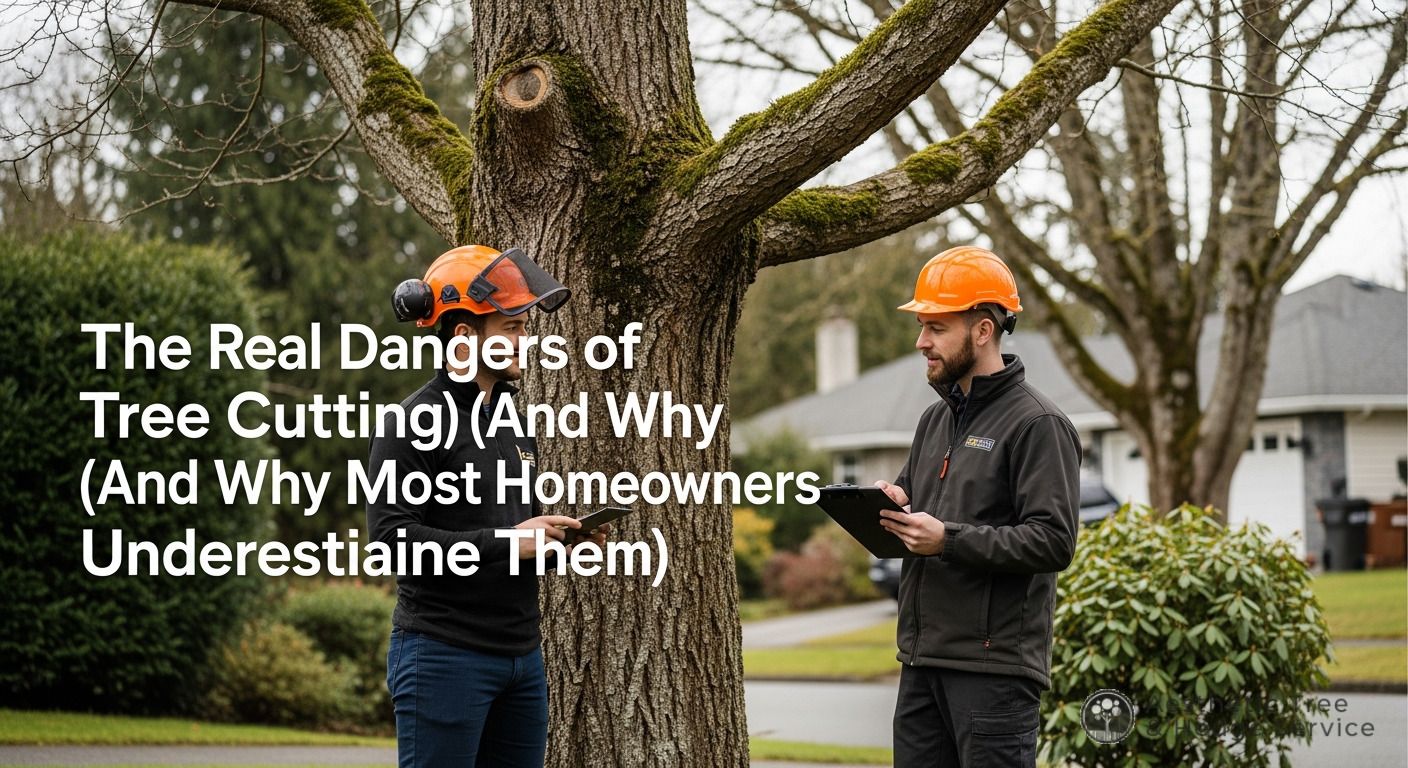
Suggested image: ISA-certified arborist inspecting a mature Lower Mainland tree near a house, with PPE visible.
TL;DR
- Tree cutting is high-risk residential work because it combines height, chainsaws, falling wood, and unpredictable stored tension.
- The biggest dangers are falls, struck-by injuries, chainsaw kickback, electrocution, and hidden structural failure.
- Vancouver's Protection of Trees By-law protects many private trees at 20 cm DBH or greater, so permits often matter before removal.
- ANSI A300 relates to accepted tree care practices; ANSI Z133, WorkSafeBC rules, and utility clearance requirements are more relevant to job-site safety.
- A WCB-registered, ISA-certified arborist protects your safety, your property, and your legal position before the saw ever starts.
What Makes Tree Cutting So Dangerous?
The dangers of tree cutting come from one basic fact: trees do not behave like static objects.
A standing tree can hold thousands of pounds of weight in the trunk, limbs, and crown. Branches may be under tension or compression. Decay can be hidden inside apparently solid wood. Wind loading can change the way a tree reacts once a cut is made. A limb that looks predictable from the ground can swing, split, roll, barber-chair, or drop in a direction no homeowner expected.
Professional arborists are trained to read those forces before cutting. They assess lean, crown weight, defects, decay indicators, escape routes, drop zones, rigging points, and proximity to targets. Homeowners usually see a branch that needs to come down. An arborist sees a moving load system.
The main injury categories in tree work are consistent:
- Falls from ladders, roofs, branches, or unstable climbing positions
- Struck-by injuries from limbs, trunks, tops, ropes, tools, or rolling logs
- Chainsaw injuries, especially from kickback or cutting above shoulder height
- Electrical contact from overhead service or distribution lines
- Property damage from uncontrolled falling material
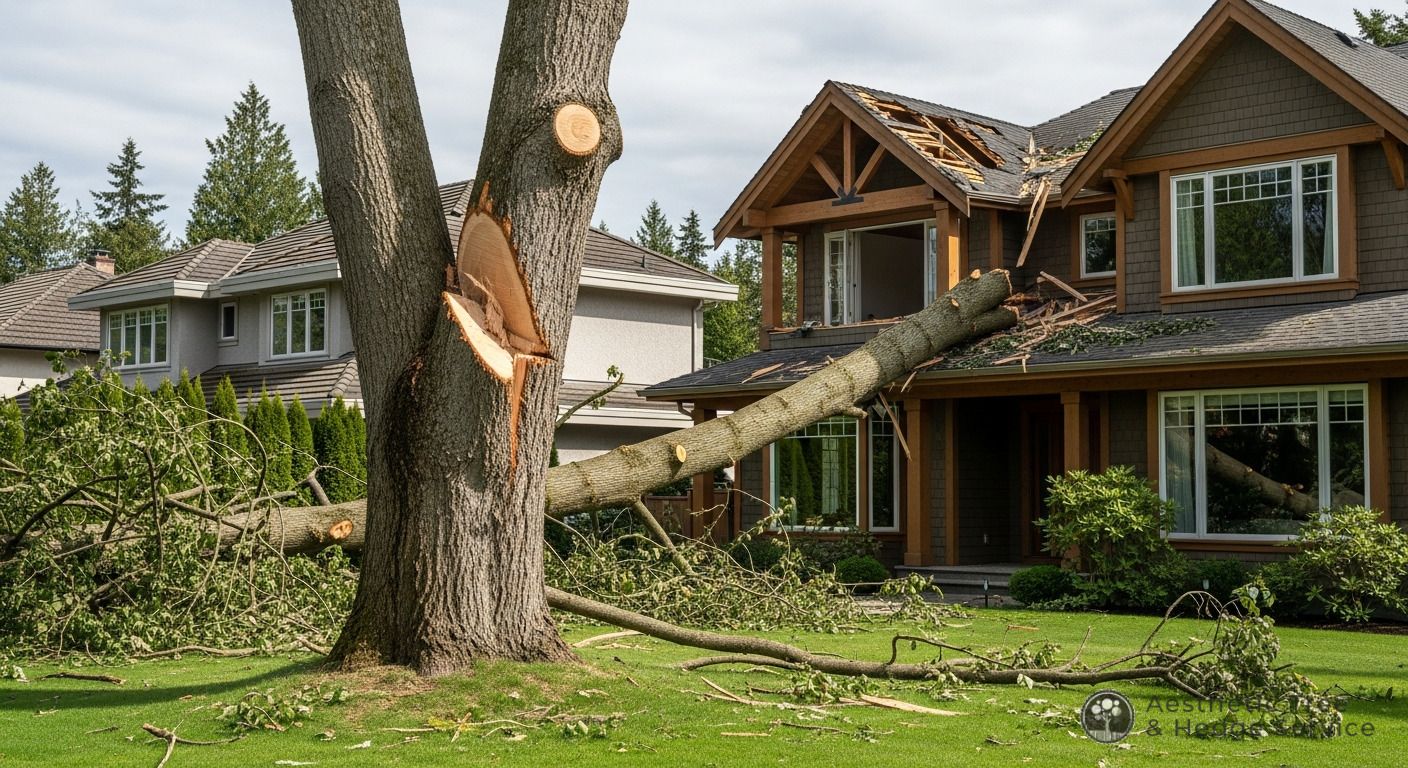
Across Vancouver and the Lower Mainland, the most expensive tree jobs often start as partial DIY attempts. A homeowner makes one cut in the wrong place, anchors a rope to the wrong limb, or drops a branch into a fence, roof, vehicle, greenhouse, or neighbour's yard. By the time a professional crew is called, the tree can be more unstable than it was before anyone touched it.
How Do Falls Happen During Tree Cutting?
Falls are one of the most serious risks in tree work because tree cutting creates movement while the worker is already elevated.
A household ladder is designed for stable surfaces. Tree work is not stable. The tree can move when a branch is cut. The ground can be soft, sloped, wet, or uneven. A limb can shift weight suddenly. A ladder can bounce, twist, or slide when the saw bites into the wood.
This is why standing on a ladder with a chainsaw is one of the clearest warning signs that a job has moved beyond homeowner-level maintenance.
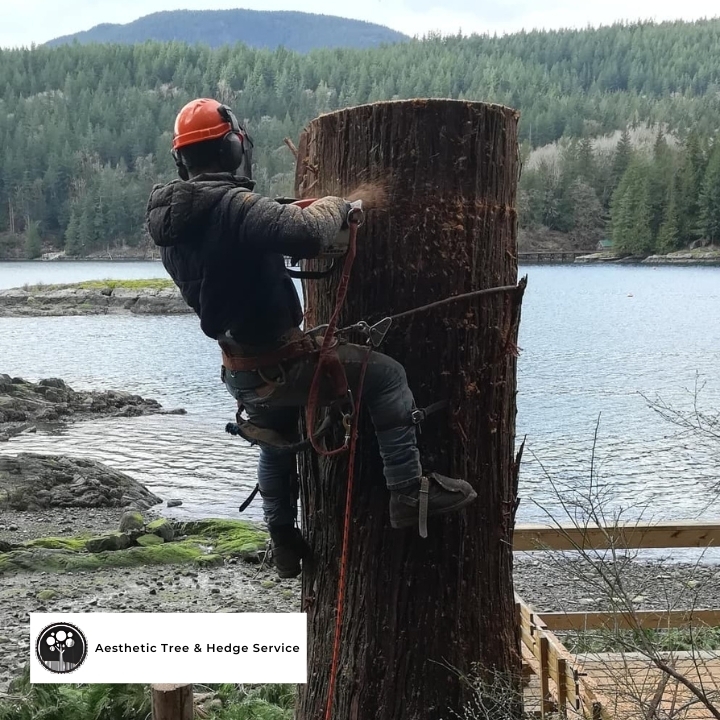
WorkSafeBC treats tree care, climbing, pruning, bucking, and falling as work that requires planning, proper equipment, and qualified workers. Professional arborists use climbing systems, harnesses, lanyards, ropes, helmets, eye protection, chainsaw protection, and controlled positioning methods. Those systems are not accessories. They are part of the safety plan.
Small pruning from the ground with hand tools can be reasonable in limited situations. Cutting at height is different. Once the work requires a ladder, climbing, a chainsaw, or a cut above shoulder height, the risk profile changes completely.
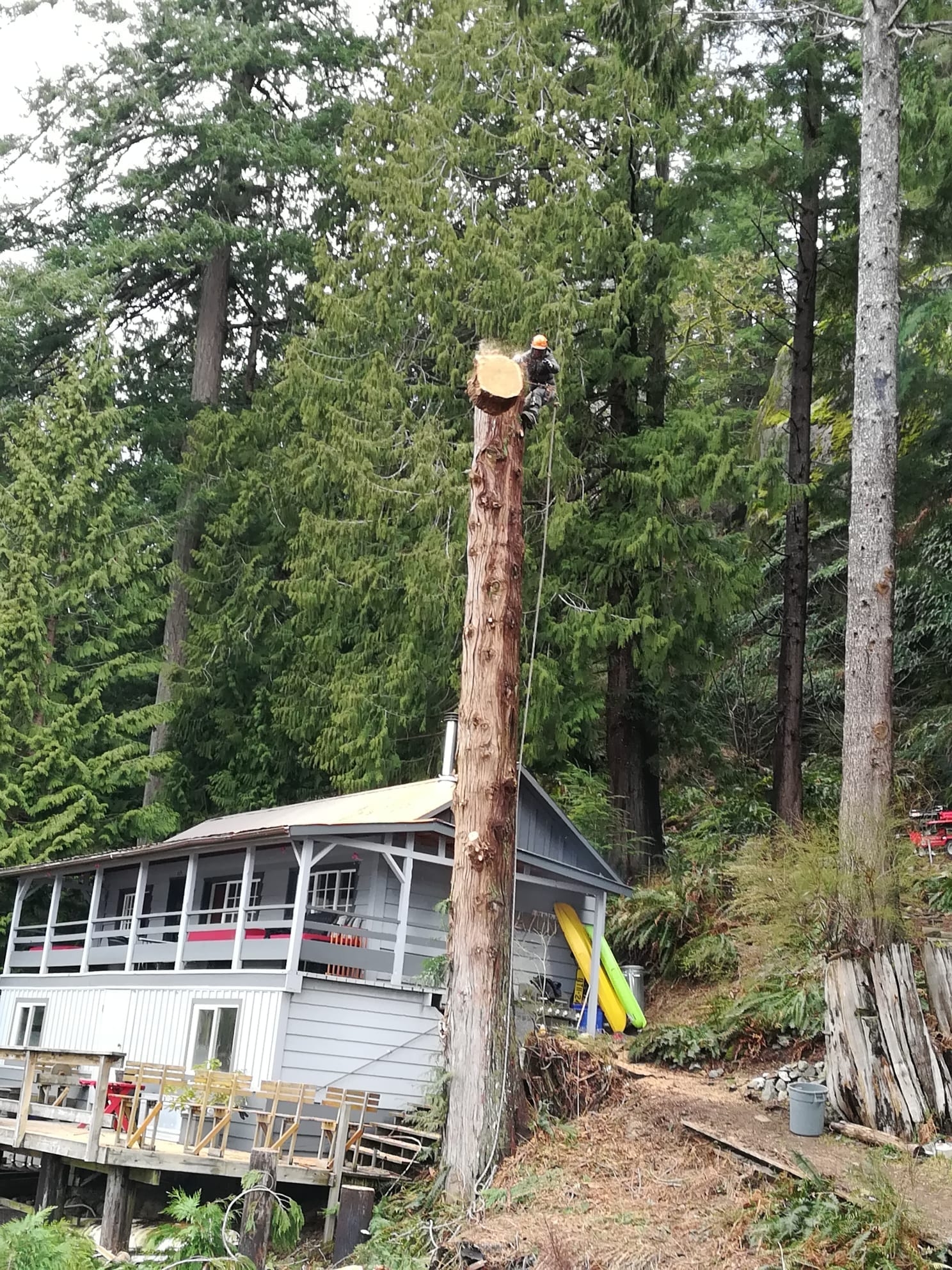
For larger trees, a professional tree cutting service in Vancouver should use trained climbers, controlled dismantling methods, and a site-specific hazard assessment before work begins.
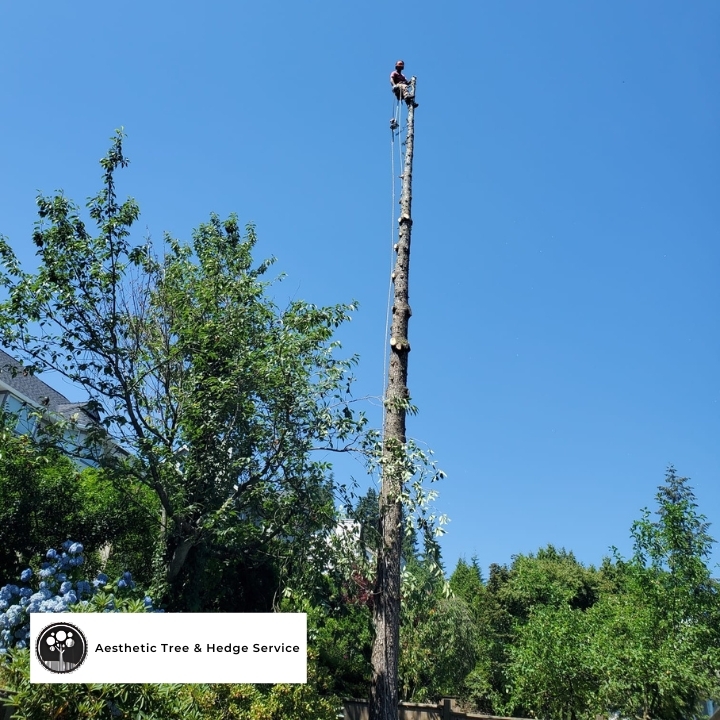
Suggested image: Arborist secured with rope and harness while dismantling a tree in sections.
What Are Struck-By Injuries?
A struck-by injury happens when a person is hit by a falling, swinging, rolling, or rebounding object.
In tree work, that object might be a limb, trunk section, tree top, rope under load, broken hanger, tool, or log that rolls after landing. These injuries are common because cut wood rarely behaves as neatly as people expect.
A branch can be heavier on one side. A trunk can split vertically. A top can twist as it falls. A limb under compression can spring backward. A piece being lowered on a rope can pendulum into a wall, window, fence, or worker.
This is where arboricultural experience matters. Professional crews use rigging systems, lowering lines, blocks, friction devices, redirect points, and controlled work zones. The goal is not simply to make the cut. The goal is to control what happens after the cut.
Lower Mainland properties make this especially important. Many Vancouver lots have mature trees within reach of houses, garages, sheds, power lines, fences, sidewalks, and neighbouring structures. There may be no open drop zone at all. In those cases, tree removal becomes a sectional dismantling job, not a simple felling job.
That is why emergency tree service is not just about arriving quickly. It is about knowing how to stabilize and dismantle damaged wood without creating a second problem.
Is Cutting Near Power Lines Dangerous?
Yes. Cutting near power lines is one of the most dangerous situations in residential tree work.
In older Vancouver neighbourhoods, mature trees often grow around overhead utility lines. From the ground, those lines may be partly hidden by foliage. A homeowner may not realize a branch is close to an energized conductor until they are already on a ladder or inside the canopy.
Electrical contact can happen directly or indirectly. A worker does not always need to touch the line with their body. A branch, pole saw, ladder, rope, or wet tree section can create a path for electricity.
WorkSafeBC has specific requirements for pruning and falling near energized conductors, including minimum approach distances and qualified utility arborist requirements. BC Hydro also warns homeowners to stay clear of trees touching or growing near power lines. If a tree or branch is near a power line, the correct first step is not to cut carefully. The correct first step is to stop and call a qualified professional.
If a tree is touching a line, leaning toward a line, or has storm-damaged limbs hung up near service wires, do not approach it. Call a WCB-registered tree service and, where appropriate, BC Hydro.
What Happens When a Chainsaw Cut Goes Wrong?
Chainsaws are efficient because they remove wood extremely quickly. That is also what makes them dangerous.
Kickback occurs when the upper tip of the guide bar contacts wood or another object and throws the saw back toward the operator. It can happen faster than a person can react. The risk rises when someone is cutting above shoulder height, reaching from a ladder, working one-handed, cutting in a cramped position, or trying to manage a moving branch.
Those conditions are common in DIY tree cutting.
Professional arborists reduce risk with training, saw control, proper stance, escape planning, and chainsaw-rated personal protective equipment. That includes helmets, face shields, hearing protection, chainsaw pants or chaps, gloves, and boots. PPE does not make chainsaw work harmless, but it can reduce the severity of an injury.
Most homeowners do not own that equipment. More importantly, they have not practised the cutting techniques needed to avoid binding, kickback, barber-chairing, and uncontrolled release of stored tension.
Suggested image: Close-up of chainsaw PPE, including helmet, face shield, gloves, boots, and chainsaw pants.
Do You Need a Permit to Cut a Tree in Vancouver?
In many cases, yes.
The City of Vancouver's Protection of Trees By-law requires a permit to remove many trees on private property, including trees with a diameter of 20 cm or greater measured at 1.4 metres above the ground. Other municipalities in the Lower Mainland, including Burnaby, North Vancouver, Richmond, and Coquitlam, have their own tree protection rules.
This is one of the most common surprises for homeowners. A tree on private property is not always yours to remove without approval. Diameter, species, condition, location, replacement requirements, and development context can all matter.
An arborist report in Vancouver helps confirm the tree's size, condition, risk level, and bylaw status. If removal is justified, the report can support the permit application. If the tree can be retained, the arborist can recommend pruning, cabling, clearance work, or monitoring instead.
Cutting first and checking later can create fines, replacement obligations, neighbour disputes, and insurance complications. Before removing a protected tree, get the permit question answered.
What Are the Hidden Structural Risks?
Some of the most dangerous trees look normal from a distance.
Big-leaf maple, Douglas fir, cedar, birch, and other Lower Mainland species can develop internal decay, root issues, included bark, weak unions, storm cracks, or deadwood hidden in the crown. A tree may still leaf out while the trunk or root plate is structurally compromised.
Warning signs include:
- Fungal growth at the base or on the trunk
- Fresh cracks or splits
- Sudden lean or soil lifting near the roots
- Large dead limbs
- Cavities or old wounds
- Sparse foliage during the growing season
- Heavy limbs over roofs, driveways, or play areas
The risk is not only that the tree may fail naturally. The risk is that cutting into a compromised tree can trigger failure while someone is standing under it, climbing it, or working beside it.
Certified arborists look for visible indicators of decay and structural weakness. In some cases, advanced tools may be used to investigate internal defects. The practical difference is simple: the arborist is not guessing from the lawn. They are assessing the tree as a living structure under load.
If your tree is leaning, cracking, dropping large limbs, or showing fungal growth, book a professional hazard assessment before attempting any cutting.
Is Stump and Debris Removal Dangerous Too?
Yes, although the hazards are different from the cutting itself.
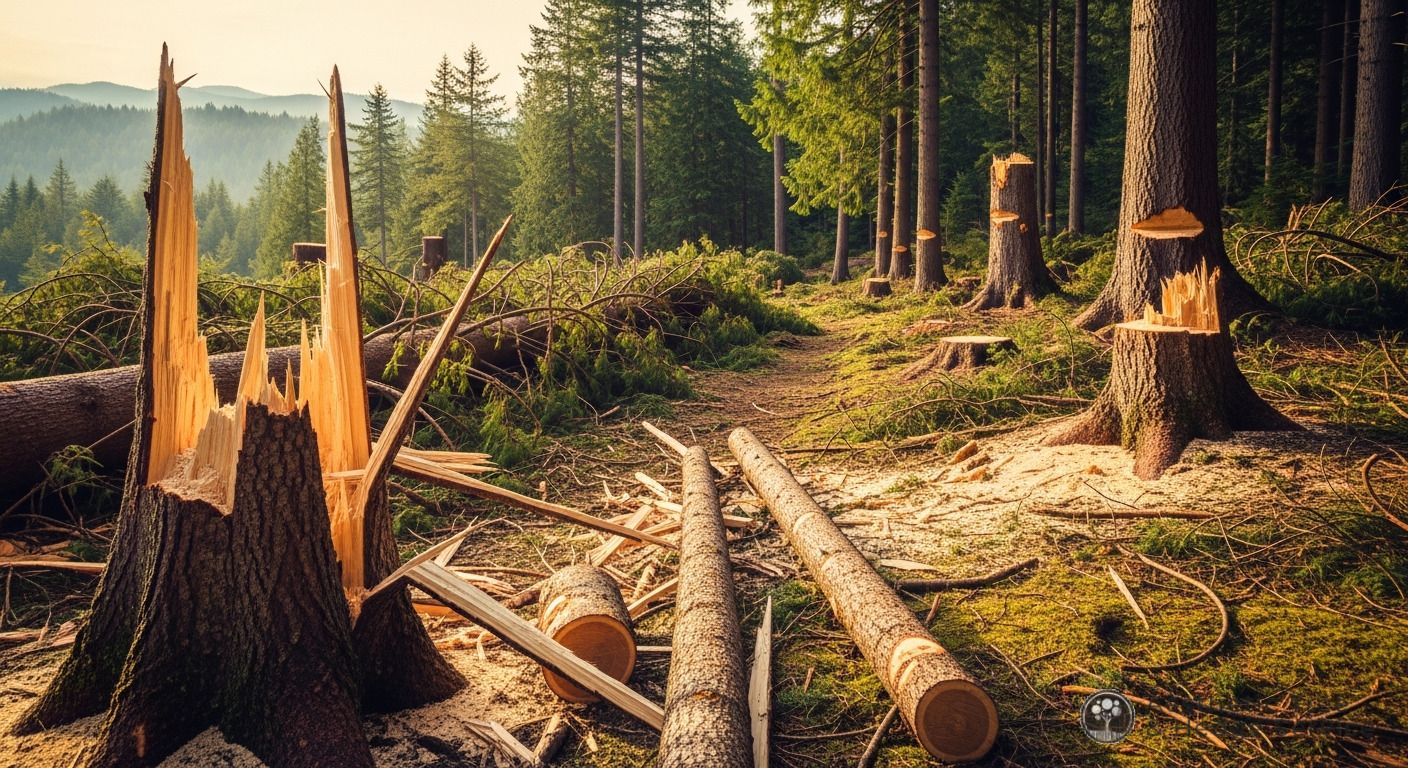
Once a tree is down, the site may still contain heavy logs, unstable rounds, sharp branch stubs, exposed roots, and a stump. Logs can roll unexpectedly. Branch piles can shift. Stumps can create tripping hazards and interfere with replanting, fencing, turf, or hardscaping.
Stump grinding also requires specialized equipment. A grinder can throw chips, stones, and debris at high speed. Eye protection, face protection, exclusion zones, and trained operation matter.
Root systems can also continue to affect nearby surfaces and utilities. In some cases, root barrier installation may be recommended to protect walkways, driveways, retaining walls, or adjacent landscaping from ongoing root pressure.
Professional stump grinding in Vancouver handles the cleanup with equipment built for the work. The result is safer, cleaner, and much easier to restore than a half-cut stump left in the yard.
How Do You Know If a Tree Is Actually Dangerous?
Not every concerning tree needs to be removed. Some can be pruned, cabled, monitored, or managed with clearance work. The key is knowing which situation you are dealing with.
Call an arborist promptly if you notice:
- A lean that is new or getting worse
- Soil lifting around the root plate
- Large dead branches in the crown
- Cracks in the trunk or major limbs
- Fungal brackets at the base
- Bark splitting or cavities
- Sudden thinning or dieback
- Branches touching the roof or utility lines
- Storm damage, hanging limbs, or split stems
In many cases, a hazardous-looking tree can be retained with the right work. Tree cabling, selective pruning, crown reduction, and deadwood removal can reduce risk while preserving a valuable tree. In other cases, removal is the safest option.
The important point is that the decision should be based on assessment, not anxiety and not guesswork.
Why Does WCB Registration Matter?
WCB registration matters because tree work carries real injury risk.
A WCB-registered tree service has WorkSafeBC coverage for its workers and is operating within the provincial safety and compensation system. That matters for the crew, and it matters for the homeowner hiring them.
Before hiring a tree company, ask:
- Are you WCB registered?
- Are you ISA-certified?
- Do you carry liability insurance?
- Who will be supervising the work?
- What is the plan for power lines, rigging, and debris?
- Will permits or an arborist report be required?
A legitimate company should answer clearly. If a contractor avoids those questions, asks for cash only, or suggests skipping permits, that is a warning sign.
Aesthetic Tree & Hedge Services is WCB registered and ISA-certified. Those credentials are not just marketing language. They are part of doing high-risk tree work responsibly.
FAQ
**Is it ever safe to cut a tree yourself?**
Small pruning from the ground with hand tools can be reasonable when the branch is small, below shoulder height, away from structures, and nowhere near power lines. Anything involving a chainsaw, ladder, climbing, heavy limbs, visible defects, or nearby utilities should be handled by an ISA-certified arborist.
**Can I cut a tree in my backyard without a permit in Vancouver?**
Sometimes, but many private trees in Vancouver require a permit before removal. Vancouver protects trees with a diameter of 20 cm or greater measured at 1.4 metres above the ground. Other Lower Mainland municipalities have their own rules. An arborist can confirm whether your tree is protected and whether a permit is required.
**What is the most dangerous part of cutting down a tree?**
The most dangerous parts are usually working at height, managing falling wood, cutting under tension or compression, and working near power lines. Chainsaw kickback is also a major risk, especially for untrained operators cutting above shoulder height or from unstable positions.
**What should I do after a storm damages a tree?**
Stay away from the damaged area, especially if limbs are hanging, the trunk is split, or power lines are nearby. Storm-damaged trees can be under heavy tension and may fail suddenly. Call a WCB-registered emergency tree service for assessment and stabilization.
**How do I know if my tree needs removal or can be saved?**
An ISA-certified arborist can assess decay, root stability, lean, cracks, crown condition, and site targets. Some trees can be retained with pruning, cabling, or monitoring. Others should be removed. The right answer depends on the tree's structure, condition, and surroundings.
Do Not Guess With Tree Cutting
The dangers of tree cutting are not theoretical. They show up in falls, chainsaw injuries, electrical incidents, damaged roofs, crushed fences, neighbour disputes, and bylaw problems across the Lower Mainland.
A large residential tree is a living structure under load. Cutting it safely requires training, equipment, planning, and local bylaw knowledge.
Call Aesthetic Tree & Hedge Services for a free estimate: (604) 721-7370. We are ISA-certified, WCB registered, and serve Vancouver, Burnaby, North Vancouver, Richmond, Coquitlam, and the Lower Mainland.
Your trees deserve expert care. So does your safety.
Before You Go
Where are you in your tree care journey?
Our Tree Care Services
ISA-certified arborists serving Greater Vancouver
Explore Our Tree Care Services
From expert pruning to safe tree removal, our ISA-certified arborists are ready to help across Greater Vancouver.
View Services