What Is Anthracnose and Why Should Vancouver Property Owners Care?
Anthracnose fungal disease is a group of related fungal diseases that affects a wide variety of trees, shrubs, and plants, causing dark lesions, premature leaf drop, and in severe cases, branch dieback. Here’s what you need to know:
- What causes it: Fungi from genera like Colletotrichum, Gloeosporium, and Apiognomonia
- Common symptoms: Dark, sunken spots on leaves; angular lesions along veins; twig cankers; premature defoliation
- Affected plants: Ash, maple, oak, sycamore, dogwood, walnut, and many fruit and vegetable crops
- Spreads by: Rain splash, irrigation water, contaminated tools
- Thrives in: Cool, wet spring weather with high humidity—exactly what Vancouver experiences
In years with lengthy rainy seasons or excessive humidity, anthracnose seems to show up everywhere. Vancouver’s mild, wet climate creates perfect conditions for these fungi to thrive, making it one of the most common tree diseases our teams encounter on residential and commercial properties throughout the region.
The good news? Anthracnose rarely kills established trees outright. Most infections are seasonal and manageable with proper care. The disease typically causes cosmetic damage like leaf spots and early leaf drop, though repeated infections over several years can weaken trees and make them vulnerable to other problems. Understanding the disease cycle and recognizing early symptoms helps property owners protect their landscape investments.
As Yaniv Biton, owner of Aesthetic Tree & Hedge Service, I’ve assessed and treated countless cases of anthracnose fungal disease throughout Greater Vancouver, working with property owners to diagnose symptoms, implement preventative cultural practices, and determine when professional intervention is needed. This hands-on experience has shown me that most anthracnose problems can be effectively managed without aggressive chemical treatments when caught early.
Identifying Anthracnose on Your Plants
At its core, anthracnose fungal disease is caused by fungal pathogens like Colletotrichum, Gloeosporium, and Apiognomonia. These fungi are opportunists, and while microscopic, their impact on Vancouver trees and shrubs is noticeable.
Accurate diagnosis is key, as symptoms can mimic other issues like environmental stress (abiotic damage) or pest damage. Knowing How to Inspect a Tree Like a Pro is helpful, but our ISA-certified arborists are experts at differentiating these problems to ensure correct treatment.
Common Symptoms of the Anthracnose Fungal Disease
Anthracnose fungal disease manifests as distinct lesions. While symptoms vary by plant, common signs include:
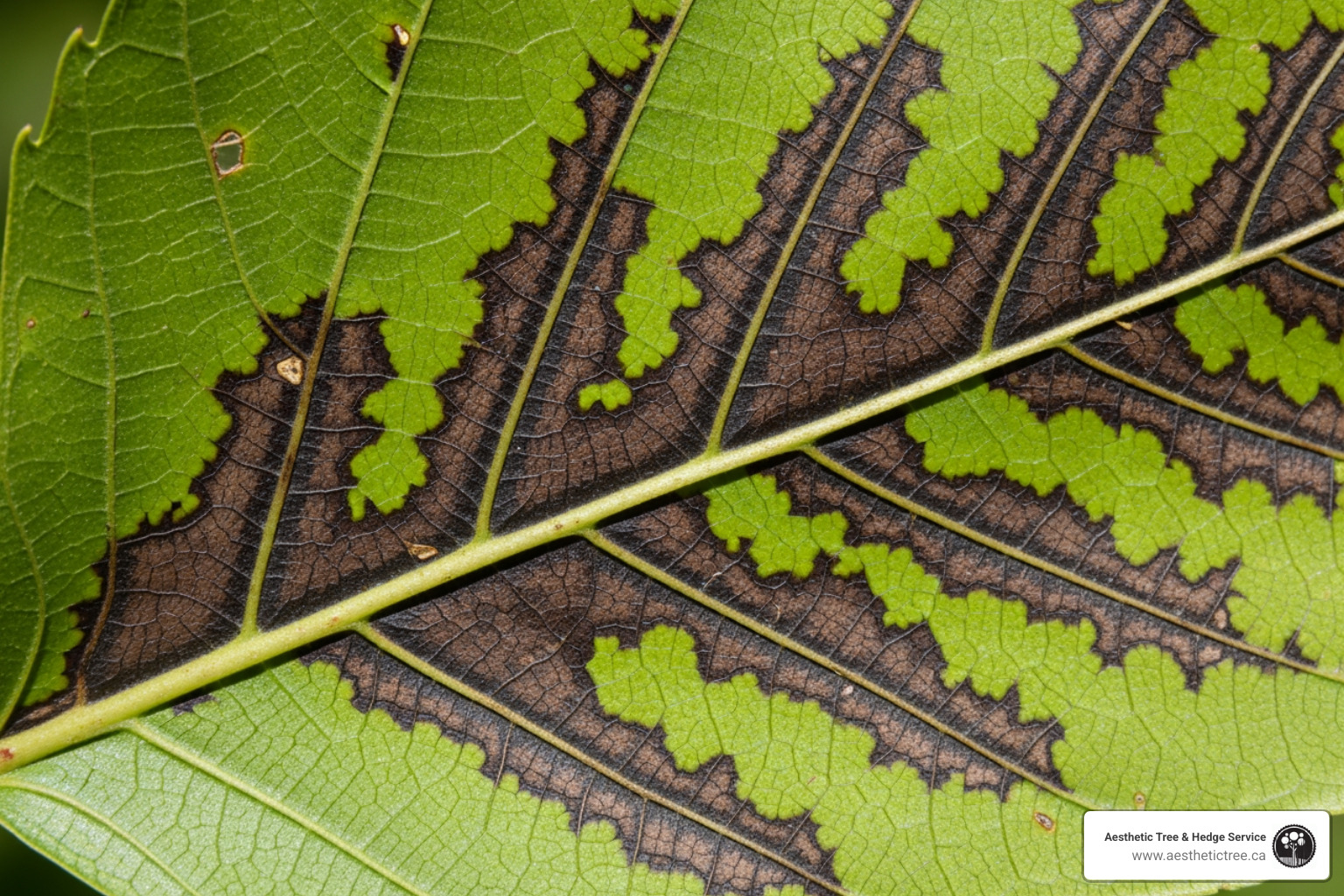
- Leaf Spots and Lesions: Irregularly shaped tan, brown, or black spots on leaves. Lesions can be angular and follow the veins (veinal necrosis), common on sycamores, oaks, and maples. Spots may merge and cover large leaf areas.
- Sunken Spots: Dark, sunken lesions on fruit, stems, or flowers. On fruit like tomatoes, this can create inedible, rotting spots.
- Dark, Water-Soaked Appearance: Early symptoms often look wet, especially on foliage or fruit, before drying out.
- Twig and Shoot Dieback: The fungus can infect young twigs, causing them to blacken and die back. This is common on sycamore and dogwood and can lead to distorted growth.
- Cankers: Sunken, discolored areas on woody stems and branches that can restrict water flow and lead to branch dieback over time.
- Premature Leaf Drop: Infected leaves may fall off in spring or early summer. Many trees will produce a second flush of leaves once the weather warms up.
- Fruit Rot: A major concern for crops, causing dark, sunken lesions and rotting on fruits like berries and avocados.
For most shade trees, leaf spots and early defoliation are primarily cosmetic. However, repeated severe infections can weaken a tree.
Plants Most Susceptible to Anthracnose
Certain species are particularly vulnerable in Vancouver’s climate. Our arborists frequently see anthracnose on:
- Deciduous Trees and Hardwoods:
- Ash: Young leaves and shoots are susceptible.
- Maple: Tan to dark brown spots along the veins.
- Oak: White oak is highly susceptible; red oak is more resistant.
- Sycamore: Highly susceptible, often showing severe twig dieback.
- Dogwood: A new, aggressive form (Dogwood Anthracnose) can cause severe losses.
- Walnut: Black walnut is highly susceptible.
- Other susceptible trees include Birch, Buckeye, Elm, and Poplar.
- Fruits and Vegetables: A significant problem for gardeners and growers, affecting berries, tomatoes, beans, melons, and more.
Different Types and Phases of Anthracnose
Anthracnose fungal disease is a group of host-specific conditions. Anthracnose on an oak may be caused by a different fungus than on a sycamore.
- Leaf Blight: The most common form, causing the leaf spots and premature defoliation described above. While alarming, established trees like ash, maple, and oak usually recover. For more on this, see Anthracnose Disease of Shade Trees.
- Stalk Rot and Top Dieback: These phases are significant in agricultural crops like corn but less common in Vancouver’s ornamental trees.
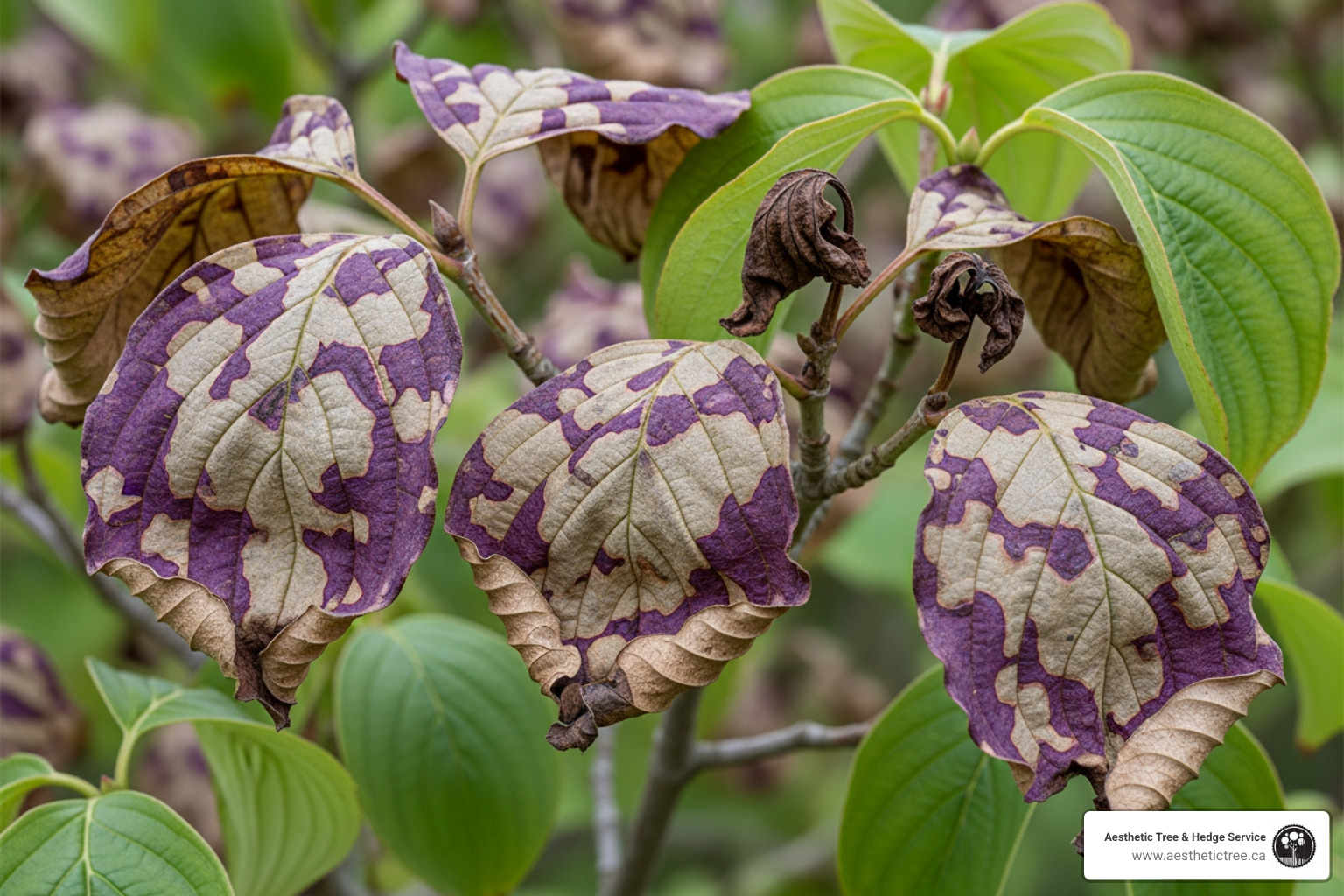
- Dogwood Anthracnose: A particularly aggressive form that thrives in cool, moist climates like the Pacific Northwest. It can cause severe losses and even kill dogwoods, featuring large, purple-bordered leaf spots, twig dieback, and trunk cankers. Unlike other forms, this often requires more proactive intervention.
Understanding these variations helps us tailor our management approach, from simple cultural practices for leaf blight to more intensive care for dogwood anthracnose.
How Anthracnose Spreads and Develops
The life cycle of anthracnose fungal disease is tied to environmental conditions, especially moisture. If you’ve noticed spots on your trees after a long, wet spring, you’re seeing the perfect conditions for anthracnose. Understanding this cycle is key to managing the Tree Diseases to Be Aware Of in Vancouver.
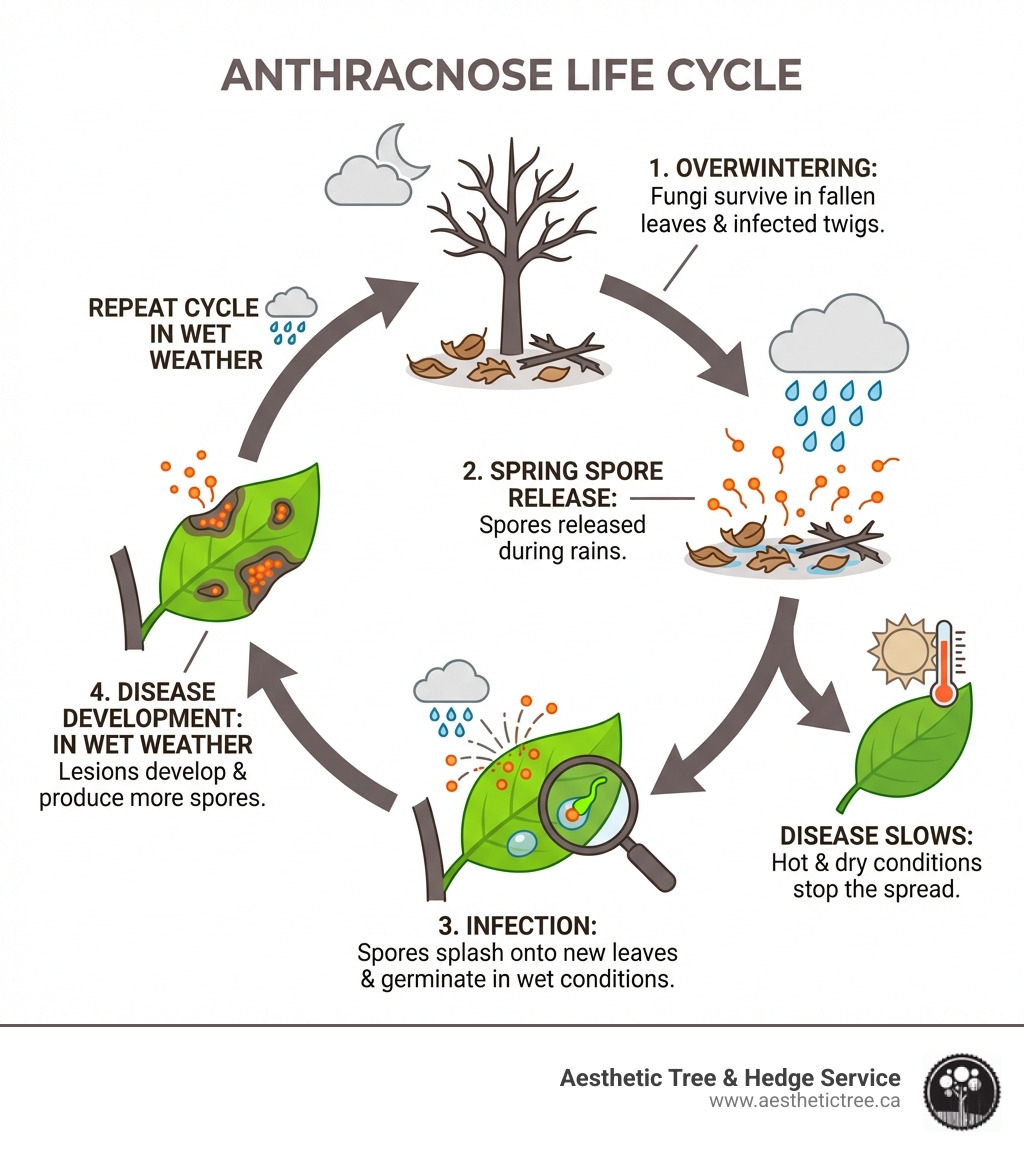
The Disease Cycle Explained
The story of anthracnose begins with its survival:
- Overwintering: The fungi survive winter in infected plant debris, such as fallen leaves, twigs, or cankers on branches.
- Primary Infection: As spring arrives with cool, wet weather, the overwintering fungi produce microscopic spores.
- Spore Dispersal: Spores are spread by splashing water from rain or irrigation. Wind can also carry spore-laden water droplets.
- Germination and Entry: If a plant surface remains wet for several hours, spores germinate and penetrate vulnerable young tissues like new leaves and shoots.
- Lesion Formation and Secondary Infection: The fungus grows, causing lesions that produce new spores. This cycle repeats throughout a wet spring, leading to secondary infections.
- Quiescent Stage: Some anthracnose fungi can remain dormant in plant tissues, becoming active later when the plant is stressed.
- Disease Slows: The disease’s progress typically slows or stops as the weather becomes hot and dry.
This cycle highlights why sanitation and moisture management are crucial for controlling anthracnose fungal disease.
Environmental Factors in the Vancouver Area
Vancouver’s climate provides the ideal breeding ground for anthracnose fungal disease. Our region is characterized by:
- Lengthy Rainy Season: Abundant spring and fall rain provides the constant moisture fungi need to spread.
- Mild Temperatures: Cool to moderate spring temperatures (10-20°C or 50-68°F) are perfect for fungal growth.
- High Humidity: This keeps plant surfaces wet for extended periods, allowing spores time to germinate.
- Poor Air Circulation: Dense canopies and crowded plantings trap moisture, creating microclimates ideal for fungal development. Our arborists often find that trees under these conditions are more susceptible. Learn more about how we help with How Vancouver Arborists Assess and Treat Tree Stress During the Rainy Season: Your Complete Guide.
These factors make anthracnose a common concern for Vancouver property owners, making proactive care essential.
Managing and Preventing the Anthracnose Fungal Disease
At Aesthetic Tree & Hedge Service, we use an Integrated Pest Management (IPM) approach for anthracnose fungal disease. We prioritize prevention and cultural practices, using chemical treatments only when necessary for long-term tree health. We believe in Addressing Common Tree Issues: Prevention and Solutions for lasting results.
Recommended Cultural Practices
These are your first and best defense against anthracnose:
- Sanitation is Key:
- Rake and Destroy Fallen Leaves: Removing fallen leaves and twigs in the fall significantly reduces the amount of overwintering fungi, breaking the disease cycle.
- Prune Infected Twigs: During the dormant season, prune out any infected or dead twigs and branches. Sterilize pruning tools between cuts to prevent spreading the disease.
- Improve Air Circulation:
- Strategic Pruning: Pruning to open the tree canopy improves air circulation and sunlight penetration, helping foliage dry faster.
- Proper Spacing: Ensure new trees have adequate space to prevent overcrowding and moisture buildup.
- Proper Watering Techniques:
- Avoid Overhead Irrigation: Use drip irrigation or soaker hoses to water the root zone directly without wetting the leaves.
- Water in the Morning: If you must use overhead watering, do it early so foliage can dry before nightfall.
- Fertilization (Only When Needed):
- Avoid fertilizing unless a soil test shows a nutrient deficiency. Excess nitrogen can promote susceptible new growth.
- Reduce Tree Stress: Healthy trees are more resilient. Ensure adequate water during dry spells, protect trunks from injury, and avoid soil compaction.
Implementing these Tree Care Tips by Aesthetic Tree Hedge Services can greatly reduce the impact of anthracnose.
Choosing Disease-Resistant Varieties
One of the most effective long-term strategies is selecting disease-resistant plants.
- Ash: Choose resistant varieties like Moraine or Blue ash over the highly susceptible Modesto ash.
- Oak: Red oak (Quercus rubra) is relatively resistant, while white oak (Quercus alba) is highly susceptible.
- Dogwood: If planting dogwoods, research cultivars resistant to the aggressive dogwood anthracnose.
- Elm: Rock elm (Ulmus thomasii) is highly resistant.
- Walnut: Japanese walnut (J. ailanthifolia) is less susceptible than the highly susceptible Black walnut (Juglans nigra).
Consult our ISA-certified arborists to choose species and cultivars well-suited to Vancouver’s climate and resistant to common diseases.
When to Use Fungicides for the Anthracnose Fungal Disease
For most established trees, fungicides are rarely necessary for this primarily cosmetic disease. However, they may be considered in specific situations:
- Preventative, Not Curative: Fungicides protect healthy tissue from infection; they do not cure existing damage.
- Application Timing: To be effective, they must be applied before symptoms appear, usually as buds open in spring. Repeat applications may be needed during persistent cool, wet weather.
- When to Consider:
- On young, highly susceptible trees that have suffered severe defoliation for several consecutive years.
- On high-value specimen trees where aesthetics are a major concern.
- In cases of severe dogwood anthracnose, where the tree’s survival is threatened.
- Professional Application is Key: Applying fungicides to large trees requires specialized equipment for safe, complete coverage. Our Tree Healthcare team provides expert application when warranted. Common active ingredients include chlorothalonil, mancozeb, and propiconazole. Always follow label instructions. For most landscapes, cultural practices are the best long-term solution.
Long-Term Effects and Broader Impact
While anthracnose fungal disease rarely kills established trees in Vancouver, repeated infections can have significant long-term effects.
Long-Term Effects on Trees and Other Perennial Plants
Repeated, severe infections can take a toll:
- Weakened Trees: A tree constantly battling anthracnose becomes stressed. Each time it loses leaves prematurely, it uses valuable energy to regrow them. This reduced vigor makes it more susceptible to other serious diseases and insect infestations, like those discussed in Diseases and Insects in the Trees of West Vancouver.
- Reduced Growth and Decline: Chronically infected trees may show stunted growth and a general decline in health.
- Structural and Aesthetic Impact: Severe cankers can compromise a tree’s structure over many years. For ornamental trees, repeated leaf spots and defoliation diminish their aesthetic appeal and can impact property values.
Economic and Agricultural Impact
Beyond backyards, anthracnose is a global economic threat, causing significant crop losses in fruits like mangoes, berries, and vegetables. In the late 1970s, an aggressive form called dogwood anthracnose appeared in the Pacific Northwest and spread, causing severe losses to natural dogwood stands. This highlights the disease’s potential for serious ecological and economic impact.
Future Directions in Anthracnose Research
The fight against anthracnose fungal disease is ongoing. Our understanding of fungi like Colletotrichum species is always evolving through scientific research on Colletotrichum lifestyles. Key research areas include developing resistant cultivars, exploring biological controls, and improving disease forecasting models. These efforts are crucial for both agricultural productivity and maintaining the health of urban forests in Vancouver and beyond.
Frequently Asked Questions about Anthracnose
We often get questions from Vancouver property owners concerned about the health of their trees. Here are some of the most common ones regarding anthracnose fungal disease:
Will anthracnose kill my mature tree?
In most cases, anthracnose fungal disease will not kill a mature, established tree. For many common shade trees like maple, oak, and ash, the disease primarily causes cosmetic damage like leaf spots and premature leaf drop. While alarming, trees typically recover and produce a new flush of leaves. However, repeated severe infections over many years can weaken a tree, making it more susceptible to other stressors, pests, or diseases. The notable exception is dogwood anthracnose, which can be lethal to dogwoods, particularly in natural stands.
Can I treat anthracnose myself?
Yes, many aspects of anthracnose management can be handled by homeowners through cultural practices. This includes raking and destroying fallen leaves, pruning infected twigs, improving air circulation through selective pruning, and adjusting watering habits to avoid wetting foliage. These preventative measures are often sufficient. For larger trees or severe infections, especially with dogwood anthracnose, professional help from ISA-certified arborists is highly recommended. We have the expertise and equipment for accurate diagnosis and effective, safe treatment.
Does anthracnose on my tree’s leaves mean the whole tree is infected?
Not necessarily. Anthracnose often starts as localized infections on leaves and young shoots. While the fungus can spread to other parts of the tree, especially twigs and sometimes branches (forming cankers), the presence of leaf spots doesn’t automatically mean the entire tree is severely infected or doomed. The disease tends to be more active during cool, wet periods and often subsides in warmer, drier weather. The tree may produce new, healthy leaves later in the season. Our arborists can assess the extent of the infection and determine if it’s confined to the foliage or if more widespread issues are present.
Protect Your Trees from Fungal Diseases
We hope this extensive guide has shed some light on anthracnose fungal disease and equipped you with the knowledge to better understand and manage it in your Vancouver landscape. While anthracnose can be a common sight, especially during our wet springs, it is often manageable.
The key takeaways are clear: prevention through good cultural practices is your best defense. Maintain tree health, ensure good sanitation, and promote air circulation. When in doubt, or if you suspect a more severe issue like dogwood anthracnose, don’t hesitate to seek professional advice. Our ISA-certified arborists at Aesthetic Tree & Hedge Service are here to help. With over 20 years of trusted service in Vancouver, Surrey, Coquitlam, Burnaby, North Vancouver, West Vancouver, Delta, New Westminster, and Richmond, we have the expertise to accurately diagnose and provide effective solutions for your tree care needs.
Let us help you protect your landscape investment and ensure the long-term health and beauty of your trees. Contact us for expert help with Tree Disease and Insect Infestation today!