Years in Coquitlam
Trees Serviced
Liability Insurance
Google Rating
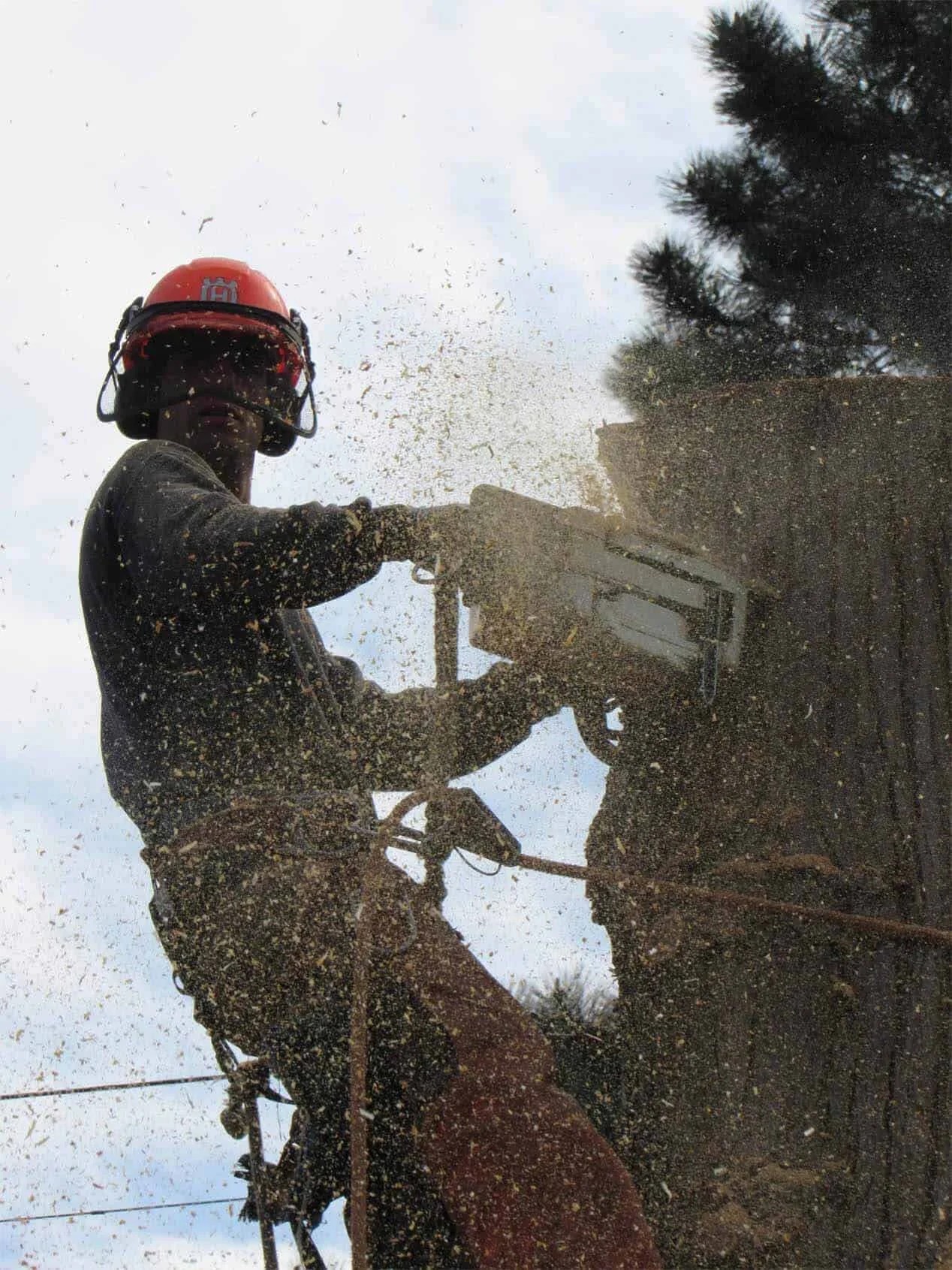
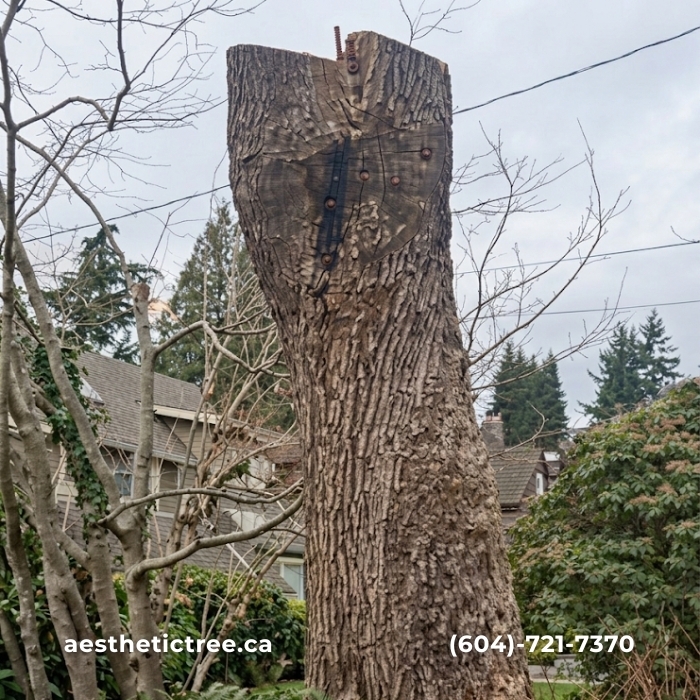
Aesthetic Tree & Hedge Services provides professional tree removal, pruning, stump grinding, hedge trimming, and arborist reports across the City of Coquitlam. From the rapidly developing hillside communities of Burke Mountain and Westwood Plateau to the established neighbourhoods of Maillardville and Austin Heights, our ISA-certified arborists understand Coquitlam's unique mix of new construction and mature urban forest. With 20+ years of experience, 100+ five-star Google reviews, and expertise in both residential tree care and development-related arborist consulting, we are a trusted tree service provider throughout the Tri-Cities. Call (604) 721-7370 for a free, no-obligation estimate.
What Tree Species Are Most Common in Coquitlam?
Coquitlam stretches from the shores of the Fraser River in the south to the foothills of Eagle Mountain and Burke Mountain in the northeast, creating a range of growing conditions that support a diverse urban forest. The tree species our arborists encounter most frequently across Coquitlam include:
- Douglas Fir (Pseudotsuga menziesii) — The dominant native conifer across Coquitlam's hillside neighbourhoods, Douglas Firs reach 30 to 50 metres on established properties in Eagle Ridge, Westwood Plateau, and Burke Mountain. Many of these trees predate the neighbourhoods around them and are remnants of the original forest cover.
- Western Red Cedar (Thuja plicata) — Abundant throughout Coquitlam, cedars are found as both landscape trees and hedge material. Large cedars on older properties can reach 25+ metres and develop heavy, wide-spreading canopies.
- Bigleaf Maple (Acer macrophyllum) — Common in lower-elevation neighbourhoods like Maillardville, Austin Heights, and Harbour Chines, Bigleaf Maples produce massive canopies and heavy autumn leaf drop. Their aggressive root systems can lift sidewalks and affect foundations.
- Paper Birch (Betula papyrifera) — Planted extensively in Coquitlam's suburban developments from the 1970s through 1990s, many Paper Birches are now reaching the end of their 50 to 70-year lifespan and are declining or dying, requiring removal.
- Red Alder (Alnus rubra) — A fast-growing pioneer species found along creek corridors, disturbed sites, and the edges of parks and greenways. Alders are short-lived (40 to 60 years) and frequently require removal as they decline.
- Native conifers in new developments — Burke Mountain and Westwood Plateau developments often retain existing Douglas Firs, Western Red Cedars, and Western Hemlocks within new lot boundaries, creating situations where mature forest trees are now standing in residential yards.
Understanding the growth habits, failure modes, and maintenance needs of each species is critical for effective tree management across Coquitlam's varied landscape.
How Does the City of Coquitlam Tree Protection Bylaw Work?
The City of Coquitlam regulates tree removal through its Tree Protection and Management Bylaw. The bylaw applies to all private property within city limits and requires a permit before removing any tree that meets or exceeds the specified trunk diameter threshold measured at 1.4 metres above the base (diameter at breast height, or DBH).
What the permit application requires:
- A completed Tree Removal Permit application signed by the registered property owner
- A site plan showing the tree's location relative to buildings, property lines, and neighbouring structures
- An arborist report from an ISA-certified or registered consulting arborist documenting the tree's species, size, health, structural condition, and the reason for removal
- A replacement tree plan or cash-in-lieu payment as required by the City
Processing time is typically 2 to 4 weeks. During peak season (spring and early summer), processing may take longer due to application volume.
Replacement requirements: The City of Coquitlam requires replacement tree planting for every permitted removal. The number and size of replacement trees depends on the diameter of the removed tree. Cash-in-lieu payments are accepted when on-site planting is not feasible due to lot size or other constraints.
Development-related tree management: Coquitlam is one of the fastest-growing municipalities in Metro Vancouver, with significant residential development on Burke Mountain, Westwood Plateau, and in the Town Centre area. Development projects require a comprehensive Tree Management Plan prepared by a certified arborist, documenting all trees on the property, identifying which trees will be retained and which must be removed, and specifying tree protection measures during construction.
Penalties: Removing a protected tree without a permit can result in fines, mandatory replacement planting at higher ratios, and potential complications for building permit approvals.
Aesthetic Tree handles the full permit process for Coquitlam property owners, from the initial arborist assessment through to the permit application submission and replacement tree planting.
Why Is Coquitlam's Growth Creating High Demand for Arborist Services?
Coquitlam has been one of Metro Vancouver's fastest-growing cities over the past two decades, with major development pushing into previously forested hillside areas. This growth pattern creates a constant demand for professional arborist services in ways that are distinct from older, more established communities.
New development on forested land. Burke Mountain and Westwood Plateau were largely forested until the early 2000s. As subdivisions are developed on these hillsides, thousands of mature native trees are removed as part of the land clearing process, while hundreds more are retained within individual lots. These retained trees often create challenges for new homeowners who find themselves living with 30-metre Douglas Firs that were part of a dense forest stand but are now isolated and exposed to wind.
Windthrow risk on newly cleared lots. When forest is cleared for development, the remaining trees lose the mutual wind protection they had in the forest stand. Trees that grew in sheltered conditions are suddenly exposed to the full force of Pacific storms. The result is elevated windthrow risk, particularly during the first 5 to 10 years after clearing. Our arborists regularly assess retained trees on Burke Mountain and Westwood Plateau for windthrow vulnerability and recommend targeted pruning (crown reduction and thinning) to reduce wind loading.
Arborist reports for building permits. Every new home, addition, laneway house, or significant renovation in Coquitlam that affects trees on the property requires a Tree Management Plan. This includes a tree inventory, a protection plan for retained trees (specifying construction fencing, root protection zones, and monitoring), and a removal/replacement plan. Our arborists prepare these reports to City of Coquitlam standards, and we work with homeowners, builders, and developers throughout the construction process.
Infrastructure conflicts. As Coquitlam's population grows, aging trees in established neighbourhoods like Maillardville, Austin Heights, and Ranch Park increasingly conflict with infrastructure. Root systems damage sidewalks, driveways, and foundations. Canopies interfere with overhead utilities. These conflicts require professional assessment and often lead to tree removal or significant root management.
What Are the Wildfire Interface Zone Risks on Burke Mountain and Westwood Plateau?
Burke Mountain and Westwood Plateau sit at the wildland-urban interface (WUI), where residential development meets undeveloped forested land. As wildfire risk increases across British Columbia due to longer, drier summers and changing forest conditions, properties in these areas face specific vegetation management requirements.
FireSmart principles for Coquitlam properties:
- Zone 1 (0 to 10 metres from structures) — The most critical zone. Trees should be limbed up to 2 metres above ground level, dead branches and debris removed, and conifer canopies thinned to reduce density. No tree branches should overhang rooflines.
- Zone 2 (10 to 30 metres from structures) — Reduce tree density through selective thinning to create spacing between canopies. Remove dead or dying trees, ladder fuels (shrubs and small trees that can carry ground fire into the canopy), and accumulated debris.
- Zone 3 (30 to 100 metres from structures) — Where property size allows, thin the forest to reduce the intensity of an approaching fire.
Our arborists provide FireSmart assessments and vegetation management for Burke Mountain and Westwood Plateau properties. This includes fuel reduction pruning, hazardous tree removal, and creation of defensible space around structures. These services align with BC FireSmart guidelines and may be required by the City as part of development permits in WUI zones.
Important: Wildfire risk management does not mean clear-cutting. The goal is strategic thinning and fuel reduction that maintains tree cover while significantly reducing fire intensity and the likelihood of structure ignition.
What Does Tree Removal Cost in Coquitlam?
Tree removal costs in Coquitlam vary based on tree size, species, location on the property, and access conditions. Properties on Burke Mountain and Westwood Plateau tend to have higher costs due to larger trees and steeper terrain. Here are typical cost ranges for 2025-2026:
- Small trees (under 6 metres / 20 feet): $250 to $500
- Medium trees (6 to 12 metres / 20 to 40 feet): $500 to $1,400
- Large trees (12 to 18 metres / 40 to 60 feet): $1,400 to $3,500
- Very large or complex removals (over 18 metres / 60+ feet, near structures, steep terrain): $3,500 to $10,000+
These ranges include felling or sectional dismantling, chipping of branches, and full site cleanup. They do not include stump grinding (typically $150 to $500 per stump) or the municipal permit application fee.
Factors that increase cost in Coquitlam:
- Steep terrain on Burke Mountain and Westwood Plateau requiring rigging and hand-carry
- Trees exceeding 25 metres that require extensive sectional removal
- Proximity to structures, fences, or neighbouring properties requiring precision rigging
- Work within BC Hydro utility line clearance zones
- Retained forest trees with compromised root systems from adjacent construction
- Emergency storm damage response (30% to 50% surcharge)
- Multi-tree projects on development sites
We provide free on-site estimates for all Coquitlam properties, including those in new developments with challenging terrain.
What Tree Pruning and Maintenance Services Do We Offer in Coquitlam?
Regular professional pruning extends tree life, reduces storm damage risk, and maintains the safety and appearance of your property. Our ISA-certified arborists provide the following pruning services across Coquitlam:
- Crown thinning — Selectively removing interior branches to reduce wind resistance, improve light penetration, and reduce the overall weight of the canopy. Essential for exposed Douglas Firs on Burke Mountain and Westwood Plateau that are vulnerable to windthrow.
- Crown reduction — Reducing the overall height or spread of a tree by cutting back to appropriate lateral branches. Used when trees have outgrown their space or require clearance from structures and power lines.
- Deadwood removal — Removing dead, dying, and broken branches that could fall during storms. Priority service for trees near walkways, driveways, play areas, and neighbouring properties.
- Crown raising — Removing lower branches to provide clearance for pedestrians, vehicles, structures, and sightlines. Common for street trees and trees along pathways.
- Structural pruning for young trees — Training developing trees with proper branch architecture to reduce future maintenance needs. Particularly important for the young native conifers retained in new Burke Mountain and Westwood Plateau developments.
- Windthrow risk reduction — Targeted crown thinning and reduction specifically designed to reduce wind loading on trees that are newly exposed following adjacent clearing or construction.
All pruning follows ISA best practice standards and the ANSI A300 pruning standard. We never top trees.
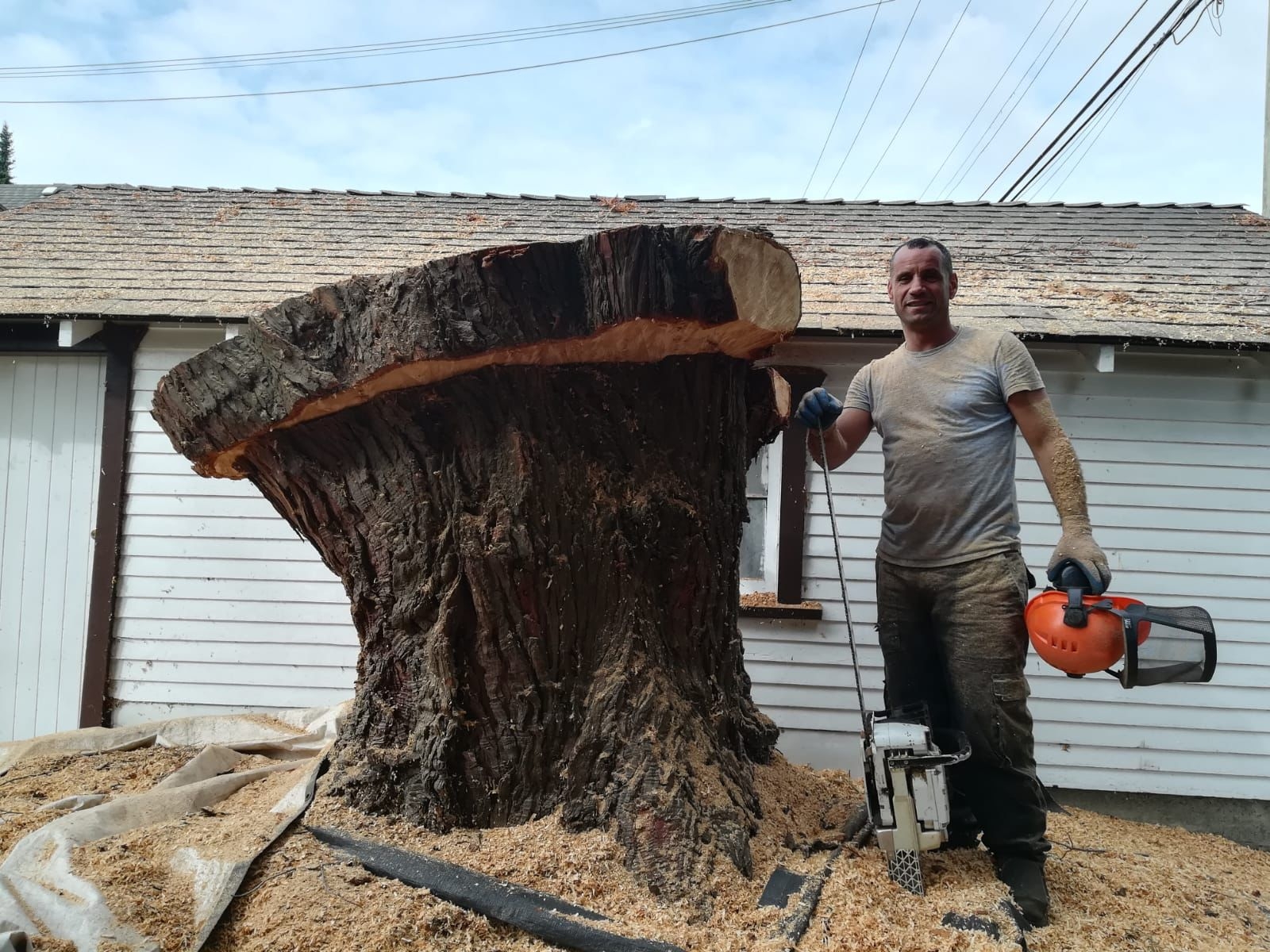
How Does Stump Grinding Work in Coquitlam?
After a tree is removed, stump grinding eliminates the visible stump and major surface roots by chipping them to 15 to 30 cm below grade level with a specialized rotating carbide-tipped cutting wheel.
Typical stump grinding costs in Coquitlam:
- Small stumps (under 30 cm diameter): $150 to $250
- Medium stumps (30 to 60 cm diameter): $250 to $400
- Large stumps (over 60 cm diameter): $400 to $700+
For development sites requiring multiple stump removals, we offer package pricing. We also provide full root ball excavation for sites where foundation or utility work requires complete root removal, which is common on Burke Mountain construction projects.
The mulch generated by grinding is typically left in the hole to decompose, or we can remove it and backfill with topsoil for replanting or landscaping.
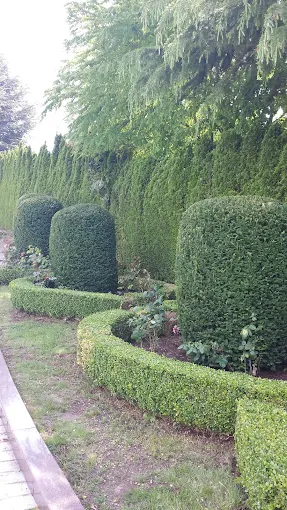
What Hedge Trimming Services Are Available in Coquitlam?
Hedges are widely used across Coquitlam for privacy, wind protection, and property boundary definition. The most common hedge species we maintain include:
- Western Red Cedar (Thuja plicata) — The most popular hedge species in Coquitlam, growing vigorously in the local climate and requiring regular annual or semi-annual trimming.
- Laurel (Prunus laurocerasus) — Common in established neighbourhoods like Austin Heights and Maillardville, laurel hedges grow aggressively and can reach 5+ metres if left untrimmed.
- Emerald Cedar (Thuja occidentalis 'Smaragd') — Widely planted in newer subdivisions on Burke Mountain and Westwood Plateau for their compact, columnar form.
- Photinia (Photinia x fraseri) — Planted for its red-tipped new growth, Photinia is found across Coquitlam's mid-elevation neighbourhoods.
- Privet (Ligustrum) — Common on older properties, privet hedges are fast-growing and require frequent trimming.
Our hedge trimming crews serve residential, strata, and commercial properties across all Coquitlam neighbourhoods. We maintain clean lines, promote dense growth, and ensure hedges comply with municipal height and sightline requirements.
When Should You Request an Arborist Report in Coquitlam?
Arborist reports are required or strongly recommended in several situations for Coquitlam property owners:
- Tree removal permit applications — The City of Coquitlam requires an arborist report as part of any Tree Removal Permit application for protected trees.
- Development and building permits — New construction, additions, laneway homes, and any project involving ground disturbance near trees requires a Tree Management Plan prepared by a certified arborist. This is one of our most common services in Coquitlam given the pace of new development.
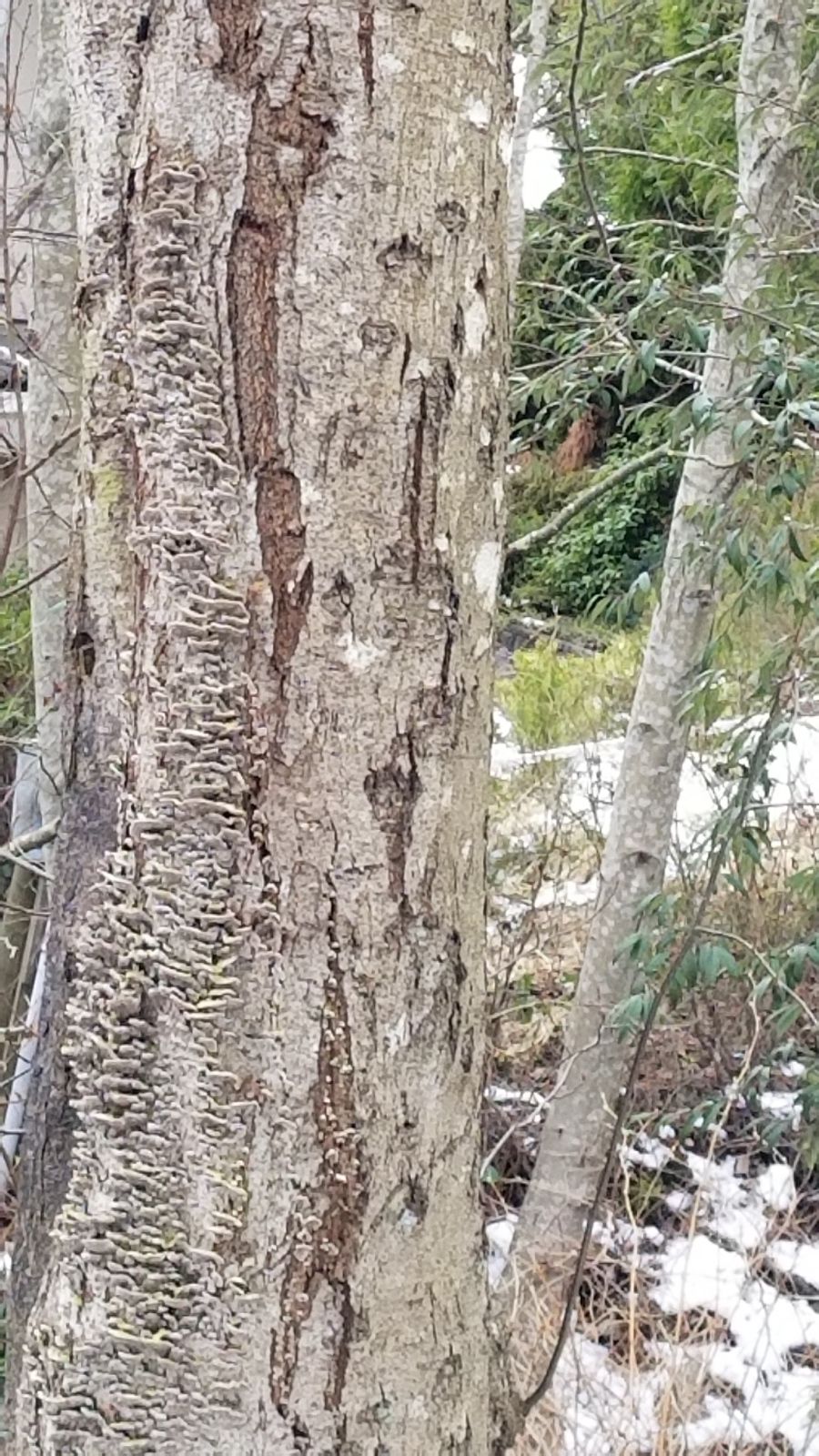
- TRAQ risk assessments — When a tree shows signs of structural compromise (leaning, cracking, decay, root heaving, or storm damage), a Tree Risk Assessment Qualification (TRAQ) assessment provides a standardized risk evaluation accepted by municipalities and insurers.
- Pre-purchase property assessments — Buyers of Coquitlam properties, especially on Burke Mountain and Westwood Plateau where large native trees are common, benefit from arborist reports that identify tree-related risks, maintenance needs, and potential costs.
- Wildfire interface assessments — Properties in WUI zones may require vegetation management assessments aligned with FireSmart guidelines.
- Insurance claims — Storm damage, tree failure, and property damage claims require professional documentation of the tree's condition and the nature of the failure.
Our arborist reports comply with City of Coquitlam requirements and are accepted by municipal planning departments, developers, real estate professionals, lawyers, and insurance adjusters.
Which Coquitlam Neighbourhoods Does Aesthetic Tree Serve?
We serve every neighbourhood across the City of Coquitlam, including:
- Burke Mountain — Coquitlam's newest major residential area, carved from dense forest on the mountainside. Large retained native conifers, steep terrain, and wildfire interface zone considerations make this one of our most active service areas.
- Westwood Plateau — Established hillside community with large lots, mature Douglas Firs and cedars retained from the original forest, and elevated windthrow risk due to terrain exposure.
- Eagle Ridge — Hillside neighbourhood with a mix of native conifers and established ornamental plantings, overlooking Coquitlam Centre and the Fraser Valley.
- Ranch Park — Established neighbourhood with mature street trees and backyard specimens that are reaching the age where maintenance and removal needs increase.
- Maillardville — Coquitlam's historic francophone neighbourhood with older residential lots, mature deciduous and coniferous trees, and tight property spacing.
- Austin Heights — Well-established residential area with large Bigleaf Maples, cedars, and a mix of ornamental species.
- Harbour Chines — Residential neighbourhood near the Coquitlam River with mature trees along creek corridors and on established lots.
- Meadow Brook — Newer suburban neighbourhood with a mix of planted and retained native trees.
- Town Centre — Coquitlam's rapidly densifying commercial and residential core, where development-related tree work is constant.
No matter which Coquitlam neighbourhood you are in, we can provide a free on-site estimate within 48 hours.
Frequently Asked Questions About Tree Services in Coquitlam
Do I need a permit to remove a tree on my Coquitlam property?
The City of Coquitlam requires a Tree Removal Permit for any tree that meets or exceeds the protected diameter threshold. The application requires an arborist report, site plan, and replacement tree plan. Removing a protected tree without a permit can result in fines and mandatory replacement planting. Aesthetic Tree handles the full permit process on your behalf.
I just bought a new home on Burke Mountain with large trees. What should I do?
We recommend scheduling an arborist consultation to assess the condition and risk level of any large trees near your home, especially Douglas Firs and cedars that were retained during development. Trees that grew in forest conditions and are now exposed to wind may need crown thinning to reduce windthrow risk. We also assess for FireSmart compliance and can create a multi-year maintenance plan.
What is FireSmart and does it apply to my Coquitlam property?
FireSmart is a Canadian program that provides guidelines for reducing wildfire risk to structures and communities at the wildland-urban interface. Properties on Burke Mountain and Westwood Plateau that border forested areas are in WUI zones where FireSmart principles apply. Key measures include fuel reduction pruning, creating defensible space around structures, and removing ladder fuels. Our arborists provide FireSmart assessments and vegetation management services.
How much does an arborist report cost in Coquitlam?
Standard arborist reports for single-tree removal permits typically cost $300 to $600. Comprehensive Tree Management Plans for development projects with multiple trees can range from $800 to $3,000+ depending on the number of trees, lot size, and complexity. TRAQ risk assessments for individual trees typically cost $300 to $500.
Can you remove trees during construction on my Coquitlam property?
Yes. We work with homeowners, builders, and developers throughout the construction process. We can prepare the initial Tree Management Plan required for the building permit, remove permitted trees before construction begins, install tree protection barriers for retained trees, and monitor retained trees during construction. Coordinating tree removal with your construction schedule avoids delays and ensures compliance with your permit conditions.
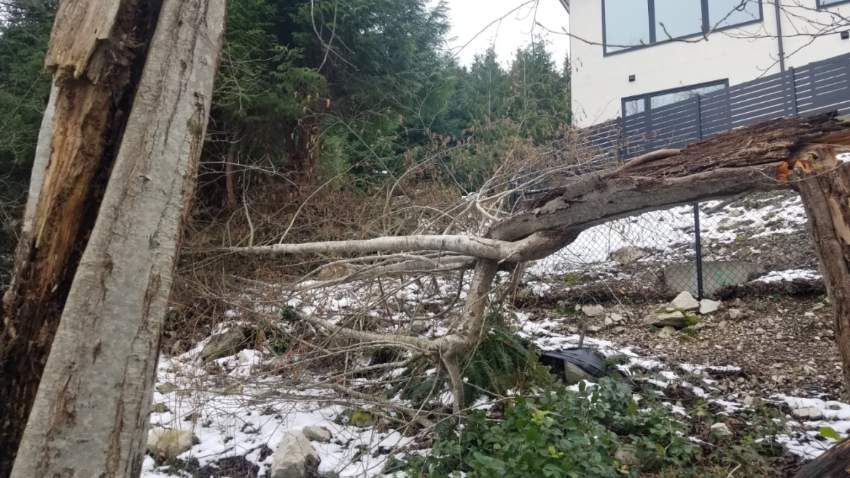
Do you offer emergency tree service in Coquitlam?
Yes. We provide 24/7 emergency response for storm-damaged, fallen, or hazardous trees across Coquitlam. Emergency service is available outside regular business hours and carries a surcharge of 30% to 50% depending on conditions. Call (604) 721-7370 for emergency tree service in the Tri-Cities.
What Are Coquitlam’s Tree Removal Permit Requirements?
The City of Coquitlam regulates tree removal under its Tree Protection Bylaw No. 3748. Any tree with a diameter at breast height (DBH) of 20 cm or greater on a single-family or two-family residential lot requires a permit before removal. Trees in environmental development permit areas — including riparian zones near waterways — have additional protections regardless of size.
For trees on strata properties, the Strata Property Act governs who can authorize removal of common-area trees. Our arborists prepare the required arborist report documenting species, health, risk rating, and justification for removal — the exact format the City of Coquitlam’s Development Services department requires for permit submission. Typical permit processing time is 10 to 15 business days.
Emergency situations — where a tree poses an immediate hazard to life or structures — may proceed without a permit, but documentation must be filed within 24 hours. Our ISA-certified arborists can assess hazard trees, issue written emergency justification, and submit the required notification on your behalf.
Tree Services We Provide Across Coquitlam Neighbourhoods
We serve the full City of Coquitlam: from Burke Mountain and Westwood Plateau in the northeast to Maillardville and Ranch Park in the southwest. Our crews work regularly in Eagle Mountain, Cottonwood, New Horizons, Scott Creek, and the river flats near the Fraser. No job is too remote — we have the equipment to reach properties with limited access, steep grades, and large specimen trees.
Common requests in Coquitlam include removal of large Douglas-fir and Western red cedar that have outgrown their lots, hedge trimming on the cedar and laurel screens common in established neighbourhoods like Harbour Chines and Cape Horn, and arborist reports for development applications near Burke Mountain’s expanding residential areas.
All crews are WorkSafeBC compliant, carry $5M liability insurance, and our lead arborists hold ISA Certified Arborist credentials and TRAQ (Tree Risk Assessment Qualification) designation. We clean up completely — no debris left behind. Free estimates by phone or online: (604) 721-7370.
FAQ: Do I need a permit to remove a tree in Coquitlam?
Yes, if the tree is 20 cm DBH or greater on a residential property in Coquitlam, a Tree Removal Permit is required under Bylaw No. 3748. Our arborists prepare the required arborist report and can assist with the permit application. Emergency removals for immediate hazards can proceed without a permit but require documentation filed within 24 hours.
FAQ: How much does tree removal cost in Coquitlam?
Tree removal costs in Coquitlam range from $500 to $3,000+ depending on the tree’s size, species, location, and access. According to industry data, the average single-tree removal in Metro Vancouver falls between $800 and $1,800. Factors that increase cost include proximity to structures, utility lines, steep terrain, and permit requirements. Aesthetic Tree provides free, itemized estimates with no obligation.
Do you offer tree trimming in Coquitlam?
Yes. Tree trimming in Coquitlam is routine work for our crews — crown thinning, deadwood removal, clearance pruning away from roofs and power lines, and shaping for ornamental trees. Our ISA-certified arborists prune to ANSI A300 standards, the same standard used across the Tri-Cities, so each cut supports the tree rather than stressing it. We trim trees on residential lots, Burke Mountain properties, and strata grounds throughout Coquitlam, with all debris hauled away.
Do you provide a tree cutting service in Coquitlam?
Yes. Our tree cutting service in Coquitlam covers controlled felling, sectional dismantling for trees in tight yards, and limb cutting for storm-damaged or overgrown trees. Cutting a tree in Coquitlam often requires a permit under the city tree bylaw, and we handle that application as part of the job. Every cut is planned by an ISA-certified arborist, the company carries $5M liability insurance, and crews work to WorkSafeBC standards.
What tree services do you offer in Coquitlam?
Aesthetic Tree provides the full range of tree services in Coquitlam: tree removal, tree cutting and felling, pruning and trimming, stump grinding, hedge trimming, arborist reports for permits, and 24/7 emergency storm response. We serve residential, strata, and commercial properties across Coquitlam and the wider Tri-Cities. Every service starts with a free on-site assessment and a written quote.
What We Do
Services in Coquitlam
Our Work
Tree Care in Coquitlam

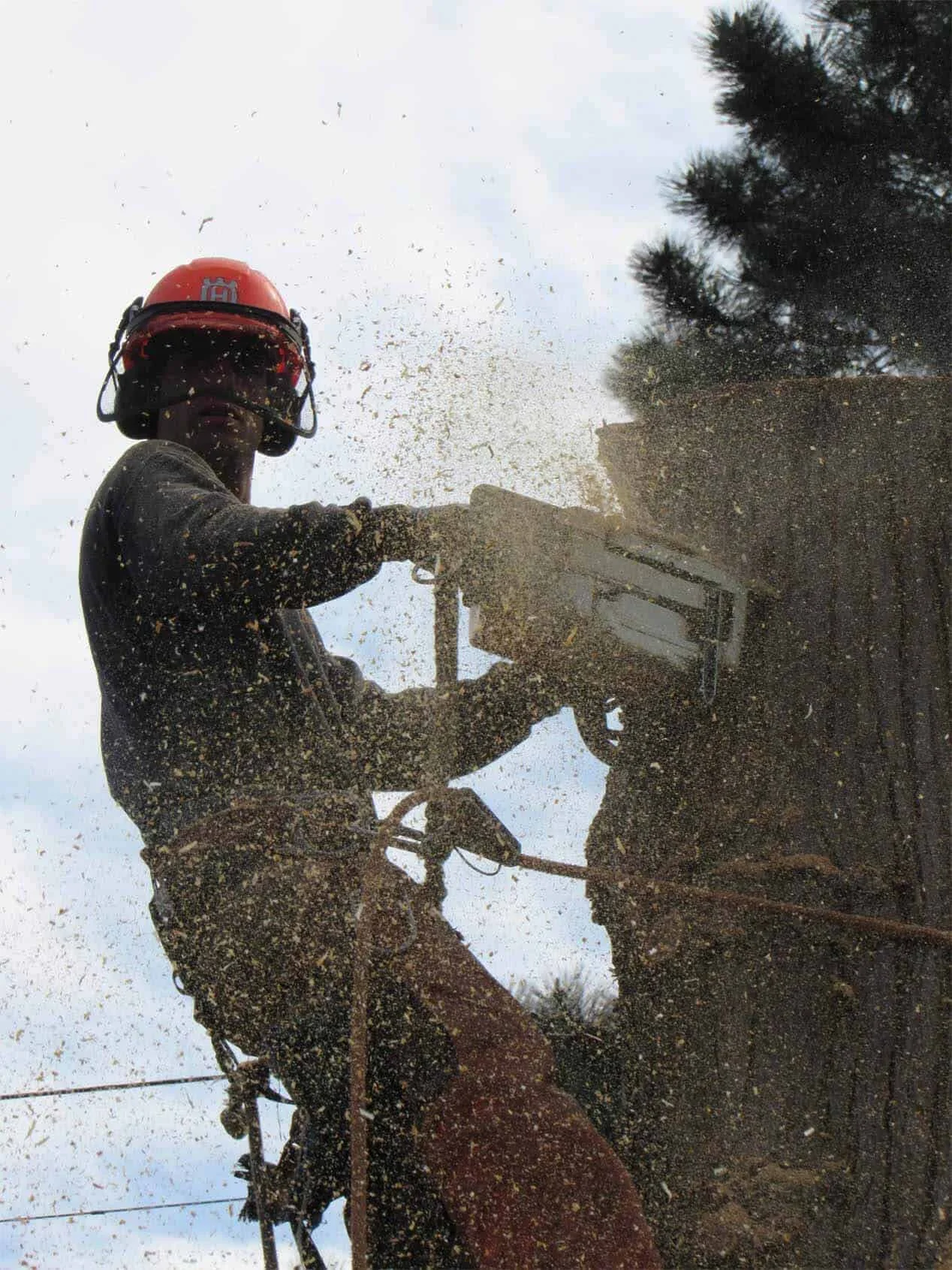
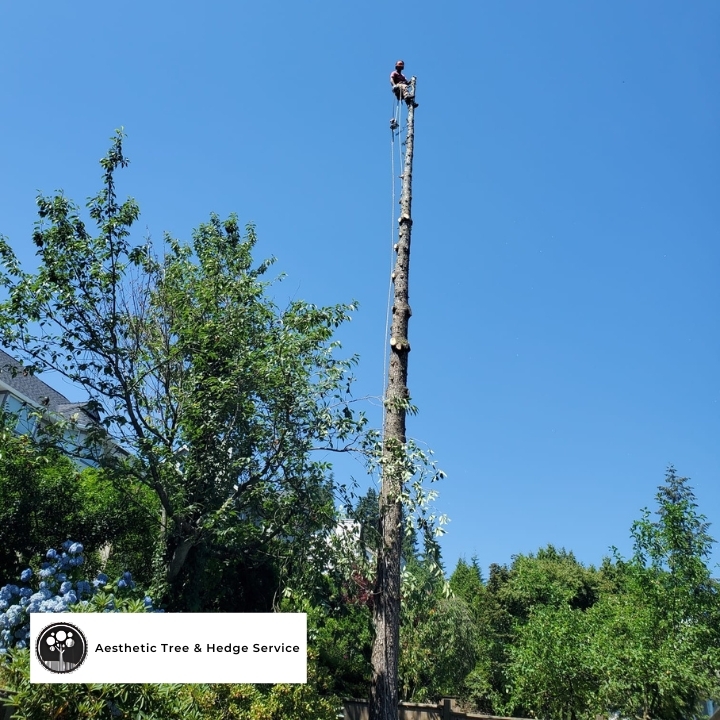
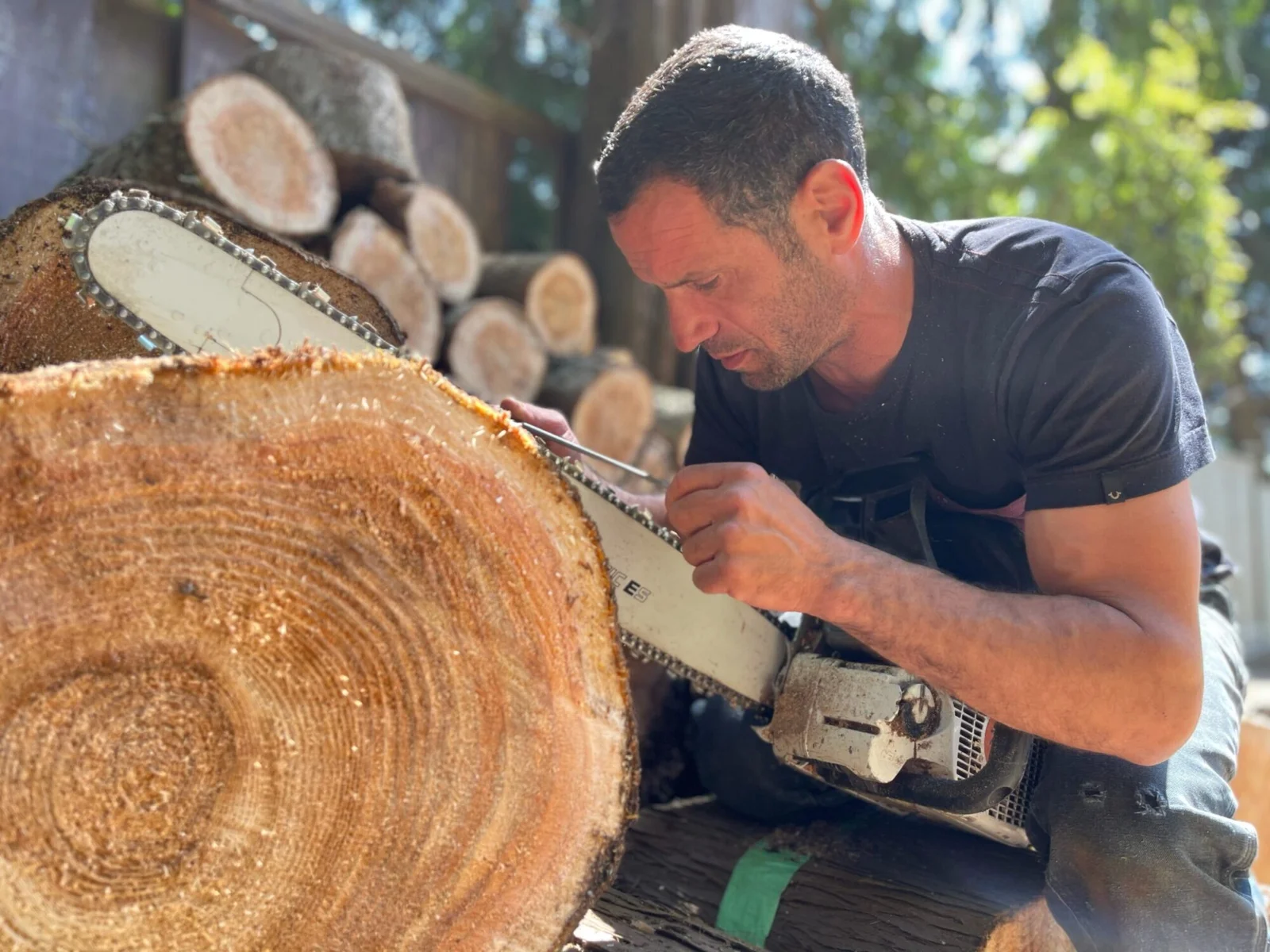
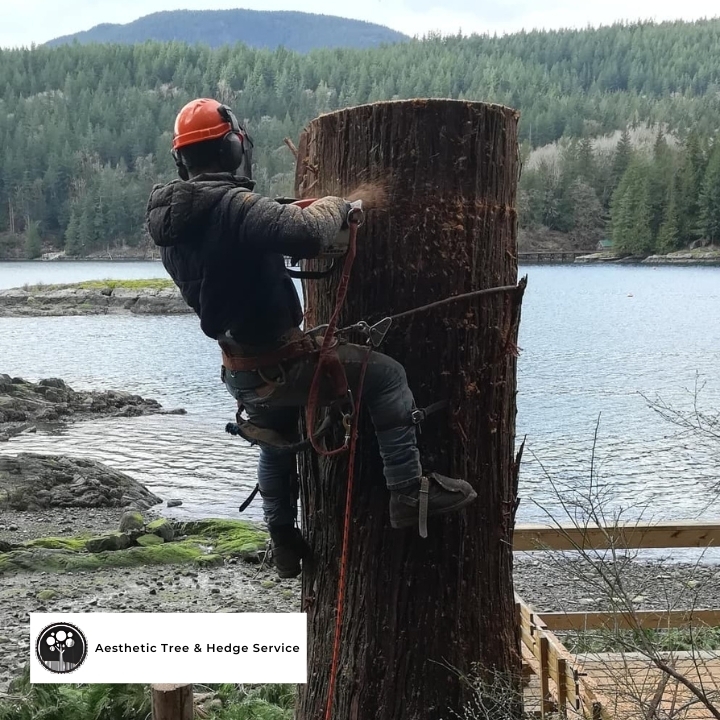
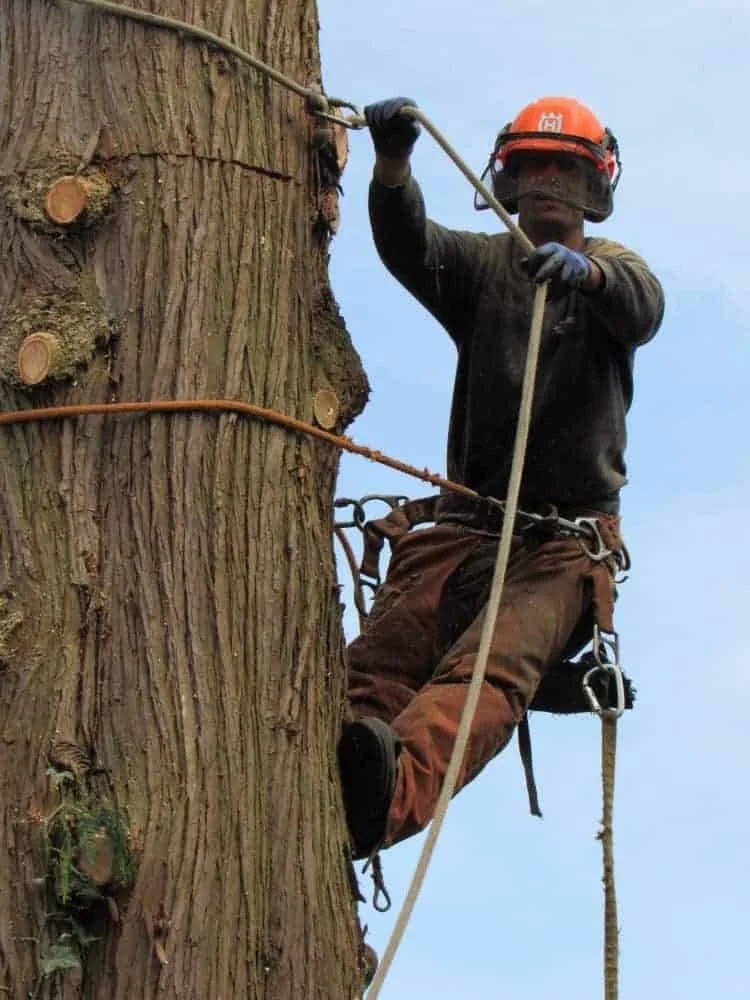
Why Choose Us
Why Coquitlam Trusts Us
Over 20 years of certified expertise, transparent pricing, and a 5.0-star Google rating make us Coquitlam’s preferred tree care provider.
WCB Registered
Fully insured and WCB-compliant. Your property is protected on every job.
ISA Certified
Our arborists hold ISA credentials — the gold standard in professional tree care.
Best Prices
Transparent, competitive pricing with free on-site estimates. No hidden fees.
Service Areas
Serving Greater Vancouver
Beyond Coquitlam, our ISA-certified arborists provide professional tree care across the entire Lower Mainland.
View all service areasNeed Tree Service
in Coquitlam?
Book your free consultation with our ISA-certified arborists today. No obligation, no pressure — just honest advice from professionals who genuinely love tree care.