Years in Vancouver
Trees Serviced
Liability Insurance
Google Rating
Aesthetic Tree & Hedge Services provides professional tree removal, pruning, stump grinding, hedge trimming, and arborist reports across the City of Vancouver. From the towering Douglas Firs of Shaughnessy to the 40,000+ ornamental cherry trees lining streets from Kitsilano to Hastings-Sunrise, our ISA-certified arborists know Vancouver's urban canopy, municipal bylaws, and neighbourhood-specific challenges inside and out. The City of Vancouver's Protection of Trees By-law 9958 requires a permit for any tree 20 cm or larger in trunk diameter, and fines for illegal removal range from $1,000 to $20,000. With 20+ years of experience, 100+ five-star Google reviews, and deep familiarity with Vancouver's permit process, we handle everything from the arborist report to the final stump grind. Call (604) 721-7370 for a free, no-obligation estimate.
What Tree Species Are Most Common in Vancouver?
Vancouver's mild Pacific maritime climate, with wet winters and warm, dry summers, supports one of the most diverse urban tree canopies in Canada. The city manages over 150,000 street trees and hundreds of thousands more grow on private property. The species our arborists work with most frequently include:
- Douglas Fir (Pseudotsuga menziesii) — The iconic conifer of the Pacific Northwest, Douglas Firs are found on properties across Vancouver's older neighbourhoods, particularly in Shaughnessy, Kerrisdale, Dunbar-Southlands, and Point Grey. Mature specimens regularly reach 30 to 50 metres in residential settings. Their height, shallow lateral root systems, and heavy limb weight make them the most common species involved in storm-damage calls. Douglas Firs in urban environments are susceptible to windthrow when surrounding trees are removed, exposing them to wind loads they were not adapted to withstand.
- Western Red Cedar (Thuja plicata) — Present on nearly every block in Vancouver, both as landscape trees and as the city's most popular hedge species. Cedars thrive in Vancouver's wet winters and can reach 30+ metres as standalone trees. They develop heavy, drooping canopies that shed interior branches and can interfere with structures, power lines, and sewer laterals.
- Japanese Maple (Acer palmatum cultivars) — Extensively planted across Vancouver for their architectural form, seasonal colour, and manageable size. Japanese Maples are common in Kerrisdale, Arbutus Ridge, South Granville, and Kitsilano. While smaller than native species, they require skilled structural pruning to maintain their natural form and prevent crossing branches that lead to included bark and eventual limb failure.
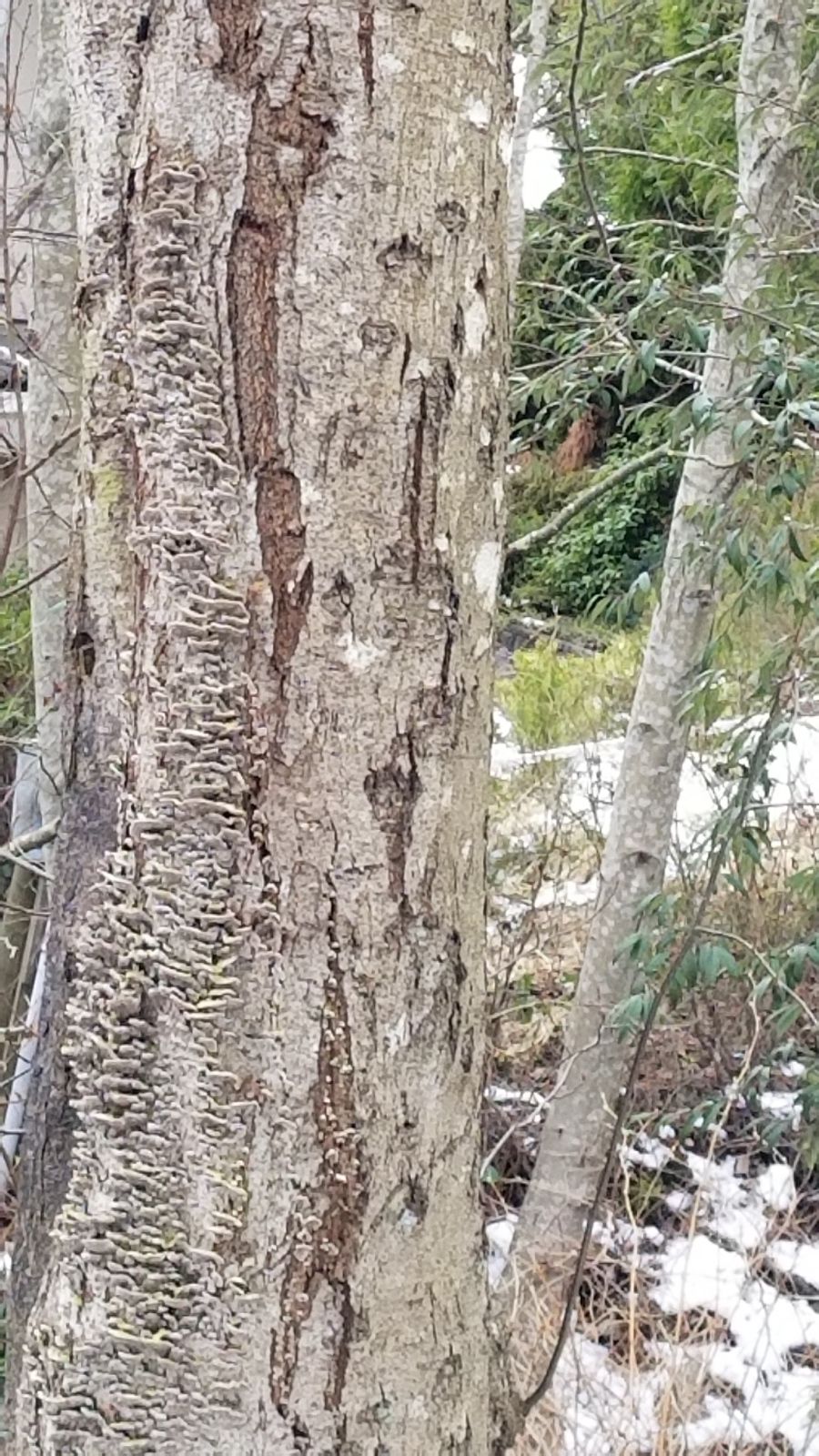
- Ornamental Cherry (Prunus serrulata, Prunus x yedoensis, and related cultivars) — Vancouver is home to over 40,000 street cherry trees, the legacy of plantings that began in the 1930s with gifts from the mayors of Kobe and Yokohama, Japan. Akebono, Kwanzan, and Yoshino are the most common cultivars. Cherry trees have a lifespan of 40 to 60 years, and many of Vancouver's original plantings are now in decline, developing trunk cavities, fungal infections, and brittle branch architecture. We see a growing volume of cherry tree removal and replacement work across the city.
- Bigleaf Maple (Acer macrophyllum) — The largest native maple in North America, Bigleaf Maples are common in Grandview-Woodland, Cedar Cottage, Mount Pleasant, and along Vancouver's park edges. They produce massive spreading canopies that drop heavy leaf litter in autumn and are prone to moss and lichen colonization on their bark and branches. Their aggressive surface root systems frequently lift sidewalks and invade sewer lines.
- Horse Chestnut (Aesculus hippocastanum) — A European import widely planted as a street and park tree across Vancouver's older neighbourhoods, particularly in the West End, Fairview, and Riley Park. Horse Chestnuts develop dense, rounded canopies and produce heavy seed pods (conkers) in autumn. They are increasingly affected by leaf blotch disease and horse chestnut leaf miner, both of which cause premature leaf drop and progressive decline.
Understanding each species' growth patterns, structural weaknesses, and pruning tolerances is essential for effective tree care in Vancouver's dense urban environment.
How Does the City of Vancouver Tree Bylaw Work?
The City of Vancouver regulates tree removal through the Protection of Trees By-law No. 9958, as amended by By-law No. 14546, which took effect on January 1, 2026. This bylaw applies to all trees on private property within the City of Vancouver.
When a permit is required:
A tree removal permit is required before cutting down, removing, or destroying any tree with a trunk diameter of 20 cm or more measured at 1.4 metres above the base of the tree (diameter at breast height, or DBH). This includes both front-yard and backyard trees on private residential, commercial, and multi-family properties.
Permit fees:
- $113 for the first tree on a permit application
- $310 for each additional tree on the same application
What the permit application requires:
- A completed application form signed by the registered property owner
- A site plan showing the tree's location relative to buildings, property lines, and adjacent structures
- An arborist report from an ISA-certified or registered consulting arborist documenting the tree's species, size, health, structural condition, and the rationale for removal
- A replacement tree plan or cash-in-lieu payment
Replacement tree requirements:
The City requires replacement planting for every tree removed under permit. Replacement trees must be a minimum of 2 cm caliper (trunk diameter measured at 15 cm above the root flare). When on-site planting is not feasible due to lot size or other constraints, the property owner must pay $1,000 cash-in-lieu per replacement tree owed.
Permit processing time:
Standard processing takes 2 to 4 weeks. During peak application periods in spring and early summer, processing may take longer. Permits are valid for 12 months once issued.
Penalties for illegal tree removal:
Removing a protected tree without a permit is a bylaw offence that carries fines ranging from $1,000 to $20,000 per tree, depending on the species, size, and circumstances. The City may also require replacement planting at a higher ratio than the standard permit would have required.
Aesthetic Tree handles the entire Vancouver tree permit process for our clients, from the initial arborist assessment and report through to the permit application submission and replacement tree planting.
What Makes Tree Care in Vancouver Unique?
Vancouver presents a distinct set of challenges that differentiate it from suburban and semi-rural municipalities in Metro Vancouver. The combination of dense urban development, aging infrastructure, and a mature tree canopy creates situations that require specialized knowledge and equipment.
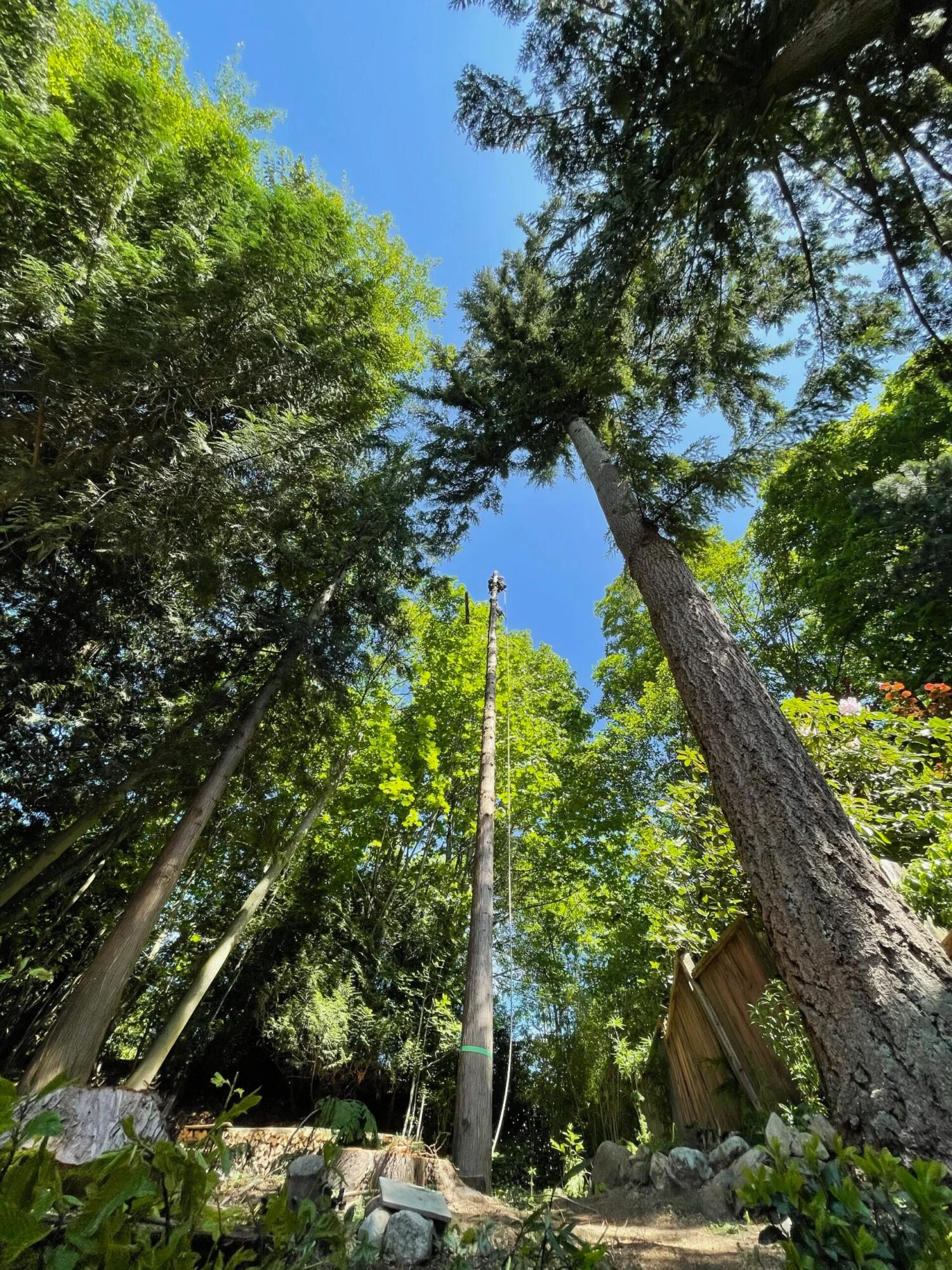
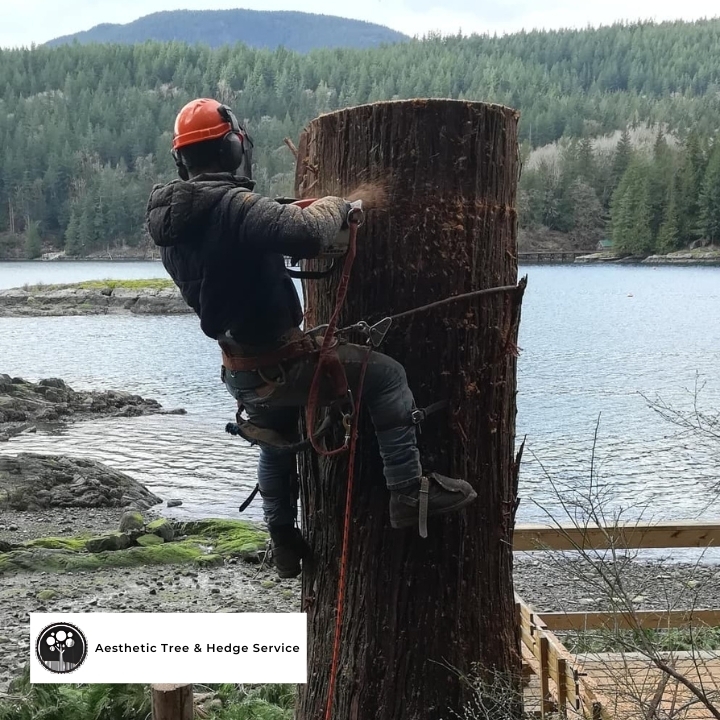
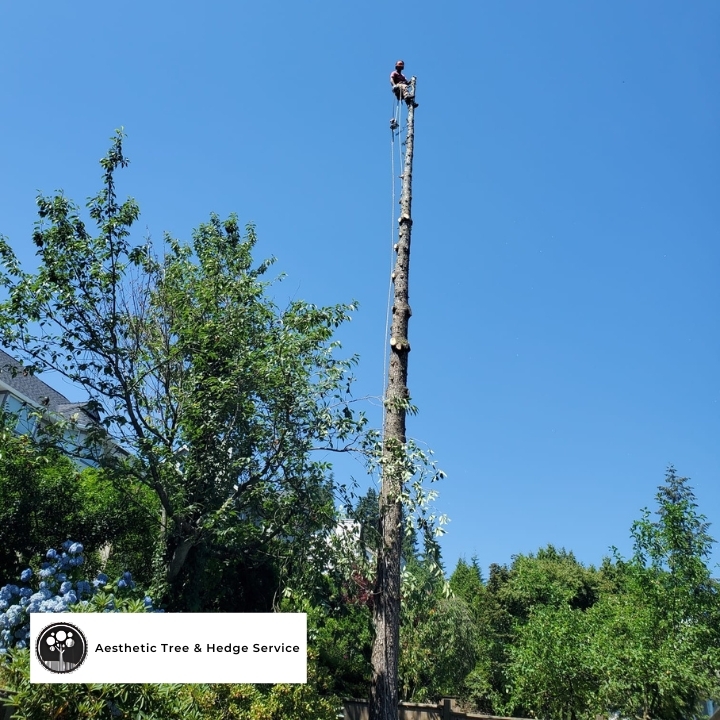
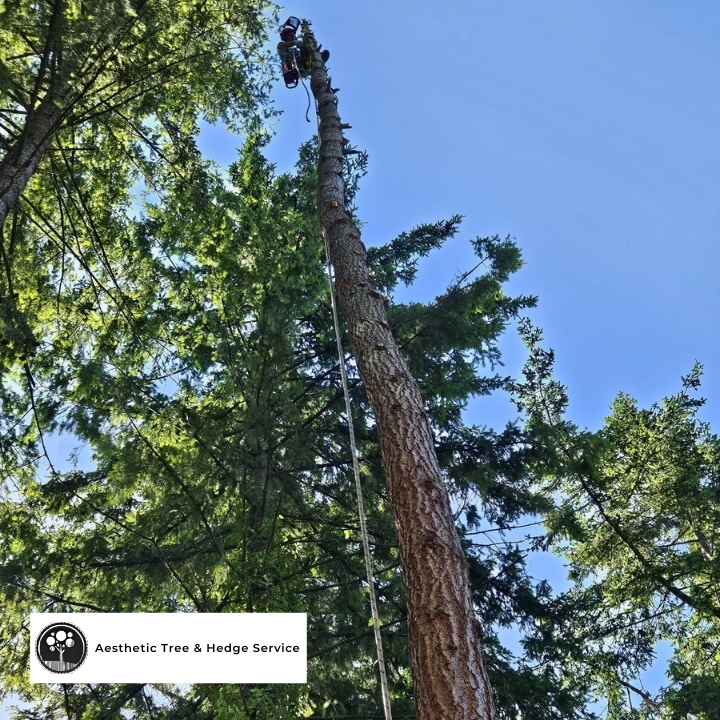
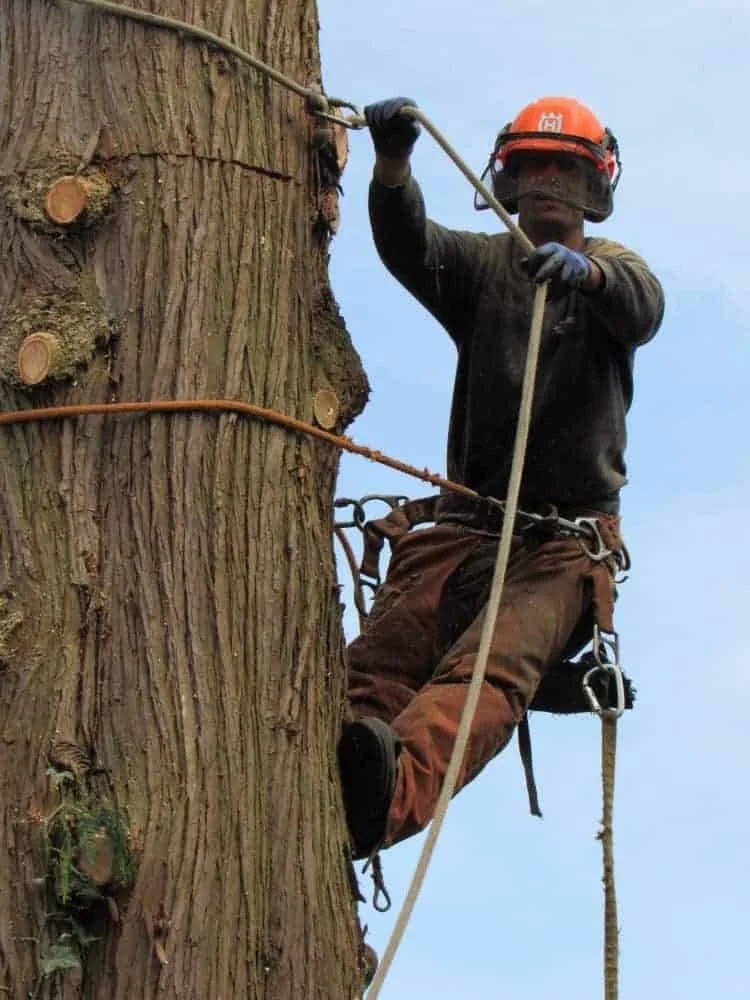
Dense urban lots with limited access. The standard Vancouver lot is 33 feet (10 metres) wide on a 120-foot (36.5-metre) deep parcel. Many properties have been subdivided further, and laneways, garages, fences, and neighbouring structures leave very little room for equipment staging or safe felling. The majority of Vancouver tree removals require sectional dismantling: climbing the tree and removing it in pieces from the top down, lowering each section on ropes to a controlled drop zone. Crane-assisted removals are used on properties where road access permits crane setup, which significantly reduces time on-site and risk to surrounding structures.
Aging sewer and water infrastructure. Vancouver's sewer system includes clay and concrete pipes installed as early as the 1900s. Tree roots, particularly from Bigleaf Maples, willows, and poplars, aggressively penetrate aging sewer laterals and storm drains. Root intrusion into sewer lines is one of the most common reasons Vancouver homeowners seek tree removal. Our arborist reports document root proximity to underground infrastructure when relevant to the removal rationale.
BC Hydro and utility line coordination. Vancouver's overhead power distribution network runs through virtually every residential neighbourhood. Trees growing into or near energized lines require coordination with BC Hydro for de-energization or line protection before removal or pruning can begin. Our arborists hold utility arborist qualifications and coordinate directly with BC Hydro when required.
Heritage tree considerations. Vancouver maintains records of significant trees, and some of the city's oldest and largest specimens, particularly in Shaughnessy, Kerrisdale, and around major parks, are subject to additional protections. Heritage-designated trees may require a higher standard of justification for removal and are assessed on a case-by-case basis by City arborists.
Nesting bird season restrictions. Under the federal Migratory Birds Convention Act, it is illegal to disturb active bird nests. In the Vancouver region, the nesting season runs from approximately March 15 to August 15. During this period, our arborists conduct a pre-work nesting survey before beginning any tree removal or major pruning. If an active nest is found, the work must be postponed until the nesting cycle is complete. This is a legal requirement, not a discretionary guideline, and failure to comply carries federal penalties.
Strata and multi-family property coordination. A significant proportion of Vancouver properties are strata developments, duplexes, or multi-family buildings. Tree work on strata common property requires strata council authorization, and we work with property managers and strata councils to ensure all approvals are in place before work begins.
Which Vancouver Neighbourhoods Do We Serve?
We serve every neighbourhood in the City of Vancouver. Our crews work across the following areas daily:
- Kitsilano — Established residential area with mature street trees, backyard fruit trees, and a mix of ornamental and native species on compact lots.
- Kerrisdale — Tree-lined streets with large elms, chestnuts, and Japanese maples on generous lots. One of our busiest neighbourhoods for pruning and hedge maintenance.
- Shaughnessy — Vancouver's premier estate neighbourhood, featuring some of the city's largest and oldest trees, including heritage Douglas Firs and copper beeches on expansive lots. Crane-assisted removals are common due to tree size.
- Dunbar-Southlands — Large lots on the western edge of the city, with mature native conifers and a semi-rural character in the Southlands area. Horse properties in Southlands have unique tree and fencing considerations.
- Point Grey — Elevated neighbourhood with ocean views, where view pruning and storm-damage response are frequent service requests.
- West Point Grey — Residential area adjacent to Pacific Spirit Regional Park, with properties bordering mature forest and high exposure to windthrow risk.
- Arbutus Ridge — Mid-city neighbourhood with established gardens and mature ornamental plantings, including many Japanese maples and flowering cherries.
- South Granville — Dense mix of residential and commercial properties with street trees and backyard canopy management needs.
- Oakridge — Undergoing significant redevelopment, with many properties requiring tree assessments, arborist reports for development permits, and pre-construction tree protection plans.
- Marpole — Southern Vancouver neighbourhood with older housing stock, mature street trees, and frequent sewer-line root intrusion issues.
- Riley Park — Central residential area around Queen Elizabeth Park, with a mix of heritage and newer plantings.
- Mount Pleasant — Densely developed neighbourhood where tight lot access and proximity to neighbouring structures make every removal a technical challenge.
- Fairview — Mix of residential towers, walk-ups, and older homes. Strata tree management and boulevard tree issues are common.
- South Cambie — Quiet residential area near Queen Elizabeth Park with large lots and mature trees.
- Sunset — Diverse residential neighbourhood with active garden culture and frequent fruit tree pruning and removal requests.
- Victoria-Fraserview — Eastern Vancouver neighbourhood with larger lots and mature canopy, including many Bigleaf Maples and Douglas Firs.
- Killarney — Southeast corner of Vancouver, with newer housing stock and a mix of ornamental and established trees.
- Collingwood — Residential area with a growing number of redevelopment projects requiring arborist reports and tree protection plans.
- Hastings-Sunrise — East Vancouver neighbourhood with wide boulevards, mature street cherry trees, and active community gardening culture.
- Grandview-Woodland — Dense residential area with large Bigleaf Maples, cottonwoods, and aging fruit trees on compact lots.
- Strathcona — Vancouver's oldest residential neighbourhood, with heritage trees, community gardens, and unique lot configurations.
- Downtown — Commercial core with street tree management, parkade-level tree installations, and strata-managed landscaping.
- West End — One of the most densely populated neighbourhoods in Canada, with towering deciduous street trees and limited access for equipment.
- Yaletown — Former warehouse district with newer landscaping, container plantings, and boulevard tree maintenance.
- Cedar Cottage — Central east-side neighbourhood with established residential lots and a mix of native and ornamental trees.
- Kensington-Cedar Cottage — Large residential area between Main Street and Knight Street, with mature cherry-lined streets and backyard fruit orchards.
No matter which Vancouver neighbourhood you are in, we can provide a free on-site estimate within 48 hours.
What Services Does Aesthetic Tree Provide in Vancouver?
We offer a complete range of professional arborist and tree care services across the City of Vancouver:
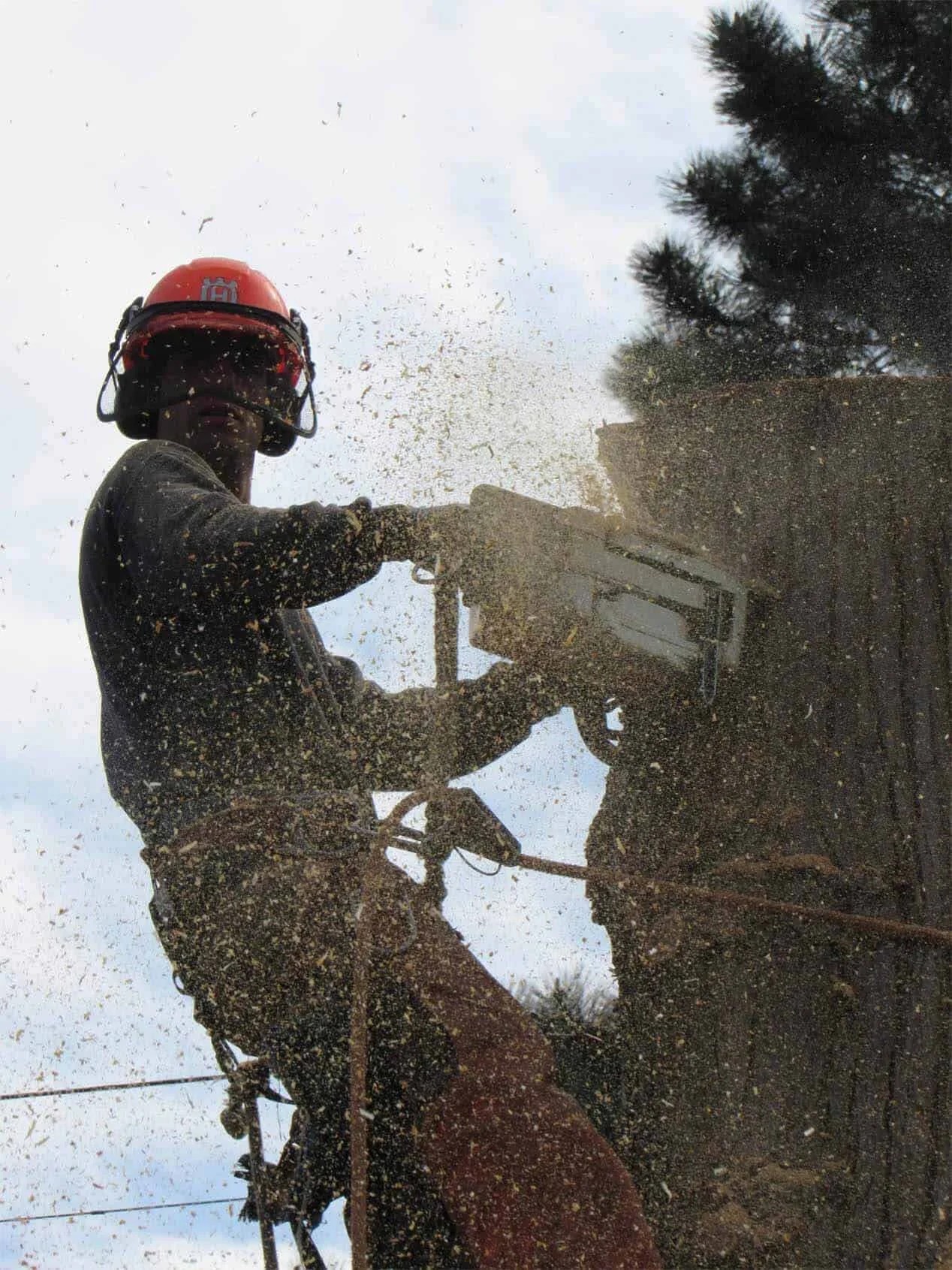
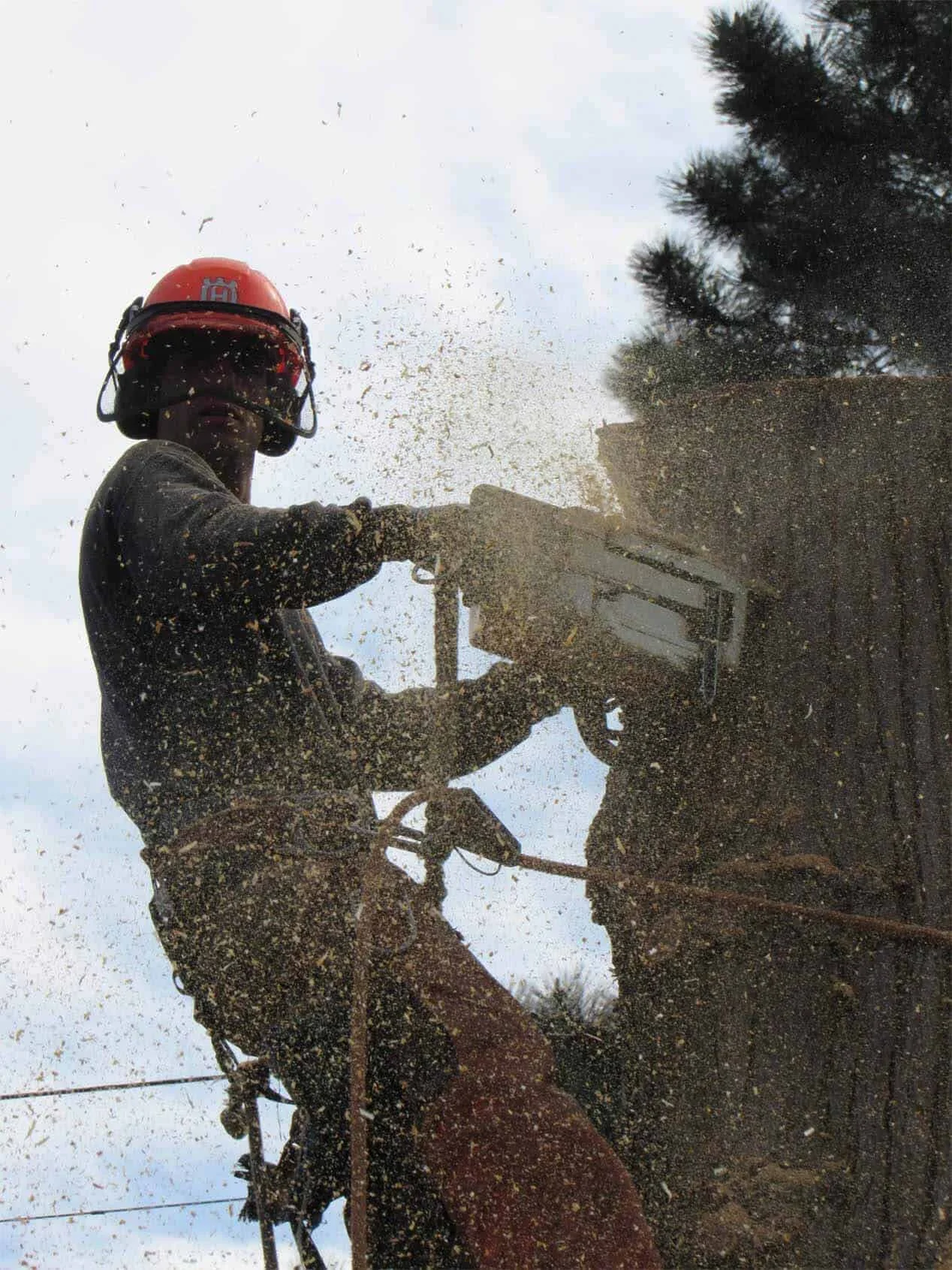
Tree Removal. Safe removal of trees of all sizes, from small ornamental trees to large conifers exceeding 30 metres. Every removal includes sectional dismantling or felling (depending on site conditions), full branch chipping, trunk removal, and complete site cleanup. For properties with tight access, we use crane-assisted removal when road conditions permit.
Tree Pruning and Cutting. ISA-standard pruning services including crown thinning, crown reduction, deadwood removal, structural pruning for young trees, and clearance pruning from structures and utility lines. All pruning follows ANSI A300 standards. We never top trees. Topping is harmful, creates long-term structural hazards, and is contrary to professional arboricultural practice.
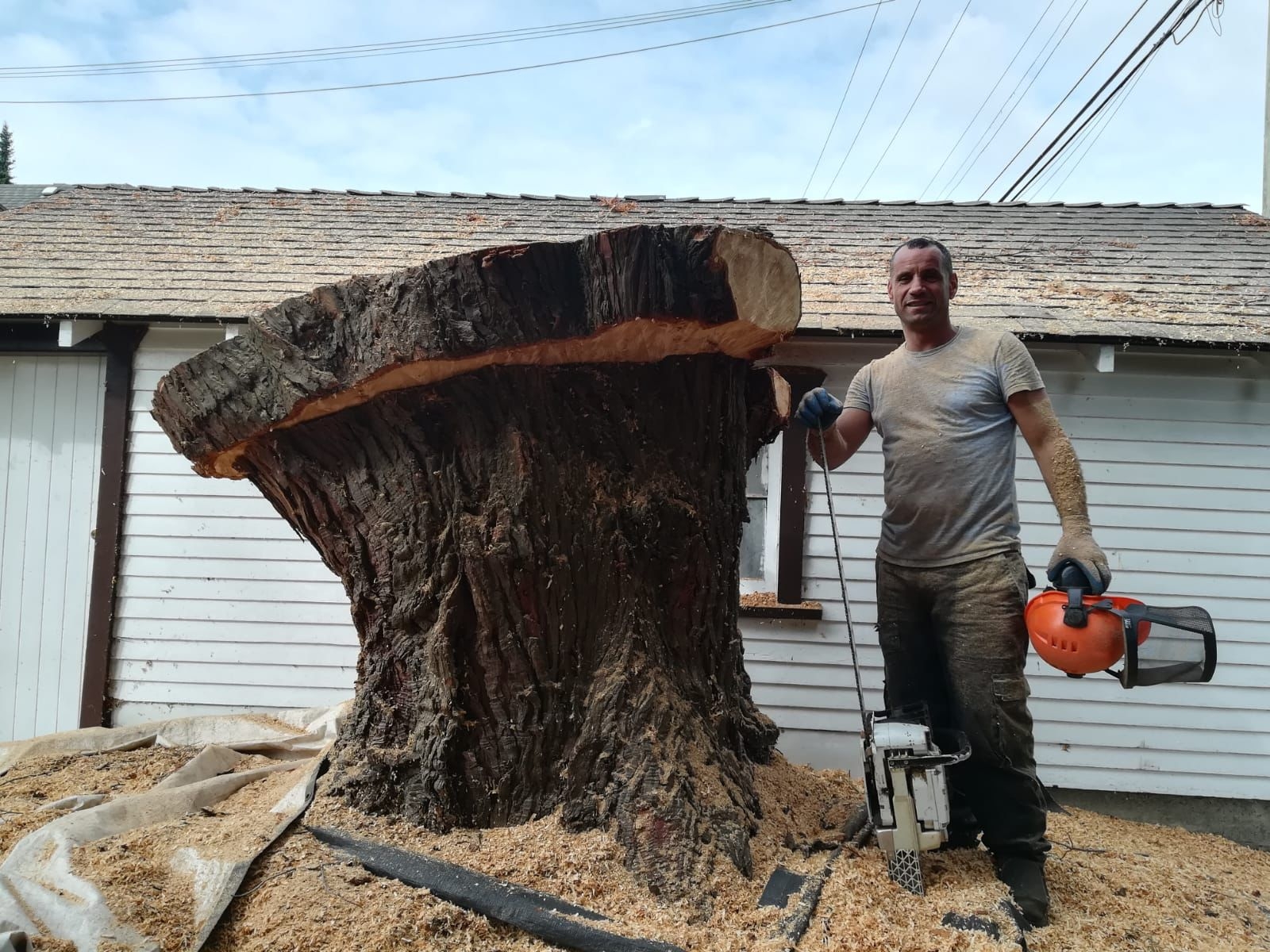
Stump Grinding. Mechanical stump removal using carbide-tipped grinding wheels that chip the stump and major surface roots to 15 to 30 cm below grade. We use compact tracked grinders for backyard access through standard 36-inch gates. Typical costs range from $150 to $500 per stump depending on size and access.
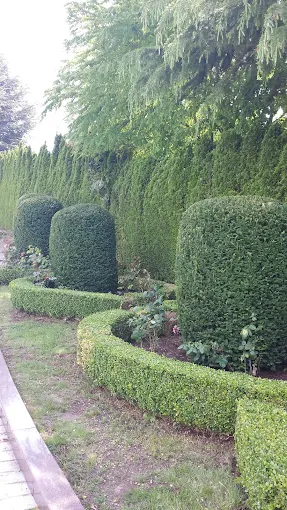
Hedge Trimming. Professional maintenance for all common Vancouver hedge species, including Western Red Cedar, English Laurel, Portuguese Laurel, Photinia, Boxwood, and Yew. We provide one-time, annual, and semi-annual hedge trimming programs for residential and commercial properties.
Arborist Reports. Professional tree assessments prepared by our ISA-certified arborists for tree removal permits, development permit applications, TRAQ risk assessments, real estate transactions, insurance claims, and neighbour disputes. Our reports are accepted by the City of Vancouver planning and permits department.
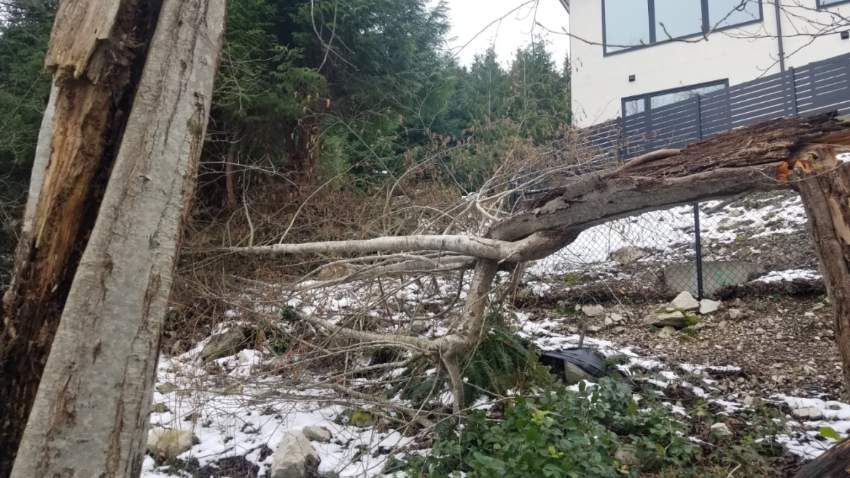
Emergency 24/7 Tree Service. Storm-damaged, fallen, or hazardous trees cannot wait for regular business hours. We provide 24/7 emergency response across Vancouver for trees that have fallen on structures, vehicles, or power lines, or that are in imminent danger of failure. Emergency service carries a surcharge of 30% to 50% depending on conditions and timing. Call (604) 721-7370 for immediate emergency assistance.
Frequently Asked Questions
How much does tree removal cost in Vancouver?
Tree removal costs in Vancouver depend on the tree's size, species, location on the property, and access conditions. Typical ranges for 2025-2026 are $300 to $600 for small trees under 6 metres, $600 to $1,500 for medium trees between 6 and 12 metres, $1,500 to $3,500 for large trees between 12 and 18 metres, and $3,500 to $10,000+ for very large or complex removals over 18 metres. These ranges do not include stump grinding or the municipal permit fee. We provide free on-site estimates for all Vancouver properties.
Do I need a permit to remove a tree in Vancouver?
Yes. Under the City of Vancouver's Protection of Trees By-law 9958, a permit is required to remove any tree with a trunk diameter of 20 cm or more measured at 1.4 metres above the base. The permit application requires an arborist report, a site plan, and a replacement tree plan or cash-in-lieu payment. Aesthetic Tree handles the full permit application process on your behalf, from the arborist assessment through to the submission.
How long does a Vancouver tree removal permit take?
The City of Vancouver typically processes tree removal permit applications within 2 to 4 weeks. During peak application periods in spring and early summer, processing may take longer. We recommend starting the permit process as early as possible, particularly if your tree removal is connected to a construction or renovation timeline. Permits are valid for 12 months once issued.
Can I trim my neighbour's tree branches that hang over my property in Vancouver?
In British Columbia, property owners have the common-law right to trim branches and roots that cross their property line, up to the property boundary. However, you cannot enter your neighbour's property to do so, and you cannot trim in a way that kills or seriously damages the tree. If the tree is protected under By-law 9958, significant pruning or root cutting may require municipal approval. We recommend having an arborist assess the situation before cutting, particularly for large branches or when the tree's health could be affected. An arborist report can also serve as documentation if a neighbour dispute escalates.
What happens if I remove a tree without a permit in Vancouver?
Removing a protected tree without a permit is a bylaw offence under By-law 9958. Fines range from $1,000 to $20,000 per tree depending on the species, size, and circumstances. The City may also require you to plant replacement trees at a higher ratio than the standard permit would have required, or pay an increased cash-in-lieu amount. In serious cases, the City has pursued enforcement action through the courts. The permit process is straightforward and relatively affordable compared to the potential penalties, and Aesthetic Tree manages the entire process for our clients.
Does Aesthetic Tree offer emergency tree removal in Vancouver?
Yes. We provide 24/7 emergency tree removal and storm damage response across all Vancouver neighbourhoods. If a tree has fallen on your home, vehicle, fence, or power line, or if a damaged tree appears to be in imminent danger of failure, call (604) 721-7370 immediately. Our emergency crews are equipped for night work, utility-line coordination with BC Hydro, and structural protection. Emergency service is available outside regular business hours and carries a surcharge of 30% to 50% depending on timing and conditions.
What We Do
Services in Vancouver
Our Work
Tree Care in Vancouver

Why Choose Us
Why Vancouver Trusts Us
Over 20 years of certified expertise, transparent pricing, and a 5.0-star Google rating make us Vancouver’s preferred tree care provider.
WCB Registered
Fully insured and WCB-compliant. Your property is protected on every job.
ISA Certified
Our arborists hold ISA credentials — the gold standard in professional tree care.
Best Prices
Transparent, competitive pricing with free on-site estimates. No hidden fees.
Service Areas
Serving Greater Vancouver
Beyond Vancouver, our ISA-certified arborists provide professional tree care across the entire Lower Mainland.
View all service areasNeed Tree Service
in Vancouver?
Book your free consultation with our ISA-certified arborists today. No obligation, no pressure — just honest advice from professionals who genuinely love tree care.