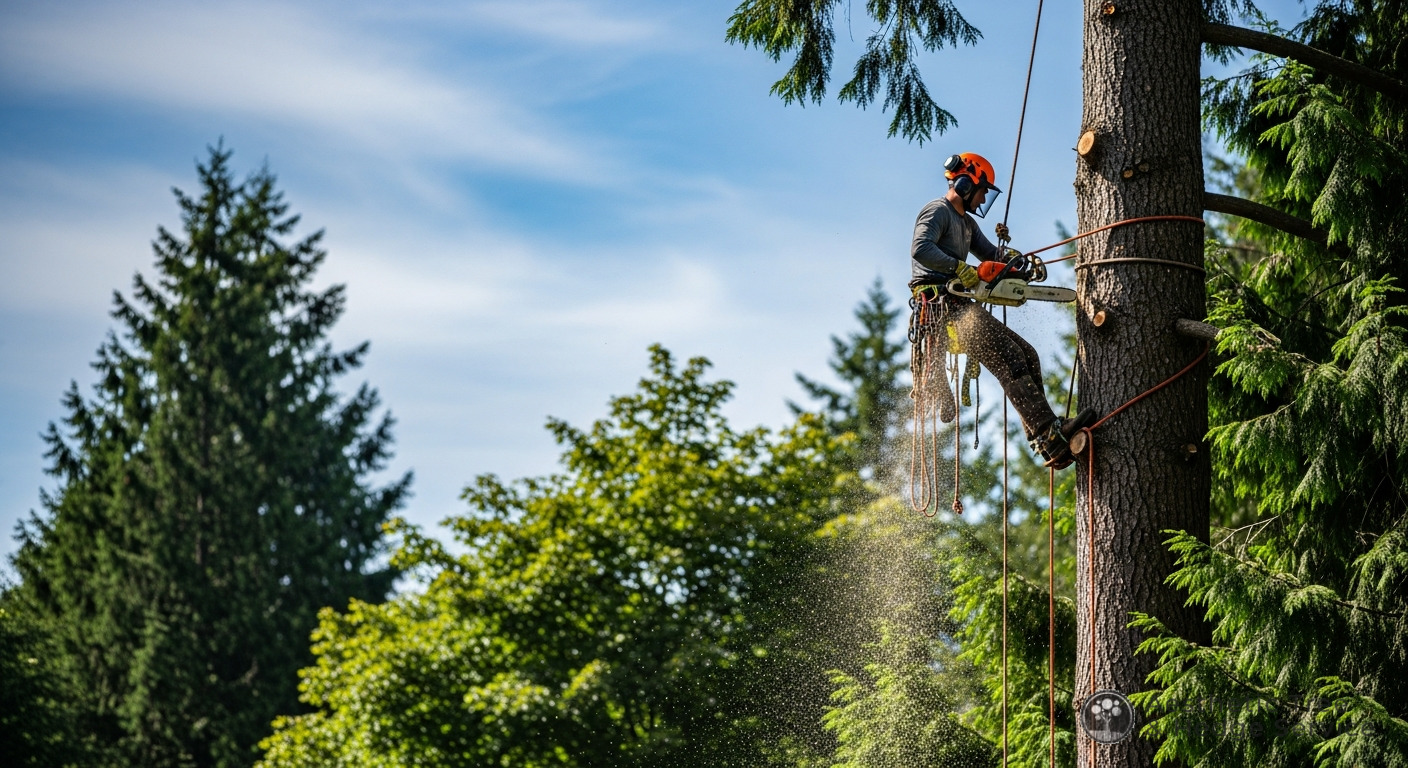
Tree Cutting Vancouver — ISA-Certified Arborists
Structural pruning, crown reduction, and selective tree cutting across Greater Vancouver. ISA-certified arborists who follow ANSI A300 standards — never topping, never lion-tailing.
At a Glance
What You Need to Know
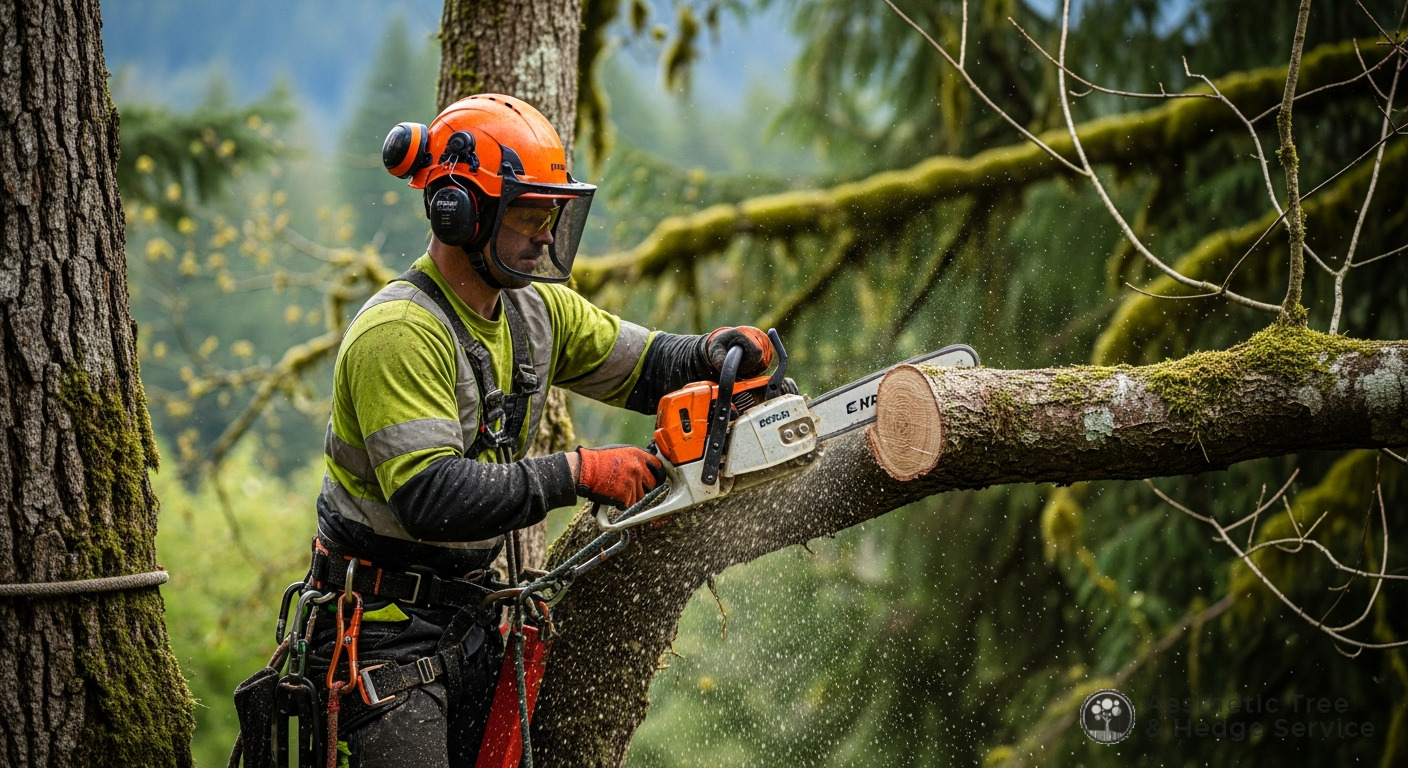
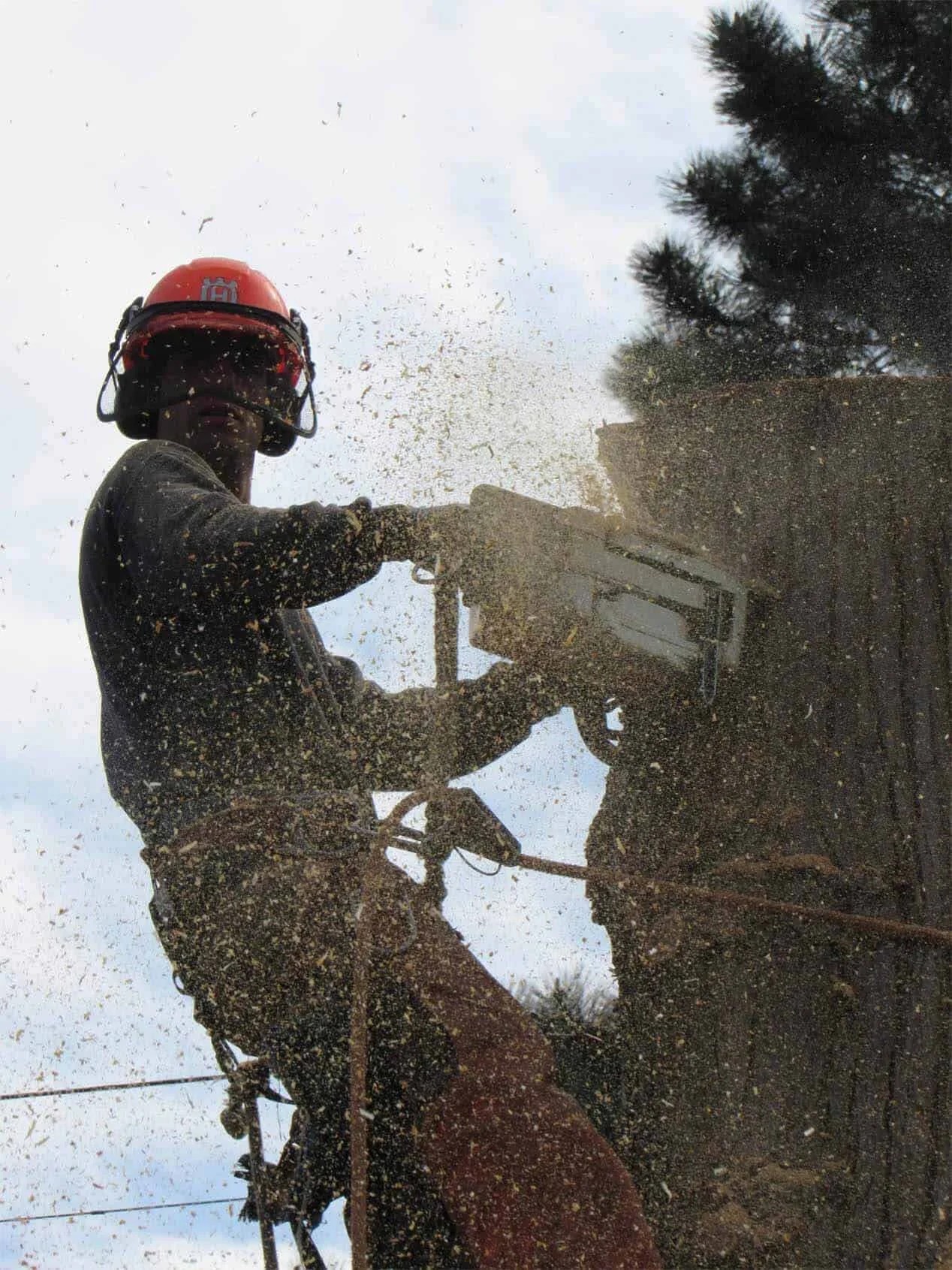
Tree pruning in Vancouver is where a tree's long-term health is won or lost. Aesthetic Tree's ISA-certified arborists handle crown cleaning, crown thinning, crown reduction, and structural pruning of young trees — plus the selective tree cutting that keeps mature canopies clear of roofs, gutters, and power lines. Every cut follows ANSI A300 pruning standards and is made at the branch collar, never flush and never as a stub. We work the full Greater Vancouver canopy: Douglas fir, Western red cedar, bigleaf maple, fruit trees, and ornamentals. Most residential pruning jobs are completed in a single visit.
Investment
$300 – $1,500+
Availability
Free assessment within 1-2 weeks
01
What Does Professional Tree Pruning in Vancouver Include?
Tree pruning Vancouver homeowners can rely on is far more than cutting back whatever looks too long. Before our crew makes a single cut, an ISA-certified arborist reads the tree — its species, its growth habit, its structural defects, and the targets beneath it. From that assessment we choose the right pruning type: crown cleaning to remove dead, diseased, and broken wood; crown thinning to open the canopy for light and wind; crown reduction to shorten a tree away from a roof or power line; or structural pruning to correct co-dominant stems and weak unions while a tree is still young.
Tree cutting Vancouver crews do well is precise, not aggressive. Every cut we make is placed just outside the branch collar — the slightly swollen ring of tissue where a branch meets the trunk — so the wound can seal naturally. We never leave stubs, we never cut flush to the trunk, and we never top a tree. Topping and lion-tailing are the two practices that ruin more Vancouver trees than storms do, and ISA-certified arborists are trained specifically not to do them.
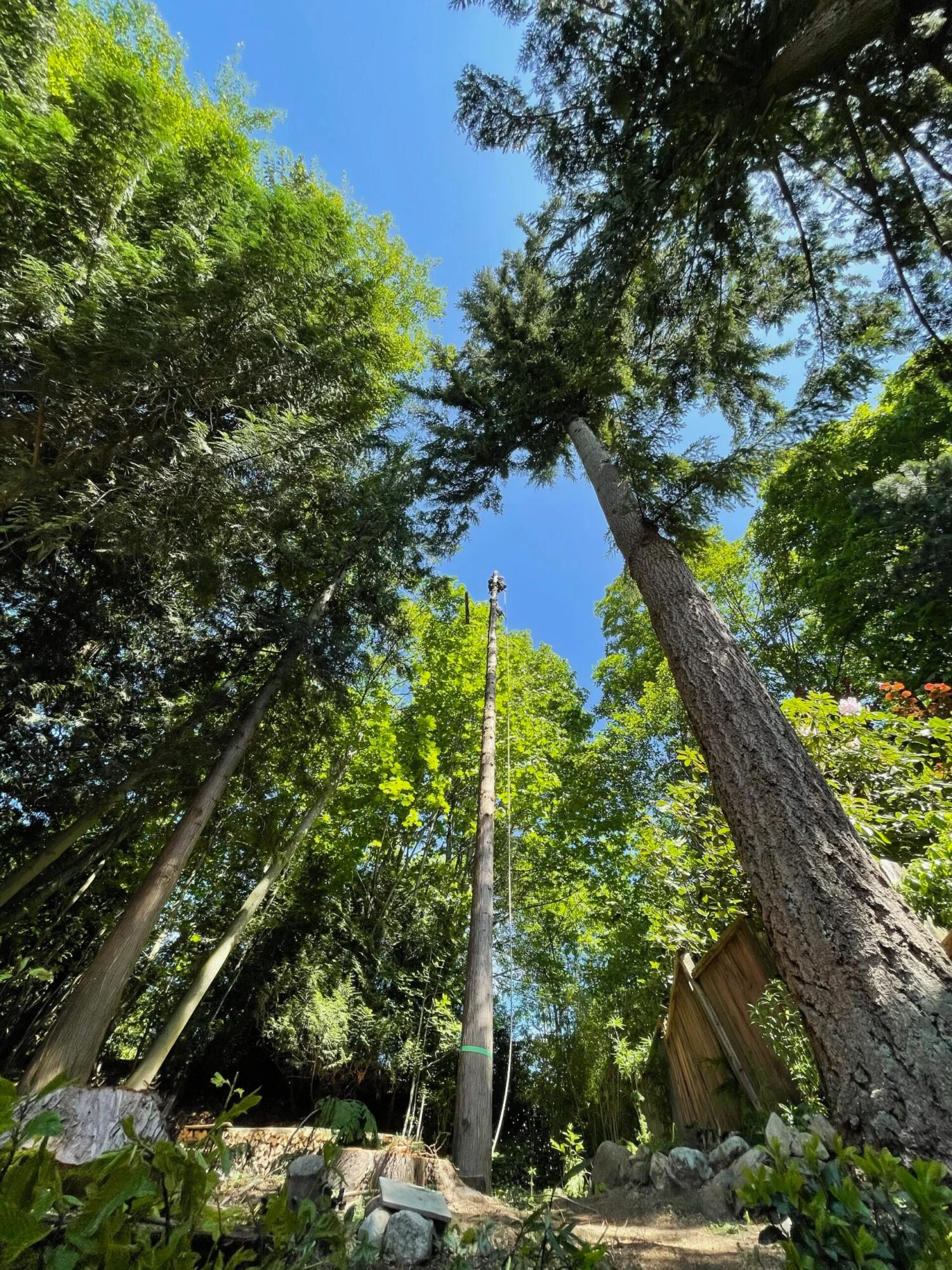
Vancouver's mix of conifers and broadleaf trees each demand a different hand. A Douglas fir or Western red cedar is pruned for deadwood and clearance, not shape. A bigleaf maple needs careful weight reduction on over-extended limbs. Fruit trees are pruned for structure and airflow on a seasonal cycle. Our crews carry the species knowledge to prune each one correctly rather than applying one generic cut to the whole yard — and where a tree has been topped or storm-damaged in the past, tree crown restoration rebuilds its structure over several seasons.
Not sure if your tree needs a permit?
When Is the Best Time to Prune Trees in Vancouver?
For most trees in Vancouver, the ideal pruning window is the dormant season — late fall through early spring, roughly November to March. With the leaves down, the arborist can see the branch architecture clearly, the tree is not spending energy on active growth, and the risk of spreading disease through fresh cuts is at its lowest. Our guide on the best time to prune trees in Vancouver covers the timing in detail. Dormant pruning also means the tree puts its spring energy into sealing the cuts and pushing healthy new growth exactly where you want it.
There are important exceptions. Dead, broken, or hazardous limbs should be cut out the moment they are spotted, in any season — a hanging limb over a driveway does not wait for winter. Flowering ornamentals such as cherry, magnolia, and dogwood are best pruned right after they finish blooming, so you do not cut off next year's flower buds. And a few species — birch and maple among them — bleed sap heavily if cut in late winter, so we prune those after the leaves are fully out.
Summer pruning has its place too. Light summer cuts slow the growth of an over-vigorous tree and are useful for fine-tuning shape once the canopy is in full leaf. What we avoid is heavy pruning in late summer and early fall, because cuts made then can push tender new growth that has no time to harden before the first Vancouver frost. Our arborists time every job to the species and to your goal as part of a seasonal tree care plan — clearance, health, structure, or sightlines.

Not sure if your tree needs a permit?
03
Why Hire an ISA-Certified Arborist Instead of a General Tree Cutter?
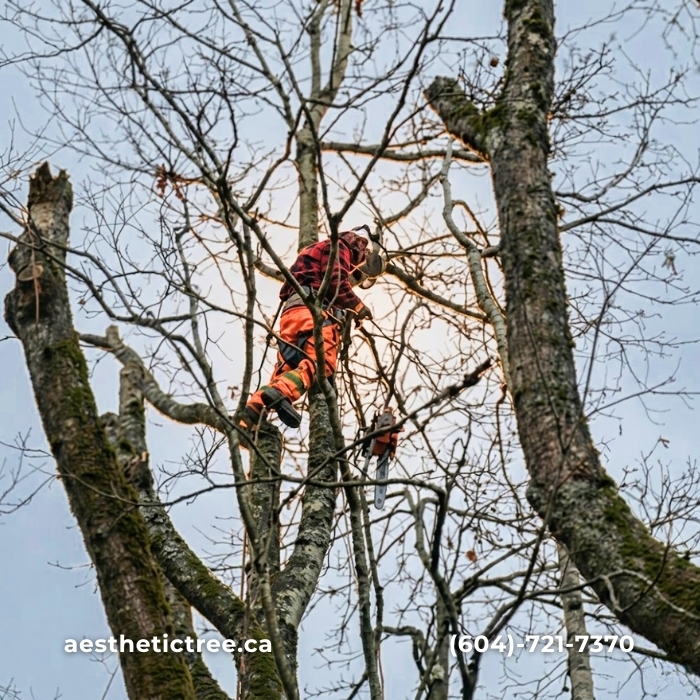
Anyone with a chainsaw and a ladder can cut a branch off a tree. Whether the tree survives that cut in good health — and whether the person doing it goes home safe — is an entirely different question. An ISA-certified arborist has passed the International Society of Arboriculture's examination on tree biology, diagnosis, and pruning practice, and is trained to make cuts that the tree can actually recover from.
The most common damage we are called in to repair on Vancouver trees comes from well-meaning but untrained tree cutting: topped trees that respond with a dense thicket of weakly-attached water sprouts, lion-tailed limbs stripped of their interior foliage so all the weight sits dangerously at the tips, and flush cuts that leave a wound the tree can never seal. By the time the homeowner sees the problem, the cheap job has become an expensive one — sometimes full tree removal is the only safe option left. If you are weighing up who to hire, our arborist near me page explains what to look for.
Pruning work also happens at height, often near power lines and over roofs. Our crews follow ANSI Z133 safety standards and WorkSafeBC regulations, carry $3M in liability insurance, and coordinate with BC Hydro for any work within 3 metres of an energized line. Hiring an ISA-certified arborist is not just about the tree — it is about who carries the risk if something goes wrong on your property.
Professional tree cutting and pruning keeps your trees healthy, structurally sound, and visually balanced. Aesthetic Tree & Hedge Services provides crown cleaning, deadwood removal, canopy thinning, structural pruning, and controlled height reduction across Vancouver. Our ISA-certified arborists follow the 25% rule — never removing more than a quarter of live canopy in a single season — and schedule all work around species-specific dormancy periods and the March 15 to August 15 nesting season. With 20+ years of experience and 100+ five-star Google reviews, we deliver results that keep your trees thriving for decades. Call (604) 721-7370 for a free estimate.
What Is the Difference Between Tree Cutting, Pruning, and Trimming?
These terms are often used interchangeably, but they describe different levels of tree care:
- Pruning is the selective removal of specific branches to improve tree health, structure, or safety. It follows ISA standards and requires knowledge of tree biology to avoid causing harm. Pruning includes crown cleaning, thinning, raising, and reduction.
- Trimming generally refers to lighter maintenance work focused on shaping and aesthetics, such as removing small branches that overhang a walkway or cutting back growth that blocks a window.
- Tree cutting in the Vancouver market typically refers to more significant branch removal, including large limb removal, crown reduction, and preparation for partial or full tree removal.
All three types of work should be performed by a certified arborist or trained tree care professional. Improper cuts — especially flush cuts, stub cuts, and topping — cause long-term damage that weakens the tree and creates future hazard risks.
What Types of Pruning Do Vancouver Trees Actually Need?
Crown Cleaning (Deadwood Removal)
Crown cleaning removes dead, dying, diseased, and broken branches from throughout the canopy. This is the most common and most important type of pruning for mature trees. Dead branches are unpredictable — they can fall in calm weather without warning. Regular crown cleaning every 3 to 5 years significantly reduces the risk of property damage and personal injury.
Crown Thinning
Thinning selectively removes live branches to reduce canopy density, allowing more light and air to penetrate the crown. This reduces wind resistance (lowering the risk of windthrow during storms), improves air circulation (reducing fungal disease pressure), and allows light to reach understory plants and lawns.
A proper thinning removes no more than 25% of the live canopy in a single session. Removing more than this triggers a stress response that can lead to excessive water sprout growth, sunscald on previously shaded bark, and overall decline.
Crown Raising
Crown raising removes lower branches to increase clearance over walkways, driveways, streets, and structures. In Vancouver, this is commonly needed when branches obstruct pedestrian sidewalks (the City requires a minimum 2.4-metre clearance) or encroach on neighbouring properties.
Crown Reduction
Crown reduction lowers the overall height and spread of a tree by cutting back to appropriate lateral branches. This is the correct alternative to topping. While topping removes the entire top of the tree with indiscriminate heading cuts, crown reduction maintains the tree's natural form and branch structure.
Topping is never acceptable. It removes the tree's food-producing canopy, triggers a flush of weakly attached water sprouts, creates large wounds that invite decay, and ultimately produces a more hazardous tree than the one you started with. The ISA, the City of Vancouver, and every credible arboricultural organization recommend crown reduction over topping in all circumstances.
Structural Pruning (Young Trees)
Structural pruning trains young trees to develop a single dominant leader and well-spaced scaffold branches. This early investment prevents the co-dominant stems and included bark that are the leading cause of tree failure in mature urban trees. For newly planted street trees and yard trees, structural pruning in years 3 through 10 is the single most effective thing a property owner can do to ensure long-term safety.
How Much Does Tree Cutting and Pruning Cost in Vancouver?
Pruning costs depend on the tree's size, species, condition, access, and the extent of work required:
- Small trees (under 6 metres): $200 to $400
- Medium trees (6 to 12 metres): $400 to $800
- Large trees (12 to 18 metres): $800 to $1,600
- Very large trees (over 18 metres): $1,600 to $3,200+
These ranges include labour, equipment, chipping of removed branches, and site cleanup. Factors that affect pricing include:
- Number of trees to be pruned (multi-tree discounts are common)
- Proximity to structures, fences, or power lines requiring technical rigging
- Whether a crane or aerial lift is needed for access
- Extent of deadwood and hazard reduction required
We provide free on-site estimates with a written scope of work detailing exactly which branches will be removed and why.
When Is the Best Time to Prune Trees in Vancouver?
The ideal pruning window depends on the species and the type of work being done:
Dormant season (November to February) is best for most deciduous trees. The tree is not actively growing, the branch structure is fully visible without leaves, and the risk of disease transmission is lower. This is the preferred window for structural pruning, crown reduction, and major deadwood removal.
Late spring to early summer is acceptable for light pruning and crown cleaning on most species, but you must schedule around the March 15 to August 15 nesting season. Under the federal Migratory Birds Convention Act, it is illegal to disturb active nests. Our arborists conduct nest surveys before beginning work during this period.
Species-specific timing:
- Fruit trees (apple, cherry, plum): Prune in late winter (January to February) before bud break for best fruit production.
- Maple trees: Prune in late summer or fall to avoid excessive sap bleeding that occurs with winter or spring pruning.
- Birch trees: Prune in late summer to early fall; birch are susceptible to bronze birch borer, and pruning wounds in spring attract the pest.
- Flowering trees (dogwood, magnolia): Prune immediately after flowering to avoid removing next year's flower buds.
- Evergreen conifers (Douglas Fir, Western Red Cedar): Can be pruned year-round, but light pruning in late spring after new growth has hardened off is ideal.
Why Should You Never Top a Tree?
Tree topping — the practice of cutting all branches back to stubs or removing the top of the tree entirely — is one of the most harmful things you can do to a tree. Despite being common in Vancouver decades ago, it is now universally condemned by arboricultural professionals. Here is why:
- Starvation. Removing the entire canopy removes the tree's ability to photosynthesize and feed itself. The tree is forced to use stored energy reserves to produce new growth.
- Weak regrowth. The water sprouts that emerge from topping cuts are attached only to the outer ring of wood, not to the structural wood of the original branch. They grow rapidly but are inherently weak and prone to failure.
- Decay entry. Large topping cuts cannot compartmentalize properly. Decay fungi colonize the exposed wood and spread into the trunk, weakening the entire tree from the inside.
- Increased hazard. Within 5 to 10 years, a topped tree is typically more hazardous than it was before topping, because its regrowth is both larger and weaker than the original branches.
- Reduced property value. A topped tree is visually disfigured and signals poor maintenance. Studies show that mature, well-maintained trees can add 10% to 20% to property value, while damaged trees reduce it.
The correct alternative is always crown reduction — selectively reducing height and spread by cutting back to appropriate lateral branches that can assume the terminal role.
Areas We Serve
We provide tree cutting and pruning services throughout Vancouver, including Arbutus Ridge, Cedar Cottage, Collingwood, Dunbar-Southlands, Fairview, Grandview-Woodland, Hastings-Sunrise, Kensington-Cedar Cottage, Kerrisdale, Killarney, Kitsilano, Marpole, Mount Pleasant, Oakridge, Riley Park, Shaughnessy, South Vancouver, Sunset, Victoria-Fraserview, West End, and West Point Grey. We also serve North Vancouver, West Vancouver, Burnaby, Coquitlam, and Port Coquitlam.
Frequently Asked Questions
How much of a tree can you cut without killing it?
The ISA recommends removing no more than 25% of a tree's live canopy in a single growing season. Exceeding this threshold triggers a stress response that can lead to excessive water sprout production, bark sunscald, root dieback, and overall decline. For severely overgrown trees that need significant reduction, the work should be staged across two to three seasons.
How much does tree pruning cost in Vancouver?
Tree pruning in Vancouver typically costs $200 to $400 for small trees under 6 metres, $400 to $800 for medium trees, $800 to $1,600 for large trees, and $1,600 to $3,200+ for very large specimens. The exact cost depends on the tree's size, species, condition, and access. Multi-tree pruning jobs usually qualify for volume discounts. Contact us for a free on-site estimate.
Do I need a permit to prune a tree in Vancouver?
Pruning generally does not require a permit under the City of Vancouver's Protection of Trees By-law (No. 9958), provided you are not removing more than 25% of the canopy and the tree is not being killed or effectively destroyed by the pruning. However, removing a tree entirely (or pruning so severely that the tree will die) requires a permit for any tree with a trunk diameter of 20 cm or more.
What is the difference between tree topping and crown reduction?
Topping removes the entire top of a tree with indiscriminate heading cuts, leaving stubs that decay and produce weakly attached water sprouts. Crown reduction selectively shortens branches by cutting back to appropriate lateral branches, maintaining the tree's natural form and structural integrity. Topping is harmful and condemned by the ISA. Crown reduction is the professional standard.
When should I prune my fruit trees in Vancouver?
Prune fruit trees in late winter, typically January to February, before bud break. This timing promotes strong spring growth and maximizes fruit production. Avoid pruning fruit trees in fall, as the wounds heal slowly during dormancy and can serve as entry points for disease.
Is it safe to prune trees near power lines myself?
No. BC Hydro requires a minimum 3-metre clearance from distribution lines for all persons and equipment. Only certified utility arborists with BC Hydro safety certification may work within this zone. Homeowners may prune branches near service wires (the line from the pole to your home) maintaining a 1-metre clearance, but for anything near distribution or transmission lines, call a professional.
When Should You Prune Trees in Vancouver? (And When Not To)
In Metro Vancouver, the optimal window for structural tree pruning is late fall through early spring — roughly November through March — when most deciduous trees are dormant. Dormant-season pruning reduces stress, limits pathogen exposure through open cuts, and allows you to clearly assess branch structure without foliage. For fruit trees, mid-winter pruning maximizes the following season’s yield.
Certain species in Vancouver have timing-specific rules. Cherry trees (Prunus spp.) should not be pruned between April and September due to elevated risk of cytospora canker infection through open cuts during the growing season. Birch trees bleed heavily if pruned in early spring — wait until leaves are fully out. Western red cedar can be pruned year-round but benefits from fall pruning before winter rains.
The City of Vancouver has no seasonal pruning restriction for private trees. However, the Migratory Birds Convention Act prohibits disturbing active bird nests — if nest activity is found during pruning, work on that section must pause until the nest is no longer active, typically 4 to 6 weeks. Our ISA-certified arborists conduct a pre-pruning nest check on every job.
ISA Pruning Standards: How We Do It Right
Aesthetic Tree follows ISA Best Management Practices for Pruning, the industry gold standard developed by the International Society of Arboriculture. Every pruning cut is made to the branch collar — the slightly raised ridge where the branch meets the trunk or parent branch — leaving the collar intact to facilitate wound closure. Flush cuts that remove the collar, and ‘hat-rack’ cuts that leave branch stubs, cause long-term decay and are never used.
We use four primary pruning objectives, always discussed with the property owner before work begins: (1) Crown cleaning — removing dead, diseased, and crossing branches; (2) Crown thinning — selectively reducing interior branch density for light penetration and air circulation; (3) Crown raising — removing lower branches to provide clearance for structures or pedestrians; (4) Crown reduction — reducing the overall height or spread to manage a tree’s size. Each objective uses different cut placement and removal ratios.
No more than 25% of the live crown should be removed in a single season — a limit set by ISA guidelines to protect tree health. Removing more than this creates a stress response that can cause rapid epicormic shoot growth, structural weakness, and long-term decline. If a tree requires significant size reduction, we schedule the work over 2 to 3 seasons to keep the tree healthy.
FAQ: How often should trees be pruned in Vancouver?
Most mature trees in Vancouver benefit from a structural pruning assessment every 3 to 5 years. Young trees (under 15 years) should be pruned annually or bi-annually during their formative years to establish good structure. Fruit trees and ornamental trees may need annual pruning for optimal performance. Fast-growing species like cottonwood and maple may need more frequent attention. Our ISA-certified arborists can assess your trees and recommend the right schedule.
FAQ: What is the difference between tree pruning and tree topping?
Tree pruning removes specific branches according to ISA Best Management Practices, making cuts at branch collars or lateral branches to maintain the tree’s natural form and health. Tree topping — cutting the central leader or main branches back to stubs — is widely condemned by arborists and causes decay columns, structural weakness, and vigorous but weakly attached epicormic regrowth. The City of Vancouver’s urban forestry guidelines explicitly discourage topping. Aesthetic Tree does not perform topping cuts under any circumstances.
Need a Tree Pruned or Cut Back in Vancouver?
Get a free, no-obligation assessment from our ISA-certified arborists. We prune for health, structure, and clearance — and leave your property spotless.
How It Works
Our Process —
Start to Finish
From your first call to final cleanup, every step is handled by certified professionals with clear communication throughout.
Start With a Free QuoteFree Consultation
Our ISA-certified arborist visits your property, assesses the situation, and provides a detailed written quote — no phone estimates.
Permit & Planning
We handle all municipal permits, coordinate with BC Hydro if needed, and create a detailed work plan for safe execution.
Professional Execution
Our crew executes the work following ANSI Z133 safety standards. Most residential jobs are completed in a single day.
Complete Cleanup
Debris removal, site cleanup, and final walkthrough. Your property is left cleaner than we found it — guaranteed.
Our Work
See It In Action
Common Questions
FAQ
Everything you need to know about our tree pruning vancouver services.
Explore More
Related Services
Serving All of Greater Vancouver
Need Tree Pruning Vancouver in Vancouver?
Get a free, no-obligation estimate from our ISA-certified arborists. We serve all of Greater Vancouver with professional, insured tree care.