Years in Burnaby
Trees Serviced
Liability Insurance
Google Rating
Aesthetic Tree & Hedge Services provides professional tree removal, pruning, stump grinding, hedge trimming, and arborist reports across the City of Burnaby. From the forested slopes of Burnaby Mountain to the densely developed corridors of Metrotown and Brentwood, our ISA-certified arborists understand Burnaby's unique combination of protected urban forest, aggressive development pressure, and a tree bylaw with one of the lowest protection thresholds in Metro Vancouver. Burnaby's Tree Bylaw No. 14338 requires a permit for any tree with a trunk circumference of 50 cm or more at 1.4 m height — roughly 16 cm in diameter — meaning far more trees are protected here than in neighbouring cities. With 20+ years of experience, 100+ five-star Google reviews, and deep knowledge of Burnaby's municipal permit process, we are a trusted tree service provider across every Burnaby neighbourhood. Call (604) 721-7370 for a free, no-obligation estimate.
What Tree Species Are Most Common in Burnaby?
Burnaby's urban forest spans a remarkable range of environments, from the high-elevation second-growth stands of Burnaby Mountain and the 220-acre old-growth remnants of Central Park to the riparian corridors along Still Creek and the Brunette River. The city's mild Pacific climate, moderate rainfall, and varied topography support a diverse mix of native and naturalized species. The trees our arborists work with most frequently across Burnaby include:
- Douglas Fir (Pseudotsuga menziesii) — The dominant native conifer across Burnaby's higher-elevation areas, Douglas Firs are especially prominent on Burnaby Mountain, throughout Central Park, and in the older residential neighbourhoods of Capitol Hill and Forest Hills. Mature specimens regularly reach 30 to 50 metres in height, and many of the largest trees in Central Park are Douglas Firs that predate the park's formal establishment. Their height and lateral root systems make them vulnerable to windthrow when surrounding trees are removed for development.
- Western Red Cedar (Thuja plicata) — Found throughout Burnaby on both residential properties and in park settings, Western Red Cedars thrive in the moist conditions along creek corridors and in the shaded understory of Central Park and Deer Lake Park. Large cedars develop heavy, spreading canopies that can shade out gardens and overload structures. Cedars are also Burnaby's most popular hedge species.
- Western Hemlock (Tsuga heterophylla) — Common in shaded, moist areas on Burnaby Mountain and in the understory of Central Park's older forest stands. Hemlocks grow rapidly in Burnaby's climate and frequently require crown thinning to manage canopy density on residential lots.
- Bigleaf Maple (Acer macrophyllum) — The largest native maple in North America, Bigleaf Maples are common throughout Burnaby's lower-elevation neighbourhoods including Edmonds, South Slope, and Burnaby Heights. They produce massive spreading canopies with heavy autumn leaf drop, and their aggressive root systems can lift sidewalks, driveways, and affect foundations.
- Red Alder (Alnus rubra) — A fast-growing pioneer species found along the Still Creek corridor, the Brunette River watershed, and on disturbed sites throughout the city. Alders are relatively short-lived at 40 to 60 years, and many specimens planted or naturalized during the post-war housing boom are now declining and requiring removal.
- Black Cottonwood (Populus trichocarpa) — The largest native hardwood in British Columbia, Black Cottonwoods grow along the Still Creek and Brunette River riparian areas. They can reach 30+ metres in height and produce prolific cotton-like seed dispersal in late spring. Their brittle wood makes them prone to branch failure during storms, and their aggressive root systems seek out water lines and drainage infrastructure.
Understanding the growth habits, failure modes, and pruning tolerances of each species is essential for safe, effective tree management across Burnaby's diverse landscape.
How Does the Burnaby Tree Bylaw Work?
The City of Burnaby regulates tree removal through Tree Bylaw No. 14338, which applies to all trees on private property within city limits. Burnaby's bylaw has one of the most protective thresholds in Metro Vancouver: a permit is required before removing any tree with a trunk circumference of 50 cm or more measured at 1.4 metres above the base. This translates to a trunk diameter of approximately 16 cm — significantly smaller than the 20 cm threshold in Vancouver or similar thresholds in neighbouring municipalities. The practical effect is that a greater number of trees on Burnaby properties are protected and require permits before removal.
What the permit application requires:
- A completed Tree Removal Permit application signed by the registered property owner
- A site plan showing the tree's location relative to buildings, property lines, and neighbouring structures
- An arborist report from an ISA-certified or registered consulting arborist documenting the tree's species, size, health, structural condition, and the rationale for removal
- A replacement tree plan or payment of the City's required tree replacement security deposit
Processing time is typically 2 to 4 weeks. During peak season (spring and early summer), processing times can extend further. Permits are valid for a limited period once issued, so property owners should plan removal work accordingly.
Replacement tree requirements: The City of Burnaby requires replacement tree planting for every permitted removal. The number and size of replacement trees depends on the diameter and species of the removed tree. When on-site planting is not feasible due to lot size or existing tree coverage, cash-in-lieu payments may be accepted. Property owners should confirm current replacement ratios and fees directly with the City of Burnaby's Planning Department, as requirements are updated periodically.
Penalties for non-compliance: Removing a protected tree without a permit can result in significant fines and mandatory replacement planting at higher ratios. The City actively enforces its tree bylaw, and violations reported by neighbours or detected during building inspections can lead to enforcement action.
Development-related tree protection: Given Burnaby's rapid densification — particularly along the Brentwood, Metrotown, and Lougheed Town Centre corridors — development projects require comprehensive Tree Management Plans prepared by a certified arborist. These plans document all trees on the development site, specify which trees will be retained and which must be removed, and outline tree protection measures during construction.
Aesthetic Tree handles the full permit process for Burnaby property owners, from the initial arborist assessment through to the permit application submission and replacement tree planting coordination.
What Makes Tree Care in Burnaby Unique?
Burnaby's geography and pace of development create tree care conditions that differ from every other municipality in Metro Vancouver. Several factors shape how our arborists approach work across the city:
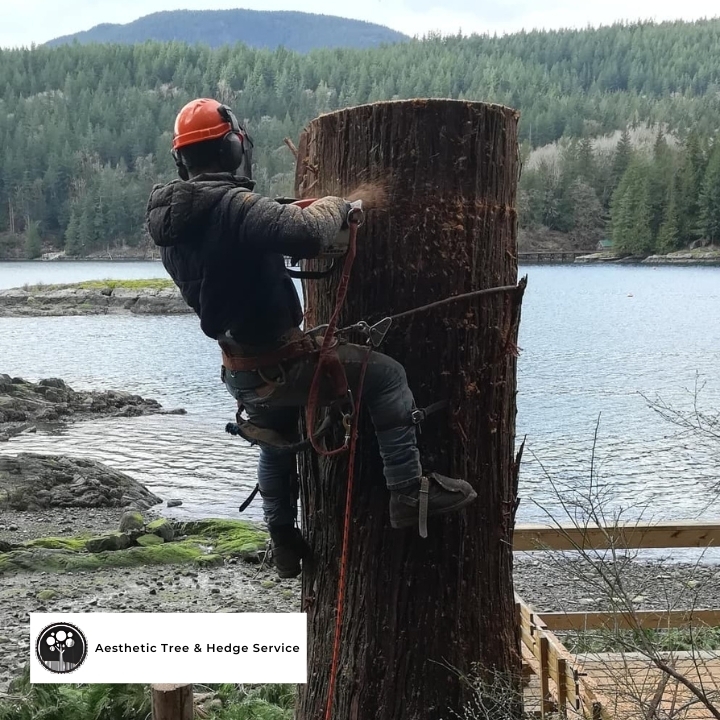
A mix of steep terrain and flat development zones. Burnaby's topography ranges from the 370-metre summit of Burnaby Mountain in the northeast to the flat industrial and residential areas around Big Bend and Edmonds at the Fraser River. Capitol Hill, Burnaby Heights, and the Burnaby Mountain residential areas sit on steep grades that require sectional tree removal with rigging, while flat areas like Metrotown and Edmonds allow standard equipment access. This means our crews need to be prepared for both mountain-style climbing and rigging work and conventional bucket-truck operations within the same city.
Heavy development pressure along SkyTrain corridors. The Brentwood, Metrotown, and Lougheed Town Centre areas are undergoing some of the most intense densification in the Lower Mainland. Tower cranes and construction hoarding line the streets, and nearly every development project triggers the tree bylaw. Trees on lots slated for redevelopment require arborist reports and Tree Management Plans. Retained trees on adjacent properties must be protected during construction. Our arborists prepare reports for developers, builders, and homeowners navigating this process daily.
Central Park's old-growth remnants and ecological significance. Central Park, at approximately 220 acres, is one of the largest urban parks in Metro Vancouver and contains stands of mature and old-growth Douglas Fir, Western Red Cedar, and Western Hemlock. Trees on properties bordering Central Park are often taller and heavier than typical urban trees because they grew in forest-edge conditions. When these trees require maintenance or removal, the work demands careful planning to avoid damage to the park boundary and surrounding properties.
Deer Lake Park heritage landscape. The Deer Lake area around the Burnaby Art Gallery and Shadbolt Centre for the Arts features significant mature trees within a heritage landscape setting. Properties in the Deer Lake neighbourhood border this ecologically and culturally significant area, and tree work must account for proximity to the park, lake, and riparian habitat.
Still Creek and Brunette River riparian areas. Still Creek runs through the centre of Burnaby from the Renfrew-Collingwood border through to Burnaby Lake, while the Brunette River drains Burnaby Lake to the Fraser River. Trees within or adjacent to these riparian corridors are subject to additional protections under the Riparian Areas Protection Regulation (RAPR). Work near watercourses may require a Qualified Environmental Professional (QEP) assessment in addition to the standard arborist report, and buffer zones restrict what can be removed or altered within a specified distance of the watercourse.
BC Hydro transmission corridors. Major BC Hydro transmission lines cross Burnaby, particularly through the Cariboo and Big Bend areas. Trees growing within or near these corridors require coordination with BC Hydro, and our arborists are experienced in utility-line proximity work.
Which Burnaby Neighbourhoods Do We Serve?
We serve every neighbourhood across the City of Burnaby, including:
- Metrotown — Burnaby's largest urban centre and the site of the most aggressive tower construction in the city. Dense residential lots surrounding the core still contain mature trees that require maintenance, removal, and bylaw compliance as properties redevelop.
- Brentwood — Rapidly densifying with new high-rise construction, Brentwood properties often require development-related arborist reports and Tree Management Plans as older single-family lots transition to multi-family developments.
- Lougheed Town Centre — Another major SkyTrain-adjacent densification area where existing mature trees on redevelopment sites trigger the tree bylaw. Adjacent residential streets contain established tree canopies requiring ongoing maintenance.
- Edmonds — A mix of established single-family homes and newer townhouse developments near the SkyTrain station. Mature Bigleaf Maples and conifers on older lots are a common source of service calls.
- Burnaby Heights — A well-established hillside neighbourhood with mature trees on steep lots overlooking Burrard Inlet. View pruning and steep-terrain removal are frequent requests.
- Capitol Hill — Elevated residential neighbourhood with significant tree coverage, steep grades, and properties that border forested parkland. Sectional removal with rigging is standard here.
- Burnaby Mountain — Residential areas around Simon Fraser University with large native conifers, forest-edge properties, and steep terrain. Some of the most complex tree work in the city happens on Burnaby Mountain.
- Deer Lake — Heritage residential area surrounding Deer Lake Park, with mature trees on large lots and proximity to the lake's riparian habitat requiring careful management.
- Cariboo — Central Burnaby neighbourhood crossed by major transportation and utility corridors, with a mix of residential and commercial tree care needs.
- Willingdon Heights — Established residential area with mature street trees and backyard specimens, conveniently located near the Willingdon Avenue corridor.
- South Slope — Hillside neighbourhood between Metrotown and the Fraser River, with views toward the North Shore mountains and a mix of native and ornamental trees on established lots.
- Big Bend — Lower-elevation area near the Fraser River, including industrial, commercial, and residential properties with trees along riparian and stormwater corridors.
- Stride Hill — Residential neighbourhood with mature trees and typical suburban lot sizes requiring regular maintenance.
- Maywood — Established residential area near Royal Oak and Metrotown with a mix of conifer and deciduous tree coverage.
- Forest Hills — As the name suggests, a well-treed neighbourhood with significant canopy coverage and regular demand for pruning, removal, and arborist assessments.
- Sperling-Duthie — Residential neighbourhood near the Sperling-Burnaby Lake SkyTrain station with established lots and mature trees that increasingly conflict with infrastructure.
- Parkcrest — Family-oriented residential neighbourhood with mature plantings and proximity to parkland.
- Buckingham Heights — Hillside neighbourhood with larger lots, significant tree coverage, and the type of elevated terrain that requires professional climbing and rigging.
No matter which Burnaby neighbourhood you are in, we can provide a free on-site estimate within 48 hours.
What Services Does Aesthetic Tree Provide in Burnaby?
Aesthetic Tree & Hedge Services provides a full range of professional arborist and tree care services to residential, strata, and commercial properties across Burnaby:
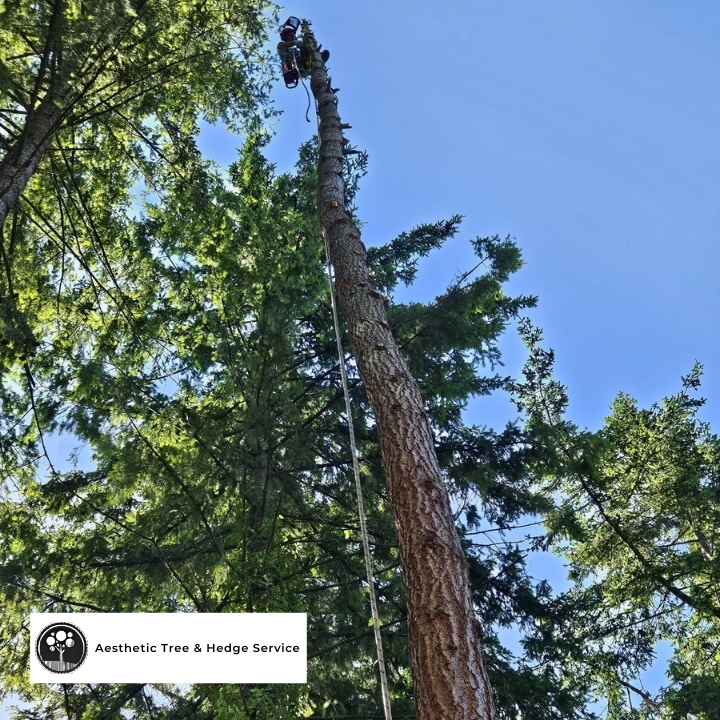
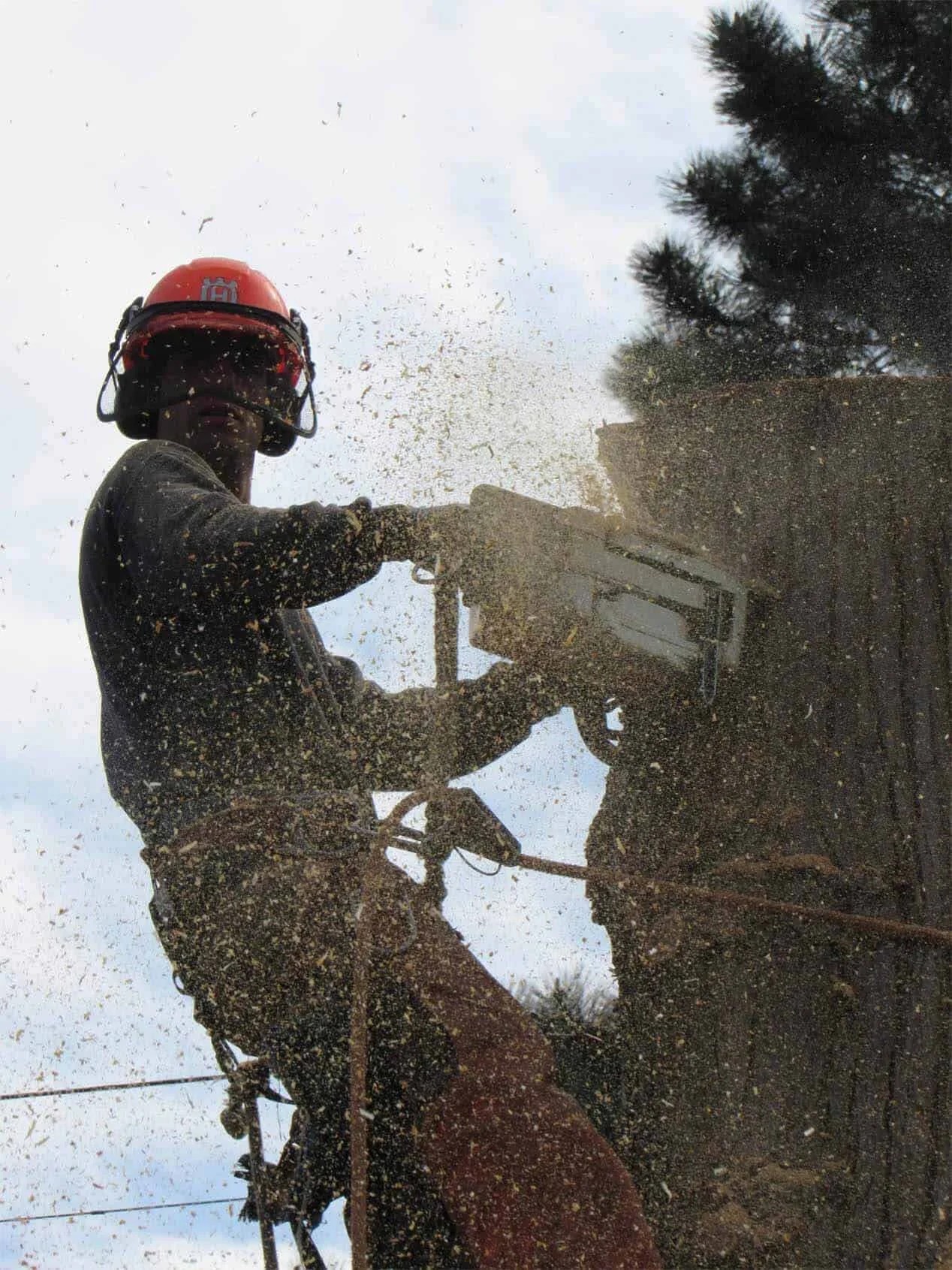
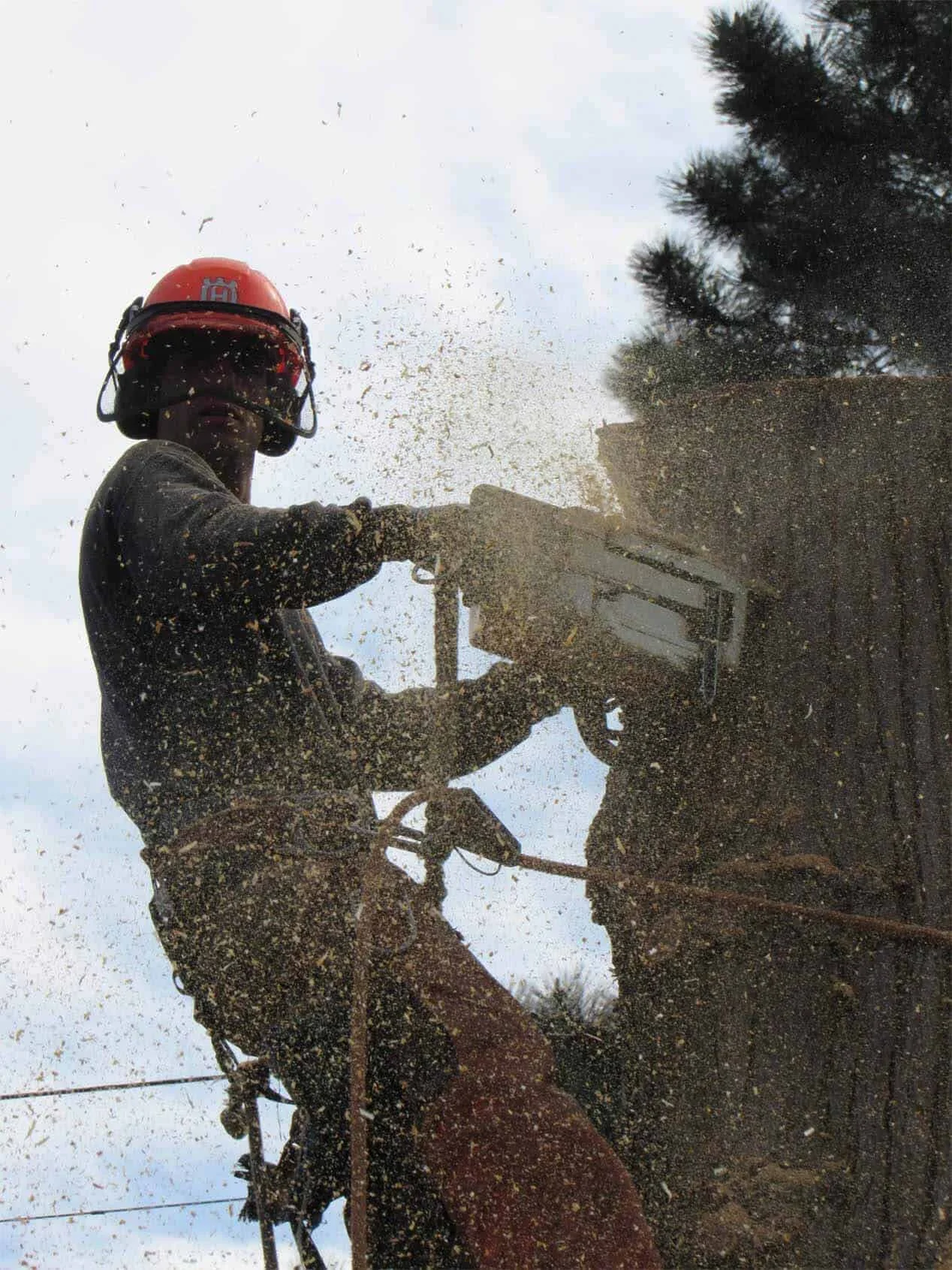
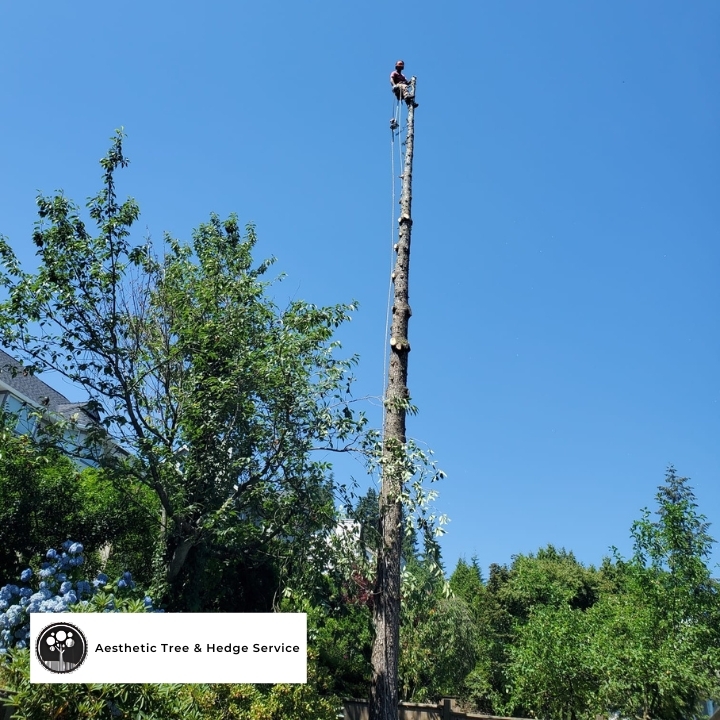
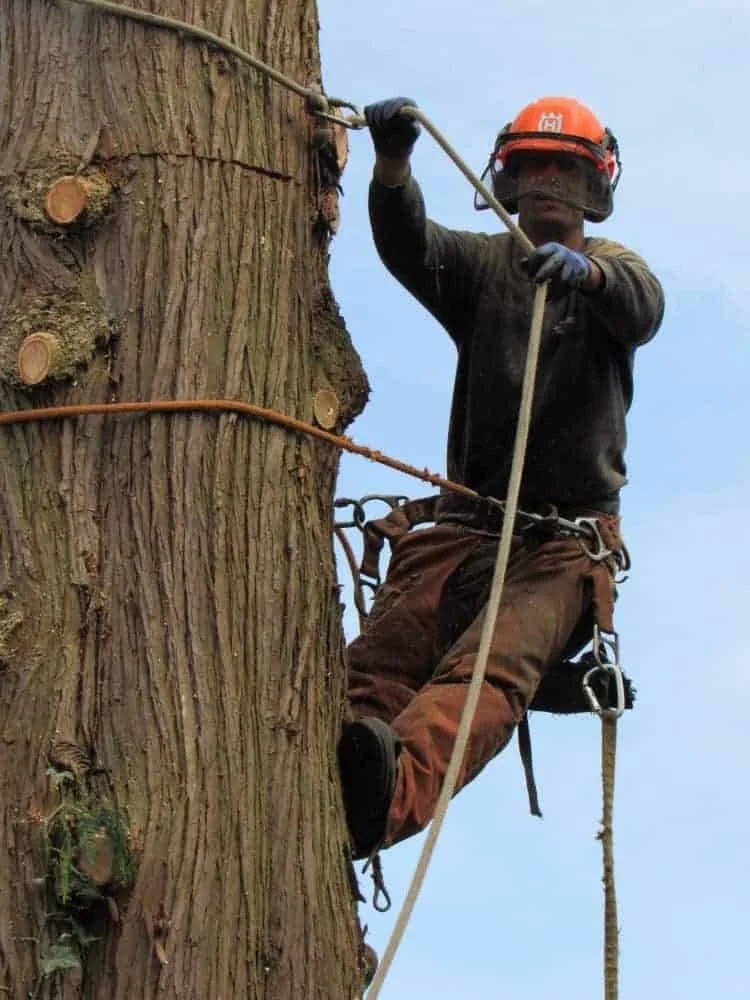
Tree Removal. Safe, controlled removal of trees of any size, from small ornamentals to 40-metre Douglas Firs. Our arborists use sectional removal with rigging for trees near structures, power lines, and fences, and conventional felling where space and conditions allow. All removals include branch chipping and full site cleanup.
Tree Pruning and Maintenance. ISA-standard pruning services including crown thinning, crown reduction, deadwood removal, crown raising, view pruning, and structural pruning for young trees. All pruning follows ANSI A300 standards. We never top trees — topping is harmful, creates long-term hazards, and violates arboricultural best practices.
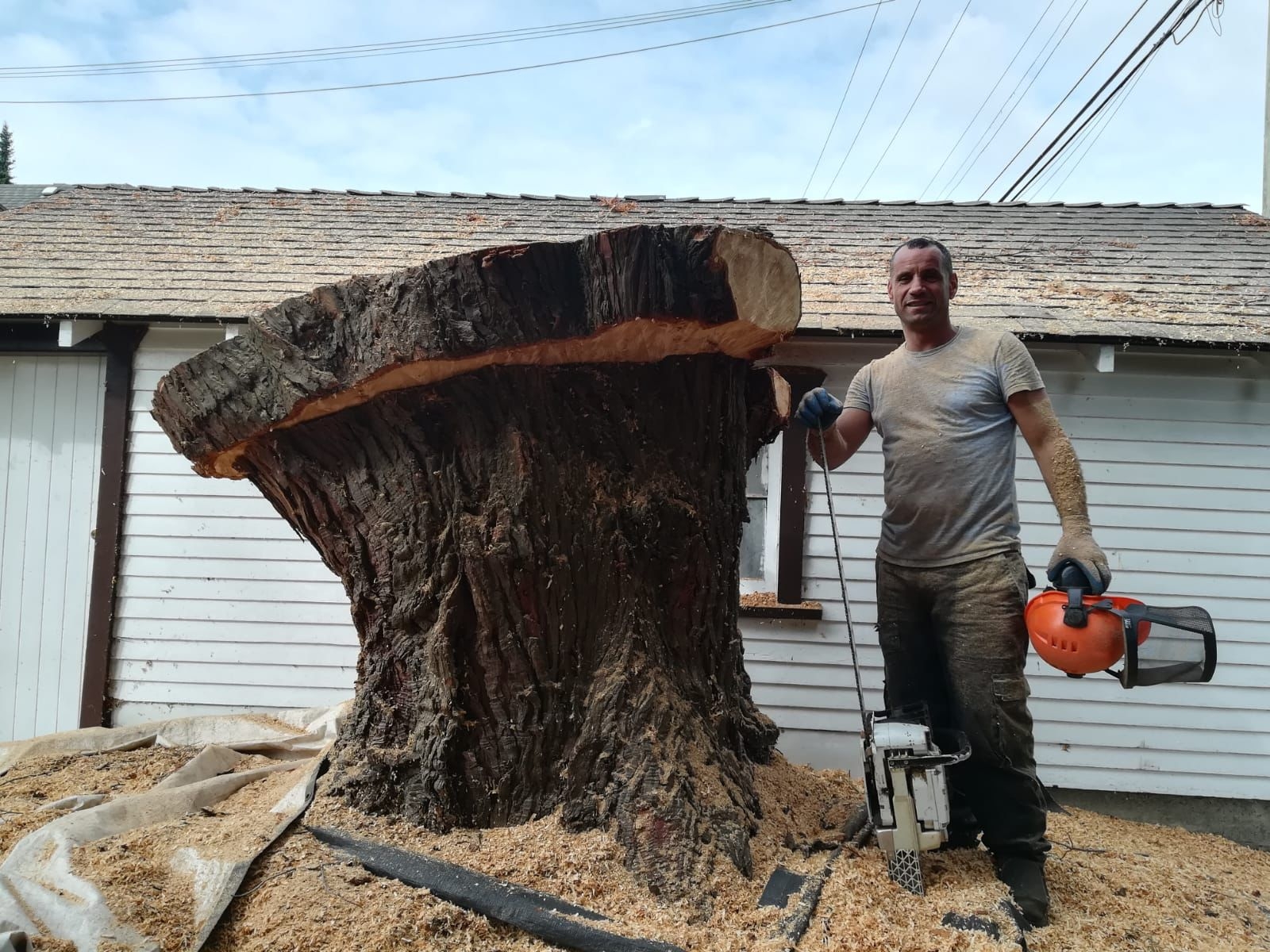
Stump Grinding. After tree removal, we grind stumps and major surface roots to 15 to 30 cm below grade using specialized equipment. Compact tracked grinders are available for properties with limited access or steep terrain. Typical costs range from $150 to $500 per stump depending on size and access.
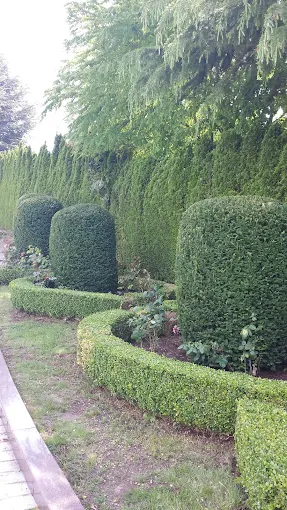
Hedge Trimming. Professional trimming and shaping for all common hedge species including Western Red Cedar, Laurel, Emerald Cedar, Photinia, Boxwood, and Privet. We serve residential, strata, and commercial properties and maintain hedges to clean lines, dense growth, and bylaw-compliant heights.
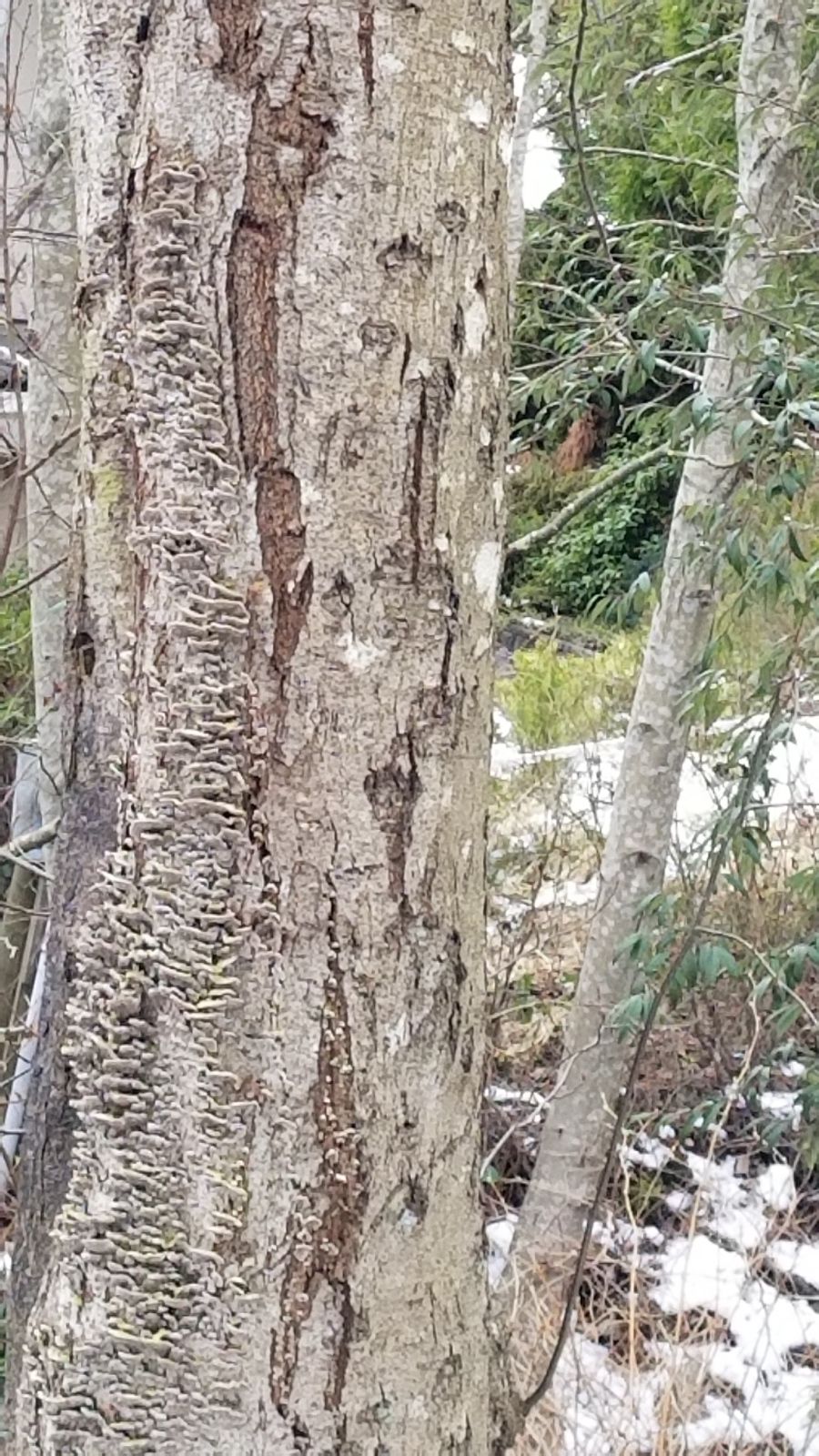
Arborist Reports. Comprehensive arborist reports for tree removal permits, development applications, TRAQ risk assessments, real estate transactions, insurance claims, and neighbour disputes. Our reports are accepted by the City of Burnaby, developers, real estate professionals, lawyers, and insurance adjusters.
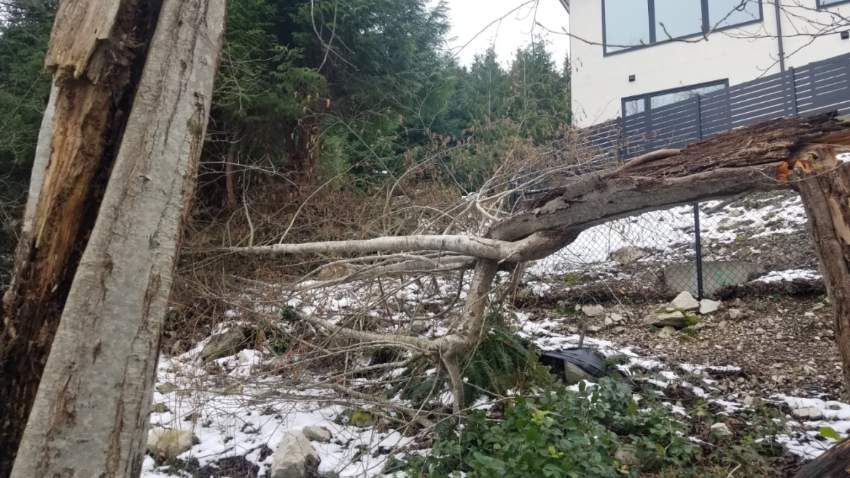
Emergency Tree Service. 24/7 emergency response for storm-damaged, fallen, or hazardous trees across Burnaby. Call (604) 721-7370 for immediate emergency assistance.
Development Consulting. Tree Management Plans, tree protection plans, and construction monitoring for residential and commercial development projects. Given Burnaby's pace of development, this is one of our most in-demand services.
Frequently Asked Questions
How much does tree removal cost in Burnaby?
Tree removal costs in Burnaby depend on tree size, species, location on the property, access conditions, and terrain. Here are typical cost ranges for 2025-2026:
- Small trees (under 6 metres / 20 feet): $250 to $500
- Medium trees (6 to 12 metres / 20 to 40 feet): $500 to $1,400
- Large trees (12 to 18 metres / 40 to 60 feet): $1,400 to $3,500
- Very large or complex removals (over 18 metres / 60+ feet, near structures, steep terrain): $3,500 to $10,000+
These ranges include felling or sectional dismantling, branch chipping, and full site cleanup. They do not include stump grinding (typically $150 to $500 per stump) or the municipal permit application fee. Properties on Burnaby Mountain and Capitol Hill with steep terrain and limited access tend to fall toward the higher end of these ranges. We provide free on-site estimates for all Burnaby properties.
Do I need a permit to cut down a tree in Burnaby?
Yes. Under Burnaby's Tree Bylaw No. 14338, a permit is required to remove any tree with a trunk circumference of 50 cm or more measured at 1.4 metres above the base. This works out to a diameter of approximately 16 cm — a relatively small tree, which means most established trees on Burnaby properties are protected. The permit application requires an arborist report, site plan, and replacement tree plan. Removing a protected tree without a permit can result in fines and mandatory replacement planting at a higher ratio. Aesthetic Tree handles the full permit process on your behalf, including the arborist report, application, and coordination with the City.
What is Burnaby's tree protection bylaw?
Burnaby's tree protection is governed by Tree Bylaw No. 14338. The bylaw protects all trees on private property with a trunk circumference of 50 cm or more at 1.4 metres above the base (approximately 16 cm diameter). This is one of the lowest protection thresholds in Metro Vancouver — for comparison, the City of Vancouver's threshold is a 20 cm diameter, meaning Burnaby protects smaller and younger trees than many neighbouring municipalities. The bylaw requires a permit before removal, an arborist report documenting the tree's condition and the reason for removal, and replacement tree planting or a cash-in-lieu payment. The bylaw applies year-round and covers all tree species on private property. Property owners should contact the City of Burnaby's Planning Department or consult with a certified arborist to confirm how the bylaw applies to their specific situation.
Does Burnaby require replacement trees after removal?
Yes. The City of Burnaby requires replacement tree planting as a condition of every tree removal permit. The number and size of replacement trees depends on the diameter of the removed tree. In general, larger trees require more replacement plantings. When on-site planting is not feasible due to lot size, existing tree coverage, or other site constraints, the City may accept a cash-in-lieu payment that funds tree planting elsewhere in Burnaby. Specific replacement ratios and cash-in-lieu amounts are set by the City and may be updated periodically. Property owners should confirm current requirements with the City's Planning Department. Aesthetic Tree can assist with both sourcing and planting replacement trees to fulfill permit conditions.
Can I remove a tree near a creek in Burnaby?
Trees near creeks, streams, and watercourses in Burnaby — including Still Creek, the Brunette River, and their tributaries — are subject to additional protections under the provincial Riparian Areas Protection Regulation (RAPR). Work within or adjacent to riparian buffer zones may require a Qualified Environmental Professional (QEP) assessment in addition to the standard arborist report and tree removal permit. The buffer zone width depends on the classification of the watercourse and can range from 5 to 30 metres from the high-water mark. Removing trees within a riparian area without proper authorization can result in both municipal and provincial enforcement action. If your property borders or contains a watercourse, contact us for an initial assessment. Our arborists can determine whether your tree is within a regulated riparian area and coordinate with a QEP if required.
Does Aesthetic Tree serve all of Burnaby?
Yes. We serve every neighbourhood in the City of Burnaby, from Burnaby Mountain and Capitol Hill in the north to Big Bend and Edmonds in the south, and from Burnaby Heights in the west to Lougheed and Cariboo in the east. Whether your property is a single-family home in Forest Hills, a townhouse complex in Brentwood, or a commercial property in Metrotown, we provide the same full range of services: tree removal, pruning, stump grinding, hedge trimming, arborist reports, and emergency response. Call (604) 721-7370 or request a free estimate through our website at aesthetictree.ca.
What We Do
Services in Burnaby
Our Work
Tree Care in Burnaby

Why Choose Us
Why Burnaby Trusts Us
Over 20 years of certified expertise, transparent pricing, and a 5.0-star Google rating make us Burnaby’s preferred tree care provider.
WCB Registered
Fully insured and WCB-compliant. Your property is protected on every job.
ISA Certified
Our arborists hold ISA credentials — the gold standard in professional tree care.
Best Prices
Transparent, competitive pricing with free on-site estimates. No hidden fees.
Service Areas
Serving Greater Vancouver
Beyond Burnaby, our ISA-certified arborists provide professional tree care across the entire Lower Mainland.
View all service areasNeed Tree Service
in Burnaby?
Book your free consultation with our ISA-certified arborists today. No obligation, no pressure — just honest advice from professionals who genuinely love tree care.