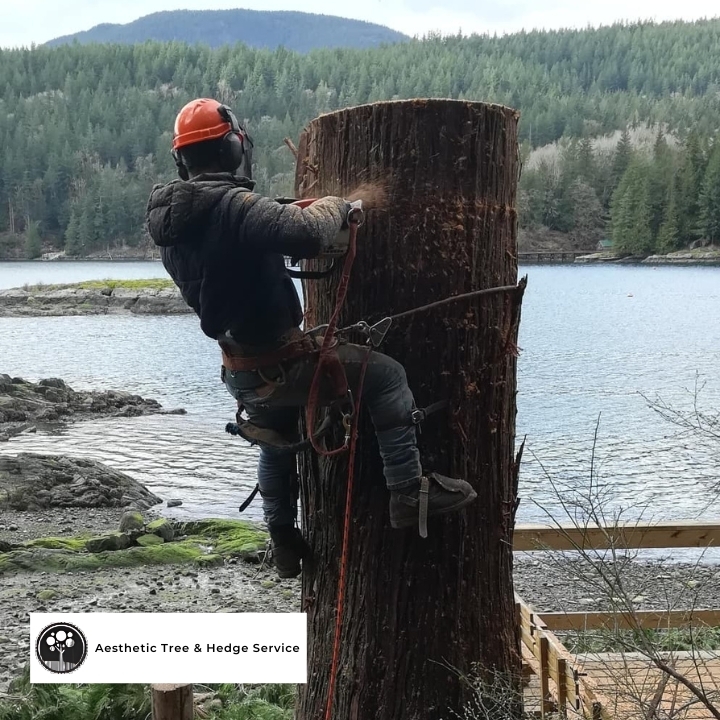
Vancouver Arborist — ISA-Certified Tree Care and Removal
A certified Vancouver arborist serving Greater Vancouver — ISA-certified, TRAQ-qualified, and $3M insured. Tree assessment, pruning, removal, and permit reports.
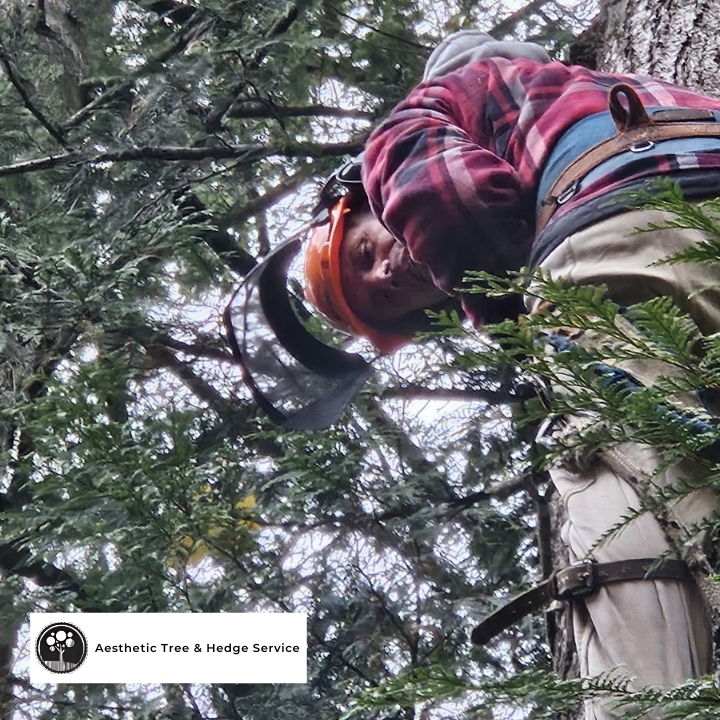
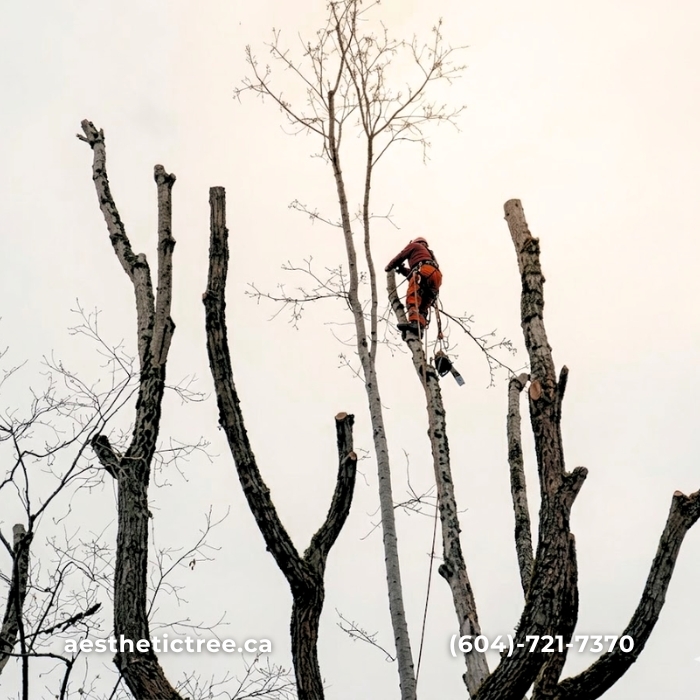
At a Glance
What You Need to Know
A Vancouver arborist from Aesthetic Tree is ISA-certified and TRAQ-qualified — credentials that matter when a tree overhangs your roof, a permit is required, or a storm has left something dangerous. We serve Greater Vancouver with same-week assessments for routine work and same-day emergency response. The assessment and written quote are free.
Investment
Free assessment · written quote on site
Availability
Same-week scheduling · Same-day emergency
01
What Separates a Certified Vancouver Arborist from a Tree Cutter
Anyone can call themselves a tree cutter. An ISA-certified arborist has passed an examination on tree biology, diagnosis, and care from the International Society of Arboriculture — and keeps that credential current through continuing education. That training changes what they see on your property. A certified Vancouver arborist reads the whole tree: species, structural condition, decay, root system, and what surrounds it. That assessment decides the work — not a standard package.
TRAQ qualification (Tree Risk Assessment Qualification) adds a second credential relevant for trees near structures. A TRAQ-qualified arborist evaluates how likely a tree is to fail, what it would hit, and what the consequence would be — the kind of documented assessment municipalities and insurance companies require for permit applications and liability records. Aesthetic Tree's arborists hold both ISA certification and TRAQ. You can read more about the full scope of what a certified arborist does on our arborist services Vancouver page.
The practical difference: a certified arborist can often save a tree that a general cutter would remove, because they diagnose before they cut. A tree showing tip dieback may need disease treatment, not removal. A leaning trunk may need tree cabling rather than felling. A certified assessment costs nothing extra — it is built into the free on-site quote.
Not sure if your tree needs a permit?
Vancouver's Trees — What a Local Arborist Needs to Know
Vancouver's urban forest is one of the most varied in Canada. Douglas fir, Western red cedar, bigleaf maple, and Garry oak all grow in city yards and parks — each with different structural properties, disease vulnerabilities, and permit implications under local bylaws. Vancouver's wet-winter, dry-summer climate adds stress patterns that differ from drier regions: waterlogged roots in March, drought stress in August, and fungal infections throughout the Lower Mainland's humid shoulder seasons.
The City of Vancouver's urban forestry strategy targets 30% tree canopy coverage, backed by one of BC's more detailed tree protection bylaws. Most significant trees require a tree removal permit before any work begins — and permit applications typically require a certified arborist report. A Vancouver arborist who works across all city zones knows which species are protected, what the permit office format requires, and how long the process takes.
Beyond the city limits, each municipality in the Lower Mainland operates its own bylaw and permit process. Burnaby, North Vancouver, West Vancouver, Richmond, and Coquitlam all differ. Aesthetic Tree operates across all of them — see our locations page for area coverage detail.

Not sure if your tree needs a permit?
03
How to Hire the Right Vancouver Arborist
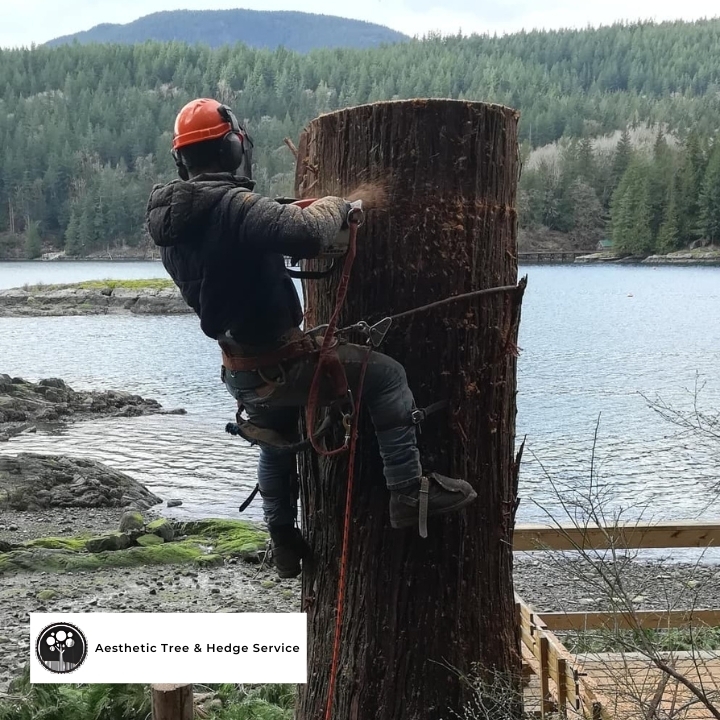
Before booking any tree work, confirm three things: ISA certification (verifiable at treesaregood.org), proof of $3M liability insurance (ask for the certificate of insurance in writing), and WorkSafeBC compliance. An uninsured crew on your property means you carry the liability if something goes wrong — tree work near structures and power lines is one of the highest-risk trades in BC.
A reputable Vancouver arborist provides a free on-site assessment before quoting. Aesthetic Tree arborists visit the property, inspect the tree, explain the options, and deliver a written quote itemising crew, equipment, any permit fees, debris removal, and cleanup. No phone estimates. See what a local assessment covers on our arborist near me Vancouver page.
Ask whether a permit is needed before the crew arrives. Scope the work first: some jobs need only pruning, others need removal followed by stump grinding. Some require a formal arborist report before any work can legally begin. Asking that question early prevents the fines and delays that come from unpermitted tree removal in Vancouver.
When tree work goes wrong it goes wrong fast. A pruning cut placed badly weakens the tree for years. A removal estimated wrong damages a house. A so-called arborist with no ISA credential walks away from the job; the homeowner pays the lawyer. Aesthetic Tree & Hedge Services has been the arborist Vancouver homeowners and property managers call when the work has to be right the first time. ISA-certified, $3M insured, WorkSafeBC compliant, and twenty years on the same streets.
This page covers what an ISA-certified arborist actually does, which of our services match which problems, the service area we cover across Greater Vancouver, and how to get a written estimate without paying for it.
What is an ISA-certified arborist?
ISA stands for International Society of Arboriculture. The ISA certification is the only globally recognized credential for tree-care professionals, and it requires both documented field experience and a written exam. A certified arborist has demonstrated knowledge of tree biology, diagnosis, pruning, removal, soils, identification, and safety. The credential expires every three years, so anyone holding current certification has stayed current with modern arboriculture practice.
In British Columbia, anyone can call themselves a "tree guy" and put a number on a truck. Only an ISA-certified arborist has proven training. For any work that touches your tree above ground level — and especially for any work near power lines, structures, or property lines — the certification is the floor you should require before getting an estimate.
What does an arborist in Vancouver actually do?
Day-to-day, our crew handles six categories of work. Most homeowners call us for one and discover they needed two.
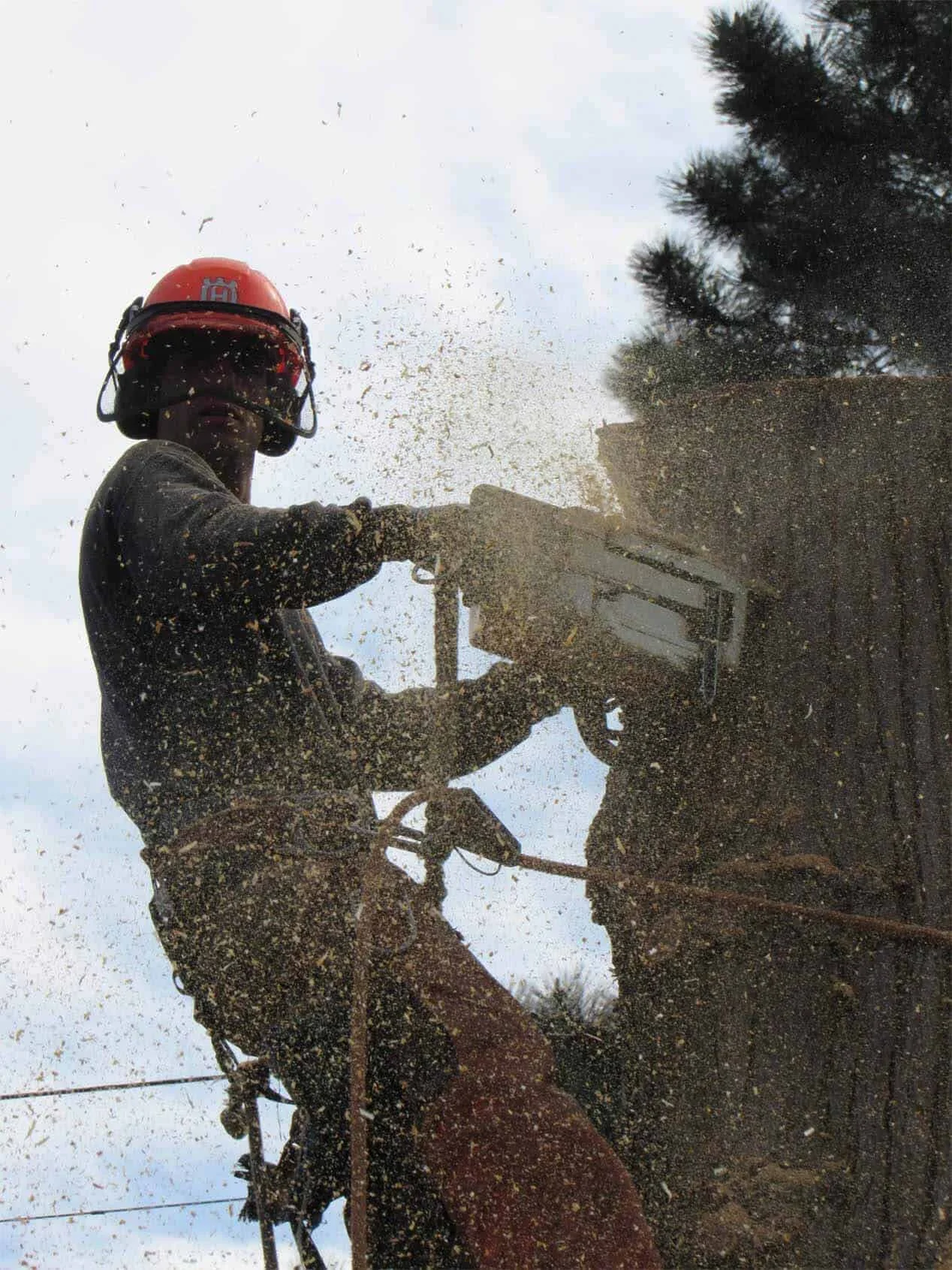
Tree pruning and structural shaping. Removing dead, diseased, crossing, or hazardous branches. Reducing canopy weight. Raising the crown for clearance. Done correctly, pruning extends tree life by decades; done wrong it shortens it. Our tree cutting and pruning service is the most common request from Vancouver homeowners.
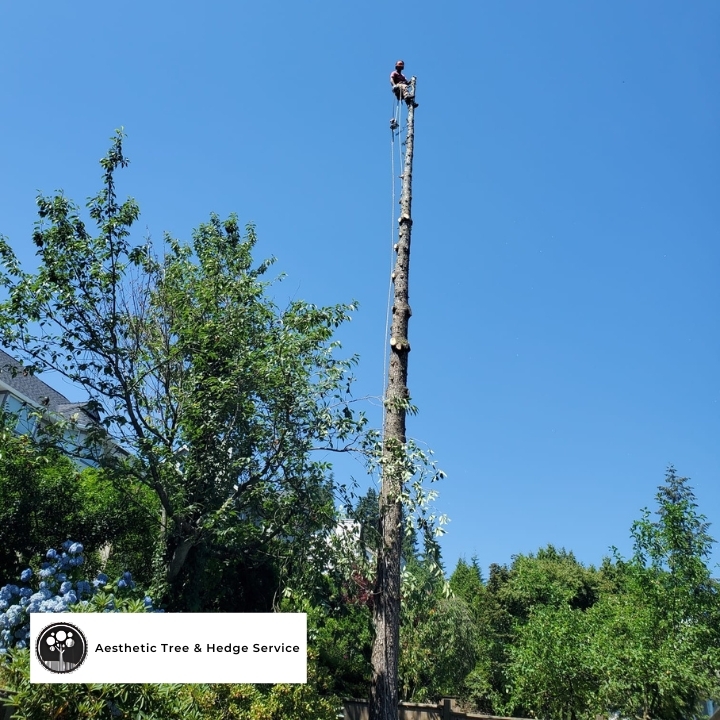
Tree removal. Dead trees. Hazardous trees. Trees blocking development. Trees that just have to come down. Vancouver bylaw requires permit review for most removals on lots with mature trees, and we handle the permit process as part of the job. See Vancouver tree removal.
Stump grinding. After removal, the stump grinds down to 6 to 12 inches below grade. Cleaner than chemical removal, faster than waiting it out, and lets you replant or pave on schedule. Details on the stump grinding service page.
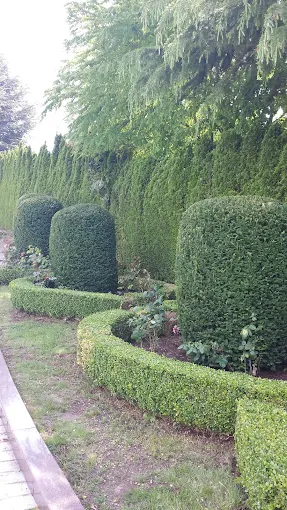
Hedge trimming. Cedar, laurel, boxwood, holly — Vancouver hedges grow fast and lose shape between visits. Maintained on a regular schedule they look professional all year; left to grow out they take three sessions to recover.
Emergency tree work. Storm damage, leaning trunks, branches across hydro lines. We hold the after-hours pager for active clients and accept new emergency calls when crew is available.
Arborist reports. A signed report from an ISA-certified arborist is required for many municipal permits in Vancouver — for tree removal, for development permits, for tree-protection plans during construction. Our arborist report service is separate from estimating tree work; it is a formal written assessment for legal and municipal use.
How are we different from a generic Vancouver tree service?
There are a lot of crews in Vancouver with chainsaws and a phone number. Five things separate us from the generic version.
- ISA certification on every estimate. We do not send uncredentialed crew to your property to quote work they cannot actually plan safely.
- $3M liability insurance and active WorkSafeBC coverage. Most homeowners only check this after a job goes wrong. We send certificates up front, on request.
- Twenty years on the same residential streets. The municipalities know us. The permit officers know us. Many of the trees we trimmed in 2008 are still on our maintenance rotation.
- Written estimates. Free, in writing, with a defined scope of work and a fixed price. No "hourly plus extras" surprises.
- 5.0 average across more than 100 Google reviews. The reviews are real, not seeded. We have not lost a one-star yet.
Which Vancouver neighbourhoods do we serve?
We cover all of the City of Vancouver and most of Metro Vancouver. The list below is the active service area. If your address is outside it, call and we will tell you honestly whether we can reach you or recommend someone closer.
- City of Vancouver — all neighborhoods including West End, Downtown, Mount Pleasant, Kitsilano, Kerrisdale, Dunbar, Marpole, Killarney, Renfrew-Collingwood, and East Vancouver.
- North Vancouver and West Vancouver — including Deep Cove, Lynn Valley, Lonsdale, Edgemont, Ambleside, and British Properties.
- Burnaby — North Burnaby, South Burnaby, Brentwood, Metrotown, and the Big Bend area.
- Richmond, Delta, and South Surrey for larger jobs.
- Coquitlam, Port Coquitlam, and Port Moody where access permits.
When do you need a professional arborist instead of a tree service?
Not every tree job needs an ISA-certified arborist. Pruning a small fruit tree in the spring is reasonable DIY work. Most jobs that need a professional fall into one of these:
- Any tree over twenty feet tall, or any tree near a structure, fence, or property line.
- Any tree showing signs of disease, internal decay, or root damage. A wrong diagnosis costs you the tree.
- Permit work where a municipality requires an ISA-certified report — this includes most City of Vancouver removals and most development permits.
- Insurance work after storm damage. Insurance companies want a credentialed assessment, not a contractor estimate.
- Any work near hydro or telecom lines. By BC Hydro rules this requires specialized training that uncredentialed crews do not have.
- Any time you suspect a tree is hazardous. A failure assessment from an arborist is cheap insurance against a six-figure failure event.
How to book and what to expect
Booking happens in three steps. First call or message us with the property address and a brief description of what you are looking at. We will give you an honest read on whether the work is urgent, optional, or somewhere in between. Second, we schedule a site visit — usually within five to ten business days, faster for storm work. The visit is free, and you receive the written estimate within two business days. Third, if you accept the estimate we book the work and complete it on schedule. Most residential jobs are one or two days on site. We clean up debris and remove it; the property looks better when we leave than when we arrived.
For a written estimate, call (604) 721-7370 or use the contact form. We respond same business day.
Frequently asked questions about Vancouver arborists
How much does it cost to hire an arborist in Vancouver?
Pricing varies by scope. A pruning visit on a mid-size residential tree typically runs in the $400–$1,200 range. A full removal of a mature tree with permit handling typically runs $1,500–$6,000 depending on access, hazard, and disposal. A formal arborist report for permit purposes runs $400–$900. All estimates are written, fixed-price, and free.
Do I need a permit to remove a tree in Vancouver?
Most likely, yes. The City of Vancouver requires a permit for removal of nearly all mature trees on private property, and the bylaw is enforced. We handle the permit application as part of the removal job in nearly all cases.
Are you really ISA-certified?
Yes. Every estimate visit is conducted by an ISA-certified arborist. Certification can be verified through the ISA public registry on request.
What is the difference between an arborist and a regular tree-service company?
Education and accountability. Anyone can call themselves a tree service. An ISA-certified arborist has documented training, has passed an exam, and recertifies every three years. For any work that affects long-term tree health, structural integrity, or municipal permit eligibility, the certification matters.
Do you do emergency calls?
Yes, with priority for active clients. For new emergency callers we will accept the job if crew is available and the work is within our service area. After-hours rates apply.
Need a Vancouver Arborist?
ISA-certified, TRAQ-qualified arborists serving Greater Vancouver. Free on-site assessment and written quote — no phone estimates, no surprises.
How It Works
Our Process —
Start to Finish
From your first call to final cleanup, every step is handled by certified professionals with clear communication throughout.
Start With a Free QuoteFree Consultation
Our ISA-certified arborist visits your property, assesses the situation, and provides a detailed written quote — no phone estimates.
Permit & Planning
We handle all municipal permits, coordinate with BC Hydro if needed, and create a detailed work plan for safe execution.
Professional Execution
Our crew executes the work following ANSI Z133 safety standards. Most residential jobs are completed in a single day.
Complete Cleanup
Debris removal, site cleanup, and final walkthrough. Your property is left cleaner than we found it — guaranteed.
Our Work
See It In Action
Common Questions
FAQ
Everything you need to know about our vancouver arborist services.
Explore More
Related Services
Serving All of Greater Vancouver
Need Vancouver Arborist in Vancouver?
Get a free, no-obligation estimate from our ISA-certified arborists. We serve all of Greater Vancouver with professional, insured tree care.