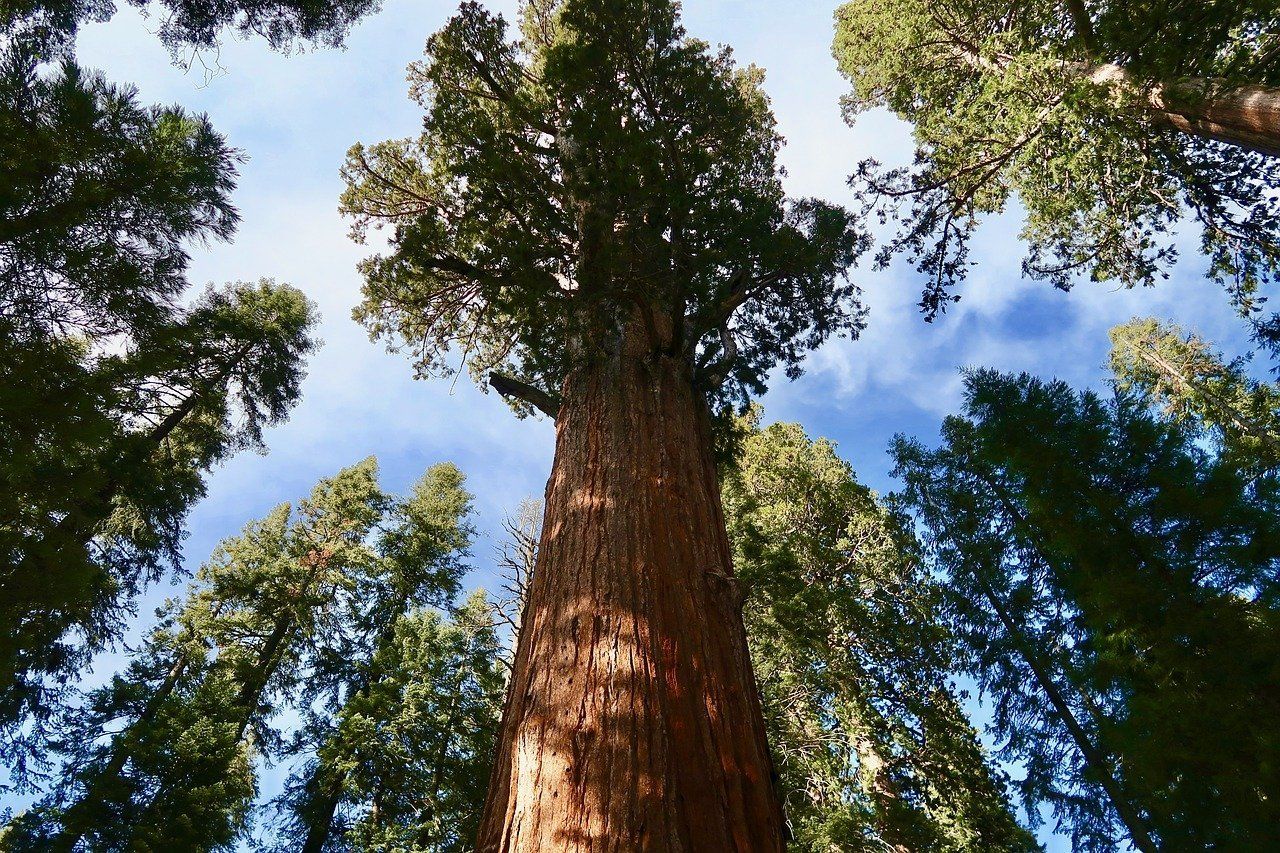

TL;DR — Quick Summary
Giant trees North Vancouver old trees — 400+ years old, legally protected, and structurally risky. ISA-certified arborist guide to bylaws, hazard signs, and care.
TL;DR
- Giant trees in North Vancouver are usually mature Douglas firs, western red cedars, western hemlocks, spruce, and big-leaf maples growing in wet coastal soils.
- The City of North Vancouver requires a permit to remove a protected tree with a trunk diameter of 20 cm or more, measured 1.4 m above ground. The District of North Vancouver has separate tree rules, so confirm the municipality before any work starts.
- Old does not mean unsafe. Green does not mean structurally sound. Large trees can hide decay, root loss, weak unions, storm damage, or construction-related stress.
- Metro Vancouver's 2024 canopy reporting shows how much private-property tree care matters as mature canopy declines inside developed areas.
- If a large tree can reach a house, driveway, deck, retaining wall, lane, neighbour's yard, or walking path, start with a written arborist assessment before pruning or removal.
Recommended images: a mature Douglas fir over a North Vancouver roofline, a close-up of root flare inspection, a big-leaf maple with co-dominant stems, and an arborist inspecting a large tree near a home.
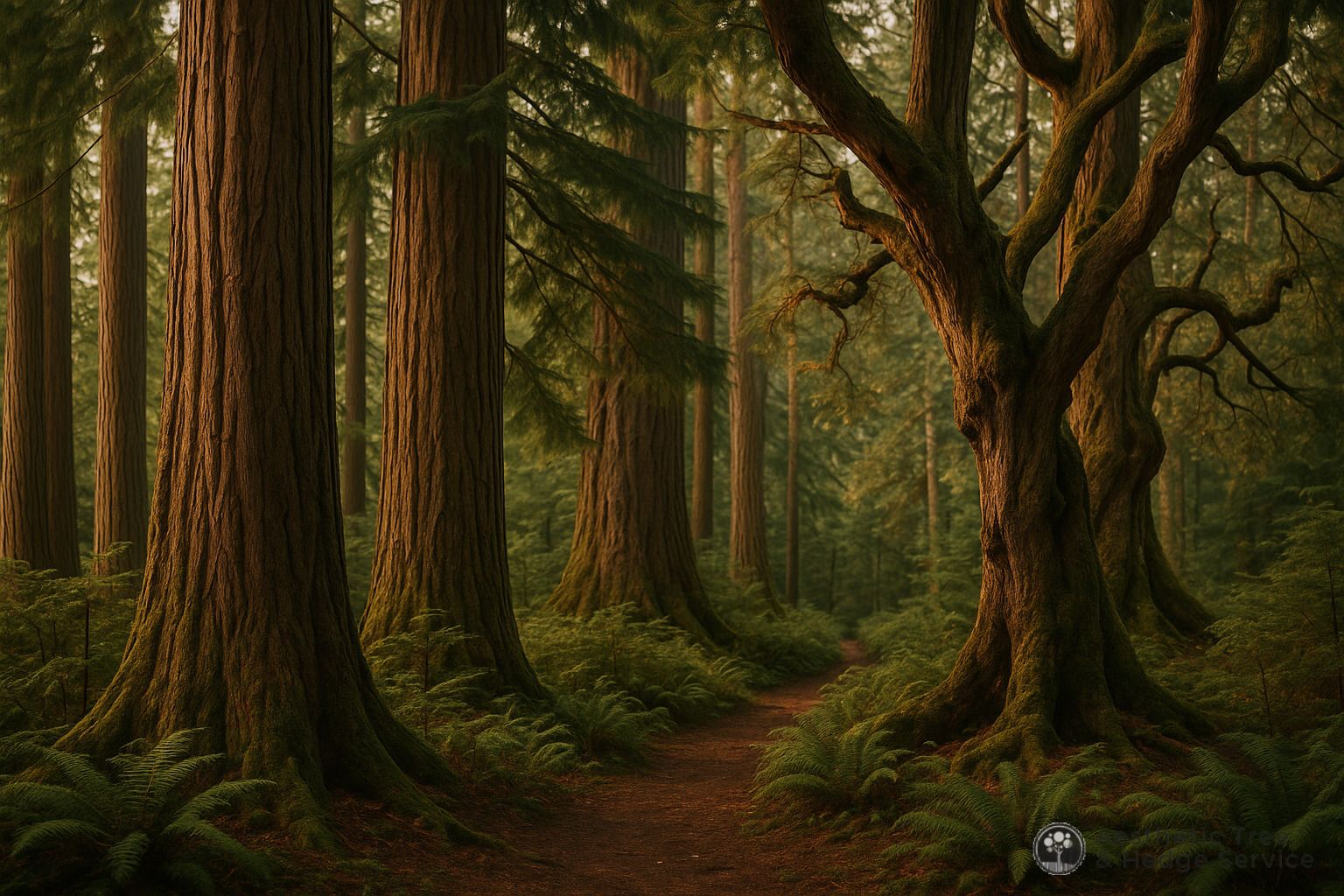
Giant trees in North Vancouver are not rare in the way a provincial record tree is rare, but they are important enough to treat carefully. In Lynn Valley, Upper Lonsdale, Queensbury, Blueridge, Edgemont, Deep Cove, and near creek corridors, many properties still have mature Douglas firs, western red cedars, big-leaf maples, hemlocks, and spruce that were growing long before nearby homes were renovated or rebuilt.
These trees are part of the North Shore landscape. They give shade, hold soil, slow runoff, support wildlife, and frame neighbourhood views. They can also create hard decisions for homeowners when roots, slopes, buildings, storms, and bylaws all meet on one lot.
In our field work, the hardest calls are rarely the obvious ones. A dead tree leaning over a garage is straightforward. A 90 cm Douglas fir with a green crown, a driveway cut through one side of the root zone, and a busy target area below is harder. So is an old big-leaf maple over a play area when the upper crown looks alive but the main union has included bark and visible decay.
This guide explains how homeowners should think about giant trees and old trees in North Vancouver. It covers common species, risk signs, bylaws, storm damage, pruning, removal, replanting, and when a written arborist report is worth getting.
What counts as a giant tree in North Vancouver?
A giant tree on a North Vancouver lot is not always a record tree. It is a tree large enough that its size changes the risk, the cost of work, the permit path, or the method needed to inspect, prune, retain, or remove it.
The BC BigTree Registry tracks the largest known trees in the province, and provincial references for specified trees show how exceptional the biggest coastal Douglas firs can become. Most residential trees are far smaller than those record-class trees, but that does not mean they are simple to manage.
For a homeowner, the practical test is different. A tree may need a higher level of care if it has any of these traits:
- The trunk is 50 cm, 75 cm, 100 cm, or more at breast height.
- The crown reaches over a roof, deck, driveway, lane, path, or neighbour's yard.
- The tree stands on a slope, ravine edge, retaining wall line, or creek setback.
- The tree is close to trenching, paving, drainage work, or new construction.
- The tree is tall enough that a whole-tree or limb failure could hit a structure.
In North Vancouver, a giant tree is often a Douglas fir rising above the roofline, a cedar with a wide root flare at the base, or a big-leaf maple with heavy limbs over a yard. Exact size matters, but the target area matters just as much.
We pay close attention to the tree's failure zone. A 70 cm tree in the back corner of a large open lot may be less concerning than a 45 cm tree beside a front path, service line, or driveway. Size matters, but location turns size into risk.
Why do North Vancouver trees grow so large?
North Vancouver has the right mix for large coastal trees: wet winters, mild temperatures, deep forest history, and slopes that still hold pockets of mature canopy.
The City of North Vancouver reports very high annual precipitation, and Environment and Climate Change Canada climate normals for the North Shore show frequent rain days through the year. That means many trees grow with long periods of available moisture, especially where soils are deep and drainage is balanced.
Species matter too. Douglas fir, western red cedar, western hemlock, spruce, and big-leaf maple can all become large when they have enough soil, light, moisture, and rooting space. A yard tree will not behave exactly like a forest tree, but the same biology explains why some North Shore trees become much larger than homeowners expect.
Metro Vancouver's recent canopy reporting gives useful context. The region still has meaningful tree canopy, but developed areas have lost canopy as redevelopment, hard surfaces, and smaller planting spaces increase. On the ground, that shows up as fewer mature trees on private lots, more heat around pavement, and more pressure to manage the large trees that remain.
Old trees in North Vancouver often survive where development worked around them: ravine edges, rear yards, old hedge lines, side yards, and streets with deep setbacks. Once a tree becomes part of a residential site, however, its roots and crown face pressures a forest tree does not face.
Which old tree species should homeowners know?
The common large trees in North Vancouver do not all fail or decline the same way. A cedar, fir, maple, spruce, and hemlock can each need a different care plan.
Douglas fir is the North Shore tree many homeowners worry about first. It can be tall, heavy, and exposed to wind above nearby roofs. A healthy fir can be stable for a long time, but root damage, grade changes, trenching, and soil compaction can change the risk picture. We look closely at the base, root flare, old wounds, dead tops, and signs of past construction near the dripline.
Western red cedar often shows stress slowly. A cedar can lose root function before the crown makes the problem obvious. Many cedar decline cases start with soil changes: a new driveway, a trench for services, fill against the trunk, or drainage that keeps one side too wet. Dead tops, thinning foliage, and heavy cone crops can all point to stress, but they must be read in context.
Western hemlock can grow tall in moist sites and may have shallow roots where soil is thin or compacted. Hemlocks near slopes, ravines, or wind gaps deserve careful inspection after storms.
Sitka spruce is less common on every street, but it appears in wet coastal pockets and near water. Large spruce can carry heavy crowns. We check for root-plate movement, stem defects, and saturated soil, especially after long rain.
Big-leaf maple is one of the most common large broadleaf trees we assess in older yards. It is valuable for shade and habitat, but it often has co-dominant stems, included bark, long limbs, and decay pockets. A large maple can often be retained with correct pruning and follow-up inspection, but topping or rough cutting can make future defects worse.
Hedges are part of this story too. Many North Vancouver homes have old cedar, laurel, yew, or cypress hedges that act like green walls. They are not giant trees, but they can still affect light, sightlines, bylaw questions, and neighbour disputes. If your hedge has grown into overhead lines or is too wide for the space, planned hedge trimming is safer than severe cutting after years of neglect.
Are giant trees and old trees protected by North Vancouver bylaws?
Often, yes. The key point is that North Vancouver has two local governments: the City of North Vancouver and the District of North Vancouver. They do not use the same tree rules.
The City of North Vancouver states that a tree removal permit is required for removal or extensive pruning of protected trees under its tree bylaw, including protected trees with a diameter of 20 cm or more measured 1.4 m above ground.
The District of North Vancouver has its own Tree Protection and Management Bylaw, permit process, and definitions. If you live in Deep Cove, Lynn Valley, Edgemont, Canyon Heights, Blueridge, or another District neighbourhood, do not rely on City rules.
Before you cut, prune heavily, excavate, pave, or change grade near a large tree, check:
- Is the property in the City or the District?
- What is the tree diameter at 1.4 m above grade?
- Is the tree on private property, shared property, municipal land, or a boulevard?
- Is the site near a stream, ravine, slope, or protected area?
- Is the work removal, extensive pruning, root cutting, or construction near roots?
- Is replacement planting required if removal is approved?
Homeowners sometimes get into trouble because they start with the wrong question. Can this tree be removed? is not the first question. The first question is: what rules apply at this address? After that, the tree can be assessed and the permit path can be planned.
If you are unsure, a permit-ready arborist report can record species, size, condition, defects, targets, and the reason for the recommendation.
How can you tell if an old tree is unsafe?
You cannot prove a large tree is safe by looking at the leaves from the kitchen window. A green crown is a useful sign, but it is not enough.
Warning signs that need a closer look include:
- Fresh lean or a lean that appears to be increasing.
- Soil lifting, cracking, or mounding near the base.
- Large dead branches over a target area.
- Cracks in the trunk or major limbs.
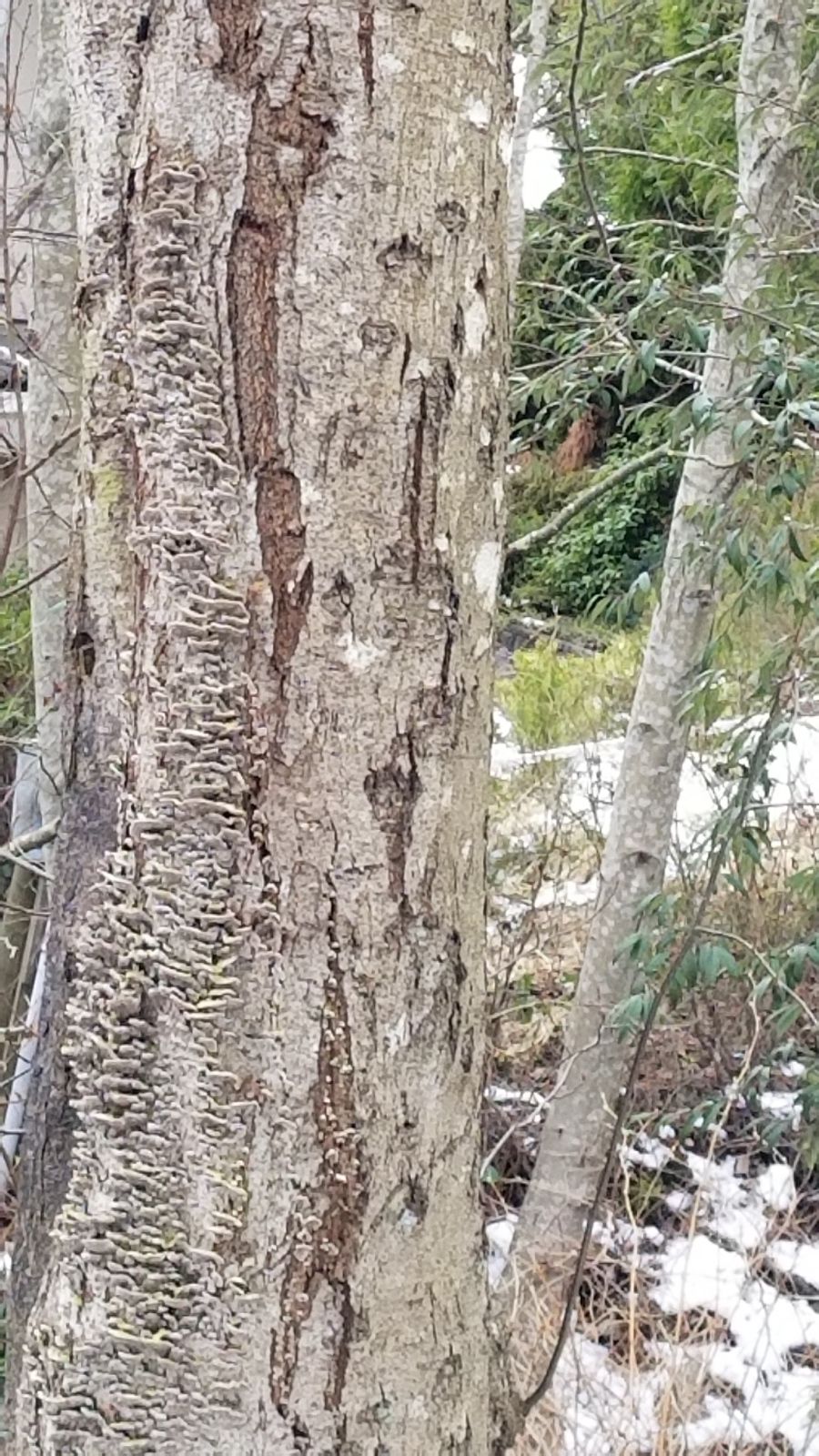
- Fungal conks on the trunk, root flare, or large roots.
- Cavities, old topping wounds, or open seams.
- Bark trapped between two main stems.
- Sudden crown thinning or dead tops.
- Recent trenching, paving, fill, or grade changes near the tree.
- Broken limbs hanging in the crown.
The most overlooked sign is often root-zone damage. Homeowners focus on trunks and branches, but roots are where many serious failures start. A tree can stand for several seasons after roots are cut, then fail when soil is saturated and wind load is high.
Old storm damage also deserves care. A past tear-out can leave decay that expands for years. An old topped maple can develop weak shoots around decay columns. A fir with a dead top can shed pieces during wind or snow.
The right response depends on the defect and the target. Some trees need deadwood pruning. Some need selective crown reduction on a specific limb. Some need monitoring. Some need removal. The goal is not to make every old tree come down. The goal is to match the work to the risk.
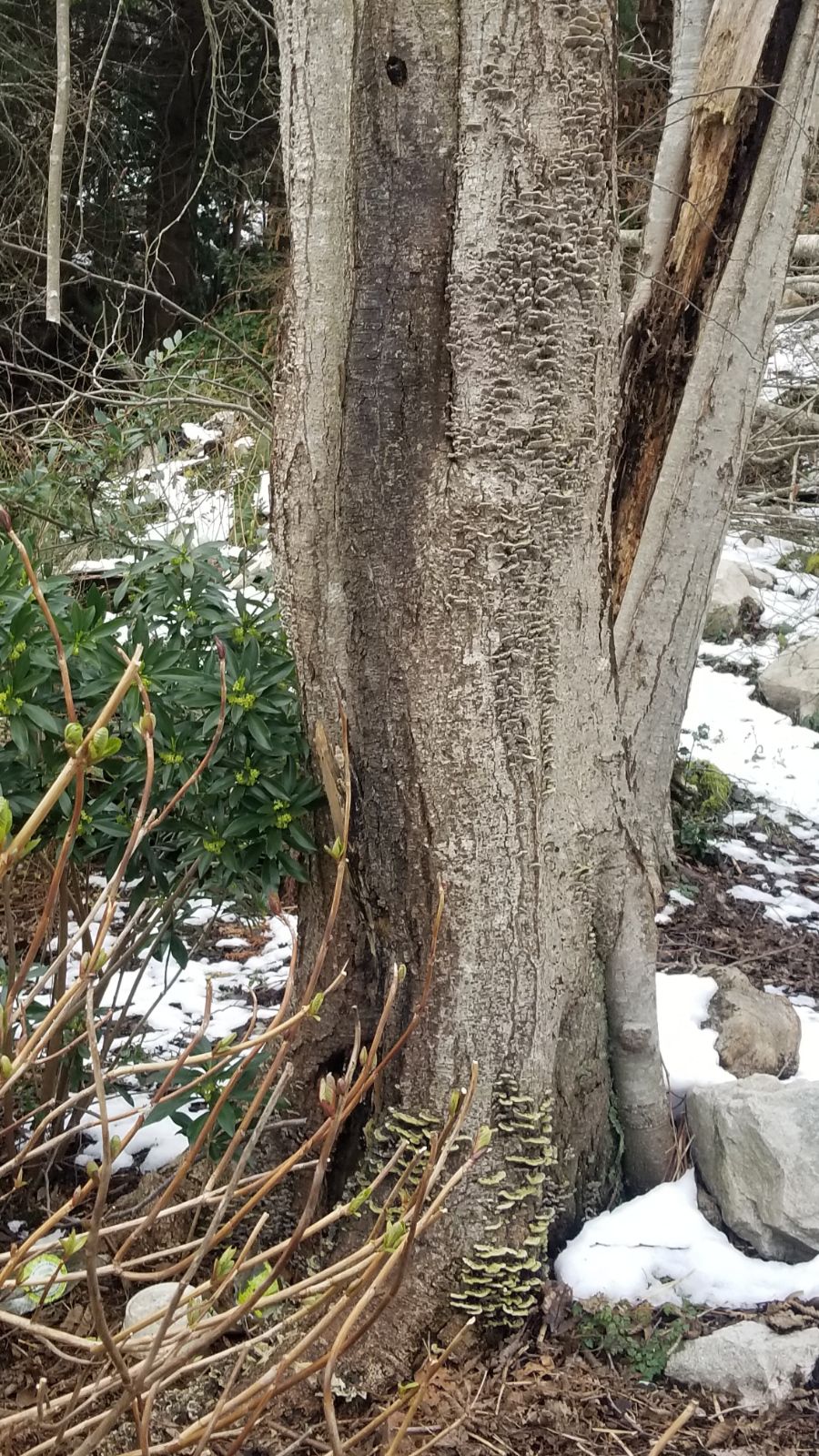
What does a proper arborist inspection include?
A proper inspection is structured. It is not a quick guess from the sidewalk.
For a large North Vancouver tree, an arborist usually looks at:
- Species and likely growth pattern.
- Diameter at breast height.
- Crown size, live crown ratio, and deadwood.
- Trunk cracks, wounds, cavities, seams, and decay signs.
- Root flare, visible roots, soil grade, and drainage.
- Targets such as houses, decks, lanes, paths, vehicles, and wires.
- Site history, including construction, trenching, drainage, and past pruning.
- Slope, retaining walls, creek setbacks, and soil movement.
- Permit needs under City or District rules.
- Whether more testing is needed.
A visual inspection is often enough for a first opinion. It is not always enough for a high-value or high-risk tree. If the findings point to hidden decay, root loss, or structural defects, an arborist may recommend further testing or a formal written report.
A written report matters when the stakes are high. It gives the homeowner a record, helps with permit review, and supports conversations with neighbours, insurers, builders, or municipal staff.
For work that is approved and ready to proceed, the next question is method. Large trees near buildings need trained crews, rigging, and a plan for targets, drop zones, access, and cleanup.
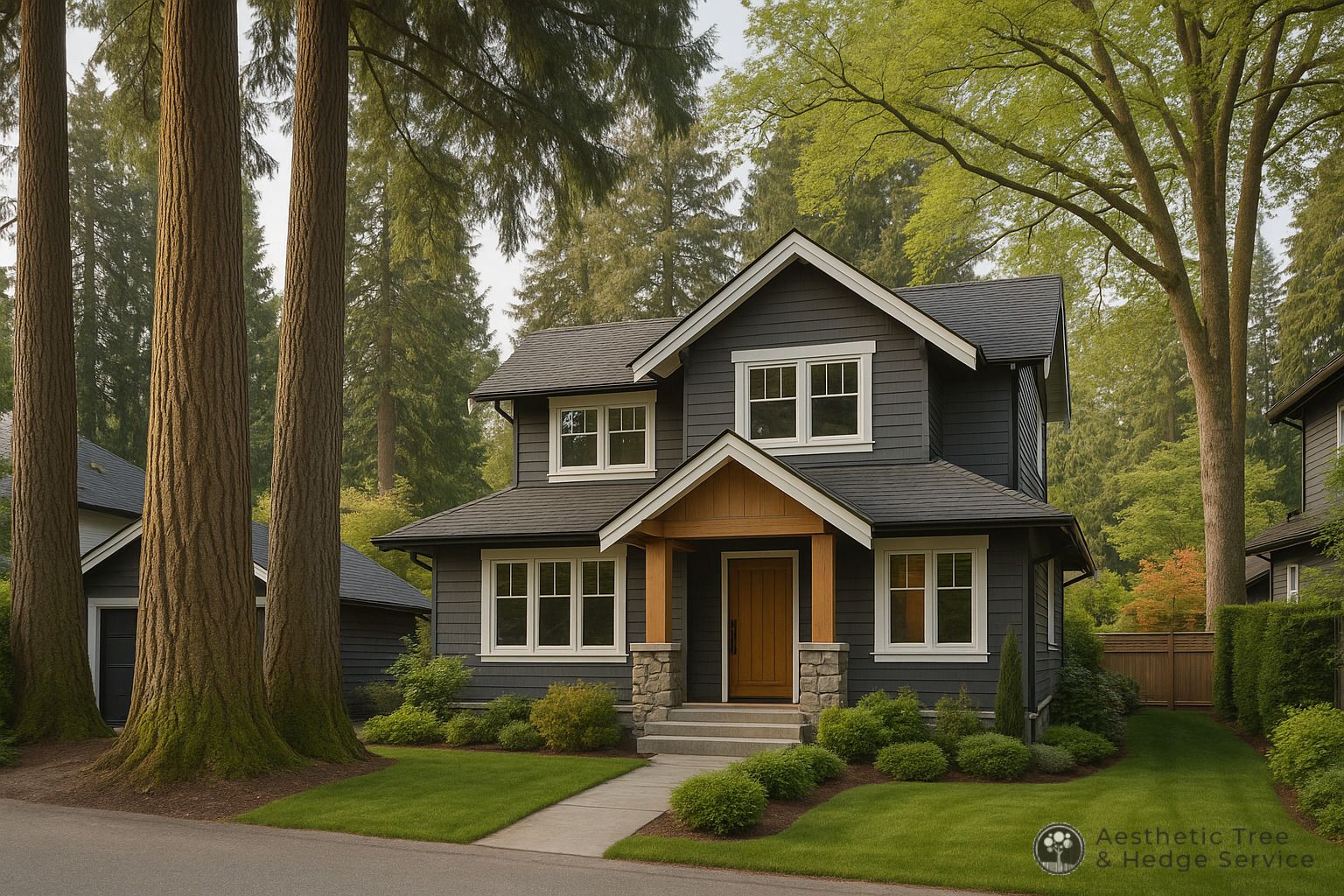
Should you prune, cable, monitor, or remove a giant tree?
The answer depends on the tree and the target area. A good recommendation should explain why one option fits better than the others.
Pruning is often the right first step when the tree is worth keeping and the defects are manageable. This may include deadwood removal, clearance pruning, end-weight reduction, or selective reduction of a heavy limb. Cuts should follow accepted arborist practice. Topping is not a sound fix for a mature fir, cedar, spruce, hemlock, or maple.
Cabling can help in some trees with weak unions or co-dominant stems. It is not a cure and does not make a poor tree good. It can reduce movement in a specific part of a tree when designed and installed by trained arborists. It also needs inspection over time.
Monitoring is reasonable when a tree has a defect that is not urgent but should be watched. That may mean a yearly check after winter storms, a recheck after nearby construction, or a set review date after pruning.
Removal is the right call when the risk cannot be reduced to a level the owner and site can accept. It may also be needed when roots are severely cut, the tree is dead or dying, a major stem has split, or the tree conflicts with approved construction and cannot be retained.
Removal is not a failure when it is supported by evidence. But size alone is not a defect. Big trees deserve assessment, not automatic removal.
How do roots, slopes, and drainage change the risk?
Roots decide much of a large tree's future. On the North Shore, that future is tied to rain, slopes, soil depth, and drainage.
More hard surface means more runoff, less open soil, more heat, and more stress on trees growing near driveways, patios, roads, and buildings. Private lots carry a large share of the urban forest, so homeowner decisions have real canopy impact.
For old trees, we look for root-zone changes such as:
- New paving over the root area.
- Excavation for drains, fences, walls, or services.
- Soil piled against the trunk.
- Soil removed from one side of the root plate.
- Repeated vehicle traffic over roots.
- Downspouts or drains that saturate one side.
- Retaining walls close to the trunk.
- Erosion on ravine or creek edges.
A large tree near a slope needs extra care. Removing it can change shade, water movement, and root support. Keeping it after major root damage can also create risk. Slope trees often need a written assessment before work starts.
If a tree must come out, the stump and root flare still need a plan. Stumps can block replanting, attract decay, or sit in the way of grade work. After approved removal, stump grinding can prepare the area for planting, lawn repair, or safer use.
What should you do after storm damage to a large tree?
After a storm, treat a damaged giant tree as an active site hazard until it has been checked.
Do not stand under hanging limbs. Do not pull branches with a rope. Do not cut a loaded limb if you are not trained. Do not park under a cracked stem. Keep children, pets, and visitors away from the area.
Call for urgent help if you see:
- A split trunk or split main union.
- A large limb hanging over a target.
- A tree leaning into another tree.
- A root plate lifting out of the ground.
- A tree on a roof, vehicle, fence, or wire.
- Fresh cracks in soil near the base.
- A broken top lodged in the crown.
Emergency tree work should put life safety first, property protection second, and cleanup after the hazard is controlled. Cleanup can wait. A cracked limb over an entry path cannot.
After the urgent work, ask why the failure happened. Was it a normal branch failure during high wind? Was there decay? Was the tree previously topped? Were roots cut during a past project? Did soil saturation play a role?
That follow-up can help protect other trees on the property. In North Vancouver storm calls, one failed tree often points to a wider pattern: compacted soil, old topping wounds, hidden decay in a row of maples, or drainage changes that affect several trees.
Take photos if it is safe. Photograph the whole tree, the failed part, the break point, the base, and any property damage. Keep arborist reports, invoices, permits, and notes. Good records help with insurance and future decisions.
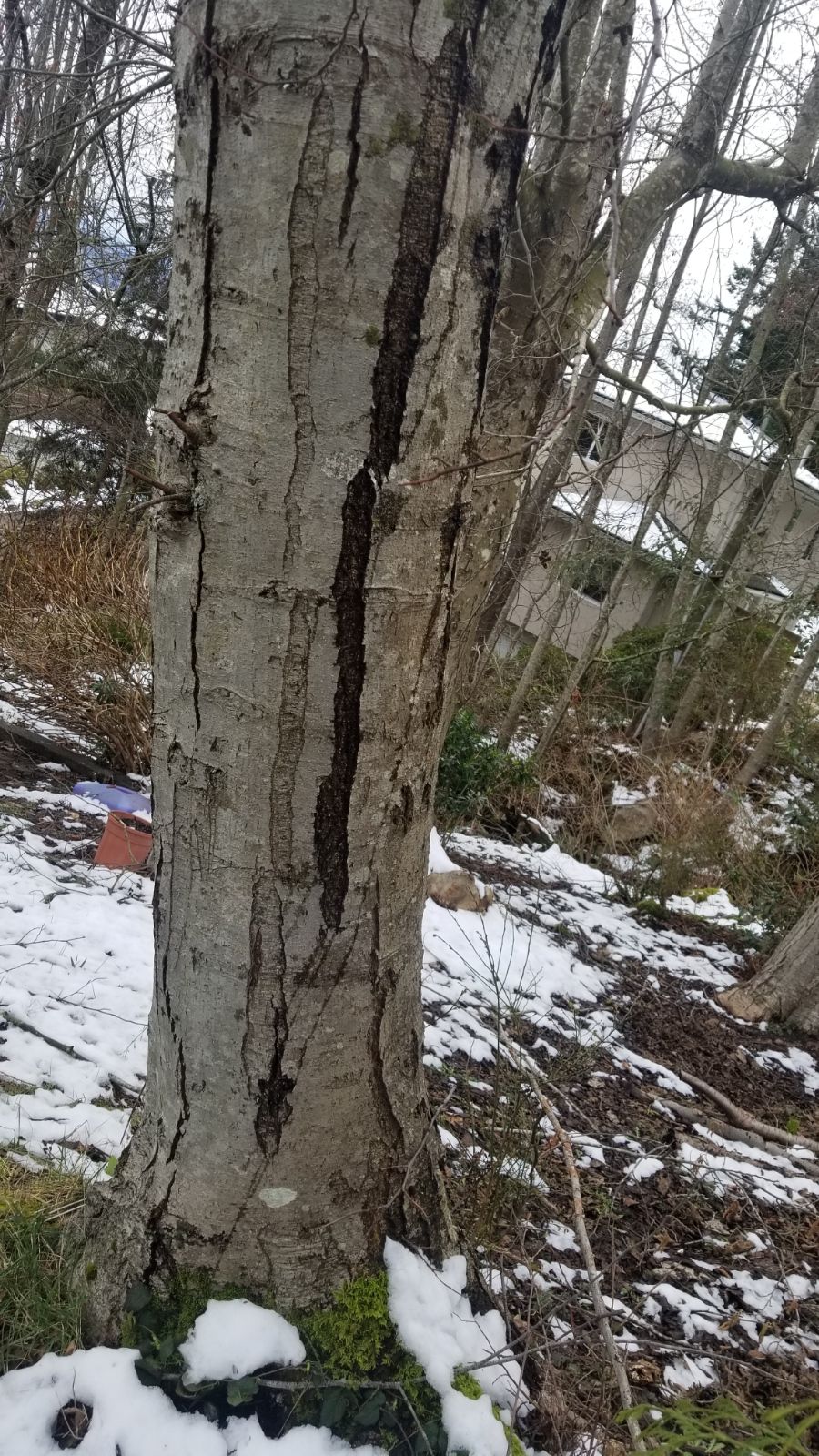
How should you care for a giant tree you want to keep?
Start with a baseline assessment. A large tree near a house should have a record of condition before there is a dispute, storm, or construction project. That report becomes the comparison point for future inspections.
Then protect the roots. Keep heavy equipment, stored materials, and repeated vehicle traffic away from the root zone. Do not allow trenching near the tree without arborist input. Do not pile soil or mulch against the trunk. Keep the root flare visible.
Prune with a clear reason. Good reasons include deadwood over targets, clearance from structures, reduction on a heavy limb, and removal of broken or diseased parts. Poor reasons include make it shorter or take the top off so it will not fall. Topping often creates decay and weak regrowth.
Water young replacement trees in dry periods. For large established trees, watering needs depend on species, soil, drainage, and weather. More water is not always better. Cedars in compacted wet soil can suffer when the root zone lacks oxygen.
Mulch can help when used correctly. A wide, shallow mulch ring can protect soil, reduce mower damage, and improve moisture balance. Keep mulch off the trunk. A mulch pile against bark can trap moisture and invite decay.
Plan construction around the tree before damage occurs. If you are adding a suite, driveway, deck, fence, retaining wall, drain line, or service trench, bring in an arborist during planning. It is easier to adjust a design before roots are cut.
Keep records. Save reports, permits, pruning notes, photos, and invoices. Responsible care is not just doing the right work. It is being able to show what was done and why.
When is removal the responsible choice?
Removal is responsible when retention creates a risk that cannot be reduced enough for the site. It may also be needed when the tree is dead, dying, structurally poor, or in conflict with approved work where retention is not practical.
Common reasons include:
- Severe root loss close to the trunk.
- Advanced decay in the stem or root flare.
- Major cracks or splitting in a main union.
- A dead or dying tree with targets below.
- Repeated limb failures from weak structure.
- A high-risk tree on a slope or ravine edge.
- A tree that cannot be retained during approved construction.
The key is proof. For a large protected tree, a homeowner should not rely on it looks dangerous or the contractor said it has to go. The reason should be documented. The report should connect the observed defects to the recommendation.
If removal is approved, ask how the work will be done. Large North Vancouver trees often stand near roofs, fences, lanes, wires, gardens, and neighbours. The crew may need climbing, rigging, sectional removal, traffic control, or crane support. The lowest price is not the only issue. The method and insurance matter.
A removal plan should also consider what happens after. Will the stump be ground? Is replacement planting required? What species fits the space? Will the new tree have enough soil to grow? A poor replanting choice can become the next conflict.
What should you replant after an old tree comes down?
Replanting depends on the site. A young tree cannot replace a 100-year-old tree right away, but it can start the next canopy cycle.
Choose the tree based on mature size, soil depth, drainage, light, overhead wires, house clearance, root space, and future maintenance. Do not choose only from a nursery tag or a photo.
For smaller city lots, the right tree may be a smaller ornamental or a compact native species. For deeper District lots, there may be room for a larger conifer or broadleaf tree. Near creeks and ravines, planting may need to respect local rules and site ecology.
If a protected tree is removed, replacement planting may be required by the City or District permit. Check the permit conditions before planting. Species, size, and timing may be set by the municipality.
The best replacement plans are simple: right tree, enough soil, no crowding, no future wire conflict, and a watering plan for establishment. A small tree planted well is better than a large nursery tree forced into the wrong spot.
How can you talk to neighbours about a giant tree?
Large trees often cross property lines with shade, roots, leaves, branches, and risk. Good communication helps.
Start with facts. Get the tree identified and assessed. Know whether the trunk is on your land, shared land, municipal land, or a neighbour's land. Do not promise removal before you know the bylaw path.
If branches overhang a property line, do not assume you can cut anything you want. Pruning that harms the tree can create liability and may break local rules. If the tree is protected, major pruning may need approval.
If the tree is rooted on a neighbour's property, you usually cannot remove it without permission. If you think it is hazardous, a written arborist report gives you a clear basis for the conversation. It is better than a verbal complaint.
If the tree is municipal, report the concern to the City or District. Do not cut a boulevard or park tree yourself.
For shared concerns, a joint inspection can help. One arborist, one report, one set of findings. That can lower tension because the discussion moves from opinion to evidence.
FAQ
Do I need a permit to remove a giant tree in North Vancouver?
You may. The City of North Vancouver requires permits for protected-tree removal, including protected trees with a diameter of 20 cm or more measured 1.4 m above ground. The District of North Vancouver has its own bylaw and permit process. Check the right municipality before any removal or major pruning.
Is an old tree dangerous just because it is old?
No. Many old trees are stable and worth keeping. Age is not the same as risk. The concern is condition: roots, trunk, crown, defects, targets, soil, slope, and past damage.
Can a tree look healthy and still have decay?
Yes. A tree can have a green crown and still have internal decay, root loss, or a weak union. Leaves show that parts of the tree are alive. They do not prove the structure is sound.
What are the most common warning signs in large North Vancouver trees?
Watch for fresh lean, soil lifting, large dead branches, cracks, fungal conks, cavities, broken limbs stuck in the crown, dead tops, and recent root damage from digging or paving.
Should I top a large fir, cedar, spruce, or maple to make it safer?
No. Topping is not a proper risk fix for mature trees. It can lead to decay, weak regrowth, sun damage, and higher future risk. A better plan may include selective reduction, deadwood pruning, cabling, monitoring, or removal.
How often should a large old tree be inspected?
It depends on the tree and the targets. A large tree over a house, driveway, or play area may need yearly checks or checks after major storms. A lower-risk tree in an open area may need less frequent review. An arborist can set a schedule after the first inspection.
Can roots damage foundations or drains?
Roots often enter existing cracks, gaps, or weak points. They can lift pavement, affect drains, and change soil moisture. Do not cut major roots near a mature tree without advice, because root loss can affect stability.
What should I do if a storm breaks a large branch?
Keep people away from the area. Do not stand under the branch or pull it down with a rope. If it is over a house, wire, driveway, path, or neighbour's yard, call an emergency tree crew.
What happens if I remove a protected tree without approval?
You may face fines, replacement orders, permit problems, and liability. The exact result depends on the bylaw and facts. Check first, document the condition, and wait for approval when a permit is required.
Who should I call for a giant tree or old tree in North Vancouver?
Call Aesthetic Tree & Hedge Services at (604) 721-7370. Our arborists assess large trees and old trees across North Vancouver, Vancouver, Burnaby, Richmond, Coquitlam, and the Lower Mainland. We prepare reports, prune, manage storm damage, grind stumps, and remove trees when retention is not practical.
Found this helpful? Follow our tree care insights directly on Google.
Make us your preferred source on GoogleBefore You Go
Where are you in your tree care journey?
Our Tree Care Services
ISA-certified arborists serving Greater Vancouver


Explore Our Tree Care Services
From expert pruning to safe tree removal, our ISA-certified arborists are ready to help across Greater Vancouver.
View Services