
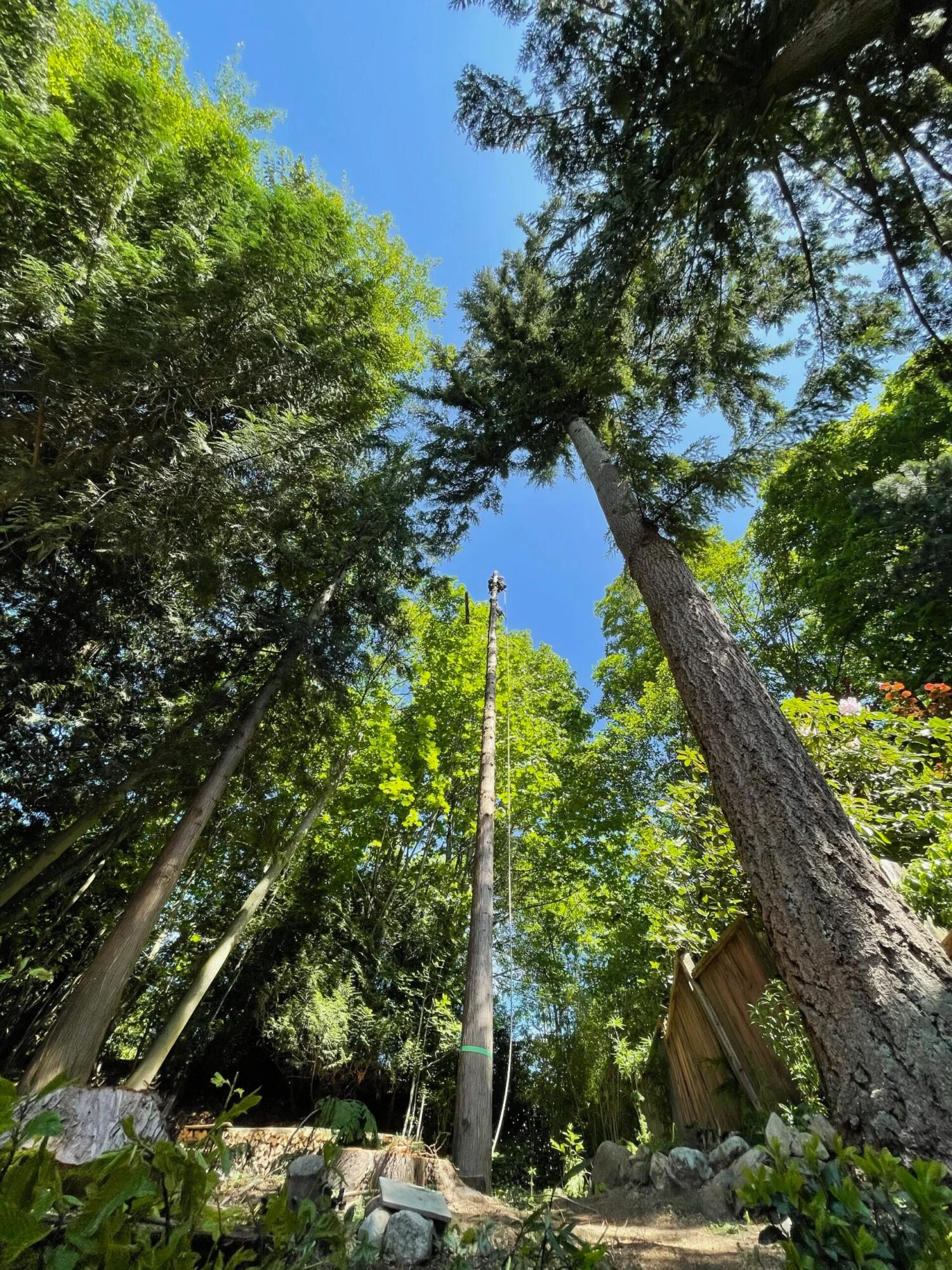
Tree Removal Vancouver BC — Licensed & Insured Arborists
Safe, efficient tree removal across Greater Vancouver. ISA-certified crews with $3M liability insurance, full permit handling, and same-week scheduling.
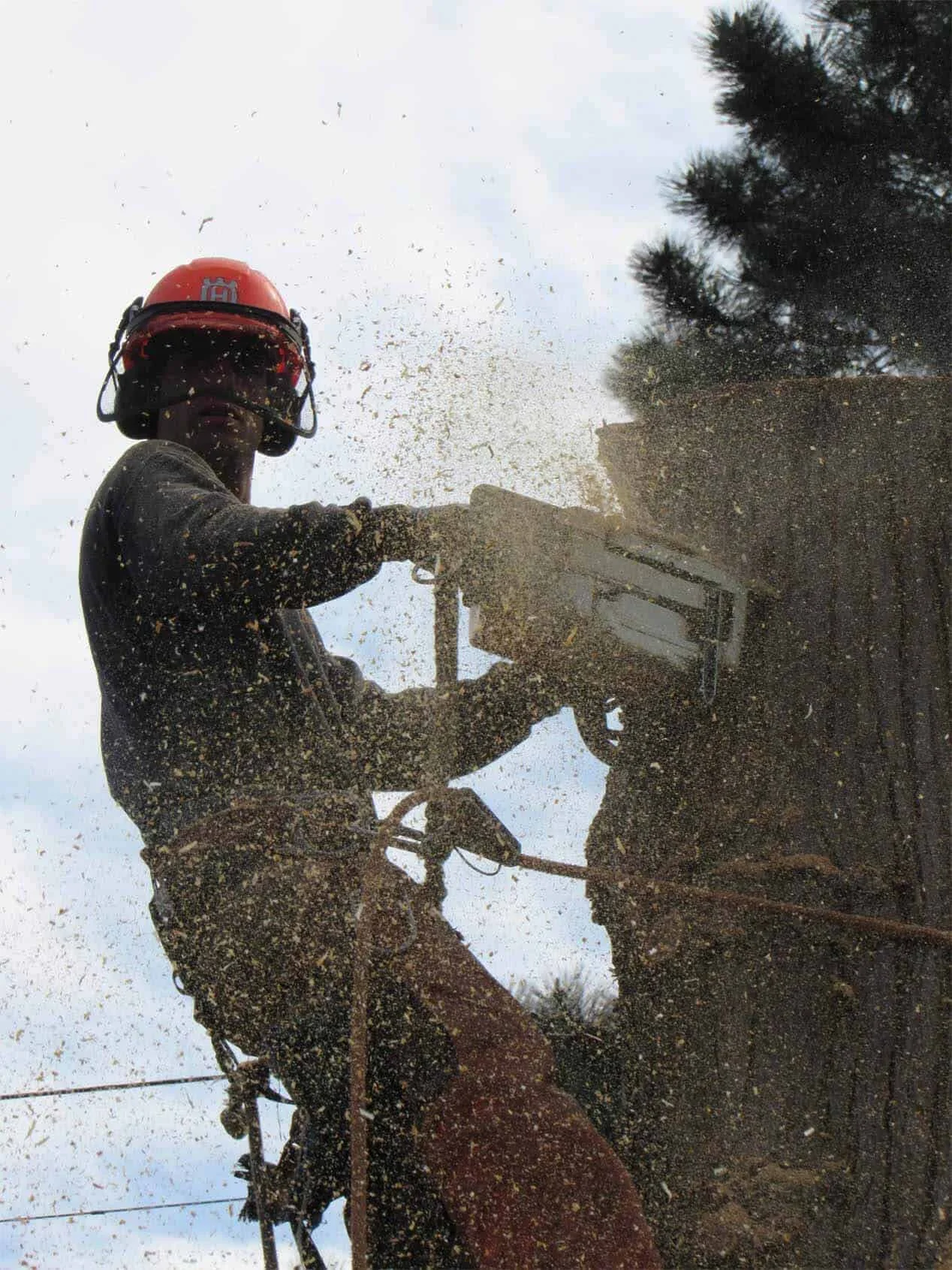
At a Glance
What You Need to Know
Aesthetic Tree provides full-service residential and commercial tree removal across Greater Vancouver. Our ISA-certified arborists handle everything from permit applications under the City of Vancouver Protection of Trees By-law to hazardous removals near power lines coordinated with BC Hydro. Every job is backed by $3M liability insurance and WorkSafeBC coverage. Most residential removals are completed in a single day.
Investment
$500 – $5,000+
Availability
Same-week scheduling · Same-day emergency available
01
Why Choose Aesthetic Tree for Tree Removal in Vancouver?
Not every tree can be saved. When a tree becomes hazardous — from storm damage, root rot, structural failure, or encroachment on utilities — professional removal is the safest path forward. Our ISA-certified arborists assess every tree before work begins, determining the safest felling direction, rigging plan, and equipment requirements.
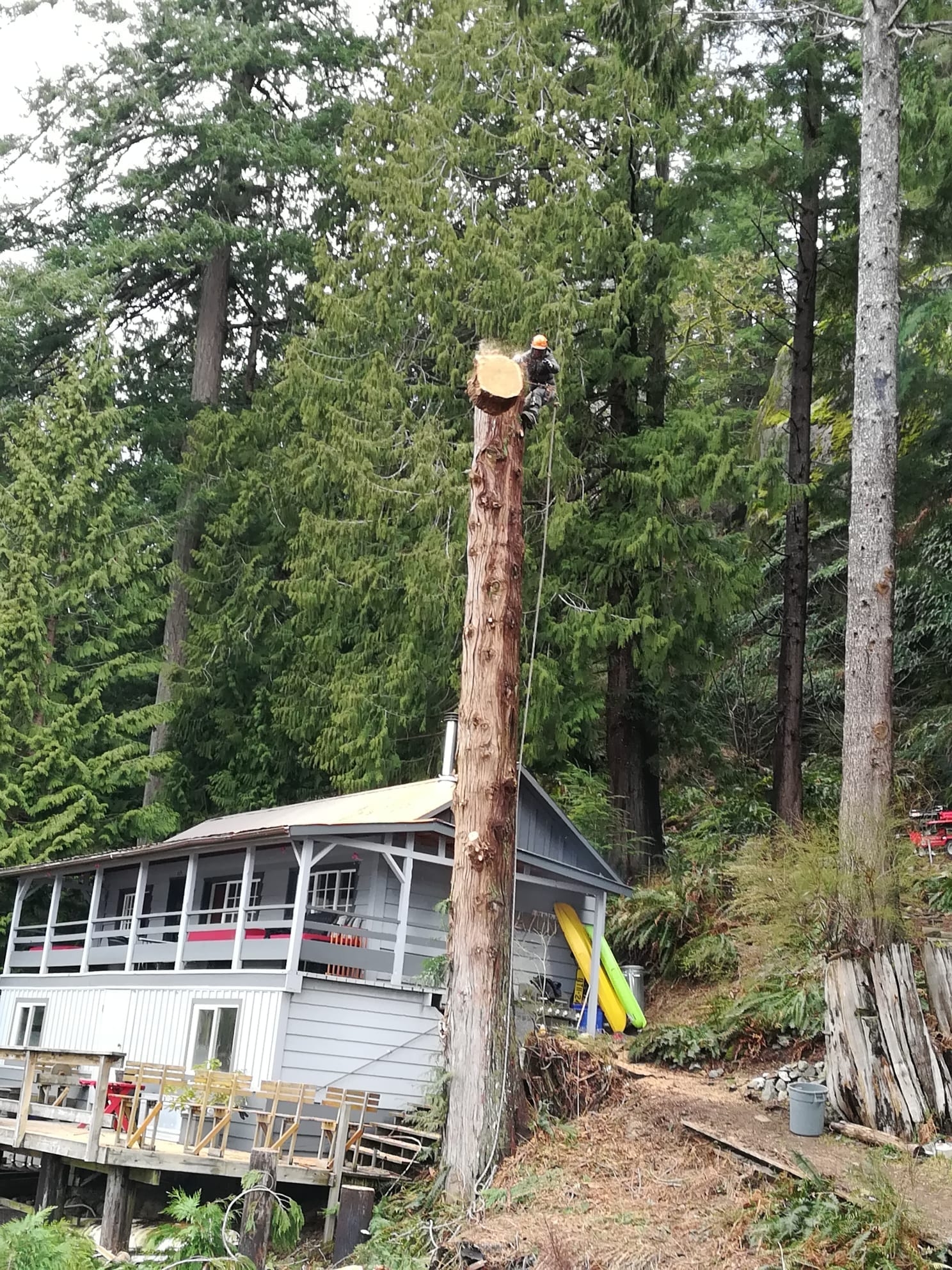
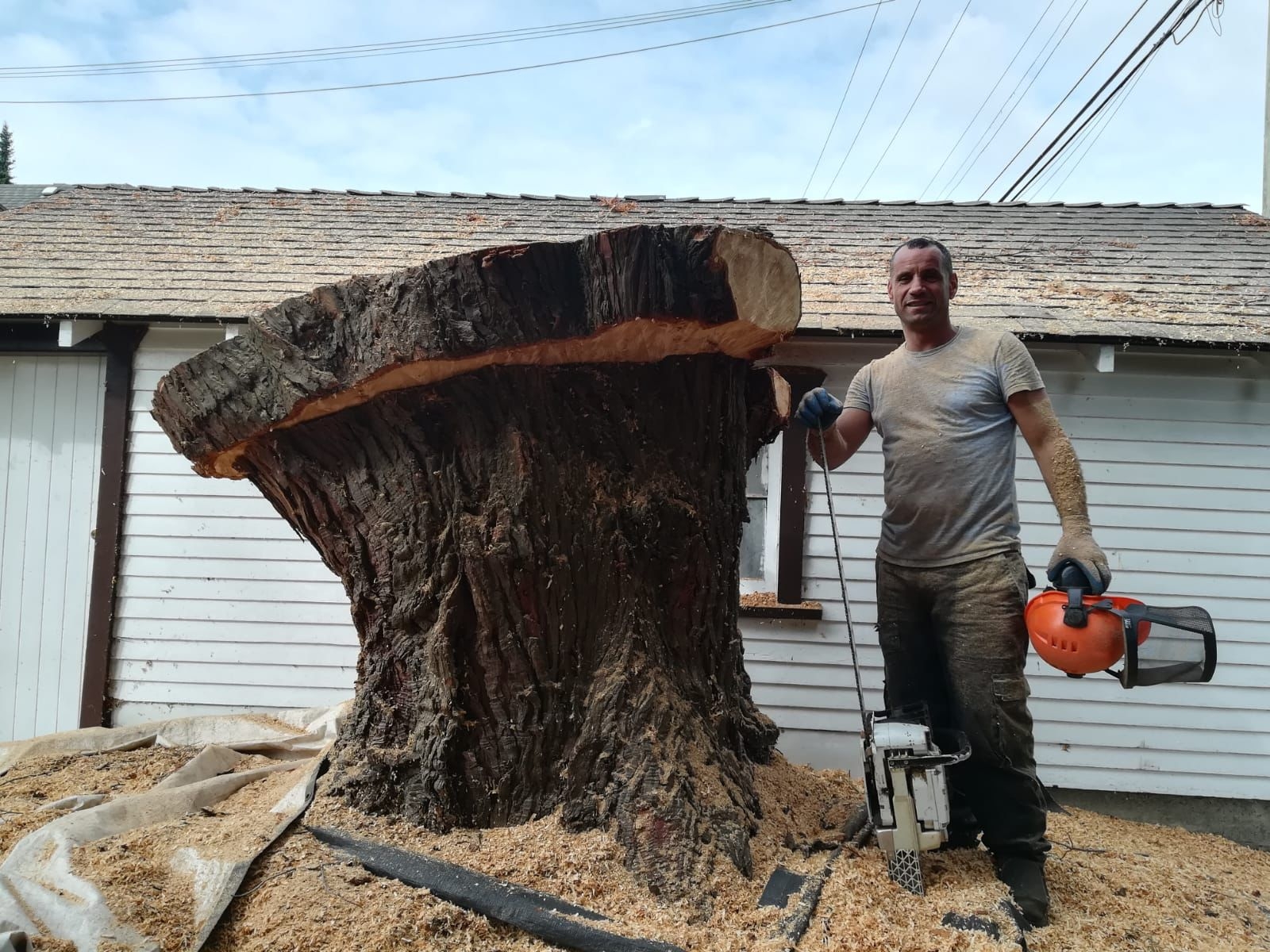
We specialize in complex removals that other companies turn away: mature Western red cedars in tight backyards, storm-damaged Douglas firs leaning over rooflines, and large-diameter bigleaf maples on sloped properties. Our crew leaders average 15+ years of climbing experience in Greater Vancouver's urban canopy, and when a fallen tree cannot wait, our 24/7 emergency tree service responds the same day.
Every removal follows ANSI Z133 safety standards and ISA best management practices. We carry $3M in liability insurance — not the industry-minimum $2M — because your property deserves real protection.
Not sure if your tree needs a permit?
How Does the Tree Removal Permit Process Work in Vancouver?
Under the City of Vancouver's Protection of Trees By-law (No. 9958), most trees with a trunk diameter of 20 cm or more at breast height require a removal permit. We handle the entire application process: measuring the tree, completing the paperwork, submitting to the city, and tracking approval.
Different municipalities across Greater Vancouver have different bylaws. Burnaby, North Vancouver, West Vancouver, and Coquitlam each have unique tree protection regulations — our guide to the Vancouver tree bylaw breaks down the thresholds in detail. Our arborists know the requirements in every municipality we serve, so you never have to worry about compliance.
Permit turnaround times vary by municipality — typically 2 to 6 weeks. We can expedite the process for hazardous trees that pose an immediate risk to people or structures. Most applications require a certified arborist report, which we prepare in-house. Emergency removals of imminently dangerous trees can proceed before permit approval under most municipal bylaws.
Not sure if your tree needs a permit?
03
What Does Residential Tree Removal in Vancouver Cost?
Tree removal costs in Vancouver range from $500 for small ornamental trees to $5,000+ for large, complex removals involving crane assistance. The primary cost factors are tree height, trunk diameter, proximity to structures and power lines, and site access for equipment.
We provide free, no-obligation on-site estimates. Our arborist will inspect the tree, assess the complexity, and provide a detailed written quote — not a ballpark over the phone. The quote includes everything: crew, equipment, permit fees, debris removal, and site cleanup.
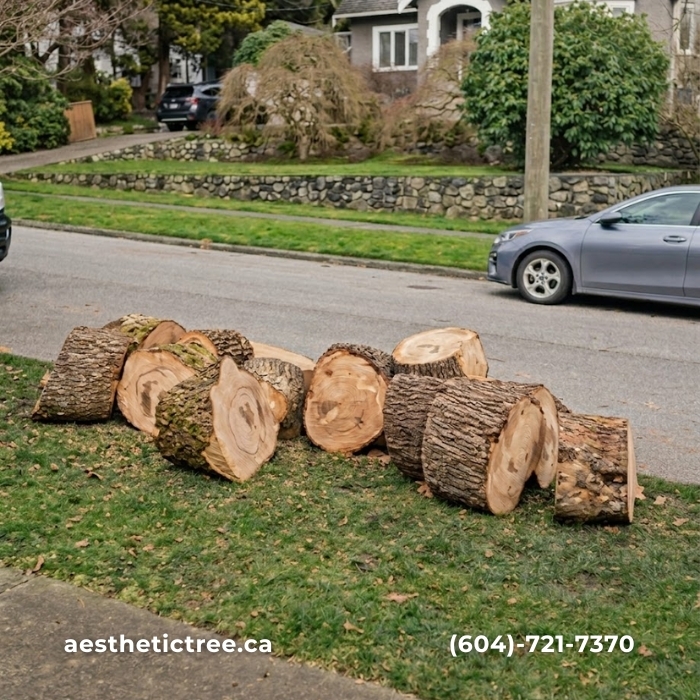
Most residential tree removals are completed in a single day. Larger removals — particularly those requiring a crane or involving multiple trees — may take 2 to 3 days. Once the tree is down, stump grinding clears what is left below grade so you can replant or landscape. We coordinate with BC Hydro when work is within 3 metres of power lines, which can add 1 to 2 business days for their crew to attend. We serve homeowners throughout the city — see our Vancouver tree service area for local coverage.
Aesthetic Tree & Hedge Services removes trees of every size across Vancouver, from 6-metre backyard fruit trees to 30-metre Douglas Firs wedged between houses and power lines. Our ISA-certified arborists handle the full process: site assessment, City of Vancouver permit application under By-law 9958, safe felling or sectional dismantling and complete debris removal. With 20+ years of experience and 100+ five-star Google reviews, we are one of Vancouver's most trusted tree removal companies. Call (604) 721-7370 for a free, no-obligation estimate.
When Does a Tree in Vancouver Need to Be Removed?
Not every tree problem requires removal. A certified arborist will always explore pruning, cabling, or bracing before recommending that a tree come down. However, removal becomes the safest option when a tree meets one or more of these criteria:
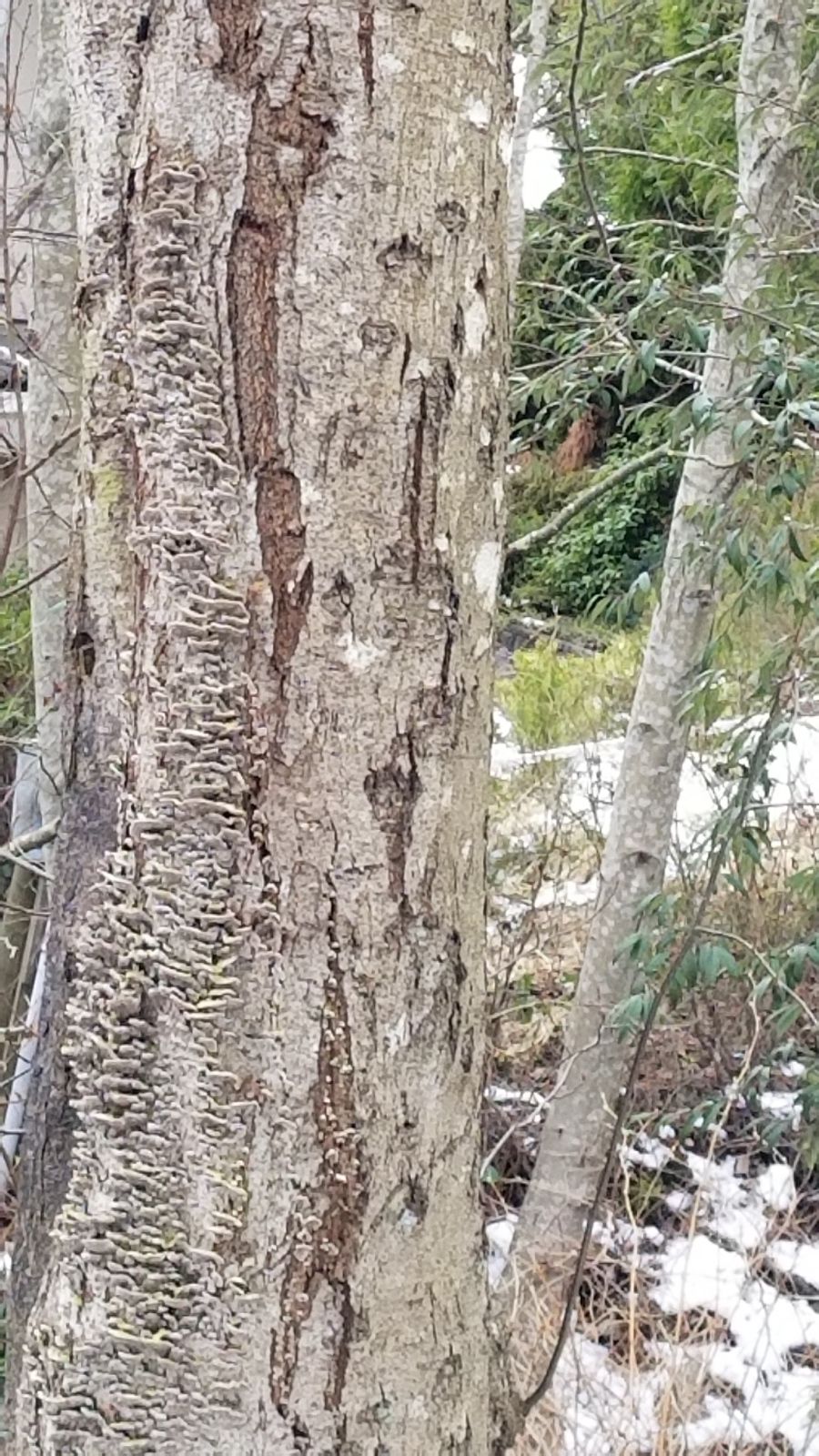
- Dead or dying trees— A tree with no living canopy, extensive bark loss, or large fungal fruiting bodies (such as bracket fungi) at the base is structurally compromised and can fail without warning.
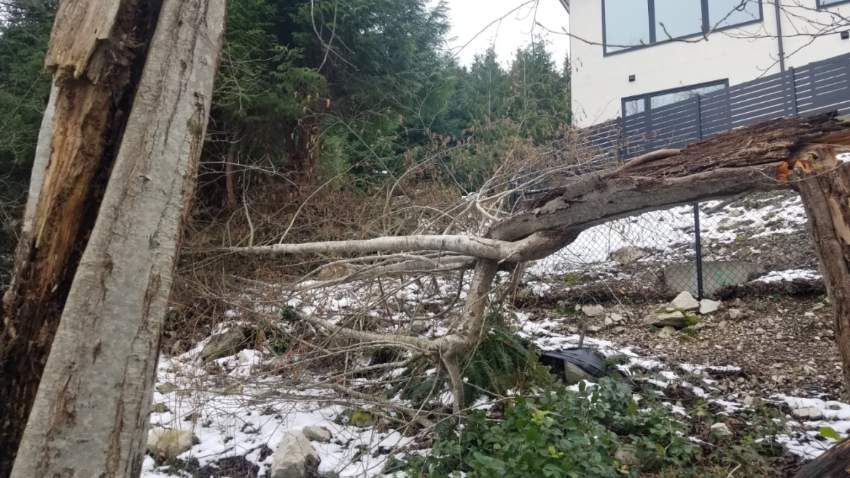
- Hazardous lean or root failure— Trees that have shifted from vertical after a storm, or that show heaving soil and exposed roots on one side, may be in the early stages of uprooting.
- Severe structural defects— Co-dominant stems with included bark, large cavities in the trunk, or major cracks through the main stem create weak points that can split under wind or snow load.
- Root damage to foundations or utilities— Species like poplar, willow and silver maple are known for aggressive root systems that can crack foundations, lift sidewalks and infiltrate sewer lines.
- Construction or development conflicts— When a new build, laneway house, or addition falls within a tree's critical root zone and the tree cannot be adequately protected during construction, removal may be required as part of the development permit.
- End of natural lifespan— Ornamental species like birch and some cherry cultivars have natural lifespans of 40 to 60 years. When they decline beyond recovery, proactive removal prevents emergency situations.
How Does the City of Vancouver Tree Removal Permit Process Work?
Under the City of Vancouver's Protection of Trees By-law (By-law No. 9958), any tree with a trunk diameter of20 cm or greatermeasured at 1.4 metres above the base requires a permit before removal. This applies to all private property within city limits.
What the permit application requires:
- A completed application form with the property owner's signature
- A site plan showing the tree's location relative to buildings and property lines
- A certified arborist report documenting the tree's species, size, condition and the reason for removal
- Photographs of the tree from multiple angles
- A replacement tree plan or cash-in-lieu payment
Permit fees:The first tree removal permit costs approximately $113. Each additional tree within 12 months costs $324. Processing typically takes 2 to 4 weeks and permits are valid for approximately 6 months once approved.
Replacement requirements:The City requires a replacement tree with a minimum 2 cm caliper for every removed tree. The replacement must be maintained for a two-year establishment period. Property owners who cannot plant a replacement may pay $1,000 per tree as cash-in-lieu, which funds the City's urban canopy program.
Penalties for removing a tree without a permitrange from $1,000 for a first offence to $5,000 for subsequent violations. Removal of heritage or exceptional trees can result in fines up to $20,000, plus mandatory replacement planting and potential stop-work orders on any active construction.
Aesthetic Tree handles the entire permit process on your behalf, from the arborist report through to the application submission, so you do not need to navigate the City's requirements yourself.
What Does Professional Tree Removal in Vancouver Actually Cost?
Tree removal pricing depends on the tree's height, trunk diameter, species, location on the property and proximity to structures or power lines. Here are typical cost ranges for Vancouver in 2025-2026:
- Small trees(under 6 metres / 20 feet):$200 to $400
- Medium trees(6 to 12 metres / 20 to 40 feet):$400 to $1,200
- Large trees(12 to 18 metres / 40 to 60 feet):$1,200 to $3,000
- Very large or complex removals(over 18 metres / 60+ feet, or near structures/power lines):$3,000 to $8,600+
These ranges include felling or sectional dismantling, chipping of branches and cleanup. They do not include stump grinding (typically $100 to $400 per stump) or the permit application fee.
Factors that increase cost:
- Proximity to houses, fences, or other structures requiring sectional removal with rigging
- Trees within 3 metres of BC Hydro distribution lines (requires a certified utility arborist)
- Difficult access requiring crane assistance
- Emergency or after-hours service (30% to 50% surcharge)
- Hazardous conditions such as hanging limbs, rot, or insect damage that make climbing unsafe
We provide free on-site estimates. Every quote includes a detailed scope of work so there are no surprises on the day of the job.
How Do We Safely Remove Trees Near Power Lines?
Trees near power lines require specialized training and equipment. BC Hydro regulations set strict clearance requirements:
- Service wires(the line from the pole to your home): minimum1 metreclearance
- Distribution lines(neighbourhood power lines): minimum3 metresclearance for all persons, equipment and tree parts
- Transmission lines(high-voltage corridors): minimum6 metresclearance
Our arborists hold utility-line clearance certification and coordinate with BC Hydro when a tree must be removed within these zones. In some cases, BC Hydro will disconnect service temporarily to allow safe removal. We manage that coordination as part of our service.
Important:Never attempt to cut a tree near power lines yourself. Contact between a tree (or a ladder, rope, or tool touching a tree) and a power line can cause fatal electrocution. Call a professional.
What Happens During the Nesting Season?
The federal Migratory Birds Convention Act protects all migratory bird species and their active nests across Canada. In British Columbia, the general nesting season runs fromMarch 15 to August 15, though some species nest outside this window.
Before beginning any tree removal during nesting season, our arborists conduct a nest survey. If an active nest with eggs or chicks is found, the tree must remain undisturbed until all young have fledged and left the nest. Violating this federal law carries significant fines.
When possible, we recommend scheduling planned tree removals between September and February to avoid nesting season complications entirely. Emergency removals of hazardous trees can still proceed during nesting season after a nest survey confirms no active nests are present.
Why Choose Aesthetic Tree & Hedge Services for Tree Removal?
ISA-certified arborists on every job.The International Society of Arboriculture certification requires passing a 200-question exam covering all aspects of tree biology, safety and care, plus 3 years of professional experience. Our arborists maintain their certification through 30 continuing education units every three years, ensuring they stay current with industry best practices.
20+ years of Vancouver-specific experience.We know the soil conditions, common species, storm patterns and municipal regulations across every Vancouver neighbourhood, from the clay soils of Kerrisdale to the steep lots of the British Properties.
Full-service approach.We do not just cut the tree and leave. Our service includes stump grinding (if requested), debris chipping, site raking and disposal of all materials. If your permit requires a replacement tree, we can source and plant an appropriate species.
100+ five-star Google reviews.Our reputation is built on consistent quality, transparent pricing and respectful treatment of both your property and your neighbours.
Areas We Serve Across Greater Vancouver
We provide tree removal services throughout the City of Vancouver and surrounding municipalities, including Arbutus Ridge, Cedar Cottage, Champlain Heights, Collingwood, Commercial Drive, Downtown, Dunbar-Southlands, Fairview, Grandview-Woodland, Hastings-Sunrise, Kensington-Cedar Cottage, Kerrisdale, Killarney, Kitsilano, Marpole, Mount Pleasant, Oakridge, Riley Park, Shaughnessy, South Cambie, South Vancouver, Strathcona, Sunset, Victoria-Fraserview, West End, West Point Grey and Yaletown.
We also serve North Vancouver, West Vancouver, Burnaby, Coquitlam, Port Coquitlam,.
Frequently Asked Questions
How much does tree removal cost in Vancouver?
Tree removal in Vancouver typically costs $200 to $400 for small trees under 6 metres, $400 to $1,200 for medium trees between 6 and 12 metres and $1,200 to $3,000+ for large trees. Very large or complex removals near structures or power lines can reach $8,600 or more. These prices include felling, chipping and site cleanup. Stump grinding and permit fees are additional. The best way to get an accurate price is to request a free on-site estimate.
Do I need a permit to remove a tree on my own property in Vancouver?
Yes. Under the City of Vancouver's Protection of Trees By-law (No. 9958), any tree with a trunk diameter of 20 cm or greater at 1.4 metres height requires a removal permit. The permit application requires a certified arborist report, a site plan, photographs and a replacement tree plan. The fee is approximately $113 for the first tree. Removing a tree without a permit can result in fines of $1,000 to $20,000 depending on the severity.
How long does the tree removal permit process take?
The City of Vancouver typically processes tree removal permits in 2 to 4 weeks. Permits are valid for approximately 6 months once approved. Applications that include a complete arborist report and all required documentation are processed faster. We handle the entire application on your behalf.
Can trees be removed during nesting season in Vancouver?
Tree removal during nesting season (March 15 to August 15) is legal but requires a nest survey before work begins. Under the federal Migratory Birds Convention Act, it is illegal to disturb or destroy active nests of migratory birds. If an active nest is found, the tree must be left undisturbed until all young have fledged. Our arborists conduct nest surveys as part of every job during this period.
What should I do if a tree falls on my house during a storm?
Call a professional tree service immediately. Do not attempt to remove the tree yourself, especially if it is in contact with power lines. If power lines are involved, call BC Hydro's emergency line. We offer 24/7 emergency tree removal service for storm damage situations. Document the damage with photographs for your insurance claim and contact your insurer as soon as it is safe to do so.
Is it cheaper to cut down a tree in winter?
Tree removal costs are generally consistent year-round in Vancouver due to our mild climate. However, scheduling removals between September and February avoids nesting season survey requirements and can sometimes offer more flexible scheduling since demand is slightly lower. Emergency removals during winter storms carry a 30% to 50% surcharge.
Tree Removal Vancouver: Permits, Risk and Hiring Safely
Tree removal Vancouver Reddit threads usually come down to three questions: whether a permit is needed, whether a tree is actually hazardous and whether the lowest quote is safe. The answers can mean the difference between a clean, legal removal and a fine, a damaged roof, or an uninsured injury on your property. Here is what Vancouver arborists with ISA certification actually say about each one.
Permits: For most trees in the City of Vancouver, a permit is required under the Protection of Trees By-law (No. 9958) for any tree with a trunk diameter of 20 cm or more at breast height. Cutting without a permit can result in fines and mandatory replacement at your expense. Most permit applications require acertified arborist reportdocumenting the tree's condition. OurVancouver tree removal permit guidecovers the full process, including municipal differences across Burnaby, North Vancouver and West Vancouver.
Hazard assessment: A leaning or dead-looking tree is not automatically a removal candidate and that distinction matters legally. Many trees that homeowners flag as hazardous are structurally sound; some that appear healthy harbour internal decay that makes them more dangerous than they look. The only reliable method is a formalISA Tree Risk Assessmentusing the TRAQ (Tree Risk Assessment Qualification) methodology. Our certified arborists rate both the likelihood of failure and the potential consequence of impact, giving you a documented, defensible answer rather than a neighbour's guess or a contractor's verbal opinion.
Cheap quotes: Tree removal is hazardous work and under-insurance is the most common hidden risk in a low quote. A company without adequate liability coverage means that a damaged fence, a crushed roofline, or a crew injury can become your financial problem. Before hiring, confirm ISA certification on every crew member, active WorkSafeBC coverage and whether the quoted scope explicitly includes permit fees, full debris removal and stump grinding. A quote that omits these line items will cost more than it appears - and a crew that skips WorkSafeBC registration is operating outside BC law.
Need a Tree Removed in Vancouver?
Get a free, no-obligation estimate from our ISA-certified arborists. We handle permits, coordinate with BC Hydro, and complete most jobs in a single day.
How It Works
Our Process —
Start to Finish
From your first call to final cleanup, every step is handled by certified professionals with clear communication throughout.
Start With a Free QuoteFree Consultation
Our ISA-certified arborist visits your property, assesses the situation, and provides a detailed written quote — no phone estimates.
Permit & Planning
We handle all municipal permits, coordinate with BC Hydro if needed, and create a detailed work plan for safe execution.
Professional Execution
Our crew executes the work following ANSI Z133 safety standards. Most residential jobs are completed in a single day.
Complete Cleanup
Debris removal, site cleanup, and final walkthrough. Your property is left cleaner than we found it — guaranteed.
Our Work
See It In Action
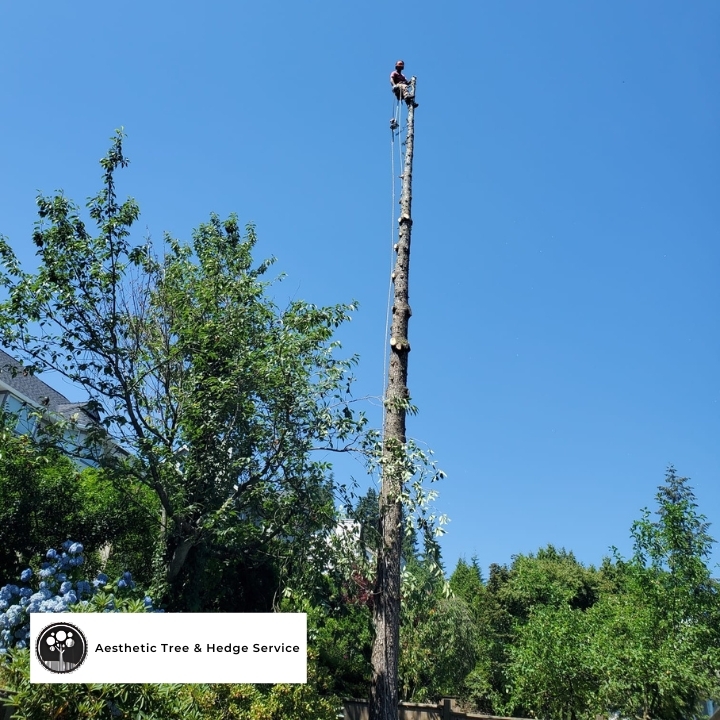
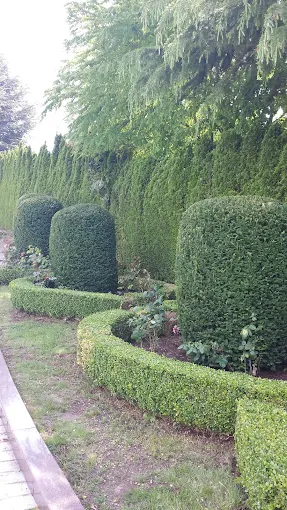
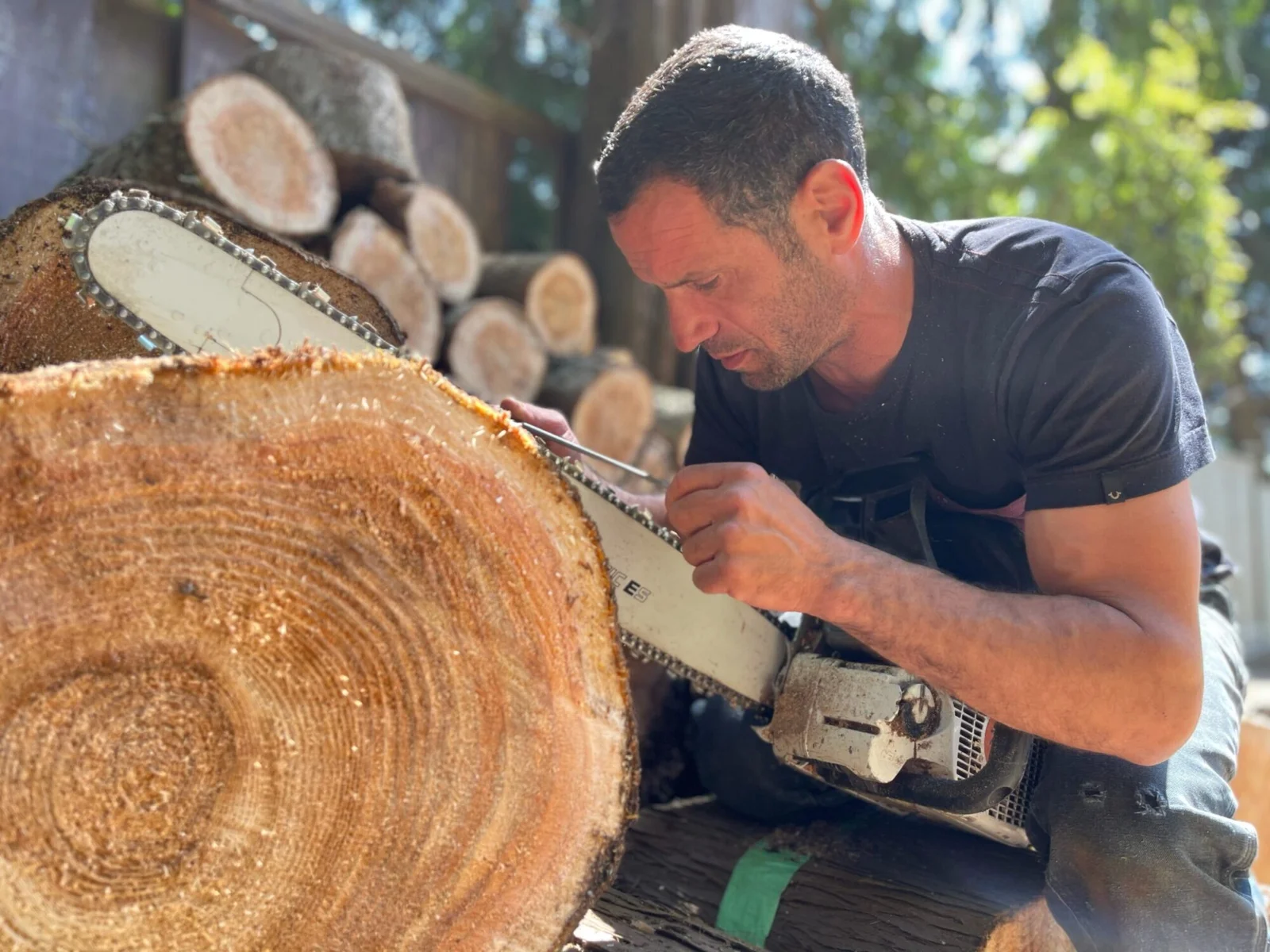
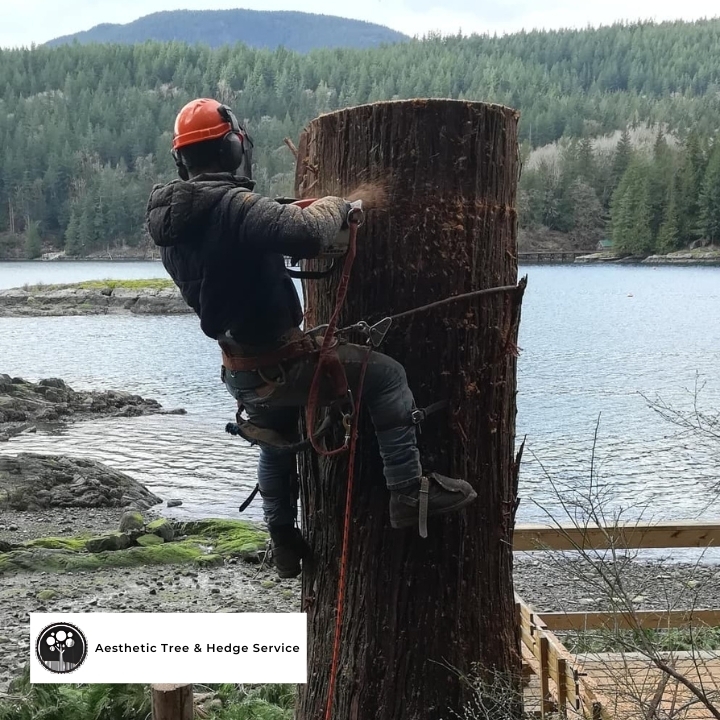
Common Questions
FAQ
Everything you need to know about our tree removal vancouver services.
Explore More
Related Services
Serving All of Greater Vancouver
Need Tree Removal Vancouver in Vancouver?
Get a free, no-obligation estimate from our ISA-certified arborists. We serve all of Greater Vancouver with professional, insured tree care.
Aesthetic Tree & Hedge Services — ISA-certified arborists serving Greater Vancouver. See everything we do on the Aesthetic Tree homepage.