
TL;DR — Quick Summary
Why prune your trees regularly? ISA-certified arborists reveal how routine pruning prevents storm damage, disease spread, and costly emergency callouts.
# Why You Should Prune Your Trees Regularly (And What Neglect Will Cost You)
A tree growing on a Vancouver property is not growing in a forest. It is growing beside roofs, gutters, driveways, vehicles, neighbours' yards, sidewalks, overhead utility lines, and municipal tree bylaws that can carry real penalties.
That changes everything about how you manage it.
Regular pruning is not cosmetic maintenance. It is the work of keeping a living structure safe beside the things you care about. It removes dead wood before it falls. It addresses weak branch unions before they split. It keeps a canopy from overloading its own scaffold during a January windstorm.
At Aesthetic Tree & Hedge Services, our ISA-certified arborists assess and prune trees across Vancouver, Burnaby, North Vancouver, Richmond, Coquitlam, and the broader Lower Mainland. We do not treat pruning as yard cleanup. We treat it as structural tree care: work that shapes how a tree grows and reduces the chance it becomes a problem you have to manage in the dark after a storm.
Here's what certified arborists look for, why timing matters in the Lower Mainland, and what years of deferred pruning can actually cost.
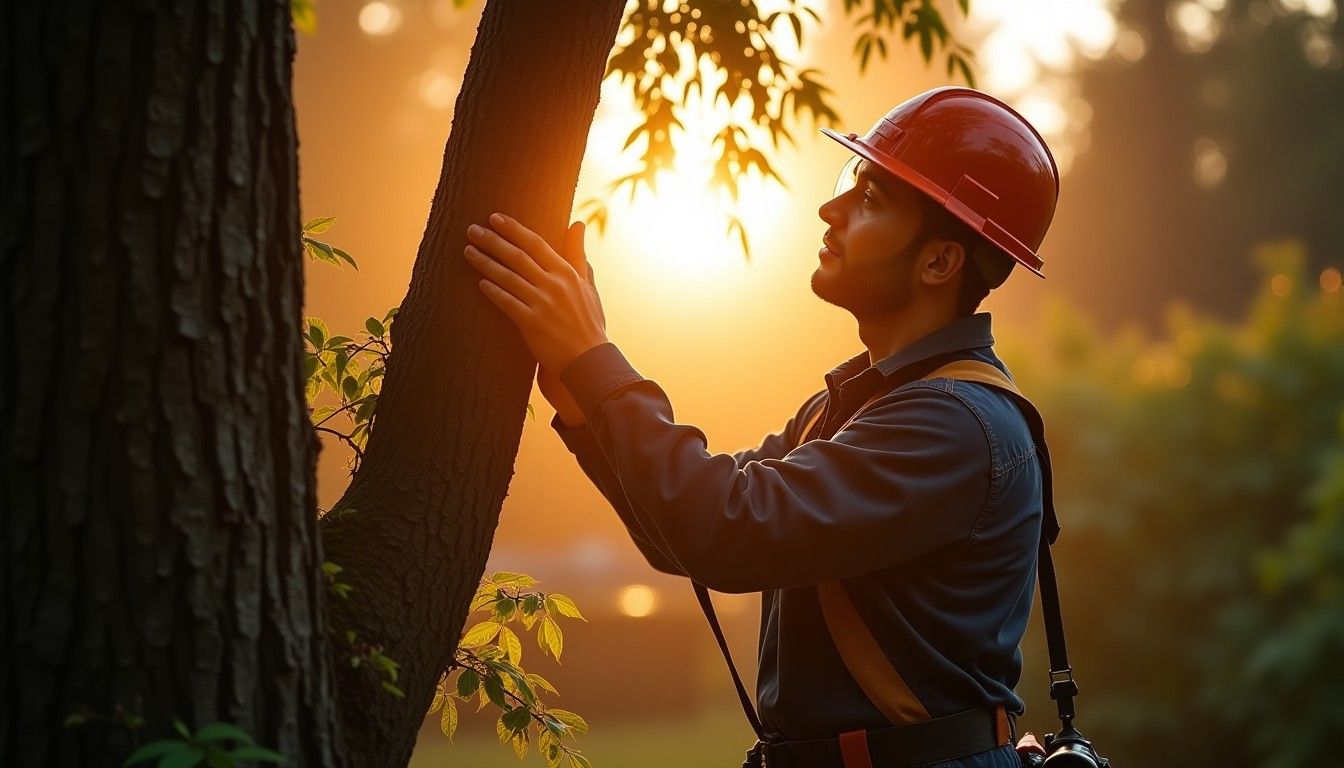
[Suggested image: ISA-certified arborist inspecting a mature residential tree in Vancouver before pruning.]
---
TL;DR
- Regular pruning removes dead, diseased, rubbing, and structurally weak branches before they become hazards.
- ANSI A300 pruning standards are the North American benchmark for professional tree care and are commonly used by qualified arborists to guide pruning objectives, cut placement, and pruning dose.
- Vancouver's wet winters, saturated soils, and wind exposure make structural defects in neglected trees more serious.
- Bad pruning, including topping, flush cuts, and lion-tailing, can be worse than no pruning at all.
- Severe weather causes billions of dollars in insured losses across Canada in heavy-loss years, according to Insurance Bureau of Canada reporting, and trees are one common source of storm-related property damage.
- Preventive pruning usually costs less than emergency removal, roof repair, fence replacement, or an insurance dispute after a foreseeable failure.
---
What Happens When You Skip Pruning for Years?
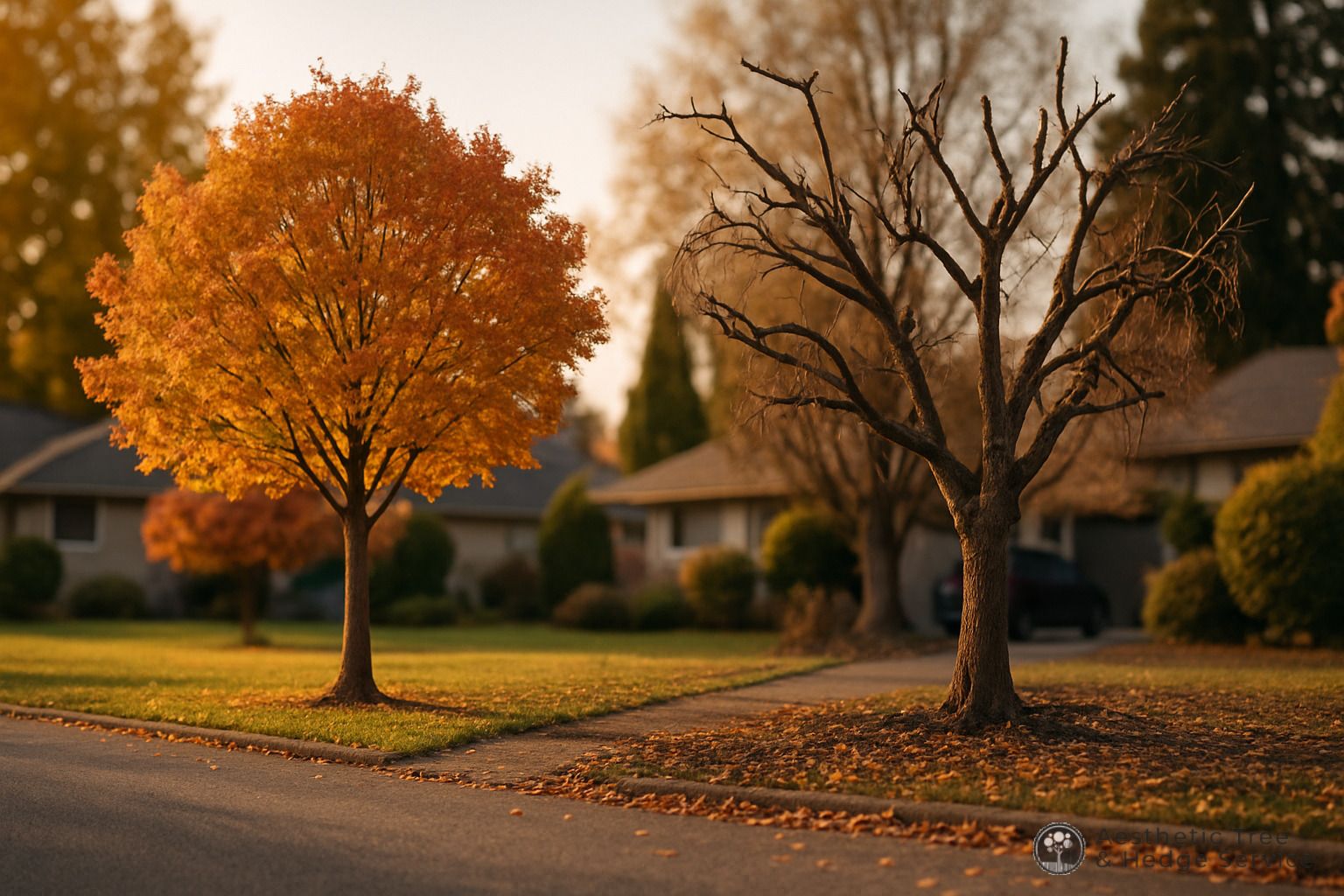
Trees do not usually fail all at once. They decline in stages.
One dead limb stays in the canopy for two seasons. One co-dominant stem keeps growing, trapping bark between it and the main trunk. One rubbing branch opens a wound that decay organisms can enter. One cedar hedge goes untrimmed long enough that the interior turns brown and bare.
Each problem is manageable when it is small. After several years, you often have four or five problems interacting at once.
In our experience assessing neglected trees across the Lower Mainland, the pattern is consistent. By the time a homeowner calls, the tree has often been showing warning signs for one to three years: deadwood visible in the upper canopy, a crack running through a major fork, fungal brackets at the base, or limbs so end-heavy that any serious wind event becomes a real test of the attachment.
The call often comes after a near-miss. A branch lands on a fence. A neighbour points out a limb hanging over their property line. A homeowner notices a split after a windstorm and realizes the defect was probably there much earlier.
Dead branches do not fall on a schedule. They fall when wind loads the canopy, when wood is saturated after heavy rain, or when decay has progressed far enough that the branch can no longer hold itself up. In the Lower Mainland, from October through March, those conditions arrive regularly and often together.
BC Hydro maintains vegetation clearance around transmission and distribution lines because trees and branches are a known cause of outages during storms. That is not a theoretical risk. It is an operational priority for the province's largest utility, and it is one reason canopy management near overhead infrastructure deserves consistent attention.
The question is not whether every unpruned tree will fail. Many will not. The question is whether a visible, foreseeable defect, deadwood, a cracked union, an overloaded limb, is being left to worsen beside your home, your vehicles, your fence, or your neighbour's property.
---
Does Regular Pruning Actually Make Trees Healthier and Stronger?
Yes, when it is done correctly. The distinction matters.
Good pruning improves structure. It removes dead or diseased wood, corrects rubbing branches, addresses weak attachments, improves clearance from structures, and helps young trees develop better architecture.
Bad pruning can shorten a tree's useful life and create the very problems you are trying to avoid. Topping, flush cuts, over-thinning, and lion-tailing all create long-term structural and health issues.
The professional standard arborists commonly reference is ANSI A300, Part 1: Pruning. It sets expectations for pruning objectives, cut placement, and pruning dose. One widely used guideline is that no more than about 25% of a tree's live crown should be removed in a single pruning event, except in unusual cases where a qualified arborist has a specific reason. Removing too much live crown can trigger stress responses, including fast-growing, weakly attached shoots that create new structural problems over time.
Early structural pruning is especially valuable. On young maples, ornamental cherries, Douglas firs, and most landscape trees, a competing leader can often be subordinated or removed before it becomes a serious defect.
Co-dominant stems grow larger over time, compressing bark between them. Arborists call this included bark. Included bark prevents a strong wood-to-wood bond. Under wind load, ice weight, or the sheer mass of an end-heavy limb, that union can split.
We have seen this on properties in Dunbar, Kitsilano, Lynn Valley, and Burke Mountain: mature trees where a competing stem was left unaddressed when it was ten centimetres in diameter and later developed into a thirty-centimetre split waiting for a trigger. Corrective work at that stage is far more expensive, and in some cases the tree can no longer be retained safely.
The right intervention at the right age makes a real difference.
Pruning is not about making a tree look tidy. It is about deciding what should stay so the tree can mature with stronger, safer architecture.
[Suggested image: Close-up comparison of a proper branch collar cut versus a flush cut or stub cut.]
---
How Does Pruning Protect Your Home During Vancouver Storms?
The Lower Mainland gets real storm pressure from October through March. Wet soil can reduce anchorage. Wind loads the canopy. Trees with existing defects are more vulnerable when those conditions arrive together.
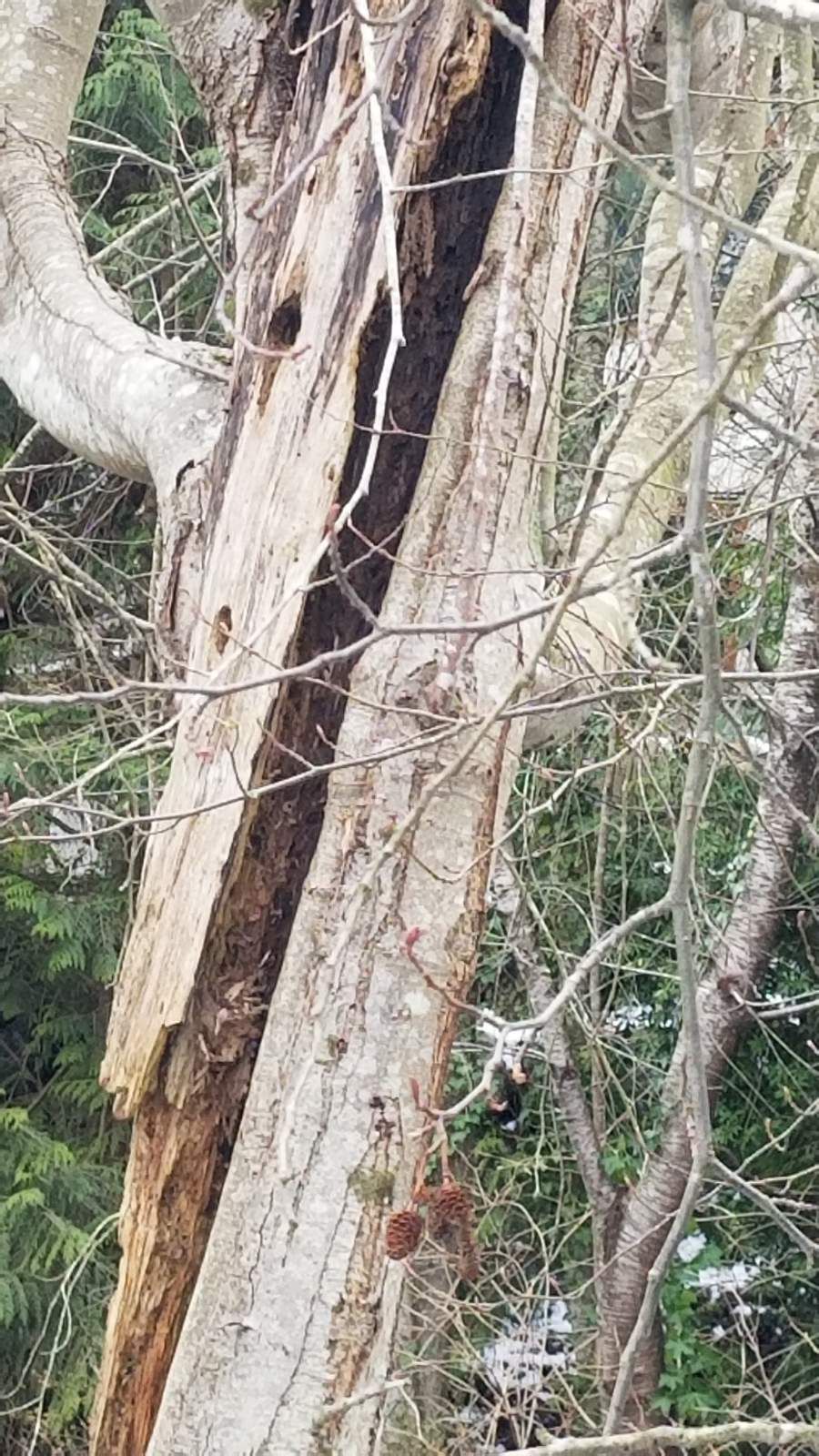
**Dead branches** lose flexibility as they dry out and decay. Live branches bend and shed load in wind. Dead branches, especially large ones with internal decay, are more likely to fracture at the attachment point.
**Weak unions with included bark** may look sound from the ground until a crack appears along the bark seam. Arborists assess bark ridges, swelling patterns, cracks, and early fungal signs that are easy to miss without training.
**Overextended limbs** place heavy leverage on their attachment points. Selective weight reduction, which is different from topping, can reduce end-load without stripping a tree's interior canopy or leaving it vulnerable to sunscald and decay.
**Root-zone concerns** compound canopy risk. A large canopy above saturated soil, a restricted rooting area, and a nearby structure create a risk profile that is difficult to evaluate from the driveway.
This is one reason an arborist report can be worth commissioning before storm season, especially for trees within falling distance of a structure. It documents visible risk factors and recommended next steps, and it creates a maintenance record if questions arise later with an insurer, a neighbour, or a prospective buyer.
Insurance Bureau of Canada reporting has repeatedly shown that severe weather is a major driver of insured losses in Canada, with some years exceeding billions of dollars in claims nationally. Tree failures are one common source of storm-related residential property damage. For a homeowner, the practical lesson is simple: if the defect was visible and the maintenance record is thin, the conversation after a loss can become harder.
Do not wait for the first October storm. Late summer and early fall are often practical windows to inspect trees, address visible defects, and reduce end-load before wet conditions arrive.
---
Can Pruning Prevent Disease and Pests from Spreading?
Pruning cannot make a tree immune to disease or insects. But it can remove infected material, improve canopy conditions, and reduce the stress that makes some problems worse.
Fungi, bacteria, and boring insects often target stressed or damaged trees first. Dead branches, cracked bark, poor airflow, drought stress, and old pruning wounds can all create openings or conditions that favour infection.
**Cytospora canker** affects stressed conifers and other hosts in British Columbia. Removing infected branches with proper cuts below visible discolouration, and using clean tools, can help limit spread when the problem is caught early. Once it advances into a main scaffold branch, options narrow quickly.
**Bronze birch borer** attacks weakened birch trees across British Columbia. We see borer pressure on ornamental birches in North Vancouver and Burnaby, often in trees already dealing with compacted soil and summer drought stress. Pruning alone will not resolve an active infestation, but removing dead or heavily affected branches is often part of a broader care plan.
**Fire blight**, caused by the bacterium *Erwinia amylovora*, affects susceptible species including ornamental pear, crab apple, and serviceberry, all common in Metro Vancouver residential landscaping. Timing, tool sanitation, and cut placement below visible infection are critical. Infected tissue should be removed and disposed of carefully, not left on site.
Airflow is another lever worth understanding. Dense, shaded interior canopies stay wet longer after rain, creating conditions that favour some fungal issues. Selective thinning, not over-thinning, allows more light and air movement without hollowing out the tree's structure or sacrificing the interior branches that support its form.
The same logic applies to cedar hedge trimming. Overgrown cedar hedges develop dead interiors, brown patches, and pest pressure from the inside out. Regular trimming maintains shape, reduces conditions that favour disease, and helps the hedge recover before sections go fully bare.
---
When Is the Best Time to Prune Trees in the Lower Mainland?
Timing depends on species, health, and what you are trying to accomplish. There is no single right answer, but there are wrong ones.
**Late fall to late winter** is often a strong window for many deciduous trees. With leaves off, branch structure is easier to evaluate. Pest and disease pressure is typically lower. The tree is not supporting a full canopy, so pruning stress can often be managed more predictably when work is done correctly.
**Maples and birches** may bleed sap heavily during spring sap flow. Sap bleeding is rarely fatal, but it is worth timing pruning around. Late fall or midsummer, after leaf expansion is complete and flow has slowed, is often more practical.
**Fruit trees** are commonly pruned in late winter before bud break. The goal is to establish fruiting wood, improve airflow, and reduce crossing branches. Disease-susceptible species may need more specific timing guidance from a certified arborist.
**Evergreens, including Douglas fir, western red cedar, and western hemlock,** do not follow one universal schedule. Light corrective work is sometimes done year-round. Heavier pruning should be planned around species needs, stress level, and pest activity. Pruning Douglas fir during warm months when bark beetle activity is elevated is often avoided when possible because fresh cuts can attract opportunistic insects to a tree already under pressure.
**Emergency pruning has no ideal season.** A cracked union, a broken branch over a roof, or a storm-damaged tree leaning toward a structure needs attention when it is dangerous, not at the start of the next dormancy window. For urgent situations, emergency tree service is the right call.
One mistake we see regularly is heavy summer pruning during heat stress. Large cuts on a tree already dealing with drought add stress at the worst possible time. Routine pruning is best planned for species-appropriate windows, not squeezed into the hottest weeks of the year because the calendar happens to be convenient.
---
What's the Difference Between DIY Pruning and Hiring a Certified Arborist?
The difference is not just equipment. It is judgment, and judgment is what prevents the wrong cut from creating a decade of structural problems.
**Training and credentials.** ISA certification requires documented arboricultural knowledge, a standardized exam, and continuing education. Certified arborists are trained in tree biology, pruning standards, risk assessment, species response, and jobsite safety. The credential exists because tree work requires more than a chainsaw and an extension ladder.
**Risk assessment before the first cut.** An arborist considers targets, tree condition, defect types, site exposure, utility proximity, and access before any branch comes down. A limb over a lawn is not the same situation as a limb over a glass patio cover, a service line, or a public sidewalk.
**Cut placement.** Most DIY pruning damage happens at the cut itself. A proper pruning cut respects the branch collar, the raised shoulder of tissue where the branch meets the stem. Flush cuts remove tissue the tree needs for wound closure. Stub cuts leave dead tissue that decays back into the stem. Either mistake can open the tree to decay that progresses quietly for years before it becomes visible.
**Pruning dose.** Removing too much live crown at once stresses a tree and can trigger fast-growing, weakly attached shoots. A certified arborist uses pruning standards and species knowledge to determine how much can be safely removed given the tree's condition, age, and history.
**Coverage and liability.** WorkSafeBC treats tree work as high-risk work with specific safety expectations. Before hiring any tree company, verify ISA certification, WorkSafeBC registration, and liability insurance. Anyone climbing, rigging, or cutting near structures without proper coverage creates risk that can land on the homeowner.
Homeowners can handle light ground-level maintenance: small suckers, minor twig pruning, and light hedge shaping with clean sharp tools. Once work requires a ladder, involves branches over structures, includes visible decay or cracking, or touches utility clearance zones, the right answer is to call a professional.
The cost of proper tree cutting is almost always less than the cost of fixing what a wrong cut causes, or managing an emergency tree service call that preventive work may have avoided.
---
How Often Should Different Tree Species Be Pruned?
There is no universal schedule. Species, age, location, health, and proximity to structures all affect the answer.
**Young trees, one to ten years after planting**
Structural pruning every two to three years is often appropriate. The goal is to establish a dominant leader, correct crossing branches, and address weak attachments before they become fixed defects. Small corrective cuts now are less stressful and less expensive than major corrective work on a mature tree.
**Mature deciduous trees, including bigleaf maple, Garry oak, ornamental cherry, and London plane**
A professional assessment every three years is a reasonable baseline for many residential properties. Pruning may be needed every four to seven years depending on growth rate, site constraints, and what is visible at each assessment. Annual visual checks after major storms are also worth building into your routine.
**Conifers, including Douglas fir, western red cedar, grand fir, and western hemlock**
Established conifers typically need less frequent pruning than fast-growing deciduous trees. More frequent inspection is worth scheduling when trees are within falling distance of structures, utility lines, or high-traffic areas. Cedar hedges often benefit from annual trimming to maintain form and prevent bare interiors that cannot be recovered once they have gone fully brown.
**Street and boulevard trees**
These are often city property and may be regulated by municipal bylaw. In the City of Vancouver, boulevard trees require municipal approval before pruning or removal. Rules differ across Burnaby, Richmond, North Vancouver, Coquitlam, and other Metro Vancouver municipalities. Check with your local planning or parks department before touching any boulevard tree. The penalties can be real.
**Fruit trees**
Annual pruning is standard for most fruit trees to maintain fruiting wood, airflow, and manageable height. Consistent light-to-moderate annual pruning usually works better than skipping several years and then making heavy cuts, which stress the tree and can reduce fruit production.
If a large tree on your property has never been assessed by a certified arborist, or has not been inspected in five or more years, that is the right place to start. An assessment tells you what you are working with and where the priorities are. It is also the foundation for any arborist report if you need one for insurance, municipal, or property purposes.
[Suggested image: Arborist pointing out included bark or a cracked union during a residential tree assessment.]
---
Does Pruning Increase Your Property Value?
Well-maintained trees support curb appeal, shade, privacy, and buyer confidence. Research from urban forestry organizations, including the USDA Forest Service and Arbor Day Foundation, has associated healthy mature trees with higher residential property values, though the exact value depends on species, size, placement, condition, and local market.
In Metro Vancouver, where outdoor space, mature landscaping, and curb appeal carry real weight in buyer decisions, a well-maintained canopy is an asset. Deadwood, a split trunk, fungal brackets, or limbs over the roofline read as deferred maintenance and potential liability.
There is also a regulatory dimension. Vancouver's Private Tree Bylaw protects many private-property trees based on trunk diameter and other conditions. Removing a protected tree without a permit can result in fines and remediation requirements. A documented pruning and inspection history helps show that you managed the tree responsibly, and that record can matter if a dispute arises with a neighbour, an insurer, or a prospective buyer reviewing the property.
When a tree reaches the point where pruning is no longer enough to manage its risk, advanced decay, a failed main union, or multiple structural defects interacting, the decision may shift to tree removal. In those cases, stump grinding is typically the final step in clearing the site properly.
The cost of a regular pruning cycle, spread over years, is usually less than the cost of one emergency removal, one roof repair, one fence replacement, or one insurance complication after a foreseeable failure that a proper inspection might have caught.
---
Frequently Asked Questions
**How do I know if my tree needs pruning right now?**
Look for dead or hanging branches, limbs touching the roof or siding, branches rubbing together, fungal growths on the trunk or major branches, visible cracks in large forks, a sudden lean, or a canopy so dense that the interior is dying out. Any of these are reasons to book an assessment with an ISA-certified arborist rather than waiting for the next scheduled inspection.
**Is it legal to prune or remove trees in Vancouver without a permit?**
It depends on the tree's size, location, ownership, and the type of work being done. Vancouver's Private Tree Bylaw protects many trees on private property, and boulevard trees usually require municipal approval before pruning or removal. Rules also differ across Burnaby, Richmond, North Vancouver, Coquitlam, and other Metro Vancouver municipalities. Check with your municipal planning or parks department before removal or significant structural work.
**Can I prune my own trees, or should I always call a professional?**
You can handle light ground-level maintenance, including small suckers, minor twig pruning, and light hedge shaping with clean sharp tools. Call a certified arborist when the work requires a ladder, involves branches over structures, includes visible decay or cracked unions, is near utility lines, or involves large structural branches. The risk of an untrained cut is real, both to you and to the long-term health of the tree.
**Why does timing matter for tree pruning?**
Trees respond differently depending on dormancy, sap flow, pest activity, disease pressure, and seasonal stress. Dormant-season pruning is often best for many deciduous species. Maples and birches are better pruned outside heavy spring sap flow. Heavy summer pruning during heat stress adds strain to an already taxed tree. In some species, including Douglas fir, pruning during periods of high bark beetle activity may create added risk around fresh cuts.
**What's the real risk of not pruning a large tree near my house?**
The main risks are branch failure, weak-union failure, and the property damage that follows: roof, siding, fencing, vehicles, and neighbouring structures. In the Lower Mainland, wet winters combine saturated soil with genuine wind loads. Structural defects that went unaddressed can fail with little warning. If a large tree close to your home has not been assessed in three to five years, schedule an inspection before fall storm season.
**What happens if I have a tree emergency overnight or during a storm?**
Aesthetic Tree & Hedge Services offers emergency tree service for urgent situations, including storm damage, fallen limbs, and leaning or compromised trees that pose an immediate risk. Do not leave a hanging branch over a structure unaddressed because it is inconvenient to deal with after hours. Temporary risk reduction and emergency removal are exactly what emergency crews handle before full remediation is scheduled.
---
Book a Pruning Assessment
Regular pruning is not just an expense. It is how you protect a living asset that may serve your property for decades.
Aesthetic Tree & Hedge Services provides ISA-certified arborist services across Vancouver, Burnaby, North Vancouver, Richmond, Coquitlam, and the broader Lower Mainland. We are WorkSafeBC registered and carry liability insurance.
**Call for a free estimate: (604) 721-7370**
We will assess your trees honestly, explain what they need, and give you clear options. No pressure. Just certified arborists who know Lower Mainland trees.
Found this helpful? Follow our tree care insights directly on Google.
Make us your preferred source on GoogleOur Tree Care Services
ISA-certified arborists serving Greater Vancouver

Explore Our Tree Care Services
From expert pruning to safe tree removal, our ISA-certified arborists are ready to help across Greater Vancouver.
View Services