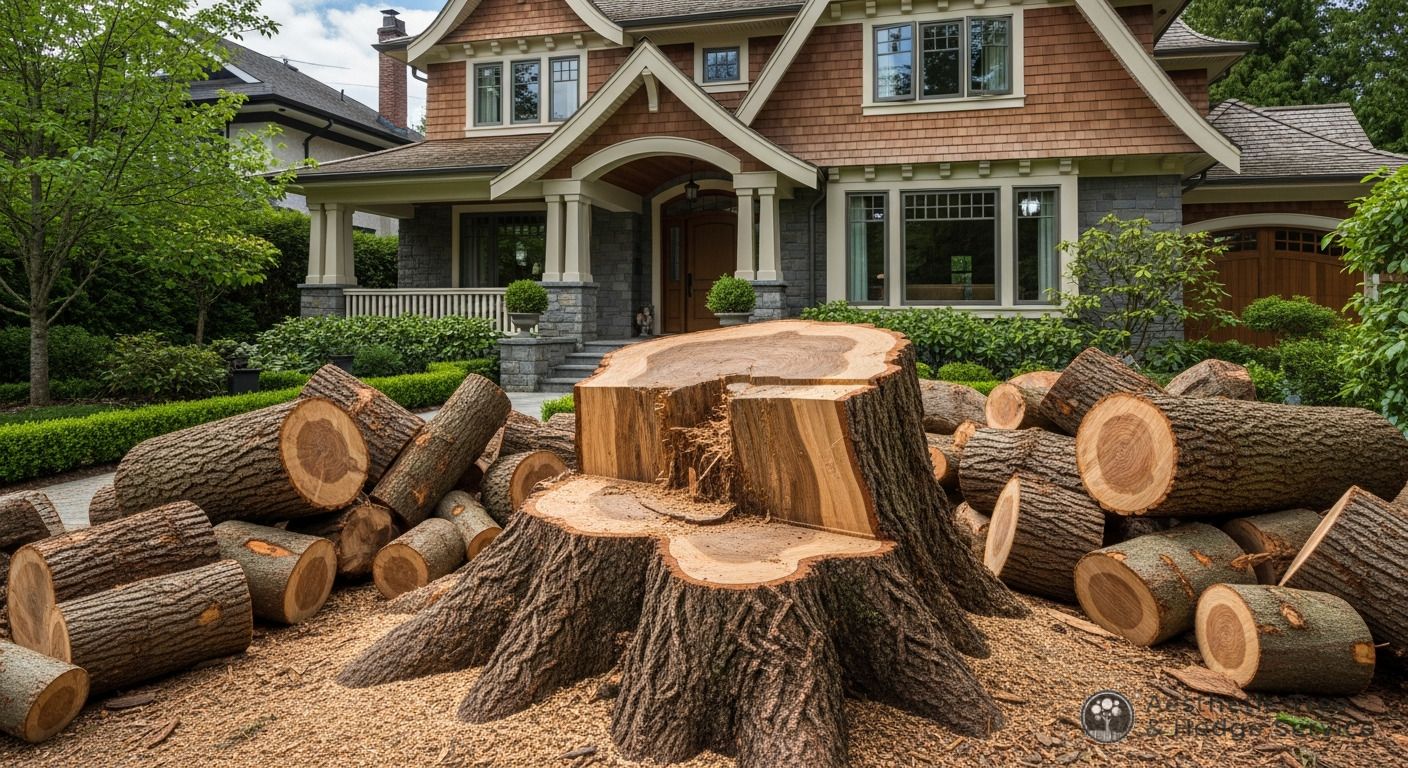

TL;DR — Quick Summary
What the loss of the Grandpapa Tree in Queen Elizabeth Park teaches Vancouver homeowners about permits, heart rot, pruning, and mature tree removal.
Grandpapa Tree Vancouver Cut: What Vancouver Homeowners Should Know Before Removing a Mature Tree
Author: Aesthetic Tree & Hedge Services, ISA-Certified Arborists Service area: Vancouver, Burnaby, North Vancouver, Richmond, Coquitlam, and the Lower Mainland
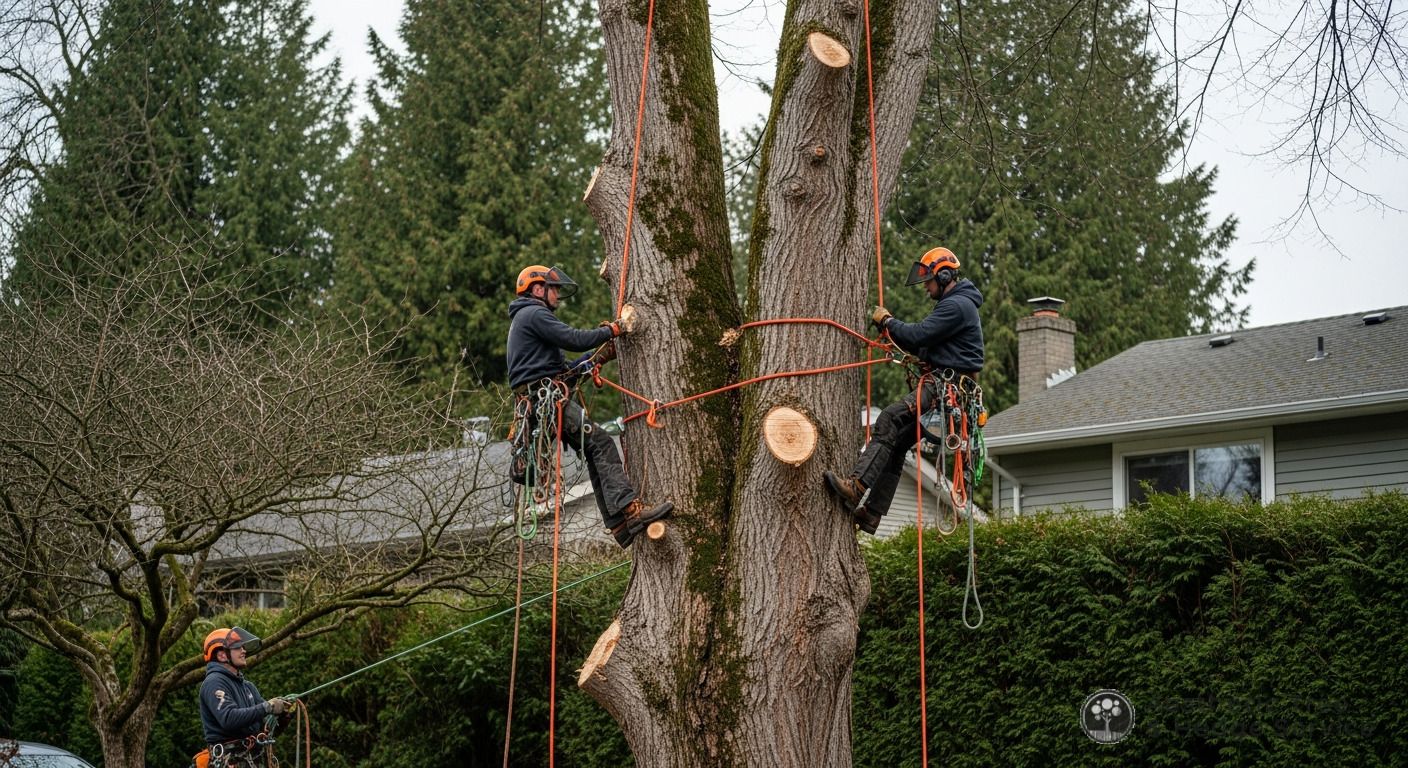
In April 2026, The Tyee reported that a much-loved old cherry known as the Grandpapa Tree had been cut down in Vancouver’s Queen Elizabeth Park.
One day, it was part of the park.
Then it was gone.
That kind of loss hits people harder than outsiders expect. Not because one tree solves climate change. Not because every old tree can stay forever. It hurts because large trees become landmarks. They shade benches. They frame streets. They mark childhood walks, wedding photos, dog routes, and the place where a neighbourhood starts to feel like itself.
But here is the hard arborist truth.
A beloved tree can still be unsafe.
A full canopy can hide decay.
A trunk with spring flowers can still have heart rot.
And a homeowner who cuts first and asks later can run into permits, fines, neighbour conflict, nesting-bird restrictions, and a job site that is far more dangerous than it looked from the ground.
The same tension plays out on private lots across Vancouver, Burnaby, North Vancouver, Richmond, Coquitlam, and the Lower Mainland. Homeowners want to keep trees. They also want to protect roofs, children, driveways, sidewalks, decks, and neighbouring homes.
Both concerns are valid.
The answer is not panic removal. It is not blind preservation. It is a proper hazard assessment, a legal permit path, and tree work handled by ISA-certified arborists who follow accepted arboricultural standards such as ANSI A300.
- The Grandpapa Tree was a loved cherry tree in Queen Elizabeth Park. The Tyee reported in April 2026 that it had heart rot and had declined badly before the Park Board removed it.
- Vancouver protects many private trees. Under Protection of Trees By-law No. 9958, a permit is required to remove a private tree 20 cm or larger in diameter, measured 1.4 m above grade.
- Large trees need professional assessment. Decay, root damage, trunk cracks, fungal bodies, canopy dieback, and target exposure can change the risk profile quickly.
- Pruning is not the same as topping. Good pruning follows ANSI A300 practices and protects branch collars, root flare health, and long-term structure.
- Bird nesting season matters. Federal guidance lists late March to mid-August as the general nesting period for zone A1, which includes the Northern Pacific Rainforest region.
- If a mature tree is dead, dying, storm-damaged, or close to a structure, call Aesthetic Tree & Hedge Services for a free estimate at (604) 721-7370. We are ISA-certified and WCB registered.
What Did The Grandpapa Tree Vancouver Cut Actually Mean?
The Grandpapa Tree was not just another ornamental cherry.
According to J.B. MacKinnon’s April 2026 article in The Tyee, the tree stood in Queen Elizabeth Park and held meaning for many Vancouver residents. Vancouver Cherry Blossom Festival founder Linda Poole told MacKinnon it was the tree that inspired her to start the festival. The same article reported that a former park supervisor found heart rot in the tree years before it came down.
Heart rot is not cosmetic.
It is internal decay. It affects the central wood inside the trunk or major limbs. A tree can still leaf out while its load-bearing wood loses strength. That is why visual beauty can mislead a homeowner.
A cherry can bloom.
A cedar can stay green.
A Big-leaf maple can hold a full summer crown.
Yet the trunk can be hollow. The root plate can be weak. Major scaffold limbs can carry decay pockets, old wounds, or included bark.
The Grandpapa Tree story shows a common problem: The Tyee found that its removal left no paper trail. People often notice the loss after a cut. They rarely see the inspection notes, decline history, pruning history, root stress, or risk calls that came before it.
For private homeowners, the lesson is direct.
Do not guess.
Do not let a neighbour talk you into a chainsaw job.
Do not assume a tree is safe because it has leaves.
Start with an arborist report in Vancouver when the tree is large, protected, close to a structure, or tied to a permit. A real report identifies species, DBH, condition, defects, targets, and likely permit issues.
That paper trail matters.
It protects the owner. It protects the contractor. It protects the tree when retention is the right call.
Why Do Vancouver Homeowners Search For Grandpapa Tree Vancouver Cut?
The story raises one sharp question.
Can Vancouver cut down a loved old tree?
The answer is yes, in some cases. But the rules depend on where the tree stands.
The Grandpapa Tree was in Queen Elizabeth Park. Park trees are managed through public systems, not the same private-property path used for most homes. Vancouver’s tree bylaw also states that it does not apply to certain removals connected to land under Park Board jurisdiction.
That distinction matters.
A homeowner in Kitsilano, Mount Pleasant, Dunbar, Kerrisdale, Shaughnessy, East Vancouver, or Marpole does not have the same process.
On private property, Vancouver’s Protection of Trees By-law No. 9958 applies to many trees. The City of Vancouver says a permit is required to remove a private tree with a diameter of 20 cm or more, measured 1.4 m above the ground. That is not a giant tree. Many backyard cherries, cedars, birches, maples, and Douglas firs meet that threshold.
The City of Vancouver says the city has about 25% canopy cover, and its 2025 Urban Forest Strategy sets a target of 30% by 2050. The same city page lists about 150,000 street trees, 36,000 specimen trees in parks and golf courses, and more than 1 million trees across 444 hectares of public forests and woodlands.
That is why one tree can feel personal while still sitting inside a much larger public policy question.
Vancouver wants canopy.
Homeowners want safety.
Arborists stand between those two pressures.
Our job is not to say yes to every removal. It is to assess the tree, explain the risk, document the condition, and follow the bylaw.
If removal is the right answer, use a legal tree removal Vancouver process before work starts.
When Is A Mature Vancouver Tree Too Dangerous To Keep?
A mature tree becomes too dangerous to keep when the likelihood of failure and the target risk become unacceptable.
That sounds formal. In the field, it means this.
What can fail?
What will it hit?
How soon could it happen?
A small dead limb over a garden bed is one problem. A decayed main stem over a bedroom is another. A leaning alder above a lane is not the same as a leaning cherry in open turf.
Visible defects to look for include:
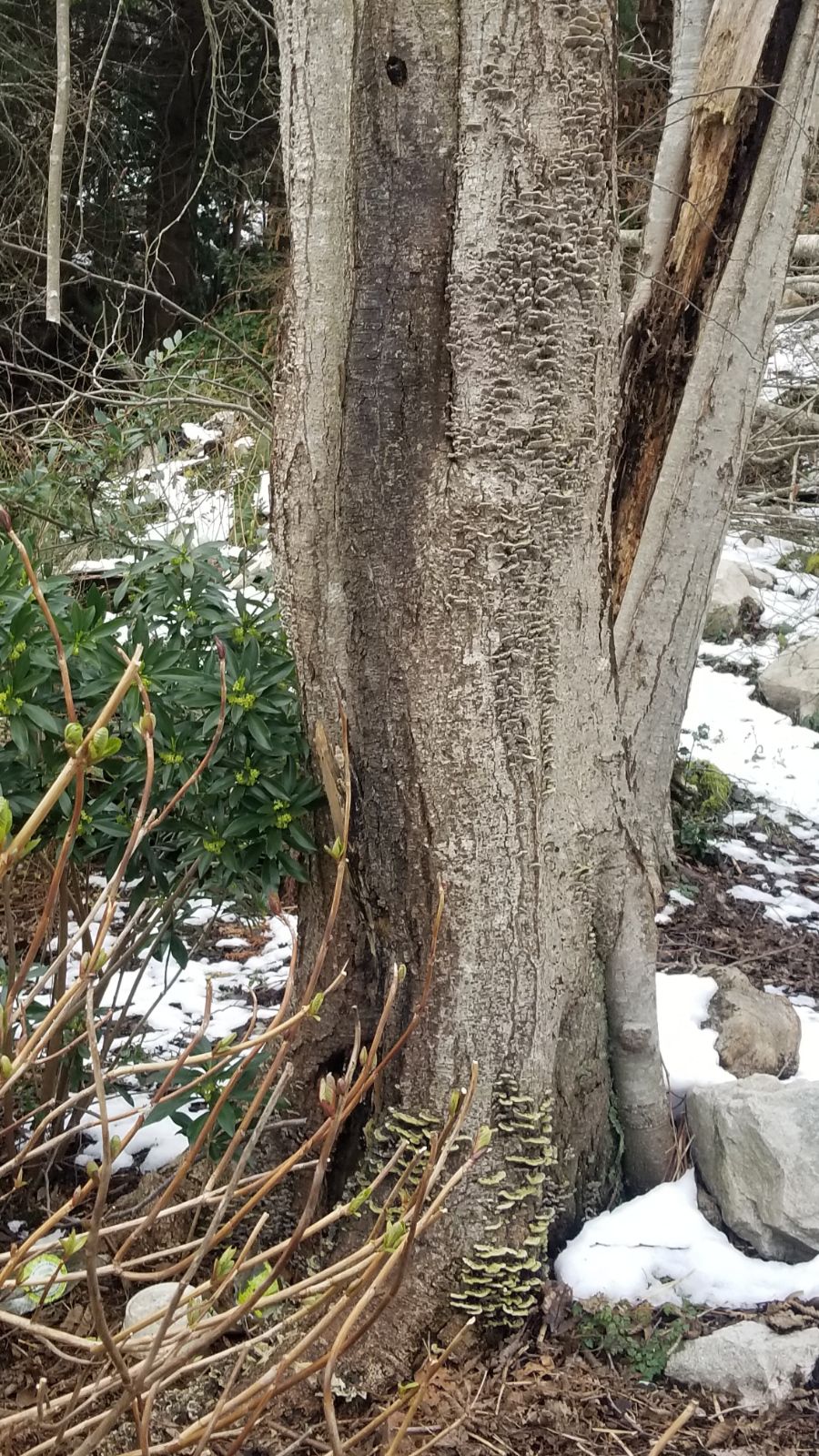
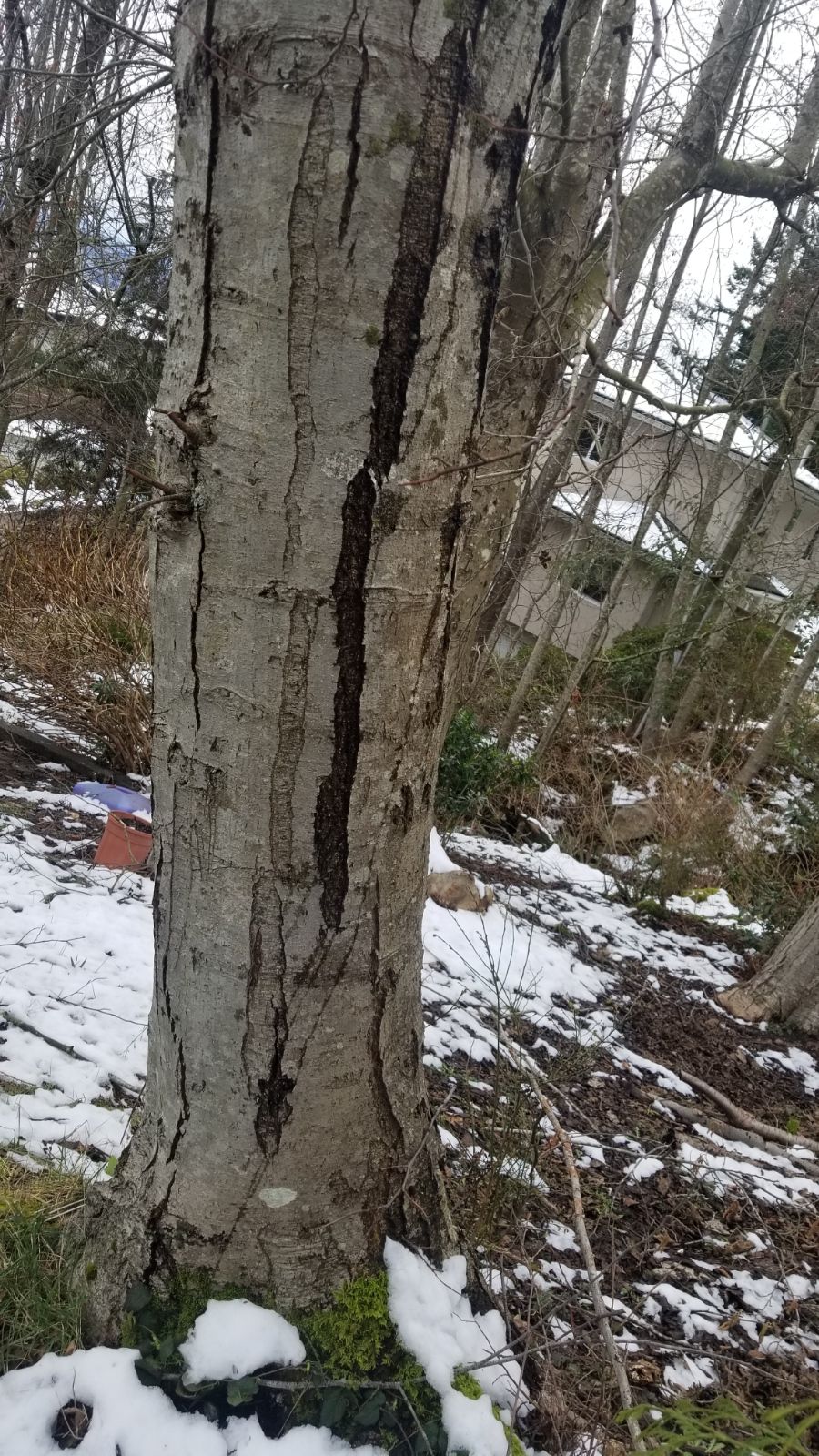
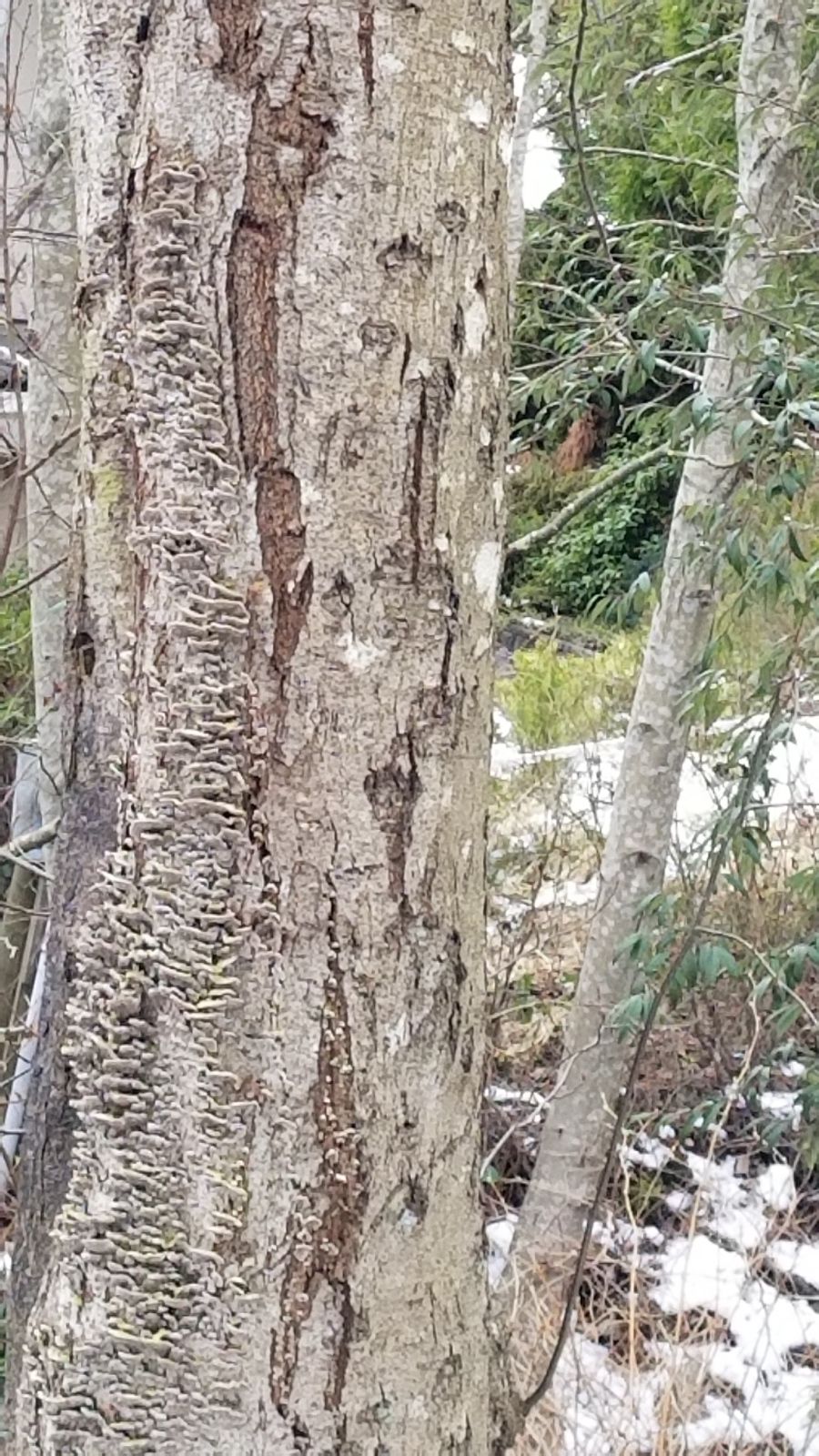
- Fungal conks near the root flare or trunk
- Cavities in the main stem
- Cracks that run with the grain
- Included bark between major stems
- Dead tops or large dead scaffold limbs
- Soil lifting on one side of the root plate
- Fresh lean after wind
- Carpenter ant activity with soft wood
- Heavy end weight on long limbs
- Root injury from excavation or grade changes
Then consider targets.
Targets include people, homes, garages, sheds, decks, parked cars, roads, fences, hydro lines, and neighbour property. A defect matters more when the target is constant.
That is the real world of mature tree removal.
It is not a ladder, a pickup, and a weekend saw.
A tree with heart rot can fail in sections. A cedar with root damage can uproot. A maple with a split union can open under snow. A Douglas fir with a dead top can shed heavy wood in wind.
When risk is urgent, call for emergency tree service. Storm splits, hanging limbs, fresh root plate movement, and trees against structures need fast triage.
The goal is simple.
Make the site safe without creating new damage.
Do You Need A Permit To Cut A Tree In Vancouver?
Yes, in many cases.
The City of Vancouver says you need a tree removal permit for a private tree that is at least 20 cm in diameter, measured 1.4 m above the base. The same threshold can apply to certain multi-stem trees when the stems meet the bylaw’s size rules.
That measurement is DBH. It means diameter at breast height.
Do not measure at the flare.
Do not measure around a branch swelling.
Do not guess from the sidewalk.
Measure 1.4 m above grade. If you measure circumference, 64 cm is about 20 cm in diameter.
Vancouver permits are usually considered when a tree is dead, dying, diseased, hazardous, within a building envelope, interfering with utilities in a way pruning cannot solve, or causing sewer or drainage issues with proper supporting evidence.
For development work, the paperwork gets heavier. Vancouver’s bylaw requires attention to trees on site, certain adjacent trees near property lines, and street trees next to the site. Development and building permit applications can also require an arborist report where trees are affected.
That is where owners get into trouble.
They think the tree is only in the way.
The City sees a regulated asset.
They think a stump proves the tree was bad.
The City may ask for photos, reports, measurements, and timing.
Vancouver’s bylaw sets fines of $500 to $10,000 per offence, and a breach that affects more than one tree counts as a separate offence for each tree.
That is not a small paperwork mistake.
It is a real risk.
If you are planning work near a protected tree, get the permit path clear before the saw starts. Good tree work is planned around the tree, the site, the bylaw, and the safest removal method.
What Rules Apply In Burnaby, Richmond, And North Vancouver?
The Lower Mainland is not one rulebook.
Each city has its own tree bylaw, permit process, pruning limits, and replacement rules. That matters for homeowners near municipal borders.
A house in Vancouver may follow one process. A house five minutes away in Burnaby may follow another. A Richmond property with a large ornamental tree faces a different fine structure again.
Here are key local examples.
Richmond’s Tree Protection Bylaw No. 8057 requires a permit to cut or remove a tree with a trunk diameter of at least 20 cm, measured 1.4 m above grade, and its definition of cutting includes topping. Fines on conviction run from $1,000 to $50,000, with a separate offence for each tree.
That is why topping is not a cheap shortcut.
It is bad arboriculture and bad risk control.
The City of North Vancouver says a permit is required to remove protected trees 20 cm or larger in diameter, measured 1.4 m above ground, for many property types. It also lists pruning limits. Topping is not permitted. Removing more than 25% of the crown in one season is not permitted. Raising the crown to less than 50% of total tree height is not permitted.
Those numbers matter when a homeowner says, just take more off.
Sometimes we cannot.
Not legally. Not safely. Not if the tree is going to survive.
Burnaby’s Urban Forest Strategy says its canopy cover was 32% as of 2022, with a goal to reach the Metro Vancouver regional target of 40% by 2075. Burnaby also reports an inventory of more than 32,000 boulevard trees.
Burnaby’s replacement guidance names real species too, including Douglas fir, Hinoki cypress, spruce, redbud, dogwood, snowbell, maple, magnolia, and some fruit trees. It also warns against cedar trees as replacement trees because many have been dying from drought stress.
That matches what arborists see across the region.
Cedars are struggling on hot, dry, compacted sites.
A green privacy screen can turn brown fast after drought, root damage, or grade changes.
If your issue is a hedge rather than one protected tree, use professional hedge trimming services in Vancouver before the hedge is cut too hard to recover.
How Can An Arborist Tell If A Tree Has Heart Rot?
Heart rot is internal decay. It is usually caused by fungi that break down wood inside the trunk or limbs.
The tricky part is this.
The living tissue of a tree sits near the outside. A tree can keep moving water and nutrients while the centre loses strength. That is why a tree with heart rot can still bloom, leaf out, and look normal from the street.
An arborist starts with a visual inspection.
The root flare comes first. The root flare is where the trunk widens into the main roots. If it is buried, damaged, girdled, or soft, the risk profile changes.
Then the trunk.
Look for cavities, seams, old topping wounds, fungal bodies, cracks, sap flow, and old branch failures. Suspect wood can be sounded. Scaffold limbs and unions need checking for included bark, decay pockets, and poor load distribution.
The site matters too.
Has there been excavation?
Was a driveway added?
Did a fence trench cut roots?
Was soil piled over the root zone?
Did the neighbour build within the dripline?
Trees do not decline in isolation. They respond to site changes.
A cherry with heart rot may be retained for years in open parkland if targets are low and pruning reduces risk. The same tree over a daycare, deck, sidewalk, or bedroom has a different risk level.
That is why photos alone are weak evidence.
A proper inspection connects defects to targets. It gives the owner a clear path: retain, prune, cable, monitor, report, or remove.
For some trees, cabling can reduce movement in a weak union. It does not make a rotten tree new. But it can extend the useful life of a tree with a specific structural issue. When that is the right option, ask about tree cabling before choosing removal.
Can Pruning Save A Mature Tree Before Removal Is Needed?
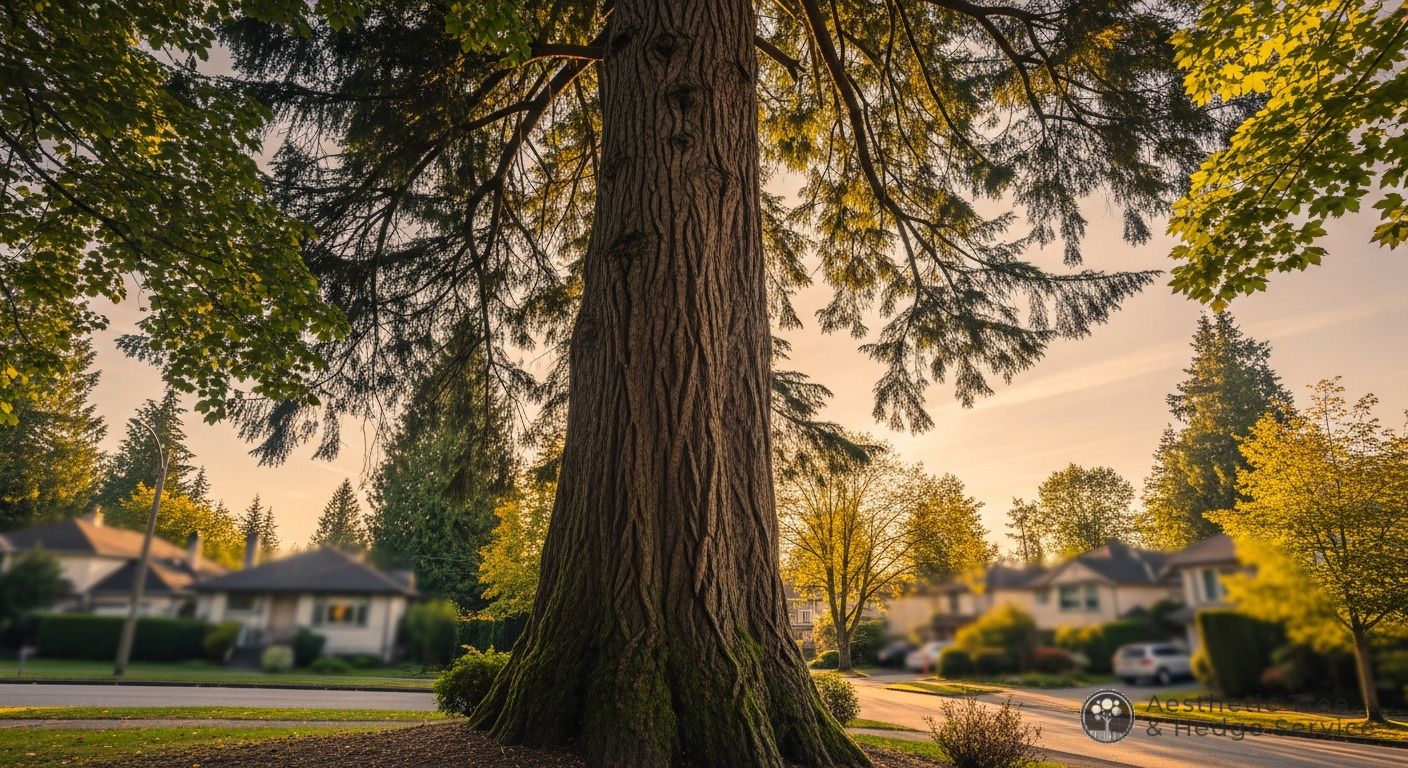
Yes, when the main problem is structure, weight, clearance, or deadwood.
No, when the tree has severe decay, major root failure, or an unstable trunk.
Good pruning is selective. It removes dead, broken, diseased, rubbing, or poorly attached branches. It reduces end weight where limbs are overextended. It clears roofs, gutters, driveways, signs, sidewalks, and service lines without stripping the tree.
Bad pruning is blunt force.
Topping is the classic mistake. It cuts main leaders back to stubs. That creates decay points. It triggers weak shoots. It leaves the tree uglier, weaker, and more expensive to maintain.
ANSI A300 pruning standards matter here. Richmond’s tree bylaw, for example, counts pruning that doesn’t follow ISA Best Management Practices and ANSI A300 as damage to a tree.
For homeowners, the practical point is simple.
Do not ask for a tree to be cut in half.
Ask for a goal.
Clear the roof.
Reduce limb weight.
Remove deadwood.
Improve sight lines.
Reduce risk over the driveway.
Preserve the natural form.
That is how a qualified arborist thinks.
Season matters too. Heavy pruning during heat stress can hurt some trees. Spring and summer work can raise bird nesting concerns. Winter work can be better for structure and visibility on deciduous trees.
For hedges, timing matters too. Cedar, laurel, yew, beech, and boxwood do not respond the same way. A hard cut into old cedar wood often leaves bare patches that do not fill in.
If the tree can be retained, pruning should buy health and safety. It should not buy one neat month followed by years of decline.
What Should You Do Before Cutting A Tree Near A House?
Slow down.
A mature tree near a house carries legal, structural, and safety risk. The right first move is assessment.
Use this homeowner checklist before any cut:
- Identify the species.
- Measure DBH at 1.4 m above grade.
- Check your municipality’s permit threshold.
- Photograph the tree, defects, and targets.
- Look for nests, cavities, and wildlife use.
- Check for overhead lines and service drops.
- Find property lines before touching shared trees.
- Ask if roots cross into neighbour land.
- Get an ISA-certified arborist opinion.
- Keep written records before removal.
Shared trees need extra care.
If the trunk straddles a property line, you usually need neighbour consent. If the tree is on City property, do not cut it. If it is close to a boulevard, lane, sidewalk, or service corridor, confirm ownership first.
Construction sites need even more control.
Vancouver’s bylaw requires tree protection barriers in many development cases. It also requires protection for adjacent trees and street trees that may be damaged. The protected area is not a storage zone. It is not a place for bins, soil piles, cement washout, or parked machines.
Root damage is often invisible at first.
The tree may decline months later. Sometimes it fails years later.
That is why arborists care about the root zone as much as the crown.
For complex removals near homes, fences, garages, or tight lanes, sectional removal is often needed. Large limbs are rigged down in pieces. In some cases, a crane is safer than lowering heavy wood through a narrow backyard. If access is tight or targets are high value, ask about crane tree removal.
The right method reduces shock to the site.
It also reduces damage to lawns, fences, roofs, and neighbouring trees.
What Happens After A Tree Is Removed In Vancouver?
Removal is not the end of the job.
The stump remains. The root plate remains. The permit conditions remain. Replacement planting may remain.
Vancouver’s bylaw says each removed tree must be replaced with one or more acceptable replacement trees unless an exemption applies. It also gives timing rules. For many non-development removals, the replacement tree must be planted within six months after the tree permit is issued, unless the Director of Planning sets another deadline.
The City’s public permit page also says a replacement tree is required for any removed tree larger than 20 cm diameter.
That surprises owners.
They think the permit approves a loss.
Often, it approves a trade.
One unsafe tree comes down. A better tree goes in.
Species choice matters. A replacement tree should fit the site, soil, sun, future canopy size, overhead clearance, and climate stress. A Douglas fir needs space. A Big-leaf maple needs room. A small ornamental tree may suit a tight yard better.
Stumps matter too.
A stump can block planting, attract decay organisms, create a trip hazard, and keep a yard from being graded or rebuilt. In many residential sites, stump grinding in Vancouver is the cleanest next step after removal.
Grinding does not remove every root.
It grinds the stump below grade so the area can be restored. The depth depends on future use. Lawn repair needs one depth. Replanting may need another. Fence or construction work may need more planning.
If the old tree failed from root disease, replanting in the exact same spot may be wrong.
An arborist can help select a better location.
The goal is not just to erase the stump.
It is to reset the site.
How Do Trees Protect Vancouver From Heat And Stormwater?
Large trees are not sentimental extras.
They are city infrastructure.
The City of Vancouver says trees clean air, capture carbon, absorb rainwater, provide habitat, and help protect the city from storms and extreme heat. Its 2025 Urban Forest Strategy sets a city-wide canopy target of 30% by 2050.
The science supports that concern.
A 2022 study in the journal Atmosphere used Landsat 8 and Metro Vancouver land cover data. It found that areas dominated by coniferous trees had surface temperatures 12.2 °C cooler than areas dominated by buildings.
That is not a small difference on a heat dome day.
Shade is not just comfort.
It protects pavement, soil, plants, pets, and people.
It also changes how homes feel. A mature deciduous tree can shade summer sun and allow winter light. A conifer can buffer wind and heat, but it needs the right space and soil.
This is why mature tree removal should be a real decision, not a reflex.
Sometimes removal is correct.
A dead cedar over a bedroom should not stay because canopy targets exist.
A split maple over a sidewalk cannot be wished safe.
But when a tree can be retained with pruning, cabling, mulching, root care, or monitoring, retention has value.
That is the mature view.
Not every tree can be saved.
Not every tree should be cut.
What About Bird Nests Before Tree Removal Or Pruning?
Bird nesting rules matter in Vancouver and the Lower Mainland.
Environment and Climate Change Canada says nesting periods vary by region and habitat. For nesting zone A1, which includes the Northern Pacific Rainforest region, the general nesting period is late March to mid-August.
The City of North Vancouver gives homeowners an even simpler warning. It says the most active bird nesting season is approximately March 1 to August 31, and it is illegal to damage, disturb, destroy, or remove an active bird nest.
That affects tree work.
A hedge can hold active nests.
So can laurel, cedar, holly, maple, cherry, spruce, and dense ivy.
Before pruning or removal during nesting season, a qualified person may need to inspect for nests. If active nests are present, work may need to pause or shift zones.
This is not optional care.
It is part of legal and ethical tree work.
Homeowners often notice birds after crews arrive. That is late. It can cause delays, extra visits, and conflict.
Plan ahead when possible.
If your tree is hazardous, safety comes first. But evidence still matters. Photos, arborist notes, and emergency documentation help show why urgent action was needed.
For non-urgent work, winter and early spring scheduling can be smoother. Deciduous structure is easier to see. Nest conflict is lower. Crews can often work with better visibility.
The best time is not always today.
The best time is when the tree, bylaw, birds, weather, and site are all considered.
How Should You Choose An Arborist After The Grandpapa Tree Story?
Choose an arborist the way you would choose a contractor to work above your roof.
Because that is what this is.
Ask for ISA certification. Ask if the company is WCB registered. Ask how they assess risk. Ask if they know local bylaws. Ask whether they follow ANSI A300 pruning standards.
Then listen to the answer.
A good arborist will not promise removal before seeing the tree. They will ask about species, size, location, defects, access, targets, and municipality. They will explain whether a permit is likely needed. They will flag neighbour consent and nesting season when relevant.
They will also tell you when pruning is better than removal.
That matters.
The cheapest saw is not the safest answer.
The fastest quote is not the strongest advice.
You want someone who can stand behind the work.
At Aesthetic Tree & Hedge Services, we work as ISA-certified arborists across Vancouver and the Lower Mainland. We are WCB registered. We handle hazard assessment, pruning, removal, stump grinding, arborist reports, hedge trimming, and emergency tree work.
Each site has its own risk.
Each tree gets its own decision.
The Grandpapa Tree story should not make homeowners afraid of arborists. It should make them demand better tree decisions.
That starts with a clear inspection.
Sources Checked
- The Tyee, They Cut Down Grandpapa, J.B. MacKinnon, April 9, 2026.
- City of Vancouver, Protection of Trees By-law No. 9958.
- City of Vancouver, 2025 Urban Forest Strategy.
- City of Richmond, Tree Protection Bylaw No. 8057.
- City of North Vancouver, Trees on Private Property guidance.
- Environment and Climate Change Canada, general nesting periods for nesting zone A1.
- City of Burnaby, Urban Forest Strategy and tree replacement guidance.
- Eyster and Beckage, Atmosphere, 2022, Conifers May Ameliorate Urban Heat Waves Better Than Broadleaf Trees: Evidence from Vancouver, Canada.
FAQ
Why was the Grandpapa Tree in Vancouver cut down?
The Tyee reported in April 2026 that the Grandpapa Tree in Queen Elizabeth Park had heart rot and declined sharply in its last years before the Vancouver Park Board removed it. Heart rot is internal decay. A tree can still look meaningful and beautiful while losing structural strength inside the trunk or limbs.
Can I cut down a tree on my Vancouver property without a permit?
Sometimes, but not if it meets Vancouver’s protected size rules. The City of Vancouver says private trees 20 cm or larger in diameter, measured 1.4 m above grade, require a tree removal permit. Replacement trees and development-related trees can also be regulated.
Is topping a tree legal in Vancouver, Richmond, or North Vancouver?
Topping is poor arboriculture and can breach local rules. Richmond’s Tree Protection Bylaw counts topping as cutting a tree, with fines of $1,000 to $50,000 per offence and a separate offence for each tree. The City of North Vancouver lists topping as not permitted for protected trees. In Vancouver, cutting a tree so it becomes hazardous or loses its characteristic appearance is unlawful damage under By-law 9958.
What is the difference between pruning and tree removal?
Pruning removes selected branches to improve safety, clearance, structure, or health. Removal takes the tree down. Pruning can save a tree when the issue is deadwood, end weight, clearance, or structure. Removal is needed when decay, root failure, or hazard risk is too high.
Who should I call for a mature tree near my house?
Call an ISA-certified, WCB registered arborist. Mature trees near homes need hazard assessment, permit review, safe rigging, and proper cleanup. Call Aesthetic Tree & Hedge Services for a free estimate at (604) 721-7370. We handle pruning, removal, arborist reports, stump grinding, and emergency tree service across Vancouver and the Lower Mainland.
Related: 10 Reasons Why We Should Cut Down Trees, What ISA Arborists Check First · Adopt a Tree in Vancouver: 5 Things ISA Arborists Want You to Know First
Found this helpful? Follow our tree care insights directly on Google.
Make us your preferred source on GoogleOur Tree Care Services
ISA-certified arborists serving Greater Vancouver

Explore Our Tree Care Services
From expert pruning to safe tree removal, our ISA-certified arborists are ready to help across Greater Vancouver.
View Services