
TL;DR — Quick Summary
Successful tree care is essential for healthy, thriving trees. Learn key practices, warning signs & when to call an ISA-certified arborist in Vancouver.
Successful tree care is essential for healthy, thriving trees. Most homeowners only think about their trees when something goes wrong.
A branch falls on the fence. The tree looks dead. The roots crack the driveway.
By then, you're in reactive mode. Reactive mode is expensive.
The good news? Most tree problems are preventable. The right care at the right time keeps your trees healthy, your property safe, and your budget intact.
This guide covers what actually works — from seasonal maintenance to knowing when a professional should step in. It's built on ISA-certified arborist experience across Vancouver and the Lower Mainland, where climate, local bylaws, and specific tree species create challenges you won't find in a generic how-to guide.
TL;DR
- Healthy trees need regular pruning, proper watering, seasonal inspection, and mulching — not just reactive care when something breaks.
- Vancouver's wet winters and dry summers stress trees in predictable ways. Knowing the pattern keeps you ahead of problems.
- ISA-certified arborists follow ANSI A300 standards. Not every tree service does.
- Skipping tree care costs significantly more in the long run. Emergency removal, property damage, and permit fines add up fast.
- Get a professional assessment once a year — especially for mature trees near your home or power lines.
Why Do Trees in Vancouver Need Special Attention?
Vancouver isn't your average city for trees.
The Lower Mainland has one of the highest urban tree canopy densities in Canada. The City of Vancouver's Urban Forest Strategy (2014) set an official goal to protect and expand the city's canopy. At that time, it covered roughly 22% of the city — approximately 177,000 street trees, plus millions more on private property.
That canopy is an asset. But it comes with real responsibilities.
Vancouver's trees face a specific set of stressors:
- **Wet winters.** Saturated soil weakens root anchoring. Trees that look stable in September can become dangerous by December.
- **Dry summers.** Metro Vancouver can go 6–8 weeks with minimal rainfall. Young trees and shallow-rooted species suffer most.
- **Windstorms.** The Pacific Northwest sees regular high-wind events. Dead wood in a structurally compromised tree becomes a projectile.
- **Dense urban planting.** Trees in city lots compete for light, water, and root space in ways they never would in a natural forest.
Industry data from WorkSafeBC claims records shows that wind damage and waterlogging account for a majority of emergency tree incidents in Metro Vancouver each year. Most of those could have been prevented with routine care and hazard assessment.
What Does Successful Tree Care Actually Include?
Tree care isn't one thing. It's a system.
Here are the core practices that keep trees healthy over the long term.
Regular Pruning — Done Right
Pruning isn't just about looks. It's about structure, light penetration, and safety.
Done wrong, it creates problems. "Topping" — cutting all main branches back to stubs — is one of the most damaging things you can do to a tree. The ISA explicitly condemns it. Topping destroys a tree's natural structure, invites disease, and creates weak water sprouts that break easily in wind.
Proper pruning follows ANSI A300 standards — the benchmark set by the American National Standards Institute for professional tree care. These standards specify where and how to cut, how much canopy to remove, and how to protect the branch collar (the ring of protective tissue where a branch meets the trunk).
Most healthy, established trees benefit from structural pruning every 3–5 years. Fruit trees and fast-growing species like cottonwood need more frequent attention.
If your tree is near power lines, you'll need clearance pruning. In Vancouver, Burnaby, and North Vancouver, utility companies have their own clearance requirements. That work needs a certified arborist for safety and regulatory compliance. Our tree cutting services in Vancouver cover this kind of structural and utility pruning.
Proper Watering
Established trees rarely need supplemental watering in Vancouver's wet climate — except during summer dry spells.
Young trees (under 3 years old) are the exception. They need consistent moisture while their root systems develop. Deep, infrequent watering works better than light daily watering. It encourages roots to grow downward, where they find consistent moisture and better anchoring.
For mature trees showing drought stress — wilting leaves, early leaf drop, bark cracking — a slow, deep soak once a week during dry periods makes a real difference.
Mulching
This is one of the most underused practices in urban tree care.
A 2–4 inch layer of mulch around the base of a tree does several things at once:
- Holds moisture through dry summers
- Regulates soil temperature through seasonal swings
- Reduces competition from grass and weeds
- Adds organic matter as it breaks down
One critical detail: keep mulch away from the trunk itself. "Volcano mulching" — piling mulch against the bark — traps moisture and causes rot. Mulch should start a few inches out from the root flare (where the trunk widens at the base). Our mulching services include proper placement, not just application.
Annual Inspections
Most tree problems are visible before they become emergencies — if you know what to look for.
An annual inspection by an ISA-certified arborist can catch:
- Early signs of disease (cankers, unusual bark patterns, dieback)
- Structural weaknesses (included bark, co-dominant stems, poor branch attachment angles)
- Root damage from construction, soil compaction, or fungal activity
- Pest pressure (bark beetles, aphids, scale, bronze birch borer)
Early detection almost always means less invasive, less expensive treatment. A diseased branch removed in spring costs far less than an emergency removal after the whole tree fails.
How Do You Know When a Tree Is in Trouble?
Healthy trees show you when they're struggling. You just need to know the signs.
**Leaf and canopy changes:**
- Leaves smaller than normal for the species
- Premature fall color or early leaf drop
- Sparse canopy, especially at the crown — arborists call this "dieback"
- Leaves with spots, lesions, or unusual discoloration
**Bark and trunk changes:**
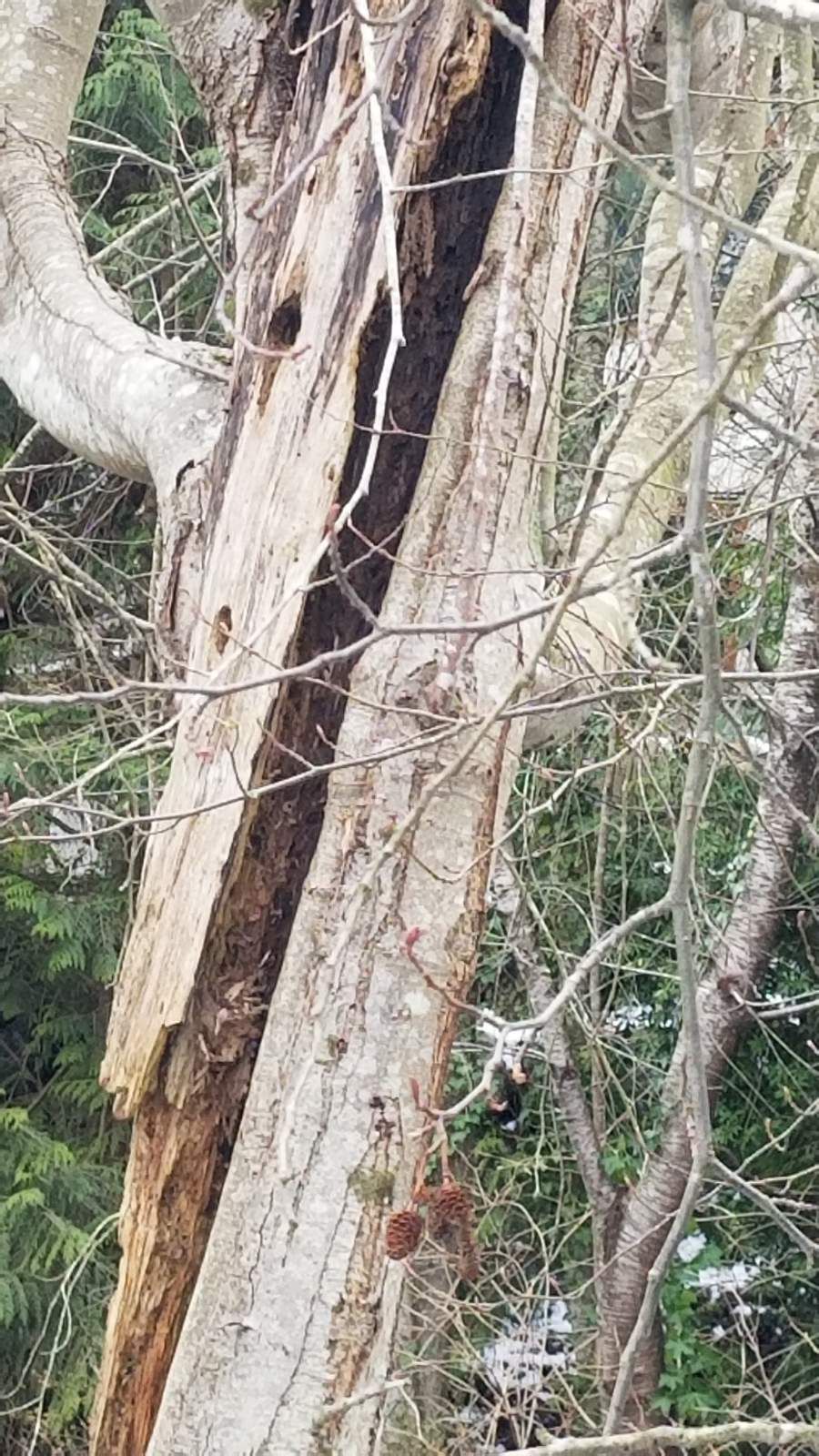
- Vertical cracks or splits
- Weeping sap or slime flux
- Missing or peeling bark sections
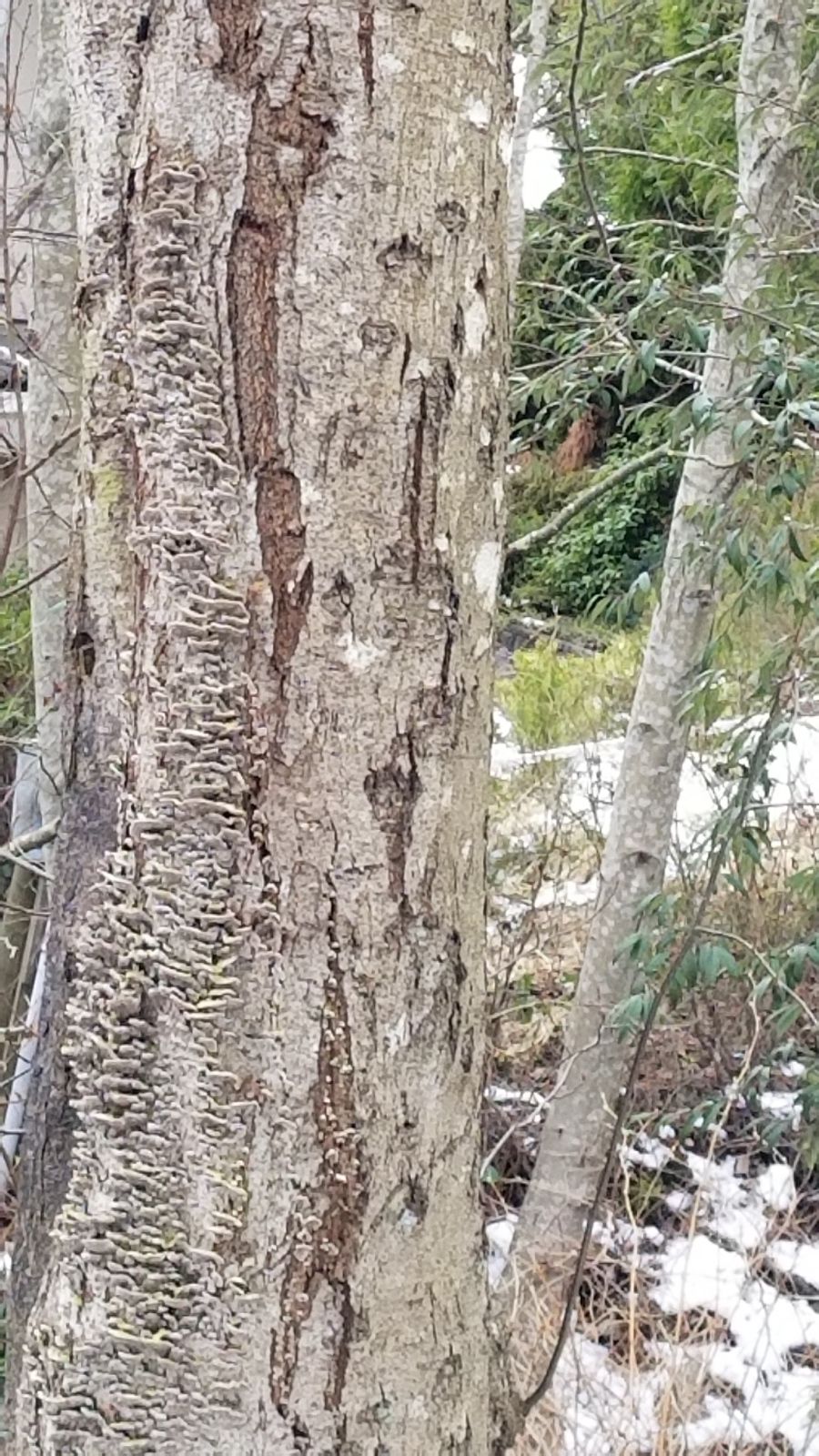
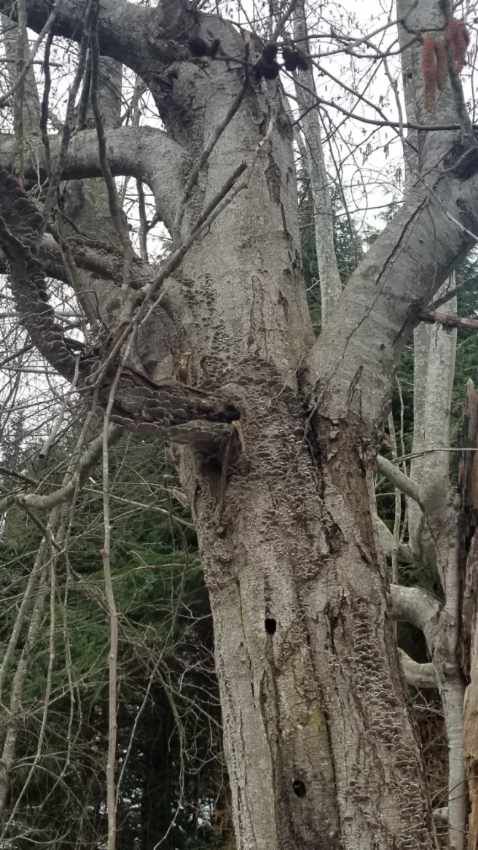
- Fungal conks (shelf mushrooms) on the trunk or at the base — these signal active internal wood decay
**Root zone changes:**
- Visible root damage from nearby construction or excavation
- Soil heaving at the base (a sign of root instability)
- Mushrooms appearing in a ring pattern near the base — sometimes indicating Armillaria root rot
- A lean that has increased noticeably in recent months
**Structural concerns:**
- Included bark where two main stems fork together — a weak attachment that can fail under load
- Large dead branches in the upper canopy
- Visible cavities in the trunk or major limbs
Any of these signs warrants a professional assessment. If a tree fails and damages property — and records show you knew about the hazard — you may face liability. An arborist report from a certified professional documents the tree's condition and gives you a defensible record.
When Should You Call a Certified Arborist Instead of Any Tree Company?
This is where homeowners often go wrong.
Not every company offering "tree service" is qualified. In British Columbia, anyone can pick up a chainsaw and call themselves a tree service. ISA certification is voluntary — but it's the most reliable indicator of genuine training and competence.
An ISA-certified arborist has:
- Passed a rigorous written exam covering tree biology, diagnosis, pruning, risk assessment, and safety
- Completed minimum documented hours working in arboriculture
- Committed to ongoing continuing education to maintain certification
The International Society of Arboriculture certifies over 70,000 arborists worldwide. Their certification database is public — you can verify any arborist at isacertified.com before hiring.
**Call a certified arborist when:**
- A tree is near your home, garage, or power lines
- You're seeing signs of disease or structural failure
- A permit may be required — the City of Vancouver mandates a Street Tree Permit for any work on city trees; most Lower Mainland municipalities also require permits for private tree removal above a certain trunk diameter (DBH)
- You need a formal arborist report for the city, insurance, or legal purposes
- A removal requires specialized equipment because of the tree's location or surroundings
For trees near structures or in confined spaces where traditional felling isn't safe, crane removal is sometimes the only responsible option. Learn more about our crane tree removal service if that sounds like your situation.
**WCB registration matters too.** WorkSafeBC requires tree service companies to carry proper workers' compensation coverage. If an unregistered crew is injured on your property, you may be liable. Always ask for proof before any work begins.
What Tree Species Are Common in Vancouver — and What Do They Need?
Different species, different care requirements. Here's a quick breakdown for the most common trees in Metro Vancouver.
Douglas Fir (*Pseudotsuga menziesii*)
The signature tree of the Pacific Northwest. Douglas firs are drought-tolerant once established and generally structurally sound — but they drop large dead branches during windstorms. Regular dead wood removal is essential for mature specimens near structures.
Big-Leaf Maple (*Acer macrophyllum*)
Fast-growing and loved for fall color. But big-leaf maples are prone to co-dominant stems and included bark — structural weaknesses that cause major failures under heavy snow or wind loads. Young big-leaf maples benefit significantly from early structural pruning to develop a strong, single dominant leader.
Western Red Cedar (*Thuja plicata*)
Cedar thrives in Vancouver's climate but is sensitive to soil compaction and root disturbance. Construction near cedar trees often triggers slow decline that doesn't appear for two to five years. Root protection zones during any nearby construction are essential.
Ornamental Birch
Beautiful but high-maintenance in Metro Vancouver. Birch trees here face ongoing pressure from bronze birch borer (*Agrilus anxius*) — an invasive pest that has killed hundreds of thousands of birch trees across North America. Look for D-shaped exit holes in the bark and crown dieback as early warning signs. Early detection gives you treatment options. Late-stage infestations almost always require removal.
Japanese Cherry and Ornamental Plums
Among the most common street trees in Vancouver and Burnaby. Prone to fire blight and bacterial canker. Regular pruning during dry weather — which limits moisture-transmitted disease spread — and early monitoring keep these trees healthy longer.
What Does Skipping Tree Care Actually Cost?
Deferred maintenance is always more expensive than proactive care.
According to research published by the Tree Care Industry Association (TCIA), reactive hazard tree removal can cost three to five times more than proactive maintenance over a mature tree's lifespan. Emergency call-outs carry an additional premium on top of that.
Then there's property damage. A failed tree on a fence is an insurance claim. One on a roof is a crisis. The Insurance Bureau of Canada has documented a significant rise in weather-related residential property claims in BC in recent years, with downed trees and storm damage among the leading causes.
Permit violations are a real risk too. Remove a protected tree in Vancouver without the required permit and you face fines up to $10,000 under the City of Vancouver's Street Tree Protection Bylaw. Some municipalities tie permit violations to conditions on property sales.
The math is clear. A regular maintenance cycle — annual inspection, pruning every 3–5 years, mulching, watering during dry spells — costs a fraction of one emergency removal or insurance claim.
How Do You Choose the Right Tree Care Company in Vancouver?
Once you've decided you need professional help, here's what to look for.
**ISA certification.** Ask which arborists on the crew hold active ISA certification. Verify at isacertified.com. This is non-negotiable for any significant tree work.
**WCB registration.** Request proof. A company without WorkSafeBC coverage is a liability risk for you as the property owner.
**Liability insurance.** Ask for a certificate of liability insurance. Most reputable companies carry $2–5 million in general liability. This protects you if equipment damages your property during work.
**Local experience.** How long have they been working in Metro Vancouver? Do they know local bylaws? Can they pull permits? Can they provide references from projects in your neighbourhood?
**Written quotes.** Get the full scope in writing before work starts. That includes timeline, cleanup process, and debris disposal.
**No pressure tactics.** Legitimate arborists don't knock on your door after a windstorm and insist a tree needs to come down today. If someone is pushing an expensive, immediate decision without a written assessment, walk away.
In our experience at Aesthetic Tree & Hedge Services, the most expensive jobs we manage are the ones where tree care was deferred for years. A tree that could have been pruned twice becomes a complex, costly removal.
What About Hedges? Are They Part of Tree Care?
Hedges get less attention than trees, but they need consistent care too.
In the Lower Mainland, common hedges include Western red cedar, emerald cedar, Portuguese laurel, English laurel, and photinia. Each has different growth rates and pruning needs.
The key principle for hedges: prune more frequently, less aggressively. Twice-yearly trimming — spring after new growth sets, and again in late summer — keeps hedges dense and healthy. Cutting too deep into old wood, past the green leafy growth zone, causes browning that can take full seasons to recover. Sometimes it never does.
For established hedges that have gotten out of shape, our hedge trimming service in Vancouver can restore their density and proper form. If you're starting from scratch, our hedge installation service matches the right species to your space, light conditions, and how much maintenance you want long-term.
Ready to Give Your Trees the Care They Deserve?
Healthy trees don't happen by accident. They're the result of consistent, informed care — done at the right time, by the right people.
Whether you need a routine pruning, a professional hazard assessment, or an emergency tree service after storm damage — getting the right team involved early almost always saves money, stress, and risk.
**Call Aesthetic Tree & Hedge Services for a free estimate: (604) 721-7370.**
We're ISA-certified arborists, WCB registered, and we care for trees across Vancouver, Burnaby, North Vancouver, Richmond, and Coquitlam. Let's keep your trees healthy.
FAQ
**What is the most important part of successful tree care?**
Consistency matters most. Regular pruning, annual inspections, proper watering during dry periods, and mulching all work together as a system. One great pruning job doesn't compensate for years of neglect — and one bad storm doesn't undo years of proper care. Build a maintenance rhythm and stick to it.
**How often should I have my trees inspected in Vancouver?**
Once a year is the right baseline for healthy, established trees. After major wind events or any construction near tree roots, inspect sooner. Mature trees near structures — particularly those over 30–40cm in trunk diameter — should be assessed every 1–2 years by an ISA-certified arborist.
**Do I need a permit to prune or remove a tree in Vancouver?**
Possibly. The City of Vancouver requires a Street Tree Permit for any work on city-owned trees. Private tree removal permits are required for trees above a certain size threshold. Rules vary by municipality — Burnaby, North Vancouver, Coquitlam, and Richmond all have their own tree protection bylaws. An ISA-certified arborist can clarify what applies to your specific situation and help with the permit process.
**What's the difference between proper pruning and topping?**
Proper pruning removes specific branches to improve a tree's structure, health, or safety — following ANSI A300 standards. Topping cuts all major branches back to stubs, destroying the tree's natural form and triggering aggressive, weakly attached regrowth. It also leaves large wounds that invite disease and rot. The ISA strongly recommends against topping, and reputable arborists won't do it.
**How do I know if my tree is a safety hazard?**
Key warning signs: large dead branches in the upper canopy, fungal conks (shelf mushrooms) on the trunk or near the base, visible cracks or cavities in the trunk, increased lean, included bark at major branch unions, and disturbed or heaving soil around the root zone. If you see any of these — especially heading into windstorm season — get a professional assessment. An arborist report documents the risk and protects you legally if the tree is near a structure.
Found this helpful? Follow our tree care insights directly on Google.
Make us your preferred source on GoogleBefore You Go
Where are you in your tree care journey?
Our Tree Care Services
ISA-certified arborists serving Greater Vancouver
Explore Our Tree Care Services
From expert pruning to safe tree removal, our ISA-certified arborists are ready to help across Greater Vancouver.
View Services