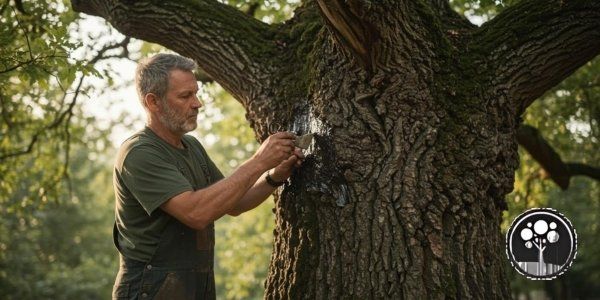

TL;DR — Quick Summary
Tree preservation practices in Vancouver protect your investment and the environment. ISA-certified arborists at Aesthetic Tree explain what every homeowner needs to know.
Tree preservation practices in Vancouver protect something many homeowners only notice after it is gone: a living asset that took decades to grow and can materially affect comfort, curb appeal, drainage, slope stability, and long-term property value.
A mature Douglas fir, Big-leaf maple, Western red cedar, or established ornamental tree does work that no renovation can fully replace. It shades your roof in July. It slows stormwater before it reaches hard surfaces and foundations. It helps hold soil on sloped lots. It also contributes to the character and market appeal of a Vancouver property.
Lose that tree through neglect, poor pruning, root damage, or an unpermitted removal, and you usually do not get the same benefit back in your lifetime.
This guide explains the tree preservation practices Vancouver homeowners should understand before pruning, building, removing, or working near mature trees. It covers practical preservation steps, municipal bylaw considerations, and the warning signs that usually deserve an ISA-certified arborist assessment.
TL;DR
- Vancouver's Protection of Trees Bylaw No. 9958 regulates protected trees and can apply to trees 20cm DBH and larger. Unauthorized removal or damage can lead to significant penalties.
- Mature trees can contribute meaningful property value, shade, stormwater control, and neighbourhood cooling benefits, especially on established Vancouver and Lower Mainland lots.
- The highest-impact preservation practices are structural pruning, root zone mulching, construction protection, and regular professional inspections.
- An ISA-certified arborist report in Vancouver is often required for permit applications and is smart due diligence before construction near trees.
- Many serious tree failures show warning signs years before the tree falls. Annual inspection helps catch structural defects before they become emergencies.
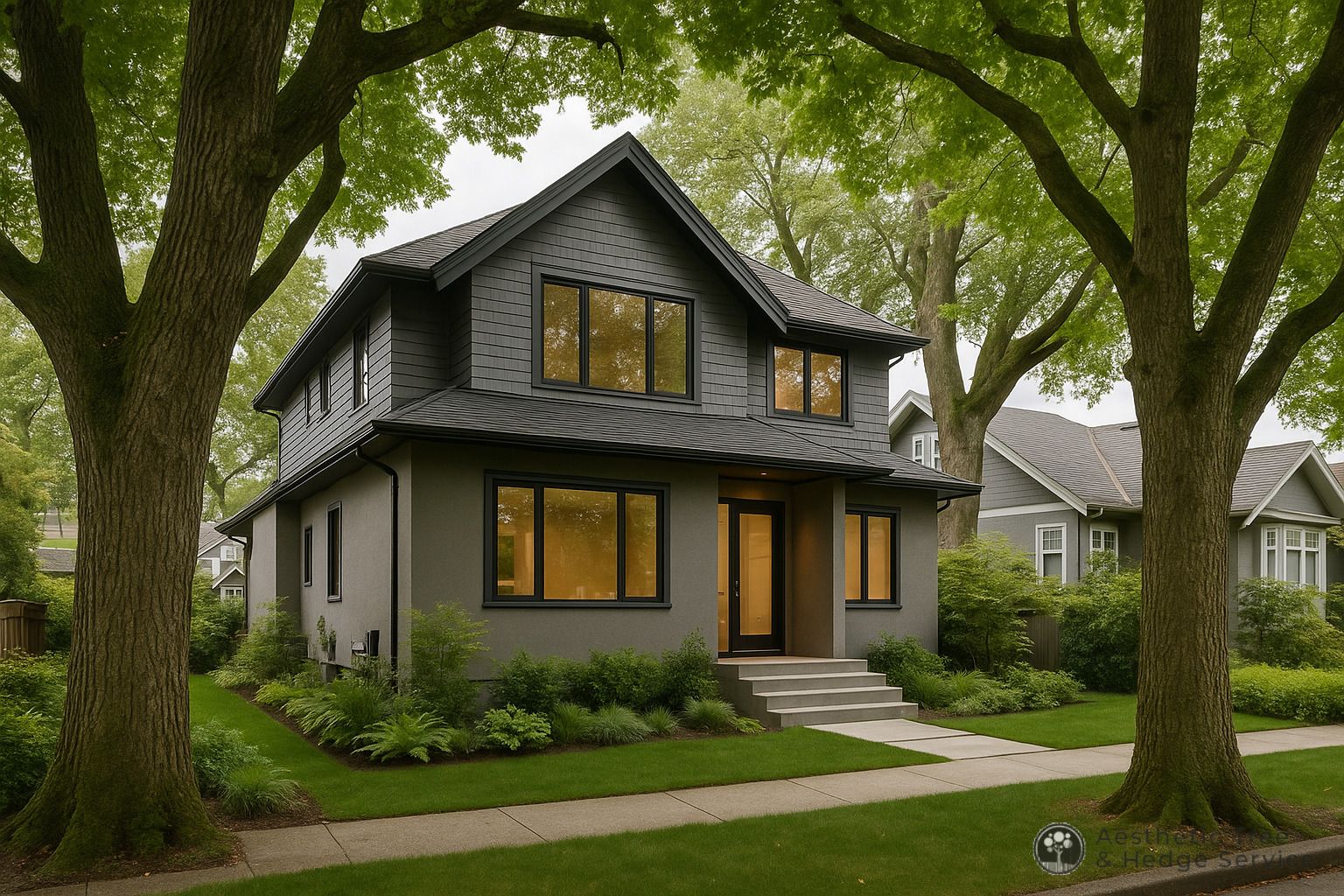
**Recommended image:** Mature Big-leaf maple or Douglas fir on a Vancouver residential property, showing canopy spread, root zone, and nearby structures.
---
Why Are Tree Preservation Practices in Vancouver Worth Your Attention?
For Vancouver homeowners, tree preservation is not just an environmental preference. It is property management.
Mature urban trees can improve curb appeal, reduce summer heat exposure, slow stormwater runoff, protect privacy, and support higher perceived property value. Research from urban forestry organizations, including the USDA Forest Service, has repeatedly linked healthy tree canopy with stronger residential property appeal and measurable economic benefit.
In Vancouver, that matters because the urban forest is under pressure. The City of Vancouver's Urban Forest Strategy identifies canopy expansion as a long-term goal, with a target of 30% tree canopy cover by 2050. The city has historically reported canopy coverage in the low-20% range, which means every mature tree retained on private property plays a role in the broader canopy picture.
The practical effect is simple: when mature trees are lost without meaningful replacement, neighbourhoods become hotter, stormwater loads increase, and established streets lose part of what made them desirable.
From our work across Vancouver, Burnaby, North Vancouver, Richmond, Coquitlam, and the surrounding Lower Mainland, the pattern is consistent. Homeowners who inspect and maintain mature trees before there is a visible emergency usually have more options. Homeowners who wait until after a storm often face a narrower choice: emergency mitigation, major pruning, or removal.
Preservation works best before decline is obvious.
---
What Does Vancouver's Tree Protection Bylaw Actually Require?
Many homeowners first learn about Vancouver's tree bylaw when they are planning a renovation, building a laneway home, or considering removal.
Vancouver's Protection of Trees Bylaw No. 9958 regulates protected trees, including many trees with a diameter of 20 centimetres or more measured at 1.4 metres above grade. That measurement is called diameter at breast height, or DBH.
In general, you should not remove, damage, or cause damage to a protected tree without first confirming whether a City permit is required. Penalties for unauthorized removal or damage can be substantial, and permit requirements can also apply when construction activity may affect a protected tree.
Construction is where many homeowners get caught. Excavation, driveway work, garage additions, drainage work, service trenching, and laneway construction can all affect tree roots. A tree does not need to be cut down to be damaged. Soil compaction, root severance, grade changes, and storage of materials inside the root zone can all create long-term decline.
Rules also vary across the Lower Mainland. Vancouver, Burnaby, the District of North Vancouver, the City of North Vancouver, Richmond, Coquitlam, and other municipalities each have their own thresholds, permit requirements, replacement rules, and enforcement processes.
That is why the safest first step is not guessing from the street. Before removing a mature tree or beginning work near one, get an ISA-certified arborist report in Vancouver. A proper report documents tree species, DBH, condition, structural defects, preservation options, and permit-related recommendations.
It also creates a record of due diligence if questions arise later.
**Recommended image:** Close-up of DBH measurement at 1.4 metres above grade with measuring tape around a tree trunk.
---
Which Tree Preservation Practices Actually Prevent Decline?
Not all tree care protects a tree. Some work looks productive while increasing stress, decay risk, or future failure risk.
The practices that matter most are the ones that protect structure, roots, soil, and water availability.
Structural Pruning to Recognized Arboriculture Standards
Structural pruning guides a tree's branch framework so it can mature with fewer weak unions, competing leaders, and overloaded limbs. It is especially valuable for young and middle-aged trees, but mature trees can also benefit when pruning is conservative and targeted.
Professional arborists commonly reference ANSI A300 pruning standards when making pruning decisions. These standards address pruning objectives, cut placement, live crown removal, and techniques that reduce unnecessary injury.
A key principle is restraint. Removing too much live canopy in one season reduces the tree's ability to produce energy, compartmentalize wounds, and respond to insects, drought, and disease. For many trees, removing more than roughly 25% of the live crown in a single growing season is excessive and can increase stress.
Topping is the clearest example of harmful pruning. Topping cuts the main stem or major scaffold branches back to stubs. It may make the tree shorter in the moment, but it usually creates weakly attached regrowth, larger wounds, decay entry points, and a more hazardous structure over time.
You can often recognize a topped tree from the ground. The canopy looks blunt or flat, with clusters of upright shoots growing from old cut points. Those shoots can grow quickly, but they are not the same as strong natural branch attachments.
Before hiring anyone to prune a mature tree, ask directly: do you follow current arboriculture pruning standards, and can you explain the pruning objective before work begins?
A qualified arborist should be able to answer clearly.
Root Zone Mulching
Mulching is one of the simplest and most effective tree preservation practices available to homeowners.
A properly applied wood chip mulch layer helps retain soil moisture, moderate soil temperature, reduce grass competition, and gradually improve organic matter as it breaks down. For Vancouver-area trees facing drier summers and heat stress, that moisture buffering can make a meaningful difference.
The details matter.
Mulch should be applied flat, not piled against the trunk. Keep mulch several inches away from the root flare, where the trunk widens into the root system. Extend the mulch outward where practical, ideally toward the drip line of the canopy.
Avoid volcano mulching. Mulch piled against bark traps moisture, encourages decay organisms, and can contribute to long-term decline. It is one of the most common avoidable mistakes we see on residential properties.
Our mulching service in Vancouver uses this same approach: protect the root zone, keep material away from the trunk, and improve soil conditions without burying the root flare.
Root Zone Protection During Construction
Construction damage is one of the most common causes of delayed tree decline in urban areas.
The difficult part is timing. A tree with damaged roots can look healthy for months or even several years. Then canopy dieback, poor leaf size, fungal activity, or instability appears later, and the connection to the earlier construction project is easy to miss.
Common construction injuries include:
- Soil compaction from equipment access
- Root cutting during excavation or trenching
- Grade changes over the root zone
- Concrete washout or chemical contamination
- Storage of lumber, bins, gravel, or soil around the trunk
- Repeated foot traffic inside the root zone
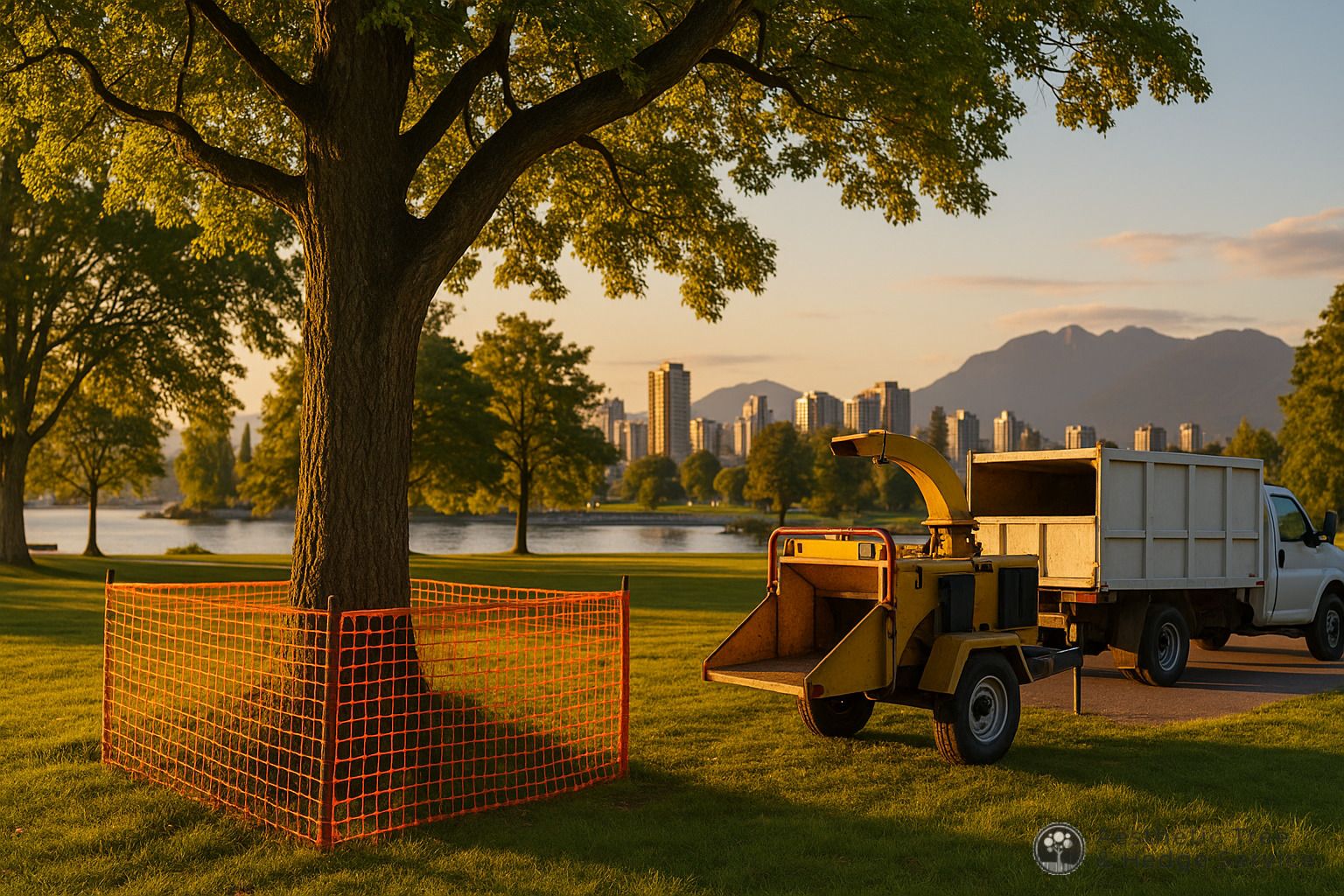
Before any project near a mature tree, an ISA-certified arborist can establish a tree protection zone, specify fencing, identify acceptable access routes, and document the recommendations for contractors and permitting staff.
For trees near driveways, foundations, and utility corridors, root barrier installation may help reduce future infrastructure conflict when installed for the right species, soil, and site conditions.
**Recommended image:** Tree protection fencing around a mature tree on a residential construction site.
---
How Does Correct Pruning Extend a Tree's Life in Vancouver?
Every pruning cut is a wound. Trees do not heal wounds the way humans do. They compartmentalize damage by growing new wood around injured tissue and limiting the spread of decay internally.
Whether a pruning cut closes successfully depends on the tree's health, the size of the wound, the timing of the work, and the placement of the cut.
The branch collar is especially important. This is the swollen area where a branch joins the trunk or a larger limb. A proper pruning cut is made just outside the branch collar. Cutting into the collar damages the tissue the tree uses to close over the wound. Leaving a long stub creates dead tissue that decay organisms can colonize.
Vancouver's wet climate also makes timing important. Wet spring and fall conditions can increase disease pressure for some species. Big-leaf maple, ornamental cherries, birches, cedars, Douglas firs, and other common Lower Mainland trees do not all respond the same way to pruning timing or intensity.
That is why good pruning is not simply cutting branches away from a roof or reducing height. It is species-specific arboriculture.
For tree cutting and pruning services in Vancouver, the pruning objective should be defined before the first cut: clearance, structure, deadwood removal, weight reduction, hazard mitigation, or restoration after prior poor pruning.
The right objective keeps the work focused. The wrong objective can stress the tree and create future defects.
---
When Is an Arborist Report the Right First Step?
An arborist report is not only for removals. It is often the right first step whenever a tree's condition, legal status, or construction impact is unclear.
A professional arborist report can:
- Identify species, DBH, condition, and location
- Assess visible defects such as decay, included bark, cracks, cavities, and root issues
- Recommend preservation, pruning, cabling, monitoring, or removal
- Support municipal permit applications when required
- Document tree protection measures for construction
- Create a written record of professional assessment
For Vancouver homeowners, this documentation can be useful before renovations, additions, laneway projects, drainage work, driveway replacement, retaining wall work, or removal applications.
It is also useful after significant storms. If a tree develops a new lean, broken major limb, soil movement, or canopy damage, a written assessment helps separate cosmetic damage from structural risk.
The best time to get an arborist report is before the decision becomes urgent. Once excavation has started, roots have been cut, or a neighbour has raised a complaint, your options may be more limited.
---
What Warning Signs Tell You a Tree Needs Immediate Attention?
Most serious tree problems give clues before failure occurs. Homeowners do not need to diagnose the tree themselves, but they should know when to call for assessment.
**Structural signs:**
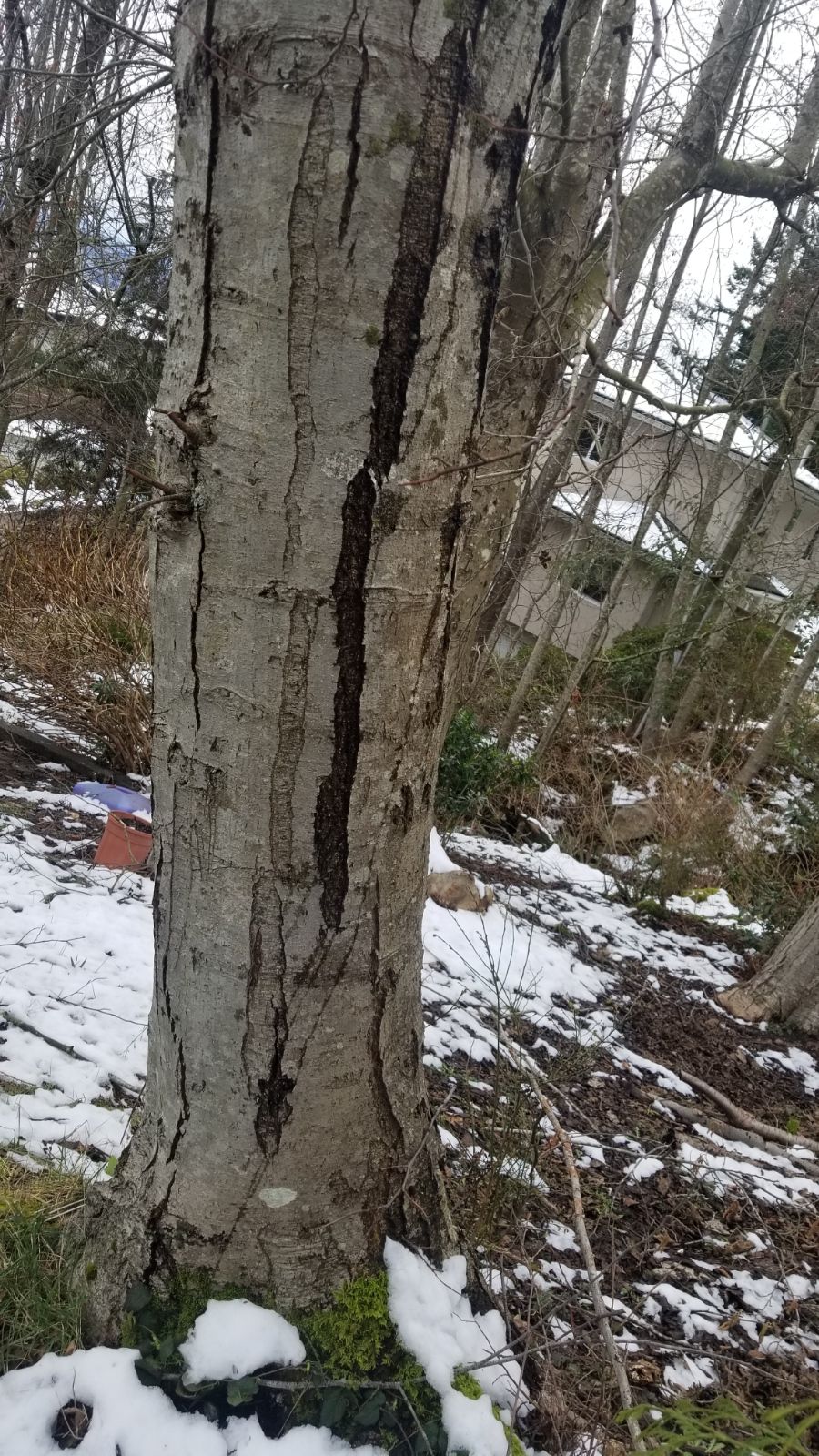
- Cracks or splits in the trunk or large branches
- Co-dominant stems with tight unions
- Included bark between stems or major limbs
- Large dead branches in the canopy
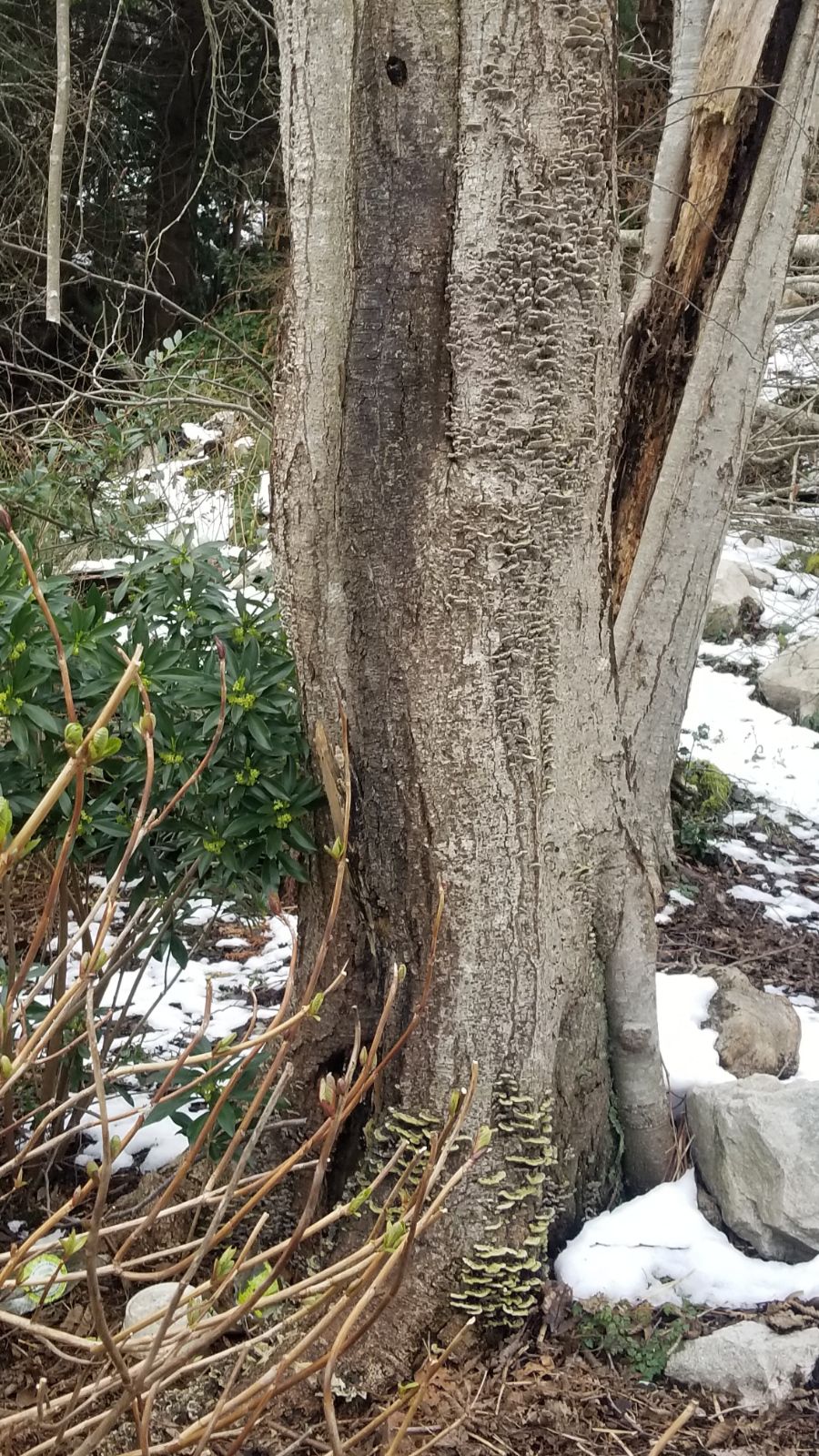
- Cavities, soft wood, or visible decay
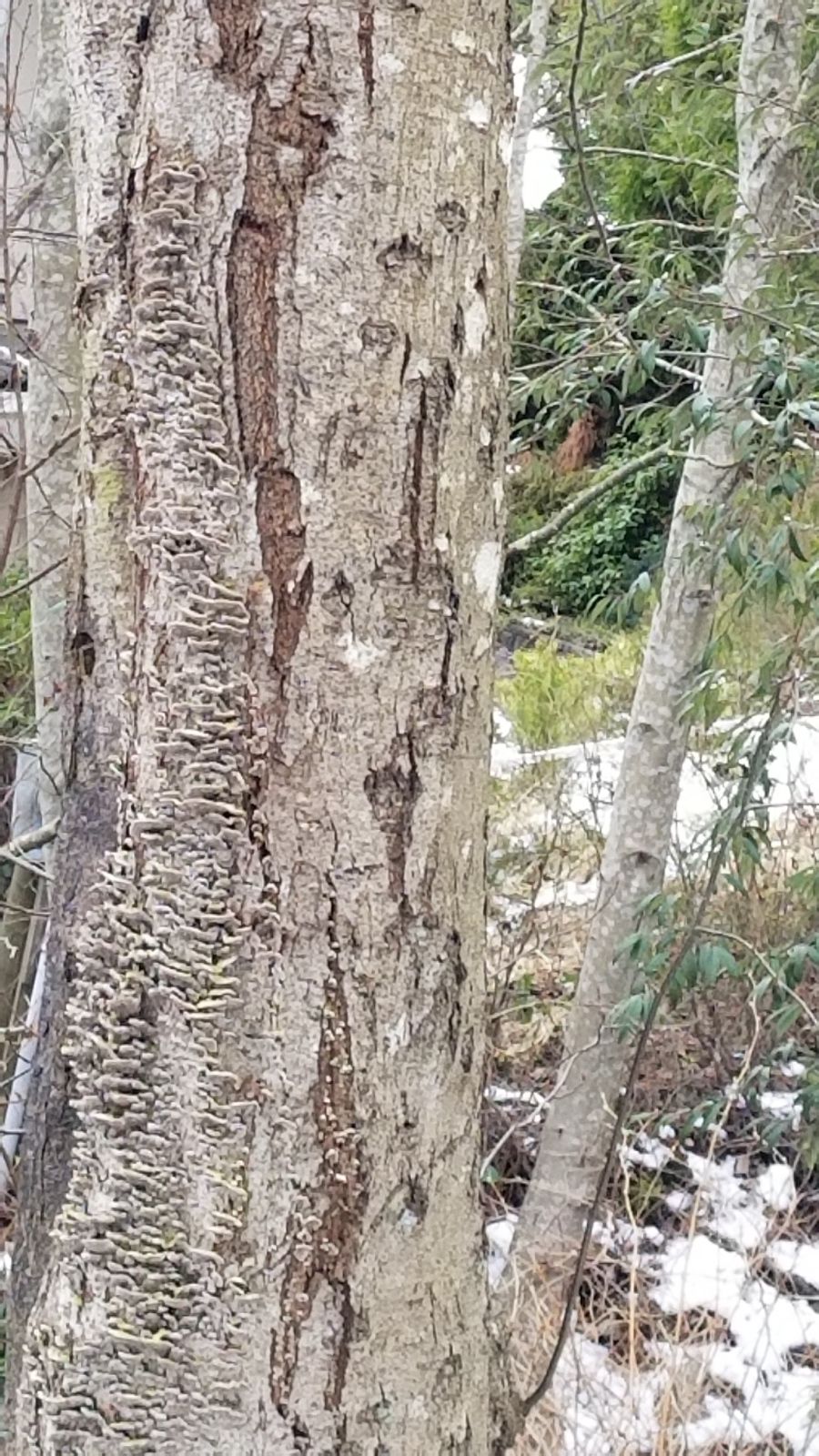
- Fungal conks on the trunk or major roots
**Root zone and base signs:**
- Mushrooms growing at the trunk base
- Soil lifting or cracking after wind
- Sudden lean or a lean that appears to be increasing
- Severed roots from recent excavation
- Heavy equipment or material storage over the root zone
**Canopy signs:**
- Upper crown dieback
- One-sided canopy decline
- Smaller leaves than usual
- Early leaf drop in summer
- Sparse foliage compared with previous years
Any one of these signs deserves attention. Several together deserve prompt professional assessment.
An arborist hazard assessment is the right next step when a tree shows structural warning signs. If a tree appears unstable, has failed limbs, or presents an immediate risk after a storm, our emergency tree service serves Vancouver and the Lower Mainland.
**Recommended image:** Side-by-side examples of included bark, fungal conks, and trunk cracking.
---
When Should Removal Replace Preservation?
Preservation should usually be considered first, but not every tree can or should be retained.
Some trees have reached the end of their structural life. Some were planted in locations that cannot support their mature size. Others have severe decay, major root loss, or repeated infrastructure conflict that cannot be responsibly managed.
Removal may be appropriate when:
- Advanced decay affects structural stability
- Major roots have been cut or compromised
- Multiple structural defects exist with no practical mitigation option
- Disease or pest damage has progressed beyond reasonable treatment
- The tree conflicts with essential construction or infrastructure and preservation is not feasible
- The tree presents an unacceptable risk to people or property
The important point is documentation. Removal decisions should be based on professional assessment, not guesswork, fear, or a contractor's unsupported opinion.
When removal is necessary, the process still needs to respect municipal requirements. Protected trees may require a permit, arborist documentation, replacement planting, or other conditions depending on the municipality and site.
After removal, proper stump grinding in Vancouver prepares the area for replanting or landscape restoration. Choosing a replacement species suited to the soil, drainage, overhead clearance, and available root volume gives the next tree a better chance of surviving.
Our tree removal in Vancouver process can include assessment, permit support, safe removal, cleanup, stump grinding, and replanting guidance.
---
How Does Tree Cabling Extend the Life of High-Risk Trees?
Some trees have structural defects but still provide enough value to justify preservation.
Cabling can help reduce movement in weak unions, co-dominant stems, or heavy limbs where removal is not the preferred option. A properly designed support system does not make a tree risk-free. It reduces specific mechanical loads and gives the tree a better chance of remaining safely in place.
Tree support systems should be designed and installed by qualified arborists. Cable type, placement, hardware, branch size, installation height, and inspection intervals all matter. Poorly installed systems can damage the tree or create a false sense of security.
Cabled trees also need follow-up. Hardware and synthetic systems should be inspected periodically, and the tree's structure should be reassessed as it grows.
For a mature Big-leaf maple, ornamental specimen, heritage garden tree, or high-value shade tree, cabling may extend useful life while reducing risk. Our tree cabling service in Vancouver is intended for exactly these situations: trees worth preserving, with defects that require professional support and monitoring.
---
How Do You Build a Long-Term Tree Care Plan That Actually Works?
One-time visits solve immediate problems. Long-term preservation comes from a plan.
A practical tree care plan includes four components.
**Annual inspection.** Mature trees should be assessed regularly for structural changes, decay indicators, canopy decline, and root zone issues. Written notes help track changes over time.
**Species-appropriate pruning.** Young trees may need structural pruning every few years. Mature trees usually need lighter, more selective work focused on clearance, deadwood, weight reduction, or risk mitigation. The goal is not to make the tree smaller every year. The goal is to maintain structure and health.
**Soil and root zone care.** Mulch renewal, compaction prevention, irrigation during drought stress, and protection from excavation are often more important than fertilization. Fertilizer should be used when there is a specific reason, not as a routine substitute for soil care.
**Documentation.** Keep arborist reports, pruning records, permit documents, photos, and maintenance notes. This supports future permit applications, helps with insurance or liability questions, and gives your arborist useful history.
For Vancouver properties with mature conifers, maples, cedars, Arbutus, or established ornamentals, annual care is modest compared with the value of the tree and the cost of emergency removal.
The math is simple: preserve early, and you keep more options.
---
FAQ
**Does Vancouver require a permit to prune a protected tree?**
Routine pruning may not require a permit when it is done properly and does not damage or destabilize a protected tree. However, heavy pruning, root damage, construction impacts, or work that could be considered injury to a protected tree may trigger bylaw concerns. When the scope is unclear, confirm requirements with the City of Vancouver or an ISA-certified arborist before work begins.
**How often should I have my trees professionally inspected?**
Annual inspection is a good baseline for mature residential trees. Schedule an additional inspection after major wind events, heavy snow or ice, excavation near the root zone, visible cracking, sudden lean, or unexplained canopy decline.
**What is a root flare and why does it matter for tree preservation?**
The root flare is where the trunk widens into the root system at the base of the tree. It should usually be visible. When soil or mulch is piled over the root flare, bark can stay wet, oxygen exchange can be reduced, and decay risk can increase. Correcting a buried root flare can improve tree health when done carefully.
**Can a tree with construction damage be saved?**
Sometimes. It depends on how much of the root system was affected, whether structural roots were cut, how compacted the soil became, and how quickly mitigation begins. Immediate steps may include stopping further access, mulching, careful irrigation, and arborist assessment. Delay reduces options.
**What does an ISA-certified arborist do that a landscaper doesn't?**
An ISA-certified arborist has training and testing in tree biology, pruning standards, soil, pests, diseases, risk assessment, and safe work practices. Landscapers may be skilled at general property maintenance, but tree structure, municipal compliance, disease diagnosis, and hazard assessment require specialized arboriculture knowledge.
---
Protect What Is Already Growing
The trees on your property may have taken 30, 40, or 80 years to reach their current size. If they are lost, the shade, structure, privacy, and environmental benefit will not return quickly.
Correct preservation practices protect that investment. Structural pruning, root zone mulching, construction protection, inspections, and timely hazard intervention all help mature trees remain safer and healthier for longer.
Aesthetic Tree & Hedge Services provides ISA-certified arborist services across Vancouver, Burnaby, North Vancouver, Richmond, Coquitlam, and the Lower Mainland.
**Call us for a free estimate: (604) 721-7370.** WCB registered. ISA certified.
Before You Go
Where are you in your tree care journey?
Our Tree Care Services
ISA-certified arborists serving Greater Vancouver
Related Articles
Explore Our Tree Care Services
From expert pruning to safe tree removal, our ISA-certified arborists are ready to help across Greater Vancouver.
View Services