
TL;DR — Quick Summary
How to become an arborist in BC: ISA cert path, WorkSafeBC rules, real wages, and what the career takes. From certified Vancouver arborists.
- To become an ISA Certified Arborist in BC, you need three years of full-time arboriculture experience, or a mix of education and experience, and then a pass on ISA's 200-question exam.
- BC arborist credentials are a mix: SkilledTradesBC offers Arborist Technician and Utility Arborist programs (Utility Arborist is a recognized program, not a compulsory trade), and ISA certification is voluntary.
- Without relevant education, plan on at least three years of full-time arboriculture work before you can apply for the ISA exam.
- TRAQ (Tree Risk Assessment Qualification) is a separate ISA qualification in tree risk assessment methodology. ISA Certified Arborist status is one way to become eligible for the course.
- WorkSafeBC's Occupational Health and Safety Regulation has specific rules for tree-climbing work, including a climbing plan with rescue procedures and a climbing system inspected before its first use each shift.
What Does an Arborist Actually Do Every Day in BC?
The job title says "arborist." The first year on the job says "ground crew."
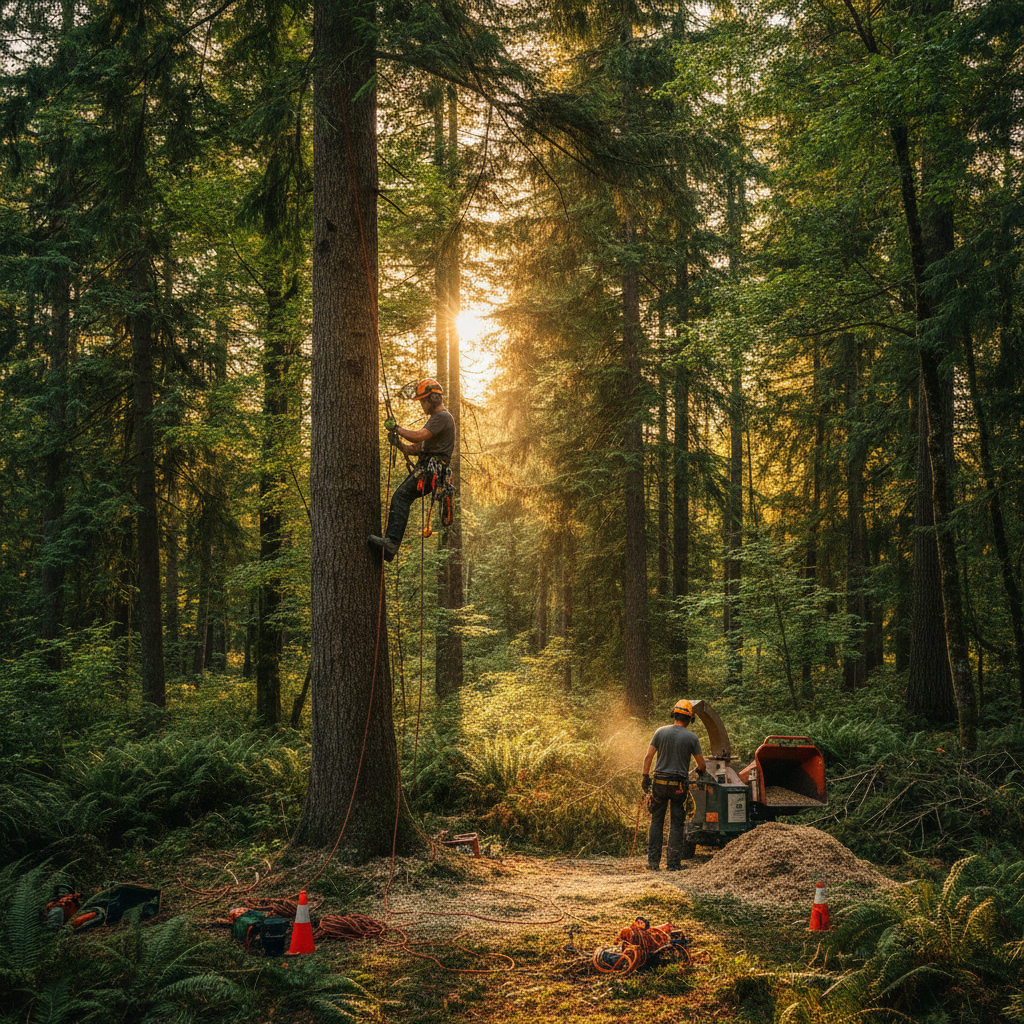
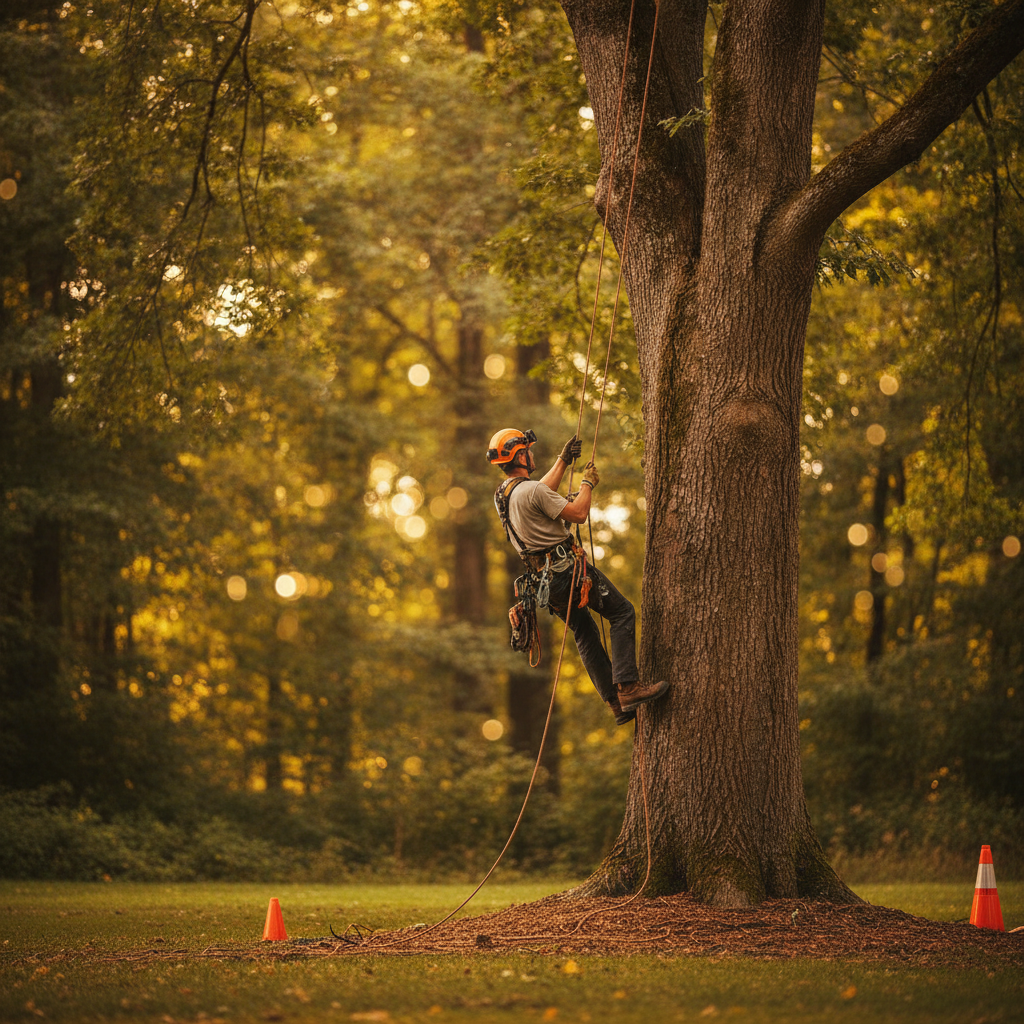
Many arborists in British Columbia start at the bottom of a crew. That's how the trade works. You haul brush. You feed the chipper. You set up rope systems before a certified climber goes up. You load and maintain equipment. You watch how professionals work safely in spaces that would make most people nervous — a tight backyard with a decaying tree two metres from the back porch, or a steep ravine where the equipment has to come in by hand.
Ground crew work in Metro Vancouver is physically demanding and technically educational in equal measure. Every site is different. You manage equipment in East Vancouver alleyways where there's barely room to swing a limb. You learn to read a job site for hazards before anyone picks up a chainsaw. You figure out load distribution for rigging through trial, observation, and direct correction from the lead arborist above you.
Over time — usually year two and beyond — the scope of your work grows:
- Hazard assessments — reading trees for signs of decay, structural weakness, and proximity risk to buildings and people
- Pruning and crown reduction — making cuts that meet ANSI A300 standards, the American National Standard for tree pruning
- Tree removal — taking trees down piece by piece in urban spaces where felling a full stem isn't possible
- Stump grinding — grinding stumps below grade after removal so roots stop causing problems and the space becomes usable
- Arborist reports — formal written assessments; in Vancouver, tree removal permit applications call for one prepared by an ISA Certified Arborist
The work is technical in a way most people don't expect. A certified arborist reads a tree the way a physician reads a patient. They look at root flare condition, bark texture, scaffold branch angles, and canopy density to identify early signs of fungal decay, insect infestation, or structural failure. That diagnostic skill takes years of repeated field exposure to develop. You don't get it from books alone.
What Are the Formal Requirements to Become a Certified Arborist in BC?
British Columbia has several arborist credentials: SkilledTradesBC offers Arborist Technician and Utility Arborist programs (Utility Arborist is a recognized program rather than a compulsory trade), and ISA certification is a voluntary program. That's why homeowners should ask exactly which credentials a crew holds.
The International Society of Arboriculture (ISA) runs the ISA Certified Arborist program, launched in 1992. The organization traces its roots to 1924. The chapter for British Columbia is the Pacific Northwest Chapter (PNW-ISA), which brings together arborists from British Columbia, Alaska, Idaho, Oregon and Washington.
To apply for the ISA Certified Arborist exam, you need one of the following:
- 3 years of full-time documented field work in arboriculture, OR
- A two-year associate degree with at least two arboriculture courses, plus 2 years of full-time experience, or a four-year bachelor's degree with at least four arboriculture courses plus one year (assessed-training certificates and approved apprenticeship programs can also count)
ISA requires documentation of your work experience, such as letters of reference from employers, and may contact those references. Start keeping those records on day one — don't assume you'll piece them together later.
Additional ISA credentials that matter in BC:
- ISA Tree Risk Assessment Qualification (TRAQ) — a separate ISA qualification in tree risk assessment methodology. ISA Certified Arborist status is one way to become eligible for the course.
- ISA Certified Arborist — Municipal Specialist — one of ISA's specialist certifications
- ISA Board Certified Master Arborist (BCMA) — ISA's highest certification; candidates must already be ISA Certified Arborists in good standing, meet extra experience and education requirements, and pass a separate exam
In Vancouver, tree removal permit applications call for a formal arborist report prepared by an ISA Certified Arborist, and Richmond also asks for an arborist report with tree permit applications. If you plan to do this work professionally, certification is what lets you prepare those Vancouver reports.
What Training Programs in BC Prepare You for the ISA Exam?
Here are common routes in British Columbia, and many arborists combine more than one.
[BCIT — British Columbia Institute of Technology (Burnaby)](https://www.bcit.ca)
BCIT's two-year Forest and Natural Areas Management diploma includes arboriculture training and an Urban Forestry stream in the final year. BCIT says graduates with additional relevant work experience can apply to become ISA Certified Arborists.
On-the-job mentorship — the most common path
Many arborists learn on a professional crew. You start as a groundie, work under experienced arborists and build knowledge job by job. When you've met the three-year experience requirement, you study ISA materials and take the exam. SkilledTradesBC's Arborist Technician apprenticeship formalizes this route: apprentices register with a sponsoring employer and attend eight weeks of technical training at Kwantlen Polytechnic University's Langley campus.
This path can take longer overall. The two approaches aren't mutually exclusive: many arborists do formal coursework early, then deepen their skills through years of supervised field work.
PNW-ISA Chapter workshops and short courses
Chapter courses, such as PNW-ISA's TRAQ courses, don't satisfy the experience requirement. Once you're certified, approved education counts toward the 30 continuing education units ISA requires every 3 years to keep certification, unless you retake the exam instead (ISA Certified Arborist Program Guide, revised August 2025).
How Long Does It Actually Take to Get ISA Certified in BC?
Be honest with yourself before you start: without relevant education, you need at least three years of full-time arboriculture work before you can apply, plus time to study.
Here's one way the progression can look. Every crew and every career is different:
Year 1–2: Ground crew fundamentals
You're on the ground. You learn chipper operation, brush handling, rigging setup, and how professional crews coordinate on a job site. You watch how your lead arborist communicates with clients and reads a site for hazards before work starts. You learn what safe equipment looks like — and what warning signs of unsafe equipment look like.
Year 2–3: Aerial entry
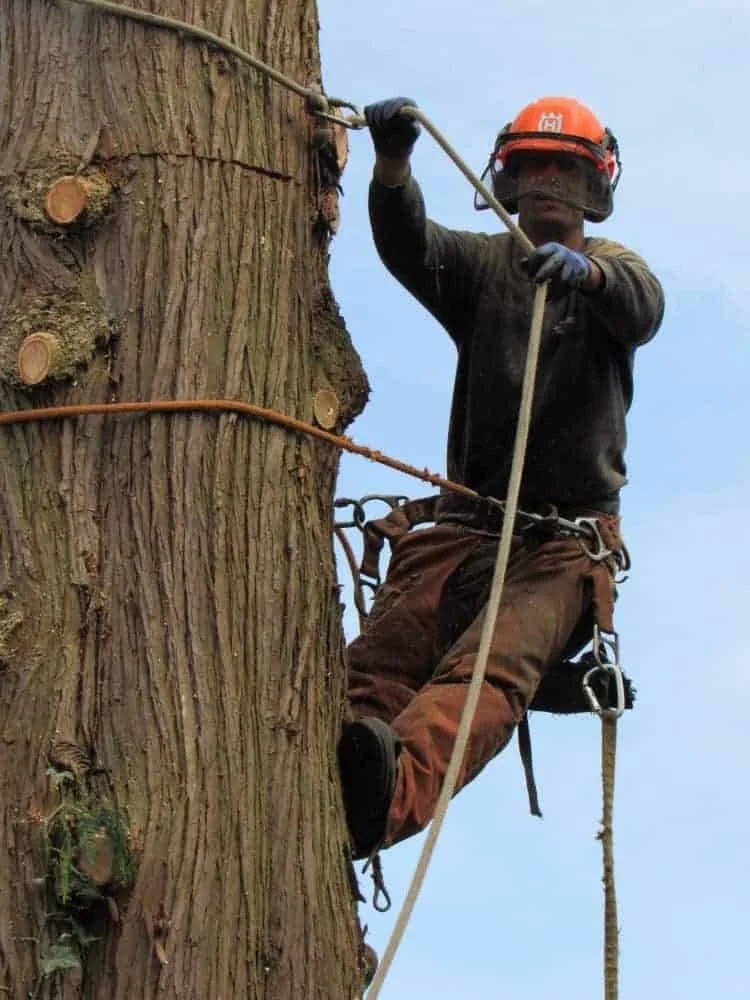
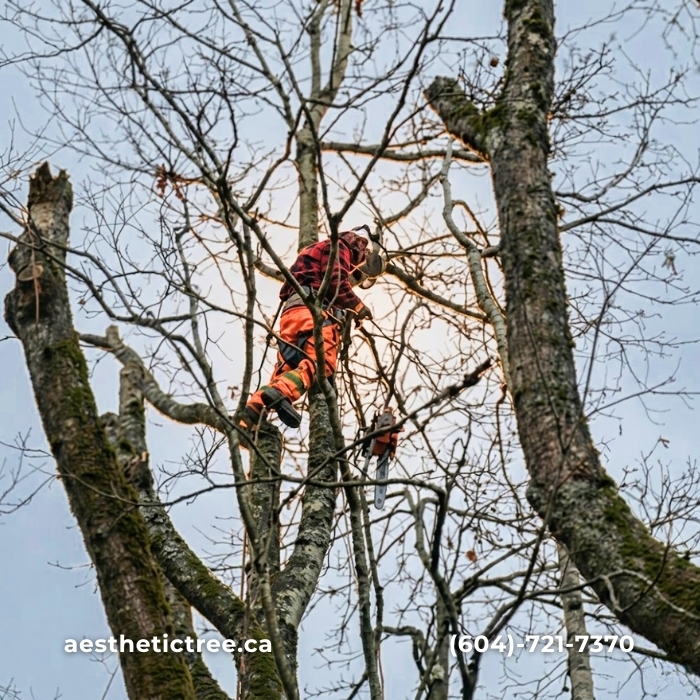
You start climbing. You learn friction hitch systems, mechanical ascenders, saddle fit, and limb walk technique. You get your first supervised aerial chainsaw hours. You begin to understand how different species respond to pruning cuts and what those responses tell you about the tree's health.
Year 3–4: Technical progression
You're a capable climber. You start learning tree biology at a deeper level: mycorrhizal relationships, vascular anatomy, how decay columns progress inside stems. You learn to identify common fungal pathogens and insect pests found on Lower Mainland trees. You start making hazard calls independently, then comparing your read to your lead arborist's assessment.
Year 4 and beyond: Exam preparation
You meet the experience threshold. You get your ISA study materials. According to ISA's Certified Arborist Program Guide (revised August 2025), the exam covers 10 content domains — tree biology, tree identification and selection, soil management, installation and establishment, pruning, diagnosis and treatment, trees and construction, tree risk, safe work practices and urban forestry — in 200 multiple-choice questions, with 3.5 hours to finish and a current passing score of 76 percent.
If you don't pass, ISA lets you retake the exam 30 days after your most recent attempt.
How Much Do Arborists Earn in BC?
Here's what federal wage data shows.
According to the Government of Canada's Job Bank (2023–2024 wage data), arborists in British Columbia earn between $20 and $33 per hour, with a median of $25 per hour. The Lower Mainland–Southwest figures are the same. Job Bank doesn't break these wages down by certification, so ask employers directly how credentials affect pay.
*Note: These figures are based on Government of Canada Job Bank wage data for arborists in British Columbia (reference period 2023–2024, updated November 2025). Actual earnings vary based on experience, certification level, business model, and employer. Self-employed arborists carry full overhead costs — equipment, insurance, WCB premiums, vehicles — which substantially affect net income. For specific market rates in your region, consult with active ISA members in the PNW-ISA Chapter.*
Self-employed arborists running their own crew may earn more in gross revenue, but they also carry the full cost of equipment, insurance, WCB premiums, and vehicle maintenance. Those overhead costs are substantial. Factor in a truck, stump grinder, climbing gear, and liability insurance before comparing gross revenue to an employee wage.
The honest picture: this is hard physical labour performed year-round in BC weather. Your body accumulates wear over a career. The pay reflects that. People don't stay in this trade for decades because it's physically easy.
What Does WorkSafeBC Require for Tree Service Workers in BC?
Tree work is hazardous, and WorkSafeBC has specific rules for it in Part 26 of the Occupational Health and Safety Regulation.
WorkSafeBC requirements for tree-climbing work include:
Personal protective equipment (PPE)
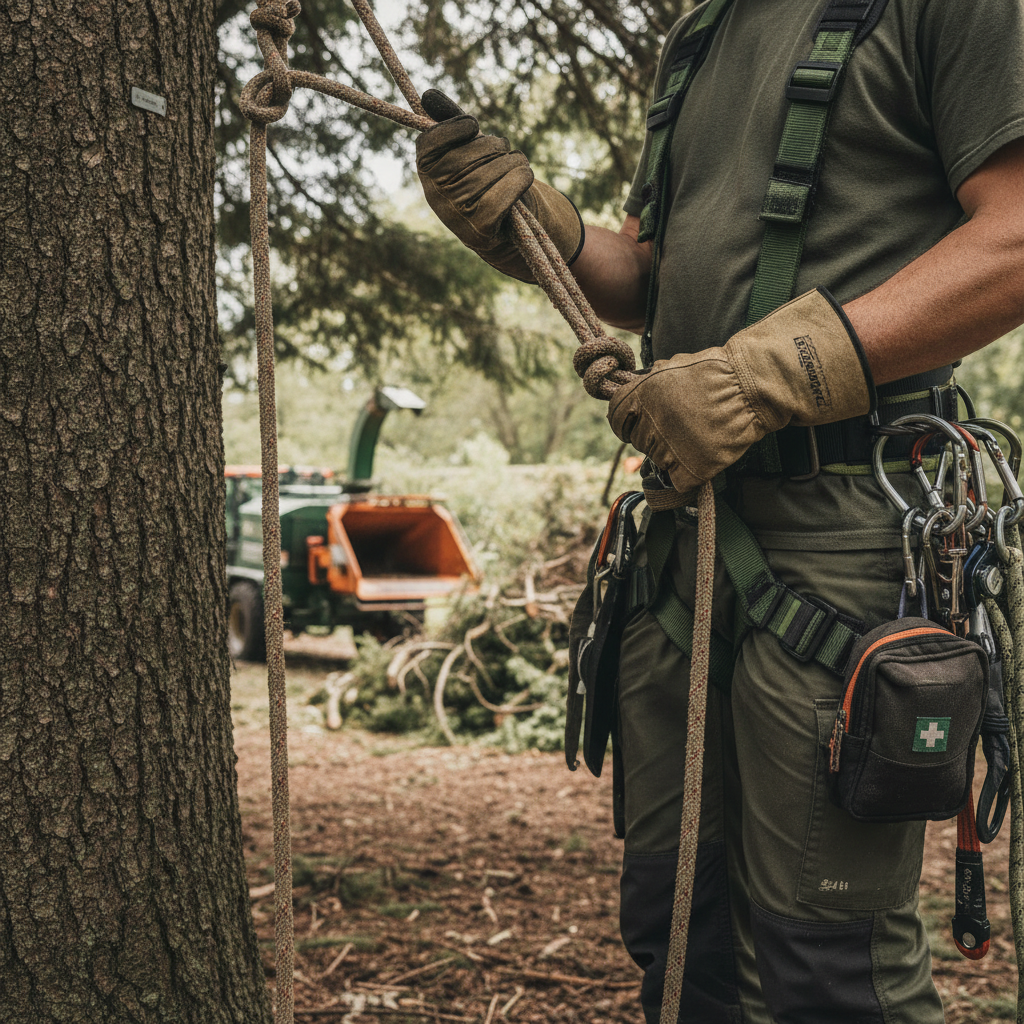
The tree-climbing plan has to set out the personal protective equipment workers will use, along with the hazard assessment, anchor points, worker duties and communication methods.
Aerial work protocols
A qualified arborist must determine that the tree can withstand the loads, and the climbing plan must include emergency response, evacuation and rescue procedures. The employer must make sure a climber can be promptly rescued, and the tree-climbing system must be inspected by a qualified arborist before it's first used on each work shift.
A company's WCB registration status is worth checking whether you're looking for work or hiring someone. For homeowners, hiring a contractor who isn't registered or isn't in good standing can leave you liable for insurance premiums they owe. A free WorkSafeBC clearance letter addressed to you protects against that, though it doesn't rate the contractor's safety or work quality.
Aesthetic Tree & Hedge Services has ISA-certified arborists, WorkSafeBC coverage for every crew member (certificates on request) and $3 million in liability insurance. For homeowners in the Lower Mainland, that combination is the minimum standard worth asking about before any tree work starts on your property.
Why Is Urban Arborist Work in Metro Vancouver Harder Than Rural Tree Work?
Rural tree work often has room to fell full stems and position equipment. Urban arborist work in the Lower Mainland is a different discipline.
The City of Vancouver's urban forest includes about 150,000 public street trees, and that count doesn't include trees on private lots. Those private-property trees need professional attention too, from arborists who understand the demands of dense urban work.
Urban arborist work in Metro Vancouver requires skills that a rural background doesn't develop:
Tight-space rigging
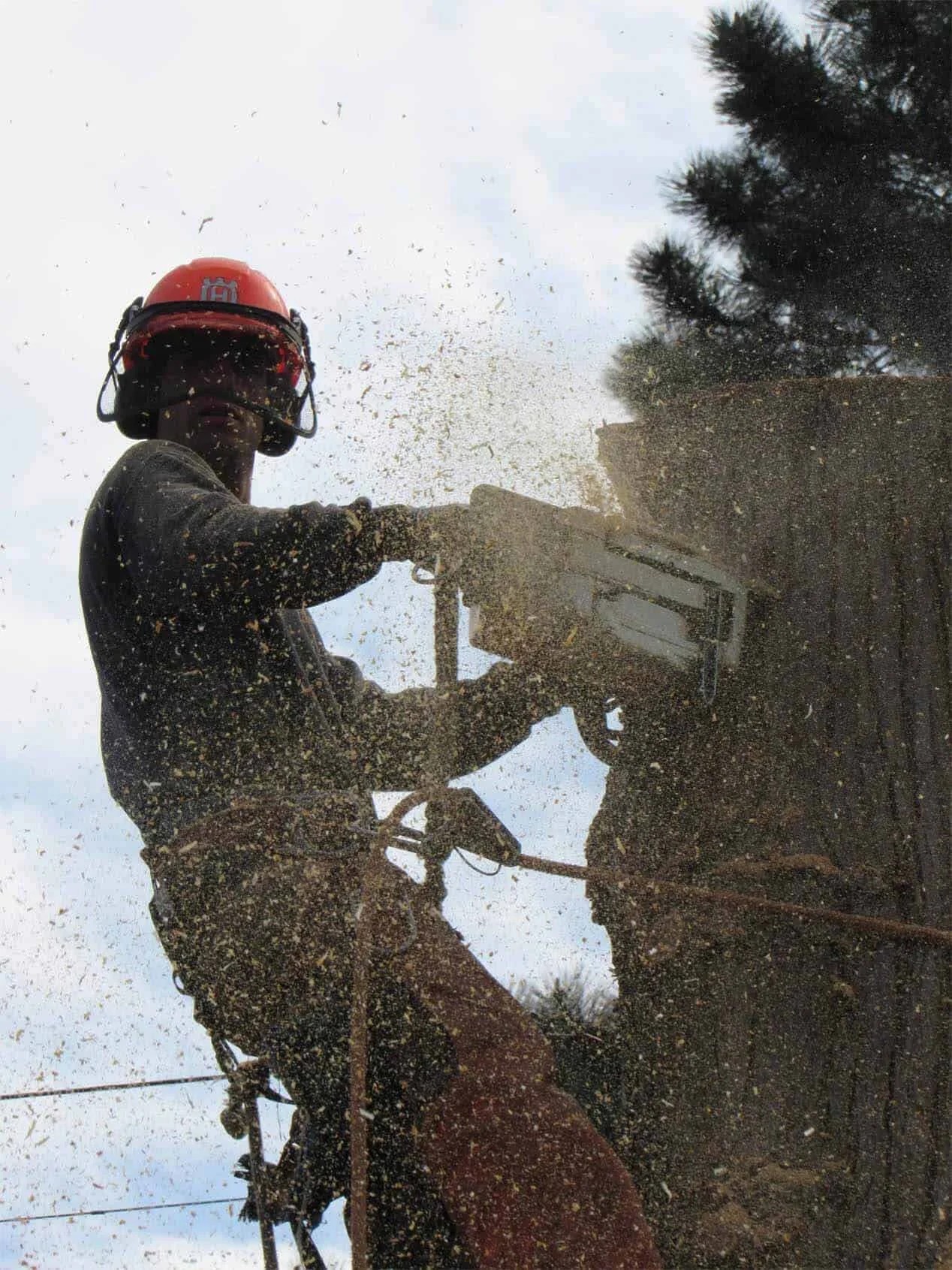
Tree removal in Vancouver often can't be done by felling a full stem. You remove trees piece by piece — rigging sections with ropes, blocks, and redirect anchors to lower them safely into yards that may have one metre of clearance between the tree and a fence, deck, or the neighbour's structure. This rigging precision takes years of regular practice to develop and can't be rushed.
Root zone management
Urban trees compete for limited soil. They grow near pavement, underground utilities, gas lines, and house foundations. An arborist who doesn't understand root zones can cause structural damage during removal — or miss root problems that indicate serious instability in the crown above. Reading roots is as important as reading canopy in dense urban settings.
Proximity to BC Hydro infrastructure
Under Part 19 of WorkSafeBC's Occupational Health and Safety Regulation, tree pruning or falling isn't permitted within set minimum distances of energized high-voltage lines unless a certified utility arborist or qualified electrical worker is on site directing the work, with at least one more qualified person trained in emergency rescue present.
Municipal permit compliance
Vancouver, Burnaby, Richmond and Coquitlam each have their own tree bylaws. In Vancouver, removing a private-property tree 20 cm or more in diameter, measured 1.4 m above the ground, needs a permit, and the application calls for an ISA Certified Arborist's report. Coquitlam, by contrast, lets owners remove up to two protected-size trees a year without a permit in most cases. Knowing which rule applies is part of scoping the job.
For tree cutting and hedge trimming across Metro Vancouver, this local knowledge separates an arborist who completes the job correctly from one who simply shows up with equipment.
What Does the Career Path Look Like After ISA Certification?
Certification is where the career starts to branch, not where it ends.
After you're ISA certified, several clear directions open up for working arborists in BC:
Master climber and lead arborist
Some arborists stay on the tools for their entire careers and become exceptional at what they do. They're the person a crew calls for the hardest jobs — removals in impossible spaces, trees leaning over occupied structures, high-risk aerial work that requires unusual precision. It's a respected specialty.
Consulting and assessment work
Adding TRAQ gives you formal training in ISA's tree risk assessment methodology. Consulting work often supports development and permit applications. In Vancouver, for example, a development permit application on a site with trees 20 cm or larger needs an arborist's report. Consulting arborists often work independently or under contract, which means varied schedules but also variable income.
Business ownership
Some arborists eventually start their own company. Startup costs are real: a chipper, a truck, a stump grinder, climbing equipment, insurance, WCB premiums and business development all demand capital before revenue arrives.
Municipal arborist
Cities employ arborists to care for public trees; Vancouver's urban forest alone includes about 150,000 street trees. ISA also offers a Municipal Specialist certification. Check each city's job postings for the credentials it asks for.
Utility arborist
Under WorkSafeBC's regulation, tree pruning or falling within set minimum distances of energized high-voltage lines needs a certified utility arborist or qualified electrical worker on site directing the work. SkilledTradesBC's Utility Arborist program combines 8 weeks of classroom instruction over two years with 2,378 hours of work-based training. Crews that respond to emergency tree service calls after storms need to recognize when lines are involved and the work has to wait for the utility.
Continuing education throughout
ISA certification is valid for three years; to renew, you retake the exam or earn at least 30 continuing education units in that period. The field changes — new tree biology research, updated risk assessment frameworks, revised city bylaws, new equipment standards. The arborists who stay relevant treat professional development as ongoing work, not a box ticked once.
Is an Arborist Career in BC Right for You?
Some people leave this trade early because they built the wrong picture before they started. They imagined climbing. They got months of brush hauling. They didn't understand why the ground work came first, or when — or whether — it would change.
Ground crew work isn't a detour on the way to the real job. At that stage, it is the real job. You learn how loads are managed, how crews communicate under pressure, how equipment fails, and how professionals set up a site safely before anyone goes up. Nobody who skips that foundation becomes a good arborist.
The people who thrive in this career long-term share a handful of characteristics:
Physical resilience under hard conditions. Not gym fitness — the ability to do sustained hard physical work in rain, cold, and mud. Metro Vancouver arborist work carries on through the wet winter months. That's the job.
Spatial and mechanical thinking. Rigging is applied physics. You're calculating load paths, anchor capacities, and redirect angles before you make any cut. You don't need an engineering background. You need a mind that works in three dimensions and catches errors before they become problems.
Comfort with managed risk. This work has real daily hazard. The arborists who last are the ones who assess risk systematically before every task — not those who ignore it, and not those who freeze when conditions get demanding. Calm and methodical beats bold and fast every time.
Patience with a long credential runway. Three years of full-time work before you can even apply for the exam is a real commitment. If you need a professional credential in months, this isn't the trade. If you can stay patient and focused over years, arboriculture offers a durable, physically engaging career with real skill depth.
If you're considering this career, talk to working arborists before committing — ideally PNW-ISA members who've been at it for ten or more years. Ask what the job looks like in January, what they wish they'd known at the start, and whether they'd do it again. The gap between the appealing version of arboriculture and the daily reality of it is significant. Knowing that difference before you start puts you ahead of most people who try.
Aesthetic Tree & Hedge Services serves Vancouver, North Vancouver, West Vancouver, Burnaby, Richmond, Coquitlam and New Westminster, with ISA-certified arborists, WorkSafeBC coverage for every crew member and $3 million in liability insurance. Services include arborist reports, tree removal, hedge trimming, stump grinding, and emergency tree service.
Call for a free estimate: (604) 721-7370.
Frequently Asked Questions
Found this helpful? Follow our tree care insights directly on Google.
Make us your preferred source on GoogleBefore You Go
Where are you in your tree care journey?
Our Tree Care Services
ISA-certified arborists serving Greater Vancouver


Explore Our Tree Care Services
From expert pruning to safe tree removal, our ISA-certified arborists are ready to help across Greater Vancouver.
View Services