
TL;DR — Quick Summary
Discover the proper mulching methods that Vancouver arborists use to promote tree health, prevent root rot, and avoid the costly mistakes that can kill even the healthiest trees.
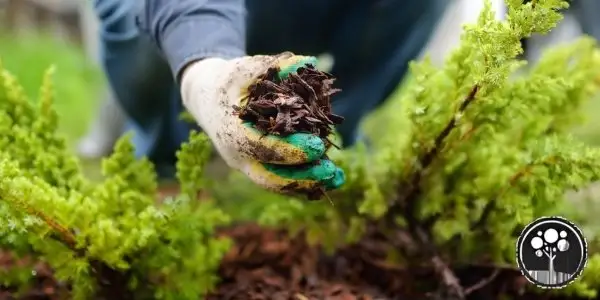
Proper mulching in Vancouver follows the ISA-recommended depth of 2–4 inches (5–10 cm) of organic material, extended outward in a donut shape with a clear gap at the trunk base. Volcano mulching — piling mulch against the trunk — is the single most damaging mistake, causing bark rot and girdling roots. Composted wood chips work best in Vancouver's wet-dry climate.
Why Mulching Matters for Vancouver Trees
Mulching is the closest thing urban trees have to natural forest floor conditions. In a forest, decomposing leaves, branches, and organic debris blanket the soil, insulating roots, feeding soil biology, and moderating moisture. Paved streets, compacted lawns, and foot traffic strip Vancouver street trees of that protection. A correctly applied mulch ring restores it.
Moisture regulation is the most immediate benefit. A proper mulch layer absorbs rainfall and releases it gradually, reducing drought stress during Vancouver's increasingly dry July-through-September window. According to the International Society of Arboriculture's Best Management Practices for Mulching (2014), organic mulch reduces soil moisture loss compared to bare soil, which directly reduces irrigation demand and root desiccation stress during summer dry periods.
Temperature buffering matters equally. Shallow feeder roots sit within the top soil layers and are vulnerable to both summer heat and winter frost heave. According to the ISA's Best Management Practices for Mulching (2014), a correctly applied organic mulch layer moderates soil temperature fluctuations, extending the window when roots actively grow and absorb nutrients. For trees stressed by construction damage, root pruning, or disease, this insulation can determine whether they recover or decline over the following growing season.
Over time, organic mulch decomposes and integrates into the soil, improving structure and feeding the microbial community that drives nutrient cycling. The City of Vancouver Urban Forestry program recommends organic mulch around newly planted street trees specifically because it accelerates establishment and reduces the irrigation calls that strain city maintenance budgets. According to the City of Vancouver's Urban Forest Strategy (2018), the city's urban forest intercepts millions of litres of rainfall annually, and maintaining tree health through correct mulching preserves that infrastructure at a fraction of the cost of removal and replacement.
Correct Application: Depth, Width, and the Donut Rule
The ISA's published arboriculture standards set the recommended mulch depth at 2–4 inches (5–10 cm) of organic material. The City of Vancouver Urban Forestry guidelines echo this range. Both sources agree that depth beyond 4 inches restricts gas exchange in the root zone and can create anaerobic conditions that harm roots even while the surface looks tidy.
Width matters as much as depth. According to the ISA's Best Management Practices for Mulching (2014), coverage should extend to the tree's drip line where practical, because most fine, water-absorbing roots extend to the drip line or beyond. A small ring centred on the trunk concentrates mulch where roots are least active and leaves the productive root zone bare. In practice, even extending mulch to a 3-foot radius around a young street tree delivers significantly more benefit than a tight collar that barely clears the trunk flare.
The trunk gap is non-negotiable. Mulch must not touch bark. A clear zone around the trunk base keeps the root flare dry and allows bark to breathe. Bark tissue is not designed to stay perpetually moist; sustained contact with wet organic material promotes fungal decay, softens the protective outer layers, and creates entry points for pathogens. The root flare — the visible widening where trunk meets ground — should always be exposed and visible after mulch is applied correctly.
Worked example (illustrative):
Assumptions: one ornamental maple in a front yard, trunk diameter 6 inches, mulch ring outer radius 4 feet, trunk gap (inner radius) 4 inches (0.33 feet), target depth 3 inches (0.25 feet). Bulk composted wood chips priced at $65 per cubic yard (illustrative supplier price — confirm current rates with your local Vancouver landscape supplier before ordering). GST at 5% per the Canada Revenue Agency.
Step 1 — calculate the mulched area as an annulus (ring):
- Outer radius = 4 ft; inner radius = 0.33 ft
- Ring area = π × (outer radius² − inner radius²) = 3.1416 × (16 − 0.11) = 3.1416 × 15.89 = 49.93 sq ft
Step 2 — calculate volume:
- Volume = area × depth = 49.93 sq ft × 0.25 ft = 12.48 cubic feet
- Convert to cubic yards: 12.48 ÷ 27 = 0.46 cubic yards
Step 3 — supplier pricing (most suppliers carry a 0.5 yd³ minimum for delivery):
- Practical order = 0.5 yd³ × $65/yd³ = $32.50 before tax
- GST at 5%: $32.50 × 0.05 = $1.63
- Total: $32.50 + $1.63 = $34.13
For a larger project — mulching six trees with rings extending 5 feet each at the same depth:
- Volume per tree: π × (5² − 0.33²) × 0.25 = 3.1416 × (25 − 0.11) × 0.25 = 3.1416 × 24.89 × 0.25 = 19.55 cubic feet = 19.55 ÷ 27 = 0.72 yd³
- Six trees: 6 × 0.72 = 4.32 yd³
- Material cost: 4.32 × $65 = $280.80
- GST: $280.80 × 0.05 = $14.04
- Total: $280.80 + $14.04 = $294.84
Bulk delivery typically becomes cost-effective above 2 cubic yards. Below that threshold, bagged composted wood chips from a garden centre are more practical for a single-tree refresh. The City of Vancouver Urban Forestry division also runs a free wood chip program where chips from city pruning work are available for pickup when supply allows, which can eliminate the material cost entirely for homeowners willing to collect.
Common Mistakes and How to Correct Them
Volcano mulching — piling mulch in a cone directly against the trunk — is the most widespread error in residential landscapes across Metro Vancouver. It likely persists because it looks deliberate, as if someone has taken care. The damage pathway is slow but predictable. Constant moisture against bark triggers fungal infections that rot the outer protective tissue. As rot advances inward toward the cambium — the thin layer responsible for transporting water and sugars between roots and canopy — the tree loses the ability to sustain growth in the affected area. According to the ISA's Best Management Practices for Mulching (2014), trunk decay caused by excessive mulch contact is among the most preventable forms of tree mortality in urban settings.
Beyond rot, deep mulch piled against the trunk encourages girdling roots. When roots encounter a warm, moist, nutrient-rich environment directly above soil level, they grow toward it — sometimes circling the trunk rather than extending outward. Girdling roots can take years to become visible but eventually compress vascular tissue and structurally destabilize the tree. According to the City of Vancouver Urban Forestry program's Street Tree Guidelines, girdling roots are a primary reason for premature street tree removals. Pest establishment follows moisture: carpenter ants, bark beetles, and other wood-boring insects are drawn to soft, decaying wood, and a volcano-mulched tree presents an ideal entry point with the mulch pile providing shelter from weather and predators.
Fixing an existing volcano is straightforward but requires care. Pull mulch back from the trunk until the root flare is exposed. If the root flare is buried, excavate carefully with a hand trowel rather than a spade, working outward from the trunk without cutting surface roots. Reshape the remaining mulch into the correct donut profile. If decay is already visible at the trunk base — soft bark, weeping sap, fungal growth, or carpenter ant trails — contact a certified arborist to assess whether intervention is needed before the damage reaches the cambium.
The second most common mistake is using the wrong material. Fine bark mulch compacts under Vancouver's heavy winter rain, forming a layer that sheds water rather than infiltrating it. Rubber mulch and gravel are sometimes used in commercial plantings for aesthetics, but neither contributes organic matter to the soil and both fail to provide the temperature and moisture benefits that matter most to tree establishment. According to ISA arboriculture guidelines, fresh arborist chips and composted wood chips with mixed particle sizes are the materials with the strongest evidence behind them for urban tree care.
Species, Site Conditions, and Seasonal Timing
Vancouver's urban forest spans a wide range of species and microclimates, from the rain-shadow dryness of East Vancouver to the perpetually wet slopes of North Vancouver. Mulch selection and application depth benefit from being matched to both the tree species and the specific site rather than applied as a uniform prescription.
According to the City of Vancouver's Street Tree Guidelines, mulch on clay sites should be kept at the lower end of the recommended depth range — closer to 2 inches — to prevent waterlogging of the root crown during wet winters. On sandy or fast-draining soils, the upper end of the range — 4 inches — captures rainfall that would otherwise pass through the root zone before roots can use it. Avoid fine bark mulch on sites with poor drainage; fine-textured materials compact under heavy rain, forming a layer that sheds water rather than infiltrating it.
Timing mulch application around Vancouver's seasons improves its effectiveness considerably. Spring is the highest-value window: applying a fresh layer in March or April allows it to moderate soil temperatures through the summer dry season, suppresses the first flush of annual weeds, and gives the organic material a full growing season to begin decomposing before winter. According to the ISA's Best Management Practices for Mulching (2014), spring is the primary recommended mulching season for temperate climates. Fall mulching serves a different purpose — a layer applied in October insulates roots against frost heave and provides a food source for soil microbes through the wet winter months when biological activity continues at low temperatures. However, according to BC Ministry of Forests guidance on urban tree care, adding moisture-retaining mulch to already-saturated clay soils in winter can promote phytophthora root rot and other water mould pathogens, so fall application on poorly drained sites warrants caution.
Maintenance is simpler than most homeowners expect. Rather than adding a full new layer each year, professional practice is to top-dress — adding roughly 1 inch of fresh material to restore depth — after checking that the existing layer has not compacted into a mat. An annual spring inspection takes five minutes: check trunk clearance, probe depth with a finger or ruler, look for weed breakthrough that signals the mulch is too thin, and inspect the trunk base for any soft or discoloured bark. Catching a mulch problem early — before bark decay reaches the cambium or girdling roots become structural — can save a mature tree that would cost thousands of dollars to remove and far more to replace in canopy value and ecosystem services.
---
Frequently Asked Questions
Found this helpful? Follow our tree care insights directly on Google.
Make us your preferred source on GoogleOur Tree Care Services
ISA-certified arborists serving Greater Vancouver
Explore Our Tree Care Services
From expert pruning to safe tree removal, our ISA-certified arborists are ready to help across Greater Vancouver.
View Services