
TL;DR — Quick Summary
Trim hedges properly in Vancouver with ISA-certified technique. Right timing, right cuts, right species rules. Free estimate from Aesthetic Tree: (604) 721-7370.
Trim hedges properly in Vancouver, and you get a dense, healthy privacy screen that holds its shape for years. Trim at the wrong time, cut too far into old wood, or use dirty blades, and one afternoon of work can leave brown patches, disease problems, or a hedge that never fills back in.
This guide explains how ISA-certified arborists approach hedge trimming in Vancouver and the Lower Mainland: species first, timing second, then tool choice, cut depth, safety, and bylaw risk.
TL;DR
- Trim most Vancouver hedges after the main spring flush, usually late May to June, with a lighter shape-up in August when conditions are not hot or dry.
- Do not remove more than one-third of the live foliage in a single session.
- Use sharp bypass pruners or well-maintained hedge trimmers. Avoid crushing stems with dull or anvil-style tools.
- Do not cut cedar or Leyland cypress back into bare brown wood. Those areas usually do not regrow.
- English laurel is treated as an invasive species concern in BC. Keep clippings contained and dispose of them through approved municipal green waste channels.
- Tall hedges, ladder work, roadside hedges, diseased hedges, and hedge removals are the situations where a professional arborist is usually the safer choice.
Why Does Proper Hedge Trimming Matter in Vancouver?
Vancouver hedge care is different from hedge care in colder, drier parts of Canada.
The Lower Mainland has mild wet winters, long damp shoulder seasons, and increasingly dry summer stretches. That combination changes how cedar, laurel, boxwood, yew, and cypress respond after pruning. It also raises the risk of fungal disease when tools are dirty or cuts are made during wet weather.
Poor hedge trimming can cause:
- Permanent brown patches on cedar and cypress when cuts go into old bare wood
- Ragged wounds that heal slowly and invite disease
- Dense top growth with thin, shaded lower growth
- Stress browning after trimming during heat or drought
- Neighbour or municipal complaints where hedges block sight lines, sidewalks, signs, or road visibility
The legal side matters more than many homeowners expect. Vancouver, Burnaby, North Vancouver, and other Lower Mainland municipalities can require vegetation to be cut back when it blocks public rights-of-way, sidewalks, road visibility, or required sight lines. Corner lots and hedges near lanes or streets deserve extra caution.
If a hedge is close to a road, sidewalk, intersection, driveway, ravine, stream corridor, or protected tree area, check the current municipal bylaw before heavy cutting or removal.
What Are the Most Common Hedge Species in Vancouver and How Do You Trim Each One?
Species determines the whole job. The right timing, cut depth, and renovation plan for laurel can ruin a cedar hedge.
Across Vancouver, Burnaby, Richmond, North Vancouver, Coquitlam, and the rest of the Lower Mainland, these are the hedge types we see most often.
Western Red Cedar (Thuja plicata)
Western red cedar is one of the most common privacy hedges in Metro Vancouver.
It can make a beautiful dense screen, but it has one unforgiving rule: do not cut into bare brown wood. Cedar does not reliably push new green growth from old interior stems. If you cut past the green outer layer, that brown section can remain visible permanently.
For maintained cedar hedges, trim after the spring growth flush has slowed, often late May through June. A second light trim in August can keep the hedge tidy through fall. Avoid late-season heavy trimming, especially in colder inland communities such as Coquitlam, Port Coquitlam, Maple Ridge, Langley, and parts of Burnaby, because soft late growth can be damaged by early cold.
Keep the top slightly narrower than the base so sunlight reaches the lower foliage. A cedar hedge that is widest at the top will often thin out near the bottom.
English Laurel (Prunus laurocerasus)
English laurel grows quickly in the Lower Mainland and can put on heavy growth in a single season. It often needs two trims per year to stay controlled, especially when planted as a formal privacy hedge.
Use sharp bypass pruners for thicker stems and clean hedge trimmer blades for shaping. Avoid tearing leaves and crushing stems where possible. Ragged laurel leaves brown at the edges and make the hedge look rough for weeks.
English laurel is also an invasive species concern in British Columbia. Birds can spread seed into parks, ravines, and natural areas, where laurel competes with native understory plants. After trimming, keep clippings contained and dispose of them through the approved green waste process for your municipality. Do not dump laurel cuttings near parks, ravines, streams, or natural areas.
For large English laurel removals near protected natural corridors, check municipal requirements before starting. Some sites need review because of tree protection, riparian protection, or slope concerns.
Portuguese Laurel (Prunus lusitanica)
Portuguese laurel is usually more manageable than English laurel. It grows more slowly, responds well to shaping, and performs well in Vancouver's wet winters when planted in suitable soil.
Trim in late May or June after the spring flush. If the hedge is formal or fast-growing, do a lighter second trim in August. Portuguese laurel can tolerate heavier renovation better than cedar, but hard cuts are still best planned for spring when the plant has the growing season ahead of it.
Boxwood (Buxus species)
Boxwood needs more disease caution than most Vancouver hedges.
Boxwood blight and other fungal problems spread through infected plant material, wet foliage, and contaminated tools. Vancouver's cool, damp conditions can make that risk worse, especially in crowded plantings with poor airflow.
Trim boxwood during dry weather. Avoid shearing when the leaves are wet. Disinfect tools between plants if disease is suspected or if you are moving from one property or hedge section to another. A 70% isopropyl alcohol spray or an appropriate disinfecting solution can reduce the risk of spreading pathogens.
For most boxwood hedges, late May to June is the main trimming window. A light September touch-up can work when the weather is dry and mild. Avoid trimming during wet spring conditions or during peak summer heat.
Yew (Taxus species)
Yew is common in older Vancouver gardens and is more tolerant of renovation pruning than cedar or Leyland cypress. It can often push new growth from older wood, but that does not mean every hard cut is safe.
Renovate yew gradually. Heavy reductions are best done in spring, with recovery monitored over the season. Old, shaded, drought-stressed, or poorly rooted yews may not respond evenly after severe cutting.
When Is the Best Time to Trim Hedges in Vancouver?
For most maintained hedges in Vancouver, timing follows growth and weather rather than a fixed calendar date.
Late May to June
This is the main trimming window for many species. By late May or June, the spring flush has usually slowed enough that trimming creates a cleaner shape without forcing the plant to replace too much new growth immediately.
This timing works well for cedar, laurel, many mixed evergreen hedges, and formal hedges that need a crisp shape heading into summer.
August
August is useful for a lighter second trim, especially on laurel, cedar, Portuguese laurel, and formal hedges. The goal is refinement, not heavy reduction.
Avoid trimming during heat waves, drought stress, or smoky conditions. Fresh cuts increase moisture stress, and hedges that are already dry can brown quickly after aggressive trimming.
September and Later
Light shaping may be acceptable for some species in mild coastal sites, but heavy pruning after mid-September is risky. Late cuts can stimulate tender growth that does not harden before cold weather.
In inland parts of the Lower Mainland, the risk increases because overnight temperatures can drop earlier than they do in coastal Vancouver.
Wet Weather
Avoid trimming boxwood and visibly diseased hedges during wet weather. Wet foliage and contaminated blades can spread pathogens through a hedge row.
What Tools Do ISA-Certified Arborists Use to Trim Hedges?
Tool quality affects plant health and finish quality. A sharp, clean tool makes a cleaner wound. A dull tool crushes tissue, leaves ragged edges, and slows recovery.
Bypass Hand Pruners
Use bypass pruners for selective cuts and stems that are too thick for hedge shears. Professional crews commonly use brands such as Felco, Bahco, ARS, and Okatsune because they hold an edge and can be serviced.
Hand pruners are especially useful on laurel, where cutting large leaves in half with a hedge trimmer can leave a browned, chopped look.
Manual Hedge Shears
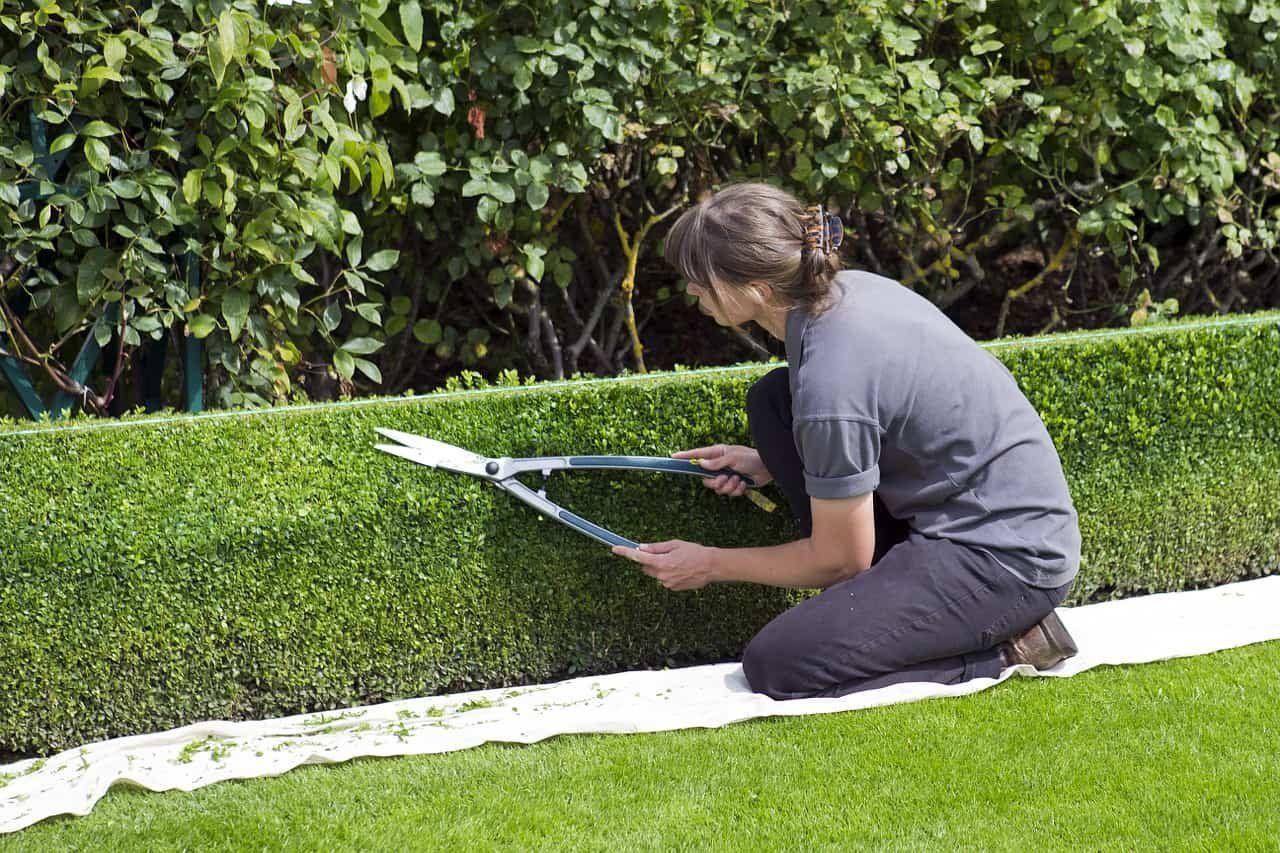
Manual hedge shears are useful for fine shaping on smaller hedges. Sharp blades matter more than brand name. Dull shears crush stems and leave uneven cuts.
Electric or Gas Hedge Trimmers
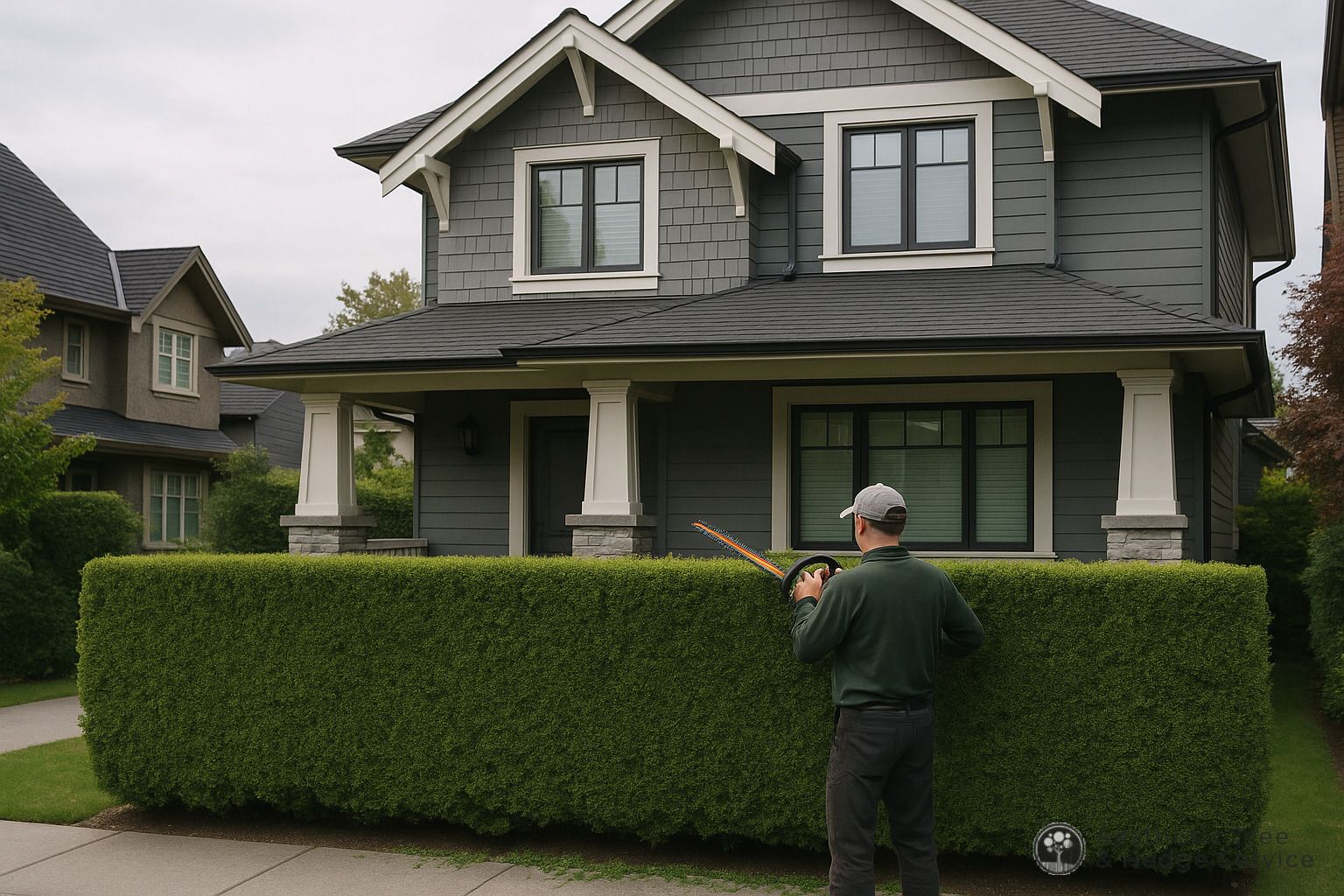
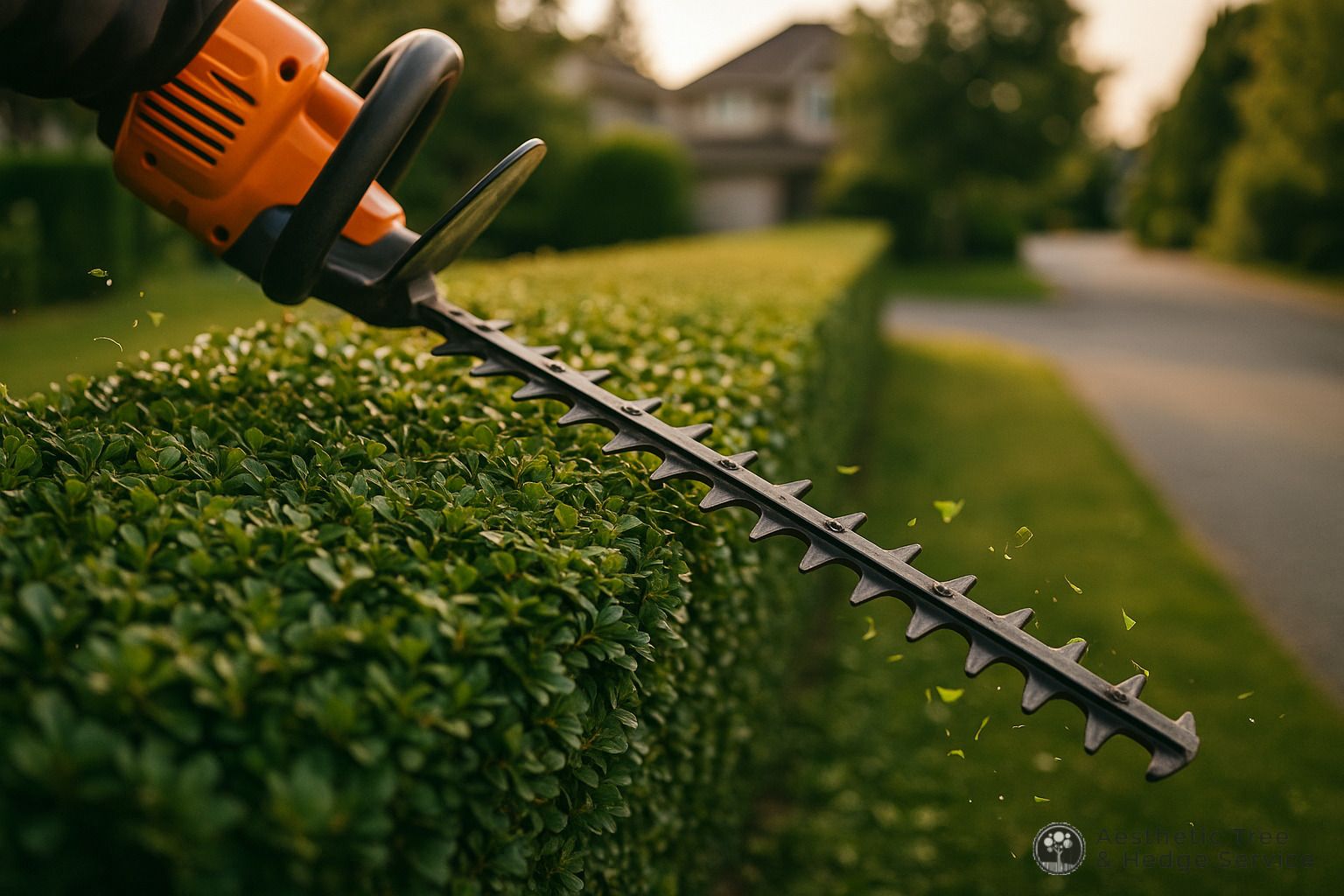
Powered trimmers are efficient for larger formal hedges. They are useful on cedar, laurel, and long straight runs, but they should not replace selective pruning where the hedge has structural problems, disease, or heavy stems.
Blade condition matters. Dirty or sap-covered blades drag through the hedge and tear foliage. Crews should clean and sharpen blades regularly.
Disinfection Supplies
Professional hedge work should include tool sanitation, especially when moving between plants, properties, or diseased sections. A spray bottle of 70% isopropyl alcohol is a common field option.
This is especially important for boxwood, laurel with disease symptoms, and mixed hedges where one infected plant can spread problems down the row.
How Much Should You Cut and What Is the One-Third Rule?
The one-third rule is one of the simplest ways to avoid hedge damage.
Do not remove more than one-third of the live foliage in a single trimming session.
Leaves produce the energy the plant needs to recover. Remove too much living foliage at once and the hedge has fewer resources to close wounds, push new growth, and maintain its root system.
In practice:
- A cedar hedge should be trimmed within the green outer layer, not pushed back into bare interior wood.
- A laurel hedge that is far beyond the target height should usually be reduced in stages rather than cut back all at once.
- A severely overgrown hedge may need a multi-season renovation plan.
- A hedge that has lost its structure completely may be cheaper to remove and replant than to correct over several years.
ANSI A300 pruning standards and ISA pruning guidance both emphasize that pruning should preserve plant health, structure, and long-term function. Heavy indiscriminate cutting works against all three.
When the hedge is too large, too close to a road, or too far gone for a simple trim, a professional assessment is worthwhile. Our hedge trimming services in Vancouver team can assess whether staged renovation or replacement makes more sense for your specific hedge.
What Do Vancouver's Bylaws Say About Hedge Height and Placement?
There is no single hedge-height rule that applies to every property in the Lower Mainland. The answer depends on the municipality, the hedge location, and whether the hedge affects public access, road visibility, neighbouring properties, or protected trees.
City of Vancouver
In Vancouver, hedges and other vegetation can become a bylaw issue when they obstruct sidewalks, lanes, streets, traffic signs, road visibility, or sight lines. Corner lots, driveways, and hedges close to the road right-of-way deserve particular attention.
If the City issues a notice, the owner may be required to cut vegetation back within a stated timeline. Before doing major work near a street or intersection, check the current City of Vancouver Street and Traffic By-law and any related guidance.
City of Burnaby
Burnaby can address nuisance vegetation where a hedge interferes with neighbouring properties, public access, or visibility. Tall boundary hedges may become a complaint issue when they block light, air, views, or access in a way the City considers unreasonable.
District of North Vancouver
In the District of North Vancouver, tree protection rules can matter when a hedge is made up of mature trees. Large cedar hedge trunks, for example, may trigger permit questions if removal is planned.
Trimming is different from removal, but the line can become blurred when a hedge is cut so heavily that individual trees are effectively destroyed. If in doubt, get the bylaw question answered before the saws come out.
If your hedge or the trees within it may be protected, an arborist report in Vancouver can provide the documentation needed for permit applications, neighbour disputes, and bylaw compliance.
What Is Hedge Topping and Why Do Arborists Treat It Carefully?
Topping means cutting flat across the top without regard for plant structure, bud location, species, or long-term health.
For trees, topping is widely recognized as poor pruning practice because it creates weak regrowth, decay risk, and structural problems. For formal hedges, the issue is more nuanced. A formal hedge often does need a flat top, but that cut still needs to respect the species and the live growth zone.
Improper hedge topping can cause:
- Weak clustered shoots below cut points
- A dense top that shades out lower foliage
- A hollow interior with little live growth
- A top-heavy shape that catches snow and blocks light from the base
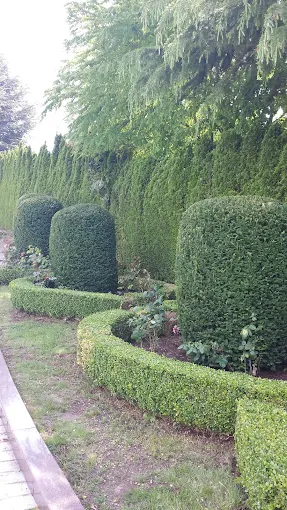
A properly shaped formal hedge is slightly narrower at the top than at the base. That taper helps sunlight reach the lower foliage and keeps the hedge dense from bottom to top.
Should You Hire a Professional Arborist or Do It Yourself?
DIY hedge trimming is reasonable when the hedge is small, healthy, reachable from the ground, and away from roads or protected areas.
DIY is usually appropriate when:
- The hedge is under about 1.5 metres tall
- No ladder or roof access is needed
- You know the species
- The hedge is healthy
- The work is light shaping rather than major reduction
- There are no bylaw, neighbour, or road-visibility concerns
A professional arborist is the better choice when:
- The hedge is over 2 metres tall
- A ladder, platform, or aerial equipment is needed
- The hedge is close to a street, sidewalk, lane, or intersection
- The hedge shows disease, dieback, or pest symptoms
- You are considering heavy renovation or removal
- The hedge may include protected trees
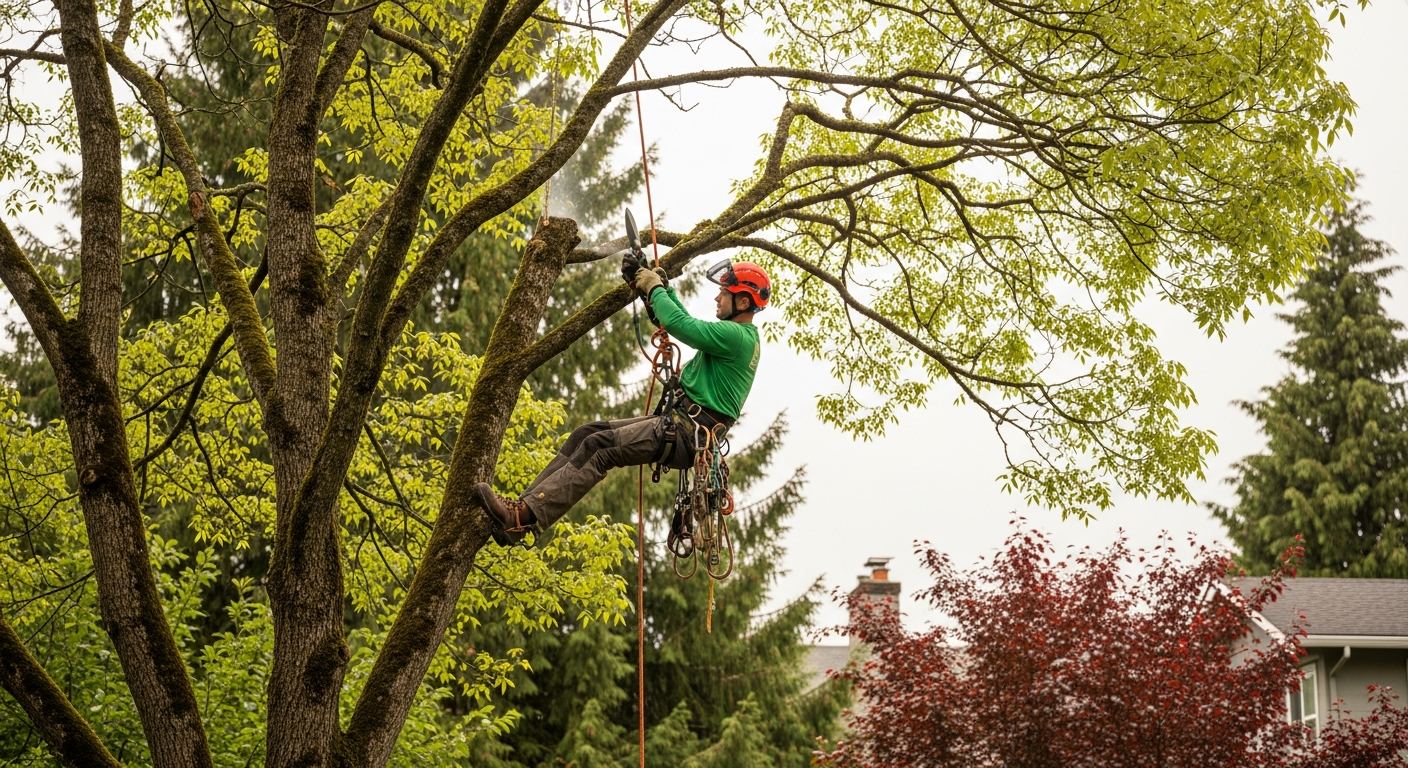
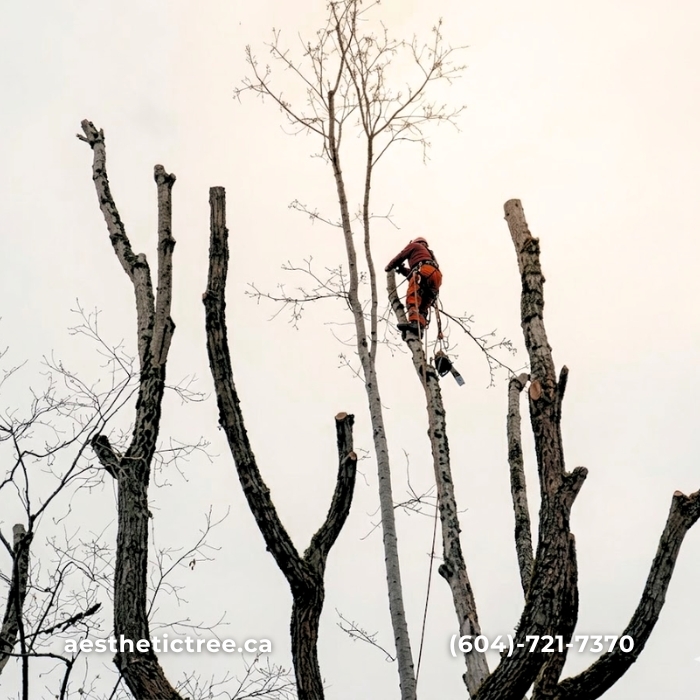
If you hire a contractor for tall hedge work, confirm they are properly insured, registered with WorkSafeBC where required, and trained for the equipment and fall hazards involved. Working at height is not just a landscaping issue. It is a safety and liability issue.
Aesthetic Tree & Hedge Services is WCB registered and ISA-certified. Crews working at height follow applicable WorkSafeBC safety requirements.
For hedges that have grown into structural trees, or where large limbs overhang structures, see our tree cutting services in Vancouver page for what that work involves.
What Happens If You Trim a Hedge at the Wrong Time of Year in Vancouver?
Seasonal timing mistakes are one of the most common causes of hedge decline on Vancouver-area properties.
Late Fall Trimming
Heavy trimming in October or November can stimulate soft new growth. In inland communities, that growth may not harden before colder nights arrive. The result can be frost-burned tips and spring browning.
Heat-Event Trimming
Freshly cut foliage loses moisture. During hot dry weather, cedar, boxwood, and shallow-rooted hedges can show stress quickly, especially if they are not watered deeply before and after trimming.
If the forecast calls for temperatures near or above the high 20s, delay heavy trimming where possible.
Wet Spring Boxwood Trimming
Wet cool weather can increase disease pressure on boxwood. Trimming during wet conditions, especially with unclean tools, can spread disease through a hedge row.
For Metro Vancouver, a practical timing guide is:
- Cedar and conifer hedges: late May through August, staying within green growth
- English and Portuguese laurel: late May through August, with staged reductions when needed
- Boxwood: late May to June, and a light dry-weather touch-up in September if needed
- Mixed hedges: follow the most sensitive species in the planting
What Does Proper Hedge Trimming Look Like Step by Step?
This is the basic process an ISA-certified arborist follows before making a hedge look finished.
Step 1: Identify the Species
Every decision starts here. Cedar, laurel, boxwood, yew, and cypress do not respond the same way.
Step 2: Inspect for Disease and Stress
Look for browning, spots, cankers, fungal growth, pest damage, drought stress, and dead sections. Do not shear through disease without understanding what is causing it.
Step 3: Set the Target Shape
For formal hedges, use a string line and maintain a slight taper so the base is wider than the top.
Step 4: Start Low and Work Up
Working from the lower sides upward helps maintain taper and keeps lower foliage from being shaded out.
Step 5: Remove Clippings as You Go
Clippings left on top of or inside the hedge hold moisture and reduce airflow. That can increase fungal pressure.
Step 6: Clean Tools When Disease Risk Is Present
Disinfect blades between plants or sections when working on boxwood, diseased hedges, or multiple properties.
Step 7: Dispose of Clippings Properly
Use your municipality's approved green waste process. Keep English laurel clippings away from natural areas, ravines, parks, and waterways.
Step 8: Water the Root Zone When Conditions Are Dry
If the soil is dry and no rain is expected, water the root zone after trimming. Avoid wetting the foliage late in the day, especially on disease-prone hedges.
How Do You Renovate an Overgrown Hedge in Vancouver?
Overgrown hedges need species-specific renovation. Some recover well from hard cuts. Others do not.
Species That Usually Tolerate Renovation Better
- English laurel
- Portuguese laurel
- Privet
- Yew, when healthy and renovated carefully
These hedges can often be reduced in stages, especially when work begins in spring.
Species That Usually Do Not Recover From Bare-Wood Cuts
- Western red cedar
- Leyland cypress
- Many older conifer hedges with dead interiors
For cedar and cypress, the green outer shell is the hedge. Once you cut beyond it, there may be no living buds available to fill the hole.
For renovation-friendly species, a staged plan often works best:
- Year 1: Reduce the top and allow recovery.
- Year 2: Reduce one side.
- Year 3: Reduce the other side.
This approach keeps enough foliage on the plant to support recovery. It also reduces the chance of shock.
For cedar hedges that are too wide, too tall, or bare inside, removal and replacement may be the more realistic option. Young cedar hedge stock can often be trained into a clean formal screen within a few growing seasons. Our hedge installation services in Vancouver cover species selection, spacing, soil preparation, and replacement planting.
FAQ
How often should I trim my hedge in Vancouver?
Most maintained formal hedges need two trims per year: one after the spring flush in late May or June, and one lighter trim in August. Fast-growing English laurel may need more frequent light shaping. Informal hedges can often be maintained with one annual trim.
Do I need a permit to trim my hedge in Vancouver?
Usually, ordinary hedge trimming does not require a permit. Removal is different. If the hedge is made up of mature trees, is near a protected area, or may fall under a municipal tree bylaw, check before cutting. An arborist report can help document the site and reduce the risk of compliance problems.
What is the best hedge species for privacy in Vancouver?
Western red cedar is a strong choice where the site suits it. It is evergreen, dense, native to BC, and familiar in Lower Mainland landscapes. Portuguese laurel is another good option where a broadleaf evergreen hedge is preferred. English laurel grows quickly but carries invasive-species concerns, especially near ravines, parks, and stream corridors.
Why is my cedar hedge turning brown after trimming?
The two most common causes are cutting into bare brown wood or trimming during stressful weather. Cedar does not reliably regrow from old interior wood. If browning is only on the tips, new growth may soften the appearance over time. If browning is deep or spreading, get an arborist assessment before making more cuts.
Can I trim my neighbour's hedge if it overhangs my property in BC?
In general, property owners can trim overhanging branches back to the property line, but they should not enter the neighbour's property or cut in a way that is likely to kill or destabilize the plant. Because disputes can become legal or bylaw matters, written notice and a conservative cut are wise. If the hedge is causing damage or blocking access, contact the municipality or get legal advice before taking aggressive action.
Call Aesthetic Tree & Hedge Services for a Free Estimate
Proper hedge trimming takes the right timing, the right tools, and cuts made in the right place for the species.
Done well, it keeps a hedge dense, healthy, and useful. Done poorly, it can leave damage that takes years to correct.
Aesthetic Tree & Hedge Services works across Vancouver, Burnaby, North Vancouver, Richmond, Coquitlam, and the Lower Mainland. Our ISA-certified arborists follow professional pruning standards and practical site-specific judgment on every hedge job. We are WCB registered.
For a free estimate, call (604) 721-7370 or review our hedge trimming services in Vancouver before you book.
Related: For more on this, see 10 Reasons Why We Should Cut Down Trees — What ISA Arborists Check First.
Found this helpful? Follow our tree care insights directly on Google.
Make us your preferred source on GoogleBefore You Go
Where are you in your tree care journey?
Our Tree Care Services
ISA-certified arborists serving Greater Vancouver


Explore Our Tree Care Services
From expert pruning to safe tree removal, our ISA-certified arborists are ready to help across Greater Vancouver.
View Services