
TL;DR — Quick Summary
When to call an arborist—and when it can't wait. Learn 7 warning signs, Vancouver tree bylaws, and why ISA-certified arborists protect your home.
Knowing when to call an arborist can protect your home, your trees, and your neighbours. Most homeowners wait longer than they should. They notice a crack in the trunk. They see a limb hanging lower after every storm. They tell themselves they will keep an eye on it until the tree makes the decision for them.
This guide explains the warning signs that deserve a professional assessment, how Vancouver-area tree bylaws usually affect removal, and when a tree issue becomes urgent.
TL;DR
- Call an arborist if you see trunk cracks, dead limbs overhead, fungal growth near the base, root movement, or a tree leaning toward a structure.
- Vancouver, Burnaby, North Vancouver, Richmond, and other Lower Mainland municipalities may require permits before protected trees are removed.
- An arborist report is often needed when applying to remove a protected tree.
- ISA-certified arborists are trained to assess tree health, structural risk, pruning needs, and preservation options.
- Emergency arborist service is appropriate after storm damage, fallen limbs, or when a tree threatens a home, vehicle, road, or power line.
- Earlier assessment is usually less expensive and less disruptive than emergency removal.
---
What Does an Arborist Actually Do?
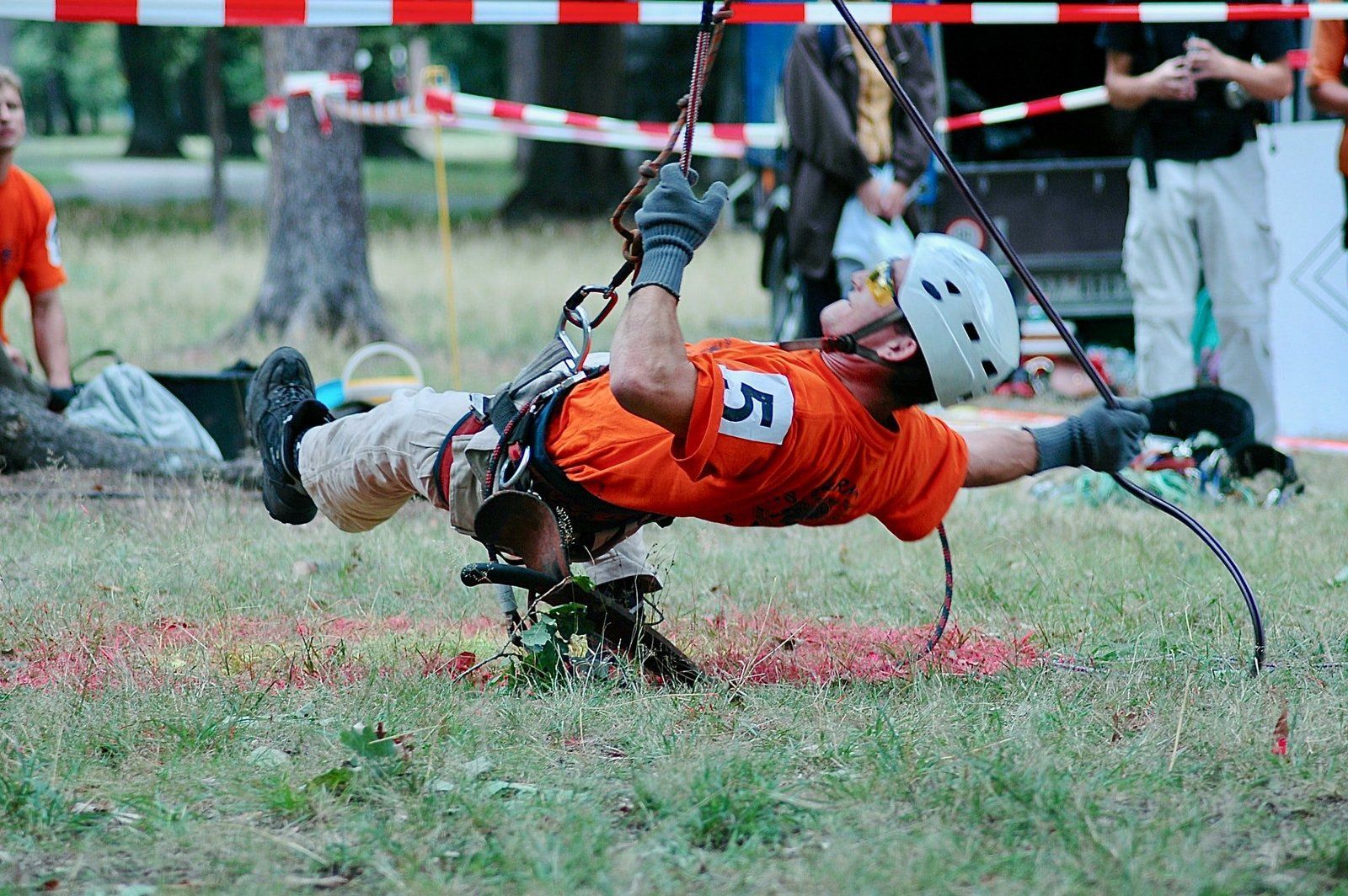
An arborist is not just someone who cuts trees. A certified arborist is trained to assess tree health, structure, risk, and long-term care.
A good arborist can diagnose disease, identify decay, recommend pruning, write reports for municipal permits, and explain whether a tree can be preserved safely. That matters in the Lower Mainland, where large Douglas firs, Western red cedars, big-leaf maples, birches, and ornamental street trees often grow close to homes, fences, driveways, and neighbouring properties.
The International Society of Arboriculture, or ISA, certifies arborists who meet education and field-experience requirements and pass a professional exam. Tree care work is also guided by ANSI A300 standards, which are widely used across North America for pruning, support systems, risk assessment, and other arboricultural practices.
For a homeowner, that training changes the conversation. You are not just asking, “Can this tree be cut?” You are asking whether the tree is structurally sound, whether it can be pruned safely, whether roots are creating a real problem, and whether your municipality will require documentation before any removal happens.
In Vancouver-area residential work, the most difficult calls are often the ones that come late: a cedar that has been leaning farther after two wet winters, a maple with decay that was visible at the base for months, or a hanging limb that stayed in the canopy after a windstorm. Those are the situations where an earlier arborist assessment could have given the homeowner more options.
---
What Are the Warning Signs It's Time to Call an Arborist?
This is the question most homeowners search for, and the answer should be specific. Call an arborist when you see any of these seven signs.
**1. Cracks or splits in the trunk**
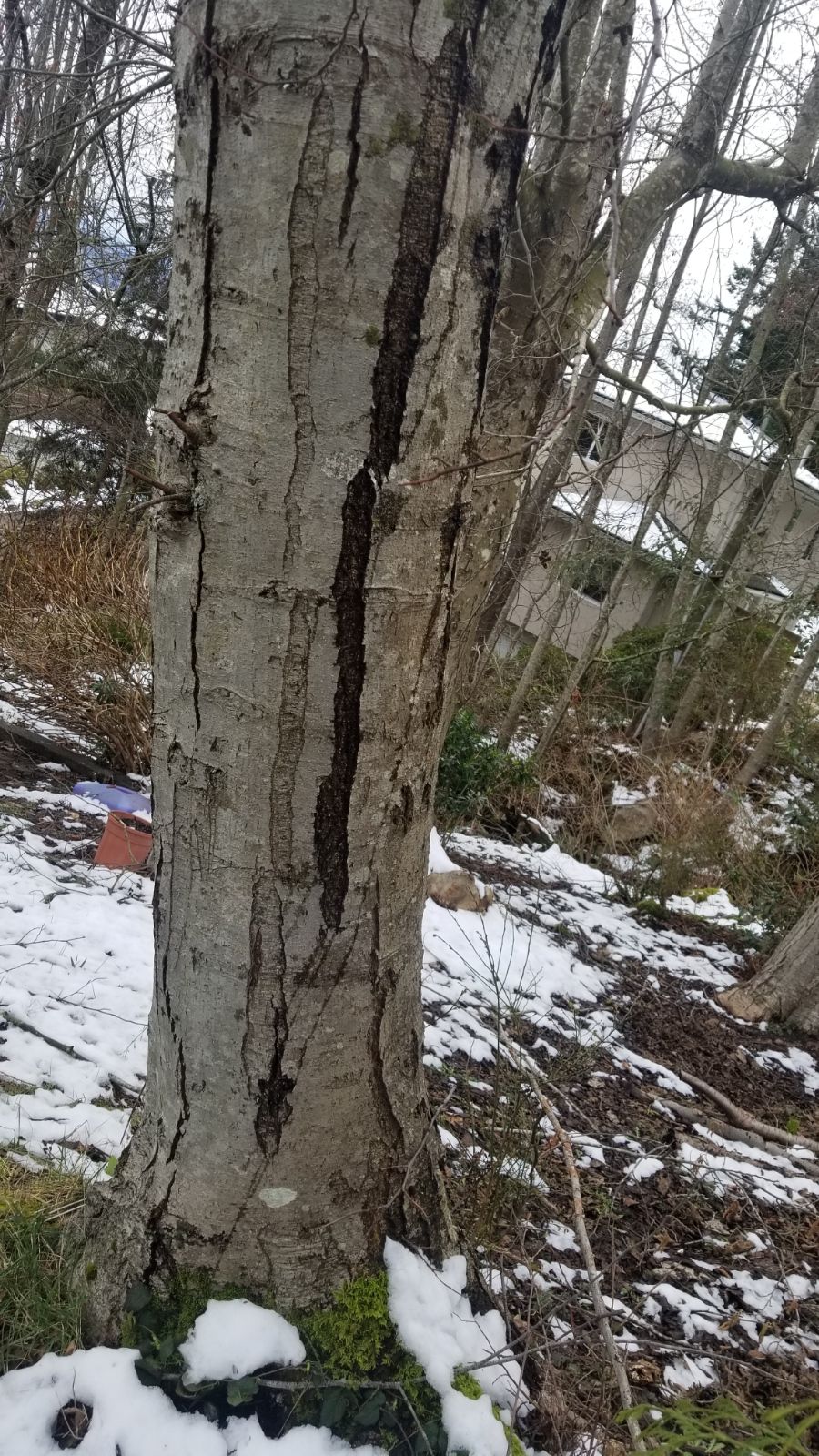
A vertical crack, open seam, or split in the trunk can point to internal decay, storm damage, co-dominant stems, or old structural weakness. Not every crack means the tree has to be removed. Every significant crack deserves a trained assessment.
**2. Dead or hanging branches**
Dead branches can fall without much warning, especially after rain, wind, or snow load. If you see branches with no leaves during the growing season, limbs that snap easily, or broken branches caught in the canopy, call before the next storm decides the outcome.
**3. Fungal growth at the base**
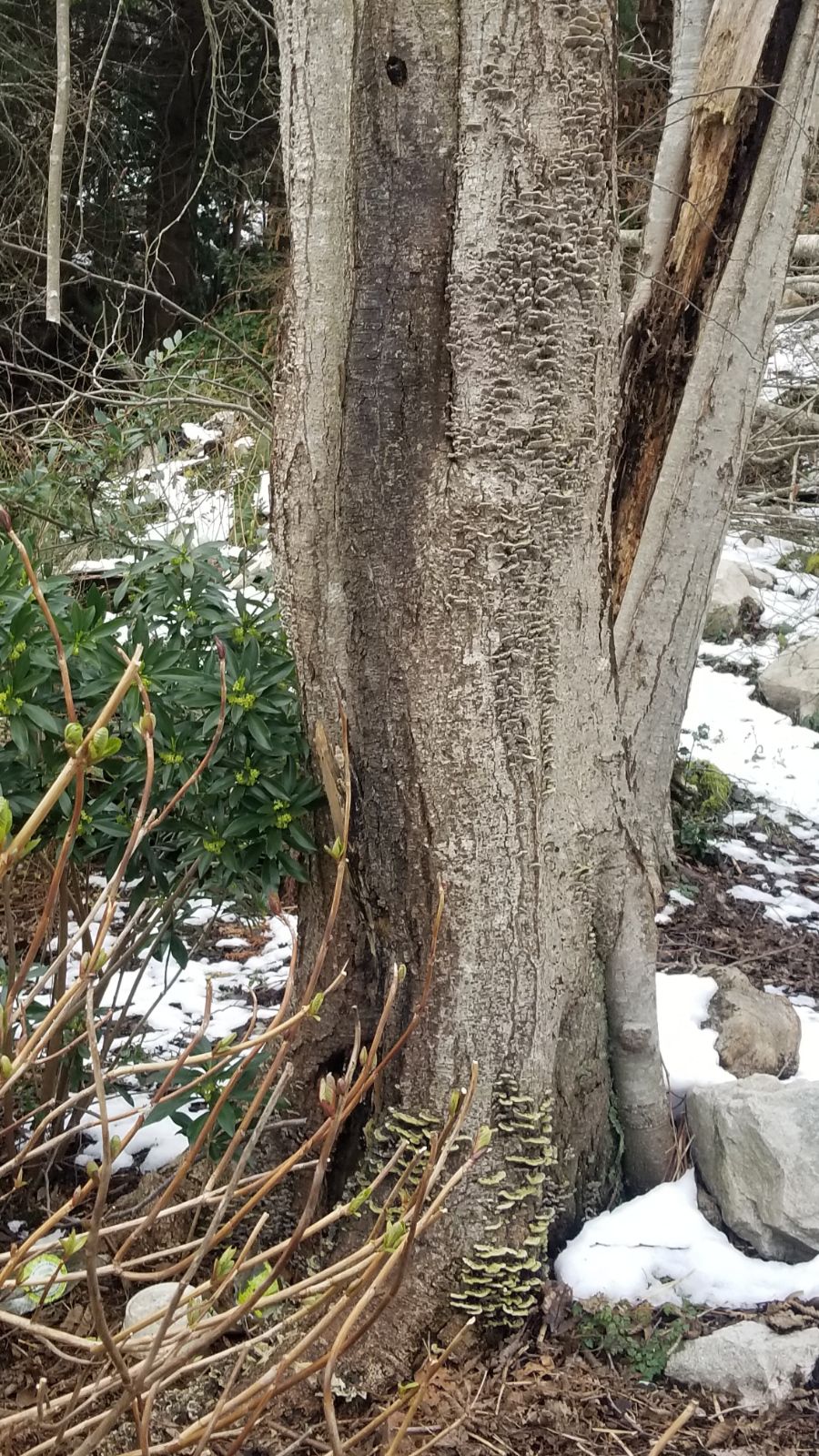
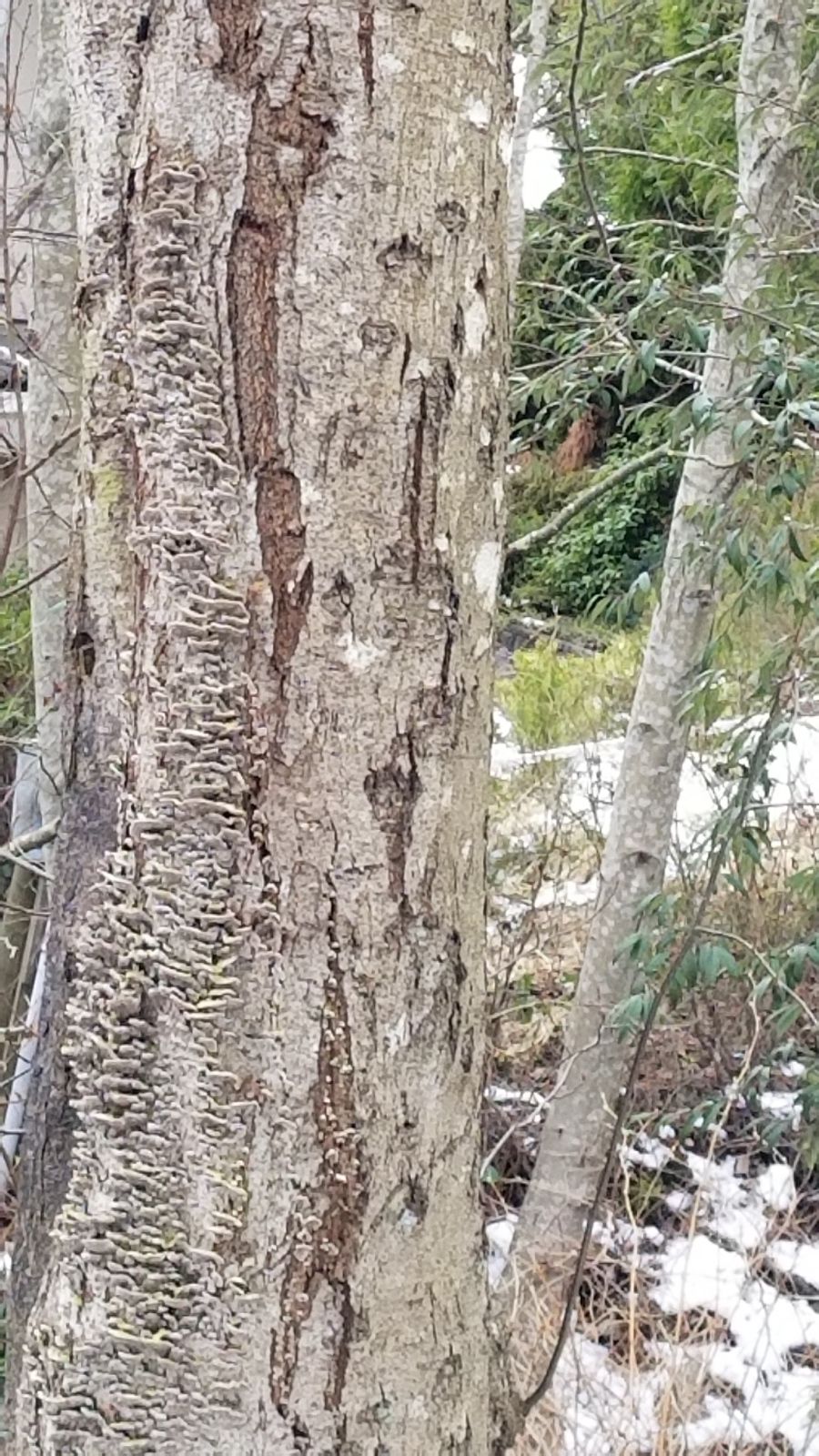
Mushrooms, conks, or shelf-like fungal growth at the root flare or trunk base can indicate decay inside the roots or lower stem. By the time fungal fruiting bodies are visible, internal wood decay may already be advanced even if the canopy still looks green.
**4. A tree leaning toward a structure**
Some trees naturally lean because they grew toward light over many years. A new lean, an accelerating lean, or a lean toward a house, garage, fence, driveway, or neighbour's property is different. That is a risk signal.
**5. Roots lifting pavement or growing toward the foundation**
Surface roots can lift sidewalks, crack driveways, and create trip hazards. In some cases, root management or a root barrier can help preserve the tree while redirecting growth away from hardscape or structures. Aesthetic Tree & Hedge Services offers root barrier installation for situations where preservation is possible.
**6. Visible pest or disease symptoms**
Yellowing leaves, early leaf drop, sticky residue, bark cankers, unusual wilting, galls, thinning canopy, or sections of dieback can all point to stress, pest activity, or disease. Early diagnosis gives you more treatment options.
**7. Your tree is near a power line**
Trees near electrical infrastructure are not DIY work. BC Hydro publishes clearance and safety guidance for vegetation near power lines, and work around energized lines can be extremely dangerous. If branches are touching or growing close to service lines or utility lines, call qualified help.
---
Is a Leaning Tree Always a Problem?
No. A leaning tree is not automatically unsafe. The key is whether the lean is old and stable or new and changing.
Many mature trees develop a natural lean as they grow toward available light. Over time, the trunk and roots adapt to that load. A tree that has leaned the same way for decades may simply need monitoring.
A newer lean needs more attention. Watch for these warning signs:
- Soil lifting, cracking, or heaving on the opposite side of the lean
- Exposed roots or root flare movement
- A lean that became worse after a storm or wet season
- Cracks in the trunk or major unions
- A lean aimed at a roof, driveway, walkway, fence, or neighbouring property
An ISA-certified arborist can assess whether the tree should be monitored, pruned, cabled, braced, or removed. Removal should not be the first answer when a tree can be made reasonably safe through preservation work.
---
When Is Tree Removal the Right Call?
Tree removal sounds drastic, but sometimes it is the safest recommendation. Removal may be appropriate when:
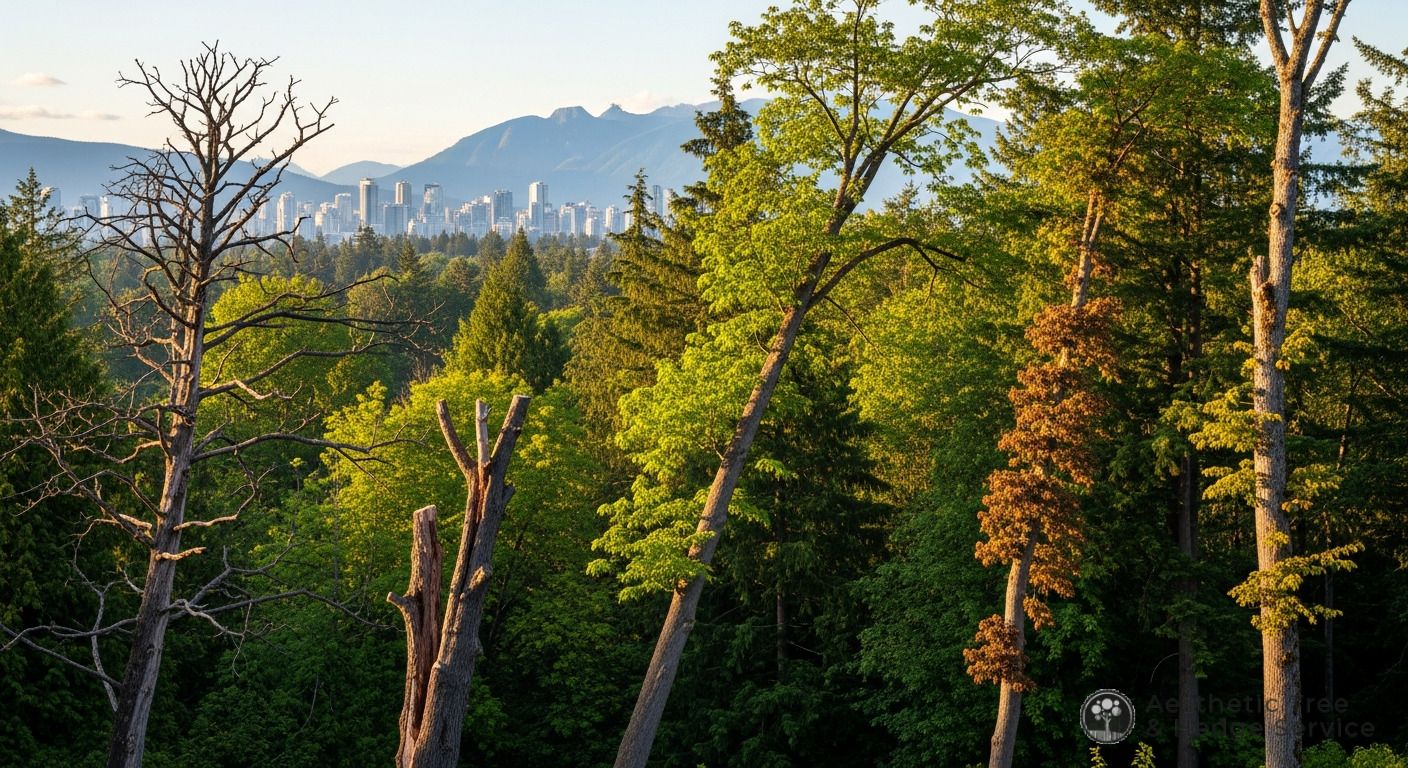
**The tree is dead or in serious decline.** Dead trees lose strength over time. Limbs become brittle, and the trunk can become less predictable.
**The tree is too close to a structure.** Roots, trunk growth, or major limbs can create unacceptable risk near foundations, roofs, retaining walls, garages, and utility corridors.
**The tree has extensive decay.** Fungal growth, hollow sections, soft wood, cavities, or advanced trunk decay can compromise the tree even if the canopy still has leaves.
**The tree failed structurally in a storm.** A tree that lost major limbs may have hidden trunk, union, or root damage. A post-storm assessment can determine whether it is still viable.
**The tree cannot be made safe through pruning or support.** Cabling, bracing, crown reduction, or structural pruning can help some trees. Others cannot be managed to an acceptable risk level.
Aesthetic Tree & Hedge Services handles tree removal in Vancouver, including residential removals in tight urban spaces. For trees with poor access or limited drop zones, crane tree removal may be the safest method. After removal, stump grinding can remove trip hazards and reduce unwanted regrowth.
---
Do You Need an Arborist Report Before Removing a Tree in Vancouver?
Often, yes.
The City of Vancouver's Private Property Tree By-law protects many trees on private land. Depending on the tree size, species, condition, and site context, you may need a permit before removal. An arborist report is commonly required as part of the application.
Burnaby, Richmond, the District of North Vancouver, the City of North Vancouver, Coquitlam, and other Lower Mainland municipalities also have tree protection rules. The thresholds, forms, replacement requirements, and review timelines vary by city.
That is why homeowners should check the current municipal requirements before booking removal work. A qualified arborist can help document the tree's condition and explain whether removal, retention, replacement planting, or additional review is likely to be required.
An arborist report in Vancouver typically includes:
- Tree species, size, location, and condition
- Health and structural observations
- Risk concerns, if present
- Recommended treatment, retention, or removal
- Photos and supporting notes for the permit application
If you are planning a renovation, addition, garage, lane house, or landscape project near existing trees, get the arborist report early. Missing tree documentation can slow down permits and construction planning.
---
How Do You Know If a Dead Branch Is Dangerous?
Dead branches are common. Some are low priority. Others are urgent. Assess them from the ground and look at three things: size, location, and attachment.
**Size matters.** A small dead twig is usually a maintenance issue. A larger dead branch over a walkway, deck, driveway, roof, or play area is more serious.
**Location matters.** Dead branches over people, vehicles, patios, doors, or neighbouring property deserve faster attention. Deadwood on the outer canopy edge may carry lower immediate risk, depending on where it could fall.
**Attachment matters.** A broken branch that remains caught in the canopy is unpredictable. Arborists often call these hangers. They can fall long after the original break.
**Season matters.** In the Lower Mainland, fall and winter storms can quickly turn weak limbs into failures. Wet weather, wind, snow, and ice all add load to compromised branches.
When in doubt, get an assessment. Tree cutting in Vancouver often includes crown cleaning, which removes dead, dying, diseased, rubbing, or poorly attached branches while preserving the overall tree where possible.
---
When Should You Call an Emergency Arborist?
Some tree problems should not wait for a regular appointment. Call emergency tree service if:
- A tree or large branch has fallen on a roof, vehicle, fence, deck, or structure
- A tree is leaning after a storm and appears unstable
- A large limb is cracked, hanging, or partially attached
- A tree is blocking a driveway, road, lane, or emergency access
- Branches are touching or pressing against power lines
- Storm damage has left the tree in danger of further failure
Aesthetic Tree & Hedge Services provides emergency tree service for urgent tree hazards. The company is WCB registered, which means crews are covered through WorkSafeBC for eligible workplace injuries. For homeowners, this is an important trust signal because tree work involves climbing, rigging, chainsaws, heavy wood, and unpredictable loads.
Do not hire an unqualified or uninsured crew for storm work. Emergency jobs are exactly when shortcuts become expensive.
---
Can You Wait Until Spring or Fall to Call an Arborist?
For routine care, timing matters. For safety concerns, do not wait.
**Winter pruning, often from November to February,** can be a good time for structural work on many deciduous trees. The tree is dormant, branch structure is visible, and there may be less disease pressure for certain pruning tasks.
**Late summer, often August to September,** can be useful for checking drought stress, canopy thinning, pest symptoms, and deadwood before fall storms arrive.
**Early spring pruning** should be approached carefully because many trees are using stored energy to push new growth. Heavy pruning during bud break can add stress.
That said, visible hazards do not follow a pruning calendar. If you see a trunk crack, a fast-changing lean, fungal growth at the base, a split union, or a dead limb over a target area, call for an assessment now.
For general maintenance, hedge trimming services in Vancouver can help keep hedges shaped, healthy, and clear of walkways throughout the year.
---
Why ISA Certification and WCB Registration Matter
Before hiring a tree care company, ask two simple questions:
1. Are the arborists ISA-certified? 2. Is the company WCB registered and insured?
**ISA certification** means the arborist has demonstrated professional knowledge of tree biology, diagnosis, pruning, safety, soil, risk, and care practices. The credential belongs to the individual arborist, not just the company name.
**WCB registration** means the company is registered with WorkSafeBC. Tree work is physically hazardous, and proper coverage helps protect workers and property owners when work is done on site.
You should also ask whether the company can provide written estimates, explain the recommended scope clearly, and produce municipal documentation when needed. A qualified arborist should be able to explain why a tree should be pruned, monitored, supported, treated, or removed.
---
What's the Difference Between an Arborist and a General Tree Service?
Not every tree company employs ISA-certified arborists. The phrase “tree service” can cover a wide range of experience levels, from qualified arborists to general landscaping crews.
An ISA-certified arborist is trained in:
- Tree biology and physiology
- Disease and pest diagnosis
- Structural risk assessment
- Pruning standards and best practices
- Tree preservation options
- Cabling, bracing, and support systems
- Arborist reports for municipal applications
A general landscaping company may be able to trim hedges, haul debris, or perform basic yard maintenance. They may not be qualified to diagnose structural defects, assess decay, work near hazards, or prepare the documentation required for a protected-tree removal permit.
For anything beyond routine hedge maintenance, choose a company that employs certified arborists. The difference shows up in the safety of the work, the quality of pruning, and the documentation you receive.
For more background, Aesthetic Tree's guide to understanding arborists and tree health explains what qualified arborists do and how they help protect trees over the long term.
---
Can a Troubled Tree Be Saved Instead of Removed?
Often, yes.
Homeowners sometimes assume a troubled tree has to come down. A good arborist should look at preservation options first, especially when the tree is valuable, healthy enough to recover, or important to shade, privacy, slope stability, or neighbourhood canopy.
Possible preservation options include:
- **Structural pruning** to reduce weak or poorly attached limbs
- **Crown cleaning** to remove dead, dying, diseased, or rubbing branches
- **Crown reduction** to reduce end weight or wind load where appropriate
- **Tree cabling and bracing** to support certain weak unions or co-dominant stems
- **Disease or pest treatment** when the issue is treatable
- **Root barrier installation** where roots can be redirected without removing the tree
Removal is sometimes necessary. But the best answer should come from a proper assessment, not a guess from the driveway.
For a deeper look at the process, Aesthetic Tree's tree removal Vancouver guide explains what homeowners can expect from permit planning through cleanup.
---
Ready to Get Your Trees Professionally Assessed?
If you have seen trunk cracks, dead limbs, fungal growth, root damage, storm damage, or a tree leaning toward a structure, get a professional opinion before the problem becomes urgent.
**Call Aesthetic Tree & Hedge Services for a free estimate: (604) 721-7370.**
Our ISA-certified arborists serve Vancouver, Burnaby, North Vancouver, Richmond, Coquitlam, and communities across the Lower Mainland. We are WCB registered and fully insured. Whether you need a routine tree assessment, an arborist report for a city permit, pruning, removal, or 24/7 emergency tree service, our team can help.
---
FAQ
**When should I call an arborist instead of handling tree work myself?**
Call an arborist for trees taller than you can safely reach from the ground, dead or damaged branches overhead, trees near power lines, trees leaning toward structures, or any work involving chainsaws, ladders, rigging, or climbing. Small ornamental shrubs and ground-level hedge trimming may be reasonable DIY work. Tree risk assessment and overhead cutting should be handled by qualified professionals.
**Do I need a permit to remove a tree on my property in Vancouver?**
Often, yes. Vancouver's Private Property Tree By-law protects many private-property trees that meet certain criteria. Other Lower Mainland municipalities have their own tree bylaws and permit requirements. Check the current rules before removing a tree. An arborist report is commonly required when applying to remove a protected tree.
**How much does a professional tree risk assessment cost in Vancouver?**
Costs vary based on the tree size, number of trees, site access, urgency, and whether you need a formal written report for a permit. A simple site visit is usually different from a detailed arborist report. The best approach is to request a written estimate for your specific property.
**Can a diseased tree be treated, or does it always need to come down?**
Many diseased or stressed trees can be treated if the issue is found early. The right answer depends on the species, condition, disease type, decay level, and risk to nearby people or structures. A certified arborist can explain whether treatment, pruning, monitoring, or removal is the safest path.
**What's the difference between crown cleaning and crown reduction?**
Crown cleaning removes dead, dying, diseased, rubbing, or poorly attached branches without significantly changing the tree's overall size. Crown reduction reduces the height or spread of the canopy, usually to manage weight, clearance, or risk near structures. Both should be done carefully so the tree is not over-pruned or weakened.
Found this helpful? Follow our tree care insights directly on Google.
Make us your preferred source on GoogleBefore You Go
Where are you in your tree care journey?
Our Tree Care Services
ISA-certified arborists serving Greater Vancouver


Explore Our Tree Care Services
From expert pruning to safe tree removal, our ISA-certified arborists are ready to help across Greater Vancouver.
View Services