
TL;DR — Quick Summary
aesthetic tree pruning techniques vancouver crown cleaning explained by ISA-certified arborists. Learn safe cuts, bylaws, timing, and when to call.
aesthetic tree pruning techniques vancouver crown cleaning starts with one simple idea: remove the right branches, at the right time, for the right reason.
That sounds plain. It is not always easy.
In Vancouver, trees grow fast. Rain feeds them. Wind tests them. Dense lots squeeze them between homes, wires, fences, garages, laneways, and neighbour lines. A cedar that looked tidy five years ago can now shade a roof, rub a gutter, or drop deadwood after a storm.
Crown cleaning is one of the cleanest answers to that problem. It is not topping. It is not random trimming. It is selective pruning that removes dead, diseased, broken, weak, or crossing branches while keeping the tree's natural structure.
At Aesthetic Tree & Hedge Services, our ISA-certified arborists use ANSI A300 standards as the pruning baseline. We care about the tree. We also care about the house under it.
TL;DR
- Crown cleaning removes dead, diseased, broken, weak, and rubbing branches without stripping the tree.
- Vancouver tree work often touches bylaws. The City of Vancouver requires a permit to remove private trees 20 cm or larger in diameter, measured 1.4 m above ground.
- Good pruning protects the branch collar, root flare, and crown structure. Bad pruning creates decay points.
- Large trees, storm damage, and branches over targets need an ISA-certified arborist. This is safety work, not yard cleanup.
- Call Aesthetic Tree & Hedge Services for a free estimate at (604) 721-7370. We are ISA-certified and WCB registered.
What Is Crown Cleaning In Tree Pruning?
Crown cleaning is selective pruning inside the crown of a tree.
The crown is the living branch and leaf structure above the trunk. ANSI A300 pruning standards define cleaning as selective pruning to remove dead, diseased, or broken branches. That definition matters because it gives pruning a purpose.
Crown cleaning does not mean cutting a tree into a smaller ball. It does not mean removing every inner branch. It does not mean thinning until you can see sky through the canopy.
A proper crown cleaning looks quiet when finished. That is the point. The tree should still look like itself.
On a mature Big-leaf maple, crown cleaning often means removing dead interior limbs, torn storm stubs, and rubbing limbs that will wound each other. On a Western red cedar, it can mean removing dead lower material while keeping the live green shell intact. On a Douglas fir, it can mean taking out dead hanging limbs before winter wind turns them into hazards.
In our field work across Vancouver, Burnaby, Richmond, Coquitlam, and North Vancouver, homeowners often call this “cleaning it up.” That phrase is fine. The arborist version is more exact.
We look for:
- Dead branches over roofs, decks, driveways, and sidewalks
- Broken limbs from snow, wind, or old cuts
- Diseased limbs that should not remain in the crown
- Crossing limbs that rub bark away
- Weak branch attachments with included bark
- Hanging branches caught in the canopy
- Clearance problems near gutters, siding, and garages
Crown cleaning is often the first pruning technique we recommend for a mature tree that still has good structure. It keeps risk down without taking away the tree's ability to feed itself.
That last part matters. Leaves are not decoration. They are the tree's food system. Remove too much live crown and the tree responds with stress growth, sunscald, decay, or dieback.
Why Does Crown Cleaning Matter So Much In Vancouver?
Vancouver trees live in a tight urban forest.
The City of Vancouver's 2025 Urban Forest Strategy reports city-wide canopy cover at 25%. The same strategy sets a target of 30% canopy coverage by 2050. The city also reported that canopy cover has grown by four percentage points since 2013.
That is good news. It also means more trees sit close to homes, roads, wires, and people.
Urban trees do not grow like forest trees. They deal with compacted soil, heat from pavement, roof runoff, construction damage, turf competition, small planting beds, and hard pruning from past owners.
Then winter arrives.
Lower Mainland storms expose every weak point in a crown. Deadwood snaps first. Long horizontal limbs fail under snow load. Old topping cuts decay from the inside. Cedars with dead inner growth shed brittle limbs. Maples with tight branch unions split.
Crown cleaning reduces that risk before the weather chooses the branch for you.
It also helps homeowners see the real tree. Once deadwood and broken pieces are removed, an arborist can assess structure more clearly. We can spot decay pockets, cracks, fungal fruiting bodies, and included bark that were hidden by clutter.
This is where pruning becomes hazard assessment.
A clean crown does three practical jobs:
- It removes material most likely to fail.
- It reduces wounds from rubbing branches.
- It improves visibility for future tree care decisions.
For homeowners, that means fewer surprise branches on the lawn. It also means better information before choosing between pruning, cabling, or removal.
If a tree has structural defects but can be retained, tree cabling may be part of the discussion. If the tree is dead, unstable, or too damaged to keep, then tree removal in Vancouver becomes the safer option.
The key is not to guess.
How Is Crown Cleaning Different From Tree Topping?
Crown cleaning removes selected problem branches. Topping cuts back major limbs to stubs.
That difference is huge.
Topping is one of the most damaging pruning mistakes we see. It removes too much leaf area at once. It creates large wounds the tree cannot close well. It triggers weak shoots near the cut ends. Those shoots grow fast, but they attach poorly.
So the tree looks smaller for a short time. Then it becomes more hazardous later.
Crown cleaning works with branch biology. A proper pruning cut is made just outside the branch collar. The branch collar is the swollen tissue where a branch joins the trunk or a larger limb. It contains cells that help the tree close over the wound.
Cut too close, and you damage that tissue. Leave a long stub, and the stub dies back. Both choices invite decay.
A clean pruning cut respects the collar.
Here is the simple homeowner test. If a crew says they will “top it so it grows back nicer,” stop the job. That is not ISA-standard pruning.
A qualified arborist talks about objectives:
- Crown cleaning for dead, diseased, and broken limbs
- Crown raising for clearance over a driveway or walkway
- Crown reduction for end-weight on selected limbs
- Structural pruning for young trees
- Restoration pruning after past topping or storm damage
Those are different tools. They should not be mixed into one vague “trim.”
This is why our tree cutting services in Vancouver start with the reason for the cut. The cut follows the objective.
Good pruning is not about how much comes off. It is about what stays behind.
When Is The Best Time To Prune Trees In Vancouver?
The best time depends on the species, the defect, and the pruning goal.
For many deciduous trees in Vancouver, late winter is a strong pruning window. The tree is dormant. The branch structure is easier to see. There is less leaf weight in the crown. The tree is ready to push spring growth after cuts are made.
That timing often works well for maple, birch, cherry, and many ornamental trees. It is also useful for structural pruning on young trees.
But safety work does not wait for a perfect season.
Dead, broken, hanging, or cracked limbs should be addressed when they are found. A dead branch over a driveway is not improved by waiting until February. A cracked limb over a play area is not a calendar issue. It is a target issue.
Conifers need a different eye. Western red cedar, Douglas fir, spruce, and hemlock do not respond like deciduous trees. Heavy pruning into old wood can leave bare areas that do not fill in. Cedar hedges also have limits. Cut beyond the green growth and you can create permanent holes.
That is why hedge work belongs in its own category. If your concern is a cedar hedge, laurel hedge, or privacy screen, see our hedge trimming services in Vancouver. Hedge pruning has different timing, tools, and expectations than crown cleaning a tree.
Flowering trees add another layer.
Some trees bloom on old wood. Some bloom on new growth. Prune at the wrong time and you remove the next flower set. That is not dangerous, but it is disappointing.
Our practical rule is simple:
- Prune for safety as soon as needed.
- Prune for structure during dormancy when possible.
- Prune flowering trees after bloom when flower display matters.
- Prune hedges before they outgrow their green shell.
- Avoid heavy pruning during heat stress or drought stress.
Vancouver's weather is mild, but urban trees still carry stress. The right timing reduces that stress.
Do You Need A Permit For Crown Cleaning In Vancouver?
In most cases, crown cleaning is pruning, not removal. That means a removal permit is not usually the issue.
But bylaws still matter.
The City of Vancouver's Protection of Trees By-law No. 9958 says you need a permit to remove any private property tree with a diameter of 20 cm or greater, measured 1.4 m above the ground. That height is diameter at breast height, or DBH.
That number is important. A lot of homeowners measure near the base. That can give the wrong answer. Measure at 1.4 m above grade.
Pruning is different from removal. Still, severe pruning can cross a line if it damages or kills a protected tree. Topping, over-thinning, root damage, and cutting major structural limbs can create bylaw problems as well as tree health problems.
Neighbouring municipalities have their own rules.
Burnaby defines protected trees by category. Its public tree guidance says that, on properties not under development, protected trees include conifers 30 cm or larger in diameter and deciduous trees 45 cm or larger. On properties subject to a development application, trees 20 cm or larger can be protected.
The City of North Vancouver Tree Bylaw No. 8888 applies to trees with a DBH of 20 cm or more, measured 1.4 m above ground.
That means the same tree can face different rules depending on the address.
This is where local experience matters. Vancouver, Burnaby, North Vancouver, Richmond, and Coquitlam do not all process tree work the same way. Some jobs need photos. Some need a site plan. Some need an arborist report. Some need replacement tree planning.
If pruning reveals that removal is the right call, an arborist report in Vancouver can document species, DBH, health, structure, risk, and the reason for removal.
Do not treat bylaws as paperwork after the fact. Check first. It is easier than explaining a stump to the city.
What Branches Should Be Removed During Crown Cleaning?
A good crown cleaning starts with defects, not appearance.
We do not walk up to a tree and ask, “How do we make this smaller?” We ask, “What is dead, broken, diseased, weak, rubbing, or unsafe?”
That question changes the work.
Deadwood is the first target. Small dead twigs are common inside shaded crowns. Large dead branches are different. A dead limb over a roof, path, driveway, lane, or neighbour's yard needs attention.
Broken branches come next. Storm breaks often leave jagged stubs. Those stubs collect water and decay. A proper reduction cut back to a suitable lateral branch gives the tree a cleaner wound response.
Diseased branches need care. The goal is to remove affected tissue without spreading the issue through dirty tools or careless cuts. Some diseases also change the pruning season. That depends on the tree and the pathogen.
Crossing branches are another common issue. When two limbs rub, bark wears away. The wound opens a path for decay. On young trees, removing one crossing limb early can prevent a major structural problem later.
Weak branch unions deserve special attention. A tight V-shaped union with included bark is weaker than a broad U-shaped union. Included bark means bark is trapped between stems, so wood does not knit together well. These unions can split under load.
We also look for end-heavy limbs. A long limb with too much weight near the tip can flex and crack. Sometimes the answer is selective reduction, not removal of the whole limb.
Here is what should not be removed during basic crown cleaning:
- Healthy live branches just because they are inside the crown
- Large limbs without a clear reason
- The live top of a conifer
- Branches that would leave the trunk exposed to sunscald
- Too much lower crown on a young tree
- Roots near the root flare unless part of a specific root issue
The root flare is where the trunk widens into the main roots. It should be visible. If soil or mulch is piled against it, the tree can suffer. Pruning the crown while ignoring a buried root flare is incomplete tree care.
Crown cleaning is selective. That word does a lot of work.
How Much Live Crown Can Be Removed Safely?
Less than most people think.
Trees need leaves to make energy. Remove too much live foliage and the tree has to recover from a sudden food shortage. That stress can lead to shoot growth, dieback, pest issues, and decay around large cuts.
There is no single percentage that fits every tree. A young ornamental cherry, a mature Douglas fir, and an old Big-leaf maple do not tolerate pruning the same way.
But the principle is steady: remove the minimum needed to meet the objective.
For crown cleaning, most of the removed material should be dead, broken, diseased, or defective. That means live crown removal can stay low. If a pruning job removes a large volume of healthy live branches, it is probably not crown cleaning anymore.
That may be crown reduction, clearance pruning, restoration, or poor pruning.
On mature trees, large live limb removal needs a strong reason. Large wounds close slowly. Some never close fully. Decay can move inward from those wounds over time.
On young trees, smaller structural cuts can prevent larger cuts later. That is one reason early pruning is so valuable. A five-minute cut on a small branch can prevent a chainsaw cut ten years later.
In our experience, homeowners often wait until a tree feels “too big.” By then, the options are narrower. A mature tree can be guided, cleaned, and reduced in selected areas. It cannot be made young again.
The best pruning plan respects age.
Young trees need structure. Mature trees need risk reduction and health care. Old trees need restraint, inspection, and careful cuts.
That is the arborist mindset.
How Does Crown Cleaning Help With Storm Safety?
Crown cleaning removes the branches most likely to fail first.
That does not make a tree storm-proof. No arborist can promise that. Trees are living structures. Wind, saturated soil, snow, decay, and hidden defects all matter.
But crown cleaning improves the odds.
WorkSafeBC has reported that manual tree falling is one of the most dangerous jobs in the province. In 2020, the injury rate for the manual tree falling classification unit was 20.1. The provincial average was 2.15. That is nearly ten times higher.
Those numbers are for workers, not homeowners. Still, they show the risk profile of tree work. Wood under tension behaves fast. Branches can swing, split, roll, or barber-chair. A ladder under a limb is not a work plan.
Storm safety pruning focuses on targets.
A target is anything a branch can hit. Homes, garages, cars, people, fences, greenhouses, service lines, decks, and sidewalks all count. A dead branch deep in a forest has low risk. The same branch over a child's bedroom has high risk.
After wind events, we often inspect:
- Hanging limbs caught in the canopy
- Fresh cracks along branch unions
- Split stems
- Root plate movement
- New lean
- Broken tops in conifers
- Large dead limbs exposed by wind
- Branches resting on roofs or wires
If a tree has already failed or is actively dangerous, call for emergency tree service. Do not try to pull branches down with a rope from the ground. Do not cut storm-loaded limbs without training. Do not climb a tree after it has shifted.
Crown cleaning before storm season is calmer. The work is planned. The rigging is controlled. The tree is assessed before cuts begin.
That is how tree care should feel.
What Vancouver Tree Species Need Extra Care During Pruning?
Vancouver has a mixed urban canopy. That mix is beautiful. It also means pruning rules change by species.
Douglas fir is common across the Lower Mainland. It can grow tall, with heavy limbs and high targets. Dead lower limbs are common. So are clearance issues near roofs and driveways. Cuts must avoid damaging the trunk and live crown.
Western red cedar is often misunderstood. Cedars hold green foliage mostly on the outside. If you cut deep into brown interior wood, it usually does not regrow well. That matters for both trees and hedges.
Big-leaf maple grows with broad limbs and heavy leaf mass. It can develop included bark, end-heavy limbs, and storm breaks. Mature maples need careful reduction cuts when weight is the issue.
Birch is sensitive to stress and pests. Heavy pruning can hurt it. Timing and cut size matter.
Cherry and plum trees are common in Vancouver yards. They can develop dense, crossing branches. They also show poor past cuts quickly. Clean structure helps, but over-pruning can create water sprouts.
Leyland cypress and cedar hedges need regular shaping. Wait too long and the hedge gets woody inside. Then hard cuts leave bare patches. That is why maintenance trimming beats rescue trimming.
Fruit trees are their own subject. Apple, pear, and plum pruning should balance structure, light, fruiting wood, and disease pressure. A fruit tree is not pruned like a cedar hedge.
Species also affects permit and replacement decisions. Municipal forms often ask for species, DBH, condition, and location. Guessing can delay the process.
When we assess a tree, we identify the species first. Then we look at age, structure, site conditions, targets, and owner goals.
The right cut depends on all of that.
Can Crown Cleaning Save A Tree That Looks Unhealthy?
Sometimes, yes. Sometimes, no.
Crown cleaning helps when the main problem is deadwood, storm damage, crossing branches, or limited structural defects. It can make a stressed tree safer and easier to monitor.
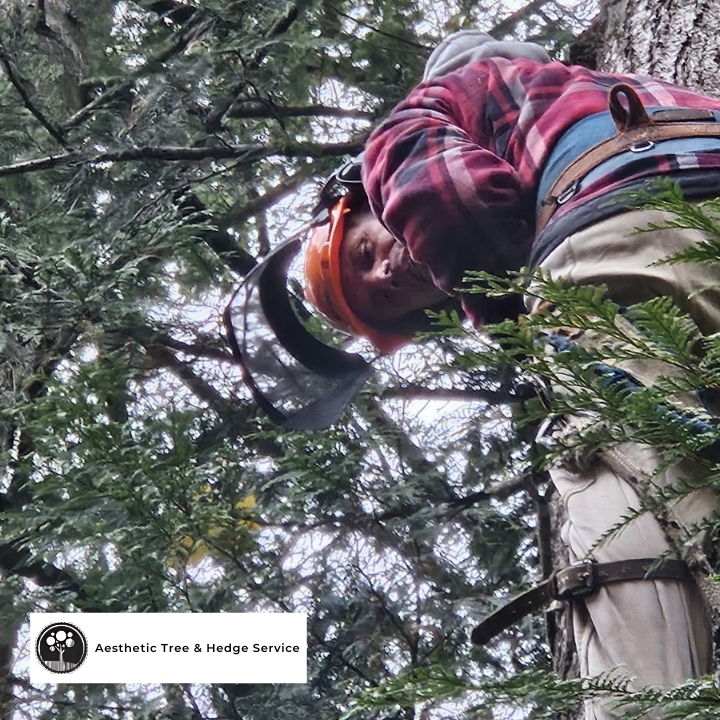
But pruning is not medicine for every tree problem.
If the roots are damaged, crown cleaning will not fix the root system. If the trunk has advanced decay, removing dead branches will not restore sound wood. If the tree has a major lean with soil heaving, pruning is not the main answer.
This is why we separate appearance from condition.
A tree can look messy but be structurally sound. A tree can look green but have a serious defect. Leaves do not prove safety.
We look for signs such as:
- Fungal growth on the trunk or root flare
- Cavities or large old wounds
- Cracks in stems or unions
- Dead top sections
- Soil lifting near the roots
- Sudden lean
- Sparse canopy compared with past years
- Bark loss or bleeding
- Construction damage near roots
If the tree is worth retaining, pruning may be one part of the plan. Mulching can help soil moisture and root health. A mulching service can protect roots when done correctly, with mulch kept away from the trunk flare.
If roots are conflicting with hard surfaces or utilities, a root barrier may be discussed. That decision needs care. Root work can affect stability.
If the tree is beyond retention, removal may be the honest answer. After removal, stump grinding in Vancouver can clear the site for replanting, turf, or a new use.
A good arborist does not sell pruning as a cure-all. We tell you what the tree can and cannot recover from.
What Should Homeowners Ask Before Hiring A Tree Pruning Company?
Ask questions that reveal standards, safety, and accountability.
Tree pruning is skilled work. It is also risk work. You want a crew that can explain the plan before the saw starts.
Start with credentials. Ask whether an ISA-certified arborist is involved. Ask whether the company is WCB registered. Ask what pruning standard they follow. ANSI A300 should be part of the answer.
Then ask about the objective. If the answer is “trim it back,” keep asking. Trim where? Why? How much live crown? Which branches? What target? What risk?
You can ask:
- Are you doing crown cleaning, crown raising, reduction, or another pruning type?
- Will you protect the branch collar?
- How much live foliage will be removed?
- Are there permit issues with this tree?
- Do you see structural defects?
- Will climbing spurs be used on a tree we are keeping?
- How will branches be lowered near the roof or fence?
- What cleanup is included?
- Do you carry WCB coverage and insurance?
Climbing spurs should not be used on trees being retained, except in very specific rescue or access situations. Spurs puncture living tissue. On a removal, that is different. On a pruning job, they can wound the tree for no good reason.
Also ask how the company handles neighbouring property. In dense Vancouver lots, branches often cross fences. You need careful cuts, controlled lowering, and respect for property lines.
A professional pruning plan should feel specific. You should know what is being removed and why.
That clarity protects your tree. It also protects your home.
How Do Arborists Decide Between Pruning And Removal?
We start with risk, condition, and value.
A tree with deadwood is not automatically a removal. A tree with a cavity is not automatically safe to keep. The decision depends on species, structure, decay extent, targets, site conditions, and owner goals.
Crown cleaning is a retention tool. It helps keep a tree when defects are manageable. Removal is a risk-control tool when defects are too severe or the tree is dead, dying, or poorly located.
We ask these questions:
- Is the tree alive and vigorous enough to respond well?
- Are the defects isolated or systemic?
- Are targets under the tree constant or occasional?
- Can pruning reduce risk to an acceptable level?
- Is cabling appropriate?
- Has construction damaged the roots?
- Is the tree protected by municipal bylaw?
- Would removal require replacement planting?
Development adds another layer. A tree near a planned addition, laneway house, driveway, or excavation zone needs root protection planning. Cutting roots can destabilize a tree. Soil compaction can decline it over years.
Sometimes the best arborist advice is to keep the tree and adjust the work area. Sometimes the best advice is removal before the project starts. The difference depends on evidence.
For homeowners comparing options, our Vancouver tree removal guide explains the removal side in more detail. If cost research is part of your planning, our tree removal cost guide for Vancouver gives broader market context without replacing a site-specific assessment.
For this article, the main point is simple. Pruning and removal are not rival services. They are different answers to different tree conditions.
The job is to choose the right one.
What Does A Proper Crown Cleaning Visit Look Like?
A proper visit starts before the saw.
First, we inspect the tree from the ground. We look at the root flare, trunk, scaffold limbs, crown density, deadwood, lean, site grade, targets, access, and nearby structures.
Then we confirm the work objective. Crown cleaning has a defined scope. If we find a cracked union, decay column, or hanging limb, we explain that. If the homeowner wants clearance, we separate that from cleaning.
Next comes site setup. Tree work needs drop zones, ropes, rigging points, traffic awareness, and communication. In tight Vancouver yards, access can be the hardest part of the job. Sheds, glass railings, wires, fences, gardens, and parked cars all shape the plan.
During pruning, cuts are made with the branch collar in mind. Larger limbs are often removed in sections. That prevents bark tearing. It also keeps weight controlled.
Cleanup matters too. Deadwood and brush should be removed or chipped as agreed. The site should look cared for, not blasted.
A crown cleaning visit often ends with practical notes:
- What we removed
- What defects remain
- Whether future pruning is needed
- Whether cabling should be considered
- Whether the tree needs monitoring
- Whether the site has root or soil concerns
That last step is important. Trees change. A one-time pruning can reduce current risk, but mature trees near homes should be checked over time.
Think of crown cleaning as part of tree stewardship. Not a one-and-done haircut.
How Often Should Vancouver Trees Be Crown Cleaned?
It depends on age, species, exposure, and targets.
A young tree may need structural pruning every few years while its main form develops. That early care prevents future defects.
A mature tree near a house may need inspection every one to three years. It may not need pruning every time. But it should be checked, especially after storms.
A large conifer over a driveway may need deadwood removal when dead limbs reach a size that creates risk. A maple over a roof may need periodic cleaning and selective reduction. A cedar hedge may need annual trimming to stay dense.
Trees in high-use areas deserve shorter inspection intervals. That includes trees over patios, sidewalks, school routes, parking areas, rental suites, and front entries.
Trees in low-target areas can often be left more natural. Deadwood in a back corner habitat area is different from deadwood over a roof.
The City of Vancouver's canopy goals also point to a bigger truth. Urban trees are public assets even when they grow on private lots. They cool streets, slow rainwater, support birds, and shape neighbourhood character.
The 2025 City of Vancouver update names Strathcona, Sunset, and Downtown among the lowest-canopy areas. It also says Strathcona is the only neighbourhood with less than 10% canopy cover. That makes retention and good pruning even more important in low-canopy areas.
Good pruning keeps trees useful longer.
Bad pruning shortens their life.
That is the real maintenance schedule: inspect often enough to make small, correct cuts before big, risky cuts become the only option.
Why Should Crown Cleaning Be Done By An ISA-Certified Arborist?
Because the wrong cut can outlive the person who made it.
Trees do not heal like skin. They close over wounds. They compartmentalize decay. A bad cut can become a decay pocket that affects the tree for years.
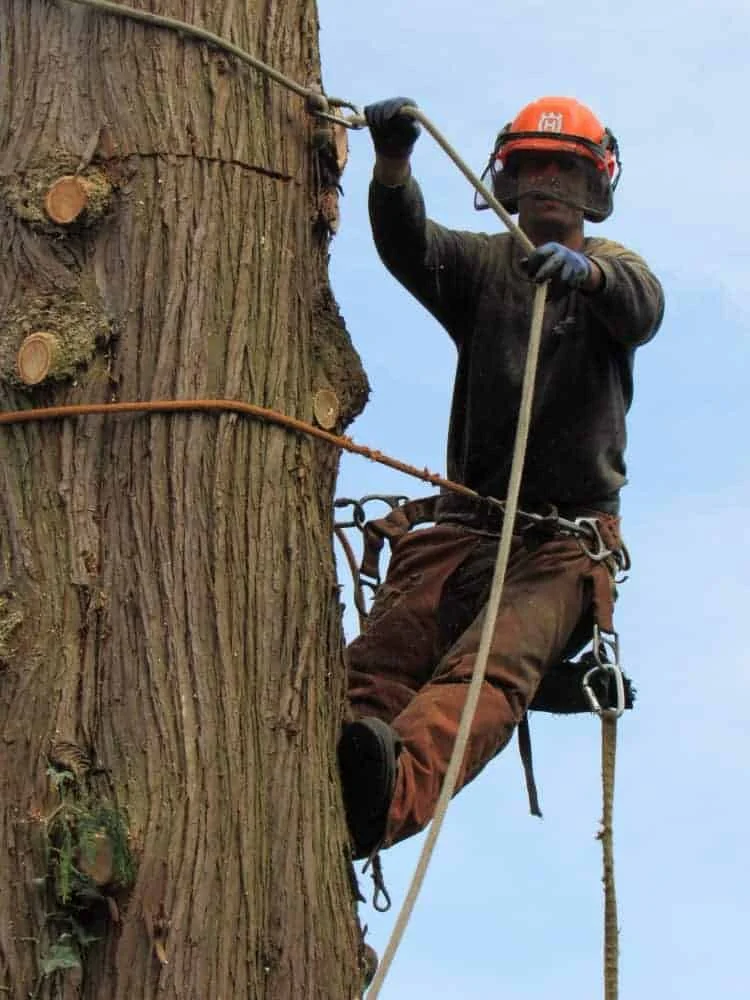
An ISA-certified arborist brings training in tree biology, structure, risk, pruning standards, species response, and safety. That matters when the tree is large, protected, near a structure, or already stressed.
WCB registration matters too. Tree work has fall hazards, chainsaw hazards, rigging hazards, and struck-by hazards. Homeowners should not carry that risk informally.
Aesthetic Tree & Hedge Services is ISA-certified and WCB registered. We work across Vancouver and the Lower Mainland with a safety-first approach. We know local bylaws. We also know when not to cut.
That restraint is part of the craft.
A landscaper may make a shrub look tidy. An arborist has to think about load, decay, collars, roots, species, targets, and future growth. Those are different skill sets.
When you hire for crown cleaning, you are not just buying branch removal. You are buying judgment.
That judgment helps answer the question every homeowner really has: “Is this tree safe to keep?”
Sometimes the answer is yes, with pruning. Sometimes it is yes, with monitoring. Sometimes it is no. The value is in knowing the difference.
FAQ
Is crown cleaning the same as crown thinning?
No. Crown cleaning removes dead, diseased, broken, weak, or rubbing branches. Crown thinning removes selected live branches to reduce density. Thinning must be done carefully. Over-thinning can stress the tree and increase branch movement.
Can I crown clean my own tree?
You can remove small dead twigs from the ground with hand tools. Do not climb, use a ladder near branches, cut limbs over targets, or use a chainsaw overhead. Large pruning should be done by an ISA-certified arborist with proper rigging and WCB coverage.
Does crown cleaning require a City of Vancouver permit?
Basic crown cleaning usually does not require a removal permit because the tree is being retained. But severe pruning that damages a protected tree can create bylaw issues. The City of Vancouver requires a permit to remove private trees 20 cm or larger in diameter, measured 1.4 m above ground.
Will crown cleaning make my tree grow back thicker?
Not when done properly. Crown cleaning is selective. It removes defective branches while keeping healthy structure. Heavy topping or over-pruning can trigger weak shoot growth. That is not a good result.
What is the safest pruning technique for large trees near a house?
The safest technique is the one tied to the defect. For many mature trees, that starts with crown cleaning and hazard assessment. If limbs are end-heavy, selective reduction may be added. If the whole tree is unstable, removal or cabling may be discussed.
Crown cleaning is careful work. It asks for sharp eyes, clean cuts, and good judgment.
If you have deadwood over a roof, storm damage in a cedar, a maple rubbing the house, or a tree you are unsure about, call Aesthetic Tree & Hedge Services for a free estimate at (604) 721-7370. Our ISA-certified arborists are WCB registered and ready to assess your tree safely.
Found this helpful? Follow our tree care insights directly on Google.
Make us your preferred source on GoogleBefore You Go
Where are you in your tree care journey?
Our Tree Care Services
ISA-certified arborists serving Greater Vancouver


Explore Our Tree Care Services
From expert pruning to safe tree removal, our ISA-certified arborists are ready to help across Greater Vancouver.
View Services