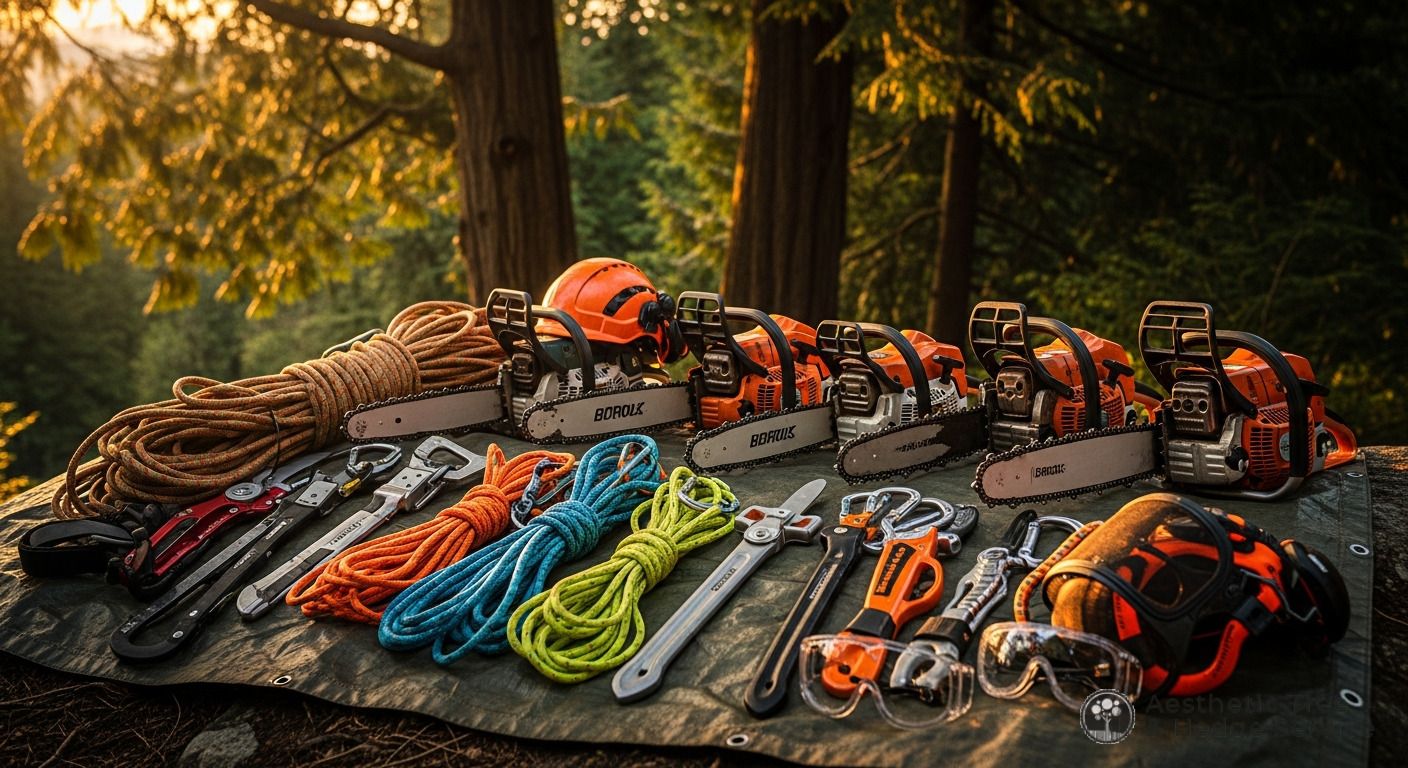

TL;DR — Quick Summary
arborist lincoln guide for safe tree removal, pruning, permits, reports, hedges, and storm calls. Call AestheticTree for help.
An arborist in Lincoln is a tree-care professional who assesses, prunes, removes, and documents trees in dense Coquitlam neighbourhoods where homes, fences, utilities, sidewalks, and neighbouring yards are close together. Before a tree comes down, homeowners should confirm permit needs, assess risk, and use qualified help for safe, controlled work.
- Check the current City of Coquitlam tree permit rules before removal.
- Use an ISA-certified arborist for risk concerns, pruning, removals, and reports.
- Watch for fresh lean, soil lift, cracks, fungal conks, dead tops, and root damage.
- Avoid topping, flush cuts, lion-tailing, and hard cuts into cedar hedge brown wood.
- Call Aesthetic Tree & Hedge Services at (604) 721-7370 for a free estimate.
What does an arborist in Lincoln Coquitlam actually do?
An arborist in Lincoln inspects, manages, prunes, removes, and documents trees near Lincoln Station, Coquitlam Centre, Pinetree Way, Northern Avenue, Guildford Way, and nearby strata, townhouse, and single-family properties.
That sounds simple until you look at the site.
Lincoln is not a wide-open rural lot. It is a dense part of Coquitlam with SkyTrain traffic, busy parking areas, compact yards, shared fences, narrow side access, patios, service lines, garages, sidewalks, and neighbours within reach of many limbs. A tree crew cannot just drop branches and hope the yard has room. Each section may need to be rigged, lowered, chipped, staged, or carried out in a planned order.
A real arborist looks at the tree and the target zone before a saw starts. A target is anything a failed tree or limb could hit. That could be a roof, bedroom, entry path, fence, parked vehicle, playground, sidewalk, service line, or neighbour's property.
An arborist checks:
- Species and growth habit
- Crown balance and deadwood
- Trunk cracks, cavities, old cuts, and decay signs
- Root flare, soil lift, and visible root damage
- Fungal conks near the base or on the trunk
- Past topping, flush cuts, or heavy thinning
- Roof, gutter, driveway, fence, patio, and utility conflicts
- City permit, strata, insurance, or arborist report needs
This matters in Coquitlam because much of the city is dense. Statistics Canada reported Coquitlam's 2021 population at 148,625 people, with a land area of 122.15 square kilometres and a density of 1,216.7 people per square kilometre. In denser neighbourhoods, there are often more nearby structures, vehicles, sidewalks, and neighbouring yards that a failed limb could affect. A limb that might fall harmlessly in a forest can become a property or safety issue in a Lincoln yard.
An arborist's job is not to sell removal first. The job is to decide whether the tree can be retained, pruned, monitored, documented, or removed in a controlled way. If removal is the right call, Aesthetic Tree's tree removal Vancouver service explains the kind of planned takedown needed in tight Lower Mainland yards.
When should I call an arborist in Lincoln?
Call an arborist in Lincoln when a tree could harm people, damage property, create a permit issue, or decline because of poor cuts, root stress, or storm damage.
Most tree problems do not start as dramatic failures. They start as small clues.
A cedar leans a bit more after heavy rain. A maple has mushrooms near the base. A Douglas fir drops a large limb on a dry day. A hedge turns brown inside after a hard cut. A topped tree grows fast shoots around old wounds. Those signs are easy to ignore until wind, wet soil, heat, or construction exposes the weak point.
Call for an assessment if you see:
- A fresh lean after wind or rain
- Soil lifting on one side of the root plate
- Trunk cracks or a split stem
- Fungal conks at the base or along the trunk
- Large dead limbs over a roof, driveway, sidewalk, or play area
- A dead top or sudden canopy thinning
- Roots cut during fence, drain, patio, driveway, or utility work
- Branches rubbing roofs, siding, gutters, or service lines
- A tree growing into a retaining wall, garage, fence, or walkway
- A cedar hedge with brown gaps after heavy trimming
Wet weather can make these signs more urgent. Wet soil can reduce root grip, especially where roots have decay, past trenching, grade changes, or compaction.
Summer brings the opposite stress. Heat and dry soil can stress cedar, maple, fir, and ornamental trees. Later fall rain and wind can then test a tree that was already weakened by drought, pruning wounds, construction, or root restriction.
If the work involves pruning, crown reduction, clearance, or controlled removal, Aesthetic Tree's tree cutting Vancouver service covers skilled cutting that keeps the tree's structure and the site risk in view.
Do you need a permit to remove a tree in Coquitlam?
You may need a permit to remove a tree in Coquitlam, depending on the tree's size, how many protected trees you have removed in the past 12 months, and where the tree is on the property. Check the current City of Coquitlam tree permit rules before cutting.
Do not cut first and ask later.
Coquitlam's Tree Management Bylaw No. 4091 protects trees 20 cm or more in diameter, measured 1.4 m from the ground. In most cases, owners may remove up to two protected-size trees in a 12-month period without a permit. A Tree Cutting Permit is needed for more than two, and for any removal in a streamside protection area, on a steep slope, under a protective covenant, or on Burian Drive or Latimer Avenue. Rules can change, so check the City's Tree Cutting Permit page before any removal.
A permit review may ask for:
- Tree species
- Diameter at breast height, often called DBH
- Tree location on the property
- Property owner authorization, if someone else applies
- Written consent from both owners if the tree straddles the property line
- Photos or a site plan
- Replacement planting details
- A tree risk assessment report from an ISA Certified Arborist, if the tree is near a watercourse or in a vegetation covenant area
An arborist report is not a short quote. It is a technical document. It can identify the tree, measure size, describe defects, assess targets, state the likely risk, and recommend pruning, retention, monitoring, or removal.
That paper trail can matter for city review, strata councils, insurance claims, neighbour concerns, and construction planning. If a tree is near a property line, driveway, building, or planned renovation, written findings are often better than a verbal opinion.
Aesthetic Tree provides arborist report Vancouver support for homeowners who need clear documentation before removal, construction, or permit review.
The practical rule is simple: if the tree is large enough to worry you, it is large enough to check before cutting.
What tree problems are common near Lincoln Station and Coquitlam Centre?
Common tree problems in dense Coquitlam neighbourhoods can include root stress, old topping wounds, cedar hedge decline, limb failure in mature maples, and conifers exposed by nearby site changes.
Root stress is one of the biggest issues. Roots need oxygen, water, and usable soil. They do poorly under compacted paths, patios, driveways, construction staging, trenching, grade changes, and heavy foot traffic. The canopy may not show the damage right away. Months or years later, you may see thin leaves, dead tips, early fall colour, or limb dieback.
Old topping is another common problem. Topping does not make a tree safer. It makes large wounds. Coquitlam treats topping as damage under its tree bylaw, and homeowners may be fined. The tree may respond with fast shoots around the cut, but those shoots often attach weakly. As they gain weight, they can fail in wind, rain, or summer stress.
> "Topping is perhaps the most harmful tree pruning practice known." — International Society of Arboriculture, TreesAreGood.org (Pruning Your Trees)
Cedar hedges also struggle in dense Coquitlam sites. Western red cedar can make a strong privacy screen, but it does not like hard cuts into old brown wood. Once the green shell is cut away, bare inner areas may not fill in well. Drought, root restriction, shade, and poor timing make the damage worse.
Bigleaf maple can grow large, heavy limbs. Weak unions, included bark, decay, and end weight can increase failure risk. A maple limb over a driveway, roof, or sidewalk should be assessed before it becomes a storm issue.
Douglas fir and cedar can be stable for decades when growing in a group. But if nearby trees are removed, roots are cut, drainage changes, or construction opens one side of the canopy, wind loading can change. The tree now faces wind it did not grow up resisting.
A good arborist asks what changed around the tree. New fence? Drain line? Patio? Driveway widening? Retaining wall? Neighbouring tree removed? Hard pruning? Trees keep a record of site stress in their roots, bark, wounds, and crown shape.
How does an arborist inspect a hazard tree before cutting?
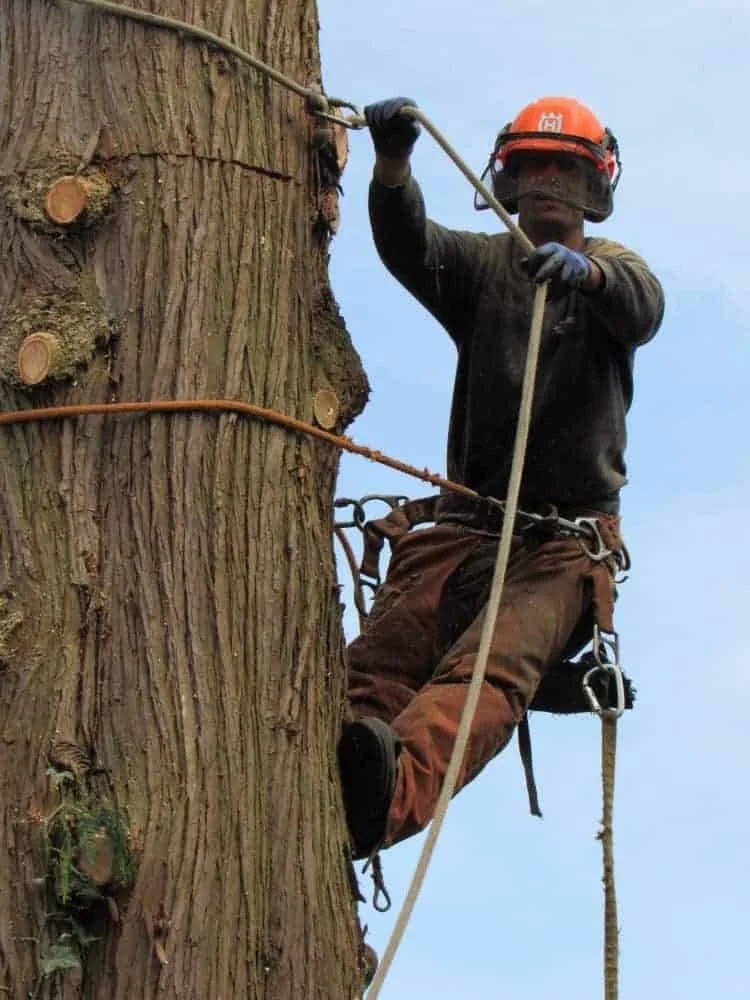
An arborist inspects a hazard tree by checking the target zone, roots, trunk, crown, species, site changes, and likely failure points before recommending pruning, reporting, monitoring, or removal.
The first question is not how fast this can come down. The first question is what it could hit.
A tree in a forest can fail with little harm. A tree over a roof, walkway, strata parking spot, or child's play area is different. Risk is the chance of failure combined with the consequence of failure.
The inspection often starts at ground level. The arborist checks whether the root flare is visible and natural. A buried flare can hide decay, girdling roots, or moisture problems. Soil cracks, soil lift, or a raised root plate can point to instability.
Next comes the trunk. The arborist looks for cracks, seams, cavities, cankers, conks, included bark, old topping wounds, sunscald, and decay indicators. Some defects are minor. Some are serious when paired with a target.
Then the crown is assessed. Deadwood, broken limbs, weak unions, end-heavy branches, storm damage, and poor past cuts all matter. Species matters too. A cedar, fir, maple, plum, birch, and cherry each fail in different ways.
The recommendation may be:
- Remove deadwood
- Reduce end weight on a specific limb
- Clear roof or structure contact
- Prune for structure
- Install support, if suitable
- Monitor the tree
- Reduce the target, such as moving a parking spot
- Prepare an arborist report
- Remove the tree
Removal is sometimes the right answer. But it should be the result of assessment, not the starting assumption.
If you can see a crack, lean, soil movement, fungal growth, or large dead limb from your kitchen window, an arborist will likely see more from the base of the tree.
Is tree removal or tree cutting better for a Lincoln yard?
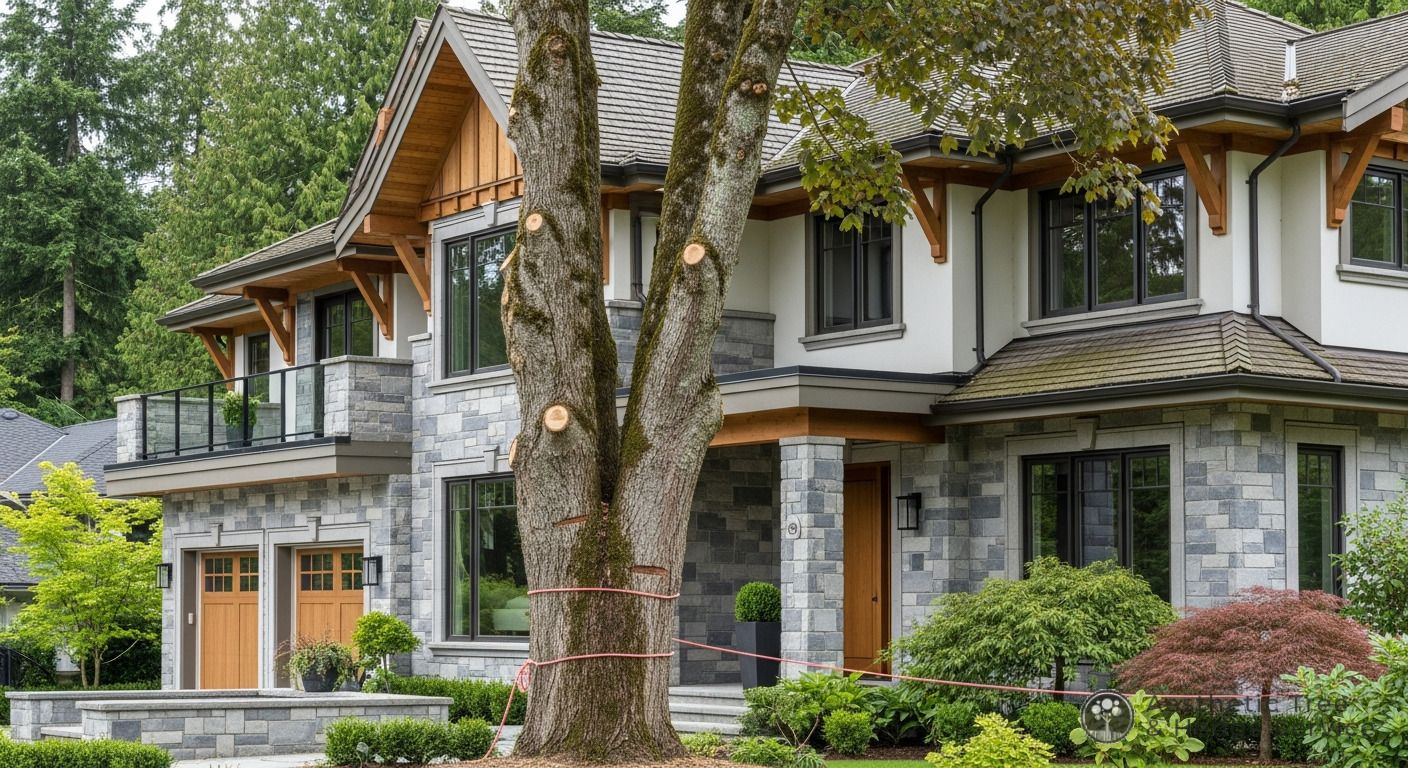
Tree removal is better when the tree is dead, unstable, badly damaged, or cannot be retained safely. Tree cutting or pruning is better when the tree is healthy enough to keep and the risk can be reduced with careful work.
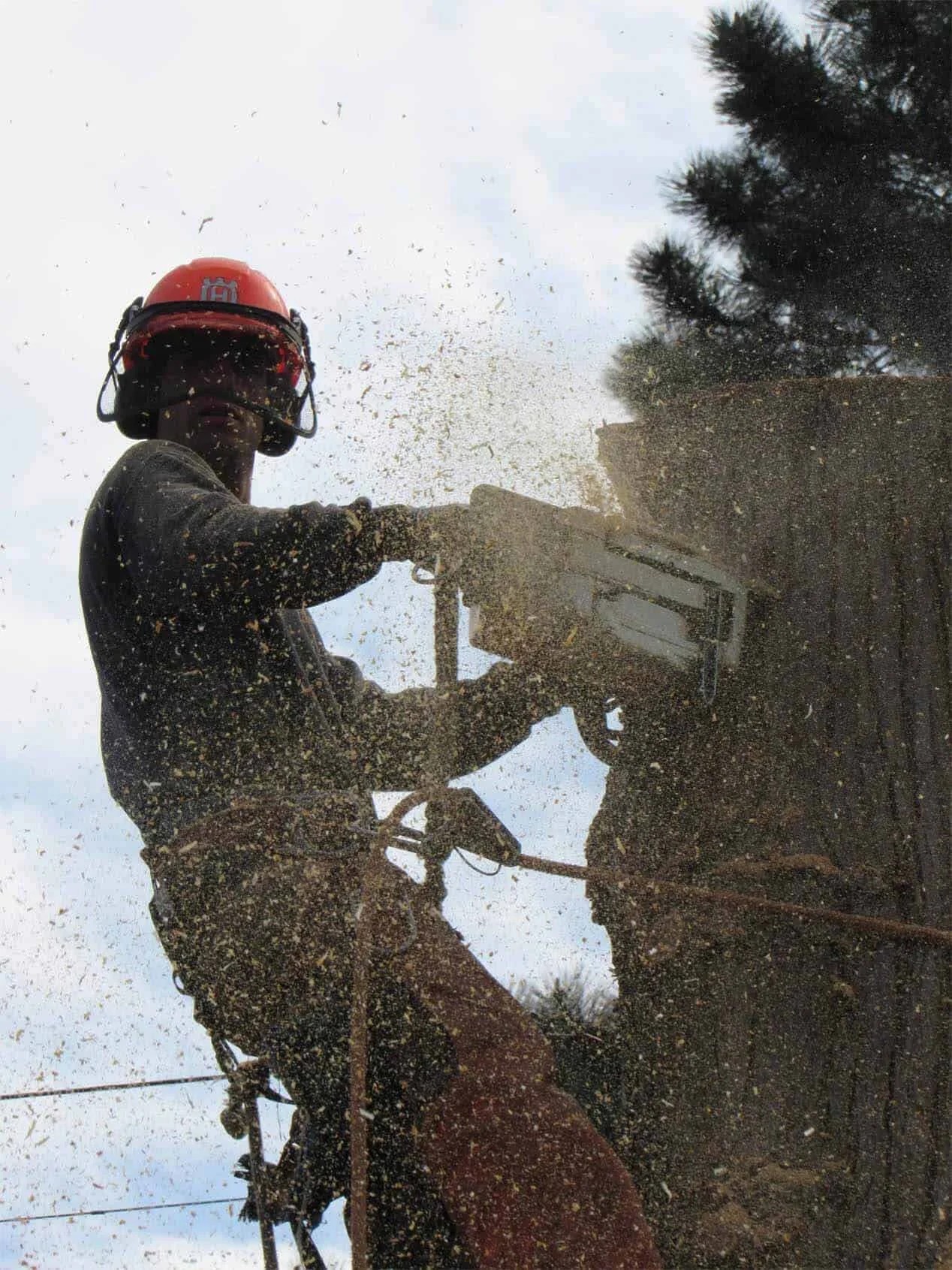
Tree removal means the full takedown of the tree. In a Lincoln yard, that often means sectional removal. Limbs and trunk pieces may be tied, cut, lowered, chipped, and hauled in stages to protect fences, patios, roofs, sheds, gardens, vehicles, and neighbours.
Tree cutting is a broader term. It can include pruning, clearance cuts, limb removal, crown reduction, deadwood removal, or controlled sectional cutting. Good cutting has a clear reason. Every cut should solve a specific problem.
Removal may make sense when:
- The tree is dead or mostly dead
- The trunk is split
- The root plate has moved
- Decay affects key support wood
- Major limbs have failed
- Construction conflict is approved and documented
- The tree is too close to a structure and cannot be managed safely
- City or insurance review supports removal
Pruning may make sense when:
- The tree is structurally sound
- Deadwood is the main issue
- A limb needs end-weight reduction
- Branches are touching the roof or gutters
- Clearance is needed for access
- Young structure can be corrected
- A hedge or screen needs routine shaping
Bad pruning can create future risk. Topping, flush cuts, lion-tailing, and stripping the interior can weaken a tree. ANSI A300 pruning standards set accepted practice, and Richmond's tree bylaw summary names them as the benchmark for normal pruning. Good pruning protects long-term structure, not just today's appearance.
If you are unsure, compare the goals. Tree removal solves a tree that cannot be kept safely. Tree cutting can reduce risk or improve clearance when retention is still a sound option.
How should cedar hedges be trimmed near Pinetree Way?
Cedar hedges near Pinetree Way should be trimmed with light, regular cuts, a slight taper, sharp tools, and timing that avoids heat and drought stress.
Many Lincoln and Coquitlam Centre properties rely on cedar hedges for privacy. Condos overlook yards. Townhomes sit close together. Side yards are narrow. A healthy hedge can make a small property feel private. A damaged hedge can leave open gaps that take years to improve, if they improve at all.
Western red cedar does not act like boxwood. If you cut too far into old brown interior wood, you may not get fresh green growth back from that spot. The hedge may look neat for a week, then show brown patches and holes.
A good hedge has a slight taper. The base should be a little wider than the top. That lets light reach lower foliage. A perfectly vertical wall can shade itself and thin near the bottom.
The safest hedge plan is maintenance, not rescue. Light seasonal trimming keeps the green shell dense. Waiting years, then cutting hard, raises the chance of permanent brown areas.
Watch for:
- Brown interior exposed after trimming
- Thin base growth from lack of light
- Top-heavy hedges that shed water outward
- Heat stress after summer cutting
- Root stress from compacted soil or construction
- Height that makes ladder work unsafe
Tall hedges need stable access and a crew that understands slope, reach, weight, and cleanup. Aesthetic Tree's hedge trimming services Vancouver page covers privacy hedge care for Vancouver and Lower Mainland homes.
The best hedge trim looks calm when it is done: straight lines, green faces, clean cleanup, and no harsh cuts into brown wood.
What should you do after a tree comes down?
After a tree comes down, decide whether the stump should be ground, whether the site needs soil repair, and where a replacement tree should go.
At first, the stump may seem harmless. The dangerous tree is gone. The yard is quiet. The roof and fence are safe.
Then the stump starts creating problems.
It can block replanting. It can catch mower blades. It can send up suckers. It can sit in the way of a new fence, patio, walkway, shed, or garden bed. As it decays, it can also draw insects and fungi into the old wood.
Stump grinding removes the visible stump and grinds below grade. It does not pull every root from the yard. In many Lincoln properties, that is a good thing. Full root excavation can disturb fences, walls, pipes, irrigation, patios, and nearby plants.
Access matters. Gates, steps, slopes, retaining walls, tight side yards, and garden beds can limit equipment choice. A crew should check access before promising the work.
If you plan to replant, do not simply place the new tree in the same compacted, root-filled, poorly drained spot. The old tree may have failed partly because the site was wrong. Fix soil, drainage, spacing, and species choice before planting again.
Right tree. Right place. Right soil.
That is better than replacing the same problem twice.
Aesthetic Tree's stump grinding Vancouver service is the next step when the tree is gone but the yard still needs to be usable.
When is emergency tree service worth calling?
Emergency tree service is worth calling when a tree or limb is actively threatening people, homes, vehicles, public access, or utility lines.
Do not climb it. Do not cut a loaded limb. Do not pull it with a truck.
Storm-damaged trees can hold force in dangerous ways. A bent limb can spring. A split trunk can tear. A hung-up branch can fall when another cut changes the load. A root plate can shift after the first piece is removed.
Call fast if you see:
- A tree leaning after a storm
- A trunk split down the middle
- A limb resting on a roof
- A branch hanging over a driveway, entry, sidewalk, or parking spot
- Soil lifting around the base
- A tree or branch touching service lines
- A cracked stem above a neighbour's yard
- A large broken limb stuck in the canopy
BC Hydro says over half of all outages in the province are caused by adverse weather bringing trees and vegetation into contact with its system. The risk is not only the outage. A tree touching service lines can create a serious electrical hazard. BC Hydro advises staying 3 to 6 metres away from power lines, depending on voltage. Keep people back and call BC Hydro if lines are involved.
Coastal storms are normal in the Lower Mainland. Wet soil plus wind can move trees, especially where roots have been cut, buried, compacted, or weakened by decay. Emergency work is about controlling that risk before someone walks, parks, or sleeps under the target zone.
For urgent hazards, Aesthetic Tree provides emergency tree service for fast assessment and controlled response.
If the tree has already moved, cracked, split, or hit something, stop guessing. Keep people clear until it is assessed.
How do I choose the right arborist in Lincoln?
Choose an arborist in Lincoln who can explain the tree risk, the site risk, the permit issue, and the work plan before selling the cut.
A cutter talks mainly about how fast the tree can come down. An arborist talks about whether it should come down, what can be retained, what targets are present, what the species is doing, what the city may require, and how the crew will control the work.
Ask these questions before hiring:
- Are you ISA-certified?
- Are you WCB registered?
- Do you carry proper insurance?
- Will you inspect the root flare, trunk, and crown before quoting removal?
- Do you follow ANSI A300 pruning standards?
- Can you advise on City of Coquitlam permit and report needs?
- How will you protect the house, fence, patio, garden, and neighbour's property?
- What happens to the brush, logs, stump, and cleanup?
- Will the estimate define the scope of work?
For Lincoln homes near Coquitlam Centre, access is often tight. Parking can be busy. Yards are small. Targets are close. Equipment choice matters. Rigging matters. Crew communication matters.
A cheap quote that ignores site control is not a bargain. It is risk with a lower number attached.
Aesthetic Tree & Hedge Services provides ISA-certified arborist work, WCB registration, tree removal, tree cutting, hedge trimming, stump grinding, arborist reports, and emergency tree service across Vancouver, Burnaby, North Vancouver, Richmond, Coquitlam, and the Lower Mainland.
If you have a leaning cedar, cracked maple, fir near the roof, dead tree, or hedge growing into the walkway, call Aesthetic Tree & Hedge Services at (604) 721-7370 for a free estimate.
Test Your Knowledge
1. Why is tree removal in Lincoln often more complex than on a rural property?
- ✅ A. Yards are usually tight and close to buildings, fences, utilities, and neighbours.
- B. The soil is always too dry for tree work.
- C. Coquitlam does not allow arborists to use equipment.
- D. Trees in Lincoln are never allowed to be removed.
*The article explains that Lincoln is dense, so limbs and tree sections may need careful rigging, lowering, and staging around nearby targets.*
2. Which sign should prompt a homeowner to call an arborist for an assessment?
- A. A tree has bright spring leaves.
- ✅ B. A tree has fresh lean, soil lift, cracks, or fungal growth near the base.
- C. A hedge was watered last week.
- D. A branch casts shade on the lawn.
*The article lists fresh lean, lifting soil, trunk cracks, and fungal conks as warning signs worth checking.*
3. What should homeowners check before removing a tree in Coquitlam?
They should confirm the current City of Coquitlam tree permit rules before removal. Most owners can remove up to two protected-size trees in 12 months without a permit, but trees near streams or on steep slopes always need one. Permit, strata, insurance, or arborist report needs may also apply.
4. What does an arborist look at before starting saw work?
An arborist checks the tree and the surrounding target zone. This includes anything a falling limb or tree could hit, such as a roof, fence, sidewalk, vehicle, service line, or neighbouring property.
Frequently Asked Questions
Related: For more on this, see arborist port coquitlam: 7 checks before hiring.
Found this helpful? Follow our tree care insights directly on Google.
Make us your preferred source on GoogleBefore You Go
Where are you in your tree care journey?
Our Tree Care Services
ISA-certified arborists serving Greater Vancouver


Explore Our Tree Care Services
From expert pruning to safe tree removal, our ISA-certified arborists are ready to help across Greater Vancouver.
View Services