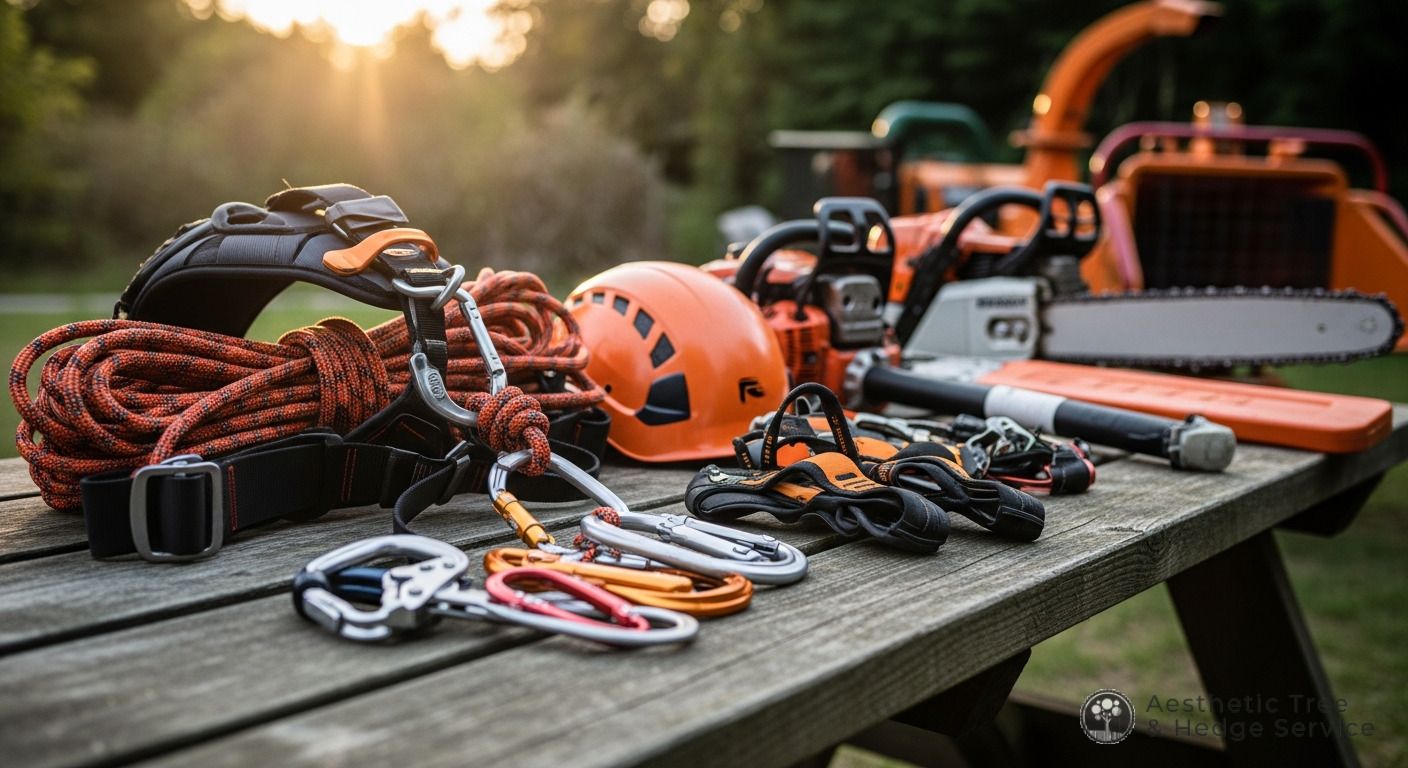

TL;DR — Quick Summary
arborist port coquitlam checks for permits, safety, pruning, and removals. Hire ISA-certified, WCB registered arborists.
An arborist in Port Coquitlam is a certified tree care professional who assesses, prunes, and removes trees in compliance with the City's Tree Bylaw #4108 and ISA professional standards. Before hiring one, homeowners should verify seven key qualifications to avoid permit violations, safety hazards, and unprotected liability.
When homeowners search for an arborist in Port Coquitlam, they usually need a tree decision that won't damage the home, violate the city's bylaws, or create a safety hazard. Before hiring, verify ISA certification, WCB registration, permit knowledge, written scope, ANSI A300 pruning standards, power-line safety protocol, and cleanup terms.
Key facts:
- Port Coquitlam's Tree Bylaw #4108 covers trees on private property
- Permit applies to trees at least 5 m tall or wider than 15 cm across, measured 1.4 m above the ground (10 cm for some significant trees)
- Permits are not issued March 15–August 31 unless a Qualified Environmental Professional's nest survey is submitted
Why should you check permits before hiring an arborist in Port Coquitlam?
Tree work is not just cutting wood. It is a legal decision, a structural decision, and a safety decision, and Port Coquitlam's municipal code enforces all three.
Port Coquitlam's Tree Removal & Protection page states that City Council adopted a new tree bylaw in 2019 that changed how trees are removed, replaced, and protected. That bylaw, Tree Bylaw #4108 applies to private property across the city.
A cedar in your side yard may feel like a private choice. Under the bylaw, if it is at least 5 m tall or wider than 15 cm across, it needs a permit before cutting or removal.
The first test is straightforward.
Ask the arborist: *What permit path applies to this tree?*
A qualified arborist should answer in plain terms. They should know the diameter measurement rule. They should know the height rule. They should know Port Coquitlam's bird nesting restrictions. They should know when the City may request an arborist report.
Port Coquitlam's Tree Removal & Protection page sets the thresholds: at least 5 m tall, or wider than 15 cm across measured 1.4 m above the ground (diameter at breast height, or DBH).
That is measurable. It is not guesswork. A careful arborist measures at 1.4 m, not at the root flare.
A poor contractor sells speed. A real arborist sells certainty. They inspect, they measure, they document, then they recommend.
Port Coquitlam's own numbers show why this matters. According to the City's Urban Forest Roadmap, tree canopy covered 23% of the city's land in 2021, and the City proposes a 30% canopy target by 2050. Nearly two-thirds of the land is privately owned. One private removal does not tip the scales. Many casual removals, made without a replacement plan, do.
That is why permits, replacement requirements, and retained-tree protections exist: to keep individual property decisions connected to a public forest goal.
Even for hazardous trees, process matters. The City says permits are required for hazardous or dead tree removal; the $100 per-tree fee is waived if the City determines the tree is hazardous. For immediate hazards, photograph the defect, keep the tree on site, report it to Port Coquitlam Public Works, and apply for a tree permit the following business day.
For a good arborist, the starting point is never "take it down." It is: What is the species? What is the defect? What does Port Coquitlam's bylaw require? What work reduces risk without removing a healthy tree? If removal is the right answer, it should come with a permit and a replacement plan. If pruning solves the problem, removal is the wrong product.
When does Port Coquitlam require a tree cutting permit?
Port Coquitlam sets clear permit triggers on its Tree Removal & Protection page.
The City requires a permit to damage, cut, or remove trees at least 5 m tall or wider than 15 cm across (measured 1.4 m above the ground). It also applies to replacement trees, trees required by a development permit, City-owned trees proposed for private cutting, and significant trees.
That is the first test. Do not measure at ankle height. Do not measure near a root swell. Measure using DBH. On a sloped lot, a trunk measurement can vary a lot depending on where you measure, so measure 1.4 m above the ground.
Significant trees receive extra protection. According to Port Coquitlam's bylaw, significant trees include very large trees wider than 45 cm (excluding cottonwood and aspen), dead standing snags used by wildlife, heritage trees, and certain locally rare species wider than 10 cm. Unless removal is needed because of a hazard or property development, the City does not permit cutting a significant tree.
Those rare species, Pacific dogwood, arbutus, Western yew, Western white pine, Garry oak, and Oregon ash, are listed by the City as locally rare. A homeowner may see a small tree. The bylaw may see a protected species.
Port Coquitlam also enforces bird nesting protections. Between March 15 and August 31, permits are not issued unless the applicant submits a biological survey prepared by a Qualified Environmental Professional (QEP). The survey must identify active nests and specify protection measures under the BC Wildlife Act.
That is not a footnote. It changes scheduling. A tree removable in February may need biological review in May. If work falls in that window, arrange the QEP survey early to avoid delays.
Hedge work can disturb nesting birds too. For cedar hedges, laurel, yew, and mixed screens, check for active nests before trimming, and hold off if you find one.
If hedge height, sightlines, or neighbour encroachment is the issue, start with hedge trimming services rather than removal.
Port Coquitlam requires one replacement tree for each tree cut, and two for each significant tree 60 cm across or larger. No replacement is needed if the cut tree's trunk is within 5 m of a retained tree's trunk on the same property. If replanting is not feasible, the City accepts a $500 cash-in-lieu payment.
These requirements should appear in your arborist's planning conversation.
Ask directly: *Will this tree need a permit? Will a replacement plan be required? Will an arborist report be needed?*
A qualified arborist will not hedge. They will answer with the measured trunk size, species, location, and the specific bylaw trigger.
What should an arborist inspect before recommending tree removal?
Removal should follow evidence, not impulse.
A homeowner often calls after spotting one symptom: a dead limb, a lean, mushrooms at the base, or a crack after wind. Those clues matter. But no single clue tells the whole story.
A rigorous assessment starts at the root flare, where the trunk widens into main roots. If the root flare is buried, the tree may have girdling roots, decay, or grade problems. Raised soil around the trunk can choke roots of oxygen. A good arborist probes it and documents it.
Then the arborist checks the trunk for cavities, included bark, vertical cracks, old topping scars, bleeding, fungal conks, and impact damage. They assess lean, is it old structural lean, or new movement? A tree grown leaning is not the same as one that shifted last week. That distinction matters.
Next, the crown. Deadwood pattern matters. Dead tips scattered across the upper crown signal root stress. One broken limb may be storm damage. A widespread pattern tells more. Photograph it and note how much of the crown is dead.
Species behavior matters too. Douglas fir carries large wind loads. Western red cedar can fail where decay advances in the stem. Big-leaf maple develops heavy lateral limbs. Lombardy poplar and cottonwood often raise risk near structures. Cherry and plum can rot at old pruning points.
The target matters as much as the tree. A defective tree over lawn is one risk. The same tree over a bedroom, driveway, sidewalk, or BC Hydro service line is another. Hazard assessment uses both likelihood and consequence.
Port Coquitlam's bylaws list examples of what is NOT an immediate hazard: normal leaf dieback, leans with intact root systems, broken hanging branches, internal decay with sound exterior wood, or swaying in wind without significant signs of risk.
That statement slows bad decisions. A tree that scares you may only need pruning. A calm-looking tree may have serious root defects. Evidence beats appearance.
Wet weather adds stress. Wet soils affect root stability. Saturated ground plus wind increase risk, especially on slopes or fill areas.
After heavy rain and wind, inspect trees near homes, retaining walls, garages, and driveways. Look for raised soil plates, ground cracking, sudden lean, torn roots, and new gaps in the root zone. Do not stand under the tree. Do not cut it yourself.
Call an ISA-certified arborist. For active failures, use emergency tree service. Even emergency work needs photo documentation to support the hazard record.
How should pruning be done in Port Coquitlam's wet climate?
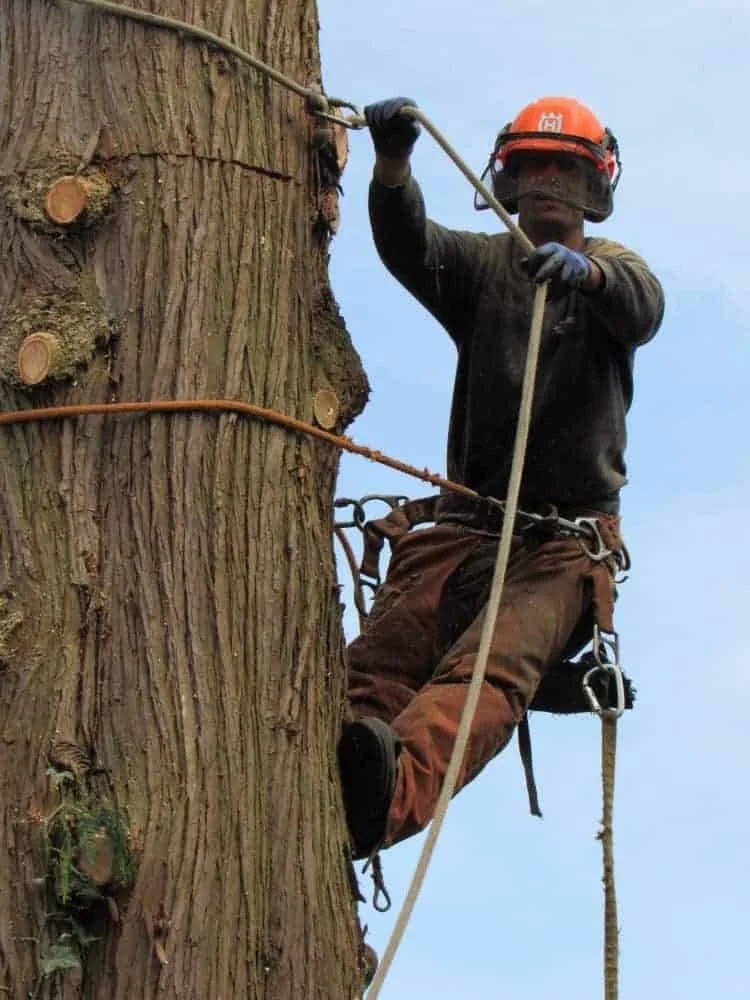
Pruning is controlled injury. Done right, it reduces risk and preserves structure. Done poorly, it opens decay paths.
That is why standards matter.
ANSI A300 standards are the American National Standards for tree care, including pruning. The Tree Care Industry Association is one industry source for more on tree care standards.
Ask: *What is the pruning objective?* Do not accept "trim it back" as a complete scope.
Good objectives sound like this:
- Remove dead, damaged, or diseased branches over targets.
- Reduce end weight on overextended limbs.
- Improve clearance from roof, gutters, driveway, or walkway.
- Preserve branch collar tissue.
- Avoid topping.
- Retain enough live crown for tree health.
Bad objectives sound like this:
- Cut it in half.
- Make it small.
- Top it so it stops growing.
- Strip the inside.
- Leave only the outer shell.
Topping causes lasting damage. Topped trees send out weak sprouts around the cuts. Port Coquitlam's bylaw lists tree topping as a tree-damaging activity that needs a permit. The same list includes damaging roots, scraping bark, changing the soil grade, depositing concrete washout near roots, and running heavy equipment over roots.
Topping is not pruning. It is damage. It creates weak sprouts at cut ends, exposes wood to decay, and often makes the tree more hazardous over time.
Wet climate makes wound quality critical. In wet weather, a cut surface stays moist longer. Ragged cuts hold moisture. Flush cuts damage the branch collar. Stub cuts die back and decay.
The correct cut leaves the branch collar intact so the tree can seal the wound naturally. A skilled arborist finds the collar, avoids flush cuts, and leaves no stubs.
Cedar hedges need different care. Western red cedar does not respond like laurel. Cut past green growth into old brown wood, and it often stays bare. Hedge reductions must be staged over seasons.
For large trees, crown thinning must be conservative. Too much interior removal increases branch end loading. It can also sunburn bark that was shaded before.
For roof clearance, do not strip one side. Balance matters. Hard side cuts change wind response and destabilize the crown. Sightlines and targets should be assessed before any reduction is proposed.
For view work, preserve structure while opening sightlines. View pruning often leads to over-pruning. Aggressive view pruning can change a tree permanently, so a conservative, phased approach is safer.
For fruit trees, timing and species matter. Apple, pear, cherry, and plum each respond differently. Heavy cuts trigger water sprouts. Disease pressure changes timing. Get advice by species.
For storm prep, focus on defects. Remove deadwood. Reduce cracked or overextended limbs. Clear branches from roofs and service lines. Do not thin every tree just because wind season is coming.
Branches near utility lines need care. The City directs residents to contact BC Hydro at 604-BC-HYDRO (224-9376) when trees contact power lines. Never prune near energized lines yourself.
For structural cuts, crown cleaning, and branch clearance, ask about tree cutting services that follow arborist standards per ANSI A300, not casual topping.
What should you ask about insurance, WCB, and crew safety?
Tree work is high-risk. The risk sits above your roof, fence, car, and crew.
Ask for proof before the job starts. The core items are:
- ISA certification (verify with ISA Directory)
- WCB registration (WorkSafeBC coverage)
- Liability insurance
- Written scope
- Site safety plan for complex work
- Traffic or pedestrian control when needed
- Power-line protocol
- Cleanup and disposal terms
Port Coquitlam's permit steps note that the City Arborist may request proof of liability insurance. That tells you the City views insurance as part of the risk record.
WCB registration matters because tree crews use chainsaws, chippers, rigging, ladders, ropes, stump grinders, and aerial gear. WorkSafeBC says a homeowner who hires a contractor that is not registered or not in good standing could be liable for the insurance premiums that contractor owes. A free clearance letter from WorkSafeBC, addressed to you, protects you from that.
Do not rely on a verbal promise. Ask for the business name and documentation. A professional contractor expects the question.
Also ask who will be on site. Some companies sell the work, then send a different crew. The crew still needs the promised skill. Ask whether the person who estimates the job will lead the crew.
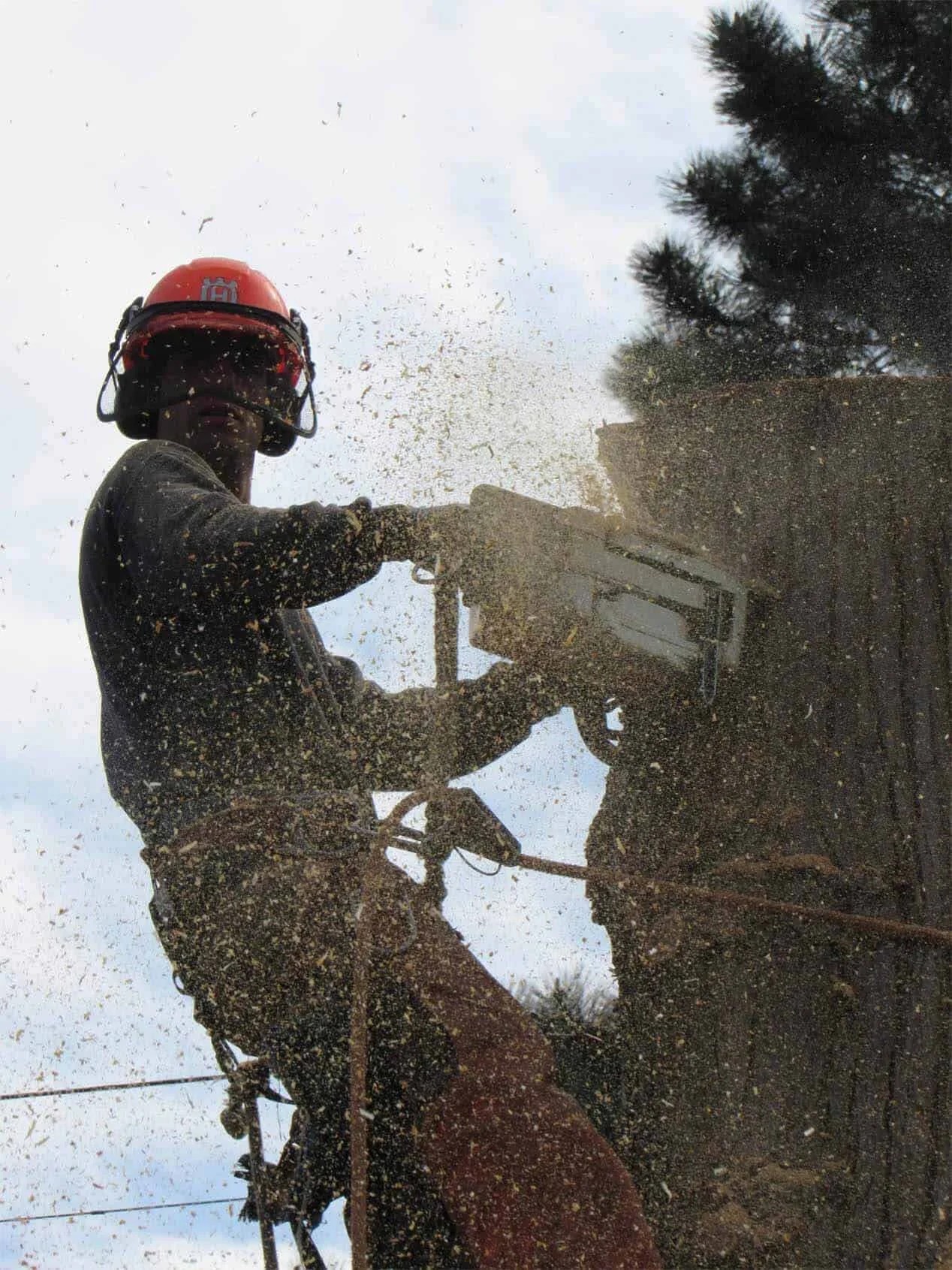
For removals near homes, ask about rigging. A tree does not fall in one piece. In tight yards, sectional removal is often the safe choice. Limbs are lowered with ropes. Trunk sections are cut and managed. Targets are protected. It is slower than one-cut felling. It is also safer.
Ask where the chipper sits. Ask where logs land. Ask how fences, lawns, pavers, and garden beds are protected. Ask if plywood mats are needed. A good crew can answer these questions before they arrive.
Ask about weather. Wet ground changes access. High wind changes climbing safety. Heavy rain changes visibility and footing. A good crew postpones unsafe work.
Ask about communication during the job. You should know which trees are included, which limbs are included, and what happens if hidden decay changes the plan. A good crew briefs you before work starts and again at completion.
Do not hire on speed alone. Fast work without a written scope is risk. It is not efficiency.
How do arborists protect homes near power lines and tight lots?
Many residential lots are tight tree sites. Older lots often have fences, garages, sheds, service lines, and neighbour trees close together. Newer areas can add slopes, retaining walls, and narrow access.
That changes the work plan.
The first rule is target mapping. The arborist should identify every target before cutting: roofs, gutters, skylights, greenhouses, decks, fences, vehicles, service drops, gas meters, irrigation, and people.
The second rule is access. A backyard cedar removal is different if access is a narrow side gate. A stump grinder needs turning radius. Chippers need safe street or driveway placement. Access should be checked before quoting.
The third rule is line clearance. If a tree touches power lines, contact BC Hydro at 604-BC-HYDRO. BC Hydro advises staying 3 to 6 metres away from power lines, depending on voltage.
Branches near communication lines also need care. Telephone and cable lines can snag limbs during lowering. Service drops can be damaged by careless cuts. A crew should plan for these before work starts.
Good crews use rigging when free-fall is unsafe. They set ropes high in the tree. They use lowering devices. They cut smaller pieces. They use taglines to guide branches away from targets. This takes more planning.
For trees close to the home, roof protection matters. Sawdust and small debris are normal. Heavy limb contact is not. Gutters, fascia, vents, and skylights should be considered before work starts. Ask whether the crew uses tarps and a spotter for roof-adjacent work.
For fences, the crew should plan drop zones. A single cedar round can break a panel. A maple limb can twist during release. Good cutting accounts for compression and tension in the wood. A good crew photographs fence conditions before and after.
For slopes, the question is not just tree removal. It is soil response. Roots are part of the site structure. Removing a tree near a slope may require extra caution, especially near ravines or watercourses.
Port Coquitlam's bylaws state that the City Arborist may require a geotechnical engineer's report confirming that the cutting and replacement plan will not create a danger of flooding, erosion, land slip, or tree falls. That is a clear signal for ravine and slope sites.
For watercourse areas, the City may ask for proof of provincial or Fisheries and Oceans Canada approval where fish habitat or flood-proofing is involved. That matters near creeks, rivers, and drainage corridors. A qualified arborist should know when the tree decision touches another discipline. That is not weakness. It is competence.
What happens after a Port Coquitlam tree is removed?
Tree removal is not finished when the trunk hits the ground. There are four after-steps: debris, stump, replacement, and records.
Debris should be handled as agreed. Some homeowners want chips left for mulch. Some want all chips removed. Some want logs cut for firewood. Some want a clean yard. The estimate should state it.
Stumps are separate. A stump can be left, cut low, ground, or removed by excavation. Grinding is common because it removes the stump and upper root crown without digging a large hole.
If the tree was close to a fence, wall, or utility, stump work needs care. Grinding depth and access should be discussed before the machine arrives.
For after-removal work, book stump grinding as part of the same plan. It keeps the site usable and removes trip hazards.
Replacement is the next step. Port Coquitlam's Tree Bylaw #4108 also requires a tree replacement plan as part of the permit application.
Choose replacement species with site conditions in mind. Do not plant a large forest tree under a service line. Do not plant a thirsty tree beside a foundation drain. Do not plant a brittle species in a tight target zone.
Metro Vancouver's Tree Species Selection Tool is a useful public reference for species choice in a changing climate. Port Coquitlam suggests it on its Urban Forest Roadmap page.
For local yards, good choices depend on space. Vine maple fits smaller areas. Serviceberry works in many residential sites. Douglas fir needs room. Western red cedar needs moisture and space. Big-leaf maple needs large area. Garry oak and arbutus have special needs.
Records matter too. Keep permit copies, replacement plans, arborist reports, photos, and invoices. If you sell the home, these records explain what happened. If the City asks, you have proof.
A professional contractor should leave the site clear and the paperwork simple.
How should you compare arborist estimates?
Do not compare only the final number. Compare the scope.
A cheap one-line estimate hides missing work. It may exclude stump grinding, hauling, permit help, traffic control, replacement planning, or cleanup. A low bid that leaves out stump removal, hauling, and cleanup can cost more once those are added.
Use a written checklist. Ask whether the estimate includes:
- Tree species and location
- Trunk diameter or size class
- Work objective
- Permit assumptions
- Arborist report needs
- Pruning standard (ANSI A300) or removal method
- Rigging plan for targets
- Debris removal
- Stump plan
- Replacement tree notes
- WCB and insurance proof
- Timeline and weather limits
Then compare risk. An estimate that includes protection may look higher than a bare cut. But the bare cut can cost more if it damages a fence, roof, line, or creates bylaw issues.
Ask what is not included. This question reveals more than any sales pitch.
Ask who handles permit paperwork. Some homeowners prefer to apply. Some want help from the arborist. Either way, the duty must be clear. In Port Coquitlam, a copy of the permit must be posted at the front of the property while the tree is being cut.
Ask whether the crew will prune to ANSI A300 standards. Ask whether topping is excluded. Ask whether live crown removal has a limit. Ask whether cuts will preserve branch collars.
Ask how they handle nesting season. The right answer mentions March 15–August 31 in Port Coquitlam, QEP survey needs, and active nest protection.
Ask how they handle immediate hazards. The right answer mentions photos, keeping the tree on site when required, reporting to Port Coquitlam Public Works, and applying for a permit the following business day.
Ask about power lines. The right answer mentions BC Hydro at 604-BC-HYDRO for trees in contact with power lines. It does not include casual cutting near lines.
Ask about WCB. The right answer includes proof of WorkSafeBC registration, and you can request a WorkSafeBC clearance letter yourself.
Ask about ISA certification. The right answer includes a credential from the ISA Directory, not vague experience claims.
Port Coquitlam's website directs residents to the International Society of Arboriculture Directory to find a certified arborist.
Found this helpful? Follow our tree care insights directly on Google.
Make us your preferred source on GoogleOur Tree Care Services
ISA-certified arborists serving Greater Vancouver

Explore Our Tree Care Services
From expert pruning to safe tree removal, our ISA-certified arborists are ready to help across Greater Vancouver.
View Services