
TL;DR — Quick Summary
Essentials complete tree care service Vancouver homeowners need: ISA-certified arborists, permits, pruning, removal & stump grinding. WCB registered. Free estimate.
Essentials complete tree care service in Vancouver isn't a single job. It's the full scope of what your trees need to stay healthy, safe, and legally compliant — season after season.
Vancouver homeowners live alongside significant trees. The city's 2018 Urban Forest Strategy documented over 153,000 street trees across Vancouver alone. That count doesn't include park trees or the trees on your private property.
Those trees are assets. They also carry liability.
TL;DR
- "Complete tree care" means far more than a single trim. It covers removal, pruning, stump grinding, hazard assessments, emergency response, and permit compliance.
- City of Vancouver Tree Bylaw No. 9958 protects trees over 20 cm diameter at breast height (DBH) on private property. Remove one without a permit and fines reach up to $10,000 per tree.
- Only hire ISA-certified arborists trained to ANSI A300 standards. Certification is publicly verifiable — always check.
- WorkSafeBC (WCB) registration is mandatory for any tree crew operating in British Columbia. Not optional. Always ask.
- A full-service arborist handles everything from routine maintenance through emergency storm response — under one call.
What Is Essentials Complete Tree Care Service — and Why Does It Matter in Vancouver?
A truly complete service covers every category your trees need:
- Hazard risk assessments
- Pruning to ANSI A300 standards
- Permitted tree removal
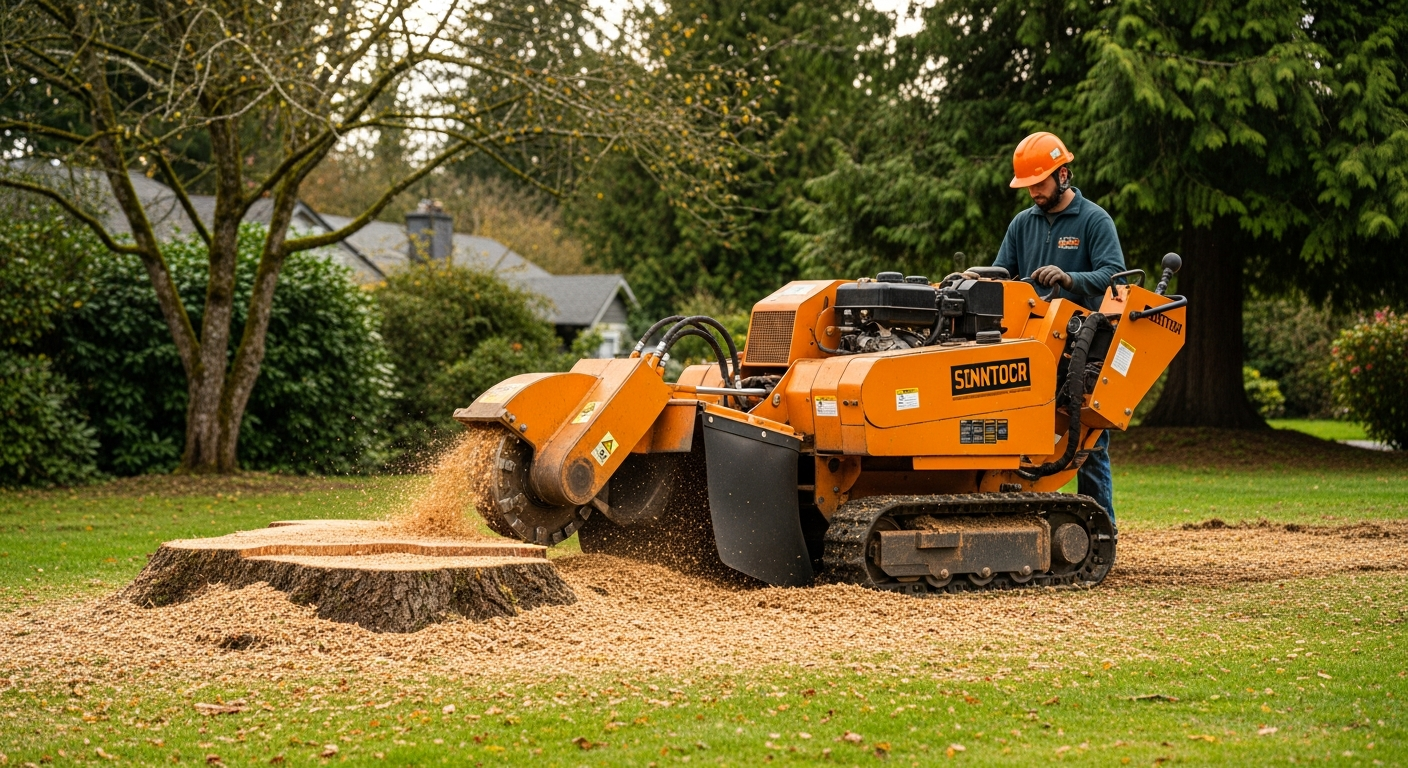
- Stump grinding and site cleanup
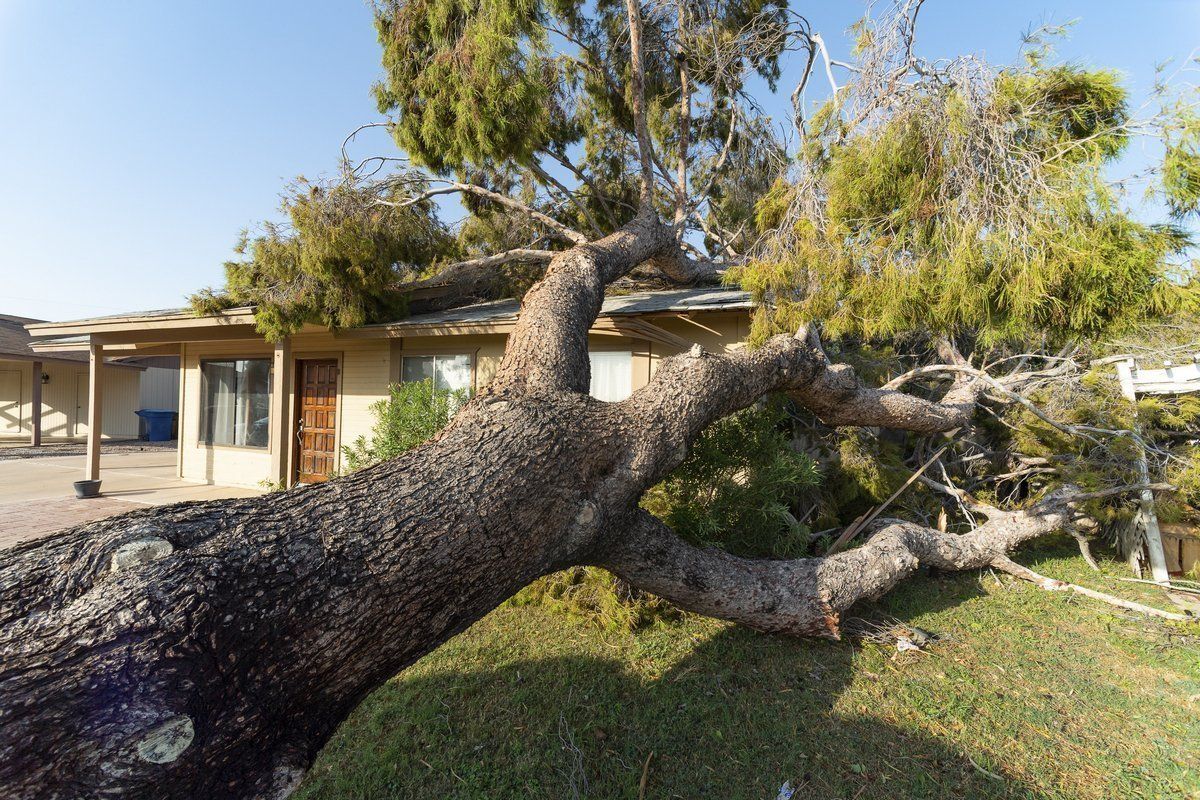
- Emergency storm response
- Arborist reports for permit applications and strata
- Hedge trimming and maintenance
- Root management and barriers
Miss one of those and you're not getting complete service. You're getting a partial fix that leaves problems behind.
In Vancouver's urban environment, that matters. Trees grow close to structures, power lines, and property lines. Incomplete care creates deferred risk — until a windstorm forces the issue at 2 a.m.
Why Do Vancouver's Tree Bylaws Exist — and What Do They Actually Require?
Vancouver takes tree protection seriously. It backs that up with law.
City of Vancouver Tree Bylaw No. 9958 governs private property trees. Any tree with a trunk diameter of 20 cm or more at breast height (DBH) requires a permit before removal. That applies to residential properties — not just parks or city boulevards.
Violate it? Fines reach up to $10,000 per tree under City of Vancouver enforcement policy.
Other Lower Mainland municipalities have their own rules:
- **Burnaby**: Burnaby Tree Preservation Bylaw No. 14700. Trees over 25 cm DBH require a permit.
- **North Vancouver District**: Permits required for trees over 20 cm DBH, especially within 6 metres of watercourses.
- **Richmond**: Richmond Tree Protection Bylaw requires permits for trees over 20 cm DBH on private lots.
An arborist report documents the tree's species, health, and justification for removal. It's exactly what permit offices require. Skip this step and your application stalls — or you face enforcement after the fact.
Permit compliance isn't paperwork overhead. It's how the city protects a mature urban forest that took decades to grow.
What Should Every Complete Tree Care Package Include?
Ask this before you sign anything. A complete service isn't just a chainsaw and a truck.
Here's what the full scope looks like — and why each piece matters.
Tree Removal
Removing a tree safely means more than felling it.
It means assessing the fall zone and surrounding structures. Coordinating with BC Hydro when power lines are within range. Pulling the permit under the applicable municipal bylaw. Removing all debris and leaving the site clean.
Tree removal in Vancouver on tight urban lots often requires specialized rigging. For trees near structures, heritage streetscapes, or confined residential spaces, crane-assisted removal may be the only safe option.
Pruning and Tree Cutting
Pruning has rules. ANSI A300 standards — the professional industry benchmark — define limits on live crown removal. Removing more than 25% of live crown in a single session stresses the tree, opens wounds, and invites fungal pathogens.
Professional tree cutting removes dead, crossing, and structurally weak branches. It improves clearance for buildings, utilities, and sight lines. Done right, it extends the tree's life. Done wrong, it accelerates decline.
Stump Grinding
You removed the tree. The stump is still there.
Leftover stumps become trip hazards. They attract wood-boring beetles and fungal disease that spread to neighbouring trees. A stump in a lawn mowing path is a weekly frustration.
Stump grinding removes the stump below grade. It eliminates the hazard and prepares the site for replanting or seeding.
Hedge Trimming
A hedge isn't just decoration. It's a living privacy screen — and it needs species-appropriate care.
Trim cedar at the wrong time and you stress the root system. Cut laurel too late and you get frost-damaged regrowth that takes a full season to recover. A qualified team trims each species at the right time, at the right height, with the right tools.
Hedge trimming services in Vancouver should cover formal hedges — cedar, laurel, Portuguese laurel, boxwood — as well as informal flowering species.
Emergency Tree Service
The Pacific Northwest doesn't give warnings.
Metro Vancouver regularly experiences significant windstorm events. Several between 2015 and 2023 caused widespread tree failures, roof damage, and downed power lines across the region, according to Environment Canada weather records.
When a tree fails in a storm, emergency tree service responds fast. The job isn't just cleanup. It's assessing secondary hazards — hung branches under tension, unstable root balls, co-dominant stems at risk of the next failure. It's documenting damage for your insurance adjuster.
Don't wait until business hours. Hazard trees don't.
How Do You Know If a Vancouver Tree Company Is Actually Qualified?
Here's the uncomfortable truth: anyone can buy a chainsaw and advertise "tree service."
British Columbia doesn't require a provincial license to operate a tree service company. That makes credential verification non-optional — not a courtesy check.
Here's what to verify before work begins.
**ISA Certification**
The International Society of Arboriculture (ISA) sets the global standard for arboricultural practice. As of 2023, approximately 30,000 ISA-certified arborists practice across North America. In Metro Vancouver, the number is significantly smaller.
An ISA-certified arborist passed a rigorous comprehensive exam. They maintain continuing education requirements every three years to keep their certification active. They're trained in current pruning science, risk assessment, and tree biology.
Their certification number is publicly verifiable at the ISA's official registry, treesaregood.org. Ask for it. Check it. It takes two minutes.
**WCB Registration**
WorkSafeBC (WCB) registration is mandatory for all tree crews operating in BC. Tree work carries one of the highest occupational injury rates of any trade — WorkSafeBC classifies it as a high-hazard activity.
If an unregistered crew member is injured on your property, your liability exposure is real. Don't skip this verification.
**Liability Insurance**
A minimum $2-million general liability policy is the standard floor. For work near structures, vehicles, or utility lines, ask whether the policy covers those scenarios specifically. Request the certificate of insurance before work begins — not after.
**ANSI A300 Compliance**
ANSI A300 is the American National Standards Institute standard governing pruning, cabling, bracing, and utility clearance for trees. ISA-certified arborists follow it. If a company doesn't know what ANSI A300 is, they probably aren't following it.
That's not a minor distinction. Improper cuts made outside ANSI A300 create permanent structural defects in trees.
Which Tree Species Do Vancouver Homeowners Deal With Most — and Why Does It Matter?
Species drives every care decision.
Common trees on Vancouver residential properties include:
- **Douglas fir** (*Pseudotsuga menziesii*): Large structural trees with significant canopy spread. High-value assets and serious liability if neglected.
- **Big-leaf maple** (*Acer macrophyllum*): Fast-growing with large root systems. Often in conflict with foundations, sidewalks, and drainage infrastructure.
- **Western red cedar** (*Thuja plicata*): Deep heritage value in BC. Highly sensitive to soil compaction from nearby construction activity.
- **Cherry** (*Prunus* spp.): Common ornamentals. Susceptible to bacterial canker and black knot — both communicable diseases.
- **English holly** (*Ilex aquifolium*): Common on older properties but classified as invasive by the BC Invasive Species Council. Cannot be composted in City of Vancouver green bins — requires separate disposal.
Species identification determines:
- The correct pruning window for each season
- Disease and pest vulnerabilities to monitor
- Whether a permit is required for removal
- How debris must be disposed of legally
An ISA-certified arborist identifies the species before making any recommendations. That identification drives everything else.
What Does a Professional Hazard Assessment Actually Look For?
Most homeowners don't think about tree failure until something falls.
That's backwards. By the time a tree fails, the warning signs were present long before — visible to a trained eye.
A professional hazard assessment evaluates three categories.
**Structural integrity**
- Decay at the root flare (base of the trunk, where the roots begin)
- Co-dominant stems with included bark — two stems growing together without a proper structural union, one of the most common failure points in mature urban trees
- Trunk cracks, open cavities, or active wounds
- Crown dieback indicating root or vascular system decline
**Site conditions**
- Soil compaction from nearby construction or heavy foot traffic
- Drainage patterns that weaken root anchorage over time
- Proximity to structures, utilities, fences, and pedestrian paths
**Target assessment**
- What occupies the failure zone?
- How many hours per day is that space in use?
- Is the target a lawn chair or a parked car?
ISA's Tree Risk Assessment Qualification (TRAQ) trains arborists specifically in this methodology. Research published in *Urban Forestry & Urban Greening* in 2021 found that trees receiving proactive hazard assessments and follow-up care had significantly lower failure rates during storm events compared to unmanaged urban trees.
A formal arborist report documents all findings. That report is what insurance companies, permit offices, and strata councils need to authorize and record tree work.
What Happens When Tree Care Gets Neglected?
The costs compound — and they arrive faster than most homeowners expect.
**Property damage**: The Insurance Bureau of Canada reported that severe weather events cost Canadian insurers over $3.1 billion in insured losses in 2022. Tree failures — many preventable with routine maintenance — represent a meaningful share of those claims.
**Pest and disease spread**: Bronze birch borer, western hemlock looper, and various fungal pathogens spread between trees on adjacent properties. One untreated infected tree becomes a neighbourhood problem.
**Legal liability**: BC courts have found property owners liable for tree failures where visible signs of decline were present and no remedial action was taken. The legal standard is reasonable care — and "reasonable" includes hiring a qualified arborist when warning signs are visible.
**Loss of the tree itself**: Some trees can be saved with early intervention. A structural cable installed before a co-dominant stem fails preserves the tree. The same job done after a stem cracks means emergency removal. Early action almost always costs less — and saves a mature tree that took 50 years to grow.
What's the Difference Between a Landscaper and an ISA-Certified Arborist?
The short answer: training, credentials, and scope of practice.
A landscaper handles lawns, garden beds, and basic hedge maintenance. That's legitimate work. But it's a different category from certified arboriculture.
An ISA-certified arborist is trained specifically in:
- Tree physiology and biology at a technical level
- Risk assessment and failure analysis methodology
- Pruning science based on ANSI A300 standards
- Safe chainsaw operation, aerial rigging, and tree felling
- Tree diseases, pest identification, and nutrient disorders
They're also accountable. ISA certification can be revoked for violations of the organization's Code of Ethics. An uncertified crew carries no equivalent accountability structure.
In BC, significant tree work near structures also falls under WorkSafeBC regulations for high-hazard tasks. ISA-certified arborists know those regulations. Uncertified crews often don't — and that gap becomes your problem if something goes wrong.
How Do You Plan for Long-Term Tree Health in Vancouver?
One visit isn't a plan.
Long-term tree health requires a consistent schedule based on each tree's species, condition, and site context. Here's a practical framework.
**Every 2–3 years:**
- Full canopy inspection by an ISA-certified arborist
- Remove dead, crossing, or structurally weak branches
- Check for disease indicators, pest activity, and root damage
**After any significant weather event:**
- Walk the property. Look for new lean, hung branches, or visible root movement.
- Call for professional assessment if anything looks different from before the storm.
**Before construction or renovation:**
- Consult an arborist before any excavation within the tree's drip line.
- Soil compaction within the root zone is one of the leading causes of long-term urban tree decline — and it's often irreversible once it progresses far enough.
**When you notice early decline:**
- Don't wait. Thinning crown, early leaf drop, and epicormic sprouting (small shoots emerging from the trunk base) are early warning signs.
- Early intervention saves trees. Late-stage decline almost always means removal.
Vancouver has lost significant old-growth Douglas fir and Big-leaf maple from private properties because owners waited too long. An early assessment and a documented arborist report can change that outcome.
---
Get Complete Tree Care for Your Vancouver Property
Now you know what complete actually looks like.
It's ISA certification and ANSI A300 standards. It's WCB registration and proper liability insurance. It's permit compliance under City of Vancouver Tree Bylaw No. 9958. It's the full range of services — from professional hedge trimming to stump grinding to emergency storm response.
Aesthetic Tree & Hedge Services is a WCB-registered, ISA-certified arborist team serving Vancouver, Burnaby, North Vancouver, Richmond, Coquitlam, and the broader Lower Mainland.
**Call us for a free estimate: (604) 721-7370.**
No guesswork. No uncertified crews. Just qualified tree care that protects your trees and your property.
---
FAQ
**Do I need a permit to remove a tree on my Vancouver property?**
Almost certainly yes if the tree is significant in size. Under City of Vancouver Tree Bylaw No. 9958, most trees with a trunk diameter of 20 cm or more at breast height (DBH) require a permit before removal. The permit application typically requires an arborist report documenting the tree's species, health status, and justification for removal. Municipalities across the Lower Mainland have their own equivalent bylaws — check with your city before any removal work begins.
**What is an ISA-certified arborist — and how do I verify their credentials?**
ISA stands for the International Society of Arboriculture, the leading global professional body for tree care. An ISA-certified arborist has passed a comprehensive exam covering tree biology, pruning science, risk assessment, and safe work practices. They maintain continuing education every three years to keep certification active. You can verify any arborist's certification number at the ISA's public registry: treesaregood.org. Ask for the number before booking.
**Is WCB registration really necessary for a tree crew I hire?**
Yes. WorkSafeBC (WCB) registration is mandatory for all tree crews operating in British Columbia. If an unregistered crew member is injured on your property, you may be exposed to significant liability. Always ask for a WCB registration number before authorizing any work.
**How much does complete tree care cost in Vancouver?**
Pricing varies considerably based on tree size, species, access, and scope of work — we don't quote our own rates in this guide. For general market context: according to HomeAdvisor's 2024 cost data, professional tree removal in Canada averages $700 to $1,800 for a mid-sized tree, with complex removals involving cranes or tight access costing significantly more. These figures represent industry averages based on third-party data. Actual costs vary by project scope, site conditions, and municipality. Contact Aesthetic Tree & Hedge Services at (604) 721-7370 for a free personalized assessment.
**What's the difference between tree pruning and tree topping?**
Tree pruning removes specific branches to improve structure, clearance, and long-term health — following ANSI A300 guidelines. Tree topping cuts the main stem back severely, leaving large exposed stubs. The ISA widely condemns topping because it creates massive open wounds that invite decay, produces structurally weak regrowth prone to failure, and often kills the tree within a few years. No ISA-certified arborist will recommend topping. If a company suggests it, treat that as a warning sign and get a second opinion from a certified arborist.
When to Book Each Tree Service in Vancouver
Vancouver's wet winters and mild springs create a predictable annual rhythm for tree care. Booking the wrong service at the wrong time doesn't just hurt outcomes — it can void insurance claims if a tree fails during a hazard window your arborist flagged beforehand.
| Service | Optimal Window | Key Reason | |---|---|---| | Structural pruning | Late winter (Feb–Mar) | Dormant trees reduce disease entry; wounds close as growth resumes | | Deadwood and hazard branch removal | Year-round | Dead limbs are a constant liability — no seasonal restriction applies | | Ornamental and fruit tree pruning | Post-harvest (Nov–Jan) | Reduces fungal pressure during Vancouver's wet season | | Stump grinding | Spring through fall | Saturated or frozen soil can restrict machinery access | | Hedge trimming | May–June and September | Brackets nesting season; captures growth before summer flush | | Emergency tree work | 24/7, all seasons | Storm events and windthrow don't follow a calendar |
Nesting season is a real constraint. Environment and Climate Change Canada identifies coastal BC's primary bird nesting window as mid-April to mid-August. Removing or significantly trimming trees during this period — especially near parks, hedgerows, or green corridors — can trigger enforcement under the federal *Migratory Birds Convention Act, 1994*. An ISA-certified arborist flags this risk during the initial assessment, before any work is scoped or quoted. [INTERNAL LINK: Arborist Reports Vancouver]
---
How Vancouver's Urban Forest Strategy Affects Your Property
Tree care decisions on private property don't exist in isolation. The City of Vancouver Urban Forest Strategy 2018–2027 sets a city-wide canopy cover target of 22% — up from approximately 18% at the time of the strategy's publication (City of Vancouver, 2018). Private residential and commercial lots are expected to contribute to closing that gap.
The reason isn't aesthetic. Vancouver receives an average of 1,153 mm of precipitation per year, according to Environment and Climate Change Canada's 1991–2020 Climate Normals for Vancouver International Airport. Mature tree canopy absorbs and slows that rainfall, reducing peak loads on the city's combined sewer and stormwater infrastructure. The Park Board, Engineering Services, and Planning Department all have a stake in private-property tree decisions as a result — which explains why Bylaw No. 9958 carries real teeth.
The policy shows up in permit conditions: trees removed under Bylaw No. 9958 typically require a replanting condition. A formal arborist report submitted at the permit stage can specify the replacement species, planting location, and timeline — turning a compliance step into documented canopy stewardship that protects you from after-the-fact fines and supports the permit application.
If your property sits in Burnaby, North Vancouver District, or Richmond, each municipality runs its own tree protection program with distinct diameter thresholds and permit fees. A credentialed arborist confirms which bylaw governs your site before a single cut is made.
[INTERNAL LINK: Tree Removal Vancouver] · [INTERNAL LINK: Arborist Reports Vancouver]
---
What Does a Replacement Planting Condition Actually Require?
Replacement requirements vary by municipality, but the most common conditions include:
- Species selection: Native or approved species lists (City of Vancouver publishes
a preferred street tree list; similar lists exist for Burnaby and North Vancouver)
- Diameter ratio: Some bylaws require 2:1 or 3:1 replacement by caliper inch for
protected species like Douglas fir or Big-leaf maple
- Planting timeline: Replacement trees typically must be planted within the same
planting season or the next available window
- Reporting: A follow-up site visit or photo submission confirming the replacement
was completed
A formal arborist report documents all of these details upfront, so permit reviewers have everything they need in one submission rather than through back-and-forth requests.
---
Ready to schedule an assessment before your next major tree work? Aesthetic Tree & Hedge Services provides ISA-certified arborist reports, hazard assessments, and complete tree care across Vancouver, Burnaby, North Vancouver, Richmond, and Coquitlam. Call (604) 721-7370 or request a free quote online — [INTERNAL LINK: Contact / Free Quote].
More Questions Vancouver Homeowners Ask About Tree Care
---
What is the best time of year to prune trees in Vancouver?
Late winter, before active spring growth, is often the safest pruning window for many deciduous trees in the Lower Mainland. The canopy is easier to inspect and structural pruning decisions are clearer. Timing still depends on species, condition, and disease pressure. Some flowering trees, including many ornamental cherries and plums, are often pruned lightly after bloom so the next flower cycle is not reduced unnecessarily.
Emergency work is different. Broken limbs, storm-split branches, hanging branches, and other immediate hazards should be assessed promptly regardless of season. An ISA-certified arborist can identify the species and recommend the least stressful timing for non-urgent work.
---
How do I know if a tree on my property is a safety hazard?
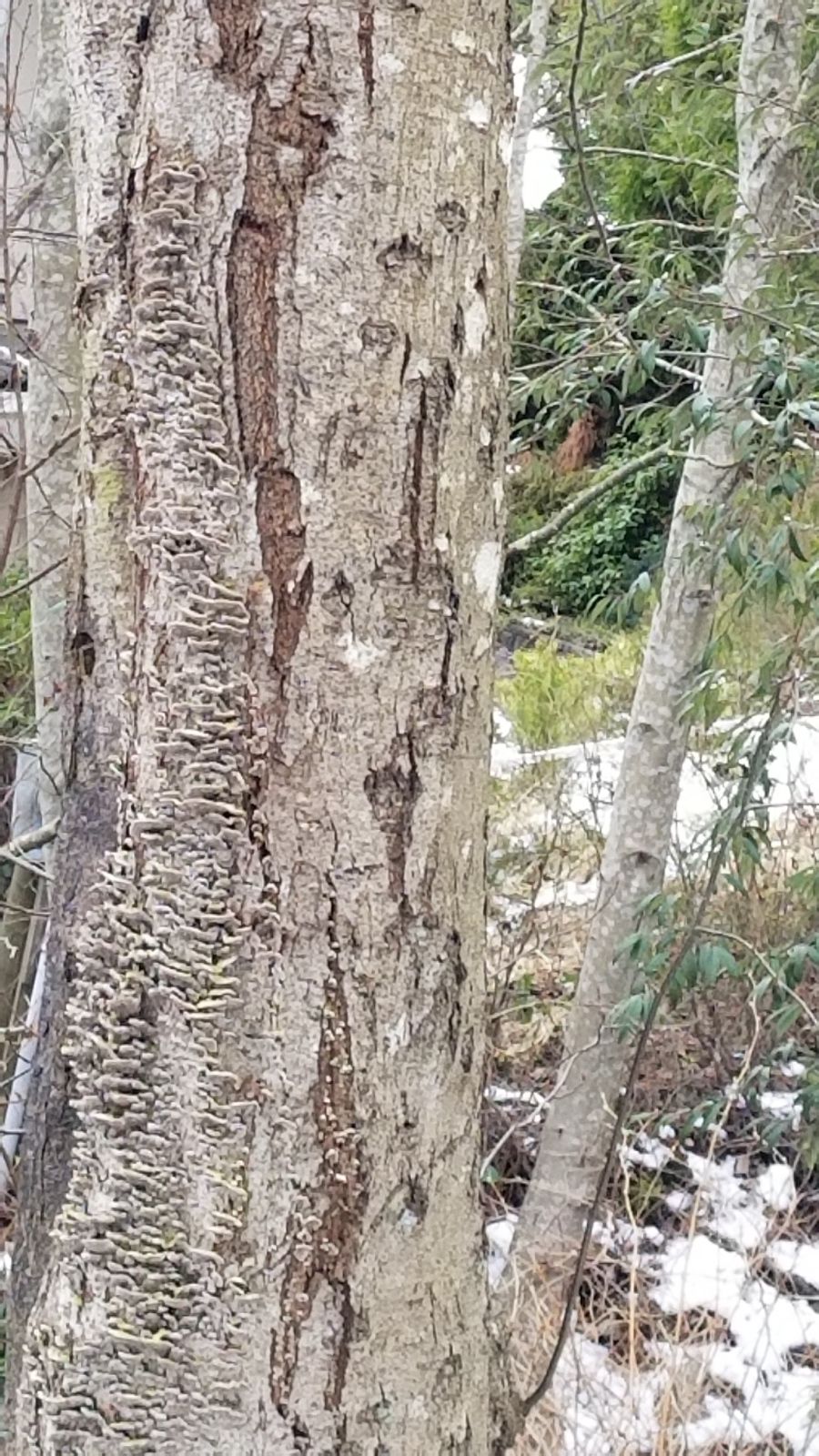
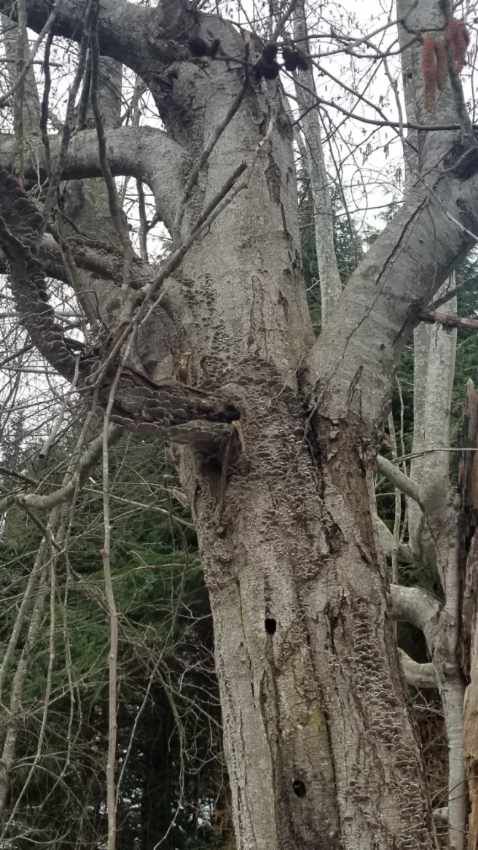
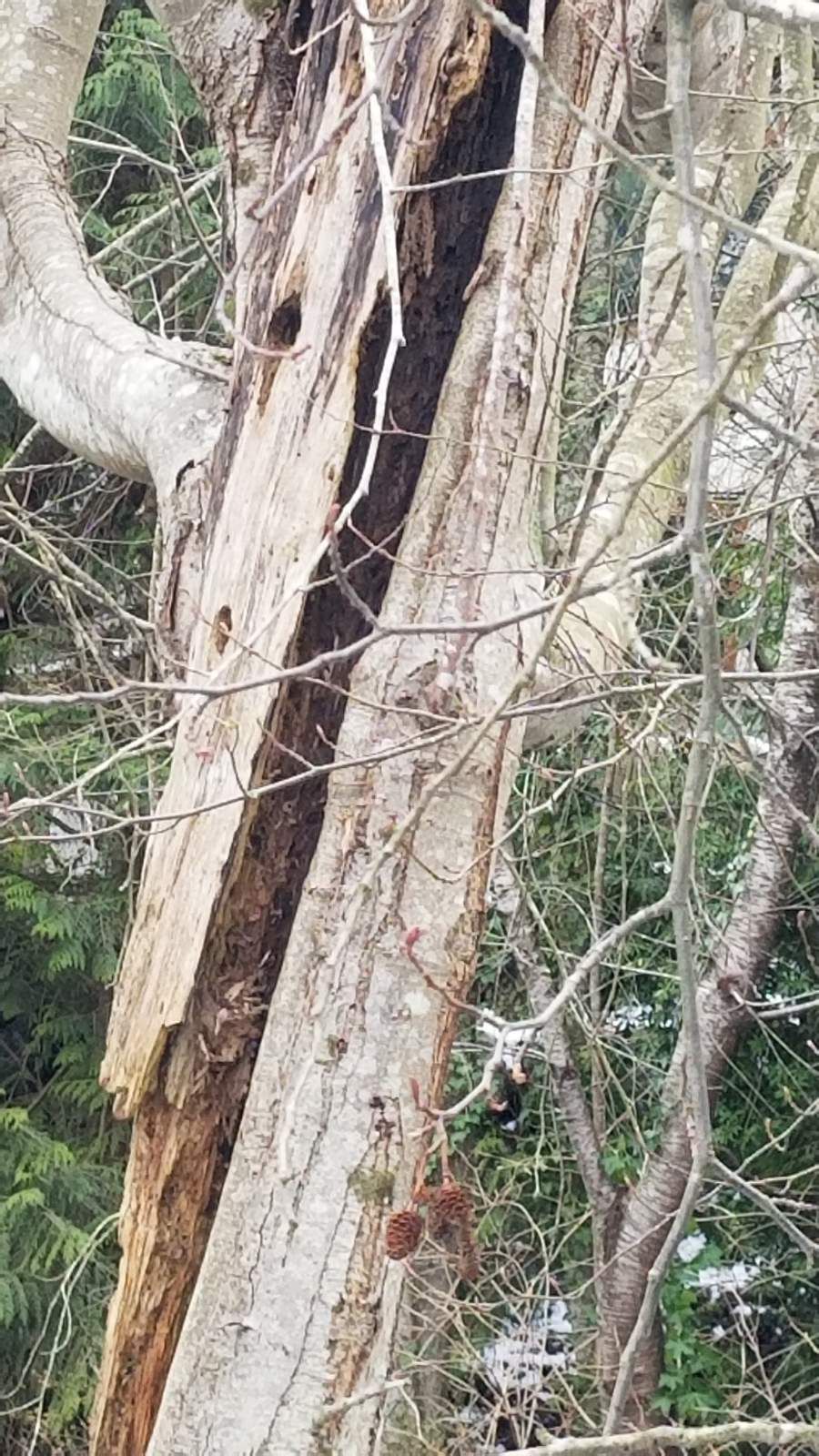
Warning signs include a new or worsening lean, cracking soil or lifting roots near the base, large dead branches lodged in the canopy, fungal conks or shelf mushrooms on the trunk or root flare, splitting branch unions, trunk cavities, major bark loss, and fresh cracks after wind or heavy rain.
Previously topped trees deserve extra attention because topping can create decay points and weak regrowth. A single large dead limb over a roof, driveway, sidewalk, or play area is enough to justify an assessment. Tree removal and climbing work are high-risk activities, and WorkSafeBC publishes safety guidance for arborists working around hazardous, dead, or decaying trees.
---
What is an arborist report, and when is one required in Vancouver?
An arborist report is a written professional assessment that identifies a tree's species, diameter, condition, structural concerns, risk factors, and recommended work. It may include photos, a site plan, tree protection notes, and a removal or retention recommendation.
In Vancouver, a permit is required to remove most private-property trees that are 20 cm or larger in diameter when measured 1.4 m above grade. The City of Vancouver's Protection of Trees By-law requires tree permit applications to include the information, certificates, and fees required under the bylaw. Arborist documentation is especially important where the removal reason is that the tree is dead, dying, hazardous, interfering with utilities, or affected by development or construction.
Arborist reports are also commonly used for development and building permit files, strata decisions, insurance documentation, and neighbour disputes. ISA credentials can be checked through the ISA public directory at treesaregood.org.
[INTERNAL LINK: Arborist Reports Vancouver - What to Expect & When You Need One]
---
How long does it take to get a tree removal permit from the City of Vancouver?
Permit timing depends on the application, the reason for removal, whether development or construction is involved, and whether the City needs more information. A complete application is faster to review than one missing a site plan, required certificates, owner authorization, strata confirmation, or fee payment.
Do not start removal until the permit is issued unless the situation qualifies as an emergency under the bylaw. Vancouver's Protection of Trees By-law allows emergency removal of a hazardous tree caused by natural damage, but the owner or occupier must apply for the required tree permit within 24 hours of removal, or on the next business day if removal happens on a weekend or holiday.
Unauthorized removal can be expensive. Under Vancouver's Protection of Trees By-law No. 9958, offences are punishable on conviction by fines from $500 to $10,000 per offence, and continuing offences can carry daily fines.
---
What happens to the wood, stump, and debris after tree removal?
This varies by company and should be confirmed before work begins. In many professional removals, branches and smaller wood are chipped on-site, then the chips are either hauled away or left for mulch if the homeowner wants them. Larger trunk sections may be cut into rounds for firewood or removed from the property.
Stump grinding may be included or may be quoted separately. If the stump is left in place, it can become a tripping hazard and will decay over time. Grinding below grade makes the area easier to level, replant, or restore, but the exact grinding depth and cleanup scope should be written into the estimate.
Ask whether the quote includes debris removal, stump grinding, backfilling, surface roots, disposal fees, and final cleanup.
---
Can a neighbour legally trim branches that overhang my property in BC?
Generally, yes. People's Law School explains that in BC, if a neighbour owns the tree, you can cut back overhanging branches or roots up to the property line under the self-help rule. You cannot enter the neighbour's property without permission, and you should not cause unnecessary damage to the tree.
If the trunk straddles the property line, it may be a jointly owned boundary tree, and both neighbours should agree before significant work is done. If pruning roots or large limbs could destabilize or seriously harm the tree, get professional advice first. Damaging or killing a protected tree can create bylaw and civil liability problems.
For a hazard tree, document what you see, notify the neighbour in writing, and consider getting an arborist assessment. If the issue is urgent or legal responsibility is unclear, speak with the municipality or a lawyer before taking major action.
---
Does homeowner's insurance in BC cover fallen tree damage?
It depends on the policy and the facts of the loss. Many homeowner policies may cover damage to insured structures caused by a fallen tree, but coverage for removing the tree itself is often limited and may depend on whether the tree damaged a covered structure. A tree that falls in the yard without damaging an insured structure may be treated differently.
Neighbour-tree claims also depend on negligence. People's Law School notes that a neighbour is not automatically responsible when their tree falls and damages your property; responsibility usually depends on whether the damage was intentional or negligent, such as ignoring known disease or damage.
Severe weather losses are a useful reminder of the risk. Insurance Bureau of Canada reported that severe weather caused $3.1 billion in insured damage across Canada in 2022. For a specific tree claim, review your policy wording and ask your broker or insurer how removal, deductible, and liability provisions apply.
---
What should I ask before hiring a tree service company in Vancouver?
Ask these questions before approving tree work:
1. Can I verify your ISA credential or the credential of the arborist supervising the work? ISA credentials can be checked through treesaregood.org. 2. Can you provide a current WorkSafeBC clearance letter or registration details? WorkSafeBC says employers in BC generally require coverage unless exempt, and clearance letters confirm whether a business is registered and paying required premiums. 3. Can you provide a certificate of liability insurance? Confirm the amount of coverage and whether it applies to the specific work being done near buildings, vehicles, fences, or utilities. 4. Does the written quote include stump grinding, debris removal, disposal, and cleanup? Clarify every inclusion and exclusion before work starts. 5. Will you provide a written assessment or arborist report where the work involves risk, permits, strata approval, or insurance documentation? Written recommendations protect both the homeowner and the contractor.
A qualified tree company should be willing to document credentials, insurance, scope, and safety responsibilities before work begins.
[INTERNAL LINK: How to Choose an ISA-Certified Tree Service in Vancouver]
---
Call to Action
Tree care decisions, from routine pruning to storm response to permit applications, carry real consequences when handled poorly. Aesthetic Tree & Hedge Services provides ISA-certified arborist support, WorkSafeBC-registered service, and tree care across Greater Vancouver including Burnaby, North Vancouver, Richmond, and the Tri-Cities. If a tree on your property needs professional assessment or service, call (604) 721-7370 for a no-obligation consultation.
[INTERNAL LINK: Contact Aesthetic Tree - Free Quote for Vancouver Tree Services]
---
FAQPage JSON-LD Schema Block
Append these questions to the existing FAQPage schema if one is already present. Do not create a second separate FAQPage block for the same page.
<script type="application/ld+json"> {"@context":"https://schema.org","@type":"FAQPage","mainEntity":[{"@type":"Question","name":"What is the best time of year to prune trees in Vancouver?","acceptedAnswer":{"@type":"Answer","text":"Late winter, before active spring growth, is often the safest pruning window for many deciduous trees in the Lower Mainland, but pruning timing is species-specific. Some flowering trees are best pruned lightly after bloom. Emergency work, including broken or hanging limbs, should be assessed promptly regardless of season."}},{"@type":"Question","name":"How do I know if a tree on my property is a safety hazard?","acceptedAnswer":{"@type":"Answer","text":"Warning signs include a new or worsening lean, cracking soil or lifting roots near the base, large dead branches lodged in the canopy, fungal conks or shelf mushrooms, splitting branch unions, trunk cavities, major bark loss, and fresh cracks after wind or heavy rain. A large dead limb over a structure, driveway, sidewalk, or play area warrants a professional assessment."}},{"@type":"Question","name":"What is an arborist report, and when is one required in Vancouver?","acceptedAnswer":{"@type":"Answer","text":"An arborist report is a written professional assessment of a tree's species, diameter, condition, structural concerns, risk factors, and recommended work. In Vancouver, tree permit applications must include the information, certificates, and fees required by the Protection of Trees By-law. Arborist documentation is especially important for hazardous, dead, dying, utility-conflicting, development-affected, strata, or insurance-related trees."}},{"@type":"Question","name":"How long does it take to get a tree removal permit from the City of Vancouver?","acceptedAnswer":{"@type":"Answer","text":"Tree removal permit timing depends on the application, removal reason, development involvement, and whether the City needs more information. Do not start removal until the permit is issued unless the situation qualifies as an emergency under the bylaw. Vancouver's bylaw allows emergency removal of a naturally damaged hazardous tree, but the owner or occupier must apply for the required permit within 24 hours, or the next business day after a weekend or holiday."}},{"@type":"Question","name":"What happens to the wood, stump, and debris after tree removal?","acceptedAnswer":{"@type":"Answer","text":"Branches and smaller wood are often chipped on-site, while larger trunk sections may be cut into rounds or removed. Stump grinding may be included or quoted separately. Before work begins, ask whether debris removal, stump grinding, backfilling, surface roots, disposal fees, and final cleanup are included in the written estimate."}},{"@type":"Question","name":"Can a neighbour legally trim branches that overhang my property in BC?","acceptedAnswer":{"@type":"Answer","text":"Generally, BC's self-help rule allows you to cut back a neighbour's overhanging branches or roots up to the property line. You cannot enter the neighbour's property without permission, and you should not cause unnecessary damage to the tree. If the trunk straddles the property line, both neighbours should agree before significant work is done."}},{"@type":"Question","name":"Does homeowner's insurance in BC cover fallen tree damage?","acceptedAnswer":{"@type":"Answer","text":"Coverage depends on the policy and the facts of the loss. Many homeowner policies may cover damage to insured structures caused by a fallen tree, but coverage for removing the tree itself is often limited and may depend on whether the tree damaged a covered structure. Neighbour-tree claims usually depend on negligence, such as ignoring known disease or damage. Review your policy and speak with your broker or insurer."}},{"@type":"Question","name":"What should I ask before hiring a tree service company in Vancouver?","acceptedAnswer":{"@type":"Answer","text":"Ask for verifiable ISA credentials, a current WorkSafeBC clearance letter or registration details, a certificate of liability insurance, a written quote that states whether stump grinding and debris removal are included, and a written assessment or arborist report where the work involves risk, permits, strata approval, or insurance documentation."}}]} </script>
---
Implementation note for SEO Ops Steward: Revised and quality-gate approved on 2026-08-13. Append to the existing FAQ section and merge schema into the existing FAQPage JSON-LD if present. Do not create duplicate FAQPage schema. Log the schema/content change in the aesthetic SEO changelog before implementation. Pull current 28-day GSC baseline for the page immediately before publishing.
Found this helpful? Follow our tree care insights directly on Google.
Make us your preferred source on GoogleBefore You Go
Where are you in your tree care journey?
Our Tree Care Services
ISA-certified arborists serving Greater Vancouver


Explore Our Tree Care Services
From expert pruning to safe tree removal, our ISA-certified arborists are ready to help across Greater Vancouver.
View Services