
TL;DR — Quick Summary
Properly apply mulching in Vancouver the right way. ISA arborists explain correct depth, timing, and the volcano mulching mistake that kills trees. Free estimate: (604) 721-7370.
Properly apply mulching in Vancouver wrong, and you can kill a healthy tree within five years.
That's not an exaggeration. It happens constantly.
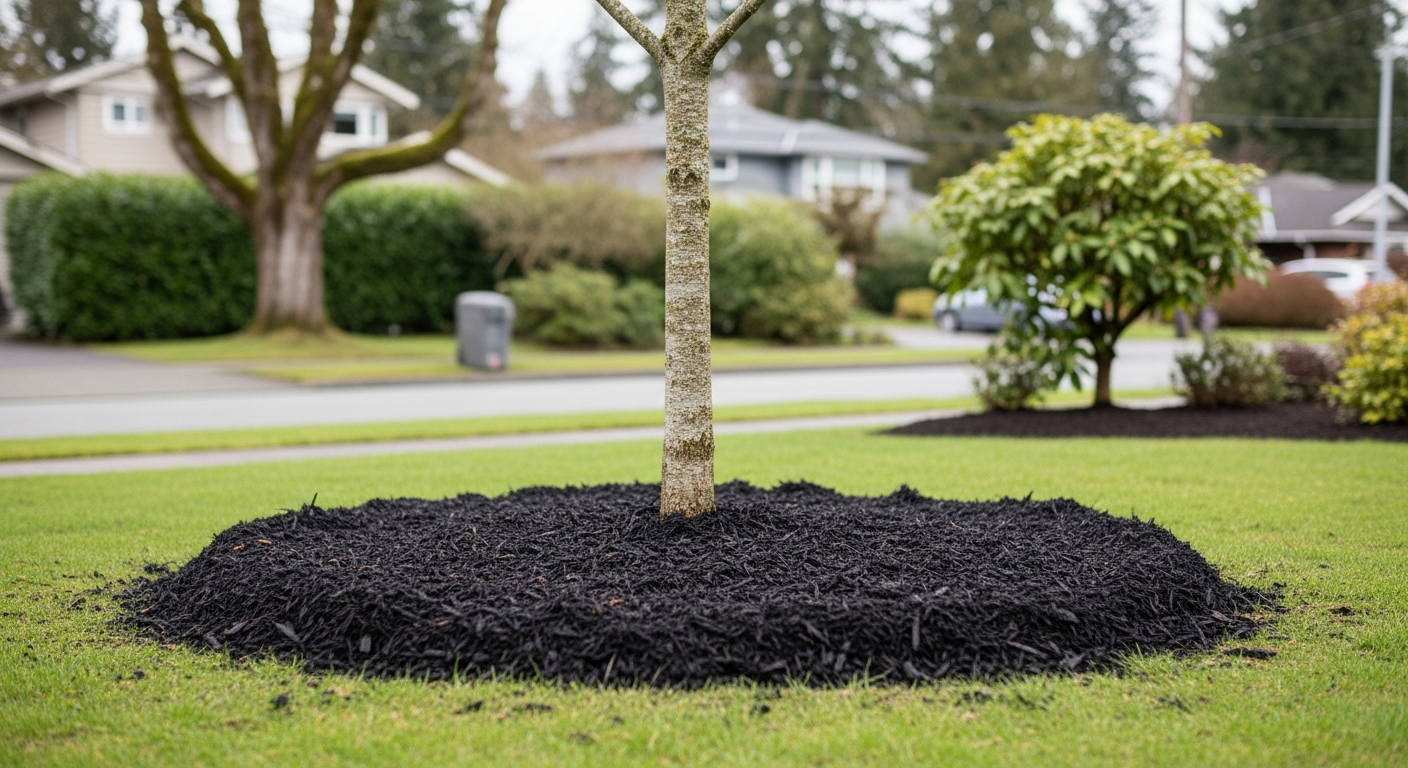
Picture this: A homeowner in Burnaby calls us. She's proud of the cedar tree in her front yard. She mulched it herself last spring — did everything she thought was right. "I piled it up nice and deep," she says. "Made it look like a little mountain."
That's when we knew the tree was in trouble.
That "little mountain" is called volcano mulching. It's one of the most common mistakes Vancouver homeowners make. And it's slowly strangling trees across the Lower Mainland.
The bark stays wet. Fungi move in. Insects follow. Roots grow the wrong direction — up into the mulch instead of down into the soil. Within a few years, a healthy 30-year-old tree starts dying. And the homeowner has no idea why.
We see it every week.
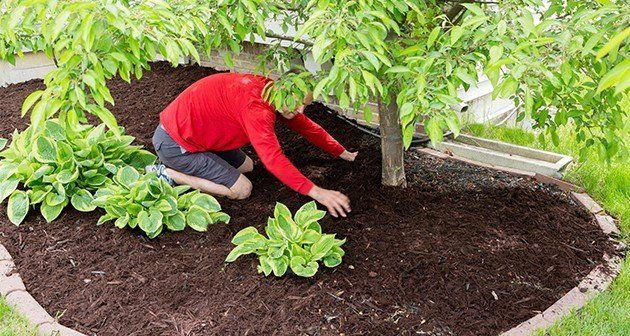
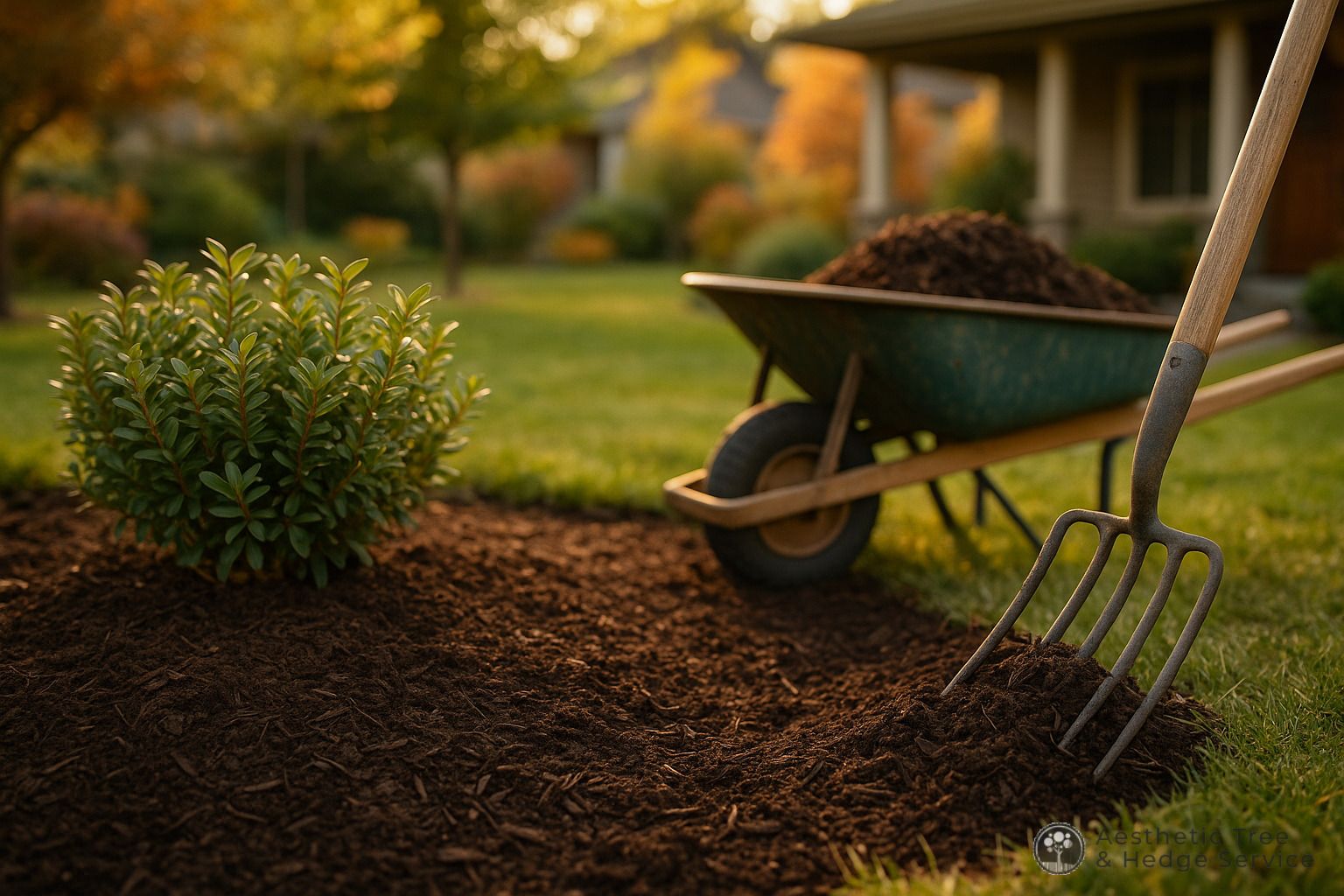
Proper mulching should do the opposite. Done right, a 2–4 inch ring of wood chip mulch is one of the best things you can do for any tree. It keeps moisture in. Keeps weeds out. Moderates soil temperature. Feeds beneficial soil fungi. It costs almost nothing.
The difference between good mulching and bad mulching? About 6 inches of distance from the trunk. And the right depth. That's it.
This guide shows you exactly how ISA-certified arborists properly apply mulching in Vancouver — and what to stop doing immediately.
---
TL;DR
- Apply mulch 2–4 inches deep around trees. Never pile it against the trunk — that's volcano mulching and it kills trees slowly.
- Use arborist wood chip mulch. Avoid dyed bark mulch and rubber mulch around trees.
- Keep mulch 6 inches away from the trunk at all times. Always.
- Mulch in early spring before the soil dries out, or in October before the first frost.
- Vancouver's wet winters create perfect conditions for crown rot when mulch touches bark. Don't let it.
---
Why Does Mulching Matter More in Vancouver Than Almost Anywhere Else?
Vancouver's climate is unusual. We get about 1,153 mm of rainfall per year, according to Environment Canada's 30-year climate normals for Vancouver International Airport. But that rainfall is uneven. Wet winters. Then dry summers — often 2–3 months with almost no rain at all.
That cycle is stressful for trees. Roots saturate all winter. Then they dry out fast in July. The freeze-thaw cycle during shoulder seasons compounds the damage.
Mulch buffers that stress. It insulates soil against temperature swings. It holds moisture through the dry season. It regulates drainage around the root zone in wet months.
The City of Vancouver's Urban Forest Strategy identifies soil compaction and moisture stress as two of the top threats to urban tree health across Metro Vancouver. Heavy foot traffic compresses soil around root zones. Mulch prevents that compaction. It acts as a physical barrier between foot traffic and the fragile soil structure beneath.
Trees in forest conditions have natural leaf litter and duff covering their roots year-round. Urban trees have bare, compacted soil, pavement, and no buffer at all. Proper mulching partly recreates what trees evolved to expect.
In other words: if you have street trees, yard trees, or newly planted trees in Vancouver, mulching isn't optional. It's essential maintenance.
---
What Type of Mulch Should You Actually Use in Vancouver?
Walk into any garden centre and you'll see choices. Dyed bark mulch. Black rubber mulch. Cedar chips. Gravel. Compost blends. It gets confusing fast.
Here's what ISA-certified arborists actually recommend for trees in the Lower Mainland:
**Arborist wood chip mulch is best.** It's coarse. It's varied in size. It breaks down slowly. As it decomposes, it feeds mycorrhizal fungi — the beneficial root networks that help trees absorb nutrients and water.
Dr. Linda Chalker-Scott, Extension Urban Horticulturist at Washington State University, has published extensively on mulch types and tree health. Her peer-reviewed research consistently shows that arborist wood chip mulch outperforms bark mulch, compost, and synthetic alternatives in improving soil biology. Her team found that wood chip mulch increased beneficial soil fungi activity and reduced pest pressure compared to bark mulch in Pacific Northwest conditions.
That matters here. Vancouver's climate is essentially the same as the research sites in Western Washington.
**Avoid dyed bark mulch for trees.** It looks polished in ornamental beds. But it repels water, breaks down poorly, and can introduce pH problems over time. Fine for flower beds. Not appropriate for tree root zones.
**Avoid rubber mulch entirely.** It doesn't decompose. It doesn't feed soil biology. Studies from Penn State's Centre for Green Industry Research have flagged rubber mulch as a potential source of leached zinc and other compounds in high-rainfall environments. Vancouver gets over a meter of rain per year. That's a lot of leaching.
**Compost blends are useful as a supplement only.** A 1-inch layer of compost beneath your wood chips can add nutrients in depleted urban soils. But compost alone compacts too quickly around root zones and doesn't provide the same physical protection as coarser wood chips.
For local sourcing: many tree service companies — including us — have arborist wood chip mulch available at low or no cost after pruning or removal jobs. Several Lower Mainland municipalities also distribute free wood chip mulch seasonally. Check with your local parks department.
---
How Deep Should Mulch Be Around a Tree in Vancouver?
This is where most homeowners go wrong. And where we see the most long-term damage.
**The rule is simple: 2–4 inches deep. No more.**
The ANSI A300 Part 2 standard — the authoritative industry benchmark for arboricultural mulching practices — specifies 2–4 inches as the correct application depth. This standard is used by certified arborists across North America and is the reference point for professional tree care.
Less than 2 inches doesn't buffer temperature or moisture effectively. More than 4 inches creates serious problems.
Beyond 4 inches, mulch starts to:
- Hold excess moisture against the bark
- Limit oxygen exchange in the root zone
- Create habitat for bark-boring insects and rodents
- Encourage girdling roots — roots that circle the trunk instead of spreading outward
In Vancouver specifically, our wet winters make excess moisture a real risk. The combination of deep mulch and 1,100+ mm of annual rainfall is a recipe for *Phytophthora* root rot — a devastating fungal disease we see in Western red cedar, ornamental cherry, and Big-leaf maple across the Lower Mainland every year.
Keep it 2–4 inches. Check with your hand before you add more. Stick your fingers into the existing mulch. If it's already 3 inches, stop. You don't need more.
---
What Is Volcano Mulching and Why Does It Kill Vancouver Trees?
You've seen volcano mulching. You've probably walked past it dozens of times without knowing the name. It's the mulch piled up against the trunk like a cone. Sometimes 6, 8, even 12 inches deep at the base.
It looks tidy. It feels like you're doing something generous for the tree. You're not.
Here's what actually happens when you volcano-mulch a tree:
The bark stays permanently wet. Bark handles rain — but not constant contact with wet material. Over time, the outer bark degrades. The cambium layer — the living tissue just beneath the bark — becomes exposed to moisture and fungi. Crown rot begins. You won't see it happening. The bark looks fine from the outside. The damage is internal.
At the same time, roots start growing upward toward the mulch. Instead of anchoring deep into the soil, they grow laterally in the damp mulch layer. These surface roots are vulnerable to frost, drought, and physical damage. They also start to circle and girdle the trunk — slowly choking off the tree's vascular system.
The International Society of Arboriculture estimates that improper mulching practices, including volcano mulching, contribute to premature tree failure in urban forests across North America at a massive scale. ISA publications have called it "one of the most common and preventable causes of urban tree decline."
We carry out arborist hazard assessments on trees showing crown dieback and root problems throughout Vancouver, Burnaby, and North Vancouver. Volcano mulching shows up in a significant percentage of decline cases — and the damage typically began years before the visible symptoms appeared.
The fix is simple. Pull the mulch away from the trunk. Create a 6-inch gap between the mulch and the bark. Do it today if your trees have mulch against the trunk right now.
---
How Far Out Should Mulch Extend from a Tree?
Most homeowners focus on depth. They forget about width. Both matter.
The root zone of a mature tree extends far beyond the drip line. A 40-foot Douglas fir in Burnaby may have roots spreading 60–80 feet from the trunk. You can't mulch the entire root zone. But you can cover a meaningful portion of it.
**The standard recommendation from ISA-certified arborists:** Extend mulch to the drip line where possible. For most residential trees, that means a mulch ring 4–8 feet in radius from the trunk. At absolute minimum, go 3 feet out.
Research published in *Urban Forestry & Urban Greening* (Volume 47, 2020) found that trees with mulch rings covering more than 25% of the estimated root zone showed significantly better growth rates and lower pest pressure than trees with small mulch rings. The larger the mulch area, the greater the benefit.
For street trees and boulevard trees in Vancouver, pavement limits your options. Do what you can within the available planting strip or tree pit.
For back-yard trees, there's usually no obstacle. Dig up some grass. The tree will benefit far more from a larger mulch ring than from turf competition around its root zone.
---
When Is the Best Time to Apply Mulch in Vancouver?
Timing matters. And Vancouver's climate gives us specific windows.
**Early spring is ideal.** Mid-March to mid-April in the Lower Mainland. Before the soil fully warms up. Before surface roots start their active growth cycle. Before weed seeds germinate. Mulching in this window achieves all three goals at once — and the April rains help mulch settle into place.
**October to mid-November is the second-best window.** Before the first hard frost. Fall mulching insulates roots against the freeze-thaw cycles during shoulder season. It also retains soil moisture heading into the cold months.
**Avoid mulching in summer.** Mulching in July or August, when the soil is already dry and hot, can trap heat and slow moisture penetration when rain finally arrives.
**Avoid mulching right before hard frost.** If you apply mulch too close to a freeze, you can trap cold in the soil and damage shallow roots. Mid-to-late November is generally too late in Metro Vancouver's higher-elevation suburbs.
For most Vancouver homeowners: mid-March to mid-April is your sweet spot. Block it in your calendar now.
---
Should You Remove Old Mulch Before Adding New Mulch?
Yes — if it's already piled up.
Check your existing mulch depth first. Stick a finger or a small stake into the mulch at several points around your tree. If it's still 3–4 inches deep and hasn't compacted significantly, you don't need more. Adding another 2–3 inches on top will push you well past the safe depth threshold.
If old mulch has compressed down to 1 inch or less, top-dress with 1–2 inches of fresh chips.
If old mulch has matted into a solid layer — this happens with fine bark mulch, especially in shaded areas — break it up before adding fresh material. Matted mulch blocks water and oxygen exchange. Use a hand rake to loosen it first.
If you see white fungal threads (mycelium) in older mulch, don't remove them. That's beneficial fungi doing exactly what you want. Leave it alone.
The one thing you do want to clear: any mulch in contact with the trunk bark. Every time. Before adding anything new.
---
What Are the Most Common Mulching Mistakes Vancouver Homeowners Make?
After years of tree work across Vancouver, Burnaby, North Vancouver, Richmond, and Coquitlam, we see the same mistakes repeatedly.
**1. Volcano mulching.** Already covered. Pull it back from the trunk.
**2. Using the wrong mulch type.** Dyed rubber mulch near trees. Pea gravel around shallow-rooted Japanese maples. Fine wood shavings that compact and repel water.
**3. Applying mulch over compacted soil.** Mulch prevents compaction — it doesn't fix it. If your soil is already hardened, loosen it with a broadfork before mulching. Avoid disturbing roots deeper than 2 inches.
**4. Mulching too close to the house.** Mulch contacting your home's foundation holds moisture against wood framing and encourages rot. Keep mulch 6–12 inches from your foundation, siding, and fence posts.
**5. Re-applying full depth every single year.** Most homeowners don't need 3 fresh inches every spring. Check first. Top-dress only if the existing layer has dropped below 2 inches.
**6. Mulching over a stump without addressing the underlying issue.** Mulch won't stop a stump from resprouting. And if the stump is diseased, mulching over it can spread pathogens into your soil. Stump grinding resolves this cleanly — then you can mulch the area safely.
**7. Ignoring slope.** Vancouver properties are often steeply graded. Mulch on steep ground washes downhill, piles up against lower structures, and runs into storm drains. On slopes, use coarser chips and consider burlap or biodegradable erosion control fabric to hold material in place.
---
What Trees in Vancouver Benefit Most from Proper Mulching?
All trees benefit. Some benefit dramatically more than others.
**Newly planted trees** need mulching most urgently. A tree planted within the past 1–3 years has a small, stressed root ball. It has limited ability to find water or buffer temperature extremes. Proper mulching in the first 3–5 years significantly improves survival rates for newly planted urban trees — the ISA recommends it as a mandatory step in any professional planting protocol.
**Japanese maples** are planted throughout Metro Vancouver gardens. They're beautiful and popular — and especially sensitive to soil temperature swings and drought. A 3-inch mulch ring keeps roots cool in August and protected during cold snaps.
**Western red cedar** — BC's provincial tree — is native to the Lower Mainland but struggles with root compaction and summer drought stress in urban settings. Mulching the root zone is one of the most impactful things you can do for a cedar in a residential yard.
**Big-leaf maple**, a native Lower Mainland species, evolved in deep forest duff conditions. Arborist wood chip mulch closely mimics that natural environment. Native trees generally respond exceptionally well to wood chip mulch.
**Fruit trees** in Vancouver back yards — the apple trees, plum trees, and ornamental cherries throughout East Vancouver, Kitsilano, and Burnaby — benefit from wood chip mulch that feeds beneficial soil fungi. Research consistently shows that orchards under wood chip mulch management show better disease resistance and soil water retention than conventionally managed orchards.
**Hedges and cedars along property lines** are among the most common cases we see. Many hedge decline problems — thinning interior, dieback at the bottom, browning tips — have a root zone moisture and compaction component that mulching directly addresses. Pair it with proper hedge trimming and maintenance and most hedges recover.
---
What's the Difference Between Mulching and Composting Around Trees?
People mix these up. They're doing different things.
**Mulch** sits on top of the soil. Its job is physical: retain moisture, insulate soil, suppress weeds, prevent compaction. Wood chip mulch achieves all four.
**Compost** is a soil amendment. It adds organic matter and nutrients. It's worked into the soil — not laid on top.
For trees, mulch is almost always the right tool. Trees aren't vegetable gardens. Their root systems extend far enough that they typically have access to adequate nutrients if the soil biology is healthy. A layer of compost beneath wood chip mulch can help in genuinely depleted urban soils. But compost alone on top of the root zone compacts quickly and doesn't deliver the same physical protection.
Fertilizer granules scattered on top of mulch are largely wasted. They rarely penetrate efficiently to the active root zone under normal watering conditions. If a tree needs nutritional intervention, deep root fertilization — something an ISA arborist administers directly into the root zone — is far more effective.
---
How Does Proper Mulching Connect to Other Tree Care Services?
Mulching rarely stands alone. It fits into a broader tree health picture.
When we complete tree cutting or pruning work, we often chip the resulting branches and offer the material as mulch on-site. This closes the loop — the tree's own biomass feeds its root zone. It's a practice aligned with ANSI A300 standards for integrated tree care.
After stump grinding, the resulting wood grindings can be used as light mulch in ornamental beds. But use caution: fresh stump grindings are high in carbon and low in nitrogen. They can temporarily tie up nitrogen in the soil as they decompose. Let fresh grindings season for 4–6 weeks, or use them in pathways rather than directly against living trees.
If you're planning new tree planting on your property, have your mulch ready before planting day. Apply it the same day you plant. The 24-hour window after a tree is installed is critical — newly planted root balls lose moisture fast. A proper mulch ring from day one makes a real difference in first-year survival.
Our professional mulching services include wood chip sourcing, root zone assessment, correct depth application to ANSI A300 standards, and on-the-spot identification of any existing issues — root rot signs, bark damage, structural concerns that warrant a closer look while we're there.
---
What Do Vancouver's Municipal Tree Bylaws Say About Mulching?
Mulching itself isn't directly regulated under Vancouver's Street Tree Bylaw. But there are intersections worth understanding.
**Protected trees need careful handling.** In the City of Vancouver, trees with a trunk diameter of 20 cm (measured at 1.4 m height) are protected under the Private Property Tree Bylaw. Any work that significantly disturbs the root zone of a protected tree — including deep soil excavation to amend soil before mulching — technically falls under that protection. Routine mulching within existing soil doesn't trigger permit requirements. But if you're doing soil work within the drip line of a large protected tree, check first.
**Tree protection zones during construction** typically require that the full zone be covered with mulch — maintained throughout the entire construction period. The City of Vancouver's Tree Protection Guidelines specify this for any development or significant renovation project. The mulch protects root zones from construction traffic, equipment, and soil contamination.
**After a regulated tree removal**, Vancouver may require replacement planting as a permit condition. When replanting under permit conditions, proper mulching of replacement trees is considered best practice — and in some permit approvals, it's explicitly noted as part of the required aftercare.
If you're unsure whether your property or planned work triggers any permit conditions, our team provides arborist reports in Vancouver that address permit requirements, protected tree status, and root zone concerns directly. We know the City of Vancouver, City of Burnaby, and District of North Vancouver bylaws well. We'll tell you exactly where you stand.
---
How Much Mulch Do You Actually Need for Your Property?
Let's make this practical.
A 4-foot radius mulch ring around a single tree covers about 50 square feet. At 3 inches deep, that's roughly 12.5 cubic feet — about half a cubic yard. For one tree, that's a manageable amount. One or two contractor bags from a local supplier.
For a 6-foot radius ring: about 113 square feet. Roughly 1.1 cubic yards.
For 10 trees with 6-foot radius rings each: approximately 11 cubic yards. That's a bulk delivery — worth calling a supplier directly.
Local suppliers across the Lower Mainland — including operations in Burnaby, Richmond, and Coquitlam — offer bulk wood chip mulch delivery. Prices vary by volume and material type. Many tree service companies, including us, can provide arborist chip mulch at minimal or no cost as a byproduct of active jobs.
Don't over-order. Leftover mulch sitting in a pile outdoors will start thermophilic decomposition. A pile of fresh chips can reach 50°C internally. Apply it only after it's cooled — hot mulch applied directly to a root zone can damage roots.
---
Ready to Get Your Trees Properly Mulched?
You now know more about proper mulching than most Vancouver homeowners ever will.
But knowing the rules is one thing. Applying them correctly — across multiple trees, on a sloped property, around protected or stressed specimens — takes trained eyes. Root zone size, species-specific needs, existing soil conditions, drainage patterns: all of these change what "correct" looks like on your specific property.
Our ISA-certified arborists serve Vancouver, Burnaby, North Vancouver, Coquitlam, and Richmond. We bring expertise, the right material, and a trained eye for what your trees actually need. We apply mulch to ANSI A300 standards — and we'll flag anything concerning while we're on-site.
Call Aesthetic Tree & Hedge Services for a free estimate: **(604) 721-7370**. ISA-certified arborists. WCB registered.
---
FAQ
**Can I use lawn clippings or fallen leaves as mulch around my trees?**
Leaf mulch is excellent around trees — it closely mimics natural forest floor conditions. Apply it loosely, no more than 3 inches deep, and keep it away from the trunk. Grass clippings can work in very thin layers but mat and repel water when applied thickly. Never pile fresh grass clippings deeply against tree trunks — they generate significant heat during decomposition and can damage bark.
**Is it safe to mulch around a tree that already has visible surface roots?**
Yes, but keep depth to 2 inches or less over any exposed surface roots. Surface roots need oxygen exchange — thick mulch on top of them can cause decay. If surface roots are lifting pavement or creating hazards, that's a separate structural issue requiring a professional assessment from a certified arborist.
**How do I know if my mulch is causing crown rot in my tree?**
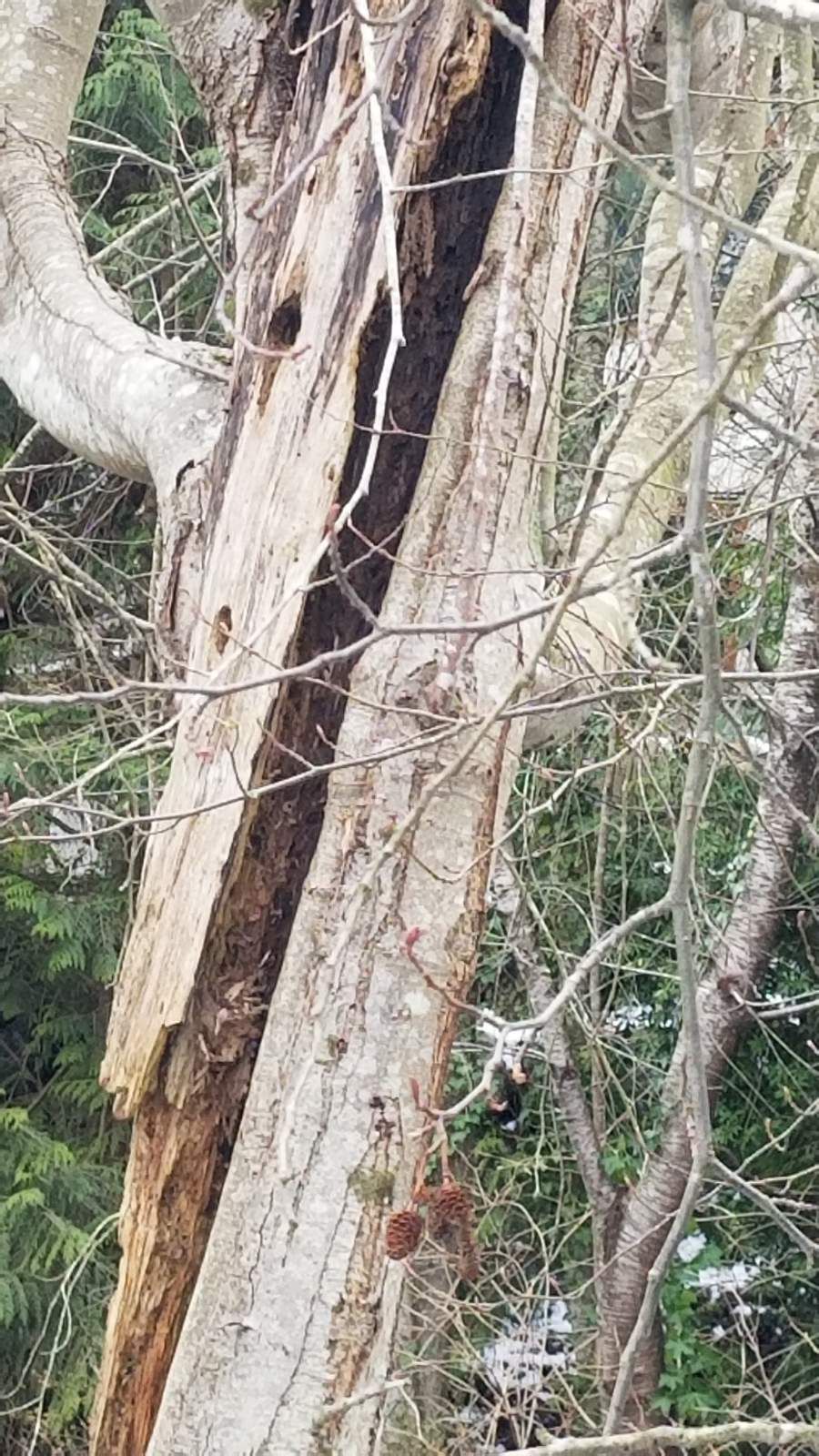
Look for dark, discolored bark at the base of the trunk — especially at or just below where mulch contacts the wood. Soft spots or oozing sap at the root flare are warning signs. A musty smell at ground level is another indicator. If you see any of these, pull the mulch back immediately and call an ISA-certified arborist. Crown rot can be managed if caught early. If it advances into the trunk's vascular system, the prognosis is poor.
**Should I mulch my trees in winter or wait until spring?**
In the Lower Mainland, a fall application in October or early November is better than waiting if your trees are stressed or newly planted. For established, healthy trees, spring is fine. Avoid applying mulch when the ground is frozen — it won't settle properly and can trap frost against roots. In most of Metro Vancouver, the spring window opens around mid-March.
**Does mulching help with tree disease prevention, or only with water and soil?**
Both. Mulch suppresses certain soil-borne pathogens by improving drainage and soil biology — conditions where beneficial microbes outcompete harmful ones. Wood chip mulch specifically increases mycorrhizal fungal activity, which strengthens tree immune response. However, mulch is not a cure for existing infection. A tree already affected by Phytophthora root rot or Armillaria (honey fungus) needs professional diagnosis and treatment — proper mulching is part of the recovery environment, not the solution alone.
Found this helpful? Follow our tree care insights directly on Google.
Make us your preferred source on GoogleBefore You Go
Where are you in your tree care journey?
Our Tree Care Services
ISA-certified arborists serving Greater Vancouver


Explore Our Tree Care Services
From expert pruning to safe tree removal, our ISA-certified arborists are ready to help across Greater Vancouver.
View Services