
TL;DR — Quick Summary
Understanding lichens tree growth threat Vancouver — learn when lichen signals tree decline vs. clean air. ISA-certified arborists explain. Call (604) 721-7370.
TL;DR
- Lichens are not parasites. They pull nutrients from air and rain — not from your tree.
- Heavy lichen coverage is a symptom of tree stress. It's not a cause.
- Vancouver's 1,153 mm of annual rainfall (Environment Canada, 30-year normals) creates near-perfect conditions for lichen growth on urban trees.
- An ISA-certified arborist assesses the underlying problem — not just the lichen.
- Removing lichen without fixing the root cause won't save a struggling tree.
Understanding lichens as a tree growth threat in Vancouver starts with one hard fact: most homeowners get this backwards.
They see grey-green crust spreading across their maple. They assume disease. They call for removal.
That response is wrong.
Lichens don't kill trees. But they do tell you when a tree is already in trouble. Here's what the science shows — and what ISA-certified arborists observe across thousands of assessments in the Lower Mainland.
What Are the Lichens Growing on Vancouver Trees?
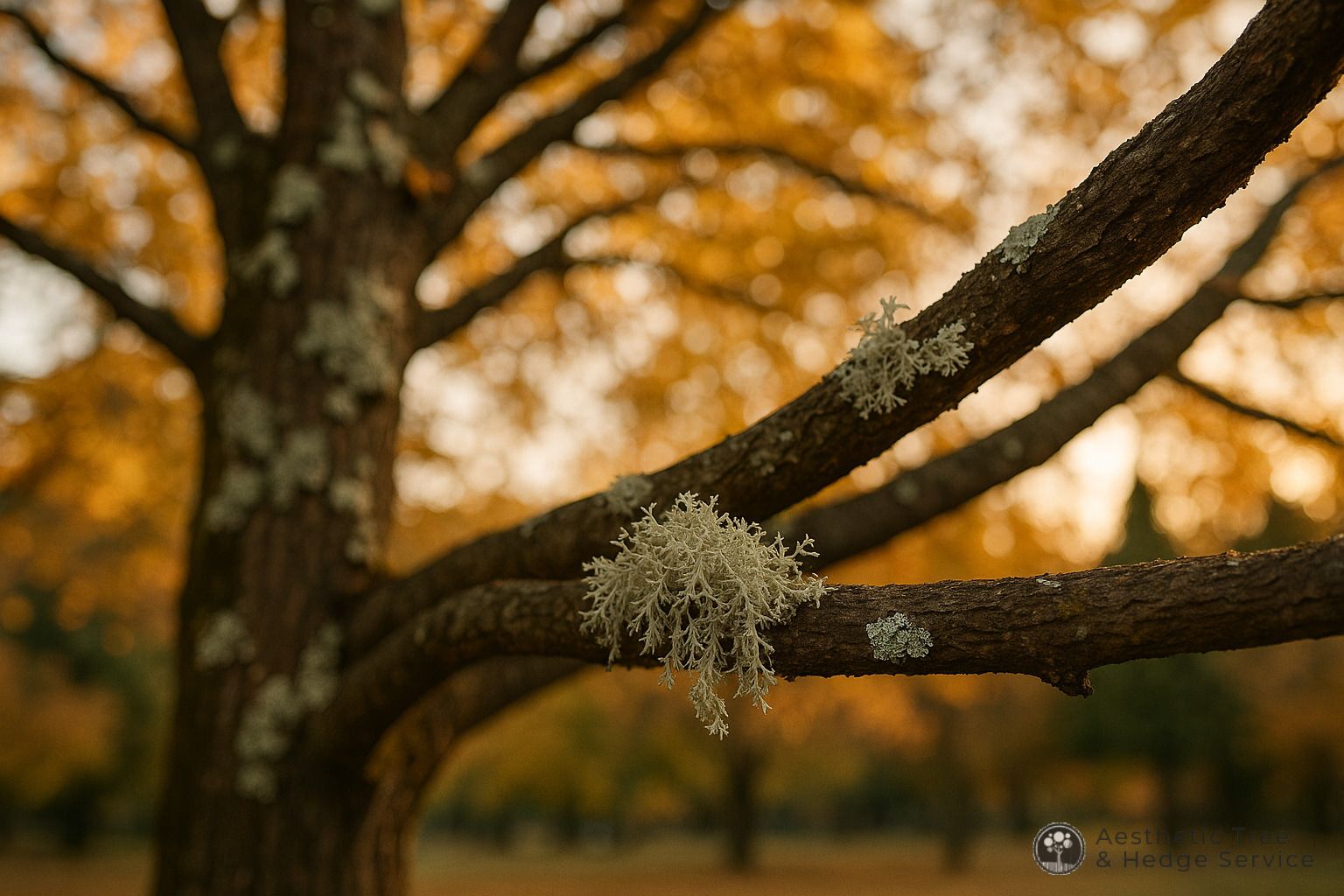
Lichens are composite organisms. A fungus forms the structure. An alga or cyanobacterium lives inside it. Together they survive where almost nothing else can — on bare rock, concrete, and bark alike.
They are not parasites. They take nothing from the tree. Their water comes from rain. Their nutrients come from airborne dust and particles.
Natural Resources Canada documents over 2,000 lichen species native to British Columbia. That's one of the highest concentrations in Canada. The Pacific Northwest's wet, mild climate directly supports this diversity.
Vancouver averages 1,153 mm of precipitation per year, according to Environment Canada's 30-year climate normals (1991–2020). That persistent moisture keeps bark surfaces wet for extended periods — exactly what lichen colonies need to establish and spread.
This explains why lichen appears on nearly every mature tree in the Lower Mainland. It's not a disease outbreak. It's geography.
Are Lichens Actually Harmful to Trees? What the Evidence Shows
Here's what arboricultural research consistently finds: lichens cause minimal direct harm to healthy trees.
They don't penetrate bark. They don't extract sap. Their attachment structures — called holdfasts — anchor to the outer bark surface without reaching living tissue.
The International Society of Arboriculture (ISA) classifies lichens as epiphytic organisms. They live on tree surfaces without feeding on them. ISA Best Management Practices for tree assessment don't list lichen removal as a standard tree care procedure.
That said, specific conditions make lichen growth worth watching closely.
**Dense growth on small branches** can restrict light to underlying bark tissue. On ornamental trees like Japanese maples or flowering cherries, heavy encrustation on fine branch tips warrants monitoring season to season.
**Growth over cracks or wounds** is a different concern. Lichens don't cause wounds. But once bark breaks, lichen can colonize the surface and obscure damage from insects, fungal pathogens, or mechanical injury.
**Accumulation on scaffold branches** adds marginal weight. This rarely matters on large trees. On smaller ornamentals with narrow branch angles, it adds up.
The real issue with lichen isn't the lichen itself. It's what draws lichen to certain trees faster than others.
Why Does Vancouver Have So Much Lichen on Its Trees?
The answer comes down to three conditions: moisture, diffuse light, and clean air.
Vancouver delivers all three consistently.
Environment Canada records show Metro Vancouver averages over 170 rain days per year. Prolonged wet periods let lichen colonies establish on bark before drying cycles can suppress them.
Light matters too. Lichens need diffuse sunlight for their photosynthetic partner. Trees with thinning canopies allow more light to reach the bark surface. More light means faster lichen growth — which is why rapid lichen increase often signals canopy decline, not the reverse.
Air quality plays a role that surprises most homeowners. Lichens are highly sensitive to sulfur dioxide pollution. They don't survive in heavily polluted air. The BC Ministry of Environment uses lichen species diversity as a biomonitoring indicator in forest management and air quality assessment. Areas with industrial pollution show sharp drops in lichen diversity.
Vancouver's relatively clean Pacific air supports a wide range of lichen species. Environment and Climate Change Canada's National Air Pollution Surveillance Network consistently rates Metro Vancouver's air quality among the best in Canada.
The City of Vancouver's Urban Forest Strategy (2018–2037) identifies approximately 150,000 street trees in the city. Many are mature specimens, 40 to 80 years old. These older trees carry rougher bark surfaces and larger total substrate areas. They accumulate more lichen than younger trees by surface area alone.
When Is Lichen Actually a Warning Sign for Your Vancouver Trees?
This is the question that matters. And it's where ISA-certified arborist training produces different answers than guesswork.
Lichen growth accelerates when a tree's canopy thins. A thinning canopy lets more light reach the bark. More light means faster lichen establishment.
Heavy lichen growth is a **lagging indicator** of tree stress. The tree was in trouble first. The lichen followed.
These combinations are warning signs worth investigating:
**Sudden increase in lichen coverage** — If a tree that was relatively clear shows widespread lichen within one to two seasons, the canopy may be failing. Crown thinning from pest pressure, disease, or root damage lets in more light than bark can naturally shed.
**Lichen combined with epicormic sprouts** — Water sprouts at the trunk base or along scaffold branches signal a stressed tree. Combined with heavy lichen, this pattern warrants a professional arborist report before the condition advances further.
**Lichen at the root flare** — Lichen on the lower trunk near the root flare can indicate chronic moisture accumulation or bark damage. This zone is already the most vulnerable part of any tree.
**Lichen covering previously clean bark** — Healthy trees shed outer bark layers naturally. This shedding keeps lichen in check. Trees that stop shedding — often a sign of slow growth or physiological stress — accumulate lichen at higher rates.
**Lichen growing into cracks or cavities** — Lichen doesn't create cracks. But it can colonize existing openings and delay the moment you notice damage that would otherwise prompt immediate action.
Which Vancouver Tree Species Are Most Affected by Lichen Growth?
Not all trees respond the same way. Vancouver's urban forest includes dozens of species with different bark characteristics and moisture tolerance.
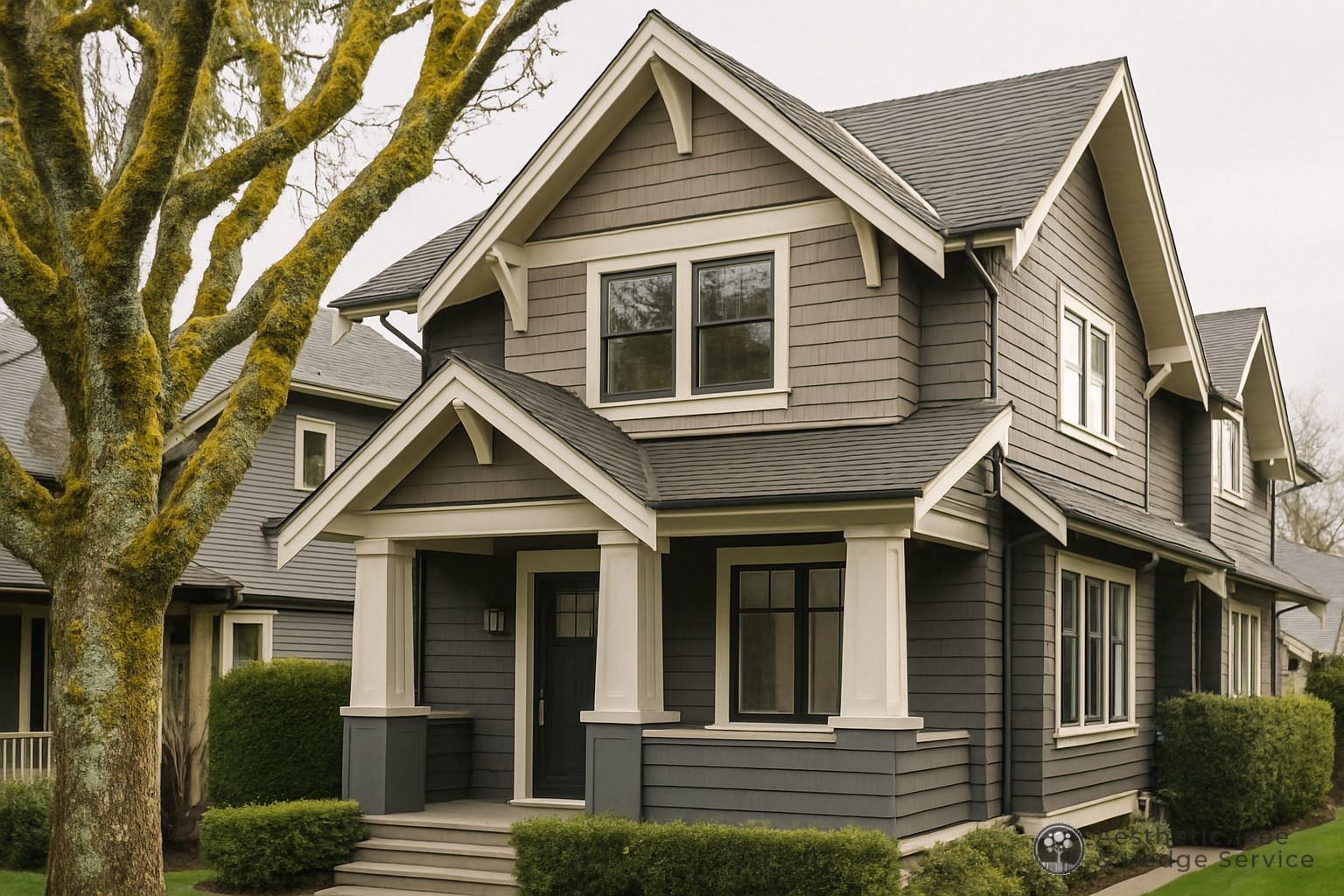
**Big-leaf maple (*Acer macrophyllum*)** is the most lichen-covered urban tree in the Lower Mainland. Its deeply ridged, moisture-retaining bark holds lichen colonies well. Mature specimens routinely show 40 to 60% bark surface coverage with lichen. On an otherwise healthy tree, this is typically benign.
**Western red cedar (*Thuja plicata*)** accumulates lichen readily in shaded conditions. Cedar's fibrous, shredded bark is an ideal attachment surface. Lichen on cedar is rarely a concern unless the tree shows other stress indicators alongside it.
**Douglas fir (*Pseudotsuga menziesii*)** in urban settings is more sensitive. Older Douglas firs with bark scale loss and lichen intrusion into bark plates can have bark beetle activity present beneath. The lichen doesn't cause the pest damage. But it can mask it until the infestation has advanced significantly.
**Ornamental cherries and Japanese maples** accumulate lichen on fine branches. This is primarily cosmetic on healthy specimens. On declining trees, lichen growth accelerates noticeably within two to three seasons.
**Norway maple** — present in significant numbers across Vancouver's urban forest — develops lichen on scaffold branches exposed by canopy dieback from Verticillium wilt. The lichen here is a visible symptom of the underlying fungal disease, not the cause of it.
What Do ISA-Certified Arborists Actually Do About Lichens?
The practical answer: they treat the underlying problem, not the lichen.
ISA Best Management Practices and ANSI A300 standards don't list lichen removal as a standalone tree care procedure. There's no evidence-based protocol showing that removing lichen alone produces measurable improvement in tree health.
What certified arborists DO is address why lichen is accelerating.
If a tree's canopy thinned because of poor soil conditions, the focus shifts to soil aeration, proper root zone mulching, and relieving root compaction. These fix the reason the canopy declined — not the visible lichen that followed.
If lichen accumulated over a pruning wound, the arborist inspects that wound for decay or pest entry. The wound is the problem. The lichen is the marker.
Where heavy lichen on scaffold branches combines with structural concerns, tree cabling may reduce load on compromised limbs while the tree's overall condition stabilizes.
Where a tree has progressed past recovery — lichen combined with crown dieback above 30%, fungal conks, or root failure — the decision shifts to hazard management. In Vancouver's dense urban settings, constrained access between structures and utility lines often means certified jobs require crane tree removal.
In our experience assessing trees across Vancouver, Burnaby, North Vancouver, Richmond, and Coquitlam: trees with moderate lichen and no other stress indicators rarely need intervention. Trees with lichen plus crown thinning, epicormic growth, and soil problems need a full evaluation without delay.
Can You Remove Lichen From a Tree Yourself?
You can scrape lichen from bark without directly injuring the tree. Lichen has no roots in bark tissue. Its holdfast structure attaches to outer bark surfaces — not the living phloem or cambium below.
However, aggressive scraping can:
- Strip protective outer bark layers
- Create small wounds that invite pest and fungal entry
- Cause more direct harm than the lichen itself
Chemical lichen treatment is not recommended by the ISA for urban trees. Copper sulfate sprays, sometimes marketed for lichen suppression, leach into soil and can damage fine root systems. In Metro Vancouver, ANSI A300-compliant arborists avoid these products near tree root zones.
If you're concerned about lichen on ornamental trees, a professional assessment comes before any action. Knowing whether the tree is healthy or declining determines whether any intervention is necessary at all.
When Does Lichen Lead to Tree Removal in Vancouver?
Lichen alone never justifies professional tree removal. That's a firm position based on evidence, not assumption.
But lichen combined with multiple failure indicators changes the assessment significantly. Here's what ISA arborists look for:
**Crown dieback above 30%** — When more than 30% of the crown shows dead or declining wood, tree viability is seriously compromised. Heavy lichen on remaining live branches is a compounding indicator.
**Bark separation at the root flare** — If the root flare shows bark lifting from the cambium with sapwood exposed beneath, and lichen is colonizing that gap, internal decay is possible. A resistograph test or sonic tomography evaluation determines how far the decay has progressed.
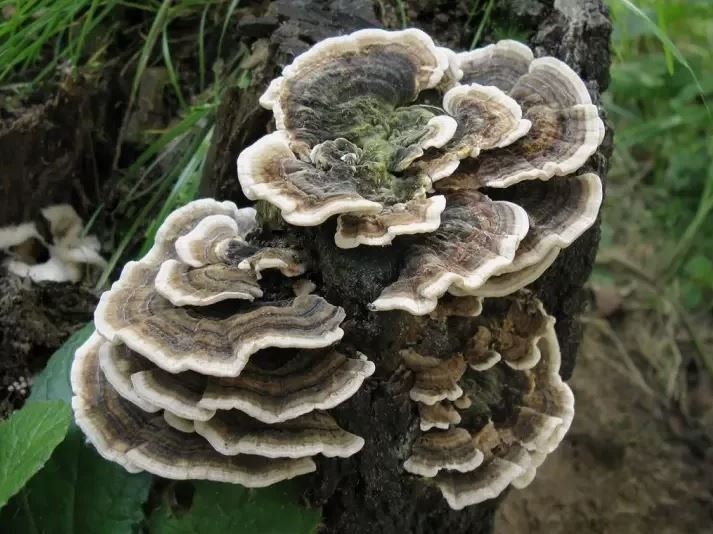
**Fungal conks combined with lichen** — Shelf mushrooms at the trunk base or on scaffold branches indicate active internal decay. Lichen on the same tree is secondary in severity. But the combination signals elevated risk of structural failure in wind or ice load conditions.
**Structural root damage from site changes** — Utility trenching, hardscape poured over root zones, or grade changes can kill a significant portion of fine roots within two to three growing seasons. The resulting crown thinning accelerates lichen growth while the tree may already be non-recoverable.
For trees near structures, driveways, or overhead utilities, this combination of indicators warrants a formal hazard assessment before the next windstorm season.
How to Assess Lichen on Your Property: A Five-Step Protocol
**Step 1: Estimate coverage.** Is lichen covering less than 20% of visible trunk and branches? More than 50%? Coverage percentage matters more than simple presence.
**Step 2: Check the canopy.** A full, dense crown with moderate lichen is rarely a concern. Dead branch tips, sparse foliage, or patchy dieback combined with heavy lichen is a different picture entirely.
**Step 3: Examine the root zone.** Soil compaction, hardscape paved over roots, or grade changes in the last five years are the real stressors. Lichen growth is often a downstream indicator of root zone damage that happened seasons earlier.
**Step 4: Inspect the bark.** Normal bark shedding in strips is healthy for birch, cedar, and cherry trees. Unusual bark loss, soft spots, or bark lifting from the trunk without a clear cause warrants a closer look.
**Step 5: Look for decay indicators.** Mushroom conks, carpenter ant trails, woodpecker feeding patterns, or sawdust at the trunk base all point to internal problems. Lichen covering the same tree means the damage may have been developing longer than you realized.
If steps 2 through 5 raise concerns, book a professional assessment. If the tree is otherwise healthy, your lichen is cosmetic.
What Lichen Tells You About Vancouver's Air Quality
Here's a fact that surprises most homeowners: lichen abundance on Vancouver trees partly reflects how clean the air is.
The BC Ministry of Environment uses lichen diversity as a biomonitoring indicator in forest and air quality management. Lichen species diversity drops sharply in areas with elevated sulfur dioxide and particulate pollution. Where air quality degrades, lichen disappears.
Metro Vancouver consistently maintains air quality among the best in Canada. Environment and Climate Change Canada's National Air Pollution Surveillance Network data shows Vancouver's air quality index rating as "Good" for a substantial majority of the year.
So the extensive lichen on your cedar or big-leaf maple is partly evidence of clean Pacific air reaching your property. The ISA uses this context in urban tree assessments. High lichen diversity on a site is a baseline indicator of good growing conditions — not a warning sign in isolation.
The pattern worth noting is the reverse: a tree that shows no lichen at all in an area where lichen is abundant. That can indicate bark damage, chemical soil contamination, or disease affecting bark viability in a way that prevents lichen establishment where it would otherwise thrive.
FAQ
**Q: Should I remove lichen from my Vancouver trees?**
A: In most cases, no. Lichen causes no direct harm to healthy trees. Removing it aggressively can damage protective bark and create entry points for pests and disease. If lichen is expanding rapidly, the real issue is usually underlying tree stress. An arborist should assess the cause before any removal is attempted.
**Q: Does lichen cause tree disease?**
A: No. Lichen is not a pathogen. It's a composite of fungal and algal partners that grows on bark surfaces without extracting nutrients from the tree. It doesn't cause disease. However, it can grow over existing bark wounds or areas of decay — masking problems that would otherwise be visible earlier and trigger faster action.
**Q: Why do Vancouver trees have more lichen than trees in other Canadian cities?**
A: Two reasons. Vancouver's 1,153 mm of annual precipitation keeps bark moist for most of the year — ideal for lichen establishment. And Vancouver's relatively clean Pacific air supports a wider range of lichen species than cities with significant industrial pollution. Lichen thrives where sulfur dioxide is low. Vancouver qualifies on both counts.
**Q: Can lichen actually kill a tree?**
A: No reliable evidence supports the claim that lichen directly kills trees. However, heavy lichen coverage is a consistent indicator of tree stress. When a tree's canopy thins, more light reaches the bark and lichen spreads faster. The lichen growth isn't the cause of decline — it's a signal that something else is already wrong and needs attention.
**Q: When should I call an ISA-certified arborist about lichen on my trees?**
A: Call when lichen coverage increases rapidly over one to two seasons, when lichen appears alongside crown dieback or dead branch tips, when lichen is growing into visible cracks or bark wounds, or when you see any decay indicators — mushroom conks, soft bark, or sawdust at the base. An ISA-certified arborist will assess the whole picture, not just the surface growth.
Call Aesthetic Tree & Hedge Services for a Free Assessment
You now know what lichen means — and what it doesn't.
It's not a disease. It's not a parasite. But heavy lichen growth on a stressed tree is a reliable signal that something deeper needs attention.
If you're seeing accelerating lichen on trees in Vancouver, Burnaby, North Vancouver, Richmond, or Coquitlam — book an assessment with Aesthetic Tree & Hedge Services.
Our ISA-certified arborists follow ANSI A300 standards on every assessment. We're WCB registered. We give you a straight answer about whether your tree needs intervention, monitoring, or nothing at all.
**Call Aesthetic Tree & Hedge Services for a free estimate — (604) 721-7370.**
Found this helpful? Follow our tree care insights directly on Google.
Make us your preferred source on GoogleBefore You Go
Where are you in your tree care journey?
Our Tree Care Services
ISA-certified arborists serving Greater Vancouver


Explore Our Tree Care Services
From expert pruning to safe tree removal, our ISA-certified arborists are ready to help across Greater Vancouver.
View Services