
TL;DR — Quick Summary
How to protect trees in winter in Vancouver — ISA-certified arborist tips on mulching, wrapping, freeze-thaw damage, and storm prep. Expert guide from Aesthetic Tree.
Knowing how to protect trees in winter means knowing what's actually killing them — and in Vancouver, the answer isn't what most homeowners expect.
This city doesn't get prairie winters. The threat isn't -30°C cold killing dormant tissue. It's the cycle: rain, then a freeze, then thaw, then rain again. Saturated soil. Bark that splits from temperature swings. Wind loads that push already-stressed trees past their structural limits.
The ISA-certified arborists at Aesthetic Tree & Hedge Services have watched this pattern repeat across Vancouver, Burnaby, North Vancouver, Richmond, and Coquitlam. A tree that looks healthy in October. A January ice event. A February call that didn't need to happen.
This guide gives you what BC arborists actually do before, during, and after winter. Follow it. Your trees will be here in spring.
TL;DR
- Vancouver winters are wet and cyclical — not just cold. Freeze-thaw cycles split bark; saturated soils loosen root plates. Prep for those threats specifically.
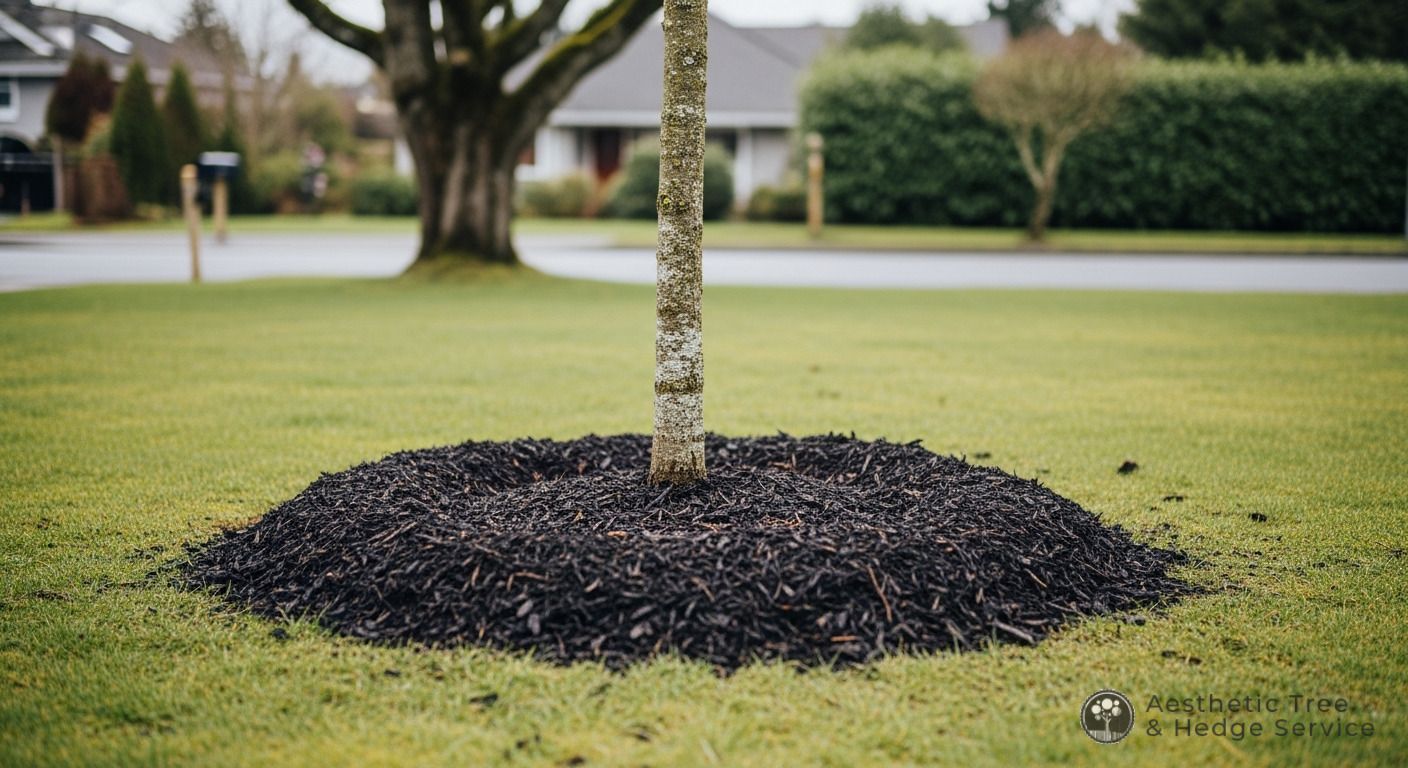
- Apply 2–4 inches of organic mulch to the root zone before November. Keep a 15-cm gap from the trunk. This single step protects feeder roots better than anything else you'll do.
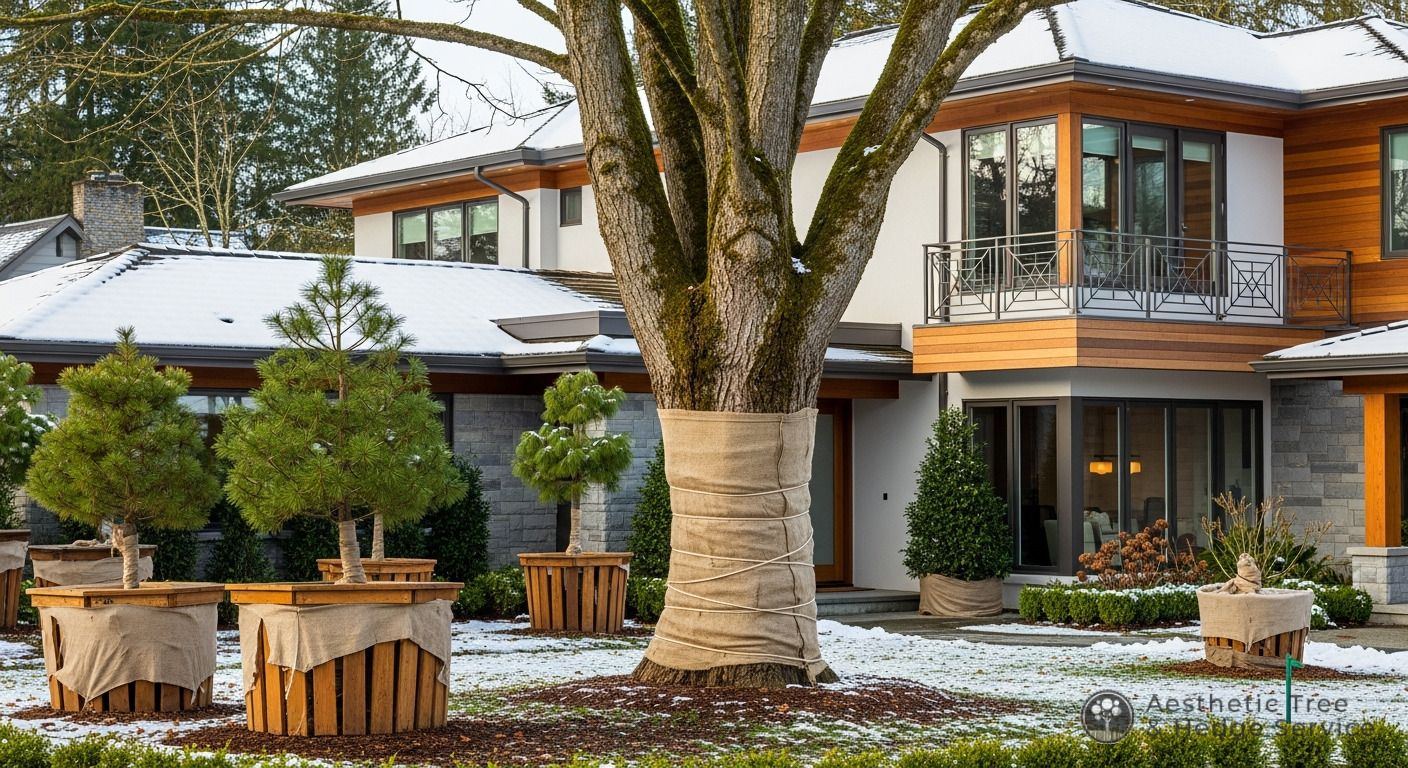
- Wrap thin-barked species — Japanese maple, ornamental cherry, Pacific dogwood — before the first frost. Use white tree wrap, starting at the trunk base.
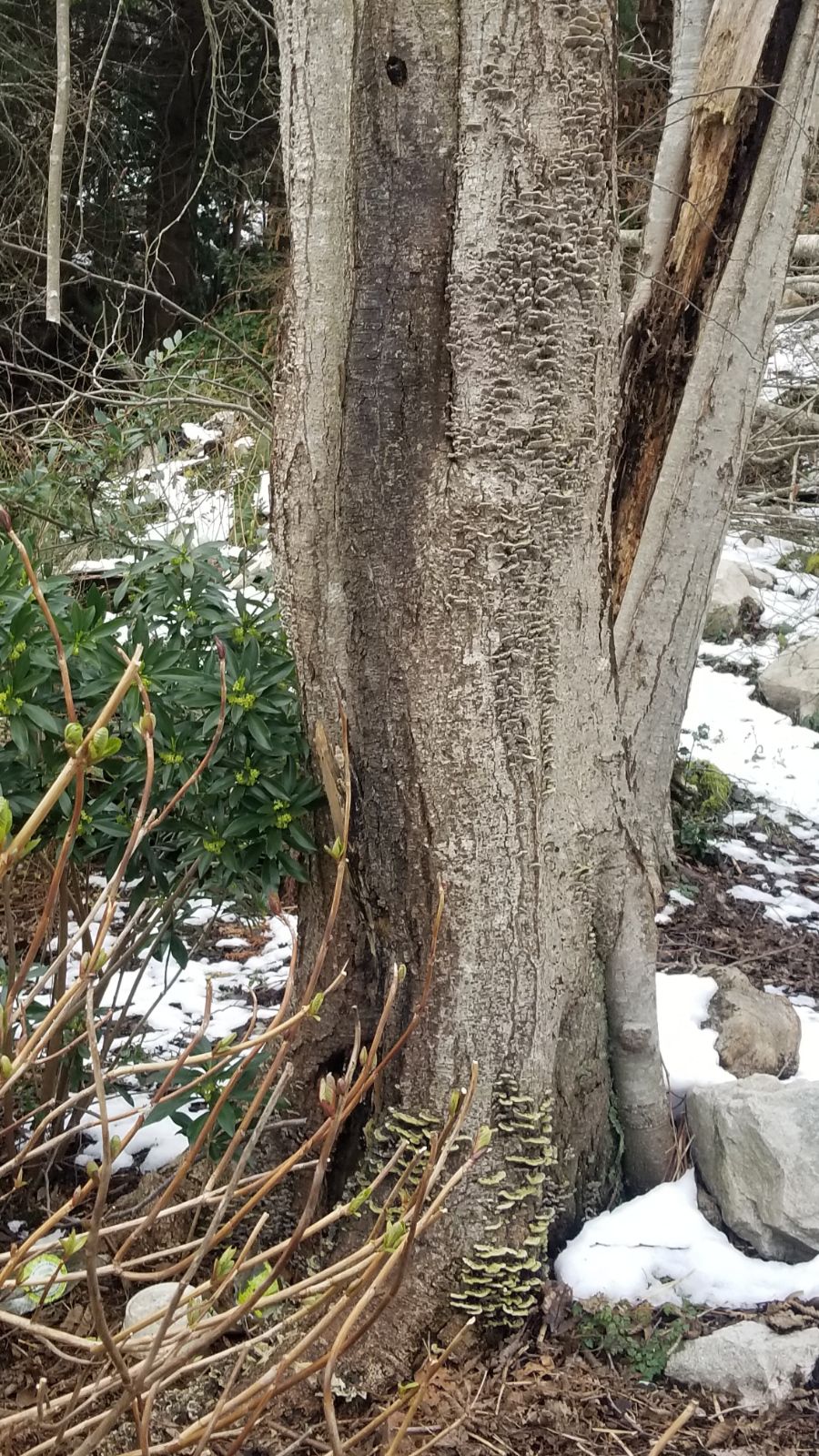
- Book a professional arborist assessment if any tree near your home shows cracks at branch unions, mid-crown dieback, or fungal conks at the root flare.
- If a branch fails during a storm, don't try to dislodge it. Call for emergency tree service immediately — hung branches fail unpredictably.
What Makes Vancouver Winters Uniquely Dangerous for Trees?
Most guides assume cold is the primary enemy. In Vancouver, it isn't.
Metro Vancouver receives approximately 1,153 mm of precipitation annually, according to Environment and Climate Change Canada's 2021 Climate Normals. The bulk of that rainfall — roughly 70% — falls between October and March. Trees spend six months saturated.
Here's why saturation matters structurally: root plates are wide, shallow anchor root networks that sit in the top 30–60 cm of soil. In waterlogged ground, that soil loses structural integrity. When a Pacific storm pushes sustained winds past 80 km/h, the roots can't hold. The tree hinges at the base. It fails.
Then comes the freeze-thaw problem. Metro Vancouver temperatures oscillate around 0°C from December through February — not a sustained deep freeze, but a relentless back-and-forth. A frost at -3°C expands the water trapped inside bark tissue. When temperatures bounce above freezing the following afternoon — often the same day — that tissue contracts. Repeat this cycle enough times and the bark splits along vertical lines. The ISA calls this frost cracking. It opens the cambium — the living growth layer just beneath the bark — to fungal and bacterial entry.
The December 2006 Stanley Park windstorm illustrates the risk at scale. According to the Vancouver Park Board, that single storm event damaged over 3,000 trees across the park. Many were old-growth Douglas firs that had stood for over 200 years. Saturated ground and sustained wind combined to topple trees that generations of Vancouverites assumed were permanent.
You can't control the weather. You can control whether your trees are prepared for it.
How Does Freeze-Thaw Damage Actually Kill a Tree?
Most homeowners look for visible ice damage and see none. They miss what's happening inside the tissue.
Freeze-thaw damage works on two fronts simultaneously.
**Above ground:** Bark splits along vertical cracks — the ISA calls these frost cracks or radial shakes. These aren't cosmetic. They expose the cambium to pathogen entry. Fungi move in. Decay begins. The damage is structural from day one.
**Below ground:** Frost heave lifts and fractures feeder roots. These fine, hair-like roots occupy the top 30 cm of soil. They're responsible for water and nutrient uptake. A single significant frost-heave event can destroy a large percentage of a young tree's feeder root network.
Research published in *Urban Forestry & Urban Greening* (Mullaney et al., 2015) found that urban trees subject to repeated soil temperature fluctuation showed measurably reduced fine root biomass compared to trees growing in stable soil conditions. Fewer feeder roots mean reduced water absorption through the entire growing season that follows. Trees enter spring already depleted.
The solution addresses both failure modes. Mulch protects below ground. Wrapping protects above. Neither step is complicated. Both must happen before the cold arrives — not during it.
What Is the Best Way to Mulch Trees Before Winter?
Mulching is the single most effective winter protection step available to a homeowner. Nothing else comes close.
A proper mulch ring does three things at once:
- Insulates the root zone against freeze-thaw temperature swings
- Retains soil moisture through dry cold spells so feeder roots don't desiccate
- Prevents frost heave by buffering the sharp temperature changes that cause soil to expand and contract
According to the ISA's Best Management Practices for Mulching of Trees and Shrubs, organic mulch applied at 2–4 inches depth maintains significantly more stable soil temperatures than bare ground. That stability is exactly what feeder roots need through a Vancouver winter.
**How to do it correctly:**
Use organic material — arborist wood chips, shredded bark, or shredded leaf litter. These break down, feed soil biology, and insulate better than inorganic alternatives like gravel or rubber chips.
Extend the mulch ring to the drip line. The drip line is the outer edge of the canopy directly above. For a mature tree, that means a ring 2–5 metres in diameter. Feeder roots are at the drip line, not at the trunk base. Mulching only the trunk area misses the point entirely.
Keep a 15-cm gap between the mulch and the root flare. The root flare is where the trunk widens at ground level. Mulch piled directly against the trunk creates constant moisture contact with bark tissue. This is "volcano mulching" — it looks tidy and it rots bark. It causes more long-term trunk damage than most winter weather events.
**The timing window:** mid-to-late October, before the first significant frost. This locks in residual soil warmth from the growing season and gives the mulch time to settle before December rains compact it.
Our mulching service uses arborist chips produced from on-site work — what the ISA classifies as ramial wood chips. They decompose quickly, support mycorrhizal fungi, and provide superior root zone insulation compared to bark products available at garden centres.
Which Trees in Vancouver Need Wrapping Before Winter?
Not every tree needs it. But for the species that do, skipping this step means frost cracks and dieback by spring.
**Wrap these:**
- Young ornamental trees under five years old: cherry, plum, dogwood, Japanese maple
- Thin-barked deciduous trees at any age: ornamental pear, stewartia, magnolia
- Any newly planted tree in its first two winters, regardless of species
**The method:**
Use white tree wrap or burlap strips. Start at the trunk base. Wrap upward in overlapping spirals — like a barber pole — to the first major scaffold branch. Secure with tape, not wire. Wire constricts cambial tissue as the trunk expands. It creates a strangling injury that looks like nothing for three years, then kills the tree.
The white colour is not cosmetic. It reflects sunlight on clear winter days, preventing the bark surface from warming significantly above ambient temperature. That temperature differential — sun-warmed bark at 10°C by noon, ambient -4°C by midnight — is the exact mechanism that produces frost cracking. White wrap breaks the cycle.
**For established conifers:**
Douglas fir, western red cedar, Sitka spruce — these don't need trunk wrapping once established. Their bark is thick, fibrous, and evolved for Pacific Northwest conditions. Focus your protection efforts on deciduous ornamentals and newly planted stock.
**A word about planting depth:**
If you're putting in new trees this fall, get the depth right. The root flare must sit at or just above finished grade. Buried root flares rot. Girdling roots develop. Full tree failure follows within 5–10 years — not from any single winter event, but from the compounding damage of a wrong planting depth. Our tree planting service ensures every tree goes in at the correct depth with the root flare correctly positioned from day one.
When Should You Water Trees Before the Cold Sets In?
Most homeowners stop watering trees in September. This is a mistake that shows up in February.
Evergreen trees — cedar, arborvitae, spruce, boxwood hedges — transpire continuously. They lose water through their foliage all winter long. Their roots can't replace that water if they entered winter with dry soil. The result is desiccation: foliage browns and drops, starting at the tips and working inward through the canopy. Homeowners often mistake this for winter cold damage or disease. It's dehydration.
The fix: a deep watering in late October or early November, before the soil freezes.
For established trees, apply 25–50 mm of water at the drip line. Use a soaker hose or slow-drip system positioned at the outer root zone — not at the trunk base. The feeder roots are at the drip line.
For newly planted trees, saturate the full root ball. New trees have no extensive root system to draw from. They rely entirely on the soil surrounding their root ball for the whole first winter. Consistent October watering is the difference between a tree that establishes and one that fails.
For hedges, water the full hedge line — not just spot-watering at intervals. A cedar hedge running along a fence has roots extending beyond the hedge width on both sides. Water that entire zone.
If you're installing new hedges this fall, post-planting watering protocols matter enormously to first-winter survival. Our hedge installation service includes species-specific care instructions and watering guidance so new plantings don't fail before they establish.
What Pre-Winter Pruning Should Be Done — and What Should Be Left Alone?
Winter is an excellent time for some pruning. It's a damaging time for other pruning. The line between the two matters.
**Prune these before winter:**
*Dead wood.* Any branch that produced no foliage this season is dead. Dead branches have no structural value. Under snow or ice load, they snap and fall. Remove them before the first snowfall.
*Crossing and rubbing branches.* These create chronic wound points where bark abrades repeatedly. Without foliage, the crown structure is fully visible and branch selection is easier. Remove the weaker of the two crossing branches now.
*Watersprouts and suckers.* Vertical shoots growing from the trunk, scaffold branches, or root flare. They're weakly attached, structurally unsound, and compete with the main crown for energy resources.
**Don't prune these in late fall:**
*Prunus species in wet weather.* Cherry, plum, and ornamental almond are highly susceptible to bacterial canker caused by *Pseudomonas syringae*. This pathogen enters directly through pruning wounds when conditions are wet. Wait for dry periods in January or February before significant pruning on these species.
*Topped trees. Don't.* Topping — removing the central leader or large scaffold branches to reduce height — creates massive open wounds. Species with low compartmentalization capacity can't seal these wounds before pathogens colonize them. Topped trees also produce a flush of vigorous but weakly attached watersprouts the following spring. The tree becomes structurally more dangerous, not less. Topping is never the right answer.
All work by our team follows ANSI A300 Pruning Standards. We remove no more than 25% of live crown in a single visit — and we don't top trees. If a company offers to "reduce" your tree by dropping the top, walk away. Our tree pruning service follows ISA standards on every job across the Lower Mainland.
How Do You Remove Snow and Ice From Tree Branches Safely?
A 10-cm snowfall loads a mature deciduous tree with hundreds of kilograms of additional weight. Act too slowly, and branches fail. Act wrong, and they fail on top of you.
**For fresh, light snow:**
Use a broom, not a rake. Sweep upward from the underside of the branch — the direction that helps. Never strike downward. Striking a loaded branch multiplies the impact force and can snap a branch that wouldn't otherwise have failed. Work from the outer canopy inward. Start with the lowest branches.
For columnar or narrow-upright trees — emerald cedar, arborvitae, Italian cypress — tie the branches loosely with twine or burlap before snow season arrives. This holds the branching structure together under load, preventing the stems from being spread apart and split at the base.
**For ice accumulation:**
Leave it alone. Ice-coated branches are under simultaneous compression and tension. Striking an ice-coated branch causes it to shatter — often from a fracture point well above the point of impact. You can't predict where it will break.
Let the ice melt naturally. If a heavily loaded branch sits directly over your roof, driveway, or a building entry point, call a certified arborist. This is not a DIY situation. An arborist with climbing equipment and chainsaw can safely relieve the load before natural thaw.
In our experience, most of the worst storm-damage outcomes we've responded to after major Metro Vancouver wind and ice events involved branches that had been partially disturbed before they were assessed. In several cases, the homeowner's intervention caused a failure that wouldn't have occurred with no interference at all. When in doubt, step back and call.
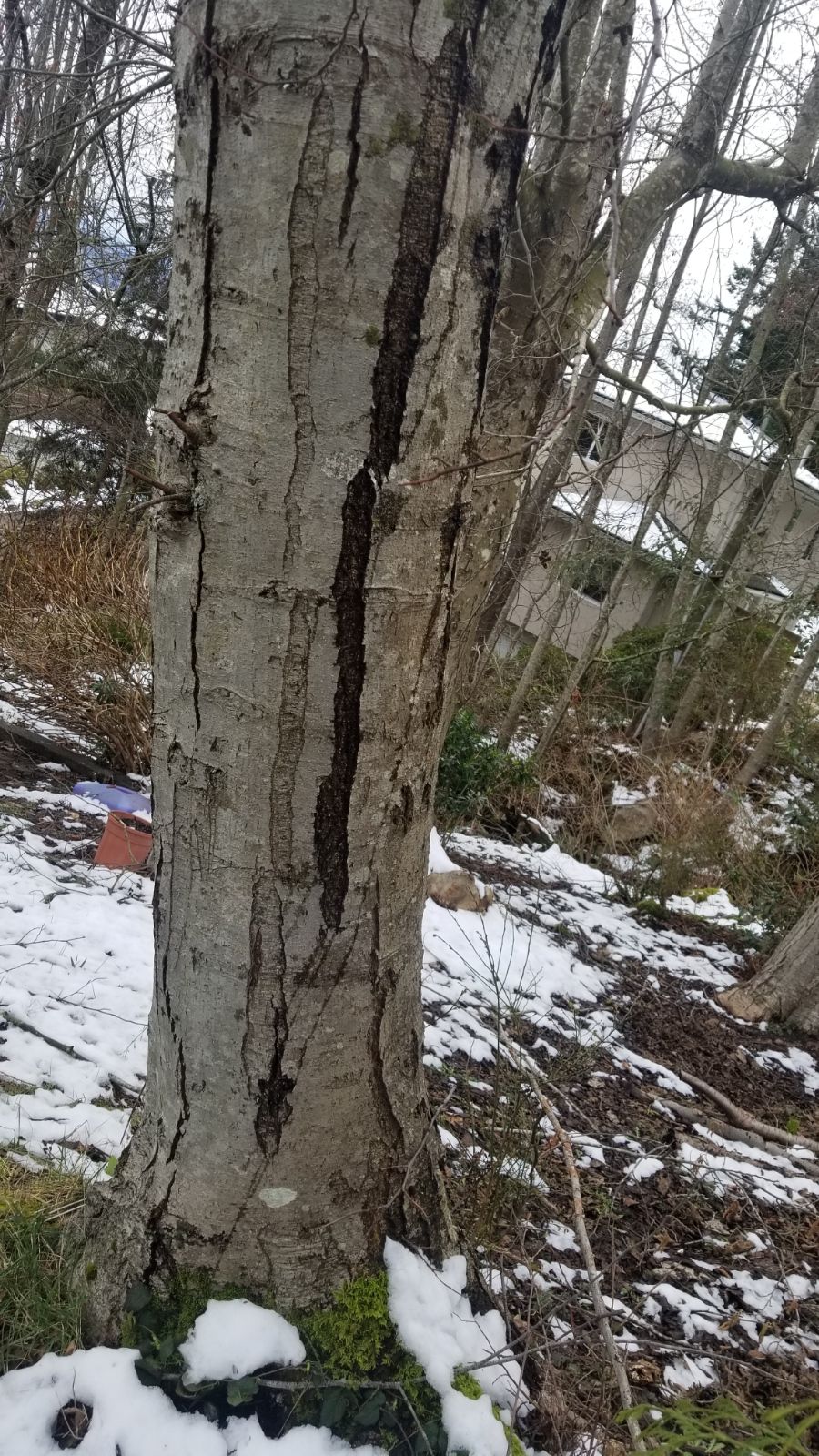
What Are the Warning Signs a Tree Won't Survive Winter?
Some trees enter winter already failing. Winter doesn't cause the final damage — it triggers it.
Watch for these signs in October and November:
**Cracks at major branch unions.** A visible crack where two stems meet means included bark. Included bark forms when bark tissue grows inward between two co-dominant stems instead of forming a wood-to-wood connection. These unions are structurally defective. Under snow, ice, or wind load, they split. This is one of the most dangerous structural defects in urban trees — and it's completely invisible until the crack appears.
**Dead branches in the mid-crown.** Not dead twig tips — entire mid-crown branches that produced no foliage this season. This pattern indicates crown dieback. Common causes: root damage from construction or compaction, fungal vascular disease, or cumulative drought stress from the past two to three dry summers.
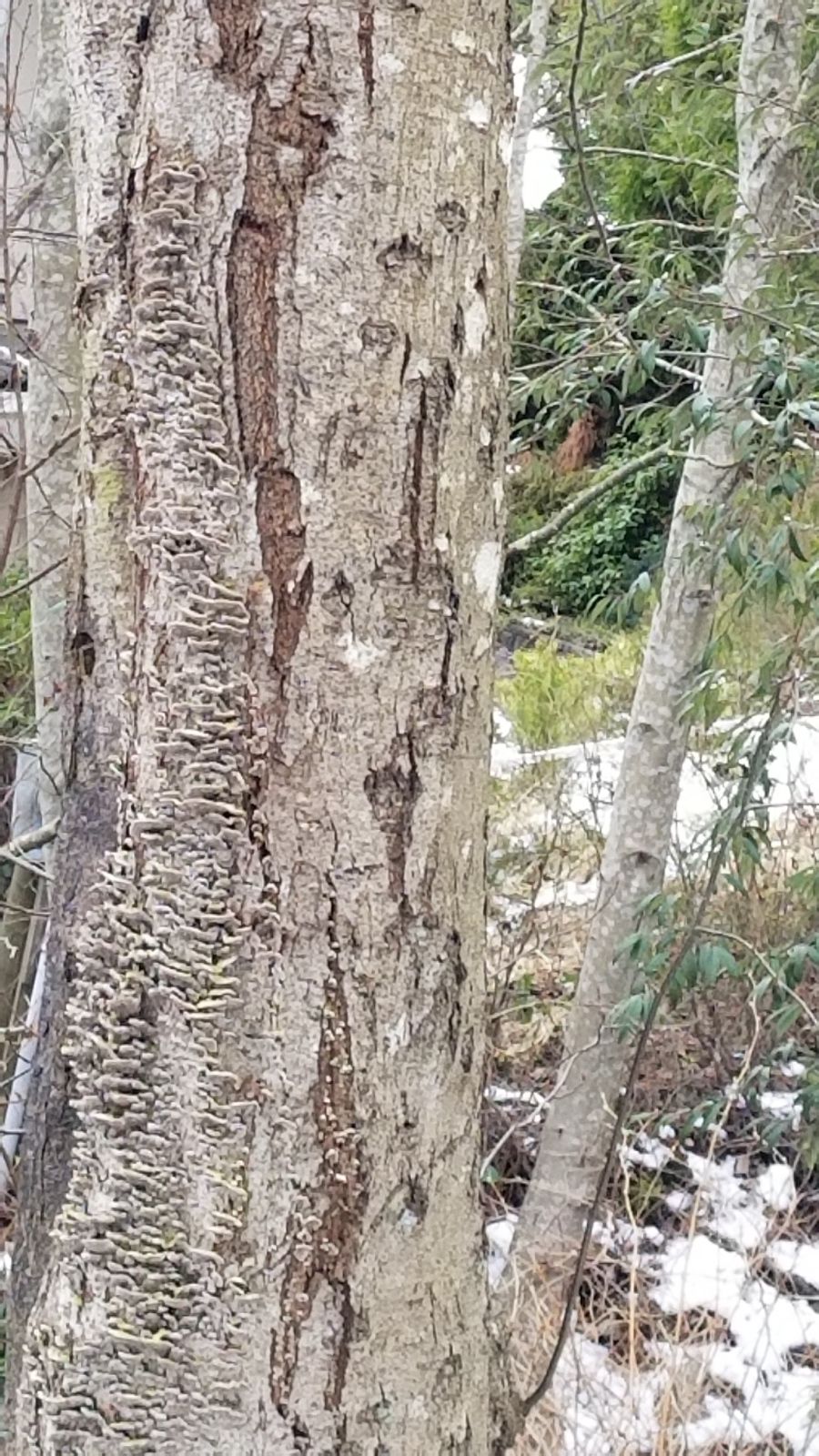
**Fungal conks on the trunk or root flare.** Bracket fungi (shelf fungi) growing from the bark indicate internal decay. These fruiting bodies appear only after years of internal colonization. By the time you see them from the ground, the structural wood inside is significantly compromised.
**Shift in lean direction.** A tree that has changed its lean in the past season — particularly one now leaning toward the prevailing storm direction — shows potential root plate movement. This is a red flag for windthrow in any significant gust event.
If you see any of these signs, don't wait until January. Book an arborist assessment before December. Our ISA-certified arborists document structural defects, assign a risk rating, and recommend specific corrective actions. The report also provides formal documentation for insurance purposes if a failure event occurs.
Does Vancouver's Protection of Trees Bylaw Affect What You Can Do in Winter?
Yes. This surprises most homeowners, who assume dormant-season work doesn't require permits.
The City of Vancouver's Protection of Trees Bylaw No. 9958 applies year-round. There is no dormant-season exemption. Any tree with a trunk diameter of 20 cm or more, measured at 1.4 metres above ground, requires a City permit for removal — in October, December, or any other month.
Permit processing timelines range from two to six weeks depending on tree species, location, and heritage status. If you're looking at a tree today and wondering whether it will make it through winter, the time to start the permit process is October — not January.
**For genuine emergencies:**
If a tree fails during a storm and creates an imminent hazard to life or property, you may take immediate action to remove that specific hazard without a prior permit. The City of Vancouver requires formal notification within 72 hours of emergency removal.
"This tree might fall during a storm" does not qualify as an emergency exemption under Bylaw No. 9958. Anticipated future risk requires a permit.
**Other Lower Mainland municipalities:**
Burnaby's Private Tree Bylaw requires permits for trees with a trunk diameter of 30 cm or more at 1.4 m height. North Vancouver District and City of North Vancouver each have separate tree protection bylaws with their own thresholds. Richmond and Coquitlam have similar frameworks. Always verify the specific bylaw for your municipality before proceeding with any removal.
Our ISA-certified arborists have filed permit applications across every Metro Vancouver municipality. We know exactly what each reviewing body requires. Our arborist report service identifies permit requirements as part of every assessment — so you know what you're dealing with before the clock starts running.
Why Does Pre-Winter Professional Assessment Protect Your Investment?
A homeowner can mulch, wrap, and water their trees. They can't see inside the wood.
An ISA-certified arborist uses Visual Tree Assessment — a diagnostic methodology developed by biomechanist Claus Mattheck at the Karlsruhe Research Centre and now standard in ISA certification globally. VTA reads visible symptoms at the root flare, trunk, branch unions, and crown to infer internal structural condition without cutting the tree open.
This matters in winter for one specific reason: catastrophic failures don't announce themselves in advance. A tree with 50% internal decay in a major scaffold branch looks completely sound from 10 metres away. One ice event or sustained wind gust is all it takes.
A 2019 study published in the *Proceedings of the National Academy of Sciences* (Ziter et al.) documented that urban tree canopy significantly reduces peak daytime surface temperatures — a finding that reinforces how much value a mature urban tree actually represents. Trees are not landscaping. They're infrastructure. They have replacement cost, ecosystem service value, and structural risk exposure — just like a roof or a foundation. Pre-winter assessment is due diligence on a significant long-term asset.
Our team is WCB-registered and carries full liability coverage on every job across Metro Vancouver. Every assessment follows ISA Visual Tree Assessment methodology. Every report is defensible for insurance purposes and accepted by all Metro Vancouver municipal permit reviewers.
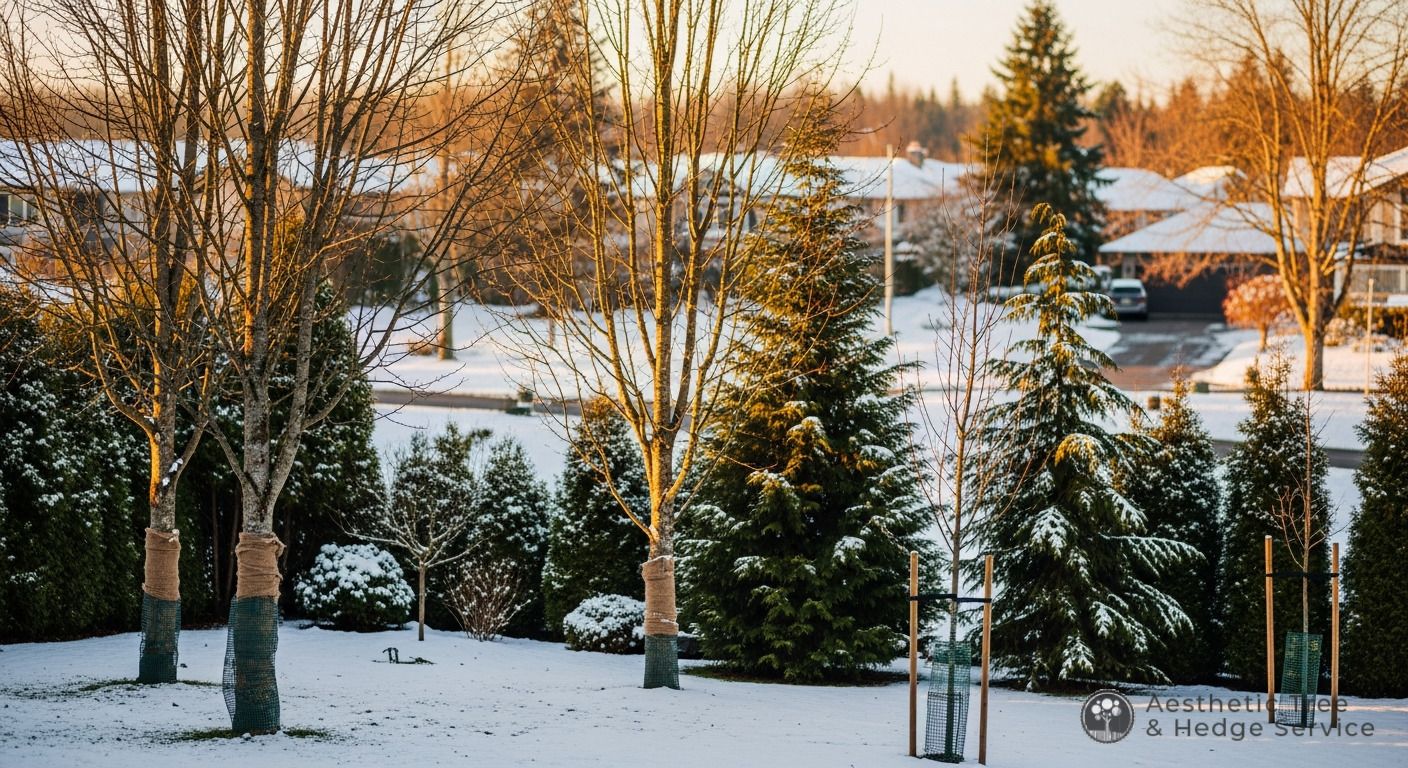
Protect Your Trees Before Winter Takes Them
Winter protection for Vancouver trees is not complicated. But it is time-sensitive.
Everything on this list — mulching, wrapping, late-season watering, pre-winter dead wood removal — needs to happen in October and early November. December is already late. January is too late.
Aesthetic Tree & Hedge Services provides ISA-certified arborist care across Vancouver, Burnaby, North Vancouver, Richmond, and Coquitlam. WCB registered. Full liability coverage.
**Call for a free estimate: (604) 721-7370**
If a branch fails this winter, our emergency tree service is available 24 hours a day, 7 days a week, across all of Metro Vancouver.
FAQ
**When is the right time to start protecting trees for winter in Vancouver?**
Start in mid-to-late October. The goal is to finish mulching and late-season deep watering before the first sustained frost. In Metro Vancouver, that window typically runs from late October to mid-November — but it moves every year. Don't wait for a hard frost before you act. Wrapping of young ornamental trees should be done before nighttime temperatures drop consistently below 0°C. Once temperatures are cycling below freezing regularly, the protection window is closing.
**Can I use leaves from my yard as winter mulch?**
Yes — but shred them first. Whole leaves mat down under rain and actually repel water, preventing moisture from penetrating to the root zone. Run them through a lawnmower to shred them, then apply at 2–3 inches depth. Shredded leaves provide effective insulation and break down to improve soil structure. Don't use leaves from diseased trees — shredding doesn't reliably eliminate fungal spores from black spot, powdery mildew, or fire blight.
**Does white tree wrap actually prevent frost cracking?**
Yes, when applied correctly. White wrap reflects winter sunlight, preventing bark from warming significantly above ambient air temperature during clear days. That temperature differential — sun-heated bark on one side, cold air on the other — is the direct cause of frost cracking in thin-barked species. The wrap eliminates that differential. It won't reverse existing frost cracks, but it prevents new ones from forming on protected species.
**How do I spot a branch that could fail in a winter storm?**
Look for these four signs: a visible crack at the branch union; discoloured or sunken bark at the attachment point; a narrow V-shaped junction where two stems of similar diameter meet (classic included bark structure); or any large branch showing no live foliage from this season. If you find any of these, don't climb the tree or attempt DIY removal. A certified arborist can assess the branch, determine the failure risk under specific load conditions, and remove it safely with the right equipment.
**What should I do if a tree falls on my property during a winter storm?**
First: check for injuries. Second: if the fallen tree contacts power lines, stay clear and call BC Hydro at 1-888-769-3766 immediately. Do not approach any tree that is touching live electrical lines under any circumstances. If no power lines are involved and the situation is stable, document everything with photographs and contact your insurance provider. Then call a certified arborist for removal and cleanup. Our emergency tree service operates 24/7 across Metro Vancouver and responds to storm damage, full tree failures, and partially failed hung branches.
---
**Cannibalization note for publishing team:** Existing page `/blog/protecting-trees-in-winter` competes directly with this article. After publishing, add a 301 redirect from `/blog/protecting-trees-in-winter` → `/blog/how-to-protect-trees-in-winter` in the AestheticTree Next.js redirect config. Delete or unpublish the old Sanity document.
Found this helpful? Follow our tree care insights directly on Google.
Make us your preferred source on GoogleBefore You Go
Where are you in your tree care journey?
Our Tree Care Services
ISA-certified arborists serving Greater Vancouver


Explore Our Tree Care Services
From expert pruning to safe tree removal, our ISA-certified arborists are ready to help across Greater Vancouver.
View Services