
TL;DR — Quick Summary
Root rot Vancouver kills trees silently. Spot warning signs early, understand BC's rainy climate risks and learn when to call ISA-certified arborists. Free estimates.
# Root Rot in Vancouver: How to Spot It Before Your Tree Falls
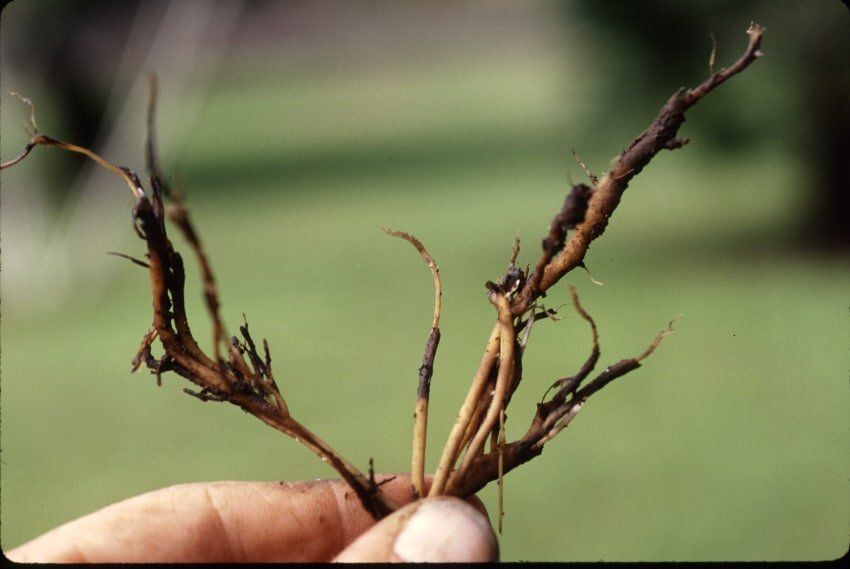
Root rot is one of the quieter tree hazards Vancouver homeowners deal with. It usually starts below the soil line, where you cannot see it and can work through the fine roots and structural roots for months or years before the canopy gives you an obvious warning.
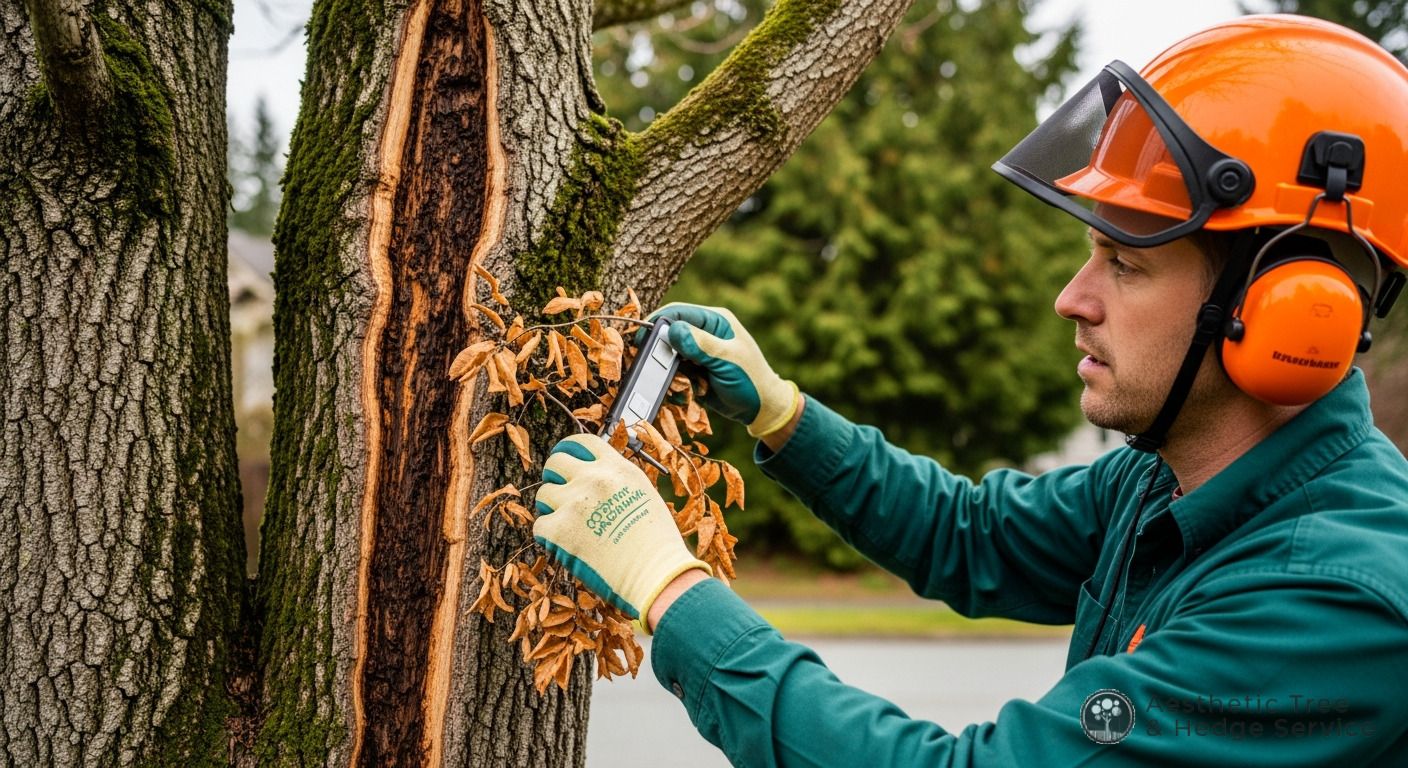
By the time a tree shows yellowing foliage, crown thinning, mushrooms at the base, or a new lean, the root system may already be badly compromised.
That matters in the Lower Mainland because our climate gives root-rot pathogens exactly what they like: long wet winters, mild temperatures, compacted urban soils and plenty of properties where old root wood has been left behind after past removals.
This guide explains what root rot is, why Vancouver trees are vulnerable, which symptoms to watch for, when treatment is realistic and when removal becomes the safer option.
TL;DR
- Vancouver’s wet fall and winter climate creates favourable conditions for root-rot pathogens, especially in compacted or poorly drained soil.
- The two most important root disease problems in the Lower Mainland are *Phytophthora* root rot and *Armillaria* root disease, often called honey fungus.
- Crown dieback, off-season yellowing, mushrooms near the trunk, resin bleeding, soil heave and new lean are all warning signs.
- Treatments can help in some early *Phytophthora* cases, but they cannot rebuild decayed structural roots.
- A tree with compromised anchoring roots can still look alive from the street. Hazard assessment should be done by an ISA-certified arborist.
- In Vancouver, protected trees generally require a permit before removal unless an imminent hazard is properly documented.
What Is Root Rot?
Root rot is not a single disease. It is a broad term for root decay caused by fungi or water-mould pathogens. Different pathogens behave differently, spread differently and carry different treatment options.
In Metro Vancouver, two disease groups matter most for residential trees.
**Phytophthora root rot**
*Phytophthora* species are water moulds, not true fungi. They thrive in wet, poorly drained soil. They usually attack fine feeder roots first, reducing the tree’s ability to absorb water and nutrients. As the infection advances, it can move into larger roots and the root collar.
The key point for Vancouver homeowners is that *Phytophthora* needs free water in the soil to spread. Its mobile spores move through saturated soil and infect nearby roots. That makes low spots, compacted lawns, over-irrigated beds and clay-heavy soils especially risky.
**Armillaria root disease**
*Armillaria ostoyae*, commonly called honey fungus, is one of British Columbia’s most important root disease pathogens. In forests, it is well documented by BC forestry researchers. In residential landscapes, it is a problem because it can survive on dead root wood and old stumps for many years.
Unlike *Phytophthora*, *Armillaria* does not need constantly saturated soil. It spreads through infected roots and through rhizomorphs: dark, cord-like fungal structures that grow underground from old root wood toward new hosts.
This is why old stumps matter. If a previous tree was cut down and the stump or major roots were left to decay underground, that buried wood can continue feeding *Armillaria*. A new tree planted into the same soil may be exposed from the beginning.
Why Vancouver Trees Are Vulnerable
Vancouver’s tree disease risk is not just about rain. It is about rain interacting with urban soil.
Many residential properties in Vancouver, Burnaby, Richmond, Delta, Coquitlam and North Vancouver have compacted soil from construction, foot traffic, driveways, landscaping equipment, or decades of grade changes. Compacted soil drains slowly and contains less oxygen. Roots under low-oxygen stress are less able to resist disease.
Heavy clay and clay-loam soils make the problem worse. Clay holds water. If the site is flat or poorly graded, water can sit in the root zone long after a storm has passed.
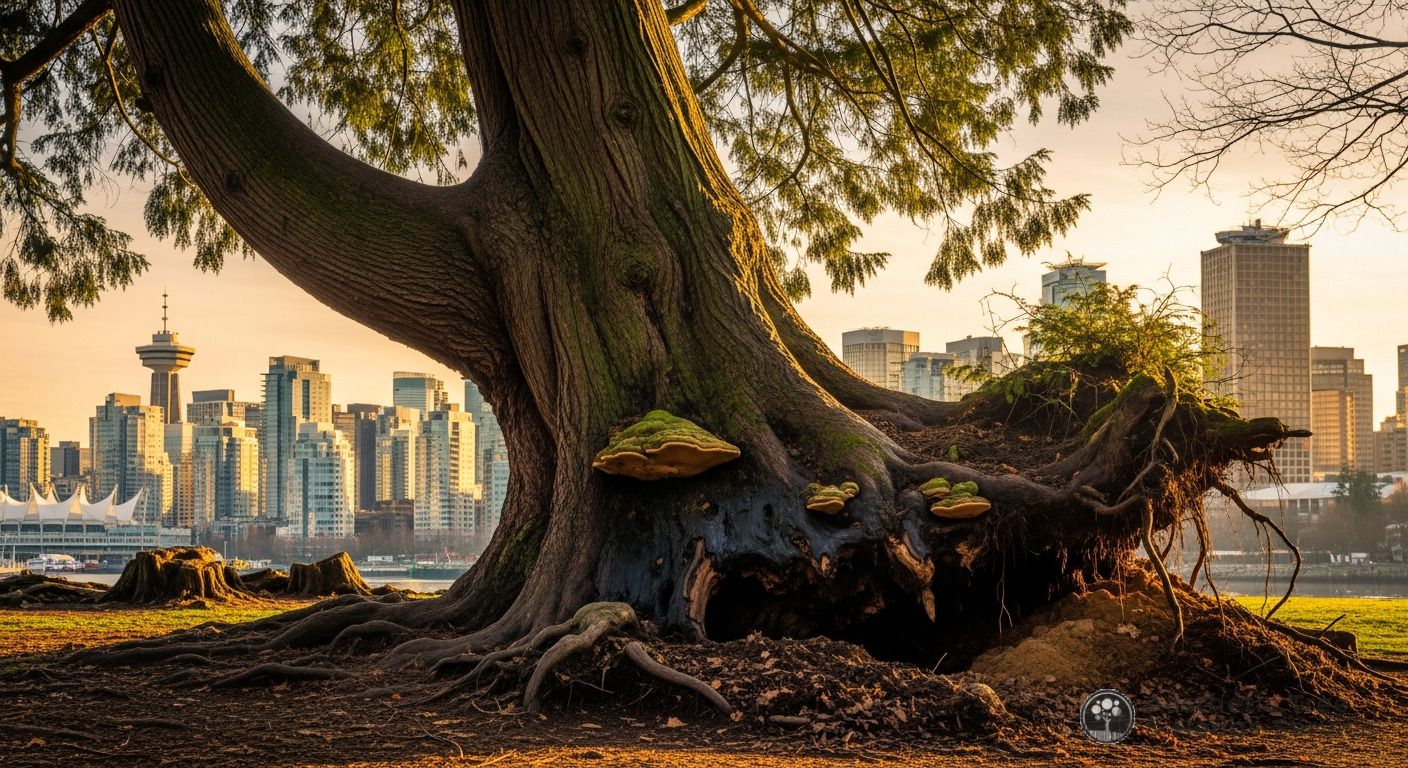
The final issue is planting depth. We regularly see trees with the root flare buried under soil or mulch. The root flare is the area where the trunk widens before the roots enter the soil. It should be visible. When it is buried, moisture sits against bark that was not meant to stay wet. That creates an entry point for decay organisms.
Warning Signs of Root Rot in Vancouver Trees
Root rot is difficult because the first serious damage happens underground. Still, most infected trees give above-ground clues before they fail. The earlier you notice them, the more options you usually have.
**Crown dieback**
Dead or dying branches in the upper canopy are one of the most common visible signs. The crown may thin from the top down. Spring growth may look sparse. Leaves may be smaller than usual.
**Off-season yellowing**
Leaves turning yellow in June, July, or August can point to root stress. Homeowners sometimes assume the tree needs fertilizer, but fertilizer does not solve a damaged root system. If roots cannot absorb water and nutrients properly, adding more nutrients to the soil will not fix the underlying problem.
**Mushrooms at the trunk base**
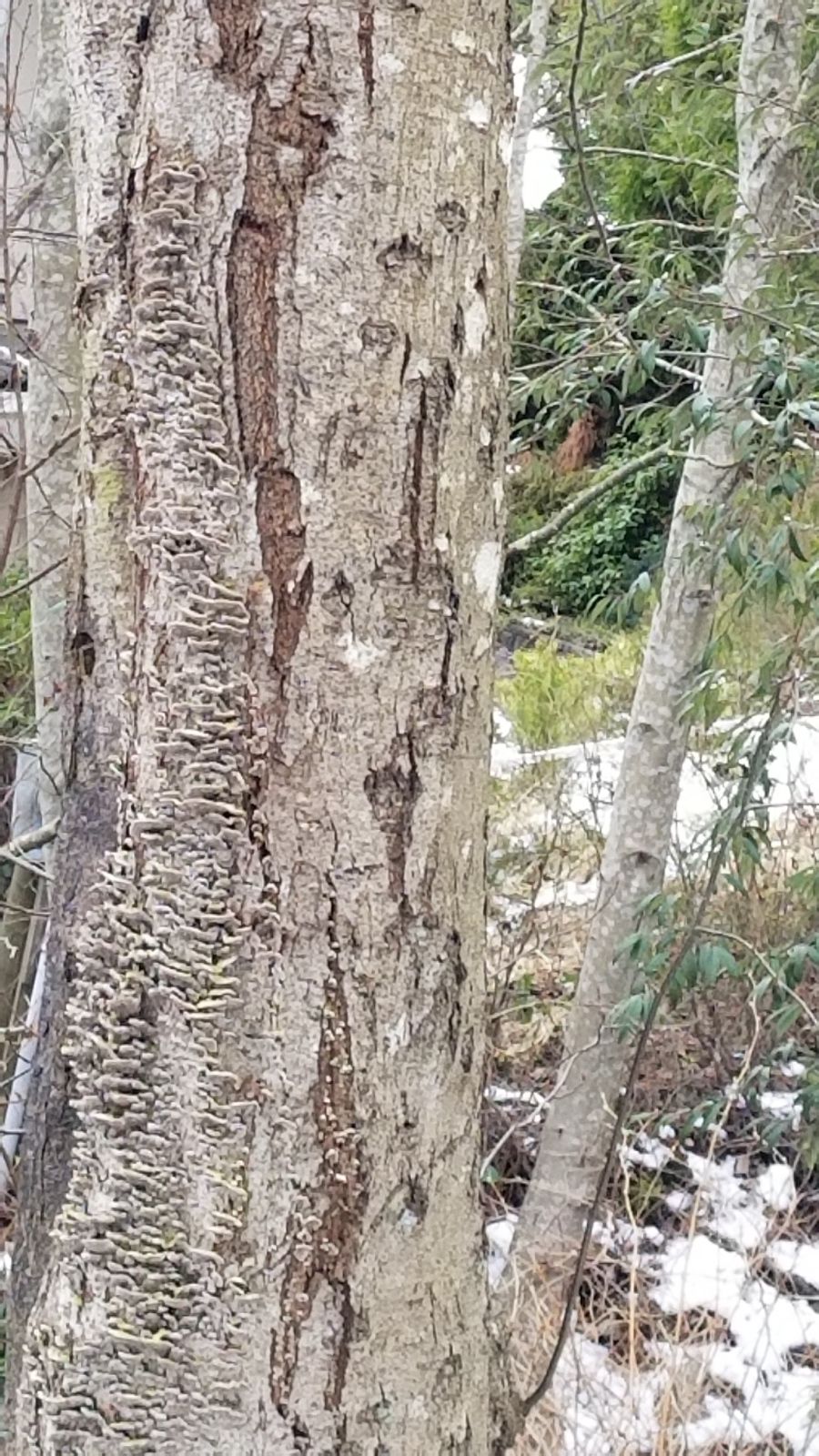
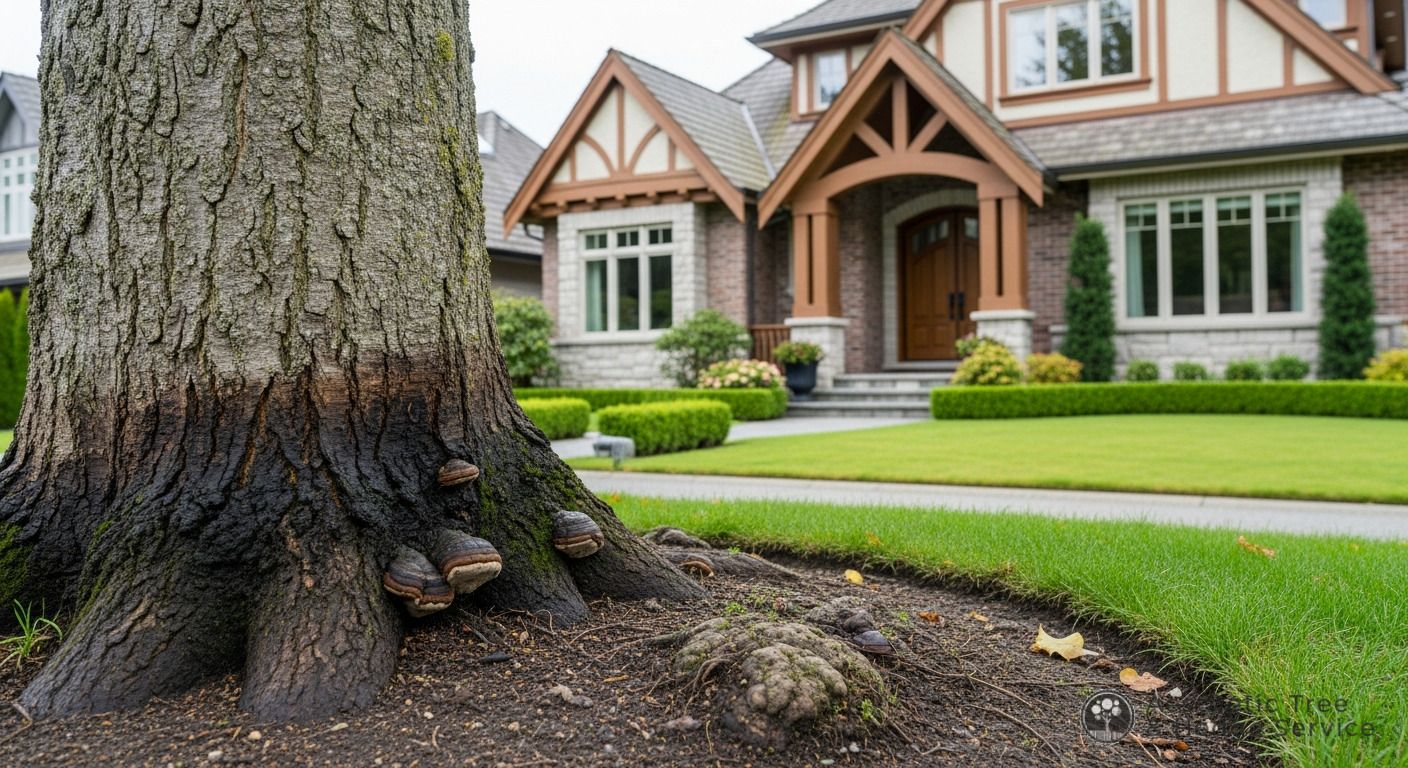
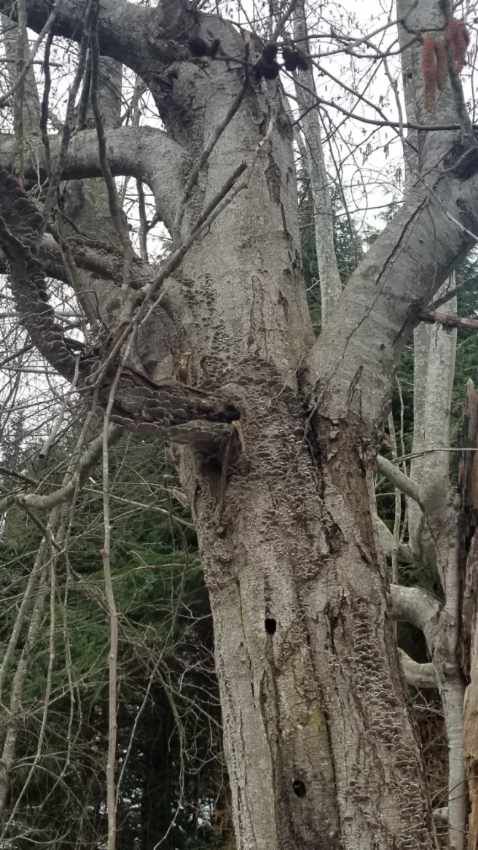
Clusters of honey-coloured mushrooms near the trunk or root flare are a serious warning sign for *Armillaria*. They often appear in autumn. Mushrooms are not the start of the disease. They are the fruiting bodies of a fungus that is already established in the root system or nearby root wood.
**White fungal fans under bark**
An arborist may check beneath loose bark at the root flare. White or cream-coloured fan-shaped fungal growth between bark and wood is a strong field indicator of *Armillaria*.
**Dark, wet-looking bark near the soil line**
*Phytophthora* infections can cause dark, water-soaked bark or bleeding cankers near the root collar. When bark is carefully opened by a qualified professional, the tissue underneath may show reddish-brown staining.
**Heavy resin bleeding**
On conifers such as Douglas fir, cedar, spruce and hemlock, heavy resin flow near the root collar can indicate stress or infection moving upward from the roots. Resin alone does not prove root rot, but it should not be ignored when paired with crown thinning or poor drainage.
**New lean or soil heave**
A tree that suddenly leans, or soil lifting around the base of the trunk, is a hazard-level warning. This can indicate structural root failure. If you see this near a home, sidewalk, driveway, road, or play area, call an arborist promptly and keep people away from the fall zone.
In field work across Vancouver, Burnaby, North Vancouver and Coquitlam, homeowners often notice canopy symptoms first. By that stage, the disease may already have affected a meaningful portion of the root system. Early assessment is much safer than waiting for a winter storm to test the tree.
What Causes Root Rot on Lower Mainland Properties?
Several site conditions increase the risk.
**Poor drainage**
Standing water after heavy rain is one of the clearest warning signs. If the lawn or garden bed stays wet for days, roots are being deprived of oxygen. That favours *Phytophthora* and weakens the tree’s natural defences.
**Soil compaction**
Compacted soil has fewer pore spaces for air and water movement. Roots grow shallower, drainage slows and disease pressure increases. Parking under trees, repeated foot traffic and construction equipment all contribute.
**Buried root flares**
Soil and mulch piled against the trunk trap moisture against bark. This is common after garden renovations, new sod installation, or incorrect mulching. The flare should remain exposed.
**Old stumps and buried roots**
Old root wood can support *Armillaria* for years. If a tree was removed without stump grinding, the remaining stump and roots may continue to act as a disease reservoir.
**Construction damage**
Excavation, utility trenching, driveway replacement, retaining walls, foundation work and laneway-house construction can cut roots and create infection points. In Vancouver’s active residential construction environment, this is a frequent trigger for decline.
**Irrigation mistakes**
Automatic irrigation can keep soil wetter than trees need, especially in shaded beds or clay soil. Ornamental trees planted in lawn areas often receive too much water because they are watered on turf schedules.
Which Vancouver Tree Species Are Most Susceptible?
Species, site conditions and tree age all matter. These are common Lower Mainland trees where root rot deserves close attention.
**Douglas fir (*Pseudotsuga menziesii*)**
Douglas fir is vulnerable to *Armillaria* root disease, especially when stressed by root disturbance, compaction, drought, or age. Large older firs near homes deserve careful assessment because their failure consequences can be severe.
**Western red cedar (*Thuja plicata*)**
Western red cedar tolerates moist conditions better than many species, but it is not immune to root disease. Cedars planted in compacted urban soils, raised grades, or poorly drained lawns can decline quickly.
**Bigleaf maple (*Acer macrophyllum*)**
Bigleaf maple is common in older neighbourhoods and ravines. Poor drainage, grade changes and root disturbance can increase the risk of root and crown problems.
**Ornamental cherry and apple (*Prunus* and *Malus* species)**
These are common residential and boulevard trees in Vancouver and Burnaby. They are often planted in irrigated beds or compacted boulevard strips, which can increase *Phytophthora* pressure.
**Spruce and ornamental conifers**
Spruce and many ornamental conifers struggle in low-lying, poorly drained locations. If they are planted in heavy soil and watered heavily through summer, root disease risk rises.
No species is completely safe in chronically waterlogged soil. Even more tolerant trees can decline when drainage, planting depth and compaction are poor.
Can Root Rot Be Treated?
Sometimes. The honest answer depends on the pathogen, the stage of infection and whether the tree’s structural roots are still sound.
Early Phytophthora Cases
When *Phytophthora* is caught early, management may be possible.
**Improve drainage**
This is usually the first priority. Regrading, French drains, soil aeration and redirecting downspouts can reduce the saturated conditions that allow the pathogen to spread.
**Expose the root flare**
Removing excess soil or mulch from the trunk base can reduce moisture against the bark and improve root-collar health. This should be done carefully to avoid further root damage.
**Reduce compaction**
Air spading, vertical mulching and controlled soil improvement can help restore oxygen movement into the root zone. This does not cure decay, but it can improve the tree’s growing conditions.
**Phosphonate treatments**
Phosphonate products may help manage some *Phytophthora* infections when used correctly by qualified professionals. They are management tools, not cures. They do not regrow dead roots and may require repeat applications.
Armillaria Cases
For *Armillaria*, treatment options are much more limited. There is no practical chemical cure for an established *Armillaria* infection in a residential tree. Management focuses on risk assessment, removal where needed, stump grinding and reducing infected root material before replanting.
The key limitation is structural integrity. Once decay has significantly compromised anchoring roots, treatments cannot restore the tree’s ability to hold itself upright. A tree can still have green foliage while its structural root system is unsafe.
When Does Root Rot Mean the Tree Should Be Removed?
Removal becomes likely when root rot has affected major structural roots, the tree is leaning, soil is heaving, decay is present at the root collar, or the tree stands near targets such as a house, road, sidewalk, driveway, parked vehicles, hydro lines, or a children’s play area.
ISA-certified arborists assess this using professional tree risk assessment methods, including ANSI A300 tree care standards. A proper assessment looks at:
- Crown condition
- Root flare and root collar condition
- Soil movement or heave
- Decay indicators
- Species and tree size
- Prevailing wind exposure
- Likelihood of failure
- Consequences if the tree fails
There is no single percentage of root loss that applies to every tree. A large Douglas fir beside a house carries a different risk than a small ornamental tree in an open yard. The decision has to be site-specific.
In Vancouver, many trees are protected by municipal bylaw. Under the City of Vancouver’s tree protection rules, trees at or above the protected size threshold generally require a permit before removal. Hazard trees can be approved for removal when the risk is properly documented by a qualified arborist.
If removal is recommended, Aesthetic Tree & Hedge Services can provide anarborist report in Vancouverfor permit support. The report documents the tree condition, visible disease indicators, risk factors and professional recommendation.
For trees that are already leaning, partially uprooted, storm-damaged, or at immediate risk of failure, ouremergency tree serviceis available for urgent response. Do not try to manage a failing tree without proper equipment and training.
After removal,stump grindingis especially important when root disease is involved. It removes a major source of infected wood and helps reduce risk for future planting.
What Happens After Removal? Can You Replant?
Yes, but the site should be prepared properly.
If *Armillaria* was involved, replanting into the same location without removing infected wood can expose the new tree to the same disease pressure. These steps reduce the risk.
1. **Grind the stump below grade.** Removing the stump reduces the largest food source for decay fungi.
2. **Remove old root wood where practical.** Large remaining roots can continue to support *Armillaria*. Complete removal is not always possible, but reducing the amount of infected wood helps.
3. **Improve drainage and soil structure.** Replanting into the same compacted, wet soil repeats the original problem.
4. **Choose the right replacement species.** Species selection should match the site’s drainage, sun exposure, soil type and available rooting space.
5. **Protect nearby trees.** If adjacent trees share the root zone, they should be inspected. Root barriers may help in some situations, but they should be used only where they make sense for the site.
Replanting matters. Vancouver and neighbouring municipalities are trying to protect and expand urban canopy cover. Replacing a hazardous diseased tree with a well-chosen, properly planted tree supports that goal while reducing future risk.
How to Prevent Root Rot in a Vancouver Garden
Prevention is mostly about keeping roots healthy and avoiding long-term wet, low-oxygen soil.
**Keep the root flare visible**
You should be able to see the trunk widen at the base before it enters the soil. If the trunk goes straight into the ground like a telephone pole, the flare may be buried.
**Mulch correctly**
Use a 5-10 cm layer of coarse wood chips in a wide ring around the tree. Keep mulch away from the trunk. Mulch volcanoes trap moisture and increase decay risk.
**Fix drainage problems early**
If water pools for days after rain, address the drainage before trees begin declining. French drains, raised beds, soil aeration and better grading can all help.
**Avoid compacting the root zone**
Do not park under tree canopies. Keep repeated foot traffic away from the same root paths. During renovations or landscaping, use ground protection before machinery crosses the root zone.
**Be careful with irrigation**
Trees and lawns do not always need the same watering schedule. Avoid keeping ornamental beds wet through the entire growing season.
**Remove old stumps before planting**
Grinding old stumps reduces the amount of decaying wood available to root disease fungi.
**Inspect after major storms**
After atmospheric river events or multi-day heavy rain, walk the property and look for new lean, soil heave, sudden wilting, cracking soil, or fresh mushrooms near the base of trees.
What Do Vancouver Tree Bylaws Say About Root-Rotted Trees?
Tree bylaws vary by municipality. Vancouver, Burnaby, Richmond, Coquitlam and the North Shore all have their own rules for protected trees, permits, replacement requirements and hazard documentation.
In the City of Vancouver, protected trees generally cannot be removed without approval unless they meet the city’s hazard criteria and the situation is properly documented. Other municipalities use different diameter thresholds and application processes.
Before removing a tree with suspected root rot, confirm the local bylaw and get a professional assessment. A clear arborist report can make the permit process much smoother because it explains the disease signs, structural concerns, target risk and recommendation.
Our arborists have supported root-rot-related removals and permit applications across the Lower Mainland. If you are unsure whethertree removal in Vancouveris necessary, the safest first step is an on-site inspection.
Suggested Images for This Article
- Close-up photo of honey fungus mushrooms at a tree base.
- Photo showing a buried root flare versus a properly exposed root flare.
- Diagram of structural roots and the root collar.
- Photo of soil heave around a leaning tree.
- Before-and-after image of stump grinding after removal.
FAQ
**Can root rot spread from one tree to another in my yard?**
Yes. *Armillaria* can spread through infected roots and underground rhizomorphs. *Phytophthora* spreads through water movement in wet soil. If one tree has confirmed root disease, nearby trees should be assessed, especially if they share the same wet or compacted root zone.
**My tree looks healthy but has mushrooms at the base. Should I call an arborist?**
Yes. Mushrooms at the base can indicate decay in the roots or lower trunk. A tree can keep a green crown for a period of time even when important roots are already compromised. It is worth having the tree inspected before storm season.
**Does Vancouver’s wet winter make root rot worse?**
Wet winters increase risk, especially for *Phytophthora*, because saturated soil helps the pathogen spread. Heavy rain also adds weight and wind exposure at the same time roots may be less stable. Trees with existing root decay are at higher risk during and after major rain events.
**How much root damage means a tree should be removed?**
There is no universal number. The decision depends on the species, size, location, direction of root loss, visible decay, soil condition and nearby targets. A certified arborist can assess whether the tree can be managed or whether removal is the safer option.
**What is the difference between root rot and normal autumn leaf drop?**
Normal autumn leaf drop is seasonal, predictable and usually affects the canopy evenly. Root rot symptoms are often irregular and progressive. Watch for yellowing outside autumn, thinning in one part of the crown, smaller leaves, branch dieback, mushrooms, resin bleeding, or a new lean.
Call Aesthetic Tree & Hedge Services
Root rot moves quietly in Vancouver’s climate. If your tree has crown dieback, off-season yellowing, mushrooms at the base, resin bleeding, soil heave, or a new lean, do not wait for a winter storm to reveal the problem.
Call Aesthetic Tree & Hedge Services for a free estimate at **(604) 721-7370**. Our ISA-certified arborists are WCB registered and carry full liability coverage. We serve Vancouver, Burnaby, North Vancouver, Coquitlam and communities across the Lower Mainland.
Found this helpful? Follow our tree care insights directly on Google.
Make us your preferred source on GoogleBefore You Go
Where are you in your tree care journey?
Our Tree Care Services
ISA-certified arborists serving Greater Vancouver


Explore Our Tree Care Services
From expert pruning to safe tree removal, our ISA-certified arborists are ready to help across Greater Vancouver.
View Services