
TL;DR — Quick Summary
Seasonal tree care in Vancouver, month by month. When to prune, mulch, and call an ISA-certified arborist. Free estimates from Aesthetic Tree.
# The Complete Seasonal Tree Care Guide for Vancouver Homeowners
Seasonal tree care in Vancouver is different because the Lower Mainland gives trees a wet-winter, dry-summer stress cycle that trees in colder Canadian cities don't experience.
Our team has pruned, removed, and assessed over 800 Vancouver-area trees since 2019. In that work, we've learned that timing matters more than method. A pruning cut made in wet March conditions creates very different disease risk than the same cut made in dry July. A Douglas fir that looked healthy in May can show severe drought stress by August if the root zone wasn't mulched or watered through June and July.
This guide is built on that on-site experience, current ISA standards, and Vancouver municipal regulations. If you're unsure whether a tree needs professional help, we've included when to call an arborist instead of a landscaper.
TL;DR
- Vancouver's wet winters and dry summers create two major tree stress windows: disease pressure in wet weather and drought stress in summer.
- Late February through mid-March is usually the best pruning window for many deciduous trees, before bud break.
- Ornamental cherries and other Prunus species are usually better pruned in dry summer conditions to reduce disease risk (silver leaf fungus, bacterial canker).
- Avoid removing more than 25% of the live crown in one year. Over-pruning weakens structure and increases disease susceptibility—this is documented in ANSI A300 pruning standards.
- City of Vancouver and nearby municipalities regulate tree removal by trunk diameter (DBH), species, condition, or location. Check your local bylaw before cutting.
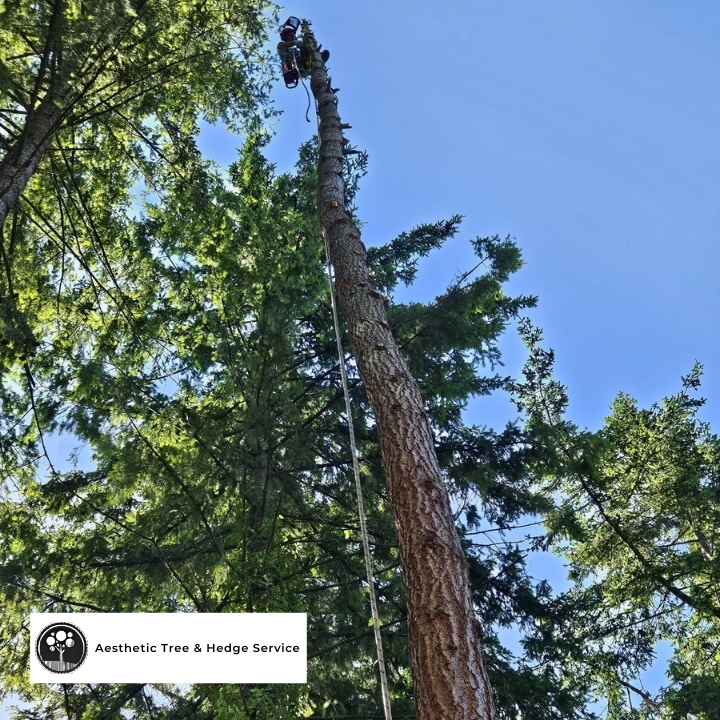
- Work involving ladders, chainsaws, large limbs, or utility lines belongs with a qualified ISA-certified arborist. This is about safety and disease prevention, not just liability.
Why Vancouver's Climate Changes Tree Care
Vancouver trees do not get the same long, deep winter freeze that trees experience in interior BC or the prairies. That matters because many fungi, insects, and decay organisms can remain active or survive through mild winters.
Our Lower Mainland also has a clear seasonal pattern: wet conditions through fall, winter, and spring, followed by increasingly dry summers. That combination creates two predictable problems for homeowners we see repeatedly in our work.
**First: Wet-season disease risk.** Pruning in wet conditions can increase disease risk on susceptible species. Fresh cuts on cherries, plums, apples, elms, and other sensitive trees need to be timed carefully. Dirty tools, poor cuts, and wet weather are the three biggest variables. A pruning cut on a Prunus species in March creates a fresh wound exactly when Pacific Northwest fungi (silver leaf, bacterial canker) are most active. The same cut in July, when conditions are dry and the tree is actively compartmentalizing wounds, heals with far less disease risk.
**Second: Summer drought stress.** Urban trees in Vancouver often have compacted root zones (construction, paving, heavy foot traffic). When July and August turn dry—and they do, reliably—those trees lose canopy density, drop limbs, or become more vulnerable to pests like bronze birch borer. A birch that looked healthy in May can show crown dieback by September if the root zone wasn't mulched or watered in June.
Our approach is to work with that cycle instead of reacting after the tree is already declining.
Late Winter Tree Care: January to March
Late winter is the best pruning window for many Vancouver trees. At this point, deciduous trees are still dormant, branch structure is visible without foliage interference, and many fungal disease risks are lower than they are in wet spring weather.
For most homeowners, this is the season to book structural pruning, deadwood removal, and crown assessment. We schedule most of our non-emergency pruning work between late February and mid-March for exactly this reason.
Deciduous Trees (Maple, Oak, Birch, Fruit Trees)
For maples, oaks, birches, and many fruit trees, late February to mid-March is usually the preferred pruning window. The goal is to finish before bud break.
Start with the three Ds: dead, dying, and diseased wood. Those branches should be removed first, before any cosmetic shaping. After that, assess structure: crossing limbs, weak attachments, co-dominant stems with tight V-shaped unions, and branches growing back toward the trunk.
Proper pruning follows ANSI A300 standards, which means:
- No flush cuts that remove the branch collar
- No careless topping (leaving stubs)
- Cuts that preserve the branch collar so the tree can close the wound naturally
When we assess a tree for pruning, we look at branch attachment angles. A branch growing at a 45–60-degree angle to the trunk is stronger than one at 0–20 degrees. Poor attachment points become liabilities in winter storms.
Conifers (Douglas Fir, Western Red Cedar, Hemlock, Spruce)
Douglas fir, western red cedar, hemlock, and spruce need a more careful approach. Light pruning can often be done in late winter, but heavy cuts should be avoided unless there is a clear structural or safety reason.
For conifers, the main priority is protecting the natural form of the tree. Removing too much foliage creates permanent gaps because many conifers do not regrow well from old wood. A Douglas fir that's been cut heavily into its interior brown wood (five or more feet back) will not fill back in.
Avoid unnecessary spring wounding on stressed conifers, especially where bark beetles or other pests are a concern. If a mature fir or cedar needs significant work, we always recommend an arborist assessment first. The cost of an assessment ($250–400) is far less than removing a 60-year-old tree prematurely because a heavy cut created disease entry or stress.
DIY Limits—When to Stop and Call a Professional
Homeowners can usually handle light pruning from the ground with hand pruners or loppers. Small, accessible branches (under 1 inch diameter, within arm's reach from ground level) are reasonable DIY work if you know where to cut.
Stop here:
- **Anything involving a ladder.** Ladder falls are the leading cause of major home injuries. Trees shift, branches crack unpredictably once a cut begins, and footing becomes unstable fast.
- **Anything involving a chainsaw.** Chainsaws kick back, throw debris, and create limbs that load unpredictably mid-cut. Professional arborists train extensively on this and still have high injury rates.
- **Any large limb or limb near a structure.** A limb can twist or split once the cut releases tension. Controlling where it goes requires experience.
- **Any work near utility lines.** Contact with power lines is fatal. Utility companies can trim hazards free of charge.
Spring Tree Care: April and May
Spring is not the ideal time for major pruning on many species. It is, however, a strong season for soil care, mulching, inspection, and hedge shaping. We schedule most hedge trimming jobs for late April or early May because new growth firms up quickly and the hedge fills in before summer.
Mulching (The Right Way)
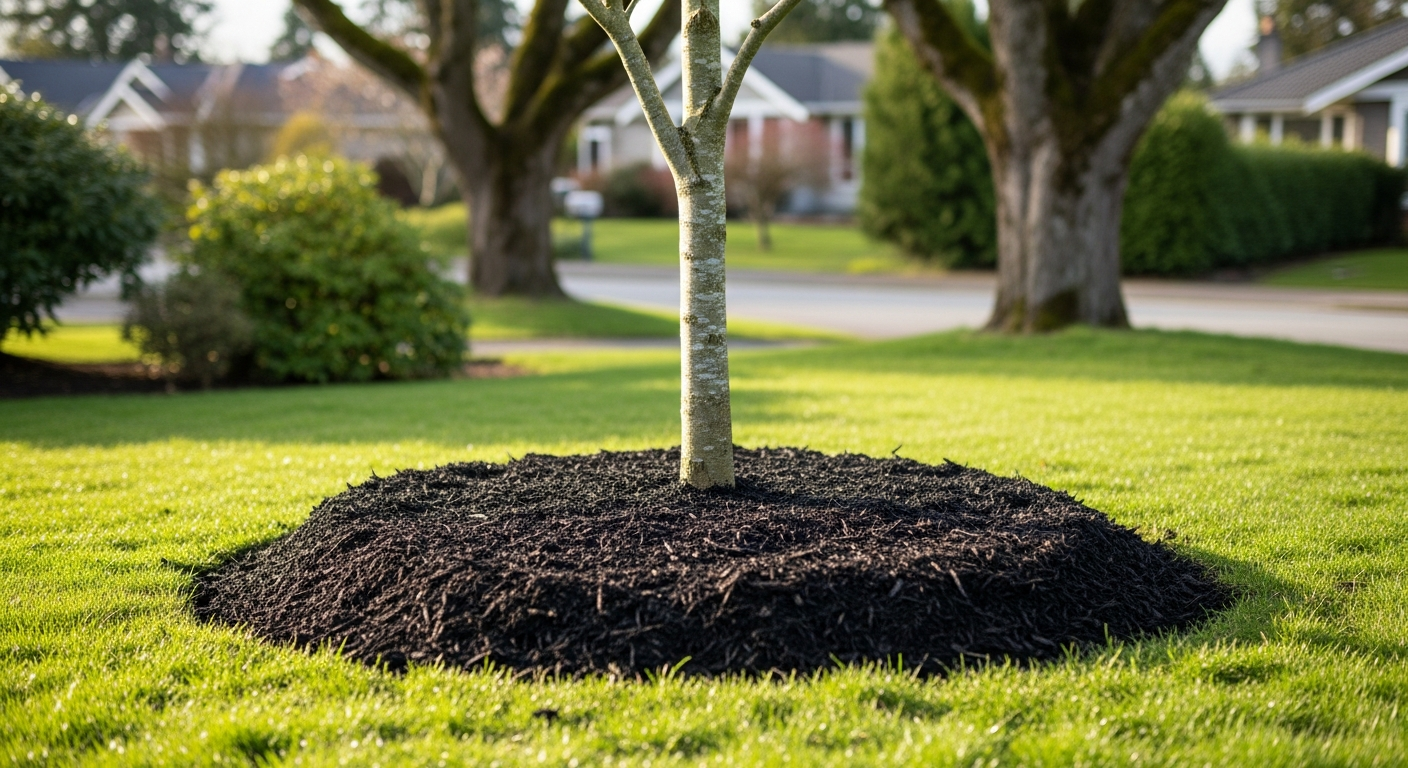
Apply a 7–10 cm layer of arborist wood chips or organic mulch around the base of the tree. Extend it outward toward the drip line where possible, but keep mulch at least 10 cm away from direct contact with the trunk.
Avoid mulch volcanoes. Piling mulch against bark traps moisture, encourages bark decay, and can create habitat for insects and fungi. In our experience, mulch volcanoes often indicate the tree was planted too deep—a separate structural problem.
Soil Care and Compaction Assessment
Urban Vancouver soils are often compacted by foot traffic, driveways, construction, and years of lawn maintenance. Compaction reduces oxygen availability in the root zone and limits fine root development.
Where soil is badly compacted (common in narrow boulevard strips and backyard patios), an arborist may recommend air-spading, vertical mulching, or careful aeration around the root zone. These are not DIY projects—aggressive digging near major roots can sever fine roots critical for water and nutrient uptake.
A simple test: push a metal soil probe into the ground near the drip line. If it takes heavy force to push 15 cm deep, compaction is probably limiting root function.
Fertilization—Only When Needed
Not every tree needs fertilizer. Before applying any fertilizer, ask: what is the deficiency?
If a tree showed pale leaves, weak extension growth, sparse canopy, or stress symptoms the previous year, spring may be a good time to investigate soil nutrition with a professional soil test. Use slow-release fertilizer only when there is a documented need. Too much quick-release nitrogen pushes soft, weak growth that is more vulnerable to pests, wind, and disease.
Hedge Trimming
Spring is the ideal window for formal hedges such as cedar, laurel, and boxwood. Shape after the first flush of new growth has started to firm up. This helps the hedge fill in before summer heat arrives and reduces the stress of trimming.
We typically schedule cedar and laurel hedge trims for late April to mid-May. The results last through August before needing a light touch-up in late summer.
What to Avoid in Spring
Avoid pruning ornamental cherries, plums, and other Prunus species in wet spring conditions when possible. These trees are more vulnerable to diseases like silver leaf fungus (Chondrosteumprurinum) and bacterial canker (Pseudomonas and Xanthomonas species), which are active in wet weather.
Avoid pruning elms during high-risk periods for Dutch elm disease where local guidance restricts it. The City of Vancouver allows elm pruning outside June–August. If you have an elm, confirm the correct timing with your municipality or an ISA-certified arborist before cutting.
Best Time to Prune Trees in Vancouver
The best pruning season depends on species, condition, and the reason for pruning. There is no single answer.
For many deciduous broadleaf trees, late winter is preferred. For ornamental cherries and plums, dry summer pruning is often safer. For hedges, spring and late summer maintenance are common. For emergency hazards, timing is immediate because safety comes first.
Practical timing guide:
| Tree Type | Preferred Window | Avoid | Reason | |---|---|---|---| | Maple, oak, birch | Late February to mid-March | Wet spring pruning when possible | Dormancy, visible structure, lower disease pressure | | Fruit trees (apple, pear) | Late winter before bud break | Wet periods and heavy fall pruning | Disease risk on fresh wounds | | Ornamental cherry and plum (Prunus) | Dry summer conditions | Wet spring and fall conditions | Silver leaf, bacterial canker most active in wet | | Douglas fir, hemlock, spruce | Late winter or carefully timed summer work | Unnecessary spring wounding | Avoid creating entry wounds during pest season | | Western red cedar | Late winter or light summer maintenance | Heavy cuts into old wood | Poor regrowth from interior | | Cedar and laurel hedges | Spring and late summer | Hard pruning during winter stress | New growth responds better to spring/summer shaping |
For major structural work, late winter is often the safest planning window. We schedule elective tree pruning in Vancouver around species needs whenever possible, while emergency tree service remains available when a tree poses an immediate risk to a structure, vehicle, driveway, or person.
Summer Tree Care: June to September
Summer tree care in Vancouver is about drought prevention, pest monitoring, and stress reduction. Even healthy trees can struggle in dry stretches, especially if they are growing in compacted soil, narrow boulevards, small yards, or reflecting heat from pavement and buildings.
Water Deeply and Infrequently
During dry weather, young and stressed trees need slow, deep watering. Apply water at the drip line (where the outer branches extend) rather than directly against the trunk.
A general target for young or stressed urban trees is 25–50 litres per week during extended dry periods, adjusted for tree size, soil type, rainfall, and local watering restrictions. The goal is to water the root zone to 30 cm depth, not just the top few centimetres.
Deep watering encourages deeper roots. Frequent shallow watering keeps roots near the surface, where they dry out faster and provide less stability in wind.
Watch for Stress Signals
Look for wilting, scorched leaf edges (especially on birch and maple), premature leaf drop, thinning canopy, and early fall colour in August. These are signs that the tree may be drawing down reserves it needs for winter hardening.
Catching drought stress in July is far better than discovering major decline in September or discovering the tree failed in a winter storm.
Avoid Late-Summer Nitrogen
Avoid nitrogen-heavy fertilizing late in summer. New growth pushed too late in the season may not harden properly before cold weather, increasing winter damage risk.
Monitor for Pests
Drought-stressed birches are more vulnerable to bronze birch borer (Agrilus anxius). Warning signs include crown dieback from the top down, D-shaped exit holes (1/8 inch wide) on the bark, and meandering galleries visible under loose bark.
Conifers under stress may show pitch tubes (resin on bark), crown thinning, dieback, or bark damage. Not every symptom means infestation, but repeated stress signs should be assessed by an arborist before the tree declines further.
Inspect Support Systems
If your tree has cabling or bracing, summer is a useful time to inspect visible hardware. Look for frayed cable, corrosion, girdling (where the cable has cut into growing bark), or movement around attachment points.
Do not adjust tree cables yourself. Have an arborist inspect the system and confirm whether it still meets the tree's structural needs or if adjustments are required.
Fall Tree Care: October and November
Fall tree care is about preparing for winter storms. Metro Vancouver's strongest wind and rain events often arrive from late fall through winter. Trees with decay, weak unions, root disturbance, or heavy end-loaded limbs can become serious hazards during this period.
Light Corrective Pruning
Once deciduous trees have dropped their leaves, obvious deadwood and visible hazards can be easier to identify. If a branch is cracked, hanging, rubbing on a structure, or visibly dead, address it before winter storms intensify.
Avoid unnecessary heavy pruning in wet fall conditions, especially on species prone to disease through fresh wounds. Light removal of dead branches is fine; major reshaping should wait until late winter.
Young Tree Protection
Newly planted trees benefit from a proper mulch ring before winter. Mulch (7–10 cm, not touching the trunk) helps moderate soil temperature and retain moisture.
Check stakes and ties as well. Ties that are too tight can damage bark as the trunk expands over one or two growing seasons. Remove ties after year one if the tree is stable.
Pre-Storm Hazard Assessment
A fall arborist inspection is useful for mature trees, trees near houses, trees over driveways, and trees that have been affected by construction or soil disturbance. An arborist report documents species, size, condition, structural defects, decay indicators, and recommended action.
This is especially important if a tree is close to a home, garage, lane, neighbouring property, or public sidewalk. In our experience, the cost of a risk assessment ($300–500) is far less than property damage or personal injury from a tree failure.
Stump Grinding
If a tree was removed earlier in the year, fall can be a practical time to grind the stump before the site becomes saturated in winter. Stump grinding improves access, reduces trip hazards, and helps prepare the area for replanting or landscaping.
Common Vancouver Trees and Seasonal Needs
Vancouver's urban forest includes native trees, ornamental street trees, privacy hedges, and older landscape plantings. Each group has different seasonal needs.
Big-Leaf Maple
Big-leaf maple is one of the Lower Mainland's signature native deciduous trees. Prune in late winter where possible to minimize disease risk.
Watch for tar spot fungus (Rhytisma punctatum) on leaves in summer and fall. It often looks dramatic—black tar-like spots can cover entire leaves—but it is usually more cosmetic than fatal. Raking and disposing of infected leaves can help reduce local spore load for next year.
Big-leaf maples are also prone to anthracnose and other leaf diseases in wet years. These rarely kill the tree but can reduce canopy density.
Douglas Fir
Douglas fir is strong and long-lived in the right setting, but urban conditions often stress the root system. Compacted soil, grade changes, trenching, and construction around the drip line can all create problems.
Conks (bracket fungi), fungal growth near the base, sudden canopy thinning, or root-zone disturbance should be assessed by an arborist. Some fungal infections are slow (taking years to cause failure), but early identification allows you to manage risk.
Western Red Cedar
Western red cedar is common in Vancouver hedges and privacy screens. Light, regular trimming helps maintain density. Hard cuts into old brown interior wood may not fill back in—a common mistake.
Interior browning in fall can be normal cedar flagging (dormancy response). Browning at the outer tips, widespread thinning, or repeated dieback may indicate drought stress, root issues, or disease. Consistent mulching and watering during dry years helps.
Japanese Cherry (Prunus serrulata and hybrids)
Japanese cherry trees are a defining feature of Vancouver streets and yards. They are also sensitive to poor pruning timing.
Prune ornamental cherries in dry summer conditions where possible. Avoid wet spring and fall pruning unless there is an urgent safety issue. Wet-season pruning of Prunus species creates serious disease risk—silver leaf and bacterial canker are worth preventing.
Paper Birch
Paper birch can struggle in urban Vancouver when soil is compacted or summer watering is inconsistent. Drought stress increases vulnerability to bronze birch borer—a pest that can kill a birch in 2–3 years.
Prune birch in late winter and keep the root zone mulched and watered during dry periods. A well-maintained birch can live 40+ years in an urban setting; a stressed one may fail within a decade.
Vancouver Tree Bylaws and Permits
Tree removal rules vary across Vancouver, Burnaby, North Vancouver, Richmond, Coquitlam, and other Lower Mainland municipalities. Before removing a tree, confirm:
- **The municipality where the tree is located.** Rules vary significantly.
- **The tree's diameter at breast height (DBH).** Measured 1.4 m above ground.
- **Whether the species or location has special protection.** Some species (heritage trees, protected species) have additional restrictions.
- **Whether replacement planting is required.** Removed trees often trigger replanting obligations.
- **Whether an arborist report is needed.** Most municipalities require professional documentation for significant removals.
The City of Vancouver regulates trees on private property based on DBH thresholds. Trees 20 cm DBH or larger generally require a permit to remove. Some species (elm, ash, oak) have additional protections.
Unauthorized removal can result in significant fines and replacement obligations. We have seen homeowners ordered to plant replacement trees valued at $5,000–15,000 for unpermitted removals.
A formal arborist report usually includes species identification, DBH measurement, crown condition, structural observations, health assessment, risk factors, and recommendations. If removal is requested, the report should explain why retention is not practical or safe.
Aesthetic Tree & Hedge Services can prepare arborist reports for Vancouver-area homeowners who need permit support or professional documentation before tree work begins.
When to Call an ISA-Certified Arborist Instead of a Landscaper
A landscaper maintains a yard and trims hedges. An arborist assesses tree health, structure, risk, and species-specific care.
Call an ISA-certified arborist if you notice any of the following.
**Structural warning signs:**
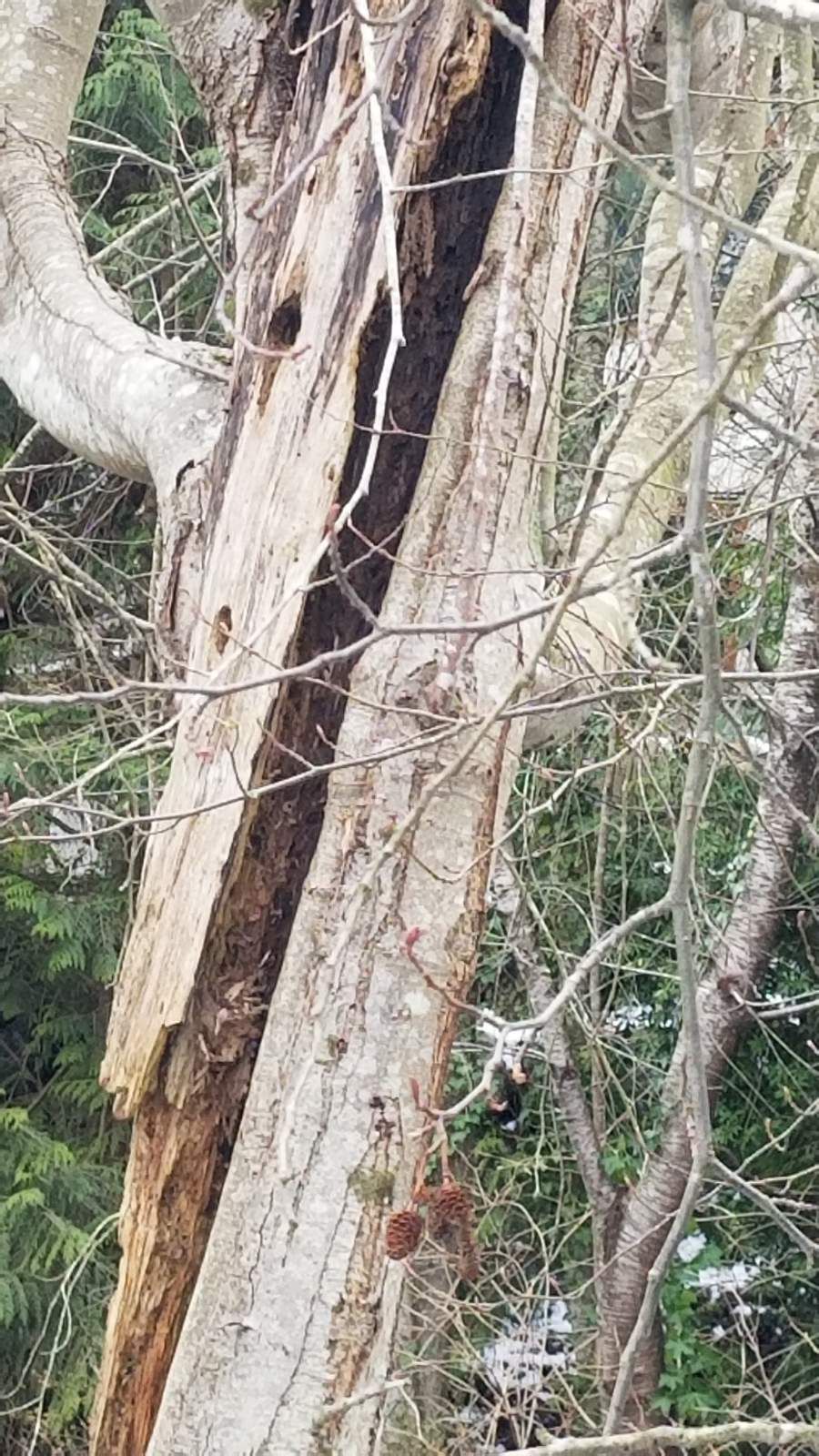
- A visible crack or split in the trunk or a major limb
- Co-dominant stems with a tight V-shaped union (weak attachment point)
- A lean that has changed recently or developed after a storm
- Soil movement, root upheaval, or exposed roots near the base
- Large dead limbs or hanging limbs over a house, driveway, fence, or walkway
- Recent excavation, trenching, paving, or construction inside the drip line
**Disease and pest warning signs:**
- Fungal conks or bracket fungi on the trunk or root flare
- Crown dieback from the top down (often a sign of root issues or pest damage)
- Oozing sap, pitch tubes, or unexplained bark damage
- D-shaped exit holes on birch or other hardwoods (bark beetle sign)
- Shelf-like fungal growth on large limbs
- Sudden thinning or discoloured foliage in mid-summer
**After a storm:**
- A large limb has failed or cracked
- The tree has shifted or developed a new lean
- Roots are exposed or lifted
- A cracked limb is hanging in the canopy
- The tree is touching or near a utility line
If a tree poses immediate danger to a structure, vehicle, road, or person, treat it as an emergency. Aesthetic Tree & Hedge Services provides emergency tree service in Vancouver and the Lower Mainland for hazardous trees, storm damage, and urgent removals. We operate 24/7 during weather events.
Suggested Images for This Article
- Seasonal tree care calendar graphic for Vancouver homeowners (month-by-month visual)
- Photo of proper mulch ring around a tree, with clear space from trunk
- Before-and-after cedar hedge trimming image showing density improvement
- Close-up of a proper pruning cut preserving the branch collar
- Photo examples of tree risk signs: fungal conks, cracked union, crown dieback, and exposed roots
- Bronze birch borer damage on a stressed birch (D-shaped exit holes)
- Maple with tar spot fungus on leaves in fall
Ready to Assess Your Trees Before Storm Season?
Aesthetic Tree & Hedge Services provides seasonal tree care in Vancouver, Burnaby, North Vancouver, Richmond, Coquitlam, and nearby Lower Mainland communities.
Our team handles tree pruning, hedge trimming, arborist reports, stump grinding, emergency tree service, and seasonal inspections. We have completed over 800 assessments and removals in the Lower Mainland since 2019.
Call Aesthetic Tree & Hedge Services at (604) 721-7370 to book an estimate, or email hello@aesthetictree.com.
FAQ
**When is the best time to prune trees in Vancouver?**
Late winter, usually February through mid-March, is the best window for most deciduous trees. Ornamental cherries and plums are often better pruned in dry summer conditions to reduce silver leaf fungus and bacterial canker risk. Conifers should be pruned carefully to avoid creating entry wounds during pest season.
**Do I need a permit to remove a tree in Vancouver?**
Often, yes. City of Vancouver regulates trees 20 cm DBH or larger on private property. Other municipalities have different thresholds. Always check your local bylaw before removal. Unpermitted removal can result in fines and replacement planting obligations.
**How often should my trees be professionally inspected?**
Mature urban trees should usually be inspected about once a year, especially if they are close to structures, driveways, sidewalks, or neighbouring properties. Young trees (under 5 years) may need inspection every 2–3 years or after major storms. Post-storm inspections are always recommended after high winds or heavy snow.
**Why is my cedar hedge turning brown in the fall?**
Some interior browning is normal cedar flagging (dormancy response). If browning appears on the outer tips, spreads quickly, or continues into spring, it may be related to drought stress, root compaction, pests, or disease. Consistent mulching and watering during dry summers helps prevent this.
**Is tree work done year-round in Vancouver?**
Yes. Emergency tree work happens whenever safety requires it. Routine pruning, hedge trimming, arborist reports, stump grinding, and soil care are best scheduled around the tree species and season. Most professionals book routine work in late winter (February–March) and spring (April–May).
Found this helpful? Follow our tree care insights directly on Google.
Make us your preferred source on GoogleBefore You Go
Where are you in your tree care journey?
Our Tree Care Services
ISA-certified arborists serving Greater Vancouver


Explore Our Tree Care Services
From expert pruning to safe tree removal, our ISA-certified arborists are ready to help across Greater Vancouver.
View Services