
TL;DR — Quick Summary
storm damaged tree stabilization arborist vancouver emergency response for risky trees, permits, power lines, and safe next steps. Call Aesthetic Tree.
storm damaged tree stabilization arborist vancouver emergency is the search you make when a tree suddenly looks wrong.
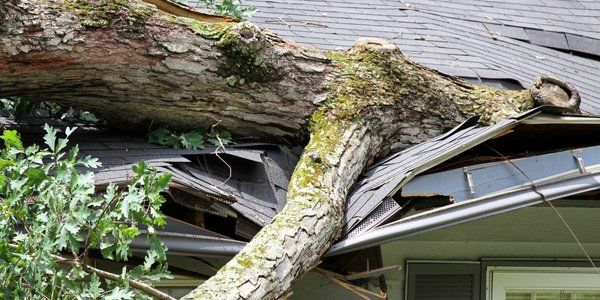
Maybe the cedar is leaning toward your roof after a night of wind. Maybe a Big-leaf maple has a split leader hanging over the driveway. Maybe a Douglas fir has lifted its root plate and cracked the lawn like a trap door.
That moment feels urgent because it is urgent.
But urgent doesn't mean frantic. The right first move is simple. Keep people away. Stay clear of wires. Photograph from a safe distance. Then call an ISA-certified arborist who handles emergency stabilization, hazard assessment, and municipal permit rules in Vancouver and the Lower Mainland.
Aesthetic Tree & Hedge Services provides emergency tree service in Vancouver across Vancouver, Burnaby, North Vancouver, Richmond, Coquitlam, and nearby communities. Our crews are ISA-certified, WCB registered, fully insured, and trained to assess the tree before cutting starts.
TL;DR
- If a tree is touching power lines, stay back at least 10 metres and call BC Hydro or 9-1-1 first. Do not inspect it yourself.
- A storm-damaged tree does not always need removal. Stabilization, cabling, pruning, or bracing can save the tree when the structure allows it.
- Vancouver often requires a permit to remove private trees 20 cm or greater in diameter at 1.4 metres above grade.
- A real hazard assessment checks root flare, soil heaving, trunk cracks, co-dominant stems, decay, canopy load, and nearby targets.
- Call Aesthetic Tree & Hedge Services for a free estimate at (604) 721-7370. ISA-certified arborists. WCB registered.
When is a storm-damaged tree an emergency in Vancouver?
A storm-damaged tree is an emergency when it threatens people, buildings, vehicles, roads, sidewalks, service lines, or neighbouring property.
The risk often shows up in plain sight. A tree leans more than it did yesterday. The soil has lifted around the root flare. A major limb is cracked but still hanging. The trunk has split where two stems meet. The crown is now one-sided because wind tore out a large scaffold branch.
Those signs matter because trees fail in parts. A branch can fail first. Then the trunk can twist. Then roots can tear. By the time a homeowner sees movement, the tree has already started telling a structural story.
In our experience across Greater Vancouver, storm calls fall into five groups:
- Trees down on roofs, fences, sheds, vehicles, or driveways
- Hanging limbs lodged in the canopy
- Split trunks or cracked co-dominant stems
- Uprooted or partially uprooted trees
- Trees or branches near utility lines
Each group needs a different response. A downed tree on a roof needs controlled sectional removal. A split maple may need load reduction and cabling. An uprooted cedar near a house may need removal because the anchoring roots have failed.
The key is the assessment. Cutting first can make the load shift. That can damage the home, crush a fence, or injure someone nearby.
If the tree is actively moving, keep everyone outside the fall zone. A simple rule helps. Picture the tree lying flat in every direction it can fall. Stay farther away than that.
What should you do first if a tree falls on power lines?
If a tree has fallen on power lines, do not approach it. Stay at least 10 metres away. That is about the length of a city bus.
BC Hydro gave that same 10-metre warning in its 2025 storm outage guidance. It also tells customers to assume every downed line is live. That rule applies even when the line looks quiet. No sparks. No buzzing. No smoke. Still live until BC Hydro says otherwise.
Call 9-1-1 for immediate public danger. Call BC Hydro's emergency line if their equipment is involved. Then call an emergency arborist for the tree work after the electrical hazard is controlled.
This order matters.
Arborists do not de-energize utility lines. BC Hydro does that. A qualified tree crew can coordinate with BC Hydro, set the work zone, and remove the tree once the electrical hazard is cleared.
Do not touch the tree. Do not touch a fence, vehicle, ladder, tool, or puddle near the tree. Electricity can travel through wet soil, metal, and wood. Vancouver storm calls often involve heavy rain, saturated lawns, and poor visibility. That mix raises the risk.
Aesthetic Tree's emergency tree service includes BC Hydro coordination when utility lines are involved. The goal is simple. Make the site safe before any saw starts.
How does an arborist decide whether to stabilize or remove a storm-damaged tree?
An arborist starts with the question homeowners care about most: can this tree be made safe without removing it?
The honest answer comes from structure, not hope.
A storm-damaged tree can often be stabilized when the main trunk is sound, the root system is holding, and the remaining canopy can be balanced. Stabilization includes selective pruning, crown reduction, cabling, bracing, propping, or temporary site controls.
Removal is the safer answer when the tree has lost its anchoring roots, the trunk is split through load-bearing wood, decay is advanced, or the tree's targets are too high-risk. Targets are the things a tree can hit. Homes, decks, sidewalks, parked cars, lanes, and service lines all count.
During a hazard assessment, we look at:
- Root flare exposure and new soil cracks
- Root plate lifting or sinking
- Trunk cracks, seams, cavities, and included bark
- Co-dominant stems with weak unions
- Deadwood size and location
- Fungal fruiting bodies near roots or trunk
- Canopy balance after limb failure
- Wind exposure from nearby tree removals or construction
- The distance to homes, wires, paths, roads, and fences
Species matters too.
Western red cedar can uproot in saturated soil, especially where roots are shallow or restricted. Big-leaf maple can shed large limbs after decay enters old pruning cuts. Douglas fir can hold strong in normal weather, then fail hard when roots are compromised by excavation, grade changes, or prolonged soil saturation.
Stabilization is not a promise that a tree will never fail. No arborist can promise that. It is a risk-reduction plan based on the tree's current condition and the site around it.
When removal is the right call, our tree removal Vancouver team handles the work in controlled sections. When the tree can stay, a support or pruning plan can protect both the tree and the property.
What does tree stabilization actually involve after a storm?
Tree stabilization means reducing immediate risk while preserving the tree when preservation is safe.
It is not one service. It is a set of arborist decisions.
The first step is site control. We mark the fall zone, keep people away, and decide where the load is sitting. A cracked limb under tension behaves like a spring. A partly uprooted tree can roll. A split trunk can open more after the first cut.
Next comes load reduction. That usually means careful pruning. The goal is to reduce weight and wind sail without stripping the tree. Over-pruning creates new stress. It also invites decay and weak regrowth.
Aesthetic Tree follows ANSI A300 pruning principles. Cuts are made at proper branch unions. The branch collar stays intact. Topping is avoided because it creates weak shoots and long-term hazards.
If pruning is enough, the tree may not need hardware. If the structure still needs support, cabling or bracing comes next.
Cabling uses a support system between limbs or stems to reduce movement. Bracing uses rods through weak unions or split wood to add support. Guying can support a young or recently shifted tree from the ground. Propping can support a heavy limb from below.
The Tree Care Industry Association describes ANSI A300 Part 3 as the standard for supplemental support systems, including cabling, bracing, guying, and propping. That matters because hardware placement is not guesswork. Wrong placement can girdle the tree, split the union, or create a false sense of safety.
For homeowners, the practical difference is this:
- Pruning reduces weight.
- Cabling limits movement.
- Bracing reinforces a weak union.
- Guying supports a shifted trunk or young tree.
- Removal eliminates a hazard that cannot be reduced enough.
If your tree needs support hardware, ask how it will be inspected later. Support systems need follow-up. Trees grow. Hardware ages. Storms add new stress.
A tree that receives cabling today still needs professional inspection in future seasons.
Can cabling save a split tree after heavy wind?
Cabling can save some split trees. It cannot save all split trees.
A split with sound wood on both sides, limited decay, and a manageable target area may be a good candidate. A split that runs deep into the trunk, opens under load, or connects to decay at the base is much more serious.
Co-dominant stems are common in storm calls. These are two main stems growing from the same point. If the union has included bark, the stems press against each other instead of forming strong wood. Wind then pulls them apart.
You often see this in maples, cherries, and ornamental trees. You also see it in older trees that were topped years ago. Topping creates multiple upright shoots. Those shoots grow fast. They often attach poorly.
A proper cabling plan starts with pruning. The crown is reduced to lower stress. Then hardware is placed high enough to support the weak union. The support is designed for the tree's size, defect, and movement.
This is where do-it-yourself fixes create trouble. Ratchet straps, rope, garden hose, chain, and wire wrapped around limbs can cut into the cambium. That damages the living tissue under the bark. It can kill the supported section over time.
A split tree needs an ISA-certified arborist, not a hardware-store rescue.
If the tree is worth preserving, ask about tree cabling and a written inspection schedule. If it is not safe to preserve, ask for a clear explanation of the failure risk and the permit path.
Do you need a permit to remove a storm-damaged tree in Vancouver?
In Vancouver, you usually need a permit to remove a private tree with a diameter of 20 cm or greater, measured 1.4 metres above the ground.
That threshold comes from the City of Vancouver's Protection of Trees By-law No. 9958. The City also states that an arborist can certify a tree as dead, dying, or hazardous as part of the removal conditions.
This is where emergency work and bylaw work meet.
If a tree has already failed and is creating immediate danger, safety comes first. If a protected tree is still standing but hazardous, the City often needs documentation. That can include photos, measurements, site context, and a certified arborist's findings.
For development sites in Vancouver, the City says an arborist report is required when there are trees 20 cm or larger in diameter. That same level of documentation can also help after storm damage, especially when a neighbour, insurer, strata council, or bylaw officer needs a record.
Different municipalities use different thresholds.
Burnaby defines protected trees differently depending on site status. As of its published tree guidance, non-development properties include conifers 30 cm or greater and deciduous trees 45 cm or greater. Richmond's Tree Protection Bylaw No. 8057 generally restricts removal of trees larger than 20 cm DBH without a permit. North Vancouver, Coquitlam, and Port Coquitlam each have their own rules.
So don't assume Vancouver rules apply across Boundary Road.
Aesthetic Tree prepares arborist reports in Vancouver for permit applications, insurance documentation, and hazard assessments. A good report names the species, DBH, condition, defects, risk factors, and recommendation.
That paperwork protects homeowners. It also protects the urban forest from needless removals.
Why are Vancouver trees more vulnerable during fall and winter storms?
Vancouver's storm season stresses trees from two directions: wind above and water below.
Heavy rain saturates soil. Saturated soil grips roots less firmly. Wind then pushes the crown. If roots are shallow, decayed, cut, or restricted by hardscape, the root plate can lift.
That is why you see whole trees tip after storms, not just broken branches.
BC Hydro's 2025 report on 2024 storm outages said weather-related outages hit record levels in 2024. It also said years of drought left trees and vegetation dry, damaged, and more likely to fall into electrical equipment. BC Hydro reported that more than 1.4 million customers faced weather-related outages in 2024, based on an Angus Reid Forum survey.
Another BC Hydro operational update from December 2024 said more than 320,000 customers were affected by a windstorm across the Lower Mainland, Sunshine Coast, Vancouver Island, and the Gulf Islands. It also noted more than 250 BC Hydro and contractor crew members were working on restoration.
Those numbers line up with what homeowners see on the ground. Storm damage is not only about one wild night. It is often the result of stress that built up over seasons.
Drought matters. Construction damage matters. Old topping cuts matter. Soil compaction matters. Root loss from trenching matters.
The City of Vancouver's 2025 Urban Forest Strategy says Vancouver had about 25% tree canopy in 2022 and a target of 30% by 2050. It also lists more frequent and intense rainfall as a climate concern. Metro Vancouver's regional strategy sets a broader goal to expand urban tree canopy from 32% to 40%.
More trees are good for shade, stormwater, and neighbourhood health. But more trees also need better care. A bigger canopy needs skilled pruning, root protection, and risk assessment after storms.
That is arboriculture. Not yard cleanup.
What signs show a storm-damaged tree is unsafe?
A storm-damaged tree is unsafe when the structure has changed in a way that increases failure risk.
Look from a safe distance. Do not stand under the tree. Do not pull branches. Do not climb. Use your phone camera zoom if needed.
Call an arborist if you see any of these signs:
- A new lean toward a house, lane, sidewalk, or wire
- Soil lifting on one side of the trunk
- Fresh cracks in the trunk or main limbs
- Bark tearing where two stems meet
- Large hanging branches lodged overhead
- A broken top or torn-out limb wound
- Fungal growth at the base
- Sawdust, cavities, or soft wood near the trunk
- Exposed roots that have snapped
- A tree rocking in wind at ground level
Some signs look small but mean a lot.
A raised root plate is one. It tells us the roots and soil moved together. That tree has lost anchorage. Another is a crack running down from a branch union. That crack can widen fast under load.
Deadwood also deserves respect. A dead branch over a walkway is not the same risk as a dead branch over a back garden bed. Risk comes from defect plus target. A defect with no target is lower risk. A defect over a bedroom, play area, sidewalk, or parking pad is high priority.
If pruning can solve the defect, our tree cutting and pruning service in Vancouver can reduce risk while protecting the tree's health. If the defect is too severe, removal becomes the safer recommendation.
How do arborists protect homes, fences, and gardens during emergency tree work?
Emergency tree work is controlled work in a messy setting.
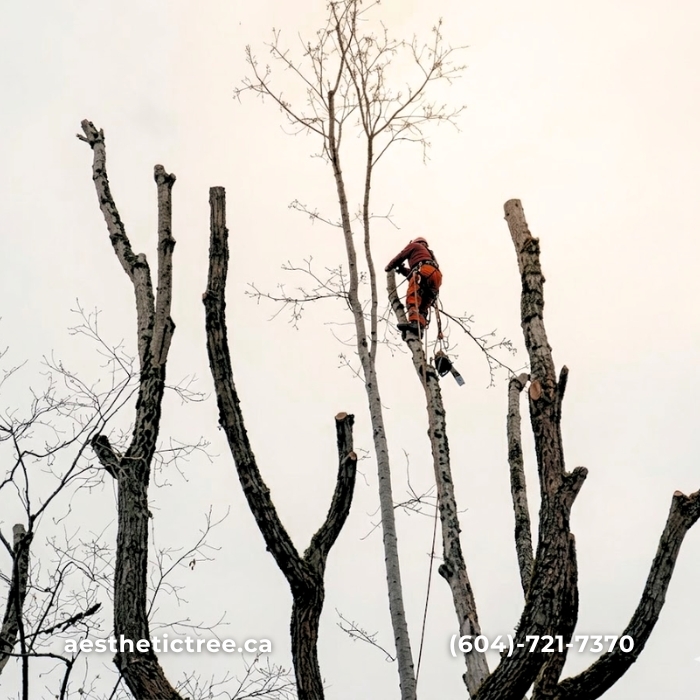
The job starts with the fall zone. We identify where wood can move, where crews can stand, and where rigging can safely lower sections. On tight Vancouver lots, that often means working over fences, garages, hedges, narrow side yards, and parked vehicles.
The equipment changes by site. Crews use chainsaws, climbing systems, rigging ropes, blocks, lowering devices, chippers, aerial lifts, and cranes when needed. Crane-assisted removal is often the safest choice when a large tree is over a structure with no clean drop zone.
A heavy limb does not need to hit the ground to cause damage. It can swing into siding. It can crush a hedge. It can tear a gutter. It can bounce through a fence panel.
So the work is planned in pieces.
The arborist reads tension and compression in the wood. The crew removes weight in a controlled order. Rigging lines hold sections before cuts are completed. Ground crew members manage the lowering path. Debris is staged so the site stays clear.
For very large or awkward removals, crane tree removal can reduce time under load and limit property damage. The crane lifts sections away instead of letting them swing or drop.
After the hazard is gone, cleanup still matters. Broken wood, sawdust, limbs, and stump sections can block access or create trip hazards. If a stump remains in a bad location, stump grinding in Vancouver can be scheduled after the emergency work.
What should strata councils and property managers do after a storm?
Strata councils and property managers should treat storm response as a triage process.
First, secure obvious hazards. Block access to fallen branches, split trees, and damaged walkways. Keep residents away from taped-off areas. If wires are involved, call BC Hydro or emergency services first.
Second, document the site. Take photos from safe distances. Record the time, location, and affected units or common areas. Keep notes simple. Do not assign blame. Just record conditions.
Third, call an ISA-certified arborist for a hazard assessment. Strata properties often have repeated targets. Parking areas, paths, courtyards, playgrounds, balconies, and entrances all change the risk rating.
Fourth, separate emergency work from follow-up work. The immediate job is to remove or stabilize hazards. The follow-up job is to inspect the rest of the property for related defects.
This second step gets missed after storms. It is also where future failures are prevented.
If one cedar uprooted in a saturated corner, nearby cedars may share the same soil conditions. If one maple limb failed from included bark, other maples on the site may have similar unions. If a construction trench cut roots near one tree, other trees beside the same trench deserve attention.
For strata sites, we often recommend a post-storm tree inventory update. It should record species, DBH, condition, defects, priority work, and reinspection timing.
That record helps councils plan. It also helps show due care if a future claim appears.
What should homeowners avoid doing after storm tree damage?
Avoid the heroic stuff.
Do not climb the tree. Do not work under hanging branches. Do not cut a limb that is holding weight against a roof or fence. Do not pull a leaning tree with a truck. Do not wrap a split trunk with rope or chain. Do not stand near downed wires.
Also avoid panic removal when the tree can be saved.
A storm-damaged tree can look dramatic and still have a good preservation path. We have seen maples with torn limbs recover well after proper pruning. We have seen cedars stabilize after selective reduction when root anchorage remained sound. We have also seen trees that looked fine from the street but had dangerous root failure at the base.
That is why the inspection comes first.
Here is a safer homeowner checklist:
- Move people and pets away from the tree.
- Photograph damage from outside the fall zone.
- Note whether wires, structures, roads, or vehicles are involved.
- Call BC Hydro first if electrical equipment is involved.
- Call an ISA-certified arborist for assessment and response.
- Keep insurance photos and invoices together.
- Ask whether a municipal permit or arborist report is required.
If hedges were damaged by falling limbs, deal with the tree hazard first. Then assess the hedge. Cedar hedges can sometimes be reshaped after branch impact. If the structure is crushed, staged restoration or replacement may be needed. Aesthetic Tree also provides hedge trimming services in Vancouver after the emergency risk is handled.
How can you reduce storm damage risk before the next wind event?
The best storm response happens before the storm.
Preventive tree care does not make trees invincible. It lowers known risks. That is the practical goal.
Start with an annual inspection for mature trees near targets. This matters most for large Douglas fir, cedar, maple, birch, cherry, and older ornamental trees near homes. Mature trees carry more weight. They also hide defects better.
Then look at pruning history. Old topping cuts, flush cuts, and heavy lion-tailing create weak structure. Lion-tailing means stripping interior branches and leaving weight at the ends. It makes limbs act like long levers in wind.
Good pruning does the opposite. It manages load while keeping natural structure.
Root care matters too. Keep soil off the root flare. Avoid trenching inside the critical root zone. Do not park vehicles over roots. Keep heavy construction materials away from the dripline. Mulch can help protect soil moisture and temperature when installed correctly. Keep mulch away from direct trunk contact.
The City of Vancouver's urban forest materials note that the city manages more than 150,000 street trees and more than 1 million trees across public forests and woodlands. Private trees add much more canopy. That is a lot of living infrastructure.
It needs maintenance.
If a tree has a known weak union, ask about pruning and support before storm season. If roots were cut during construction, book an assessment. If a tree has grown into service lines, call before the first wind warning.
Emergency calls are sometimes unavoidable. Repeat emergency calls usually point to deferred maintenance.
How fast should you call an arborist after storm damage?
Call the same day if the tree is leaning, split, uprooted, hanging over a target, or near lines.
If there is no immediate target and the tree is stable, call within a few days. Do not wait weeks. Fresh cracks dry out. Broken limbs shift. Insurance documentation gets weaker. Municipal questions become harder to answer after cleanup.
Aesthetic Tree's emergency page notes 24/7 response across Greater Vancouver, with triage during active storm events. A tree on an occupied building takes priority over a tree blocking a back corner of a yard. That triage is normal. It is how crews handle multiple urgent calls safely.
When you call, be ready with:
- Your address and municipality
- Tree species, if known
- What changed after the storm
- Whether people, structures, roads, vehicles, or wires are at risk
- Photos from a safe distance
- Access limits, such as locked gates or narrow lanes
- Insurance or strata contact details, if relevant
You do not need to diagnose the tree. That is the arborist's job.
You only need to describe the scene clearly and stay safe until help arrives.
Why choose an ISA-certified, WCB registered arborist for emergency stabilization?
Emergency tree work is high-risk work. Credentials matter.
An ISA-certified arborist has passed a professional certification exam covering tree biology, pruning, risk, diagnosis, soil, installation, and safe work practices. WCB registration matters because tree work involves chainsaws, climbing, rigging, heavy wood, and unpredictable loads.
Insurance matters too. Aesthetic Tree carries liability coverage and provides professional service across Greater Vancouver. The company has served the Lower Mainland for more than 20 years, with emergency response, pruning, removal, stump grinding, hedges, and arborist reports.
But the bigger reason is judgment.
A good emergency arborist does not only ask, "How do we cut this down?" They ask:
- Can this tree be stabilized safely?
- What is the failure mode?
- What target is at risk?
- What does the bylaw require?
- What documentation does the homeowner need?
- What follow-up work prevents the next failure?
That is the difference between tree work and arboriculture.
For storm-damaged trees, that difference protects your home, your neighbours, and the tree when it can be saved.
If you need urgent help, call Aesthetic Tree & Hedge Services for a free estimate at (604) 721-7370. ISA-certified arborists. WCB registered. Emergency service available across Vancouver and the Lower Mainland.
FAQ
Can a leaning tree be stabilized after a storm?
Yes, a leaning tree can be stabilized when the root system is still anchored and the trunk is structurally sound. An arborist checks the root flare, soil movement, trunk cracks, canopy load, and nearby targets. If roots have lifted or snapped, removal is often the safer option.
Do I need an arborist report for a storm-damaged tree in Vancouver?
You need an arborist report when the City, an insurer, a strata council, or a permit process requires documentation. In Vancouver, private trees 20 cm or greater in diameter at 1.4 metres are regulated under the Protection of Trees By-law. A report records species, DBH, condition, defects, risk, and recommendations.
Is tree cabling a permanent fix?
Tree cabling is a support system, not a permanent cure. It reduces movement in weak limbs or stems when the tree is a good candidate. It also needs periodic inspection because trees grow and hardware ages. Proper cabling follows ANSI A300 support-system practices.
Who should I call first if a tree falls on power lines?
Call 9-1-1 if there is immediate danger. Call BC Hydro when their lines or equipment are involved. Stay at least 10 metres away. Then call an emergency arborist after the electrical hazard is controlled. Do not touch the tree, wires, fence, vehicle, or nearby puddles.
Does every storm-damaged tree need to be removed?
No. Some storm-damaged trees can be preserved with pruning, cabling, bracing, or load reduction. Removal is recommended when the tree cannot be made safe enough for its location. An ISA-certified arborist should assess the tree before a final decision is made.
Call Aesthetic Tree & Hedge Services for a free estimate at (604) 721-7370. Our ISA-certified arborists are WCB registered and serve Vancouver, Burnaby, North Vancouver, Richmond, Coquitlam, and the Lower Mainland.
Related: For more on this, see What Does ISA Certified Mean — And What Uncertified Crews Miss.
Found this helpful? Follow our tree care insights directly on Google.
Make us your preferred source on GoogleBefore You Go
Where are you in your tree care journey?
Our Tree Care Services
ISA-certified arborists serving Greater Vancouver


Explore Our Tree Care Services
From expert pruning to safe tree removal, our ISA-certified arborists are ready to help across Greater Vancouver.
View Services