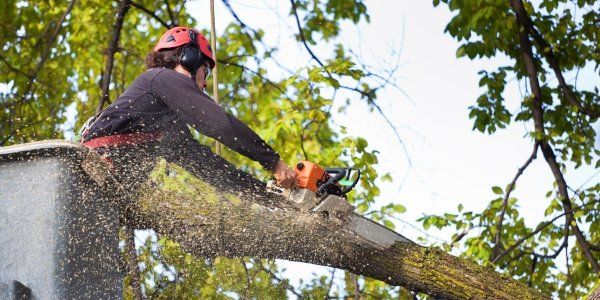

TL;DR — Quick Summary
Ultimate Vancouver tree services guide: verify ISA credentials, WCB coverage & permits before hiring. Learn red flags & what certified arborists do differently. Free estimate.
Choosing the right Vancouver tree services provider starts before you book an estimate. Most homeowners search quickly, compare prices, and hope the crew knows what they are doing. Tree work is not the place to gamble on hope.
A bad hire can create real problems: WorkSafeBC coverage questions, permit issues, property damage, poor pruning cuts, or a tree that becomes less stable after the work is finished.
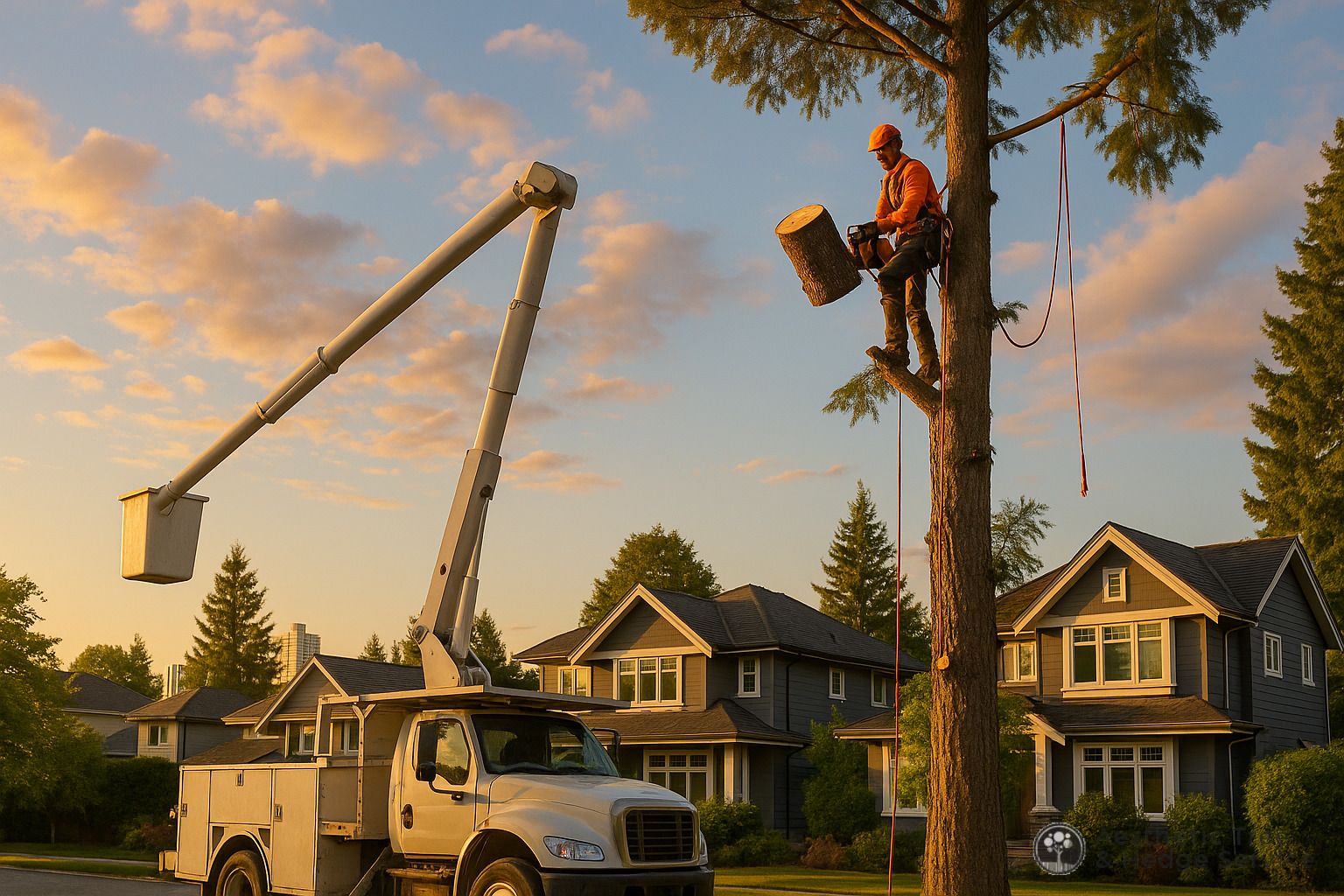
The difference between a professional job and a risky one usually comes down to three things: credential, coverage, and permit awareness. This guide explains all three.
TL;DR
- **ISA certification** is the credential to ask for. Verify an arborist's credential number at isacertified.isa-arbor.com before signing a quote.
- **WorkSafeBC coverage matters** for BC tree work. Ask for the company's WorkSafeBC account number and confirm coverage before work begins.
- **Vancouver tree permits are not optional** when a tree is protected by municipal rules. Private-property tree protection in Vancouver is governed by the City's Protection of Trees By-law, and rules vary across the Lower Mainland.
- **ANSI A300 standards** are the professional benchmark for pruning and tree-care work. They help separate proper arboriculture from fast cutting.
- Get a **written quote with scope of work** before any crew arrives. It should cover disposal, cleanup, access, permit responsibility, and insurance documentation.
What Credentials Should a Vancouver Arborist Actually Have?
There is one credential that homeowners should understand before hiring a tree service: **ISA Certified Arborist**.
ISA stands for the International Society of Arboriculture. It is one of the best-known professional bodies in arboriculture, and ISA certification shows that an arborist has met experience requirements, passed a technical exam, and maintains the credential through continuing education.
To qualify for the ISA Certified Arborist credential, applicants generally need arboricultural experience or an approved combination of education and experience. Certified arborists also complete continuing education to keep the credential active.
Every ISA Certified Arborist has a credential number. Ask for it. Then verify it at isacertified.isa-arbor.com. If a contractor advertises certified arborist services but cannot provide a credential number, pause before hiring.
For complex work, you may also see additional qualifications such as **TRAQ**, the Tree Risk Assessment Qualification, or **Board Certified Master Arborist** status. These matter most for hazard assessments, development-related tree reports, heritage trees, strata disputes, and removals near buildings or utilities.
In real Vancouver-area tree work, the credential gap shows up quickly. A trained arborist assesses species, structure, decay, root conditions, targets, and site constraints before recommending removal or pruning. A less qualified cutter may only see a trunk and a direction to drop it.
How Do You Know If a Tree Service Is WorkSafeBC Registered?
This question protects more than the crew. It protects the homeowner from preventable risk.
Tree work is high-risk work. Crews work at height, use chainsaws and chippers, manage heavy wood under tension, and often operate near fences, homes, vehicles, roads, and power lines.
In British Columbia, legitimate tree-service companies should be able to provide WorkSafeBC registration information. Ask for the company's WorkSafeBC account number and request a clearance letter or confirmation of active coverage where appropriate. You can also contact WorkSafeBC directly to confirm coverage status.
The exact liability exposure depends on the worker, company structure, job type, and whether the homeowner is acting as a prime contractor. The practical advice is simple: do not hire a tree service that refuses to provide WorkSafeBC documentation.
You should also ask for **general liability insurance**. For residential tree work, $2 million in coverage is a common baseline. For larger removals, crane-assisted work, commercial sites, or work close to structures, higher coverage may be appropriate.
No WorkSafeBC information, no insurance certificate, no written scope: no work.
Aesthetic Tree & Hedge Services provides coverage documentation before work begins so homeowners know who is coming onto the property and what protections are in place.
What's the Difference Between an ISA-Certified Arborist and a Tree Cutter?
The difference is accountability, diagnosis, and standards.
An ISA-certified arborist is trained to evaluate the tree before cutting it. That means looking at species, defects, pruning history, site conditions, decay indicators, root-zone issues, and likely consequences of each cut.
Professional arborists use **ANSI A300** as the technical standard for tree-care practices. ANSI A300 covers pruning, soil management, support systems, lightning protection, and other tree-care operations. It is not marketing language. It is the standard serious arborists use to define proper work.
On a pruning job, that means:
- Avoiding excessive live-crown removal in one season
- Preserving the branch collar instead of making flush cuts
- Avoiding topping and other cuts that create long-term structural weakness
- Making pruning decisions based on tree health, structure, and future growth
Tree topping is one of the clearest red flags. It removes major leaders or large upper limbs, often leaving a tree with decay-prone wounds and unstable regrowth. A topped tree may look smaller after the job, but it is often more vulnerable over time.
For tree removal in Vancouver, the stakes are obvious. A large tree beside a house, lane, garage, or neighbouring property may need rigging, sectional dismantling, ground-crew coordination, and careful debris handling.
The same applies to tree cutting and pruning. Poor pruning can leave wounds that do not close properly, create weak regrowth, or remove the wrong structural limbs. In common Lower Mainland species such as Bigleaf maple, Douglas fir, cedar, cherry, and ornamental pear, those mistakes can affect the tree for years.
When Do You Need a Permit to Remove a Tree in Vancouver?
Do not assume that a tree on your property can be removed without approval.
In Vancouver, private-property trees are regulated under the City's **Protection of Trees By-law No. 9958**. Protected-tree rules can depend on size, species, location, development status, hazard condition, and whether the tree is on private property, city property, or a boulevard.
Across Metro Vancouver, rules vary by municipality:
- **City of Vancouver**: Protected private trees may require a permit before removal, and city or boulevard trees carry separate restrictions.
- **Burnaby**: Tree removal may require approval depending on size, location, and site conditions.
- **District of North Vancouver**: Permit requirements apply to protected trees on many private properties.
- **Coquitlam**: Tree management rules apply, with additional restrictions in environmentally sensitive or development-permit areas.
- **Richmond**: Tree cutting is regulated under municipal tree-protection rules, with permits required for many removals.
Because thresholds and exemptions change by municipality, the safest first step is to confirm the rule with the city before cutting. A qualified arborist can help determine whether a permit or arborist report is required.
An arborist report is often required for permit applications. It documents species, diameter, location, health, structural condition, defects, risk factors, and the arborist's recommendation.
A report prepared by someone without appropriate credentials may delay the permit process or be rejected. Aesthetic Tree & Hedge Services prepares arborist reports with the municipal review process in mind, including the details permit staff need to assess the request.
For hazard trees, municipalities may allow expedited review or emergency action depending on the condition and immediate risk. Documentation still matters. Photos, measurements, defect descriptions, and a qualified assessment can make the difference between a smooth process and a dispute after the fact.
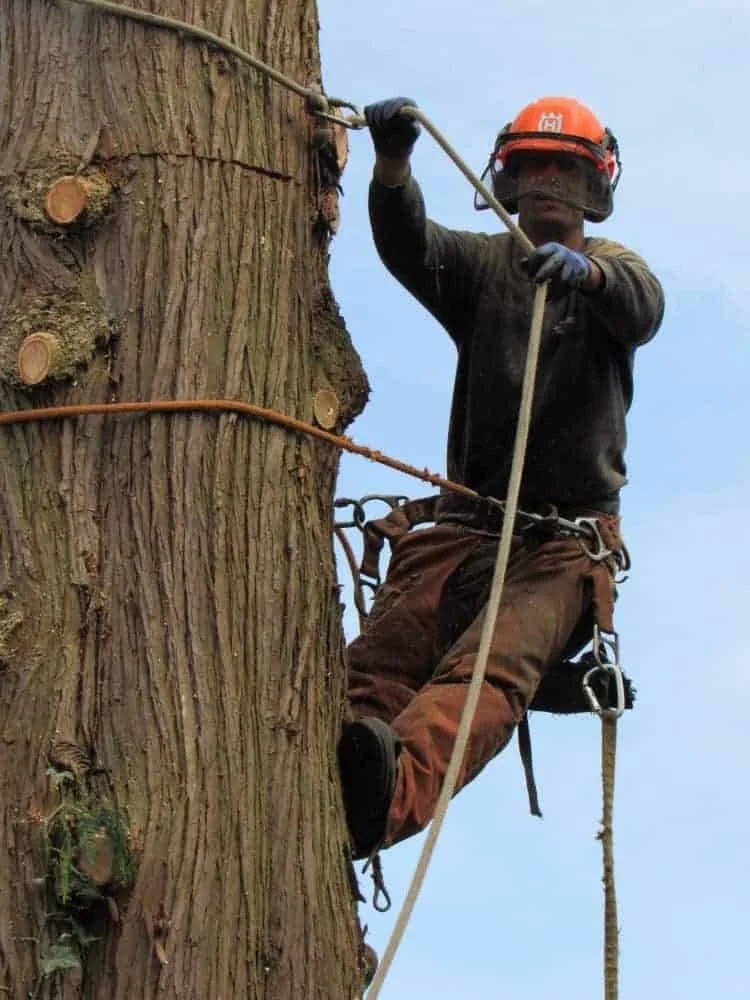
What Does a Professional Tree Hazard Assessment Look Like?
Not every ugly tree is dangerous. Not every healthy-looking tree is safe.
A professional hazard assessment looks at the tree, the site, and the target. The goal is not to scare the homeowner into removal. The goal is to understand likelihood of failure, likely consequences, and practical management options.
A complete assessment may include:
**Above-ground structure:**
- Crown density, dieback, deadwood, and asymmetry
- Trunk wounds, cavities, seams, cracks, or included bark
- Co-dominant stems and weak unions
- Fungal fruiting bodies or signs of decay near the trunk or root flare
- Previous topping, flush cuts, storm damage, or poor pruning history
**Root zone:**
- Soil compaction from construction, parking, or repeated traffic
- Root disturbance from trenching, grading, or excavation
- Drainage issues or saturated soils
- Root conflicts with retaining walls, driveways, utilities, or foundations
- Possible indicators of root disease, including Armillaria or Phytophthora in suitable conditions
**Site factors:**
- What the tree could strike if it failed
- Proximity to homes, garages, fences, sidewalks, roads, and parked vehicles
- Slope, wind exposure, soil conditions, and site drainage
- Nearby power lines or service drops
The recommendation may be removal, pruning, cabling, soil improvement, monitoring, or no immediate action. A good arborist explains why.
Tree cabling can be appropriate for some trees with co-dominant leaders or manageable structural defects. It is not a cure-all, but when specified and installed correctly, it can reduce movement and help preserve a tree that might otherwise be removed.
After removal, stump grinding removes the visible stump and grinds below grade so the area can be replanted or landscaped. It does not remove every root in the soil, and disease management depends on species, site conditions, and diagnosis. If fungal disease is suspected, ask the arborist how the site should be handled before replanting.
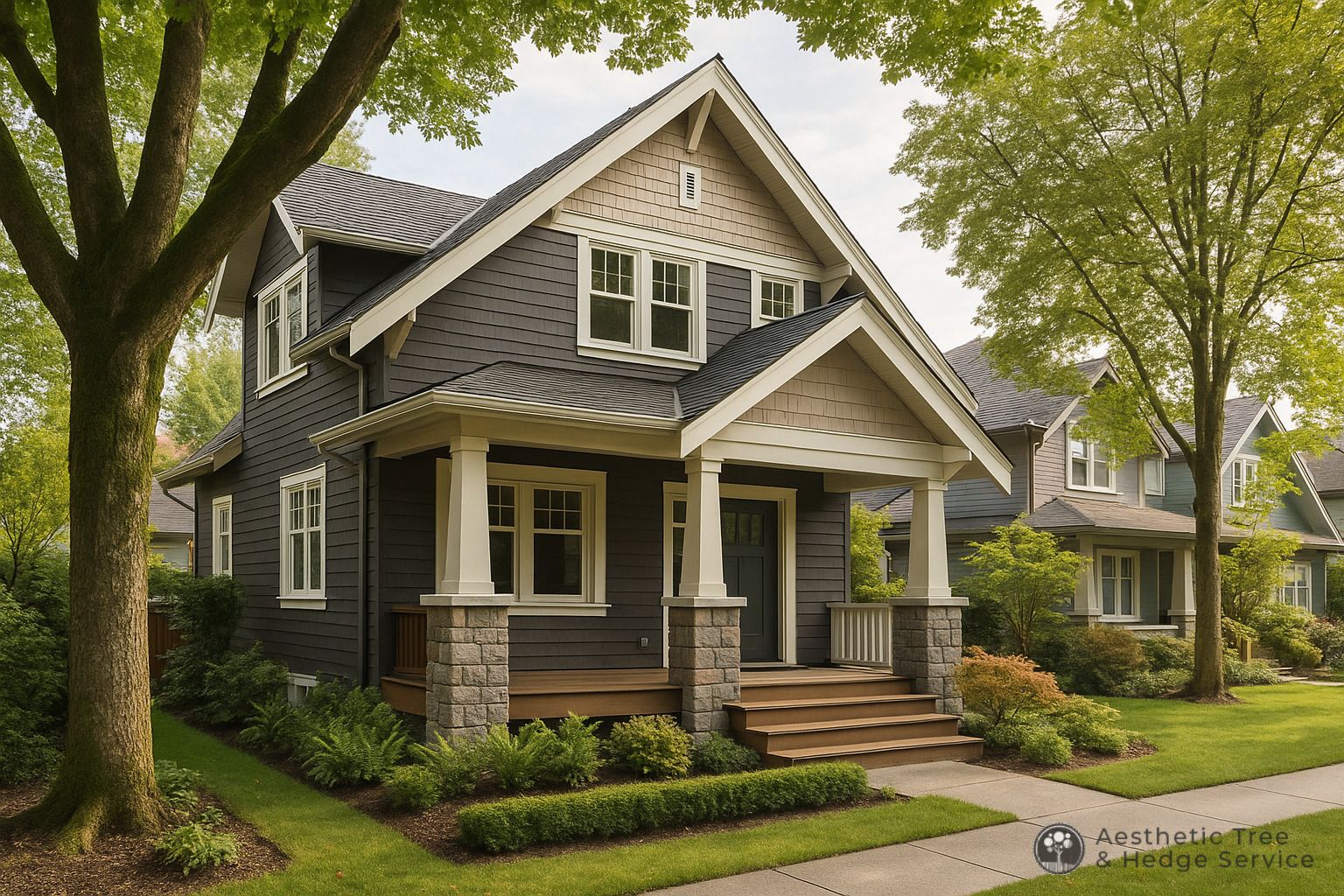
What Red Flags Should You Watch For When Hiring Tree Services?
You can often identify a risky contractor before the quote is finished.
**They offer topping as normal pruning.** Topping is not proper tree care. It creates large wounds, weak regrowth, and long-term structural problems.
**They refuse to provide a written quote.** Professional tree work should be documented: tree location, species if known, scope, disposal, cleanup, access, and exclusions.
**They cannot provide WorkSafeBC or insurance documentation.** This is a dealbreaker. A professional company should expect the question.
**They use climbing spikes on a living tree being pruned.** Spikes are appropriate for removals, not routine pruning. On a retained tree, spikes wound the trunk and can create avoidable injury points.
**They recommend removing every tree near the house just to be safe.** Tree removal should be based on condition, risk, targets, and site constraints, not fear.
**They show up without professional equipment.** Vancouver-area tree work often requires rigging gear, climbing systems, saws, chippers, stump grinders, traffic awareness, and trained ground support. A small saw and an unmarked vehicle are not enough for serious tree work.
What Should a Written Quote From a Vancouver Tree Service Include?
A written quote protects both the homeowner and the contractor. It should include:
1. Company name, contact information, and business details 2. WorkSafeBC account number or clearance information 3. Insurance confirmation 4. Quote date and expiry 5. Tree species if known, location, and approximate size 6. Scope of work and method, especially for removals near structures 7. Disposal plan for chips, branches, logs, and stump material 8. Site access requirements 9. Cleanup terms 10. Permit responsibility and whether permit fees are included 11. Any exclusions, such as utility coordination, traffic control, or landscaping repair
For larger jobs involving crane-assisted tree removal or land clearing, written scope becomes even more important. Misunderstandings about debris volume, access, restoration, or permits can change the cost of a job quickly.
A clear quote prevents disputes before the work starts.
How Do ISA-Certified Arborists Approach Each Major Vancouver Tree Service?
Different tree jobs require different methods. A professional tree service does not approach pruning, removals, emergencies, hedges, and stump work the same way.
**Tree Removal:**
In dense Vancouver neighbourhoods, sectional dismantling is often the safest approach. Branches are removed and lowered in controlled pieces. The trunk is then cut in sections from the top down. Near homes, fences, lanes, gardens, and neighbouring properties, this requires rigging knowledge and tight communication between the climber and ground crew.
**Emergency Response:**
For emergency tree service, speed matters, but assessment still comes first. A storm-damaged tree can have loaded limbs, compromised roots, cracked stems, or hidden tension wood. If power lines are involved, the first call may need to be BC Hydro or emergency services, not a chainsaw crew.
**Pruning:**
Professional pruning starts with purpose. Is the goal clearance, risk reduction, deadwood removal, structure, light penetration, or restoration after previous poor pruning? ANSI A300-style pruning means the arborist chooses cuts that support long-term tree health rather than only shaping the canopy for appearance.
**Hedge Trimming:**
Vancouver hedges commonly include Western red cedar, Portuguese laurel, English boxwood, yew, photinia, and privet. Professional hedge trimming considers species, timing, density, access, and the client's desired finished shape. Laurel, cedar, and boxwood do not all respond the same way to hard cutting.
**Stump and Post-Removal Care:**
After removal, stump grinding can prepare the site for landscaping or tree planting. Replacement species should be chosen based on available root space, soil drainage, mature size, light exposure, and proximity to buildings or utilities. Native and climate-suitable species can be good choices where the site supports them.
Is Choosing the Right Vancouver Arborist Worth the Difference in Cost?
Usually, yes.
The lowest quote is not always the lowest final cost. A cheap removal can become expensive if it damages a fence, misses a permit requirement, leaves an unsafe stem, or creates insurance problems. Poor pruning can also reduce the health, structure, and lifespan of a tree that should have been retained.
Mature trees can contribute meaningfully to curb appeal, shade, privacy, stormwater management, and property value. The exact financial contribution depends on species, health, placement, lot size, and buyer preference, so it should not be reduced to a single dollar amount. What is clear is that a healthy mature tree is an asset, and bad tree work can damage that asset quickly.
Tree-removal pricing in Metro Vancouver varies widely. Small, simple removals may be relatively modest. Large hazard trees, difficult access, crane work, utility coordination, stump grinding, and permit support can raise the price. The only reliable number is a written, site-specific quote.
Call Aesthetic Tree & Hedge Services for a Free Estimate
Aesthetic Tree & Hedge Services serves Vancouver, Burnaby, North Vancouver, Richmond, Coquitlam, and the broader Lower Mainland.
Our team provides arborist-led assessments, written quotes, permit guidance, pruning, removals, hedge trimming, stump grinding, cabling, planting, and emergency response. We follow professional tree-care standards and provide documentation before work begins.
**Call us for a free estimate: (604) 721-7370.**
FAQ
**Do I need a permit to remove a tree on my own property in Vancouver?**
Often, yes. Vancouver's Protection of Trees By-law regulates protected trees on private property, and separate rules may apply to street or boulevard trees. Requirements depend on size, species, location, hazard condition, and development context. Check with the City of Vancouver or ask an ISA-certified arborist before removing a tree.
**How can I verify that an arborist is actually ISA-certified?**
Ask for the arborist's ISA credential number and verify it at isacertified.isa-arbor.com. If the person is certified and current, the credential should appear in the registry.
**What is an arborist report and when do I need one?**
An arborist report is a formal assessment that documents tree species, size, health, structure, defects, risk factors, and recommended action. Municipal permit offices often require arborist reports for protected-tree removal, construction impacts, development permits, strata disputes, insurance matters, and hazard-tree documentation.
**What should I do immediately if a tree falls on my property?**
Stay away until you know whether power lines are involved. If lines are down or nearby, call BC Hydro or emergency services and keep people away from the area. Once the site is safe, contact an emergency tree service. For trees on structures, blocked access, or immediate hazards, request urgent assessment.
**Is tree topping legal in Vancouver?**
Tree topping is not accepted professional pruning practice and may conflict with municipal tree-protection rules when it damages a protected tree. It also violates accepted arboricultural standards because it creates large wounds, decay risk, and unstable regrowth. A qualified arborist will recommend proper pruning, reduction, cabling, monitoring, or removal instead of topping.
Related: For more on this, see Arborist Lincoln: What Coquitlam Homeowners Need Before a Tree Comes Down.
Related: For more on this, see 5 Questions to Ask Before Hiring an Arborist in Vancouver.
Found this helpful? Follow our tree care insights directly on Google.
Make us your preferred source on GoogleBefore You Go
Where are you in your tree care journey?
Our Tree Care Services
ISA-certified arborists serving Greater Vancouver


Explore Our Tree Care Services
From expert pruning to safe tree removal, our ISA-certified arborists are ready to help across Greater Vancouver.
View Services