
TL;DR — Quick Summary
Tree crown restoration outcomes Vancouver: ISA-certified arborists explain real timelines, species recovery, and what to expect after topping or storm damage.
Tree crown restoration outcomes in Vancouver often start with a bad decision made years ago.
Maybe a previous owner "trimmed" the big maple in your East Van backyard.
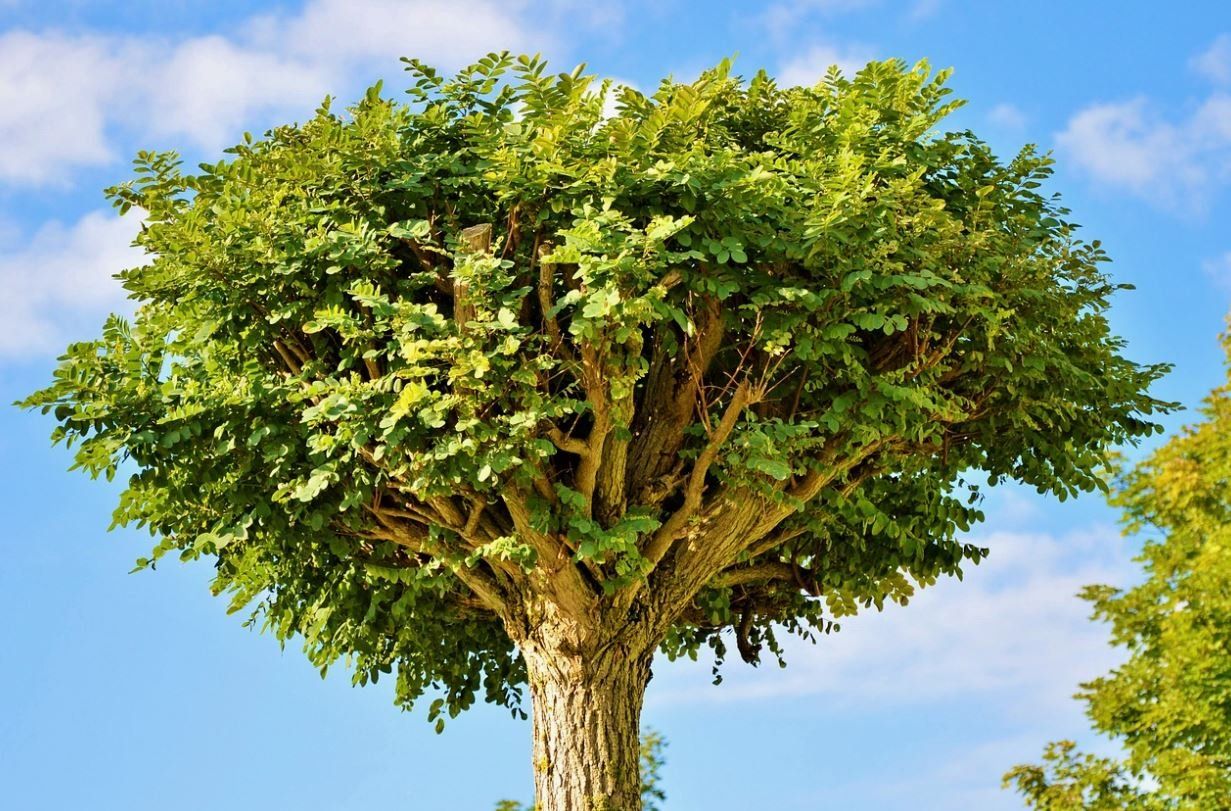
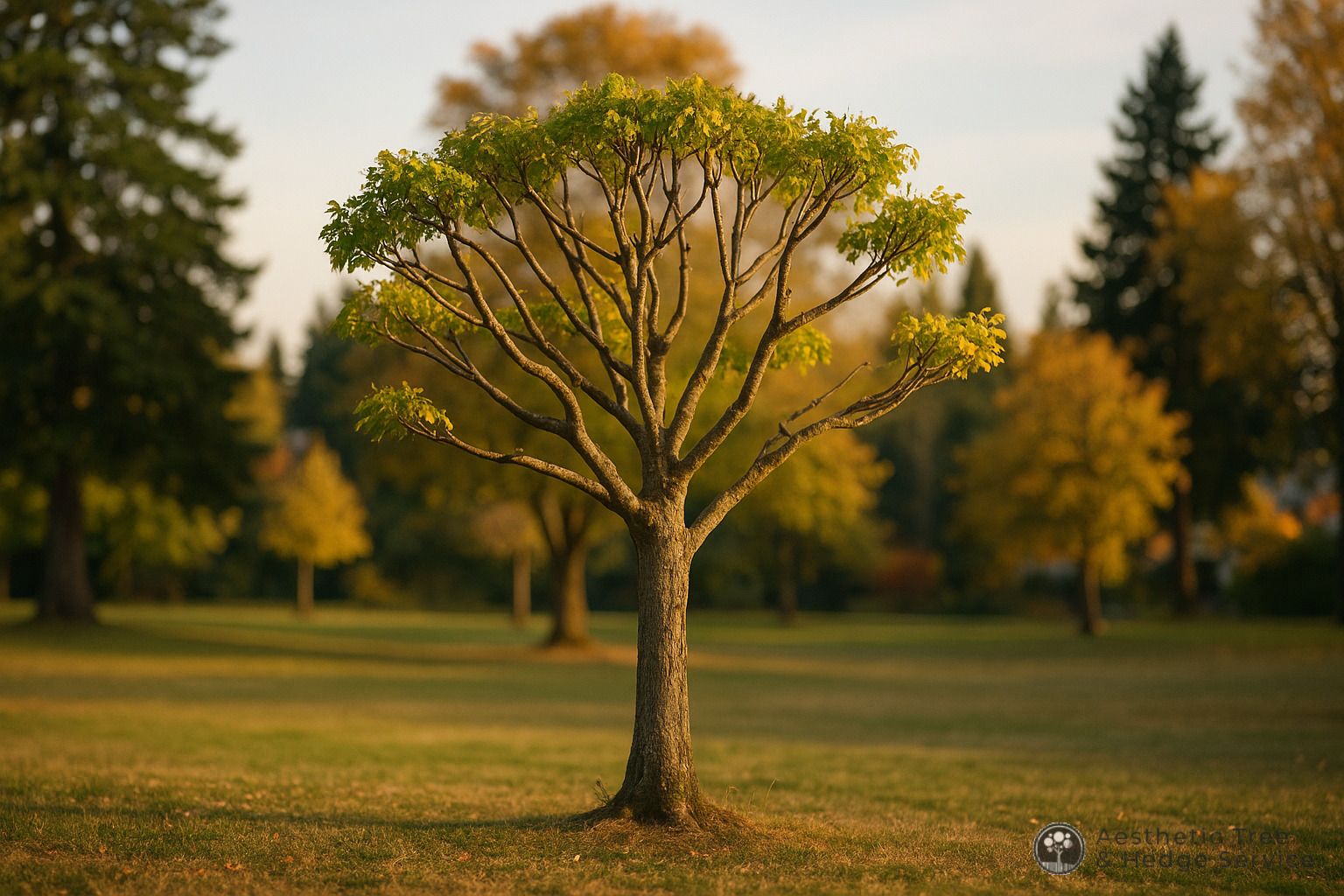
Topped it, actually. Cut off the top third of the crown. Left behind stubby, ugly cuts. And when you moved in, the tree already looked sick. Watersprouts shot straight up everywhere — those weird, vertical growths that look nothing like real branches.
You've been watching it for three years. Wondering: is it going to make it? Can a tree like this come back?
That's the right question.
And the honest answer — from ISA-certified arborists who've done this work across Vancouver, Burnaby, North Vancouver, and the rest of the Lower Mainland — is: it depends.
Here's what we see in the field.
---
TL;DR
- Crown restoration is not a one-season fix. Most trees need 3–7 years of guided recovery pruning to rebuild structural integrity.
- Species matters enormously. Douglas fir and Western red cedar recover differently than Big-leaf maple or ornamental cherry.
- Topped trees don't just look bad — they're genuinely dangerous. Epicormic watersprouts are structurally weak and fail under load.
- Vancouver's wet winters accelerate decay in improperly pruned wounds. Timing and technique are not optional.
- ISA-certified arborists follow ANSI A300 pruning standards — no more than 25% of live crown removed per visit.
---
What Does "Crown Restoration" Actually Mean for a Vancouver Tree?
Crown restoration is not decorative pruning. It's not a cleanup.
It's a multi-year rehabilitation program for a tree that's been through something traumatic — topping, storm damage, severe defoliation, utility line clearance cuts, or years of improper pruning.
The goal: rebuild a functional, structurally sound crown that the tree can sustain on its own.
In Vancouver, four main causes send trees into crown restoration programs:
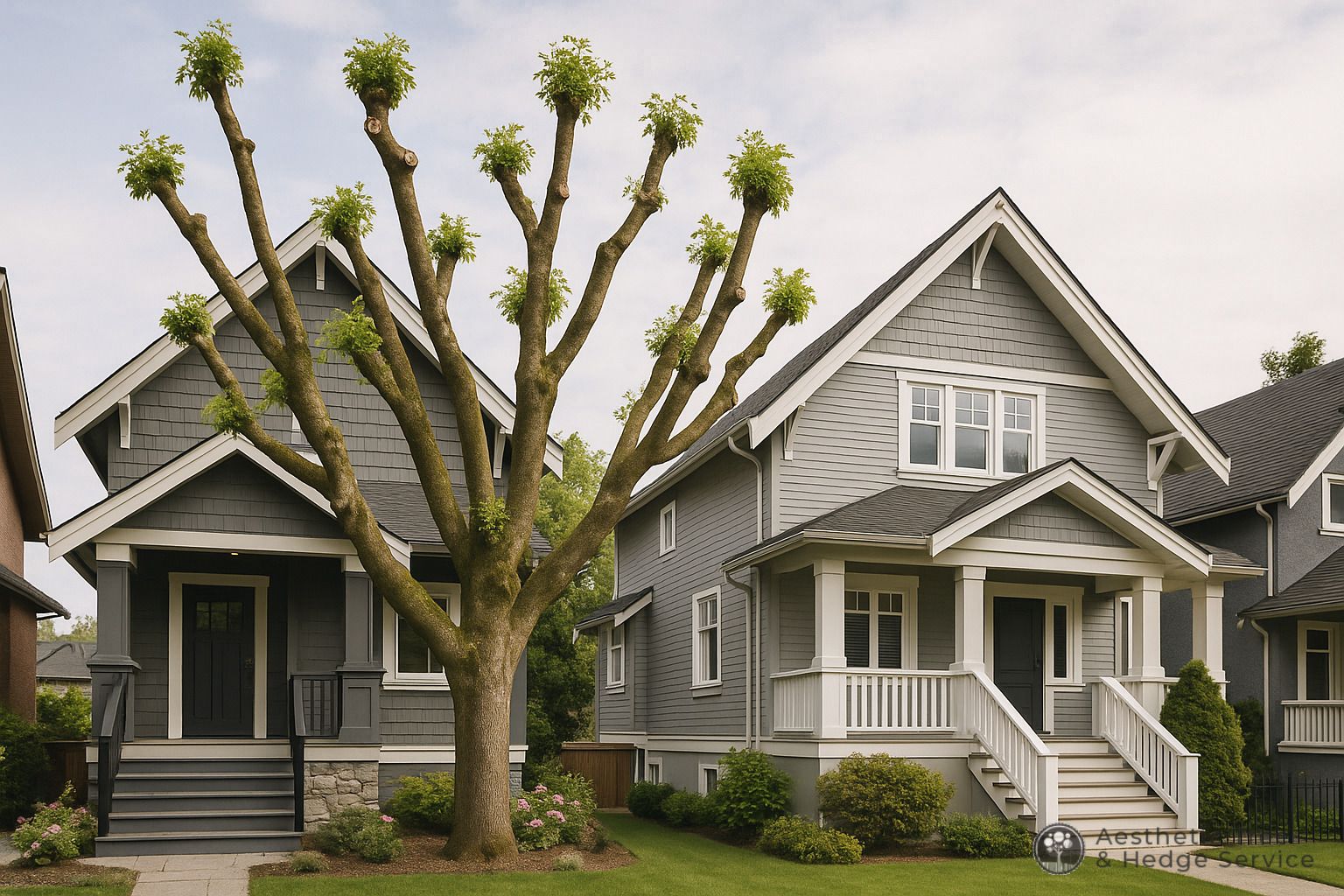
**Topping.** Someone cut the top off. Maybe a previous owner worried about height. Maybe a neighbour complained. Topping destroys the natural branching hierarchy. It leaves multiple severe wounds. The tree responds with fast, weakly attached epicormic growth — watersprouts that shoot straight up.
**Storm damage.** Vancouver's atmospheric rivers have been brutal. January 2024 brought wind gusts exceeding 90 km/h across Metro Vancouver. Leaders snapped. Entire crown sections stripped from mature trees.
**BC Hydro line clearance.** Power line clearance pruning doesn't follow ANSI A300 standards. It follows the wire. The result is often one-sided, heavily wounded crowns that need corrective work.
**Construction damage.** Root system trauma from nearby excavation or compaction can show up as crown dieback a full 2–3 years after construction ends. By then, the crown is thin, stressed, and vulnerable.
---
What Outcomes Are Realistic — and What's a Fantasy?
Let's be direct.
A topped tree will never look exactly like it did before it was topped. That's the honest answer.
The original leader — the central trunk that gave the crown its form — is gone. New leaders grown from watersprouts can be trained. But they'll always be structurally different from the original architecture.
What IS realistic:
- **Recovering crown volume.** With proper restoration pruning every 1–3 years, most healthy trees can regain 60–80% of their original crown density within 5–7 years.
- **Redirecting growth.** An ISA-certified arborist selects the best watersprouts and trains them as replacement leaders. The others are removed. Over time, the crown structure becomes more natural.
- **Reducing hazard.** This is the most critical outcome. A topped tree with unchecked watersprouts is genuinely dangerous. Restoration pruning reduces large branch failure risk — especially important given Vancouver's wind and snow loading patterns.
- **Extending tree life.** A properly managed tree can survive topping. An improperly managed one often can't. We've seen 80-year-old Big-leaf maples in East Van recover from severe topping damage with consistent, expert care.
What is NOT realistic:
- A full crown restoration in one season.
- A tree that looks "normal" within 2 years of severe damage.
- A tree surviving when its root system was also severely compromised.
---
How Long Does Crown Restoration Take for Common Vancouver Tree Species?
Species knowledge matters here more than most homeowners realize.
**Big-leaf Maple (Acer macrophyllum)**
The most common native tree in East Van backyards. Big-leaf maples are resilient. They respond aggressively to pruning — sometimes too aggressively, with explosive watersprout growth.
Typical timeline for a Big-leaf maple in good soil:
- **Year 1:** Initial restoration pruning. Select 3–5 replacement leaders from watersprouts.
- **Years 2–3:** Follow-up pruning. Remove competing sprouts. Reduce weight on selected leaders.
- **Years 4–5:** Crown develops coherent structure.
- **Year 7+:** Tree looks and functions like a mature, healthy specimen.
**Douglas Fir (Pseudotsuga menziesii)**
Far less forgiving. Conifers don't produce epicormic growth the way broadleaved trees do. If the dominant leader is lost, there's no replacing it the same way.
What we can do: encourage the strongest lateral branch to assume apical dominance. Reduce competing laterals. Give the new leader space.
Timeline: 5–10 years for meaningful structural recovery. Some Douglas firs never regain a natural form after severe topping.
**Western Red Cedar (Thuja plicata)**
More tolerant than Douglas fir but still significantly damaged by topping. The characteristic drooping, layered crown form is essentially destroyed by heavy cuts.
Cedar also has high vulnerability to fungal infection through large pruning wounds — a major concern in Vancouver's wet climate. Wound compartmentalization in cedar is slower than in maple.
**Ornamental Cherry (Prunus species)**
Common in Kitsilano, Point Grey, and Mount Pleasant — planted in large numbers over the past 40 years. Ornamental cherries respond reasonably well to restoration pruning. But they're prone to bacterial canker through large wounds.
Timeline: 3–5 years for crown restoration in young-to-mid-age trees. Older specimens (20+ years) have much lower success rates.
---
What Does the Research Say About Topping Damage?
The science is unambiguous. Topping is one of the most harmful practices in arboriculture.
According to the International Society of Arboriculture (ISA), topped trees exhibit significant reduction in structural integrity due to epicormic shoot formation. These watersprouts are attached only to the outermost wood layers — without the internal wood-to-wood union that characterizes normal branch development. They're prone to failure under wind, ice, and snow loading.
Research published in peer-reviewed urban forestry literature — including the journal *Urban Forestry & Urban Greening* — documents that trees subjected to severe topping show measurable increases in crown failure risk within 5–7 years of the initial cuts. Wound decay advances into the main stem at rates 3–4 times higher than in properly pruned specimens.
The City of Vancouver's 2018 Urban Forest Strategy identifies the city's approximately 150,000 street trees as critical public infrastructure. The strategy explicitly identifies improper pruning — including topping — as a leading cause of reduced tree lifespan and increased hazard risk. Vancouver's Private Tree Bylaw (By-law No. 9958) reflects this by protecting significant trees from exactly this kind of damage.
The USDA Forest Service's i-Tree program — used by municipalities across North America including Vancouver — estimates urban trees provide ecosystem services valued at approximately $1.50–$3 for every $1 invested in proper maintenance. That ratio inverts when trees are improperly managed and must be removed prematurely.
Research from urban forestry programs across North America, including work from the University of British Columbia Faculty of Forestry, consistently documents that well-treed residential blocks can be 2–3°C cooler than comparable untreed areas. That's not a trivial number. It matters for every Vancouver homeowner who wants to keep their property cool through an increasingly hot summer.
The conclusion from all of it: damaged trees that are correctly managed are worth saving. Trees abandoned after topping — left to grow unchecked watersprouts year after year — become genuine hazards. They eventually require tree removal in Vancouver anyway, at far greater cost and risk.
---
What Does an ISA-Certified Arborist Actually Do During Crown Restoration?
Here's the real-world process. No vague promises.
**Step 1: Assessment**
We start with a full hazard assessment. Crown density. Wound sites. Decay indicators — conk fungi, cracks, cavities. Root flare condition. Lean and site exposure.
We consider what's within striking distance. Soil conditions. History of compaction. Any recent construction nearby.
If formal documentation is needed for a municipality or insurance purpose, an arborist report in Vancouver provides written assessment with full ISA-standard methodology — tree species, DBH, condition rating, and recommended work.
**Step 2: Initial Restoration Pruning**
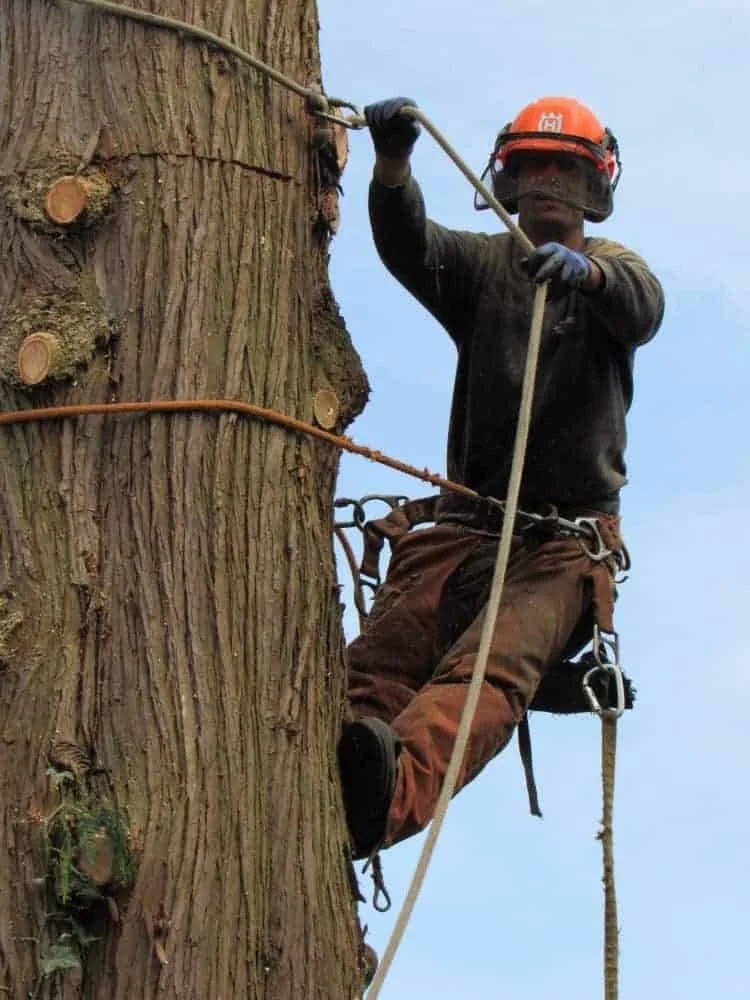
We follow ANSI A300 Part 1 (Pruning) standards. Dead, dying, and structurally compromised branches come out first. Then we address watersprout thinning — reducing the cluster of sprouts to a small number of viable candidates.
We follow the 25% rule: no more than 25% of the live crown removed in a single visit. This isn't a suggestion. It's a physiological limit. Remove more and you push the tree into acute stress.
**Step 3: Wound Assessment**
Large, blunt cuts — the kind left by topping — are significant entry points for pathogens. We assess each wound for decay progression. In Vancouver's wet climate, Phellinus and Ganoderma root and butt rot are real concerns. So is Nectria canker in cherry species.
We don't use wound sealants. The research is clear: they don't help and often trap moisture, accelerating decay. The tree walls off wounds through its own compartmentalization process — CODIT (Compartmentalization of Decay in Trees), the framework established by Dr. Alex Shigo's foundational arboricultural research.
**Step 4: Structural Support Where Needed**
Some trees in active restoration benefit from tree cabling — installing high-strength cable between major co-dominant stems to reduce failure risk while new crown structure develops. Appropriate for specific situations. Not universal.
**Step 5: Follow-Up Schedule**
Crown restoration is not a one-visit job. We establish a follow-up schedule — typically every 1–2 years — to continue guiding the crown's development. Each visit builds on the last. Skip the follow-up visits and you lose the gains.
---
Does the City of Vancouver Require a Permit for Crown Restoration Work?
This question comes up on every job.
Short answer: it depends on whether the tree is protected under Vancouver's Private Tree Bylaw or Street Tree Bylaw.
Vancouver's Private Tree Bylaw (By-law No. 9958) protects trees meeting certain criteria — typically trees with a trunk diameter of 20 cm or greater, measured at 1.4 m above grade (DBH). A permit IS required to remove or significantly alter a protected tree.
Crown restoration pruning — when done correctly — typically doesn't require a permit. Proper pruning doesn't constitute removal of a protected tree. But there are exceptions. Major crown reductions involving significant live material on a protected tree can require written documentation from a certified arborist.
If your tree is a Boulevard Tree in the public right-of-way, contact the City of Vancouver's Urban Forestry branch before touching it. Only licensed contractors approved by the City can work on boulevard trees.
In Burnaby, North Vancouver, Richmond, and other Lower Mainland municipalities, similar bylaws apply with different thresholds and processes. We know these bylaws. We deal with them on every job.
When there's any question about permit requirements, we prepare the appropriate arborist report documentation to support the application — so you don't end up doing legitimate work that gets flagged by the City.
---
When Does Removal Become Necessary Instead of Restoration?
We hate removing trees. But we do it when it's the right answer.
Some clear indicators that a tree is beyond restoration:
- **Decay has reached the root system.** A crown can look healthy while the tree is failing at the base. We look for root flare issues, soil heaving, fungal fruiting bodies at the base, and specific crown dieback patterns that point to root system failure.
- **More than 50% of the crown is already dead.** This threshold varies by species. But as a general rule, a tree that's lost more than half its live crown to disease or storm damage has poor restoration prospects.
- **Structural failure has already occurred.** Co-dominant stems that have already split, or trunks with significant internal decay advancing to the main stem, are not strong restoration candidates.
- **The tree is in direct proximity to critical infrastructure.** When restoration buys time but not safety, removal protects the homeowner.
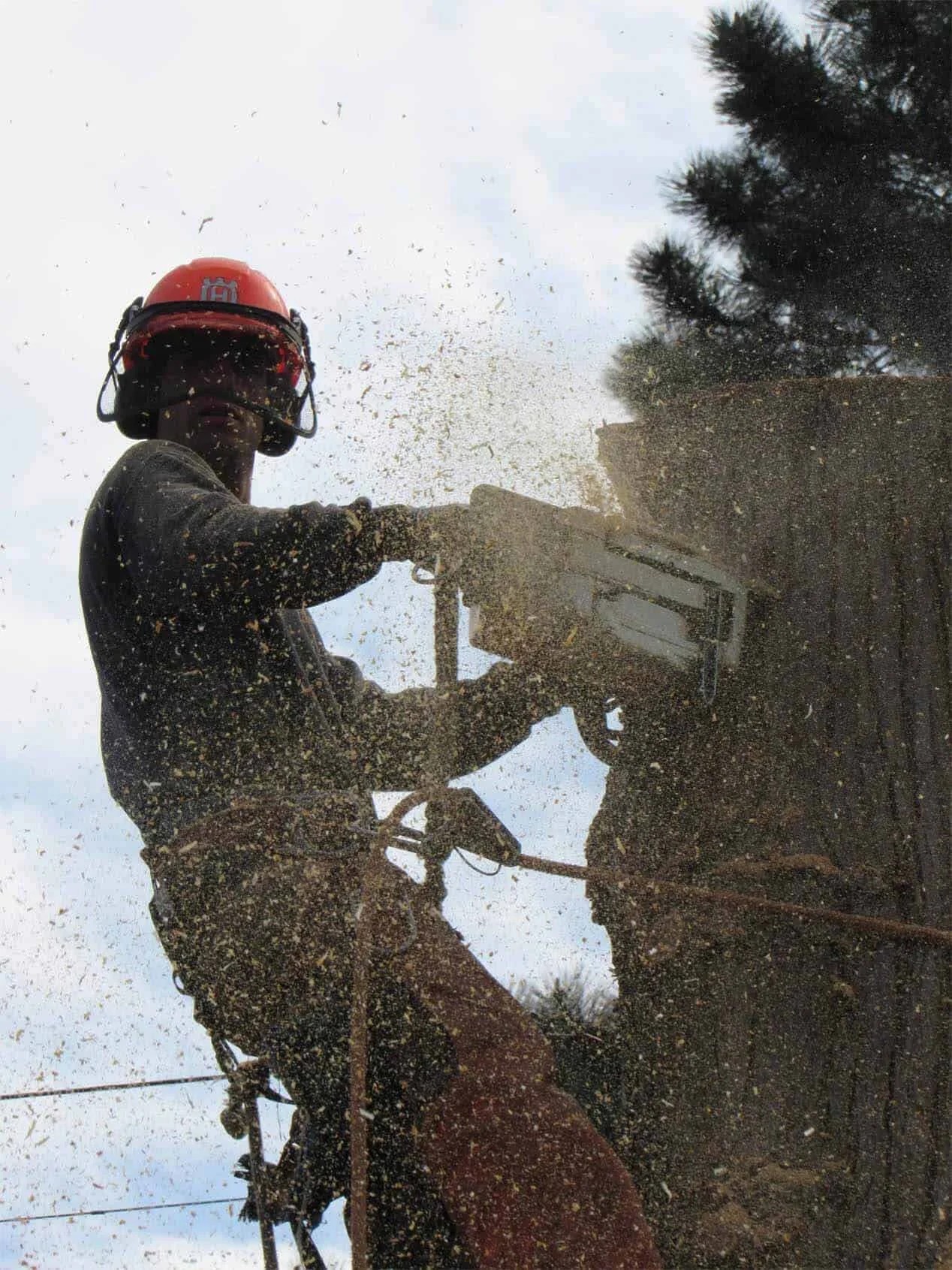
If removal is the call, we handle tree cutting in Vancouver with full safety protocols. And we strongly recommend replanting — a new tree planted today reaches meaningful size faster than most homeowners expect.
---
What Does Crown Restoration Cost in the Vancouver Market?
We won't quote our own pricing here. That requires a site visit and a specific assessment.
For general market context: according to HomeAdvisor's 2024 national tree care cost report, professional pruning and crown work in major Canadian urban centres typically ranges from $200–$1,500+ for a single session, with multi-year restoration programs varying widely based on tree size, access, species, and the extent of damage.
*These figures represent industry averages based on HomeAdvisor's 2024 consumer cost data. Actual costs vary by project scope, tree size, site access, and specific site conditions. Contact Aesthetic Tree & Hedge Services for a personalized assessment.*
What we will say directly: the cost of proper crown restoration over 5–7 years is almost always less than the cost of emergency removal after a failure event. And far less than the liability exposure when a fallen tree damages a structure or injures someone. In a city where a single mature tree adds thousands to property value, protecting that asset makes financial sense.
---
How Does Vancouver's Weather Affect Crown Restoration Timelines?
Vancouver's climate is both an advantage and a complication.
**The advantage:** The Pacific Northwest's mild winters and consistent rainfall support vigorous tree growth. A Big-leaf maple in East Van has growing conditions most of North America would envy. This accelerates recovery compared to prairie cities.
**The complication:** High rainfall accelerates fungal infection through pruning wounds. Timing matters more here than in drier climates.
For most deciduous species, late winter — February to early March, just before bud break — is optimal. The tree is dormant. Wound compartmentalization begins immediately when the growing season starts. Fungal spore loads are lower.
For conifers, early fall or late winter works best.
We track seasonal conditions actively. A Big-leaf maple pruned in late October in Vancouver carries different infection risk than one pruned in February. These are not abstract details. They directly affect outcomes and timeline.
---
Should You Address the Stump After a Topping-Related Removal?
If crown restoration fails and removal becomes necessary, don't leave the stump.
Stumps left in Vancouver's wet climate become hosts for Armillaria — honey fungus — one of the most aggressive root disease pathogens in BC. It spreads through root contacts to neighbouring trees. We've seen it colonize multiple trees on a single property when one infected stump was left in place for a few seasons.
Stump grinding in Vancouver removes the stump below grade. It eliminates the pathogen host and opens the space for replanting — which is always the right next move.
---
What Should You Plant to Replace a Tree That Didn't Make It?
If a tree needs to come out, replanting is the correct response. Don't leave the space empty.
Strong species choices for Vancouver residential properties:
- **Serviceberry (Amelanchier alnifolia)** — native, excellent wildlife value, manageable size
- **Pacific Dogwood (Cornus nuttallii)** — BC's provincial tree, showy spring flowers, good urban tolerance
- **Vine Maple (Acer circinatum)** — excellent for smaller spaces and partial shade
- **Magnolia (Magnolia stellata or grandiflora)** — tolerates urban conditions well, dramatic seasonal interest
- **Japanese Maple (Acer palmatum)** — popular for smaller gardens, slow-growing, year-round structural interest
Our tree planting service includes species selection based on your soil conditions, light exposure, and property goals. Planting the wrong species in the wrong location is how the cycle of damage restarts — and how homeowners end up back in the same conversation in fifteen years.
---
FAQ
**How long does tree crown restoration take in Vancouver?**
Most crown restoration programs take 3–7 years, depending on species, tree age, and severity of the original damage. Deciduous trees like Big-leaf maple typically show meaningful structural improvement within 5 years with annual or biennial restoration pruning. Conifers take longer and may never fully regain their original form if the dominant leader was removed. Any arborist who tells you a seriously topped tree looks normal in one season is not being straight with you.
**Can a topped tree be saved in Vancouver?**
Often, yes. Whether a topped tree can be saved depends on the species, how long ago the topping occurred, the health of the root system, and whether any corrective work has been done since. Big-leaf maple, ornamental cherry, and many broadleaved species respond well to properly managed restoration programs. Douglas fir and other conifers are harder to restore after topping but can be managed for continued health and reduced hazard. An on-site assessment gives you a real answer specific to your tree.
**Do I need a permit for crown restoration pruning in Vancouver?**
Generally, no — proper pruning is not the same as tree removal under Vancouver's Private Tree Bylaw. However, if your tree is a protected tree (typically 20 cm DBH or larger) and the work involves significant crown reduction, written documentation from an ISA-certified arborist may be required. Boulevard trees in the public right-of-way always require City of Vancouver approval before any work begins. We advise on permit requirements as part of every initial assessment.
**Is crown restoration worth it, or should I just remove the tree?**
It depends on the tree's structural condition, the hazard it presents, and its value to your property. A tree that's a genuine structural hazard cannot be safely managed through restoration — removal is the correct call. But a tree that's been topped and looks poor while remaining structurally sound in its root system and main stem is almost always worth a restoration program. A targeted ISA-certified assessment gives you the information to make the right call without guessing.
**What's the difference between crown restoration and regular pruning?**
Regular maintenance pruning manages a healthy tree — removing dead or crossing branches, maintaining clearance from structures, shaping for long-term health. Crown restoration is specifically for trees that have been structurally damaged — topped, severely storm-damaged, or improperly pruned over many years. It involves training replacement leaders, managing watersprout development, assessing wound sites for decay pathways, and following a multi-year guided program to rebuild structural integrity. The techniques, timing considerations, and follow-up schedule are significantly different from standard maintenance work.
---
*Authored by Aesthetic Tree & Hedge Services, ISA-Certified Arborists | WCB Registered | Serving Vancouver, Burnaby, North Vancouver, Richmond, Coquitlam, and the Lower Mainland*
---
Ready to Get Eyes on Your Tree?
Don't wait until the next windstorm makes the decision for you.
A tree that's been topped, storm-damaged, or improperly pruned is not a tree to leave alone. It's a tree that needs professional assessment now — before a problem becomes an emergency.
We've done this work across Vancouver, Burnaby, North Vancouver, Coquitlam, and the rest of the Lower Mainland. ISA-certified arborists. WCB registered. We know the bylaws. We know the species. We know the difference between a tree worth saving and one that needs to come out.
**Call Aesthetic Tree & Hedge Services for a free estimate: (604) 721-7370.**
Found this helpful? Follow our tree care insights directly on Google.
Make us your preferred source on GoogleBefore You Go
Where are you in your tree care journey?
Our Tree Care Services
ISA-certified arborists serving Greater Vancouver


Explore Our Tree Care Services
From expert pruning to safe tree removal, our ISA-certified arborists are ready to help across Greater Vancouver.
View Services