
TL;DR — Quick Summary
Tree disease and insect infestation can kill your Vancouver tree in one season. Learn BC's top threats, warning signs, and what municipal bylaws mean for removal.
TL;DR
- Vancouver's wet winters and dry summers create ideal conditions for fungal disease and boring insects to attack trees before homeowners notice anything wrong.
- Emerald Ash Borer has been officially confirmed in the City of Vancouver by the Canadian Food Inspection Agency; ash wood movement is now regulated in affected areas.
- The most serious threats on Lower Mainland residential properties include Bronze Birch Borer, Western Tent Caterpillar, Armillaria root rot, Dothistroma Needle Blight, Phytophthora root rot, canker diseases, and Douglas-fir Beetle.
- Warning signs include D-shaped exit holes, premature leaf drop, fungal conks, honey-coloured mushrooms at the base, frass, bark cracking, and top-down crown dieback.
- In the City of Vancouver, private trees 20 cm or more in trunk diameter — measured at 1.4 m above grade — generally require a removal permit even when diseased.
- An ISA-certified arborist can diagnose the problem, assess structural risk, prepare permit documentation, and recommend the right course of action.
---
Tree disease and insect infestation rarely show up all at once. In the Vancouver area, the first damage almost always starts under the bark, in the root zone, or inside the sapwood — long before a homeowner spots a thinning crown, a dead branch, or mushrooms near the base.
That delay matters here. Vancouver's wet winters, mild shoulder seasons, compacted urban soils, construction pressure, and increasingly dry summers create exactly the stress pattern that makes trees more vulnerable to fungal disease and insect attack. In our experience working on residential properties across Vancouver, Burnaby, North Vancouver, Richmond, Coquitlam, and the wider Lower Mainland, many serious tree problems are already one or two growing seasons old by the time the canopy looks obviously unhealthy.
A proper diagnosis helps you protect your property, avoid unnecessary removal, comply with municipal tree bylaws, and decide whether pruning, treatment, monitoring, stump grinding, or removal is the responsible next step.
---
How Do You Know if Your Tree Has a Disease or Infestation?
Most trees don't show visible decline until they're already under serious stress. As ISA-certified arborists, we don't just look at leaf colour. A proper assessment covers the species, foliage, trunk, bark, branch structure, root flare, soil conditions, site drainage, nearby host trees, and any recent disturbance — including construction, trenching, paving, drought, or heavy pruning.
In Vancouver-area residential work, the site history often matters as much as the symptom. We've assessed birch trees that started declining after driveway paving, cedar hedges struggling beside compacted fill from new construction, and Douglas-firs showing early borer signs after root zone disturbance during a nearby home renovation. The species might be the same as one growing across the street in open, undisturbed soil — but the stress profile is completely different, and so is the prognosis.
**Foliage symptoms** to watch for include yellowing or browning outside normal seasonal change, leaves dropping in spring or early summer, wilting on one branch while the rest of the canopy looks normal, leaf spots, curling, sparse growth, or a noticeably thin upper crown.
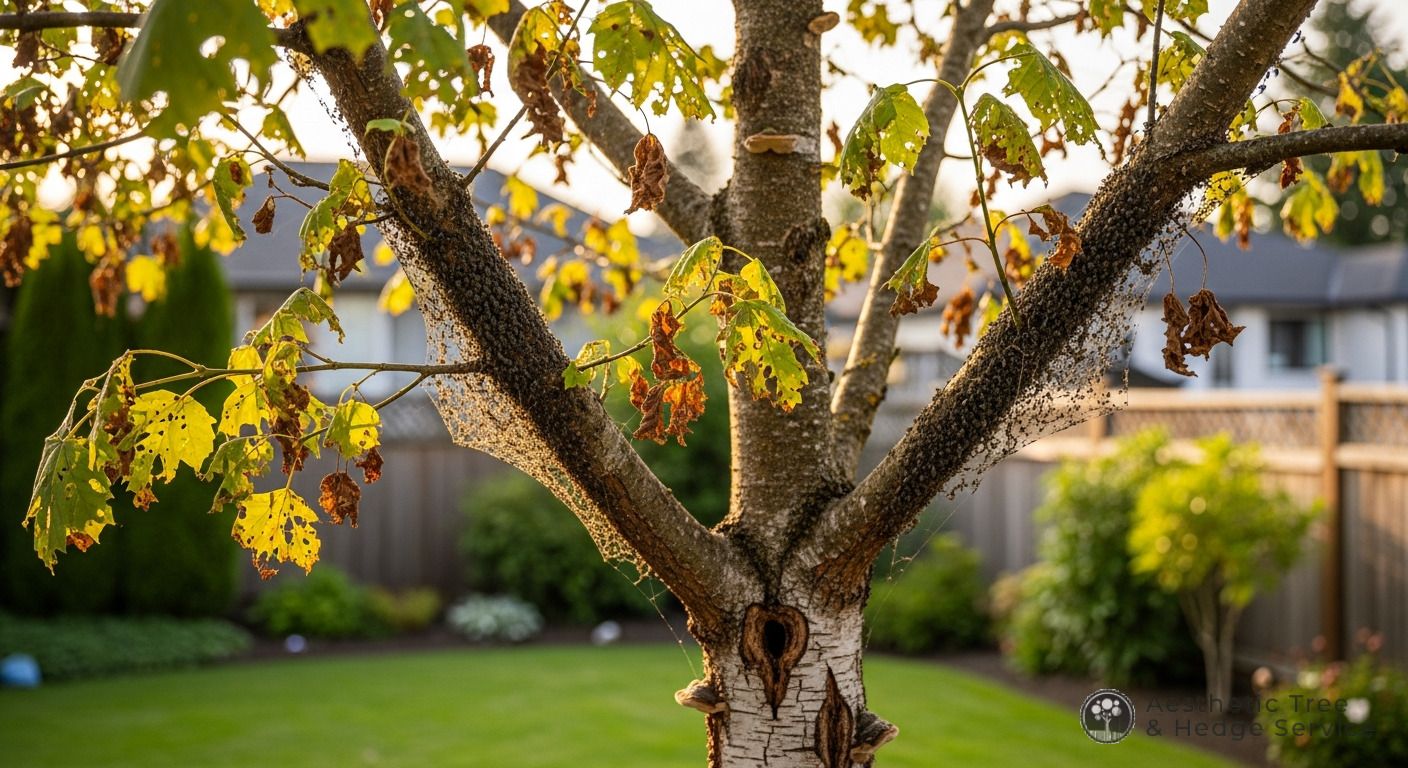
**Bark and trunk symptoms** are often more diagnostic. Watch for cracks, sunken patches, wet or oozing bark, D-shaped exit holes from flatheaded borers, round exit holes from other boring insects, sawdust-like frass, resin or pitch tubes, and fungal shelf brackets growing from the trunk or exposed roots.
**Root zone signals** can tell the rest of the story. Honey-coloured mushrooms at the base in autumn, soil heaving after rain or wind, a new lean, dead bark at the root flare, or a soft cavity near the base all warrant a closer look.
**Crown symptoms** usually show up last. Dead branches at the top, sudden limb failure, water sprouts from the lower trunk, and heavy one-sided dieback can all indicate the tree is losing structural or vascular function.
Early detection matters. A fungal infection or borer infestation caught early may still be manageable. The same problem found after major crown loss, internal decay, or root failure may leave tree removal as the only practical option.
---
What Tree Diseases Are Most Serious in Vancouver?
Vancouver's maritime climate strongly favours fungal pathogens. The most consequential problems on residential properties are root diseases, stem cankers, needle blights, and water-mold diseases that thrive in wet, compacted, or poorly drained soil.
Cytospora Canker
Cytospora canker affects stressed trees, including spruce, poplar, cottonwood, and other common landscape species. The fungus enters through pruning wounds, frost cracks, storm damage, mechanical injury, or other bark damage, then spreads into the cambium and vascular tissue.
Symptoms include sunken, discoloured bark, resin flow, branch dieback, and progressive decline from the branch tips inward. If the canker girdles a branch or main stem, water and nutrient movement gets cut off completely.
The best prevention is stress reduction and clean, properly timed pruning based on ANSI A300 standards. Those standards reduce unnecessary wounds and help trees compartmentalize injury. In our experience, many Cytospora cases we see in residential settings trace back to improper pruning done years earlier — flush cuts, stub cuts, or wounds made at the wrong time of year that left the tree exposed when it was least able to respond.
Dothistroma Needle Blight
Dothistroma Needle Blight affects pines, including lodgepole pine, ponderosa pine, and ornamental pines planted in landscape settings. The BC Ministry of Forests has tracked *Dothistroma septosporum* for decades because repeated infections cause major defoliation across both plantation and landscape settings. Our autumn and spring rain cycles create near-ideal conditions for spore spread, making this disease especially relevant for the Lower Mainland.
Look for brown banding on needles, premature needle drop, thinning in the lower crown, and defoliation that progresses upward over successive growing seasons. One infection year may not kill a tree. But repeated defoliation weakens photosynthesis and makes the tree increasingly vulnerable to everything else.
Armillaria Root Rot
Armillaria root rot — often called honey fungus — is one of BC's most serious root diseases. According to the BC Ministry of Forests, *Armillaria ostoyae* is the dominant root pathogen in both coastal and interior BC forests, affecting conifers and hardwoods alike. It spreads through direct root contact and can persist in infected stumps and buried roots for decades.
The classic signs are honey-coloured mushrooms appearing at the base in autumn and white mycelial fans found under the bark near the root flare. Trees may also show thinning crowns, poor seasonal growth, resin flow from the base, and — in advanced cases — sudden failure when root decay has compromised the anchoring system.
This is exactly why stump management matters after a removal. When a tree dies from Armillaria, leaving the stump in place preserves an active infection source. We typically recommend stump grinding before replanting in the same area, especially if another susceptible species would go into the same soil.
Dutch Elm Disease
Dutch Elm Disease is caused by *Ophiostoma* fungi and spread by elm bark beetles and through root grafts between closely planted elms. The USDA Forest Service estimates that more than 30 million elms were killed across North America during the 20th century. Symptoms include flagging — wilting or yellowing on individual branches — followed by brown streaking in the sapwood and rapid canopy dieback. Boulevard elm rows are especially vulnerable because root systems are often grafted underground, allowing the pathogen to move tree to tree without a beetle visit.
Phytophthora Root Rot and Sudden Oak Death
*Phytophthora* species thrive in wet soils and poor drainage — both very common in Lower Mainland residential settings through winter and spring. They infect roots and crown tissue, reducing the tree's ability to move water and nutrients upward. Infected trees often look drought-stressed even during wet weather, which confuses diagnosis.
*Phytophthora ramorum*, the pathogen associated with Sudden Oak Death, is federally regulated in Canada. It can affect ornamental hosts common in Metro Vancouver gardens, including rhododendron, viburnum, and camellia. If a regulated pathogen is suspected, plant movement and disposal should follow current CFIA guidance before any material leaves the property.
---
Which Insects Are Threatening Vancouver Trees Right Now?
Emerald Ash Borer — The Confirmed Threat to Local Ash Trees
Emerald Ash Borer (*Agrilus planipennis*) is now a confirmed Vancouver issue. The Canadian Food Inspection Agency officially confirmed EAB in the City of Vancouver in 2023, making it a genuine local concern for every ash tree on residential and municipal properties. CFIA-regulated areas restrict the movement of ash material and firewood to slow further spread.
According to the CFIA, EAB has killed more than 100 million ash trees across North America since the pest was first detected on the continent in 2002. That number reflects what happens when an insect with no established natural predators reaches a continent full of susceptible host trees. Every ash tree in the urban forest — street tree, boulevard specimen, or backyard planting — should be assessed if you haven't done so recently.
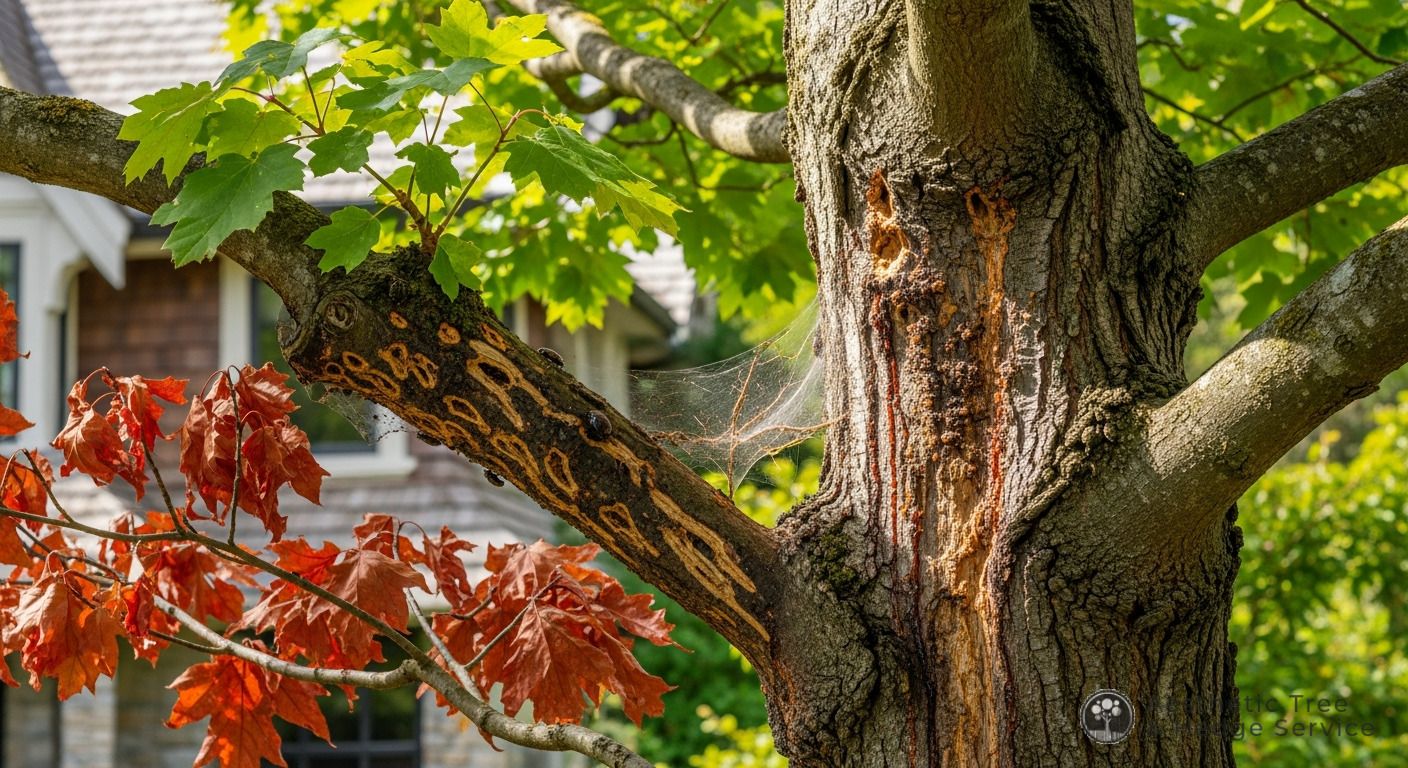
Adult beetles are metallic green and roughly 1 cm long, but homeowners usually notice the damage before the insect. Key signs include D-shaped exit holes roughly 4 mm wide, S-shaped larval galleries beneath the bark, bark splitting, epicormic shoots sprouting from the lower trunk, woodpecker activity targeting the same area repeatedly, and top-down crown dieback.
EAB larvae feed beneath the bark, damaging the phloem and cutting off the movement of sugars from leaves to roots. Once crown loss is severe, treatment is usually no longer viable. Preventive or early-stage treatment may be possible for selected ash trees using PMRA-registered products applied by a licensed applicator — but timing is everything. Once significant dieback has occurred, the window has closed.
Do not move ash logs, branches, bark, chips, firewood, or nursery stock out of regulated areas without confirming current CFIA requirements.
Bronze Birch Borer — The Birch Killer in Compacted Sites
Bronze Birch Borer (*Agrilus anxius*) attacks birch trees, with stressed trees in compacted soils, restricted boulevard strips, paved areas, or drought-prone sites as its preferred targets. Birch is extremely popular in Metro Vancouver landscapes, which makes this pest especially relevant for residential properties across the region.
We see Bronze Birch Borer cases regularly on birches planted too close to paved surfaces, in shallow soil above clay, or in areas where root zones have been disrupted by nearby construction. Symptoms include D-shaped exit holes, raised ridges beneath the bark from larval galleries, thinning in the upper crown, and progressive top-down dieback.
The best defense is stress reduction: deep, infrequent watering during summer drought, protecting root zones during any nearby construction, avoiding unnecessary wounds, and improving growing conditions where the site allows. A birch that's been water-stressed for several consecutive summers is dramatically more vulnerable than one grown in optimal conditions.
Western Tent Caterpillar — A Spring Defoliator That Compounds Stress
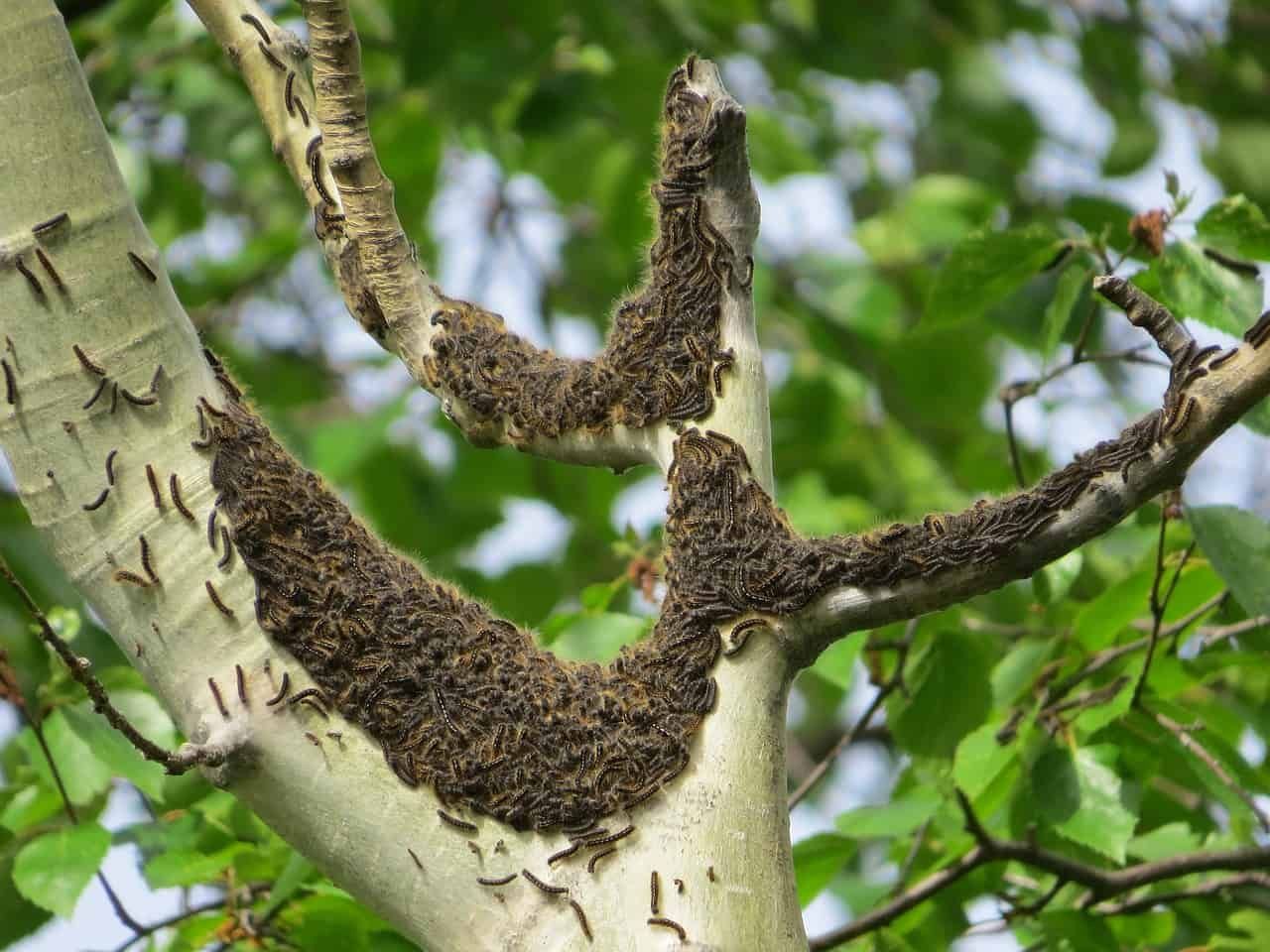
Western Tent Caterpillars build silk tents in branch crotches in spring and feed on hardwood foliage. Host trees include alder, birch, cherry, apple, and cottonwood — all common Lower Mainland landscaping species.
Healthy, established trees usually survive one or two defoliation events without lasting damage. Repeated outbreaks, especially when combined with drought or other concurrent stress, drain carbohydrate reserves. Young trees and already-weakened trees are most at risk. In our experience, a tree coming out of construction-related root stress that then gets hit by caterpillars two or three years running often declines faster than either problem would cause on its own.
Douglas-fir Beetle — The Risk After Storm and Construction Damage
Douglas-fir Beetle (*Dendroctonus pseudotsugae*) attacks Douglas-fir, one of the dominant coastal BC species and a common large landscape tree. It usually targets trees already stressed by windthrow, drought, root injury, construction damage, or mechanical wounds — exactly the conditions common in urban residential settings.
Signs include fading needles, boring dust near the base of the bark, pitch on the trunk, and rapid colour change from green to red across the crown. By the time needles are fully red, the tree may already be dead. This is one of the scenarios where emergency tree service becomes necessary — a large, dead Douglas-fir poses real structural risk, especially in the wind events Vancouver sees each autumn and winter.
Aphids and Spider Mites — Small Pests, Important Signals
Aphids and spider mites are often treated as minor nuisances. But heavy infestations weaken trees, and they almost always signal other stress the tree is dealing with. Aphids produce honeydew that supports sooty mold growth on bark and foliage. Spider mites cause stippling, yellowing, and canopy thinning — especially during hot, dry stretches.
These pests don't always call for aggressive treatment. But when they appear alongside drought stress, poor soil conditions, root restriction, or existing canopy thinning, treat them as diagnostic signals rather than isolated problems. They're often telling you something more serious is going on.
---
How Does Tree Disease and Infestation Spread Between Properties?
Tree disease and insect infestation don't respect property lines. Understanding how they move matters for managing risk on your own lot — and for understanding why conditions on neighbouring properties can directly affect your trees.
Bark beetles and borers fly to nearby host trees. Stressed, injured, or already-declining trees are preferred targets, and some species release chemical signals that draw additional beetles to the same area. One infested tree can effectively call in more insects.
Root diseases like Armillaria move underground through direct root-to-root contact. In urban settings — where boulevard trees and closely planted ornamentals often develop interlocked root systems — one infected tree can begin affecting neighbours long before any above-ground symptoms appear on those trees.
Dutch Elm Disease spreads both through elm bark beetle flight and through root grafts between adjacent elms. A row of boulevard elms with connected underground root systems can experience rapid spread from a single infected tree.
Human movement is the most controllable pathway. Firewood, pruned branches, logs, chips, and construction debris can carry larvae, eggs, fungal spores, or infected tissue. That's why CFIA restricts movement of regulated host material in EAB-confirmed areas — and why careful wood handling after any diseased tree removal matters.
A thorough assessment always looks at the subject tree and the trees around it. Solving one tree's problem in isolation can miss the actual spread pattern already underway.
---
When Does a Diseased Tree Become a Safety Hazard?
A diseased or infested tree becomes a safety hazard when decay, root loss, crown imbalance, or structural defects make failure more likely — and when something or someone is in the fall zone.
ISA-qualified arborists use tree risk assessment principles based on three factors: likelihood of failure, likelihood of impact, and consequences of failure. A declining tree positioned over a driveway, sidewalk, home, power line, or play area is a fundamentally different risk profile than the same tree standing in an unused corner of a large lot.
Call an arborist promptly if you observe any of the following: sudden large limb drop with no obvious cause, soil heaving or cracking near the base of the tree, a new lean that developed after rain or wind, large trunk cracks, fungal conks growing from the lower trunk or root flare, severe top dieback, or a hollow sound when the trunk is tapped.
Not every diseased tree requires removal. Some trees can be pruned, treated, monitored, or improved through better cultural care. But structural wood that has decayed does not regenerate. Once load-bearing parts of the tree are compromised, the conversation shifts to risk management — and sometimes that means tree removal is the right and responsible call.
---
Can a Diseased or Infested Tree Be Saved?
Sometimes — and the answer depends on several variables working together: the specific pest or pathogen, the stage of decline, the tree species, the tree's structural condition, and its location relative to people and structures.
Early canker infections limited to individual branches can sometimes be pruned out using proper technique and timing. Aphid and mite problems can often be corrected through improved cultural care and stress reduction. Some borer infestations can be managed if caught before significant vascular damage has occurred. Preventive treatment for EAB may be appropriate for valuable ash trees that haven't yet developed severe decline.
But treatment has real limits. A tree with advanced internal decay, severe crown loss, compromised root structure, or major girdling is usually not a realistic treatment candidate. Controlling a pest doesn't restore missing structural wood, and a tree can be technically alive and still structurally unsafe.
In our assessments, we separate the biological question from the structural risk question. Those are two different evaluations, and they don't always lead to the same answer. We've assessed trees with active pest issues that were still structurally sound and worth treating. We've also assessed trees with minor pest activity that were already too compromised structurally to safely leave standing. One does not predict the other.
---
What Does an Arborist Report Include for a Diseased Tree?
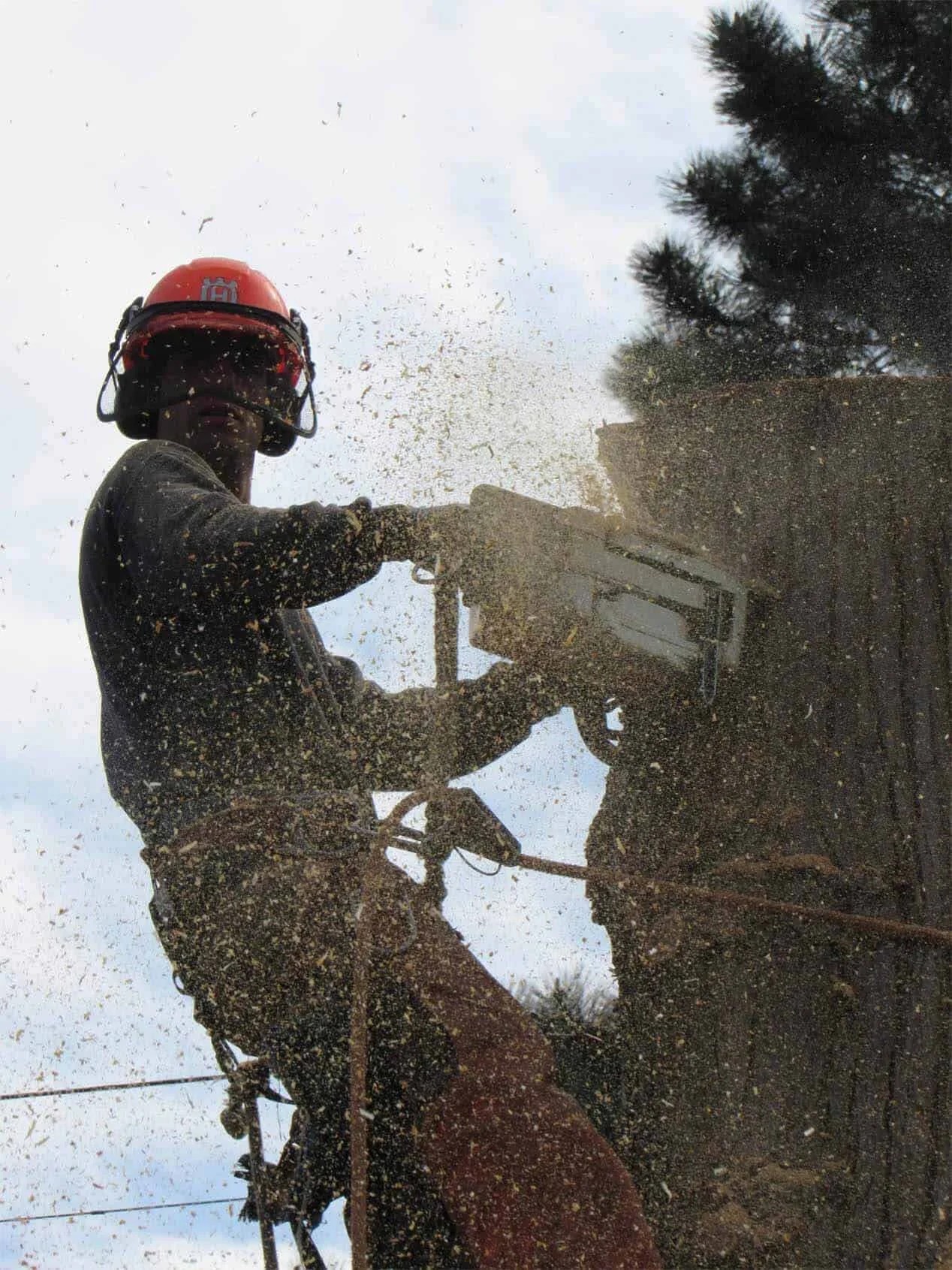
An arborist report documents the tree's condition and supports decisions about treatment, pruning, monitoring, or removal. For protected trees, most municipalities require one before they'll approve removal.
A complete report typically includes species identification, DBH measured at 1.4 m above grade, crown condition and live crown ratio, root zone observations, structural defects noted, pest or disease indicators, site constraints, a risk rating using ISA methodology, supporting photographs, and a recommended course of action.
That documentation also creates a written record showing the homeowner acted on qualified professional advice — which matters if a tree issue affects a neighbouring property, an insurance claim is filed, or the municipality requires documentation as part of a permit application.
---
What Do Vancouver Tree Bylaws Say About Diseased Trees?
In the City of Vancouver, the Protection of Trees By-law generally requires a permit to remove a private tree with a trunk diameter of 20 cm or more, measured at 1.4 m above grade. A diseased or declining tree is not automatically exempt from that requirement.
Emergency provisions exist for trees posing an imminent hazard to life or property, but even in urgent situations, homeowners should document the tree's condition thoroughly, notify the city as the by-law requires, and involve a qualified arborist wherever time permits.
Other Lower Mainland municipalities have their own rules. Burnaby, Richmond, Coquitlam, the District of North Vancouver, and other jurisdictions each set their own size thresholds, permit requirements, replacement ratios, and review processes. What's required in Vancouver may differ significantly from what's required a few blocks away across a municipal boundary.
Before removing a diseased tree — even one that looks clearly dead — confirm the applicable by-law. An arborist can help prepare the report and permit documentation so the work is done legally, and so you're not exposed to fines for unpermitted removal.
---
What Happens to the Stump After a Diseased Tree Is Removed?
The stump still matters after the tree is gone. If Armillaria or another root disease killed the tree, infected wood and root material remain biologically active in the soil. Replanting in the same location without addressing the stump can expose the new tree to the same disease pressure.
If a regulated pest like Emerald Ash Borer is suspected or confirmed, wood handling becomes even more important. Ash material in regulated areas may be subject to CFIA movement restrictions. Disposal, chipping, or transport should follow current regulatory guidance before any material leaves the property.
Stump grinding removes the physical disease reservoir, eliminates the trip hazard, and prepares the site for replanting without leaving an active source of infection in the ground. We typically discuss stump removal at the same time as tree removal when disease is involved — it's worth planning both steps together rather than treating them as separate decisions.
---
What Does the Research Tell Us About Tree Threats in BC and the Lower Mainland?
British Columbia has already seen what serious pest and disease pressure looks like at scale. According to Natural Resources Canada, the Mountain Pine Beetle outbreak in BC — which peaked in the early 2000s and continued for over two decades — killed billions of trees and affected more than 18 million hectares of forest, representing one of the most significant insect-driven forest disturbances in Canadian history.
EAB is following a comparable trajectory in urban forests across the continent. The CFIA reports that EAB has killed more than 100 million ash trees in North America since the pest's detection in 2002. Vancouver's confirmed EAB presence means local ash trees are now genuinely at risk — not a future concern, but a present one.
The City of Vancouver's Urban Forest Strategy identifies the urban forest as critical infrastructure, contributing to stormwater management, urban cooling, air quality, carbon storage, and livability. City data documents approximately 150,000 street trees across Vancouver, and those numbers represent only the publicly managed portion of the city's canopy. The health of that canopy depends on active management, not passive monitoring.
Climate stress is compounding the biological risk. Research from the Pacific Forestry Centre at Natural Resources Canada has documented how drought and heat stress reduce tree defenses and make trees more vulnerable to borers, mites, root disease, and opportunistic pathogens. In the Lower Mainland, the combination of saturated winter soils and increasingly dry summer conditions creates a cycle of stress that hits urban trees in compacted or restricted sites especially hard. Trees that might handle either condition in isolation often struggle to handle both in succession.
---
What Should You Do if You Suspect Tree Disease or Insect Infestation?
Start by observing carefully. Don't aggressively prune, move wood, or disturb the root zone before you know what you're dealing with. Moving logs, branches, or chips from a potentially infested tree to another part of the property — or off-site in a truck — can spread the problem.
Take clear photos of the symptoms: the whole tree from a distance, the base and trunk close-up, any exit holes, frass, conks, or bark irregularities, the canopy from different angles, and any nearby trees showing similar signs. Note when you first noticed the problem and whether symptoms appear limited to one branch, one side, or the entire tree.
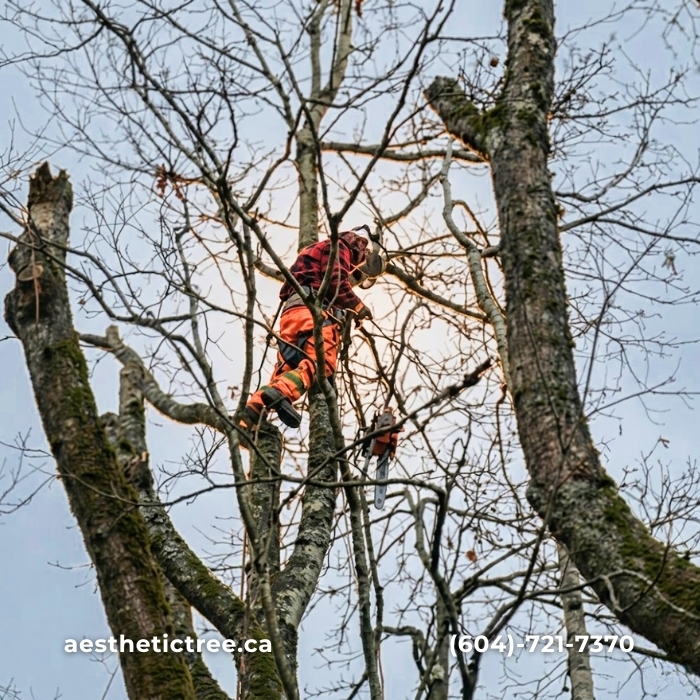
Call an ISA-certified arborist rather than a general landscaper. Tree disease and insect diagnosis requires species knowledge, pest identification skills, structural assessment, and familiarity with both local bylaws and regulated pest protocols that a landscaper isn't trained for.
If the tree is protected under the local by-law, get the arborist report before any removal work begins. If a regulated pest may be involved — particularly EAB — confirm CFIA wood disposal and movement requirements before any material leaves the site.
Act promptly once you have a professional recommendation. Disease and infestation almost never improve with delay. Early action preserves options. Waiting usually eliminates them.
If the situation is urgent — a large limb has already failed, the tree has developed a sudden lean, or you've discovered extensive decay at the root flare — our emergency tree service is available across Vancouver and the Lower Mainland.
---
FAQ
What are the first warning signs of tree disease or infestation in Vancouver?
Early signs include yellowing or browning outside the normal seasonal pattern, premature leaf drop in spring or early summer, wilting on a single branch while the rest of the canopy looks normal, frass or boring dust near the trunk, wet or oozing bark, honey-coloured mushrooms near the root flare in autumn, shelf-like fungal conks on the trunk or roots, bark cracking, and top-down dieback. Two or more symptoms appearing together are a strong signal that a professional assessment is needed rather than a wait-and-see approach.
Is Emerald Ash Borer actually present in Vancouver right now?
Yes. The Canadian Food Inspection Agency confirmed EAB in the City of Vancouver in 2023, and regulated areas now restrict ash material movement. Homeowners with ash trees should watch for D-shaped exit holes, bark splitting, S-shaped galleries visible under lifted bark, woodpecker activity targeting the same trunk areas repeatedly, epicormic shoots sprouting from the lower trunk, and upper crown dieback progressing downward. Preventive treatment may be possible for trees that haven't yet developed severe decline — but once significant crown loss has occurred, the treatment window narrows considerably.
Do I need a permit to remove a diseased tree in Vancouver?
In most cases, yes. The City of Vancouver's Protection of Trees By-law generally requires a permit for any private tree with a trunk diameter of 20 cm or more, measured 1.4 m above grade. Being diseased doesn't automatically exempt a tree. Emergency hazard provisions exist, but documentation and notification requirements still apply. Other Lower Mainland municipalities have their own thresholds and processes. An ISA-certified arborist can prepare the report documentation needed to support a permit application and make sure the removal is done legally.
Can a diseased or infested tree be treated instead of removed?
Some can. Early canker infections limited to individual branches, minor pest pressure, and selected borer cases caught before significant vascular damage may be treatable. Advanced internal decay, severe crown loss, root failure, or major structural defects often make removal the only safe option. The right answer requires two separate assessments: one for the biological problem and one for the structural risk. Those evaluations don't always lead to the same conclusion, which is why a single conversation with a certified arborist matters before committing to either path.
How do bark beetles and boring insects spread between properties?
Adult beetles fly to nearby host trees, with stressed, injured, or declining trees as preferred targets. Some species also release pheromone signals that draw additional beetles to the same area. Root diseases like Armillaria spread underground through direct root contact, meaning trees can be affected by a neighbour's infected tree long before any visible symptoms appear. Human movement is another major pathway: firewood, branches, logs, or chips from an infested tree can carry larvae, eggs, or infected tissue. That's why CFIA restricts movement of regulated host material in EAB-confirmed areas, and why proper wood handling after diseased tree removal isn't optional.
What's the difference between tree cutting and full tree removal?
Tree cutting typically refers to pruning — removing individual branches or crown sections to improve health, structure, clearance, or safety while keeping the tree in place. Full tree removal is the complete removal of the tree, including felling and processing the trunk and main branches. In the context of disease or infestation, the right approach depends on how widespread the problem is, whether the tree's structural integrity is still intact, and what the local permit situation requires. An arborist assessment will clarify which option applies.
How long does it take for a diseased tree to become a safety risk?
It varies widely depending on the disease, the tree species, the site conditions, and the tree's overall health going into the stress event. Some trees — like birch attacked by Bronze Birch Borer on a drought-stressed site — can go from early symptoms to structural failure in two to three growing seasons. Others may show slow decline over five or more years. That's why the trajectory matters as much as the current state. An arborist doesn't just assess where the tree is now — a good assessment considers how fast it's moving and what the failure risk looks like over the next one to two years.
---
*Aesthetic Tree & Hedge Services provides ISA-certified arborist assessments, tree cutting, tree removal, stump grinding, hedge trimming, emergency tree service, and arborist reports across Vancouver, Burnaby, North Vancouver, Richmond, Coquitlam, and the Lower Mainland. Call (604) 721-7370 for a free estimate.*
Found this helpful? Follow our tree care insights directly on Google.
Make us your preferred source on GoogleBefore You Go
Where are you in your tree care journey?
Our Tree Care Services
ISA-certified arborists serving Greater Vancouver


Explore Our Tree Care Services
From expert pruning to safe tree removal, our ISA-certified arborists are ready to help across Greater Vancouver.
View Services