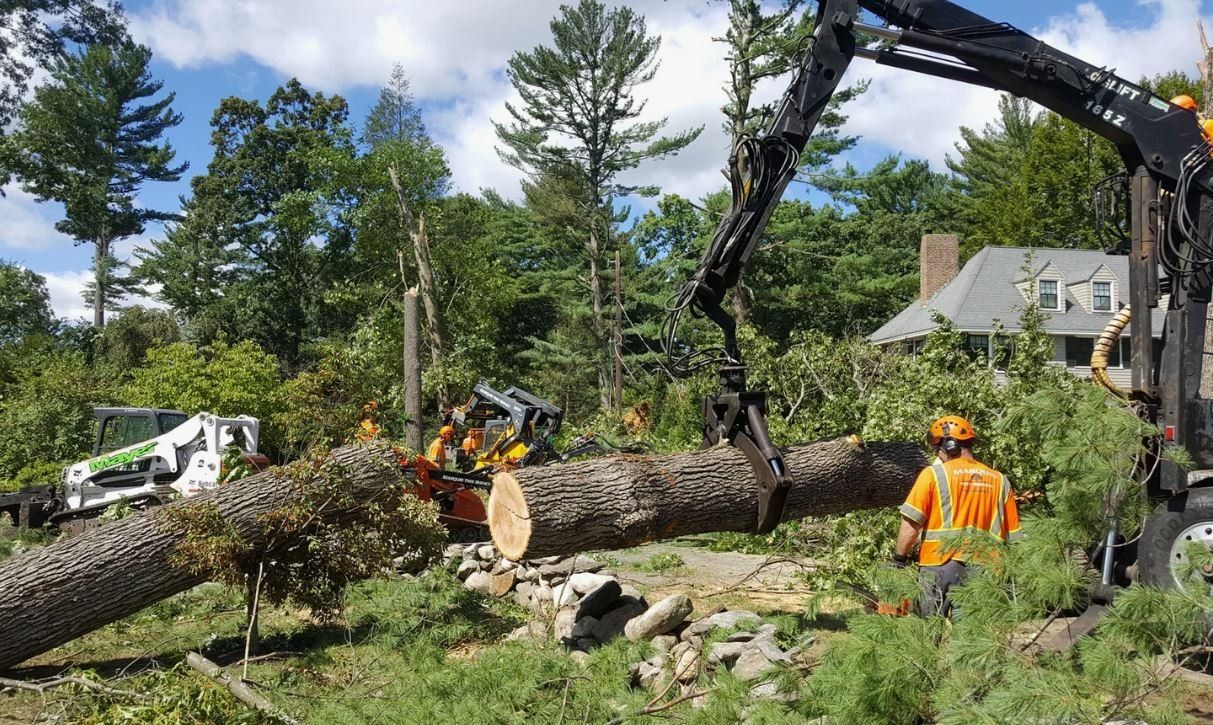

TL;DR — Quick Summary
Tree removal reasons involve a certified arborist in Vancouver for safety, permits & hazard assessment. ISA-certified, WCB registered. Call (604) 721-7370.
Tree removal reasons involve a certified arborist in Vancouver more often than homeowners expect. That dead cedar leaning over your fence? The Big-leaf maple whose roots are lifting your driveway? You can't just call any tree crew and start cutting.
Vancouver has strict bylaws. Permits are required for most removals. And the wrong decision — removing a protected tree without approval, or leaving a hazard tree standing — can cost you $10,000 in fines and serious liability exposure.
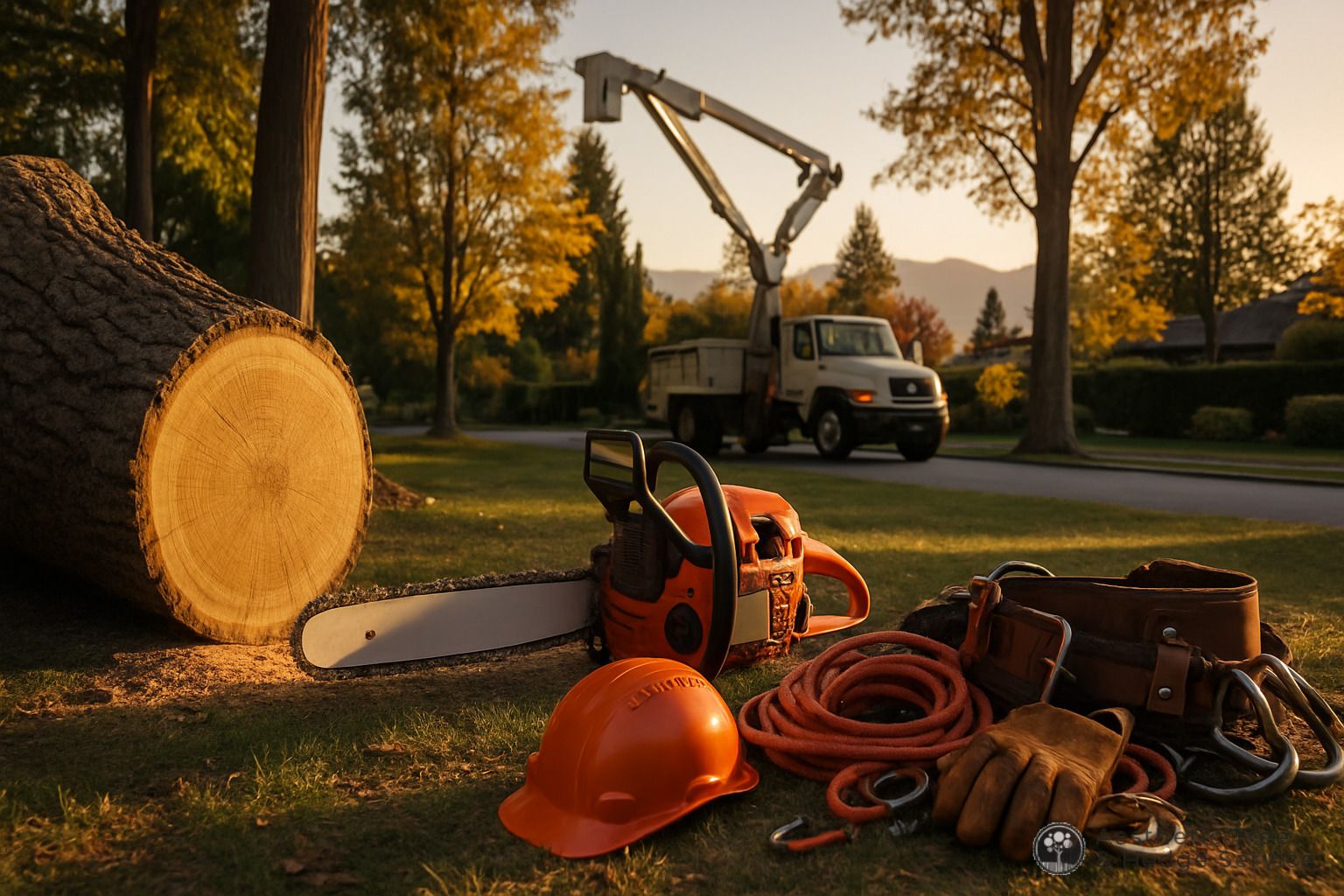
Here's what certified arborists assess, what the law actually requires, and why it matters for your property and your safety.
---
Key Takeaways
- Vancouver's **Street and Private Tree Bylaw (Bylaw 9958)** requires a permit for trees with trunks 20 cm or wider — only ISA-certified arborists can sign the required report
- Dead, diseased, structurally compromised, and construction-impacted trees are the most common removal reasons in Metro Vancouver
- **WorkSafeBC** classifies tree felling among the highest-risk occupations in BC — hiring WCB-registered crews protects you from personal liability
- Leaving a known hazard tree unaddressed creates legal exposure — a certified arborist's documentation significantly reduces that risk
- The City of Vancouver is targeting **30% urban tree canopy coverage by 2050** — certified arborists preserve trees that don't need to come down
---
What Are the Most Common Reasons Trees Get Removed in Vancouver?
Not all removals are the same. Most requests fall into five categories.
**Dead or structurally dying trees**
Dead wood is unpredictable. Decay weakens root anchorage. Internal rot spreads faster than external symptoms suggest. A dead Western red cedar can shed limbs on a calm day without warning. We see this most in older Vancouver neighborhoods — Dunbar, Kerrisdale, East Van — where mature trees have grown undisturbed for decades.
**Disease**
Dutch elm disease has been documented in Metro Vancouver. Phytophthora root rot thrives in BC's wet winters and can kill an otherwise healthy tree within a season. *Phytophthora ramorum* — the pathogen behind sudden oak death — has been detected in BC plant nurseries. A diseased tree left in place doesn't stay a problem on your lot alone. It's a vector to neighboring trees.
**Structural hazard**
Included bark. Co-dominant stems. Root zone damage from construction, paving, or utility trenching. These conditions aren't visible from the sidewalk. But they're what cause trees to fail. They're only reliably identified through a structured hazard assessment using **ISA Tree Risk Assessment Qualification (TRAQ)** methodology.
**Construction and development**
New builds, additions, and landscape renovations regularly conflict with existing trees. Root zones get compacted or cut during excavation. Trees can't coexist with proposed footings. Both the City of Vancouver and Metro municipalities require arborist reports as part of development permit applications for sites with protected trees.
**Proximity to structures**
A Douglas fir growing six feet from your foundation looks manageable today. Give it another decade. Root intrusion, wind loading against the structure, and canopy overhang all compound into serious problems. Early assessment costs less than emergency removal later.
---
When Does Vancouver Require a Permit for Tree Removal?
Most homeowners don't know the threshold until they're already in trouble.
Under **City of Vancouver Street and Private Tree Bylaw (Bylaw 9958)**, a permit is required for the removal of any tree with a trunk diameter of **20 centimetres or more**, measured 1.4 metres above grade. That's roughly the diameter of a dinner plate.
Most mature trees in Vancouver yards meet that threshold.
The permit application requires:
- A formal application to the City of Vancouver Engineering or Parks Board
- A **written arborist report** from an ISA-certified arborist
- Assessment of tree condition, hazard rating, and species identification
Fines for unpermitted removal of a protected tree can reach **$10,000 per tree**. The City enforces this. Neighbor complaints get investigated.
Surrounding municipalities have their own bylaws. **Burnaby Tree Protection Bylaw (Bylaw 14866)** protects trees on private property. North Vancouver, Richmond, and Coquitlam each have separate tree protection legislation requiring formal review before removal.
If you need an arborist report for a Vancouver permit application, that report must be signed by an ISA-certified professional. A landscaper's letter won't satisfy the city's requirements. It documents the tree's condition, the reason for removal, and confirmation that alternatives were considered.
---
Why Can't You Just Hire Any Tree Crew?
Because the stakes are higher than most people realize.
**ISA Certification**
The International Society of Arboriculture (ISA) is the global credentialing body for tree care professionals. ISA-certified arborists pass a rigorous exam covering tree biology, risk assessment, climbing and rigging, pruning standards, and soil science. They're required to maintain continuing education credits to keep certification current.
As of 2024, ISA reported over **22,000 certified arborists** active in North America. BC has several hundred. Not every tree company employs ISA-certified staff — but Vancouver permit applications require one.
**ANSI A300 Standards**
Professional tree care follows **ANSI A300** — the American National Standard for Tree Care Operations. These standards govern pruning cut angles, rigging during removal, wound treatment protocols, and soil management. They exist because poorly executed tree work kills people and causes long-term tree health damage.
**WCB Registration**
Tree felling is one of the most dangerous occupations in British Columbia. According to **WorkSafeBC's 2022 Annual Report**, arborist and forestry work generates consistent injury claims year over year. Struck-by incidents and falls from height are the leading causes of serious injury.
Hiring a WorkSafeBC-registered company protects you. If an unregistered worker is injured on your property during tree work, you may be personally liable for their medical costs and compensation. That's not hypothetical — it's documented exposure under BC occupational health and safety legislation.
Aesthetic Tree & Hedge Services is WCB registered and ISA-certified. Both credentials matter.
---
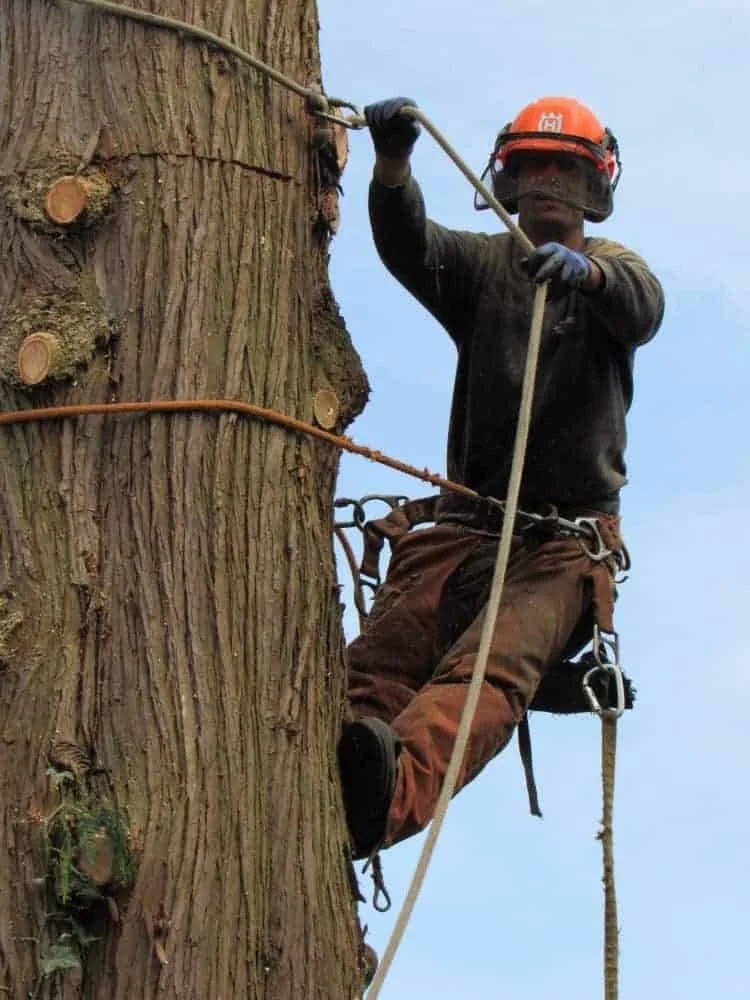
How Does an ISA-Certified Arborist Actually Assess a Tree?
Assessment is a structured process, not a walk-around visual inspection.
**Crown condition**
Dead branches. Dieback patterns. Chlorotic foliage. These indicate systemic issues — root dysfunction, vascular disease, or progressive structural failure in the upper canopy.
**Trunk integrity**
Cavities. Through-cracks. Fungal conks. Old pruning wounds. Cankers. The trunk reveals internal wood condition. A fungal conk at the root flare is one of the most reliable indicators of advanced butt rot — often invisible from above until the tree fails.
**Root flare and root zone**
Root flare damage is the most underestimated cause of urban tree failure. Construction, pavement changes, grade alterations, and soil compaction all compromise root function long before the canopy shows symptoms. We've assessed trees that looked perfectly healthy from the street but had severely compromised root zones underground.
**Target structures and site conditions**
Overhead lines. Adjacent structures. Slope angle. Access constraints. These factors shape both the hazard rating and the removal methodology. A large Douglas fir over a roof requires completely different planning — and often crane-assisted tree removal — compared to the same tree in an open backyard.
**Species-specific risk patterns**
Different species fail in different ways. Big-leaf maples can fail suddenly when structurally compromised, often at the union of co-dominant stems. Western red cedars regularly show advanced internal rot while external symptoms remain subtle. Black cottonwood drops large branches in high winds even when otherwise healthy. Species knowledge changes the risk calculation.
The output is a formal hazard rating using **TRAQ methodology** — the current ISA standard for tree risk assessment. That rating drives the recommendation: retain, monitor, apply structural support, or remove.
---
What's the Legal Exposure If a Hazard Tree Falls Without an Assessment?
This is the question most property owners avoid asking.
In BC, property owners carry a **duty of care** for trees on their land. If a hazard tree fails and damages a neighbor's property — or injures someone — and visible warning signs were present, "I didn't know" isn't a complete defense.
A tree with visible fungal conks at the base, a major cavity in the trunk, or significant crown dieback presents observable warning signs. A court can find that a reasonable property owner should have acted on those signs.
Getting a formal arborist hazard report creates documentation that you exercised reasonable care. If you received a professional recommendation and acted on it, your liability exposure is substantially reduced. If you never got an assessment on a tree showing obvious failure signs, you're exposed.
---
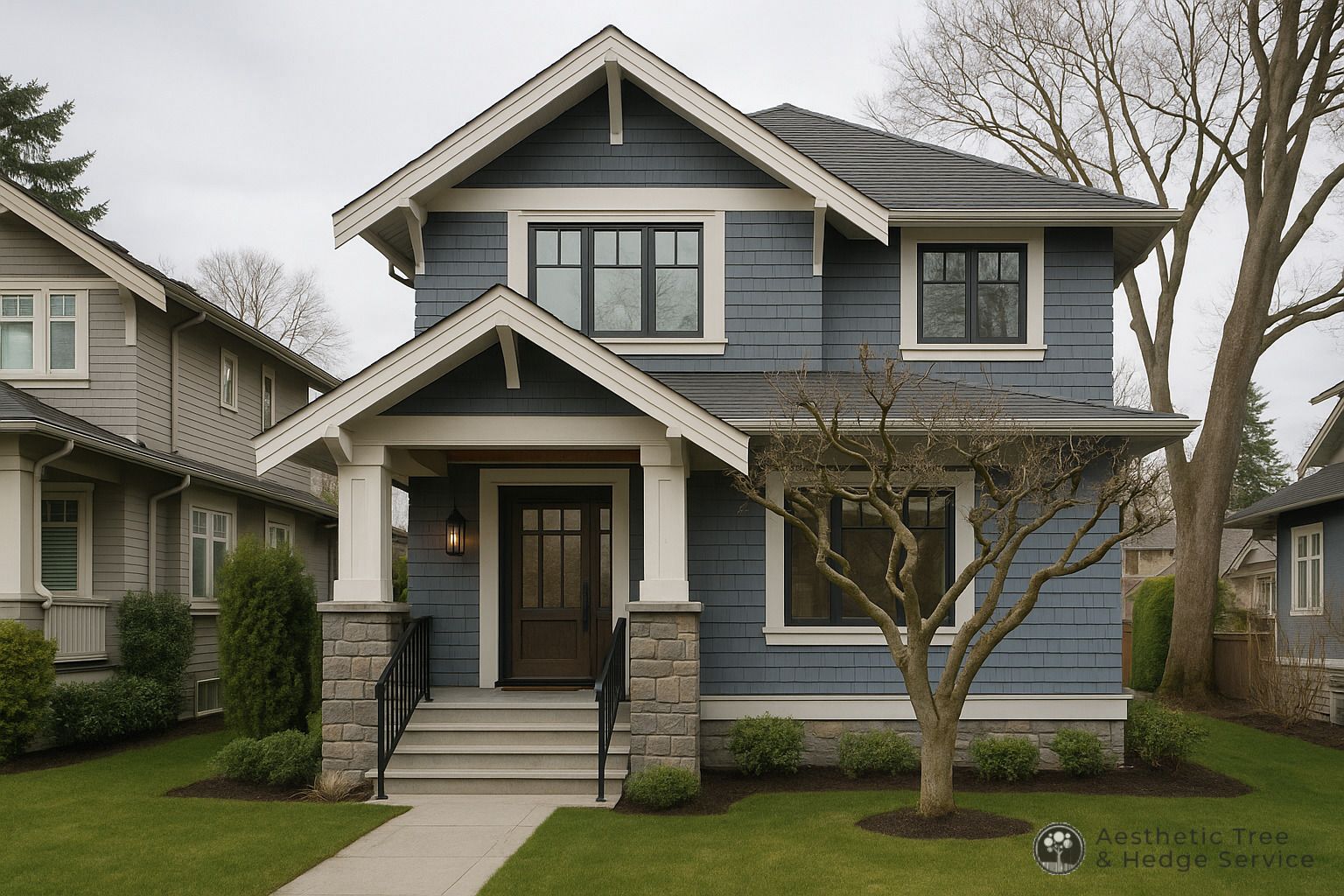
Which Trees in Vancouver Are Specially Protected?
Some trees get extra protection beyond the diameter threshold.
**Heritage trees** — those on the City of Vancouver's Heritage Tree Register — require special approval for any work, including pruning and removal. These trees are documented in the **Vancouver Open Data Portal**'s public tree inventory. Before assuming a large tree on your property can be removed with a standard permit, check the inventory.
**Garry oak (Quercus garryana)** receives particular attention in BC. It's an at-risk ecosystem species, with most remaining populations concentrated in the Gulf Islands and Saanich Peninsula. Any Garry oak in Vancouver typically warrants careful consideration regardless of size.
Other commonly protected species include:
- **Big-leaf maple (Acer macrophyllum)** — widespread in East Vancouver and Burnaby; protected at mature sizes
- **Western red cedar (Thuja plicata)** — BC's provincial tree; heritage specimens exist in many older Vancouver neighborhoods
- **Douglas fir (Pseudotsuga menziesii)** — dominant conifer on forested properties across the Lower Mainland
Neighborhoods like Shaughnessy, Point Grey, and Grandview-Woodland have higher concentrations of heritage-designated trees. Always verify status before starting any removal process.
---
Can You Skip a Certified Arborist for Small or Dead Trees?
Vancouver's Bylaw 9958 has exemptions for trees below the 20 cm threshold. But even for exempt removals, there are practical reasons to involve a professional.
**The safety case**
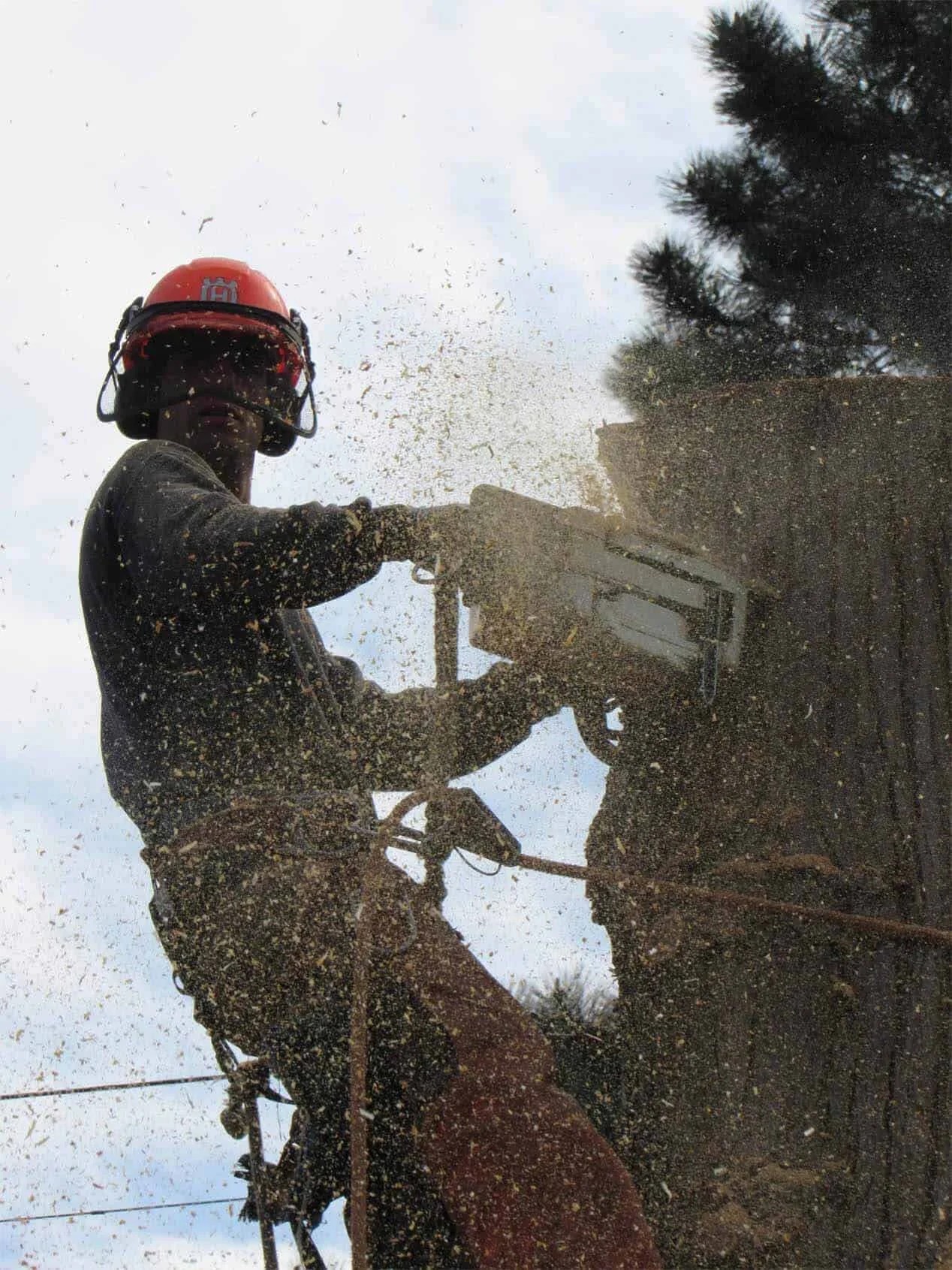
A 25-foot dead tree still weighs hundreds of kilograms. Directional felling in a tight urban yard — fence on one side, house on the other — requires precise calculation of lean, fall zone, and hinge geometry. These are skills developed over years. Without them, the margin for a serious mistake is narrow.
**The liability case**
If you hire an unregistered person to do tree work and they're injured on your property, you're exposed. Always ask for WCB registration in writing before work starts.
**The neighbor case**
Trees near property lines generate disputes. Even exempt removals create legal exposure if there's any ambiguity about ownership, shared root systems, or boundary location. A professional assessment creates documentation that protects you.
For removals with limited access, canopy overhanging structures, or trees requiring sectional dismantling in confined spaces, tree cutting services in Vancouver from a certified team is the right call. Equipment and technique make the difference between a clean removal and a claim.
---
What Happens After the Tree Comes Down?
The removal is one step. Here's what follows.
**Stump grinding**
Leaving a stump creates ongoing problems. Trip hazards. Pest habitat for carpenter ants and beetles. Root decay that can spread fungal pathogens to nearby healthy trees. Big-leaf maple generates persistent root sprouts from a cut stump for years. Stump grinding in Vancouver removes the stump below grade, eliminates regrowth, and prepares the area for replanting or landscaping.
**Replacement planting**
Vancouver's tree permit conditions increasingly require replacement trees — typically at a 1:1 or higher ratio depending on the species removed and site conditions. Our tree planting service covers species selection appropriate to site conditions, proper planting depth, and establishment support.
**Site cleanup**
All debris gets chipped and removed. If you want firewood left on site, let us know before the job starts — we'll cut rounds to your specifications.
---
When Is Tree Removal an Emergency?
Not every removal can wait for a permit process.
A tree actively failing — root plate lifting, trunk cracking, major limbs hanging over occupied structures — is an emergency. Vancouver's fall and winter storm season regularly compromises otherwise stable trees. Wind loading on waterlogged soil in the city's clay-heavy substrates can uproot trees that showed no prior symptoms.
Under Bylaw 9958, emergency removal of an imminent hazard can proceed before a permit is issued. The property owner must apply within **30 days** of the removal and provide documentation confirming imminent danger.
Our emergency tree service in Vancouver operates around the clock across Metro Vancouver. Emergency response still requires ISA-certified assessment — we determine the appropriate response before making any cuts, even under time pressure.
---
Why Does This Matter for Vancouver's Entire Urban Forest?
Beyond individual properties, there's a bigger picture.
The **City of Vancouver's Urban Forest Strategy (2021)** targets 30% urban tree canopy cover by 2050 — up from approximately 22% in recent years. That goal depends on the trees we have staying healthy, and on the trees that do need removal being properly replaced.
Certified arborists aren't primarily removal specialists. We assess trees that can be saved. We recommend structural cabling and bracing for trees with manageable defects. We identify early-stage disease when intervention is still possible. We document trees that need to come down — but we also document the ones that don't.
According to the **International Society of Arboriculture's 2023 research on urban tree benefits**, mature trees in temperate cities provide an average of **$2,600 in annual ecosystem services per tree** — including stormwater interception, urban heat reduction, and carbon sequestration. That's a real number. Every tree we retain rather than remove is value kept in the neighborhood and the city.
A proper hazard assessment regularly finds trees that were candidates for removal but are actually retainable with targeted intervention. That matters for your property value, your neighborhood's canopy, and Vancouver's long-term urban forestry targets.
---
FAQ
**Do I always need a permit to remove a dead tree in Vancouver?**
Yes, in most cases. Vancouver's Street and Private Tree Bylaw (Bylaw 9958) requires a permit for any tree with a trunk diameter of 20 cm or more at 1.4 metres height — dead or alive. Dead trees aren't automatically exempt. Exemptions apply primarily to trees below the diameter threshold. When in doubt, contact the City of Vancouver Engineering Department before proceeding.
**What's the difference between an ISA-certified arborist and a regular tree service?**
ISA certification requires passing a comprehensive exam in tree biology, hazard assessment, pruning science, and soil management. Certified arborists must maintain continuing education credits to keep certification current. Not all tree services employ ISA-certified arborists. Vancouver permit applications require a report signed by an ISA-certified professional — a landscaper's assessment or a general contractor's letter won't satisfy the city's requirements.
**Can a certified arborist ever save a tree that looks like it needs to come down?**
Frequently. Early-stage disease treatment, root zone remediation, crown reduction, and structural cabling can extend the useful life of many trees that initially appear compromised. ISA-certified arborists follow ANSI A300 standards, which require considering all viable alternatives to removal before recommending it. Removal is the recommendation when it's the appropriate option — not a default.
**How long does the Vancouver tree removal permit process typically take?**
The City of Vancouver targets a 20-business-day processing window for tree permit applications, though actual timelines vary with application volume and complexity. Trees with heritage designation or unusually complex site conditions may take longer. Start the process early — especially if construction or development is driving the removal timeline.
**What should I do immediately if a storm drops a tree on my property?**
Call a certified arborist emergency line right away. Vancouver's bylaw allows emergency removal without advance permit approval, but requires a permit application within 30 days with documentation of the hazard condition. Don't attempt to move large downed sections yourself — hung-up limbs and root plate movement create serious secondary hazards. Our emergency team responds 24/7 across Vancouver and Metro.
---
Ready to Talk to an ISA-Certified Arborist?
If you've got a tree showing signs of disease, structural concern, or conflict with a planned renovation — don't wait until it becomes an emergency.
Aesthetic Tree & Hedge Services is ISA-certified and WCB registered. We operate across Vancouver, Burnaby, North Vancouver, Richmond, and Coquitlam. We handle everything from hazard assessments and permit reports to full tree removal in Vancouver — and we'll tell you straight whether the tree needs to come down or whether there's a better option.
Call for a free estimate: **(604) 721-7370**
Related: For more on this, see What Arborist Jobs in British Columbia Actually Require — And Why It Matters When You Hire.
Related: For more on this, see arborist vancouver dispute: 2026 Tree Guide.
Found this helpful? Follow our tree care insights directly on Google.
Make us your preferred source on GoogleBefore You Go
Where are you in your tree care journey?
Our Tree Care Services
ISA-certified arborists serving Greater Vancouver


Explore Our Tree Care Services
From expert pruning to safe tree removal, our ISA-certified arborists are ready to help across Greater Vancouver.
View Services