
TL;DR — Quick Summary
Tree topping why to avoid it — ISA-certified arborists explain the real damage, why topped trees become hazards, and what proper pruning looks like. Free estimates Vancouver.
Picture your neighbor's yard from three years ago.
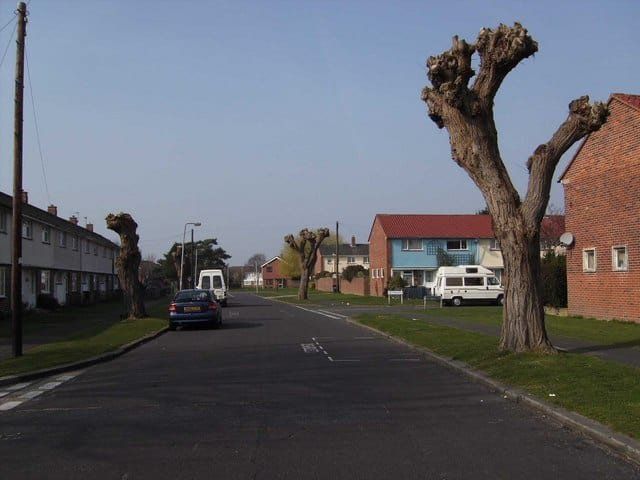
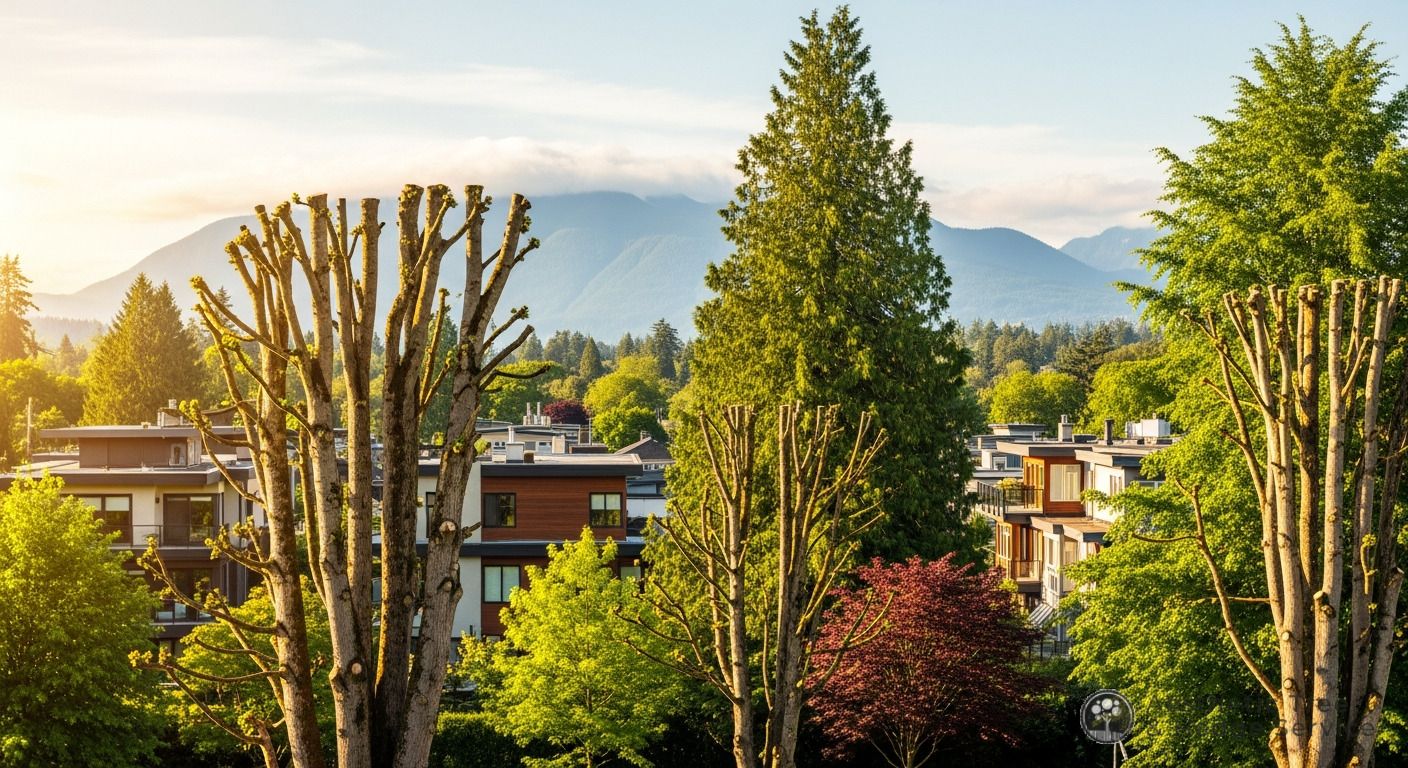
They hired a cheap crew to 'top' the big Norway maple in the corner. The crew showed up with chainsaws. They cut the top off every major branch. The tree looked like a collection of phone poles with blunt stubs pointing at the sky.
The homeowner was happy. The tree was shorter. More light in the yard. Problem solved.
Then summer hit.
Dense, bushy growth exploded from every cut end. Within two years the tree was smothered in a thick mop of new branches. But those branches were nothing like the original ones. They were fast-growing and weak. Attached to the outer shell of old wood by the thinnest possible connection.
A windstorm last spring took out three of them. One landed on the fence. One blocked the driveway. The third narrowly missed a car.
Now the whole tree needs to come down. What could have been a manageable job years ago is now a costly emergency. The tree has been rotting from the inside since those first cuts were made.
This is tree topping. This is exactly how it ends.
It plays out across Vancouver, Burnaby, North Vancouver, and the rest of the Lower Mainland every single year. Same story. Same result. A 'solution' that creates a much bigger problem.
Here's the full picture — and why every ISA-certified arborist will tell you to avoid tree topping.
TL;DR
- Tree topping removes most of a tree's canopy at once, sending it into a biological panic
- The replacement growth (epicormic sprouts) is structurally weak and fails in windstorms
- The International Society of Arboriculture calls topping one of the most harmful pruning practices known
- Topped trees often decline and die within 10–15 years — costing far more to manage than proper care
- Get a professional arborist report before any major work — crown reduction, thinning, or removal are the right alternatives
What Actually Happens Inside a Tree When You Top It?
To understand why topping is so destructive, you need to understand how trees respond to wounds.
When you make a proper pruning cut at the branch collar — the slight swelling where a branch meets the trunk or parent limb — the tree responds by building a chemical barrier. It walls off the wound. Decay-causing fungi can't penetrate it. Over time, the tree's tissue seals the cut entirely.
This process is called compartmentalization. It was first studied in depth by Dr. Alex Shigo, a researcher at the USDA Forest Service who spent decades cutting open tens of thousands of trees to understand how decay actually moves through them. Shigo's research established that compartmentalization works only when cuts are made at natural branch unions.
Cut between nodes — in the middle of a branch, not at its origin — and the tree cannot wall off the wound. The wood on either side of the cut dies back. Decay fungi move in immediately.
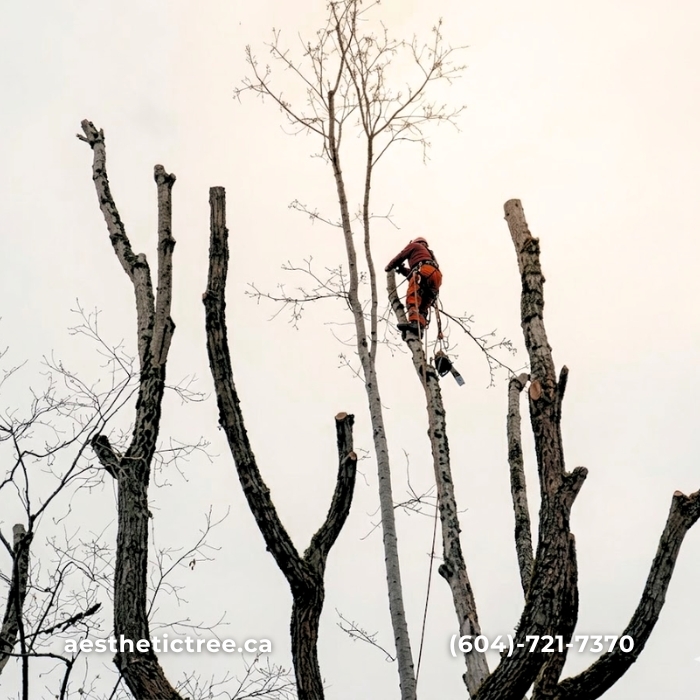
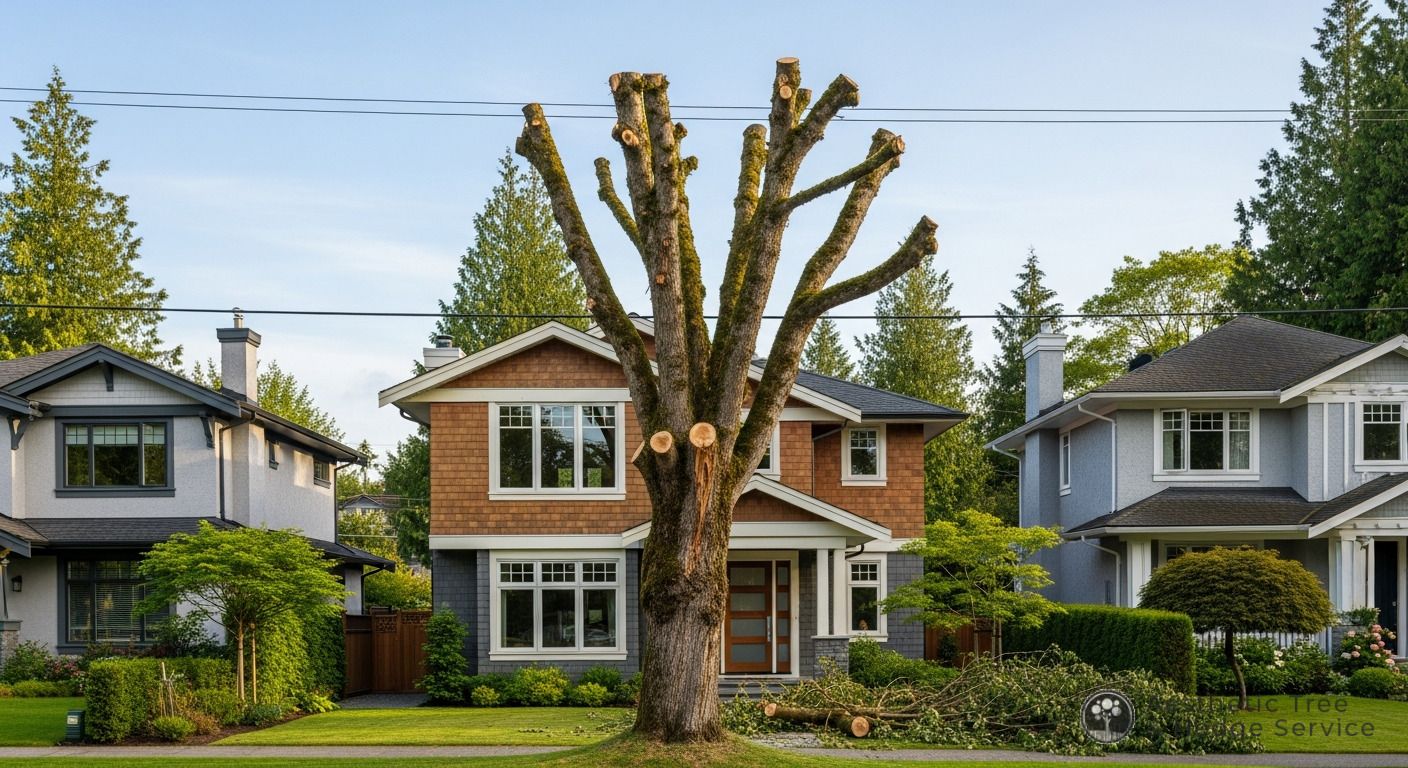
Topping means cutting large branches or the main stem between nodes. Every. Single. Cut. There are no natural unions to cut at because the branches are being severed at arbitrary heights. The wounds are enormous. Sometimes 6, 8, or 10 inches across. The tree can't seal them.
But the tree doesn't give up. It launches a survival response.
It pushes out what arborists call epicormic growth — dozens of fast-growing shoots that burst from just below each cut. The tree is desperately trying to restore its canopy. It needs leaves to photosynthesize and keep itself alive.
Those shoots grow fast. Sometimes 6 to 8 feet in a single season. But they attach only to the outermost wood of the old limb. They don't develop the strong, deep-embedded unions that natural branches have. Their attachment angles are poor. A branch that grew naturally over decades is structurally integrated. These epicormic sprouts are held on by a shell.
After five years of growth, those sprouts are long and heavy. They're held on by almost nothing. The core of the limb beneath them is rotting.
That's not a safer tree. That's a ticking clock.
Does Tree Topping Actually Make Trees More Dangerous?
Yes. The research is unambiguous.
The International Society of Arboriculture — the global authority on professional tree care — has described tree topping as "perhaps the most harmful tree pruning practice known." That's not an opinion. That's a formal position statement from the organization that certifies arborists worldwide.
Here's the failure sequence:
**Topping depletes the tree's energy reserves.** According to ISA research on tree stress physiology, a tree may exhaust the majority of its stored carbohydrate reserves responding to a single large-scale topping event. Those reserves were needed for compartmentalization, disease resistance, and root maintenance. The tree spends years just trying to stabilize.
**The wounds invite decay pathogens.** Research published in *Arboriculture & Urban Forestry* — the peer-reviewed journal of the ISA — identifies large-diameter topped stubs as primary entry points for wood decay organisms. Fungi like *Ganoderma applanatum* and *Armillaria mellea* colonize these wound surfaces and spread inward along the grain. Within three to five years, major structural sections of a topped tree can be hollow.
**Epicormic sprouts have inferior structural integrity.** The ISA's Best Management Practices for Tree Pruning (2017 edition) notes that epicormic shoots formed in response to topping have significantly weaker attachment characteristics than branches that develop naturally. Under wind load — in a storm, say — they fail. This is what you find after an emergency tree service call: branches that separated cleanly from the attachment point with no transition wood at all.
**Topped trees die far sooner than they should.** According to ISA guidelines on tree longevity, properly maintained trees can live for decades — or centuries — depending on species. Topped trees frequently enter terminal decline within 10 to 15 years. Once internal decay reaches critical mass and the epicormic growth creates too much structural liability, the tree can't be saved.
Here's the cruel irony: people top trees because they're afraid of them. They think a shorter tree is a safer tree. But topping creates the exact hazard they were trying to prevent — on a slower timeline, and at greater eventual cost.
Why Do People Still Top Trees If It's So Harmful?
A few reasons. They're worth understanding.
**It looks like it's working.** The tree is shorter. The canopy is gone. For the first year, that looks like a solution. You can't see the decay beginning inside. You can't see how weakly those new sprouts are attaching. The damage is invisible until a windstorm shows you.
**Unlicensed crews offer it cheaply.** Topping doesn't take skill. Any person with a chainsaw can do it. Crews without ISA certification or WCB coverage often offer topping because it's fast, dramatic, and leaves homeowners feeling like something meaningful got done. What didn't get done: anything that actually helps the tree.
**It gets confused with real pruning.** Crown reduction is a legitimate arboricultural technique. Done correctly, it reduces a tree's height or spread by cutting back to a lateral branch that's at least one-third the diameter of the removed limb. That lateral becomes the new terminal. The tree's natural form is maintained. No stubs are left. The tree can compartmentalize every cut.
Topping is not crown reduction. The techniques produce completely different outcomes. But to an untrained eye, both involve making trees shorter.
**Timing hides the consequences.** The homeowner sees fresh cuts, feels satisfied, and doesn't revisit for a few years. By then the crew is long gone. The decay is inside the tree. The cause-and-effect connection isn't obvious until something falls.
What Does ANSI A300 Say About Tree Topping?
ANSI A300 is the American National Standard for tree care operations. It's the benchmark that ISA-certified arborists follow. And it's explicit.
ANSI A300 Part 1 (Pruning) — revised in 2022 — sets three non-negotiable requirements for all pruning work:
1. **No more than 25% of the living crown should be removed in a single pruning cycle.** Topping typically removes 50–75% of the crown. Sometimes more. 2. **All pruning cuts must be made at a branch union.** Not between nodes. Not at an arbitrary height. At the collar — the biological junction where the tree can form a wound barrier. 3. **Stubs are not acceptable.** Leaving a severed limb end without a lateral branch to continue the limb's function violates the standard.
Topping fails all three tests simultaneously.
Any contractor who tops trees is working outside ANSI A300 standards. This has real legal implications. If a topped tree subsequently fails and damages property or injures someone, whether the work was performed to industry standard will be examined. The answer will be no.
Before hiring anyone to work on your trees, ask whether they follow ANSI A300. If they look confused — or if they're recommending topping as a solution to your concern — hire someone else.
Is Tree Topping Illegal in Vancouver?
This surprises most homeowners. But in many cases, tree topping in Vancouver is prohibited under bylaw.
The City of Vancouver's Street Tree Protection Bylaw protects trees on public boulevards and rights-of-way. Pruning of street trees must comply with ANSI A300 standards. Topping a street tree — or having an unlicensed crew do it — can result in fines and cost recovery orders for replacement.
The City of Vancouver's Private Tree Bylaw protects trees on private property with a trunk diameter of 20 cm or greater. Destructive pruning that would significantly harm or kill a protected tree requires a permit. Tree topping routinely qualifies as destructive pruning under this definition.
North Vancouver District, Burnaby, Coquitlam, and Richmond all have comparable tree protection bylaws. Before any significant tree work, verify the status of your tree with your municipality — or commission an arborist report from a certified professional who knows the local regulations cold. That report documents the tree's condition, what's legally permitted, and what the recommended course of action is.
BC Hydro manages trees near power lines through its Vegetation Management Program. Their arborists use directional pruning — not topping — to maintain clearance from utility conductors. If your tree is near power lines, contact BC Hydro before hiring any private contractor. For trees within 3 metres of primary conductors, BC Hydro handles the work directly. Don't let a private crew near live lines.
What Are the Real Alternatives to Tree Topping?
There is almost always a better option. Here are the techniques ISA-certified arborists actually use.
Crown Reduction
Done correctly, crown reduction reduces a tree's height and spread while preserving its natural form and structural integrity. The key: every cut goes back to a live lateral branch that's at least one-third the diameter of the removed limb. That lateral becomes the new terminal. The tree maintains a tapered, natural silhouette — and can close every wound.
This requires genuine skill. It requires reading the tree's structure, understanding load distribution, and knowing which branches carry the form. A crew doing proper crown reduction studies the tree before making a single cut.
The result is a smaller tree that's still structurally sound. Still healthy. Still compartmentalizing.
Crown Thinning
Sometimes the concern isn't height — it's density. A thick canopy acts like a sail in high wind. Crown thinning selectively removes interior branches to allow wind to pass through. It also improves light penetration and air circulation through the canopy.
Thinning doesn't change a tree's height. It reduces the wind force on the structure. For large trees near buildings in the Lower Mainland, this is often the most appropriate first intervention.
Structural Pruning for Young Trees
The best time to address structural problems is before they become serious. Structural pruning on young trees establishes sound architecture early — removing competing leaders, correcting poor branch angles, and reducing co-dominant stems before they become a liability. A properly pruned young tree costs a fraction of what it takes to manage a mature, compromised one.
Tree Cabling
Some trees have structural weaknesses that can be managed rather than removed. Tree cabling installs high-strength cables between major limbs to limit movement and reduce failure risk under load. It's an ISA-approved technique for extending the safe life of a structurally sound but vulnerable tree — one with value that makes preservation worth the effort.
Proper Removal When Needed
Sometimes the right answer is removal. A tree that's structurally compromised beyond recovery, dead, or diseased is better taken down cleanly than managed indefinitely as a worsening hazard.
Professional tree removal done correctly solves the problem permanently and safely. It doesn't leave you managing a slow-motion failure for years.
That's the key difference between topping and removal. Removal ends the problem. Topping postpones it, compounds it, and costs far more over time.
How Do You Know If Your Tree Is a Real Hazard?
Most trees don't need topping. Many don't need removal. But some do. Here are the warning signs ISA-certified arborists look for in a formal hazard assessment:
- **Dead branches in the upper crown.** Dead wood is brittle. It doesn't bend — it snaps. Dead branches near structures are a direct, active risk.
- **Co-dominant stems with included bark.** Two main stems competing from a tight V-shaped junction, with bark wedged inward between them. This union can split under wind or ice load with almost no warning.
- **Visible cracks in major limbs or the trunk.** A crack is structural failure in progress.
- **Cavities or hollow sections.** Internal decay has removed load-bearing wood. How much is left? Only a proper inspection tells you.
- **A recent change in lean.** A tree that has shifted its angle may have root failure occurring underground.
- **Root damage from nearby construction or grade changes.** Roots killed by excavation or new pavement show up as canopy dieback years later. The damage is invisible until it's severe.
If you're seeing any of these signs, stop. Don't call a crew that offers to top it. Get an arborist report. Know what you're actually dealing with before anyone picks up a chainsaw.
In our experience working across Vancouver, Burnaby, and North Vancouver, a significant portion of the trees we receive as emergency calls after a major windstorm were previously topped. The topping didn't prevent the failure. It caused it.
What Happens When a Topped Tree Falls?
We get emergency calls after every major windstorm in the Lower Mainland.
The pattern is consistent. A branch fails. It separates right at the epicormic sprout attachment — where new growth met old, decayed wood. A branch that's been growing for four or five years can be 20 to 30 feet long. When it comes off a tree, it hits hard.
Fences. Cars. Roofs. Power lines. In serious cases, people.
After the cleanup is done, there's often a painful conversation. The homeowner had the tree topped three or four years ago. They thought it was handled. They didn't know what was happening inside the wood.
No one told them.
That's the real cost of tree topping. Not just the money — though that adds up fast. It's the years spent thinking you've solved a problem while a hazard quietly grows.
How Do You Find a Qualified Arborist in Vancouver?
Not every 'tree company' is an arborist operation. Here's what to verify before anyone works on your trees.
**ISA Certification.** The International Society of Arboriculture certifies arborists who pass a comprehensive knowledge exam and maintain ongoing education. Ask for the arborist's certification number and verify it at isa-arbor.com. This takes 30 seconds.
**WCB Registration.** WorkSafeBC registration is non-negotiable. If a worker is climbing your tree without WCB coverage, you carry the liability if they're injured. Always request a WCB clearance letter before work begins.
**ANSI A300 compliance.** Ask directly: 'What standard do you prune to?' A qualified arborist answers ANSI A300 without hesitation. If they recommend topping as a solution, that's your answer.
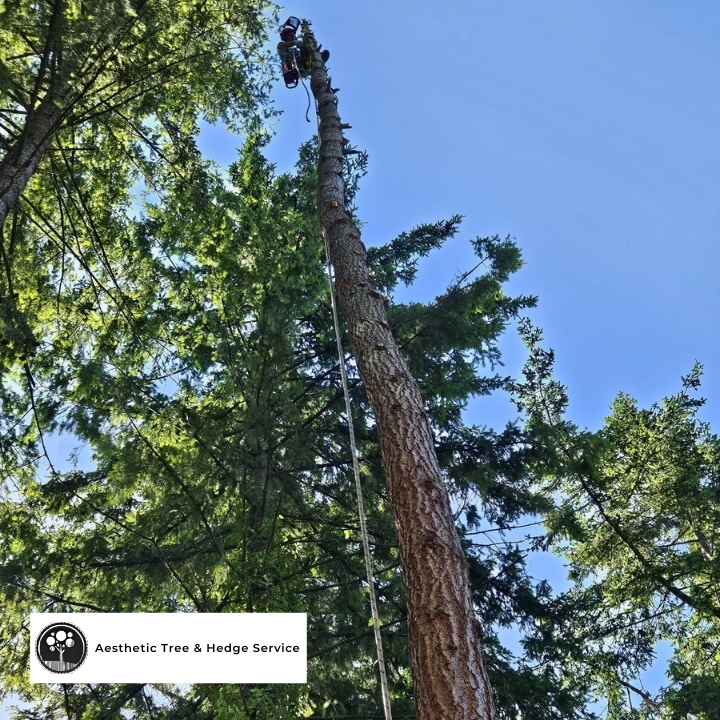
**Proper technique and equipment.** Professional tree cutting requires more than chainsaws. Climbing gear, rigging equipment, a proper crew. What they don't do is hack branches off at arbitrary heights and call it a day.
**A written assessment.** A good arborist gives you a document. It explains the tree's condition, the recommended work, and why. Not just a number and a handshake.
Aesthetic Tree & Hedge Services is ISA-certified and WCB registered. We follow ANSI A300 standards on every job. We work across Vancouver, Burnaby, North Vancouver, Richmond, Coquitlam, and the Lower Mainland.
We tell you what the tree actually needs. Not what's easiest to sell.
FAQ
**1. What is tree topping and why do ISA arborists oppose it?**
Tree topping means cutting a tree's main branches or stem back to stubs — at arbitrary heights, not at natural branch unions. The International Society of Arboriculture describes it as 'perhaps the most harmful tree pruning practice known.' It creates massive wounds that trees cannot close, triggers structurally inferior regrowth, exhausts the tree's energy reserves, and initiates a decay process that frequently kills the tree within 10 to 15 years.
**2. Can a topped tree recover?**
Some topped trees survive, but they're never fully healthy again. The internal decay from unsealed stubs continues to spread. The replacement growth — epicormic sprouts — will always be structurally weaker than the original branches. Recovery depends on the species and the extent of topping. In many cases the tree enters a slow decline that ends with removal.
**3. Is tree topping illegal in Vancouver?**
In many situations, yes. The City of Vancouver's Private Tree Bylaw protects trees with a trunk diameter of 20 cm or greater. Destructive pruning that could kill or significantly harm a protected tree requires a permit — and topping typically qualifies. Street trees are protected under a separate bylaw. Burnaby, North Vancouver, Coquitlam, and Richmond have comparable protections. Check with your municipality before any major tree work. An arborist report documents what's legally permitted.
**4. What should I do if I'm worried my tree is too large?**
Get an assessment from an ISA-certified arborist. They'll evaluate the tree's structure, health, and position relative to your property. If size is the concern, crown reduction or thinning is usually appropriate. If the tree is genuinely hazardous, proper removal solves the problem permanently. The answer is almost never topping.
**5. What is the difference between tree topping and crown reduction?**
Crown reduction is a proper, ANSI A300-compliant technique. It reduces height and spread by cutting back to live lateral branches — never leaving stubs. The tree's natural form is preserved. It can close its wounds. No more than 25% of the crown is removed in a single cycle. Tree topping cuts between nodes, leaves stubs, removes far more than 25% of the crown, and creates wounds the tree cannot seal. They look similar from the street. The outcomes are completely different.
---
Call Aesthetic Tree & Hedge Services Before Any Tree Work
Now you know what tree topping actually does to a tree. It's not a solution. It's the beginning of a longer, more expensive problem.
The trees on your property are worth protecting. A mature Big-leaf maple or Douglas fir took decades to grow. With proper care, it can stand for decades more. With topping, it becomes a hazard — and an expensive one.
Don't top your trees. Call the arborists who know the difference.
**Aesthetic Tree & Hedge Services** ISA-certified arborists. WCB registered. Serving Vancouver, Burnaby, North Vancouver, Richmond, Coquitlam, and the Lower Mainland.
Call for a free estimate: **(604) 721-7370**
Found this helpful? Follow our tree care insights directly on Google.
Make us your preferred source on GoogleBefore You Go
Where are you in your tree care journey?
Our Tree Care Services
ISA-certified arborists serving Greater Vancouver


Explore Our Tree Care Services
From expert pruning to safe tree removal, our ISA-certified arborists are ready to help across Greater Vancouver.
View Services