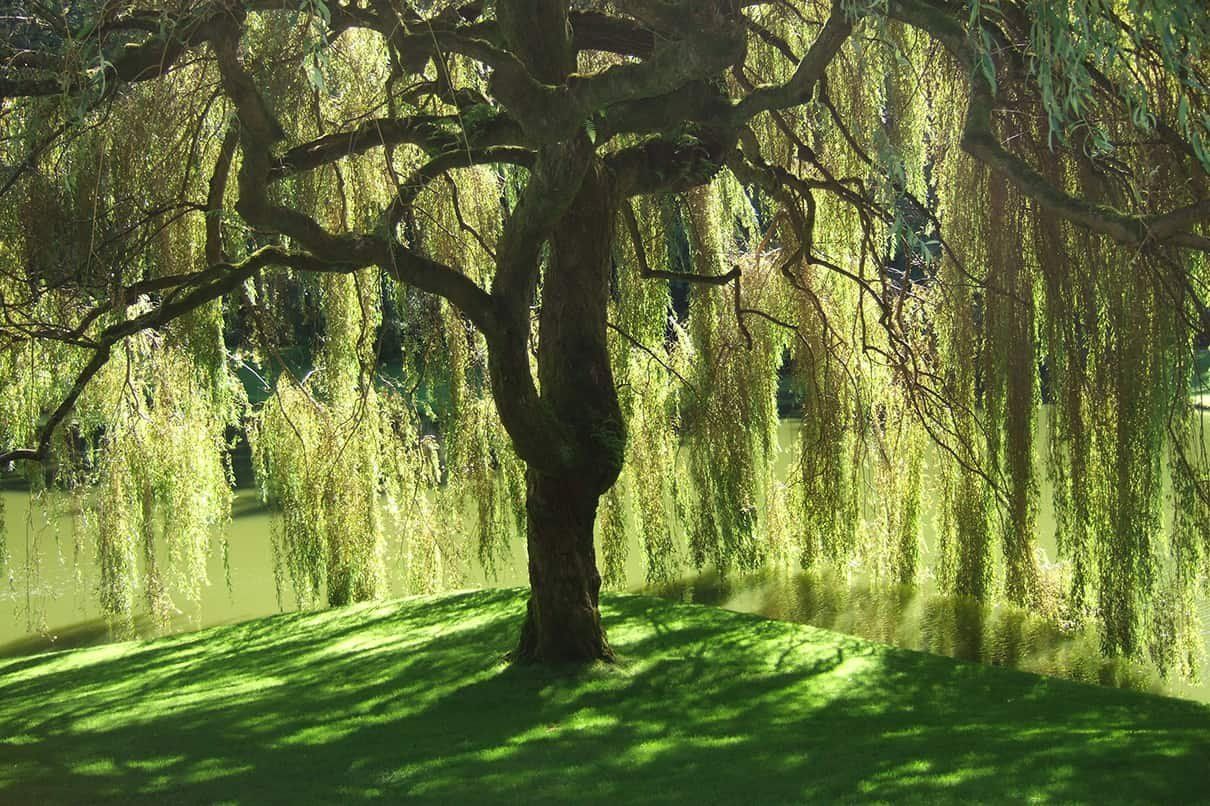

TL;DR — Quick Summary
Weeping willow tree roots and water pipes: learn how far roots spread, what they damage, and when to call an ISA-certified arborist in Vancouver.
TL;DR
- Weeping willow roots are shallow, fast-spreading, and strongly drawn to reliable moisture sources such as sewer lines, perimeter drains, storm drains, septic fields, irrigation leaks, and wet service corridors.
- Willow roots usually do not crush a healthy, sealed modern pipe from the outside. The more common failure pattern is root entry through an existing crack, separated joint, older clay pipe, damaged coupling, or settled section of line.
- In Vancouver and the Lower Mainland, wet winters and drier summers can make buried leaks more attractive when surface soil dries out.
- If you have repeated mainline clogs, wet lawn strips, sewer odour, or gurgling drains near a mature willow, start with a licensed plumber's CCTV camera inspection.
- Removing the tree does not repair the pipe. Tree removal, stump grinding, root-zone work, and pipe repair should be planned together.
- In Vancouver, private-property trees 20 cm DBH or larger generally require a removal permit under the City of Vancouver Protection of Trees By-law No. 9958. Confirm current municipal rules before work starts.
Suggested image: Mature weeping willow in a compact Vancouver yard, with a simple overlay showing the sewer line, perimeter drain, and foundation.
---
Weeping willow tree roots and water are connected by the way the tree grows. A willow is built for wet ground, streambanks, drainage channels, pond edges, and low areas where soil moisture stays available. That same habit can become a problem in a Vancouver-area yard, where the most dependable water source may not be a pond. It may be a sewer line, perimeter drain, storm drain, irrigation main, or wet foundation drainage system.
In Aesthetic Tree & Hedge Services assessments across Vancouver, Burnaby, Richmond, North Vancouver, Coquitlam, and nearby Lower Mainland communities, willow problems rarely arrive as tree problems alone. The first call is often about repeated mainline blockages, backed-up floor drains, wet lawn strips that never dry, cracked hardscape over a service corridor, or perimeter drains that need cleaning again soon after being flushed. By the time the tree is blamed, the pipe or drainage system is often already compromised.
This guide explains why weeping willow roots follow water, which underground systems are most exposed, what warning signs to watch for, and when removal becomes the practical option.
---
Why Do Weeping Willow Roots Seek Out Water?
Weeping willow, commonly sold as Salix babylonica or related ornamental hybrids, is a moisture-loving tree. It grows best where water is available and soil conditions allow a shallow, wide root system. In a natural setting, that habit helps the tree thrive beside creeks, ponds, and drainage channels. In a residential yard, it can put buried infrastructure under pressure.
Roots do not grow randomly. They respond to oxygen, nutrients, soil structure, and moisture. A leaking sewer joint creates a steady plume of water and organic material. A cracked storm drain releases moisture after rain. A saturated perimeter drain can become a long, shallow moisture source running around the house. Those are the conditions willow roots are adapted to find.
A key point for homeowners: roots usually do not break into a sound, sealed modern pipe by brute force. The more common pattern is root entry through an existing weakness. That weakness may be an old clay-pipe joint, a separated coupling, a hairline crack, a corroded section, or soil movement around the pipe. Once a fine root tip enters, it can branch inside the pipe, catch debris, slow flow, and eventually contribute to a blockage.
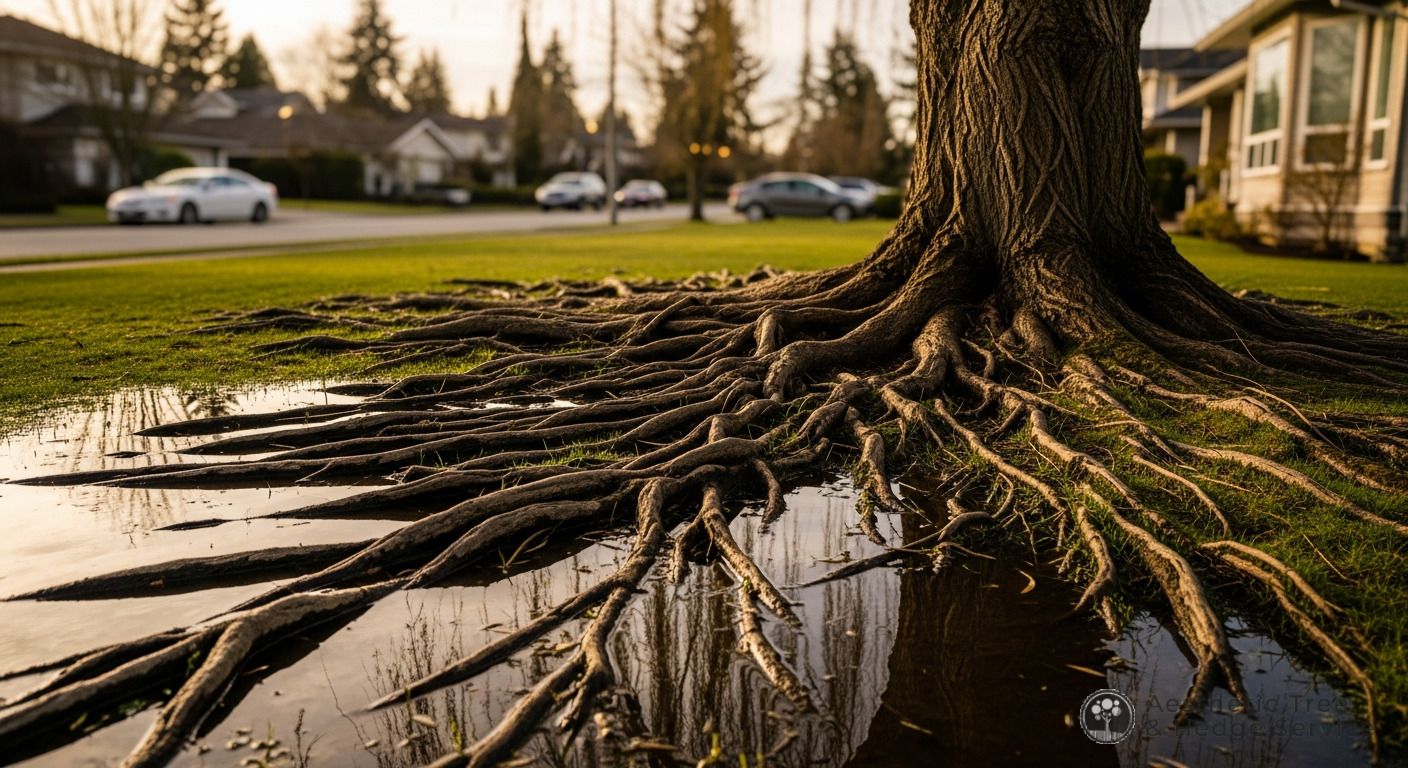
Another common misconception is that roots stop at the drip line. They do not. The drip line is the outer edge of the canopy, not the outer edge of the root system. Mature willow roots can extend well beyond the canopy, especially through moist, loose, oxygenated soil. On a compact Lower Mainland lot, that can put roots under patios, driveways, lawns, and service corridors before the tree looks like an obvious problem.
---
How Far Can Weeping Willow Roots Spread?
There is no single root radius that applies to every willow. Root spread depends on age, size, soil type, compaction, water availability, slope, drainage, and hardscape. What matters for practical risk planning is that willows tend to produce broad, shallow root systems, with many active feeder roots in the upper soil layers where residential drainage and irrigation infrastructure often sits.
Arboricultural guidance generally treats large, water-seeking trees near underground services as higher-risk plantings. For homeowners, the useful question is not whether roots can travel an exact number of metres. The useful question is whether the tree is close enough to reach a vulnerable service line during normal growth.
On older East Vancouver lots, mid-century Burnaby homes, and Richmond properties with shallow groundwater, a willow planted six to ten metres from a sewer line may already be within practical root range if the line is old, jointed, cracked, or leaking. Richmond's soft delta soils and higher water table can create different root-path behaviour than a rocky or sloped North Vancouver site. Coquitlam, Maple Ridge, and Langley properties may vary again depending on clay content, drainage pattern, and service-line depth.
Before digging, trenching, stump grinding, or installing a root barrier near buried services, contact BC 1 Call at 1-800-474-6886 or bc1call.ca. An arborist assessment does not replace utility locating.
Suggested image: Cross-section diagram showing shallow willow roots near a sewer line, weeping tile, and irrigation line.
---
Which Underground Systems Face the Highest Risk?
Not every buried system carries the same risk. During a weeping willow assessment in the Lower Mainland, these are the systems we check first.
Sanitary Sewer Lines
Sanitary sewer lines are usually the highest concern because they carry steady moisture and nutrients year-round. Older clay, concrete, cast iron, and jointed pipe systems are more vulnerable than newer, well-sealed PVC systems. A tiny root can enter through a small defect, then expand inside the pipe and collect paper, grease, and sediment.
Warning signs include repeated mainline cleaning, slow drains across multiple fixtures, gurgling toilets, sewer odour near floor drains, and backups that return after temporary clearing.
Weeping Tile and Perimeter Drainage
Perimeter drainage is a major issue in Metro Vancouver because these systems move groundwater away from foundations through long wet seasons. Environment and Climate Change Canada climate normals for the Vancouver area show a strong seasonal rainfall pattern, with the wettest months generally falling between October and March. During that period, weeping tile may carry water for weeks or months at a time.
For a nearby willow, that creates a consistent moisture signal around the house. If joints are open, pipes are old, or sediment has built up, roots may follow the water and worsen the drainage problem.
Storm Drains
Storm drains can be vulnerable where joints separate, pipe sections settle, or water remains in low spots between rain events. A partial blockage may seem minor in dry weather but become serious during a heavy November rain event or atmospheric river.
Irrigation Lines
Irrigation lines are shallow and active during the dry season, when willow roots are under more pressure to find moisture. Small leaks around emitters, valves, or flexible pipe can create localized wet zones that encourage root growth.
Septic Drain Fields
Septic drain fields are among the worst places to plant a willow. They are moist, oxygenated, and nutrient-rich. In areas outside the core municipal sewer network, including parts of Langley, Maple Ridge, Mission, and rural Pitt Meadows, willows should be kept well away from septic fields and reserve areas.
---
Does Vancouver's Climate Make the Problem Worse?
Yes, but not simply because Vancouver is rainy. The problem is the seasonal contrast.
From fall through early spring, moisture is widespread in the soil. Roots can access water in many directions. During drier summer months, surface soil dries out while buried infrastructure may remain moist. A leaking sewer line, active irrigation system, or damp perimeter drain can become one of the most reliable water sources on the property.
That is why willow-related plumbing problems often appear in summer or early fall. The root intrusion may have been developing for years, but the blockage becomes obvious when the tree is drawing harder on available water and household flow is restricted by roots already inside the pipe.
A common local pattern is a mature willow that has looked healthy for 15 or 20 years while the buried line slowly deteriorates. The lawn may look normal. The canopy may be vigorous. Then one dry-season backup leads to a camera inspection, and the footage shows root growth inside the line.
Richmond properties can be more complicated because groundwater often sits close to the surface. A shallow-rooted willow may not need to search far for moisture, but any leaking pipe or failed drain can move water through the soil quickly and create a larger wet zone.
---
Warning Signs Willow Roots May Be in Your Pipes
Root intrusion usually builds gradually. Watch for these signs, especially if a mature willow is growing near the suspected service route.
Slow Drains Across Multiple Fixtures
One slow sink usually points to a local clog. Slow drainage in the kitchen, bathroom, laundry, and floor drain at the same time suggests a mainline issue.
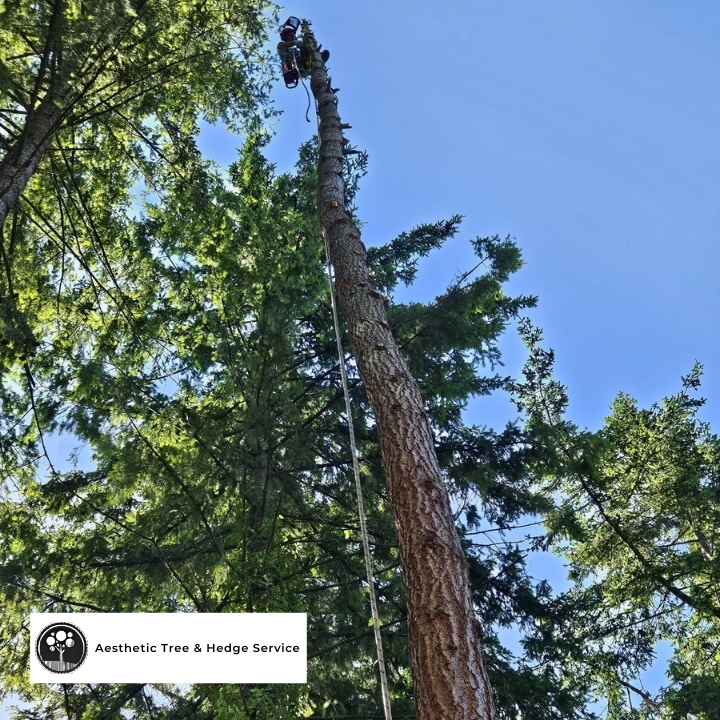
Gurgling Toilets or Drains
Gurgling after flushing, showering, or running the dishwasher can mean air is being displaced by a partial blockage.
Sewer Odour
Sewer odour near a floor drain, laundry tub, crawlspace, or exterior foundation wall may indicate a leak, break, or blocked line.
Wet or Lush Lawn Strips
A strip of grass that stays wetter or greener than the surrounding lawn can indicate a leaking service line or drainage path below.
Cracked or Settled Hardscape
Cracking above a buried line can come from soil movement, pipe leakage, root pressure, or a combination of factors.
Repeated Mainline Cleaning
If the line is cleared and blocks again within a year or two, the cleaning may have removed the symptom without solving the cause.
If you recognize two or more of these signs, call a licensed plumber for a CCTV camera inspection. The camera footage gives evidence of root intrusion, cracks, separated joints, or buildup. If roots are confirmed, involve an ISA-certified arborist before finalizing the repair plan. The pipe and tree problem should be handled together.
If the tree itself is unstable, heavily leaning, storm-damaged, or cracked through the main stem, treat that as a separate safety concern. Aesthetic Tree's emergency tree service covers urgent tree-risk situations where the structure of the tree may threaten the home, driveway, fence, or occupants.
---
Can You Keep the Willow and Protect the Infrastructure?
Sometimes, but it depends on the tree, the site, and whether damage has already started.
Root Barriers
Root barriers can help in preventive situations. A properly installed vertical barrier can redirect root growth away from a target area. Barriers are most useful around younger trees, before roots have entered a pipe or drain.
A root barrier does not remove roots from a sewer line. It does not repair cracked pipe. It only helps manage future root direction where the site conditions make that practical.
Root Pruning
Root pruning near a mature willow is not a casual fix. Large roots contribute to stability. Cutting structural roots can reduce wind resistance, especially before the Lower Mainland storm season.
Root pruning should be planned by an ISA-certified arborist who has assessed canopy weight, lean, trunk condition, soil conditions, and proximity to buildings or utilities. In many cases, an arborist report is the right documentation tool because it records tree condition, DBH, site constraints, and the recommended scope of work.
Tree Removal
Removal is often the responsible option when a mature willow sits close to critical services, CCTV footage confirms root intrusion, or the property has recurring drainage problems tied to the same root system.
Removing the willow does not repair the pipe, but it stops new growth from that tree while the damaged pipe is repaired. In practical terms, mature willows near residential sewer or drainage systems often become recurring maintenance problems unless the tree and pipe are addressed in the same plan.
---
How Close Is Too Close to Plant a Weeping Willow?
The following clearances are conservative planning references, not guarantees and not a substitute for municipal, engineering, plumbing, or site-specific arborist advice.
| Infrastructure | Conservative Planning Clearance | |---|---| | Sanitary sewer line | 30 metres / 100 feet where possible | | Storm drain | 23 metres / 75 feet where possible | | Water supply main | 30 metres / 100 feet where possible | | Foundation or structure | 15 metres / 50 feet minimum | | Septic drain field | Do not plant near the field or reserve area | | Irrigation main | 15 metres / 50 feet where possible |
These distances show why most Vancouver-area residential lots are not good places for weeping willows. A 60-foot-wide lot with a house, sewer line, perimeter drain, patio, and fence line cannot give a willow enough clearance in every direction.
That does not mean the property is flawed. It means the species is mismatched to the site.
If you already have a willow, do not rely on distance alone. A smaller tree beside a damaged clay line can be a bigger problem than a larger tree beside a newer, sealed line with no leaks. The age and condition of the pipe matter.
---
Do You Need a Permit to Remove a Weeping Willow in Vancouver?
In most cases, yes, if the tree meets the regulated size threshold.
The City of Vancouver's Protection of Trees By-law No. 9958 applies to private-property trees. As of current City guidance, a permit is generally required to remove a private-property tree with a trunk diameter of 20 cm or more, measured 1.4 metres above the ground. Rules can differ for replacement trees, development sites, street trees, heritage trees, and hazardous-tree situations, so always confirm requirements with the City before work begins.
Other Lower Mainland municipalities have their own tree rules:
- Burnaby has private-tree permit requirements based on size, species, location, and site context.
- North Vancouver municipalities regulate protected or significant trees and may require documentation before mature-tree removal.
- Richmond has a Tree Protection Bylaw covering regulated private trees.
- Coquitlam protects significant trees and may require replacement planting.
- Maple Ridge and Langley have their own private-tree and development-related provisions.
The wrong sequence is removing first and applying later. Unpermitted tree removal can lead to fines, replacement-planting requirements, and problems during insurance claims or property sales.
An arborist report for Vancouver typically includes species identification, DBH measurement, condition notes, photos, site context, infrastructure concerns, and a recommended action scope. That documentation helps support permit applications and gives the plumber, insurer, or municipality a clearer record of the issue.
---
What Does Professional Weeping Willow Removal Involve?
Removing a mature willow is more involved than removing a small ornamental tree. Weeping willows often have broad canopies, heavy flexible limbs, brittle older wood, and surface roots that affect access and equipment placement.
Structural Assessment
An ISA-certified arborist assesses stem condition, lean, canopy load, decay indicators, root-zone disturbance, nearby utilities, fences, hardscape, and building clearance. This determines whether the tree can be dismantled safely and what equipment is needed.
Permit Confirmation
Where a permit is required, the arborist report supports the application before cutting begins.
Staged Dismantling
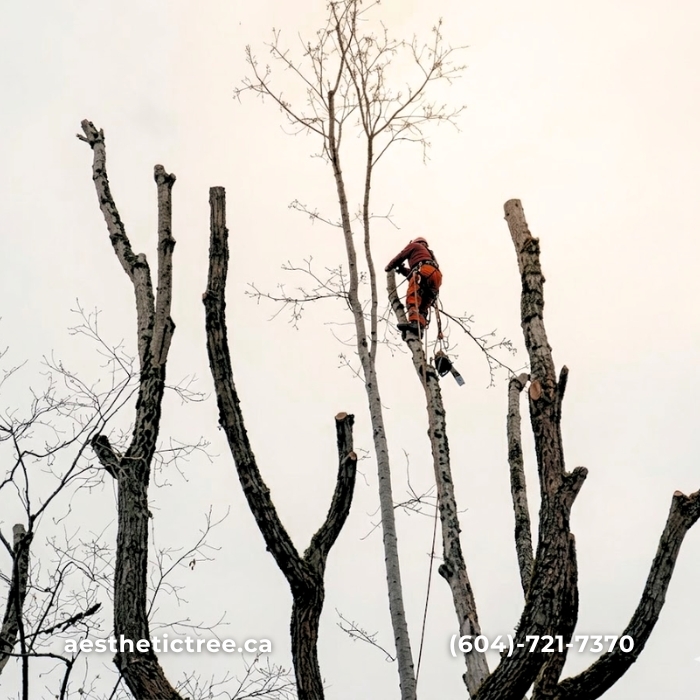
On typical Lower Mainland lots, mature willows are usually removed in sections. Crews work from the canopy down, using rigging where needed to control limbs and protect fences, roofs, patios, and nearby plantings.
Stump Grinding
Willow stumps can resprout aggressively. New shoots may appear from the stump base or surface roots if the stump is left in place. For willows, deeper stump grinding is often recommended to reduce regrowth risk and prepare the area for repair or replanting.
Follow-Up Root Monitoring
After removal, check the old root zone the following growing season. This is especially important before installing new irrigation, paving, planting beds, or turf over the same area.
For tree removal in Vancouver, documentation of site conditions and root-zone observations can also help with plumbing repairs, insurance files, permit records, and future landscape planning.
Suggested image: Crew performing staged tree removal in a tight urban backyard, with rigging visible and surrounding fence or house protected.
---
Better Tree Choices for Vancouver Yards
The weeping form is attractive, but you do not need a weeping willow to get that look.
Weeping Japanese Maple
Acer palmatum 'Dissectum' is compact, graceful, and well suited to many Vancouver gardens. It offers layered form, strong fall colour, and a mature size that works on smaller lots. Its root behaviour is much easier to manage than willow.
Weeping Cherry
Prunus pendula types provide spring flowers and a cascading shape without the same water-seeking root risk. They still need proper placement, but they are more realistic for residential landscapes.
Weeping Blue Atlas Cedar
Cedrus atlantica 'Glauca Pendula' is a sculptural evergreen that works well as a focal specimen on larger sites. Once established, it is better adapted to drier summer conditions than willow.
For wet areas, consider native or climate-adapted shrubs instead of a large water-seeking tree.
Red Osier Dogwood
Cornus sericea is native to British Columbia, handles moist soil, provides winter stem colour, and supports habitat value at a manageable residential scale.
Pacific Ninebark
Physocarpus capitatus is native to the Lower Mainland, tolerates moist areas, and offers a better fit for low-lying garden spaces than a large willow.
The City of Vancouver's urban forest planning emphasizes canopy growth, species diversity, and climate resilience. Choosing a site-appropriate tree supports those goals while reducing future conflicts with foundations, drains, and buried services.
---
Sources to Check Before Removal or Planting
For a homeowner, the best next step is not guessing from the surface. Check the actual site conditions.
Use these sources before making a final decision:
- City of Vancouver Protection of Trees By-law No. 9958 and current tree-removal permit guidance.
- Your own municipality's tree bylaw if the property is outside Vancouver.
- BC 1 Call before digging, trenching, stump grinding, or installing barriers near buried utilities.
- CCTV inspection footage from a licensed plumber when sewer or storm-line damage is suspected.
- An ISA-certified arborist report when tree condition, root pruning, permit support, or removal planning is required.
That combination gives you better evidence than distance rules alone.
---
FAQ
How far should a weeping willow be planted from a house in the Lower Mainland?
As a conservative minimum, keep a weeping willow at least 15 metres or 50 feet from the foundation, and farther from sewer lines, storm drains, water mains, and septic systems where possible. Many Metro Vancouver lots cannot provide enough clearance in every direction, which is why weeping willow is often the wrong tree for urban yards.
Do willow roots actually break pipes?
Usually not by direct force alone. The common failure pattern is root entry through an existing defect such as a crack, separated joint, old clay connection, corroded fitting, or loose coupling. Once inside, roots branch, catch debris, and restrict flow.
How do I know if willow roots are already in my sewer line?
Book a CCTV camera inspection with a licensed plumber. Warning signs include slow drains across multiple fixtures, gurgling toilets, sewer odour, wet lawn strips over the service route, and mainline backups that return after cleaning.
If I remove the willow, will that fix my drain problems?
No. Removal stops future growth from that tree, but it does not repair existing pipe damage. The damaged pipe still needs inspection and repair. Tree removal, stump grinding, pipe repair, and any root-barrier work should be planned together.
Do I need a permit to remove a mature weeping willow in Vancouver?
Usually yes if the tree is 20 cm DBH or larger, measured 1.4 metres above ground, but always confirm directly with the City of Vancouver or your municipality before work begins. Burnaby, Richmond, North Vancouver, Coquitlam, Maple Ridge, Langley, and other municipalities have their own rules.
Who should I call first, a plumber or an arborist?
If you have active drain backups, call a licensed plumber first for camera inspection. If the camera shows roots, bring in an ISA-certified arborist before finalizing the repair plan. If the tree is leaning, cracked, storm-damaged, or structurally unsafe, call an arborist first.
Can a root barrier solve the problem once roots are already in the pipe?
No. A root barrier redirects future root growth. It does not remove roots already inside a pipe and does not repair damaged pipe. Barriers are preventive tools, not pipe-repair tools.
---
Reviewed by Aesthetic Tree & Hedge Services, ISA-certified arborists serving Vancouver and the Lower Mainland.
Aesthetic Tree & Hedge Services provides ISA-certified arborist assessments, tree removal, tree cutting, stump grinding, hedge trimming, and arborist reports across Vancouver, Burnaby, North Vancouver, West Vancouver, Richmond, Coquitlam, Maple Ridge, Langley, and the Lower Mainland. If you have a weeping willow near buried services and want a clear site-specific assessment, call (604) 721-7370 for a free on-site estimate.
---
Found this helpful? Follow our tree care insights directly on Google.
Make us your preferred source on GoogleBefore You Go
Where are you in your tree care journey?
Our Tree Care Services
ISA-certified arborists serving Greater Vancouver


Explore Our Tree Care Services
From expert pruning to safe tree removal, our ISA-certified arborists are ready to help across Greater Vancouver.
View Services