
TL;DR — Quick Summary
hedge trimming best practices for healthy, dense hedges in Vancouver. Learn timing, safety, bylaws, and when to call an ISA-certified arborist.
hedge trimming best practices start with one ugly Saturday mistake.
A homeowner in East Vancouver drags a ladder across wet grass. The cedar hedge is tall. Too tall. It blocks the lane view. It leans over the fence. The neighbour has already made one comment.
So out comes the gas trimmer.
One hour later, the hedge is butchered. The top is flat. The sides are shaved hard. Brown wood shows through. A bird nest falls out. The ladder slips once, just enough to scare everyone watching from the kitchen window.
That hedge won't look right for years.
We see this kind of damage across Vancouver, Burnaby, Richmond, Coquitlam, and the North Shore. Most of it comes from one false idea.
People think hedge trimming is just cutting green stuff shorter.
It isn't.
Good hedge work is controlled pruning. It protects plant health, sightlines, privacy, bylaws, nesting birds, and the person holding the tool.
At Aesthetic Tree & Hedge Services, our ISA-certified arborists treat hedge work like tree work. We look at species, growth points, root stress, structure, access, and hazards. We also look at what happens next season. A hedge is alive. It remembers bad cuts.
TL;DR
- Trim the right hedge at the right time. Cedar, laurel, yew, boxwood, privet, and beech do not respond the same way.
- Keep the base wider than the top. Light must reach the lower growth, or the hedge thins out.
- Avoid hard cuts into old cedar or most conifer wood. Brown gaps often stay brown.
- Check for active nests before cutting. Environment and Climate Change Canada's 2024 guidance lists late March to mid-August as the general nesting period for coastal BC's A1 zone.
- Call an ISA-certified, WCB registered crew for tall, roadside, storm-damaged, or bylaw-sensitive hedge work.
What Are Hedge Trimming Best Practices for a Healthy Hedge?
The best practice is simple to say and harder to do.
Cut for the next flush of growth, not for today's perfect line.
That means you do not scalp the hedge. You do not chase every stray shoot into old wood. You do not take a six-foot cedar down to four feet in one angry pass and hope it fills back in.
Healthy hedge trimming follows five rules.
First, identify the plant. Western red cedar, English laurel, Portuguese laurel, yew, privet, beech, hornbeam, and boxwood all react differently. A laurel can be reduced with selective hand cuts. A cedar hedge has far less mercy once you cut past green growth.
Second, trim during the right season. The Royal Horticultural Society's hedge pruning guidance says formal hedges often need trimming once, twice, or three times during the growing season. Informal hedges often need one well-timed cut. That difference matters.
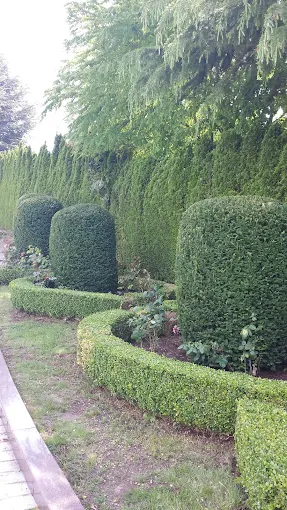
Third, taper the hedge. The top should be narrower than the base. The RHS describes this as cutting to a batter. It lets sunlight reach lower branches. When the top is wider, it shades the bottom. Then the base goes thin. Then privacy dies from the ground up.
Fourth, use sharp tools. A dull trimmer tears leaves and bruises stems. That leaves ragged brown edges, especially on laurel. We use professional hedge trimmers, poles, hand pruners, loppers, and saws based on the plant and cut size. Tools like STIHL hedge trimmers and Felco hand pruners each have a place. One tool does not solve every hedge.
Fifth, know when the hedge is no longer a hedge job. If the work involves large limbs, broken trunks, heavy lean, root damage, or a protected tree, you need arborist judgement. That is where arborist report services in Vancouver come in.
Good trimming keeps a hedge dense, green, and predictable. Bad trimming makes it react.
And hedges react hard.
When Is the Best Time to Trim Hedges in Vancouver?
The best time depends on species, weather, nesting birds, and the goal of the cut.
For many formal hedges in Vancouver, light trimming happens during active growth. That usually means spring through late summer. But timing changes by plant.
Cedar hedges are often trimmed in late spring and again in late summer or early fall. The goal is to clean the new growth while it is still green. Do not cut deep into old brown cedar wood. Most cedar hedges do not push fresh growth from bare interior wood.
Laurel hedges handle selective pruning better. For cherry laurel, RHS guidance recommends hand pruning individual stems when appearance matters. Hedge trimmers slice large leaves and leave brown cut edges. On a front hedge in Kerrisdale or Dunbar, that shows fast.
Yew can handle harder pruning than many conifers. Boxwood needs light, frequent shaping. Beech and hornbeam are often trimmed in mid to late summer. Flowering hedges need timing tied to bloom. Cut at the wrong time and you remove the flower buds.
Now add Vancouver's bird season.
Environment and Climate Change Canada's 2024 nesting period table places coastal BC in nesting zone A1. The regional nesting period is late March to mid-August. The same source lists 55 forest-habitat species in A1, with 61% to 100% active nesting from May 6 to July 19.
That does not ban every hedge cut in that period. It does mean you check before work starts. Dense cedar, laurel, holly, and mixed hedges are common nesting sites. If an active nest is present, the work area needs a buffer and a different plan.
Weather matters too.
Do not trim during heat stress. Do not hammer a hedge in drought. Do not cut when a freeze is forecast. Fresh cuts and stressed roots make a weak plant weaker.
In our experience, the best Vancouver hedge schedule is planned. It is not panic work before a barbecue, sale listing, or neighbour complaint. A planned hedge trim protects shape and plant health at the same time.
For routine shaping, Aesthetic Tree & Hedge Services provides hedge trimming services in Vancouver across the Lower Mainland.
How Much Should You Cut Off a Hedge at One Time?
Cut less than your frustration tells you to cut.
That is the rule.
For routine maintenance, remove the season's soft outer growth. Leave a green shell. Keep the plant photosynthesizing. Keep the lower growth fed by sunlight. Keep the shape tight without shocking the plant.
Hard reductions need more care.
A leafy laurel can often take heavier selective cuts. A yew can recover from older wood better than cedar. A privet can push fresh growth after firm pruning. But a tall cedar hedge in Vancouver is different. If you cut back behind the green face, you expose brown interior wood. That gap can stay open.
This is the mistake we see after DIY weekends.
The homeowner wants a hedge two feet narrower. The trimmer bites into the side. The outside green layer disappears. The hedge now has a brown scar from sidewalk to top. The owner waits for it to green up. It doesn't.
Better practice is staged reduction.
Reduce height and width over time. Use hand cuts where needed. Keep green growth on the face. Thin or shorten selected branches instead of shaving the whole hedge to a hard wall.
For large-leaved hedges, hand pruning also looks better. RHS guidance notes that cherry laurel leaves can look rough when cut by shears or hedge trimmers. That is true in the field. A machine can be fast. It is not always the cleanest finish.
A hedge should not look punished when the crew leaves.
It should look controlled.
Why Should the Base of a Hedge Be Wider Than the Top?
Because sunlight is the cheapest fertilizer you will ever buy.
A hedge with a fat top and a narrow base shades itself. The lower branches lose light. Then they thin. Then they die back. Then the hedge becomes a green roof sitting on bare legs.
That is common on cedar hedges along lanes in Vancouver. The top grows fast. Everyone trims the sides they can reach. Nobody corrects the shape. After a few seasons, the top flares out. The bottom starves.
The fix is a slight taper.
The base should be wider than the top. Not cartoon-wide. Just enough for light to hit lower growth. The RHS says formal hedges should be tapered on both sides, with the base wider than the top.
This one detail changes everything.
A tapered hedge holds privacy lower down. It sheds snow better. It resists top-heavy growth. It looks more even from the street. It also gives the plant a fighting chance during long dry spells.
In Vancouver, drought stress matters more than it used to. The City of Vancouver's 2025 Urban Forest Strategy says the city faces hotter, drier summers and more intense rainfall events. Hedges sit right in that stress zone. They get reflected heat from pavement, fence-line compaction, and tight root space.
Shape is not just cosmetic.
Shape is plant health.
What Tools Should You Use for Hedge Trimming?
Use the smallest tool that makes the correct cut.
That sounds plain. It saves hedges.
A powered hedge trimmer is good for light, even shaping on a formal hedge. It is not good for every cut. It cannot see branch structure. It cannot choose a lateral branch. It cannot avoid slicing big laurel leaves. It just cuts what is in front of it.
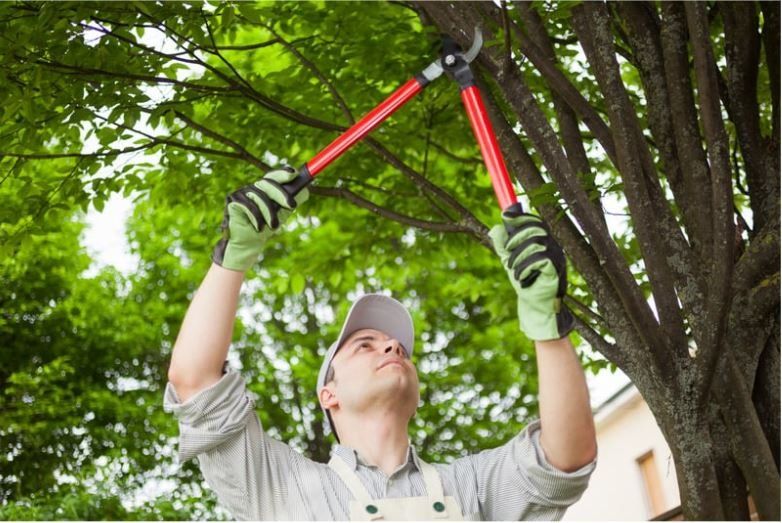
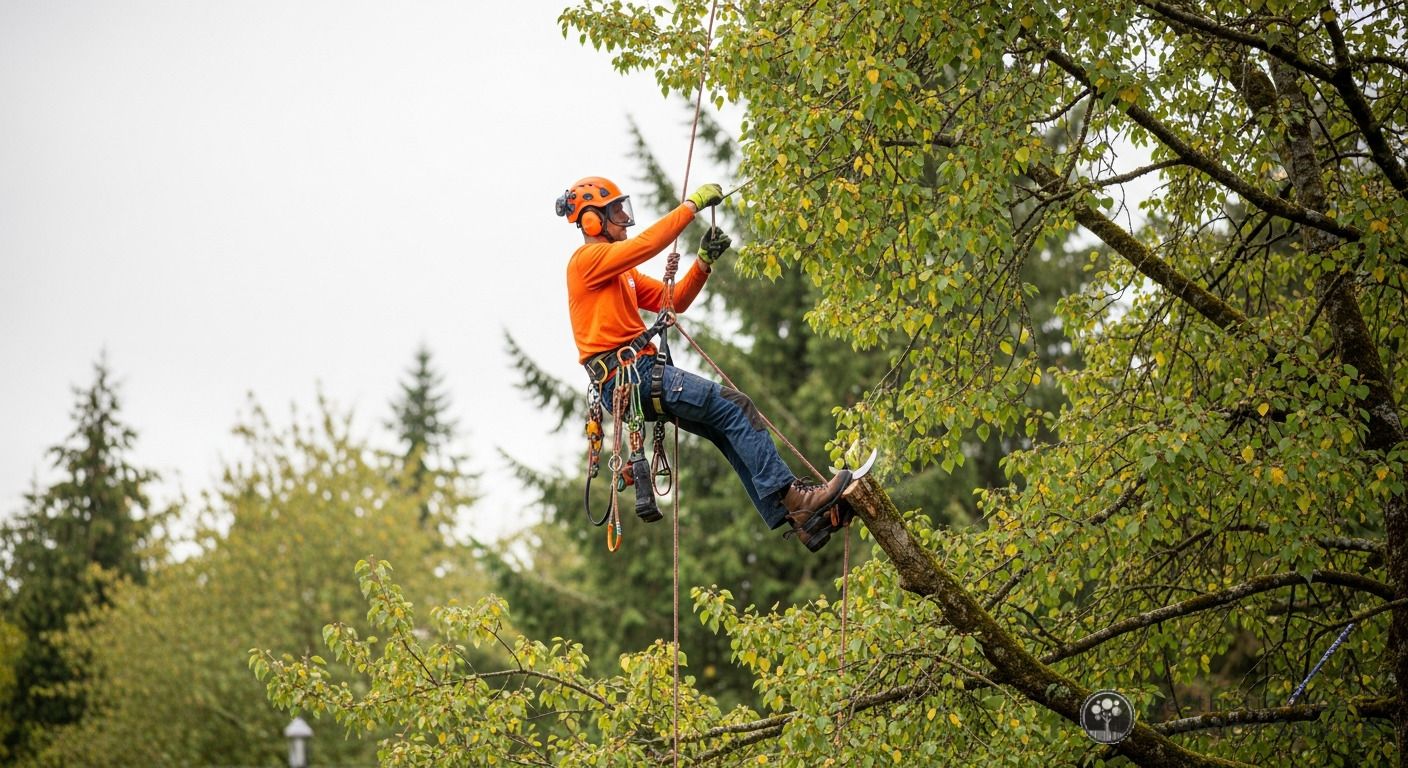
Hand pruners are better for selective cuts. Loppers are better for thicker stems. A pruning saw is better for larger branches. Pole tools help from the ground when access allows. Ladders add risk. Aerial lifts and climbing systems belong with trained crews.
Sharp blades matter. Clean blades matter too. Dirty tools can move plant problems from one hedge to another. Dull tools tear instead of cut. Torn tissue dries out and browns.
Personal protective gear matters as much as the tool.
Use eye protection. Use hearing protection. Wear gloves. Wear long sleeves for western red cedar. RHS guidance notes that some gardeners report skin irritation after handling Thuja plicata trimmings. That is western red cedar, a common Lower Mainland hedge species.
The bigger issue is height.
Tall hedges are not normal homeowner work. They need level footing, safe access, debris control, traffic awareness, and a rescue plan. A ten-foot cedar hedge beside a sloped driveway is not a weekend chore. It is a jobsite.
WorkSafeBC's 2023 statistics show why safety matters. In 2023, B.C. workers missed 4.15 million days due to work-related incidents and disease. WorkSafeBC also accepted 175 work-related death claims and 50,914 new short-term disability claims. Cuts alone made up 4,932 accepted injury claims.
Those are not hedge-only numbers. They are a hard reminder. Tools, heights, blades, and fatigue have consequences.
That is why Aesthetic Tree & Hedge Services is WCB registered.
What Hedge Trimming Mistakes Damage Cedar, Laurel, and Yew?
The first mistake is cutting cedar too hard.
Cedar hedges are the Lower Mainland classic. You see them in Burnaby Heights, Richmond, North Vancouver, and Coquitlam. They give privacy fast. But they do not forgive deep cuts into brown interior wood.
If a cedar hedge is too wide, reduce it slowly. Keep green on the face. Do not chase a property line so hard that you destroy the living surface.
The second mistake is using a hedge trimmer on laurel when hand cuts are needed.
Cherry laurel and Portuguese laurel have large leaves. A trimmer slices them. The cut leaves brown at the edges. For a polished front hedge, selective pruning gives a cleaner look.
The third mistake is topping without a plan.
Taking height off a hedge changes light, growth, and weight. A small height reduction is routine. A major reduction needs species knowledge. A hard flat top on cedar can expose brown patches. On laurel, it can trigger a rush of upright shoots.
The fourth mistake is ignoring root stress.
A hedge with compacted soil, poor drainage, drought stress, or root damage will not respond like a healthy hedge. If the root flare area is buried under mulch or soil, the plant already has stress. Heavy trimming adds more.
The fifth mistake is letting vines take over.
English ivy, blackberry, and bindweed can hide inside hedges. They add weight. They block light. They make cuts messy. They also hide hazards.
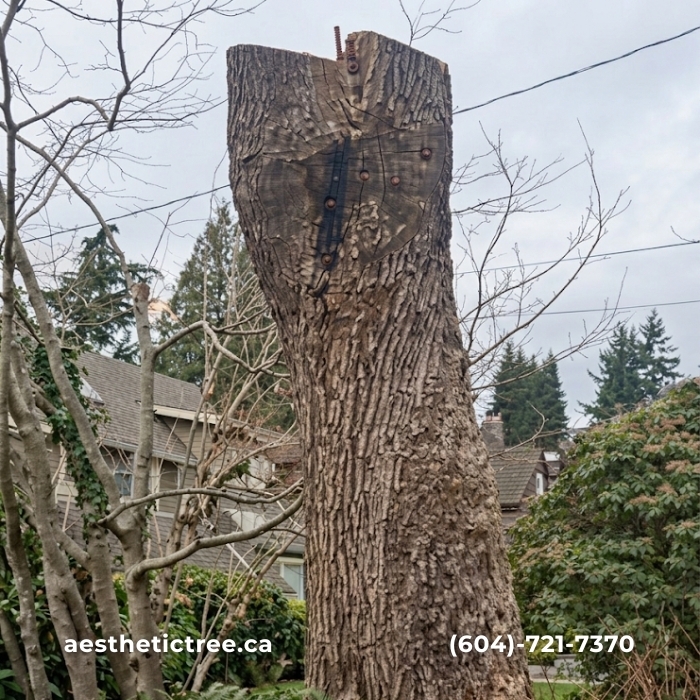
When a hedge has become a tree problem, the service changes. Large stems, dead sections, cracked trunks, and failed roots call for tree cutting services in Vancouver or a full hazard assessment.
Do not force a hedge crew to solve a tree hazard with hedge tools.
Do Vancouver Tree Bylaws Affect Hedge Trimming?
Yes, when the hedge includes trees or tree-sized stems.
The City of Vancouver's Protection of Trees By-law 9958 applies to private property trees. The city's current guidance says a permit is required to remove any private property tree with a diameter of 20 centimetres or greater, measured 1.4 metres above the ground. It also says an arborist report is required for development permit applications when trees 20 centimetres or larger are on site.
That matters for old hedges.
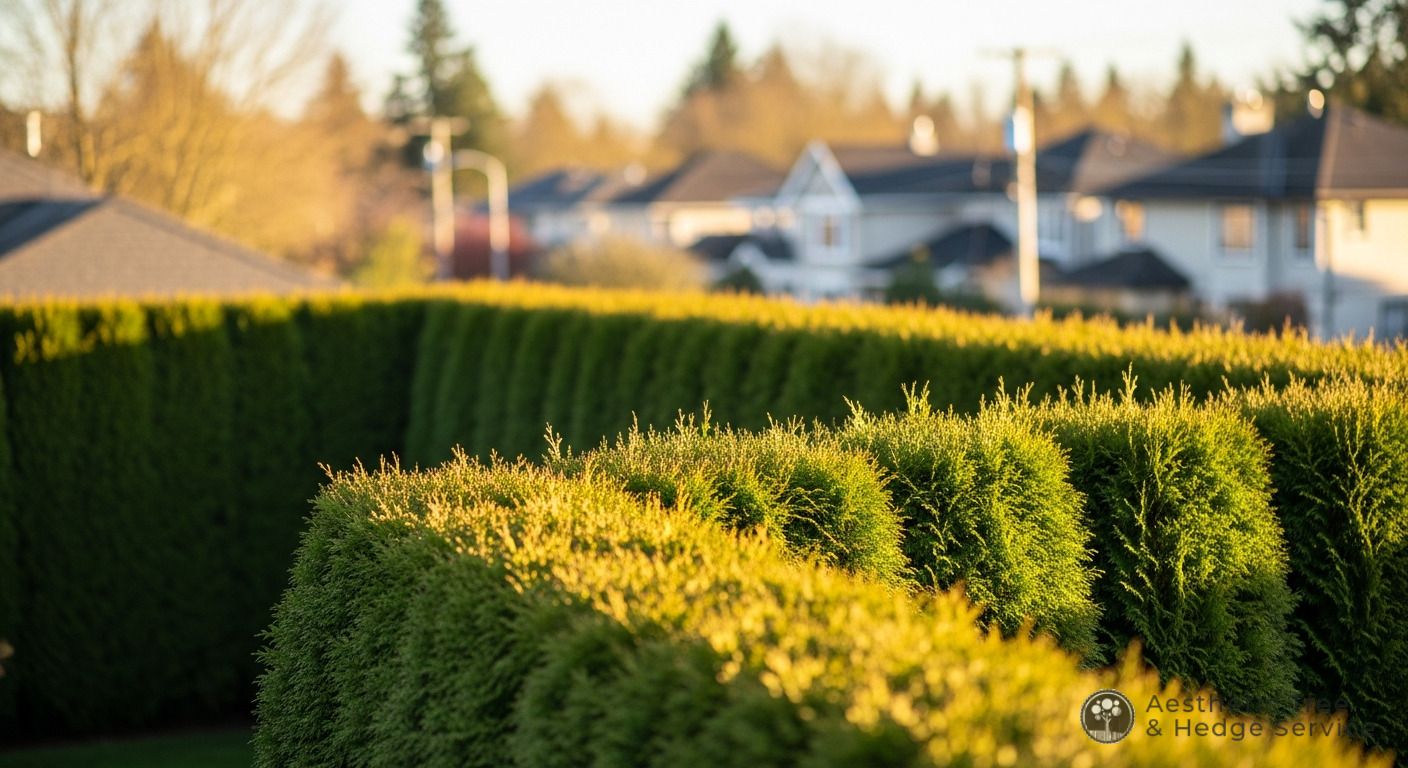
Some so-called hedges are rows of tree-sized cedar, cypress, laurel, or holly. The owner calls it a hedge. The bylaw may treat parts of it like trees. The difference matters before removal, heavy cutting, development, or root disturbance.
Vancouver is not the only city with rules. Burnaby, Richmond, North Vancouver, Coquitlam, and other Lower Mainland municipalities have their own tree protection rules. A hedge near a boulevard, lane, sidewalk, ravine, watercourse, or development site needs more care.
The safest rule is this.
If stems are large, the site is under development, or the hedge is near public land, ask before cutting.
Aesthetic Tree & Hedge Services works with municipal rules often. We know when a tree removal permit and arborist report conversation needs to happen before saws start.
A clean hedge line is not worth a bylaw problem.
How Do Nesting Birds Change Hedge Trimming Plans?
They change the job before it starts.
Dense hedges are prime nesting cover. Cedar, laurel, holly, yew, and mixed shrub hedges give birds shelter from weather and predators. That is good for the yard. It also creates a legal and ethical duty during nesting season.
Environment and Climate Change Canada's 2024 guidance tells property owners to reduce risk to migratory birds, nests, and eggs. For coastal BC's A1 nesting zone, the general nesting period runs from late March to mid-August. In forest habitats in A1, the highest nesting activity runs from May 6 to July 19, with 61% to 100% of listed species active.
That is the heart of hedge season.
So the crew checks.
We look for bird movement, calls, fresh nesting material, droppings, and hidden nest sites. We do not tear through a hedge blind. If an active nest is found, work stops in that area. The plan changes.
Sometimes the answer is delay. Sometimes the answer is trimming another section. Sometimes the answer is a limited safety cut away from the nest zone. The decision depends on species, location, urgency, and risk.
This is one reason last-minute hedge work causes trouble. A homeowner waits until July. The hedge is overgrown. The neighbour is upset. The birds are active. Now every choice is harder.
Book earlier.
Plan the work.
Respect the living hedge.
How Often Should Vancouver Homeowners Trim Their Hedges?
Most formal hedges need one to three trims per year.
That range is broad because species and goals differ. A tight boxwood hedge needs a different schedule than a tall cedar privacy hedge. A laurel screen on a large lot in Southlands needs a different plan than a narrow sidewalk hedge near Commercial Drive.
Here is a practical schedule.
Cedar hedges often need one or two trims per year. Fast-growing hedges near lanes or sidewalks may need two. Keep cuts light and regular. Do not wait five years and demand a hard reset.
Laurel hedges often need one or two trims per year. Use selective cuts when appearance matters. Watch for thick stems that need loppers or saw work.
Yew hedges can handle formal trimming well. They often respond to one or two trims, depending on growth and shape.
Privet can grow fast. It may need two or three trims in a growing season if kept formal.
Beech and hornbeam often need one main summer trim.
Flowering hedges need species-specific timing. If flowers matter, pruning timing follows bloom. Cut at the wrong time and you remove the show.
The RHS says established formal hedges are often trimmed once, twice, or three times a year. That is a strong general guide. But Lower Mainland weather changes the calendar. A warm spring can push growth early. A dry summer can slow it down. A wet fall can trigger fresh late growth.
The best hedge schedule is based on observation.
Look at growth. Look at density. Look at lower branches. Look at soil moisture. Look at access. Then cut.
When Is Hedge Work Really a Tree Service Job?
It becomes a tree service job when the risk changes.
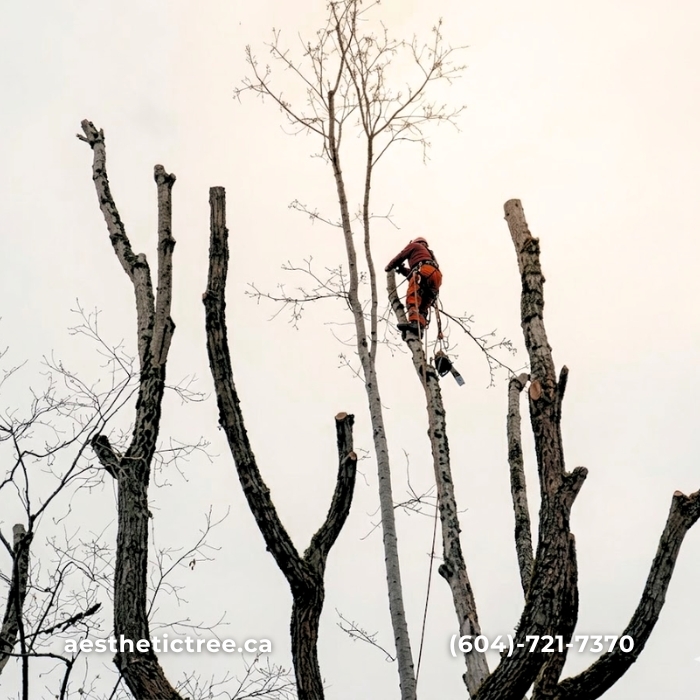
A hedge trim is not just a hedge trim when branches are heavy, stems are large, roots are failing, or the work is above safe reach. It is not just hedge work when the plant leans over a garage, service line, sidewalk, lane, or neighbour's roof.
Look for these warning signs:
- Dead brown sections that spread through the hedge
- Cracks in main stems
- Soil lifting around the base
- Lean that has increased after wind or rain
- Large limbs hidden inside the hedge
- Fungal growth near the root flare
- Hedge sections pushing on fences, sheds, or retaining walls
- Branches touching service lines
- Storm damage after an atmospheric river or wind event
If those signs are present, the job needs arborist eyes.
Sometimes the hedge can be restored. Sometimes a section must be removed. Sometimes the safest answer is staged removal and replanting. Sometimes a stump remains after removal and needs grinding before the site can be replanted. In that case, stump grinding in Vancouver keeps the space usable and reduces trip hazards.
If a hedge section fails during a storm, do not climb into it with a saw. Bent stems can store force. Broken limbs can shift. Wet slopes change footing. That is when emergency tree service is the safer call.
A hedge is only simple until it is not.
How Can You Restore an Overgrown Hedge Without Ruining It?
Start with honesty.
Some hedges can be restored. Some need staged reduction. Some are too far gone.
An overgrown laurel hedge often gives you options. You can reduce selected stems. You can open light into the plant. You can reshape over more than one season. It may look rough for a short time, then respond with new growth.
An overgrown yew hedge also gives options. Yew is one of the more forgiving conifers. It can produce new growth from older wood better than cedar or cypress.
An overgrown cedar hedge is the hard one.
If it is green only on the outer shell, the living surface is thin. Cut past that shell and you hit brown wood. The hedge will not magically refill. This is where many DIY restorations fail.
The better plan is staged work.
First, inspect the hedge. Check species, height, width, green depth, deadwood, roots, grade, irrigation, and access.
Second, set a realistic target. If a cedar hedge is eight feet wide and the green layer is only eight inches deep, you cannot make it four feet wide and keep it green.
Third, reduce in phases. Take what the plant can handle. Let it recover. Return later.
Fourth, improve the root zone. Clear smothering debris. Keep mulch off the root flare. Water during dry stretches. Avoid trenching near the hedge.
Fifth, decide when replacement is smarter. RHS guidance notes that most conifers, except yew, do not regrow from old wood well. It also says an inherited overgrown conifer hedge may be better replaced than renovated.
That is not what every homeowner wants to hear.
But it is better than selling false hope.
Aesthetic Tree & Hedge Services also handles hedge installation in Vancouver when replacement is the right answer.
What Should You Do Before Calling a Hedge Trimming Company?
Walk the hedge before you call.
You do not need to diagnose everything. Just gather facts.
Look at the species. Is it cedar, laurel, yew, privet, holly, beech, or a mixed hedge? If you do not know, take clear photos of the leaves, stems, and full hedge.
Measure height and length. A rough number is fine. Note slopes, fences, sheds, pools, tight lanes, overhead lines, and parking issues.
Look for nests. Do this from the outside. Do not poke into the hedge. Watch for birds flying in and out of one spot.
Check access. Can a crew reach both sides? Does the neighbour need notice? Is there a locked gate? Is there a narrow side yard?
Decide your goal. Do you want shape, height reduction, width reduction, clearance from a sidewalk, more light, or full removal?
Tell the company if there are large stems. Tell them if the property is in Vancouver and the hedge includes tree-sized trunks. Tell them if development or renovation is planned.
A good arborist will ask these questions anyway.
A rushed operator will just ask for photos and a price.
Price is not the first question. Risk is.
That is why credentials matter. ISA-certified arborists follow tree biology, not guesswork. WCB registration matters because crews working with blades, ladders, slopes, and heavy debris need proper coverage.
What Are the Best Hedge Trimming Best Practices for Vancouver's Lower Mainland Climate?
Vancouver hedge care has its own rules because the climate is changing fast.
The City of Vancouver's 2025 Urban Forest Strategy says Vancouver's tree canopy has grown to 25% city-wide since 2013 and sets a goal of 30% canopy coverage by 2050. The city also reports about 150,000 street trees, 36,000 specimen trees in parks and golf courses, and more than 1 million trees across public forests and woodlands.
That is the big picture.
Your hedge is the small picture.
Both matter.
Metro Vancouver's 2020 Regional Tree Canopy Cover and Impervious Surface report found that impervious surface increased between 2014 and 2020. More hard surface means more heat, more runoff, and tougher root conditions. Hedges along driveways, lanes, patios, and sidewalks feel that stress first.
So Lower Mainland hedge care needs restraint.
Do not overtrim during dry heat. Water deeply before and after stress periods. Keep mulch light and away from stems. Protect the root flare. Avoid trenching along hedges for fences, irrigation, lighting, or drainage without thinking about roots.
Also watch species choice.
Western red cedar gives privacy, but drought stress has hit many cedar hedges across the region. Laurel is tough but needs space. Yew is useful but toxic if plant parts are eaten. Beech and hornbeam can make beautiful formal screens, but they need proper establishment.
If you are planting new, choose for site conditions. Sun, shade, drainage, deer pressure, salt, wind, and space all matter. A hedge planted in the wrong place becomes a maintenance bill.
If you are maintaining old hedges, cut with the future in mind.
That is the real best practice.
FAQ
What is the golden rule for trimming hedges?
The golden rule is to keep the base wider than the top and never cut deeper than the hedge can recover from. This keeps sunlight on the lower growth. It also prevents bare legs and brown gaps. For cedar hedges, stay within the green growth unless an arborist has inspected the plant and approved a staged reduction plan.
Can I trim my cedar hedge hard if it is too wide?
Do not hard-trim a cedar hedge into brown interior wood. Most cedar hedges do not regrow well from old bare wood. Reduce width in stages. Keep green growth on the face. If the hedge is already too wide for the space, ask an ISA-certified arborist whether restoration or replacement makes more sense.
Is it illegal to trim hedges during bird nesting season in Vancouver?
Routine trimming is not automatically illegal, but damaging or disturbing active migratory bird nests creates legal risk. Environment and Climate Change Canada's 2024 guidance lists late March to mid-August as the general nesting period for coastal BC's A1 zone. Check for nests before work. If an active nest is present, stop work in that area and change the plan.
Do I need a permit to remove a hedge in Vancouver?
You may need a permit if the hedge includes tree-sized stems. The City of Vancouver's Protection of Trees By-law 9958 says a permit is required to remove a private property tree with a diameter of 20 centimetres or greater, measured 1.4 metres above the ground. Old cedar, cypress, laurel, and holly hedges can include stems large enough to trigger bylaw review.
How often should cedar hedges be trimmed in the Lower Mainland?
Most cedar hedges in the Lower Mainland need one or two light trims per year. Fast-growing privacy hedges near lanes, sidewalks, or driveways often need two. The goal is to trim new green growth before the hedge gets too wide. Waiting several years usually leads to harsher cuts and worse results.
Why does my hedge turn brown after trimming?
A hedge turns brown after trimming when cuts expose old interior wood, tear leaves, or stress the plant during heat or drought. Laurel leaves also brown along cut edges when sliced by hedge trimmers. Cedar turns brown when trimmed past the green shell. Sharp tools, correct timing, and species-specific cuts prevent most browning.
Should I trim my hedge myself or hire an arborist?
Trim small, low hedges yourself if you can work from the ground with sharp tools and no nesting birds present. Hire an arborist for tall hedges, steep sites, road frontage, large stems, storm damage, bylaw questions, or major height and width reductions. The risk rises fast once ladders, power tools, traffic, and heavy debris enter the job.
A clean hedge makes a property feel cared for. A bad hedge cut can scar the yard for years. Call Aesthetic Tree & Hedge Services for a free estimate at (604) 721-7370. Our ISA-certified arborists are WCB registered, safety-first, and ready to help with hedge trimming, tree pruning, removals, arborist reports, and emergency tree work across Vancouver and the Lower Mainland.
Found this helpful? Follow our tree care insights directly on Google.
Make us your preferred source on GoogleBefore You Go
Where are you in your tree care journey?
Our Tree Care Services
ISA-certified arborists serving Greater Vancouver


Explore Our Tree Care Services
From expert pruning to safe tree removal, our ISA-certified arborists are ready to help across Greater Vancouver.
View Services