
TL;DR — Quick Summary
strategies improve lawn health manage weeds arborist advice for Vancouver yards. ISA-certified tips for safer trees, turf, and weed control.
Strategies to improve lawn health and manage weeds with arborist guidance start with one practical truth: your lawn, weeds, hedges, and trees are all working in the same root zone.
In Vancouver and the Lower Mainland, that root zone takes a beating. Wet winters compact soil. Dry summers stress turf and cedars. Clay, fill soil, shaded yards, moss, ivy, blackberry, knotweed, and mature surface roots all affect what will actually grow.
At Aesthetic Tree & Hedge Services, we often see the same pattern during site visits. A homeowner calls because the lawn is thinning, moss is spreading, or weeds keep coming back. Once we inspect the tree and the surrounding soil, the real issue is often bigger than grass: a buried root flare, mower damage, compacted soil, drainage trouble, heavy shade, old pruning cuts, or roots disturbed by landscaping.
A healthy lawn is not just a green surface. It is part of a living root system. Treat it that way.
TL;DR
- Mow higher. Health Canada and the Province of BC recommend 6 to 8 cm for healthier turf and better weed resistance.
- Check the current Metro Vancouver watering stage before irrigating. As of May 2026, Stage 2 restrictions ban most residential and non-residential lawn watering.
- Keep turf and trimmers away from tree trunks. A mulch ring protects bark, root flare, and surface roots.
- Read weeds as symptoms. Moss, clover, plantain, ivy, blackberry, and knotweed usually point to light, drainage, compaction, or disturbance issues.
- Call an ISA-certified arborist when lawn work affects tree roots, pruning, drainage, digging, bylaws, or safety.
Why Lawn Problems Often Start Around Trees
Trees change the lawn beneath them. That is normal biology.
A mature cedar or Douglas fir intercepts rain before it reaches the grass. A Big-leaf maple casts dense shade by late spring. Birch, cedar, maple, and fir roots often occupy the upper soil where turf also wants water and oxygen.
Grass usually loses that contest.
Thin grass creates room for weeds. Moss fills damp shade. Clover often appears where turf is thin and nitrogen is low. Plantain tolerates compacted soil. English ivy creeps from bed edges and can climb trunks. Himalayan blackberry moves into neglected borders. Japanese knotweed spreads through disturbed ground and rhizome fragments.
That is why an arborist looks below the mower line. We check the root flare, trunk base, surface roots, drainage, canopy density, soil grade, and signs of old injury. The lawn tells part of the story. The tree often explains the rest.
Vancouver's 2022 Tree Canopy Assessment reported citywide canopy cover at about 25 percent, up from 21 percent in 2013. More canopy is good for the urban forest, but it also means many lawns sit under real tree influence.
The goal is not to fight every tree with fertilizer and weed control. The goal is to match the groundcover to the site. In deep shade, turf may be the wrong plant. In a surface-root area, mulch may be better than grass. Near a stressed tree, soil care matters more than cosmetic weed removal.
When a tree is declining, unsafe, or no longer suitable for the site, start with a proper inspection. Our tree removal Vancouver service includes hazard review, site planning, and permit-aware guidance where removal is justified.
What Mowing Height Helps Grass Beat Weeds?
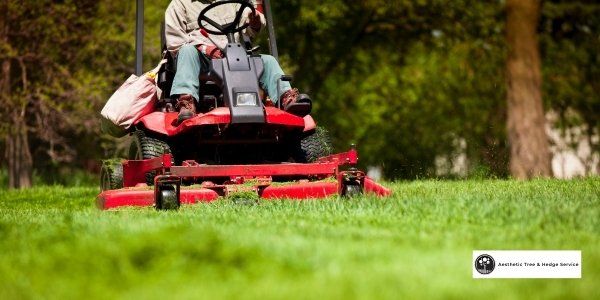
Cut grass too short and weeds get light. Roots shrink. Soil dries faster. The lawn may look tidy for a day, then weaker for the week.
Health Canada and the Province of BC recommend mowing most lawns to 6 to 8 cm. That height helps turf grow thicker, hold moisture, and compete better with weeds. Metro Vancouver lawn-care guidance has also advised keeping summer lawns taller rather than scalped.
For most Vancouver yards:
- Set the mower high.
- Remove no more than one-third of the grass blade at a time.
- Keep mower blades sharp.
- Leave light clippings on the lawn.
- Raise mowing height during dry spells.
- Never shave grass around tree trunks or exposed roots.
The one-third rule matters because grass stores energy in its blades. Remove too much at once and the plant shifts into repair mode. Root growth slows. Weeds take advantage.
Around trees, mowing damage is one of the most preventable problems we see. Mower decks scrape surface roots. String trimmers cut bark at the root flare. Repeated wounds at the trunk base can invite decay and weaken young trees for years.
The best fix is simple: stop mowing right to the trunk. Install a clean mulch ring instead.
How To Water Without Hurting Trees
Water rules in Metro Vancouver are not static. Homeowners should check the current restriction stage before irrigating. Older Stage 1 advice allowed limited weekly lawn watering, but 2026 restrictions moved the region into Stage 2 as of May 1, where residential and non-residential lawn watering is banned.
That distinction matters. Trees, shrubs, flowers, food gardens, drip irrigation, hand watering, and sprinklers may each be treated differently depending on the stage and municipality.
For tree health, the method matters as much as the amount. A lawn sprinkler wets grass blades and the upper soil. Tree absorbing roots often spread far beyond the trunk, under and beyond the canopy edge. They need slow water over the root zone, not water piled against bark.
When watering trees and shrubs is allowed, use these principles:
- Water early in the morning where possible.
- Water deeply rather than lightly every day.
- Use drip or soaker hoses where permitted.
- Move water outward under the canopy, not against the trunk.
- Keep the root flare dry and visible.
- Check soil moisture before watering again.
Young trees usually need careful watering through their first three summers. Mature trees need broader root-zone care. Western red cedars are especially visible when drought stress builds; heavy interior browning often reflects stress that began before the current season.
If a tree drops leaves early, shows dieback, cracks, hanging limbs, or sudden lean after drought or wind, book a hazard review. Our emergency tree service helps when storm damage or sudden failure creates risk.
Which Weeds Point To Soil Or Root Problems?
Weeds are field notes. They tell you what condition is winning.
Clover can point to low nitrogen and thin turf. Plantain often points to compaction. Moss suggests shade, moisture, poor drainage, acidic soil, or weak grass. Dandelions exploit open sunny gaps. Prostrate knotweed likes compacted edges. Ivy can hide trunk defects. Blackberry marks neglected borders. Japanese knotweed signals a serious invasive issue.
A practical Vancouver read looks like this:
- Moss under cedar: too much shade and moisture for standard lawn.
- Plantain near a walkway: compacted soil and repeated traffic.
- Clover across open turf: thin grass and fertility imbalance.
- Dandelions in sunny gaps: exposed soil and low turf density.
- Ivy at a tree base: climbing risk and hidden bark defects.
- Blackberry along a fence: unmanaged edge and bird-spread seed.
- Knotweed near fill soil: invasive plant risk requiring care.
Do not dig Japanese knotweed casually. Small rhizome fragments can restart growth and spread the infestation.
Ivy also deserves caution around trees. It holds moisture against bark, hides cavities and cracks, adds weight, and can climb into the crown. Removing heavy ivy from mature trees should be done carefully so bark is not stripped.
If weeds are growing at the tree base, among surface roots, or into the canopy, get arborist eyes on it. Our arborist report Vancouver service supports permit applications, hazard assessment, and tree protection planning under local bylaws.
When To Replace Grass With Mulch
Replace grass when the tree is already winning.
Grass under mature trees often fails because the site is shaded, rooted, dry, compacted, or unsafe to mow. Fertilizing the turf does not fix mower wounds, buried root flare, or a root zone that needs air.
Mulch is often the better arborist choice. A proper mulch ring reduces competition, protects surface roots, keeps equipment away from bark, moderates soil temperature, and makes the yard easier to maintain.
Place it correctly:
- Keep the root flare visible.
- Leave a mulch-free gap around the trunk.
- Build a broad ring, not a tight collar.
- Use about 5 to 8 cm of organic mulch.
- Avoid landscape fabric over active roots.
- Do not pile soil or mulch over surface roots.
Do not build a mulch volcano. Mulch against bark traps moisture and can contribute to decay.
If a tree has been removed and the stump remains, weeds often colonize the old root crown. That area becomes hard to mow and easy to trip over. Our stump grinding Vancouver service clears the stump below grade so the area can be restored, replanted, or mulched with less weed pressure.
How Compaction Affects Lawns And Trees
Compaction is one of the most common Lower Mainland yard problems.
It comes from foot traffic, parked vehicles, construction, pets, heavy mowers, poor grading, and repeated wet-season use. Clay soils make it worse.
Compacted soil has fewer air spaces. Water runs off or sits on top. Grass thins. Roots struggle. Weeds adapted to hard soil move in.
For trees, compaction is more serious. Feeder roots need oxygen. A mature tree can show stress years after soil damage. Construction equipment parked inside a dripline can do lasting harm in a single project.
Watch for:
- Puddles after normal rain.
- Thin grass near paths.
- Plantain or knotweed spreading.
- Exposed surface roots.
- Smaller-than-usual leaves.
- Crown dieback.
- Mushrooms near the trunk.
Core aeration can help lawns, but heavy equipment near major tree roots needs care. In sensitive areas, arborist-directed soil work, vertical mulching, or air spading may be more appropriate.
If construction, trenching, drainage work, or grade changes are planned, tree protection should come first. Vancouver's Protection of Trees By-law No. 9958 requires protection for retained trees during development and may require arborist documentation when regulated trees are present.
What Vancouver Tree Bylaws Mean For Yard Work
Tree bylaws affect more than tree removal.
In Vancouver, a permit is required to remove a private-property tree with a diameter of 20 cm or greater, measured 1.4 m above ground. Other municipalities, including Richmond, Burnaby, North Vancouver, Coquitlam, and surrounding Lower Mainland cities, have their own rules.
Do not assume a tree can be cut because it stands in your lawn.
Bylaws can also matter during drainage work, trenching, retaining wall installation, driveway changes, stump grinding, ivy removal, and grade changes. Roots are part of the tree. Damaging roots can damage the tree.
For pruning, avoid topping. Topping creates weak regrowth and long-term risk. When limbs block light and the lawn fails, selective pruning may help, but it must protect the tree's structure.
Our tree cutting Vancouver service follows safety-first methods for clearance, reduction, and site-specific cutting needs.
How Hedge Trimming Helps Lawn Health
Hedges change light, air, and moisture.
A dense cedar hedge can shade a strip of lawn all day. Laurel can trap moisture along a fence. Overgrown hedges block airflow, hold leaves, and create bare soil at the base. Weeds like those conditions.
Good hedge work is not just making a green wall flat. It is plant health work. The hedge needs light, species-appropriate cuts, stable shape, and enough clearance for maintenance.
A better sequence is:
- Trim the hedge to restore light and access.
- Clear dead material at the base.
- Improve soil and drainage.
- Overseed only where turf can realistically grow.
- Keep mowers and trimmers away from hedge stems.
- Mulch areas where grass will keep failing.
Species matters. Cedar, laurel, yew, boxwood, and privet recover differently. Heavy cuts during heat stress can brown cedar, and hard cuts into old wood may not fill back in.
If your lawn edge is failing beside a hedge, solve light and airflow before adding more seed. Our hedge trimming services Vancouver page explains how professional hedge care keeps boundaries cleaner, safer, and easier to maintain.
A Seasonal Plan For Vancouver Yards
The best plan follows the weather.
Spring
Inspect after winter rain. Look for moss, puddles, thin turf, and compaction. Rake leaves and twigs. Aerate compacted lawn areas where appropriate.
Inspect trees before full leaf-out. Deadwood is easier to see on deciduous trees. Check cedar hedges for snow or wind damage. Be mindful of nesting birds before pruning.
Summer
Follow current Metro Vancouver watering restrictions. Raise mowing height. Avoid stressing turf during heat. Use tree-appropriate watering methods where allowed.
Watch cedars and young trees closely. Drought stress often appears as browning, thinning, or dieback.
Fall
Fall is recovery season. Overseed suitable cool-season lawns when soil is still warm and rain returns. Remove dead, damaged, or hazardous limbs before winter storms where appropriate. Check mulch depth and root flare exposure.
Winter
Winter reveals structure. Storms expose weak attachments, broken tops, hanging limbs, and soil movement. After major wind, look for fresh cracks, sudden lean, soil heaving, and large broken branches. Do not stand under a damaged tree to inspect it.
For broader timing guidance, our seasonal tree care article covers the yearly rhythm for Lower Mainland trees.
When To Call An Arborist Instead Of A Lawn Company
Call an arborist when the issue involves trees, roots, safety, bylaws, structural pruning, or digging near mature trees.
A lawn company can mow, seed, fertilize, and manage turf. An arborist assesses woody plants, structure, decay, root disturbance, and risk.
Call an ISA-certified arborist when you see:
- Large dead branches.
- Cracked unions.
- Sudden lean.
- Fungal growth near the trunk.
- Soil lifting around roots.
- Heavy ivy in the crown.
- Roots cut by trenching.
- Lawn grade raised over tree roots.
- A tree near a house, garage, fence, or service line.
- Any permit question.
Aesthetic Tree & Hedge Services is ISA-certified and WCB registered. We follow hazard assessment principles, ANSI A300-informed practices, and local bylaw requirements.
FAQ
What is the best mowing height to reduce weeds in Vancouver lawns?
For most lawns, keep grass around 6 to 8 cm. Taller turf develops deeper roots, shades weed seedlings, and handles dry weather better than scalped grass.
Should I remove grass around mature trees?
Yes, when the grass is thin, shaded, or difficult to mow without hitting roots. Replace it with a proper mulch ring and keep the root flare visible.
Are lawn weeds a sign that my tree is unhealthy?
Sometimes. Weeds can point to shade, compaction, drainage trouble, or root competition. If the tree also has dieback, cracks, fungi, or sudden lean, call an arborist.
Do I need a permit to remove a tree from my Vancouver lawn?
Often, yes. Vancouver requires a permit to remove a private-property tree with a diameter of 20 cm or greater, measured 1.4 m above ground. Other Lower Mainland municipalities have their own rules.
Can pruning a tree help my lawn grow better?
Selective pruning can improve light and airflow, but topping is not proper pruning. An ISA-certified arborist can assess whether pruning, mulching, soil work, or removal is the right answer.
Your lawn, weeds, hedges, and trees are one system. Treat the root zone well and the whole yard improves. For a practical site assessment, call Aesthetic Tree & Hedge Services for a free estimate at (604) 721-7370. Our ISA-certified arborists are WCB registered and serve Vancouver, Burnaby, North Vancouver, Richmond, Coquitlam, and the Lower Mainland.
Related: For more on this, see What Arborist Jobs in British Columbia Actually Require — And Why It Matters When You Hire.
Found this helpful? Follow our tree care insights directly on Google.
Make us your preferred source on GoogleBefore You Go
Where are you in your tree care journey?
Our Tree Care Services
ISA-certified arborists serving Greater Vancouver


Explore Our Tree Care Services
From expert pruning to safe tree removal, our ISA-certified arborists are ready to help across Greater Vancouver.
View Services