
TL;DR — Quick Summary
Signs dying tree during extreme heat? 8 warning signs Vancouver homeowners must know before a stressed tree becomes a structural hazard. ISA-certified arborists explain.
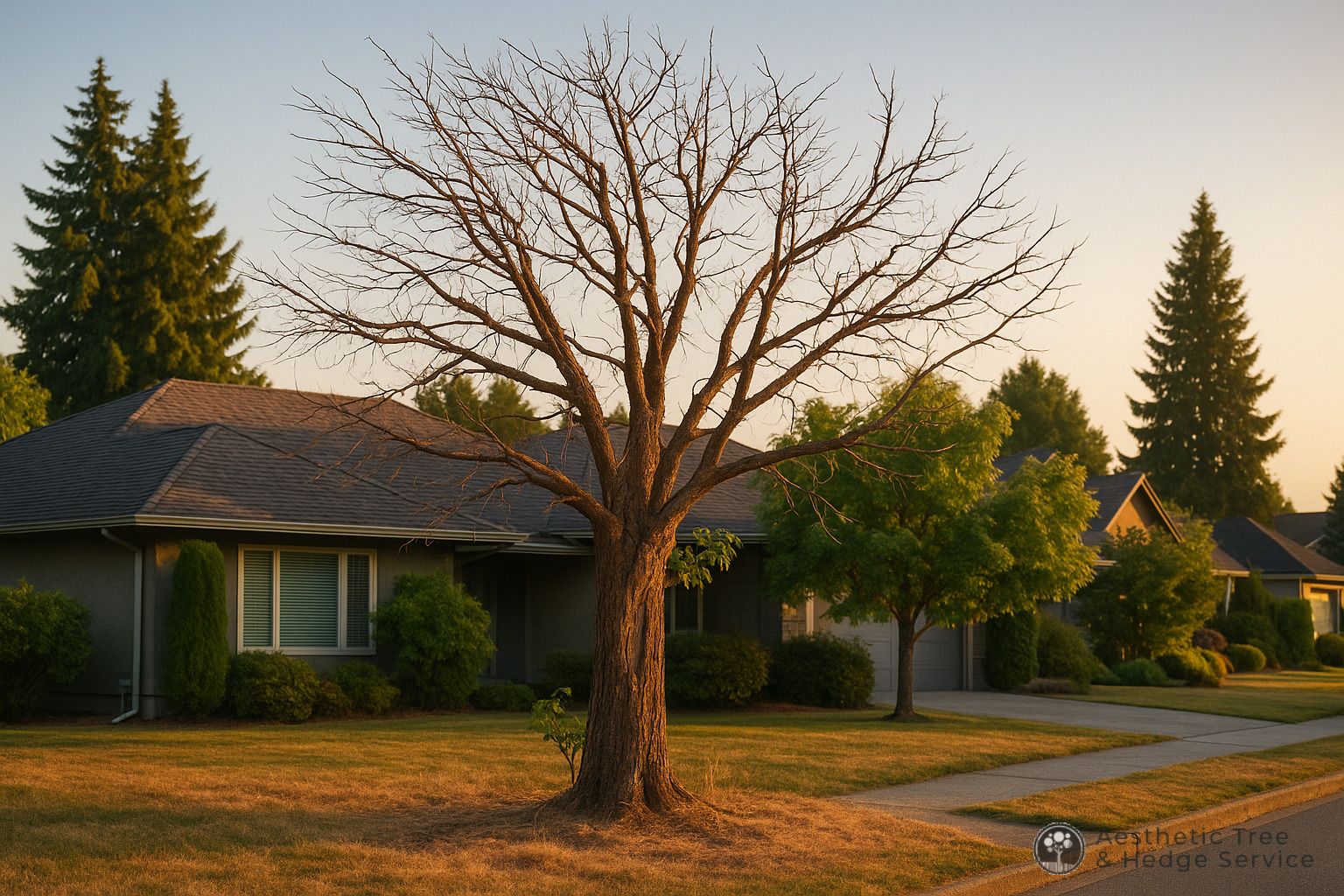
Signs of a dying tree during extreme heat are easy to miss in the first few days. By the time the damage is obvious from the street, the tree may already have lost fine roots, cambium, or structural strength.
Vancouver homeowners saw this after the 2021 heat dome. Many trees looked stressed that summer, seemed to recover by fall, then showed dieback, fungal growth, or branch failure one or two seasons later.
This guide explains what to look for, what can wait, and when to call an ISA-certified arborist before a heat-stressed tree becomes a hazard.
TL;DR
- Extreme heat can damage trees in days, not months
- The main warning signs are leaf scorch, early leaf drop, wilting, crown dieback, bark cracking, fungal growth, epicormic shoots, and root movement
- Environment and Climate Change Canada recorded 40.3°C at Vancouver International Airport on June 29, 2021
- A tree can look better after a heat event but still carry hidden root, cambium, or vascular damage
- Call an arborist quickly if you see a new lean, root upheaval, fungal growth at the base, bark separation, or more than 30% crown dieback
Suggested image: close-up comparison of normal summer leaf scorch versus severe brown, curled leaf margins on a Vancouver maple.
Why Extreme Heat Damages Trees So Quickly
Drought usually stresses a tree slowly. The tree closes stomata, reduces water loss, sheds older leaves, and tries to conserve resources over weeks or months.
Extreme heat works faster.
When air temperatures climb above 40°C, leaf surfaces can become much hotter than the surrounding air. Photosynthesis slows. Chlorophyll breaks down. Water moves through the tree faster than roots can replace it. In severe cases, the vascular system develops air pockets that interrupt water movement.
That means damage can happen in hours.
Environment and Climate Change Canada recorded 40.3°C at Vancouver International Airport on June 29, 2021. Lytton reached 49.6°C the same day, setting Canada's all-time temperature record before the village was devastated by wildfire.
World Weather Attribution later concluded that the 2021 Pacific Northwest heat dome would have been virtually impossible without human-caused climate change. For trees in Vancouver, Burnaby, Richmond, North Vancouver, and the rest of the Lower Mainland, that event was not just a hot week. It was a major stress event that many mature trees are still responding to.
What Are the 8 Signs of a Dying Tree During Extreme Heat?
Start your inspection from 10 to 15 metres away. Look at the full shape of the canopy first. Then move closer and inspect the leaves, bark, trunk base, and soil around the root zone.
1. Leaf Scorch
Leaf scorch usually shows as brown, dry, crispy edges. The damage often starts on the outer leaf margins and moves inward.
The south and west sides of the tree usually show scorch first because they take the strongest afternoon sun.
Timing matters. Autumn colour change is normal. Brown, papery leaf edges in June, July, or early August are not.
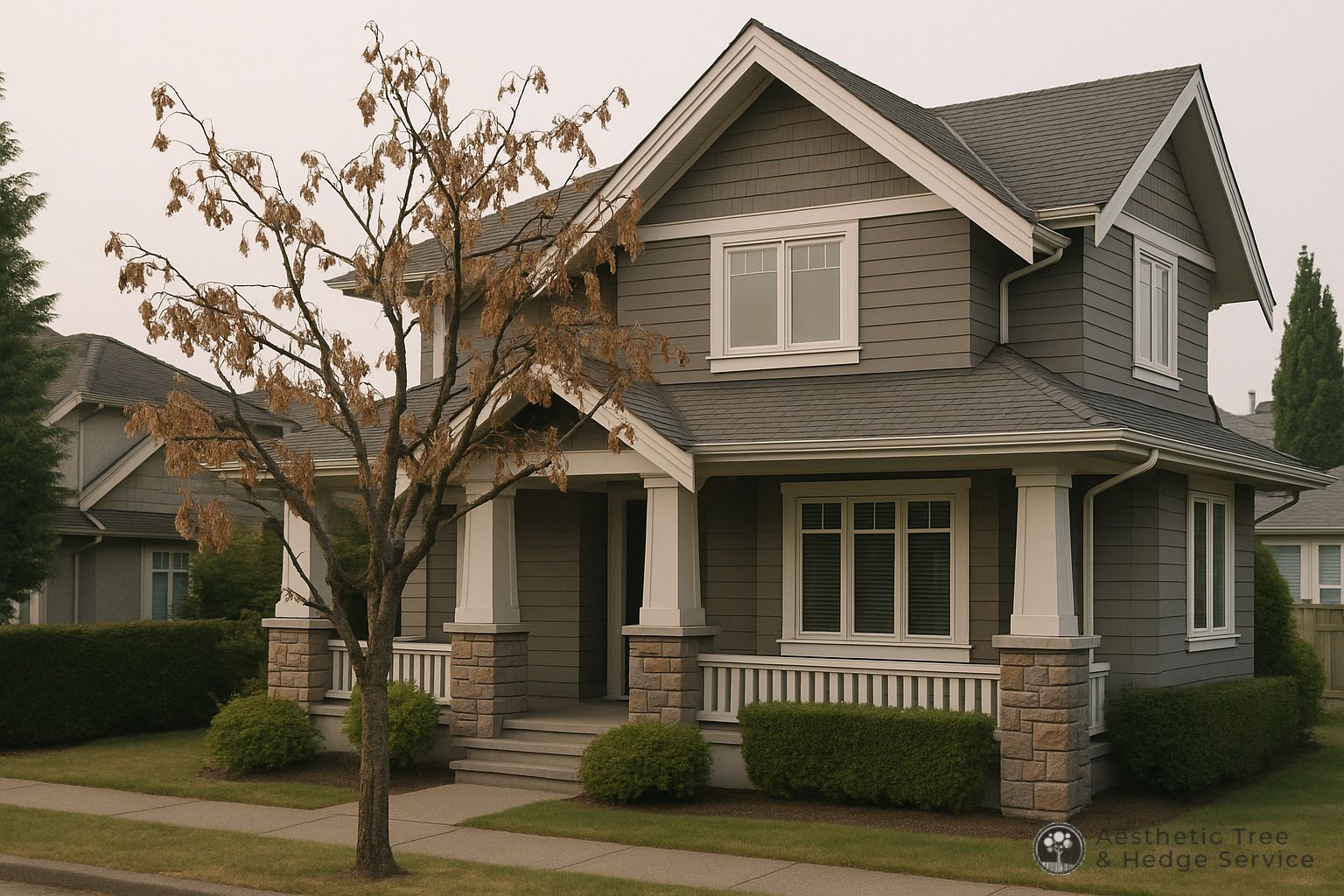
On Big-leaf maple, which is common across East Vancouver, Burnaby, the North Shore, and many older residential lots, heat scorch often creates curled brown edges while the centre of the leaf stays partly green. On Japanese maple, ornamental cherry, and young street trees, whole leaves can brown quickly after a heat spike.
2. Premature Leaf Drop
Trees drop leaves during extreme heat to reduce water loss. It is a survival response, but it is also a warning sign.
A few yellow leaves in late summer may not mean much. Heavy leaf drop in June or July is different. If a tree suddenly sheds a noticeable portion of its canopy during or shortly after a heat event, it is under real stress.
After the 2021 heat dome, many Vancouver street and yard trees showed early leaf drop followed by thin canopy recovery in later seasons. That delayed response is common after severe heat injury.
3. Wilting That Does Not Recover Overnight
Healthy leaves hold water pressure. That pressure keeps them firm.
Heat-stressed leaves lose pressure and droop. Some midday wilting during a hot afternoon can be temporary. The better test is early morning.
Check the tree before 10 AM. If the leaves are still wilted after a cooler night, the root system is not replacing water fast enough. Persistent morning wilt across much of the canopy is a serious sign.
4. Crown Dieback
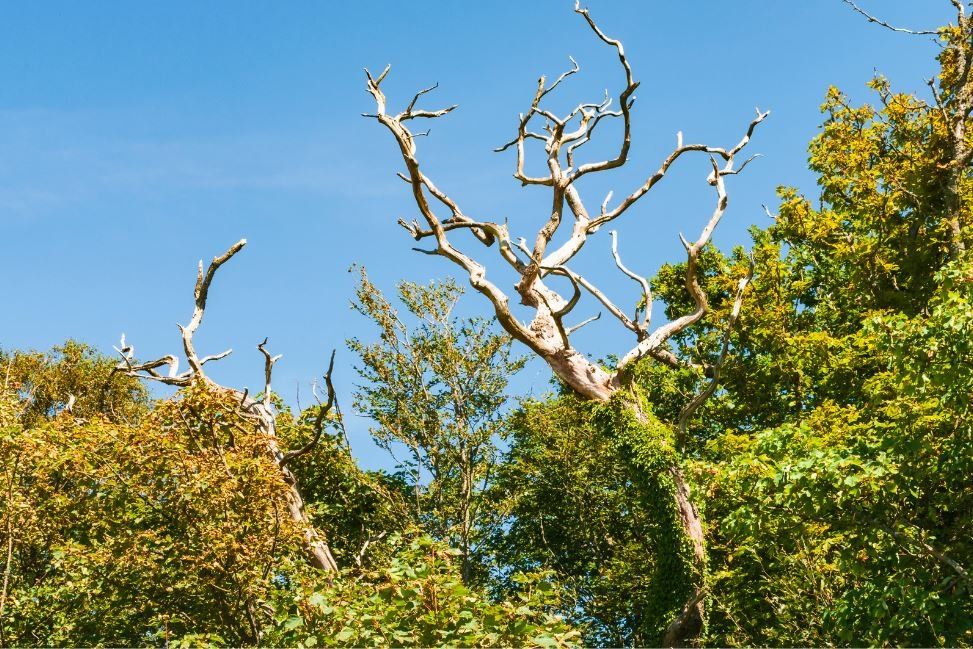
Crown dieback starts at the outer branch tips and moves inward. The tips look bare, brittle, or thin while the inner canopy may still have leaves.
Stand under the tree and look up. Healthy branch tips usually have live buds, leaves, or fresh extension growth. Dying tips look dry and sparse.
In conifers such as Douglas fir, Western hemlock, and Western red cedar, crown dieback is especially important. These trees do not recover well once dieback reaches larger scaffold branches. Browning at the top or outer crown should be taken seriously, especially after repeated hot summers.
Suggested image: annotated canopy photo showing normal interior shading versus true crown dieback at branch tips.
5. Bark Cracking or Sunscald
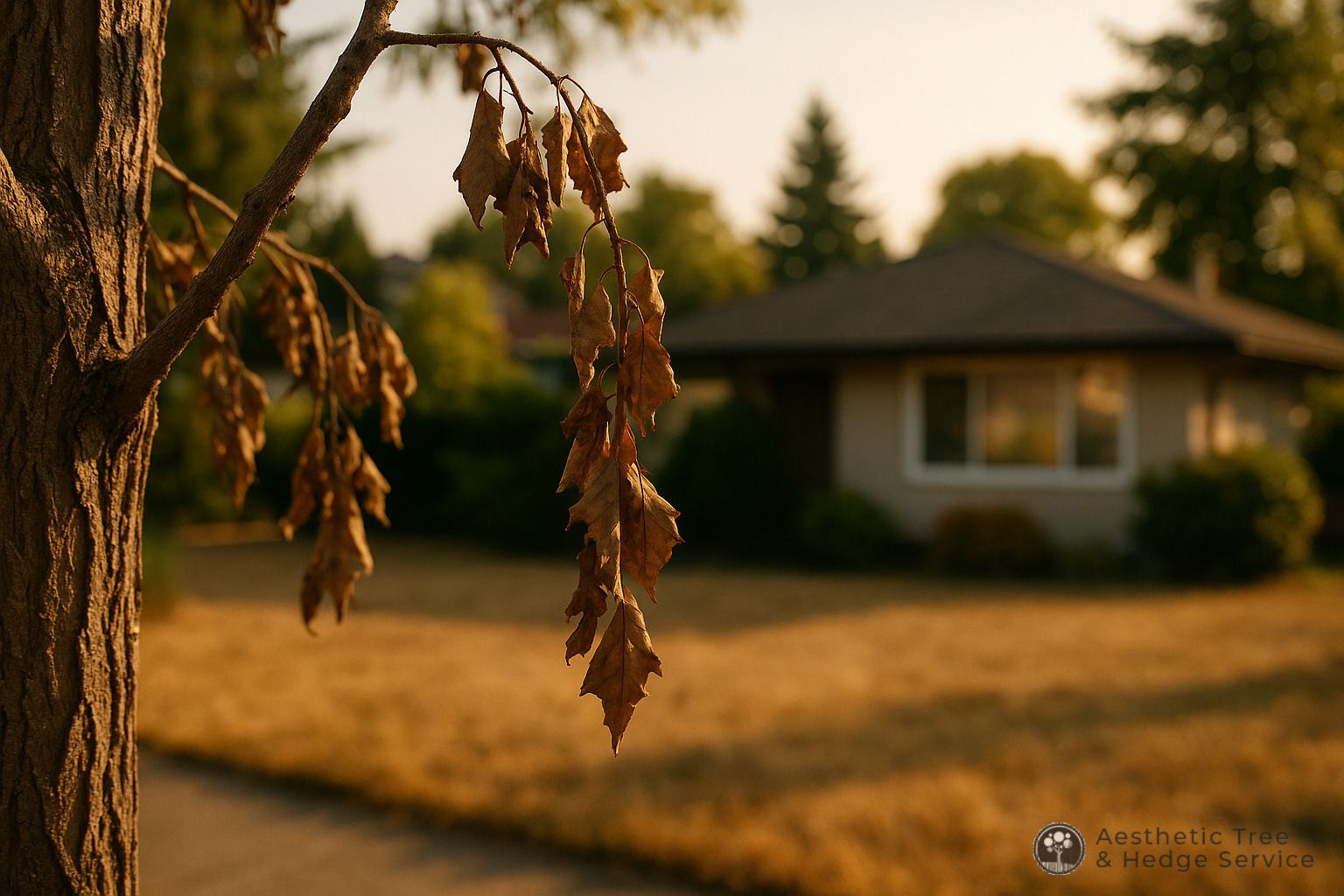
Extreme heat can dry bark and damage the cambium layer beneath it. Vertical cracks often appear on the south or southwest side of the trunk.
Thin-barked species are most vulnerable. Birch, cherry, ornamental plum, and young maples are common examples in Vancouver yards.
Run your hand gently along the trunk. Loose, lifting, or separating bark is a concern. If bark has separated from the cambium beneath it, that section can no longer move water and nutrients properly. The tree may survive, but the damaged area becomes a long-term weak point.
6. Fungal Growth at the Root Flare
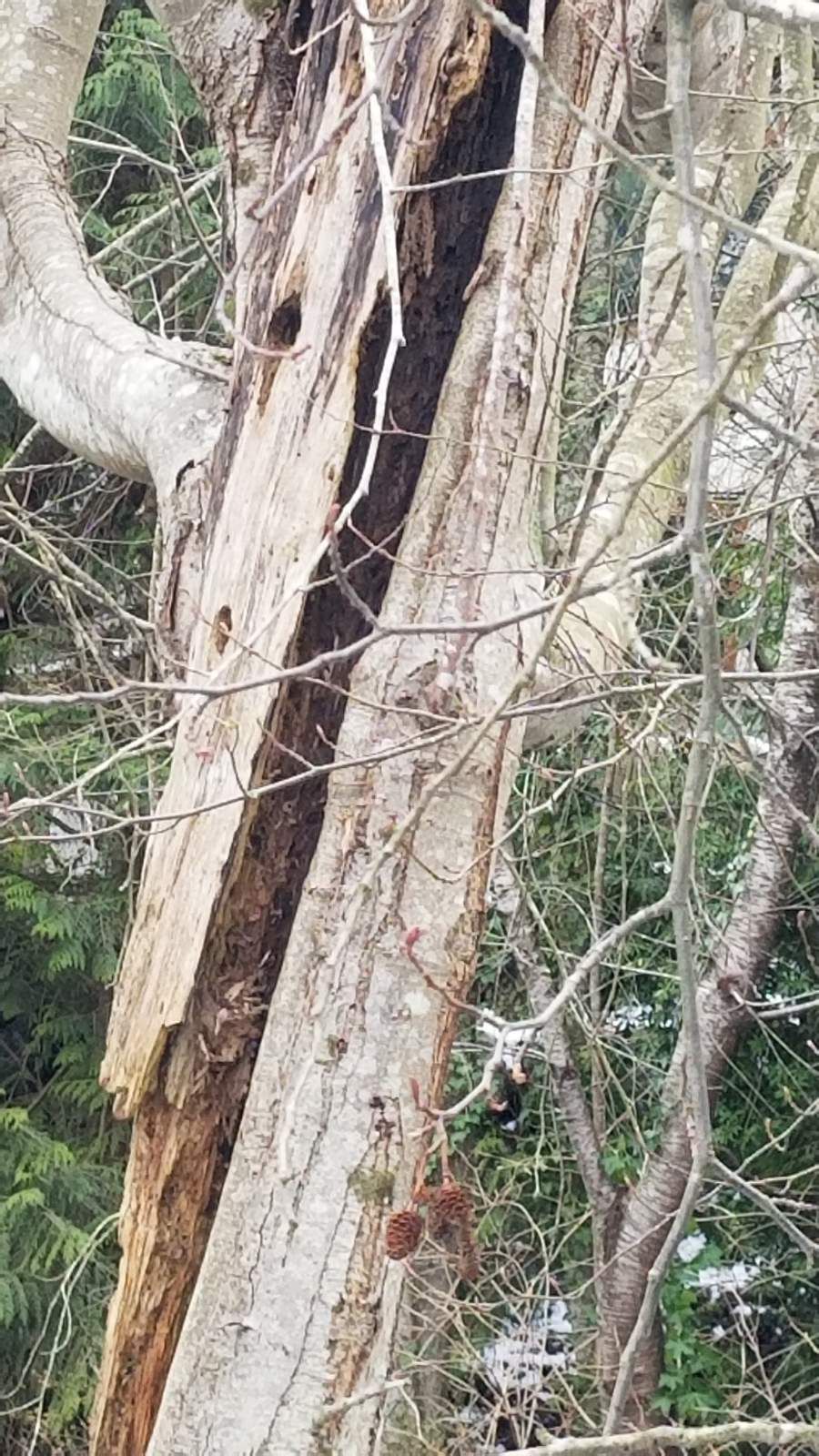
Mushrooms, conks, or shelf fungi at the base of the tree are not just cosmetic. They can indicate internal decay or root disease.
Heat-stressed trees are more vulnerable because fine roots die back, basal bark cracks, and the tree has less energy to resist decay organisms.
Armillaria root rot is seen in the Lower Mainland and can produce honey-coloured mushroom clusters near the root flare, often in fall. By the time mushrooms appear, the underlying root or wood decay may have been developing for months.
If you see fungal growth at the base of a tree near a house, driveway, sidewalk, or play area, call an arborist.
7. Epicormic Shoots
Epicormic shoots are small, dense shoots that grow directly from the trunk or large branches.
They often appear when a tree is trying to replace lost canopy. One or two shoots may not be urgent. Heavy sprouting along the trunk, especially with crown dieback above, is a distress signal.
Established, healthy trees do not usually push large amounts of emergency growth from the trunk. When they do, the tree may be compensating for canopy loss, root stress, or internal decline.
8. Leaning, Soil Cracking, or Root Upheaval
This is the most urgent category.
Extreme heat can kill fine roots. Fine roots absorb water, but they also support the larger root system. When enough root function is lost, the tree's anchorage can weaken.
A new lean after a heat event is an emergency sign. So are soil cracks, heaving soil, or visible movement around the root plate.
Do not take a wait-and-see approach with a newly leaning tree. If it can reach a home, garage, vehicle, neighbour's property, sidewalk, or road, arrange emergency tree service immediately.
Which Vancouver Tree Species Are Most Vulnerable?
Heat risk depends on species, age, soil depth, exposure, past pruning, and how much root space the tree has.
Big-leaf Maple
Big-leaf maple is native to British Columbia, but it has large leaves and can lose water quickly during extreme heat. On shallow or compacted urban soils, it can show scorch, early leaf drop, and branch-tip dieback after heat events.
Western Red Cedar
Western red cedar prefers cool, moist conditions. Extended heat and dry soil can trigger browning, thinning, and cedar flagging. Some seasonal flagging is normal, but widespread outer canopy browning after a heat wave deserves closer inspection.
Ornamental Cherry and Plum
Cherry and ornamental plum trees are common in neighbourhoods such as Kitsilano, Kerrisdale, Mount Pleasant, and Strathcona. Their thinner bark makes them more vulnerable to sunscald, cracking, and heat-related stress.
Garry Oak
Garry oak tolerates dry conditions better than many native species, but it is not immune to extreme heat. Severe or repeated heat events can still cause scorch, twig dieback, or stress-related decline.
Young Douglas Fir
Mature Douglas fir can be resilient, but young trees with limited root systems are more vulnerable. Street trees and recently planted trees are at higher risk because they often have restricted soil volume and reflected heat from pavement.
How Long Does It Take a Heat-Stressed Tree to Die?
Sometimes quickly. Sometimes slowly.
A tree may decline within a single growing season if heat stress combines with drought, compacted soil, root damage, or existing decay. In other cases, the tree looks mostly normal for months and then declines the following spring.
The key threshold is canopy loss. Once crown dieback reaches roughly 30% to 40%, the tree has less leaf area to produce energy. At the same time, it must maintain roots, seal wounds, resist decay, and rebuild foliage. Many trees cannot do all of that at once.
Early action matters. The best window for helping a stressed tree is often the first 2 to 4 weeks after symptoms appear. After that, the work may shift from recovery care to risk management.
What Can Homeowners Do Right Away?
If the tree is not leaning and there are no emergency signs, these steps can help reduce stress.
Water Deeply, Not Lightly
Daily light watering usually wets only the surface. Much of that water evaporates before it reaches the active root zone.
Deep watering once a week is usually more useful during dry heat. Aim to moisten the soil 25 to 30 cm deep. For a medium tree with a trunk diameter around 30 cm, that may mean roughly 75 to 100 litres per watering session, depending on soil type and slope.
Place the water near the drip line, not against the trunk. A soaker hose or slow drip is better than a fast blast from a hose.
Mulch the Root Zone
Apply 7 to 10 cm of arborist wood chips over the root zone. Keep mulch about 30 cm away from the trunk so it does not hold moisture against the bark.
Mulch reduces evaporation, moderates soil temperature, and protects shallow roots during heat events.
The City of Vancouver has offered wood chip mulch through municipal arborist operations at different times. Homeowners can call 311 or check the current City of Vancouver guidance before relying on availability.
Do Not Prune During Active Heat Stress
Pruning removes leaves the tree needs for recovery. It also creates wounds the tree may not have enough energy to close.
Remove broken or dangerous branches if they pose an immediate hazard. Otherwise, wait until the tree has stabilized, usually several weeks after the heat event ends.
Do Not Fertilize a Heat-Stressed Tree
Fertilizer can push new growth. New growth needs more water. During extreme heat, that can make the stress worse.
Unless a soil test or arborist recommends it, skip fertilizer during active heat stress.
When Should You Call an ISA-Certified Arborist?
Call immediately if you notice any of these signs:
- A lean that was not present before the heat event
- Soil cracking, lifting, or root plate movement
- Crown dieback across more than 30% of the canopy
- Mushrooms, conks, or fungal growth at the trunk base
- Bark lifting or separating over a significant trunk section
- Heavy epicormic shoots on the trunk with dieback above
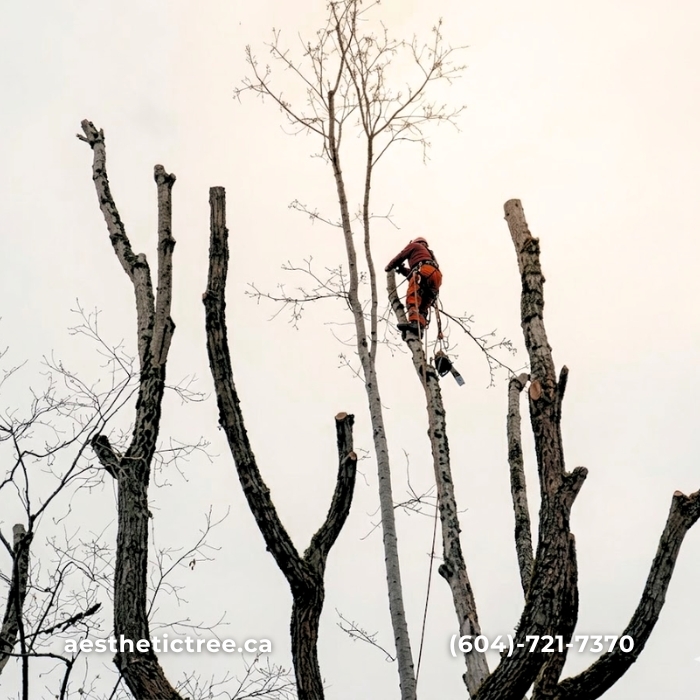
- A heat-damaged tree within striking distance of a structure, road, vehicle, or public walkway
For urgent hazards, use emergency tree service rather than waiting for a routine appointment.
In our experience assessing heat-stressed trees across Vancouver, Burnaby, and North Vancouver, the worst outcomes often involve trees that were left until fall or winter. By then, the visible symptoms may be only part of the problem. Root loss, basal decay, or internal cracking can be farther along than the canopy suggests.
A qualified arborist can assess tree risk using accepted industry methods, including ANSI A300 tree care standards and ISA tree risk assessment practices. A ground-level inspection can identify visible defects, but trained assessment is needed to interpret decay indicators, root flare problems, canopy decline, and structural loading.
An arborist report can also create a written record for municipal, insurance, or liability purposes. If a tree later fails, documentation showing that you sought professional advice and acted on it may matter.
Can Extreme Heat Cause Permanent Damage After a Tree Looks Better?
Yes.
This is one of the most important points for homeowners. Trees can look better after a heat event while still carrying internal damage.
Severe water stress can reduce fine root mass. It can damage cambium. It can interrupt water movement inside the tree. It can also leave the tree with less energy to resist decay fungi or close wounds.
That delayed damage may not show fully until the next growing season. A tree can leaf out thinly in spring, drop more branches in summer, and become structurally weaker by the following winter.
The Pacific Climate Impacts Consortium at the University of British Columbia projects warmer summers for the Lower Mainland through mid-century under continued emissions scenarios. For trees already growing in Vancouver yards, that matters. They are likely to face more frequent or more intense heat stress over their remaining lifespan.
One heat event weakens a tree. Repeated heat events can push it beyond recovery.
Should You Save or Remove a Heat-Damaged Tree?
This is a professional judgment call. The right answer depends on the tree and the target beneath it.
An arborist will consider:
Species and Age
A mature Big-leaf maple with moderate stress may be worth preserving if the structure is sound. A smaller ornamental tree with severe dieback, bark separation, and basal decay may not have the same recovery potential.
Location
A compromised tree over a driveway, roof, sidewalk, lane, or neighbour's property carries more risk than the same tree in an open yard.
Structural Integrity
If the trunk, root flare, and major scaffold limbs are sound, recovery care may be reasonable. If there is basal decay, root failure, a new lean, or major cracking, removal may be the safer path.
If removal is recommended, Vancouver homeowners need to consider the City of Vancouver Private Tree Protection By-law. Trees with a trunk diameter of 20 cm or greater measured at 1.4 m above grade are generally protected. Removing a protected tree without the proper permit can result in significant fines.
An arborist can advise on permit requirements and provide supporting documentation when a tree is hazardous or no longer viable.
After removal, stump grinding may be recommended. Grinding removes the trip hazard, reduces the remaining woody material that can host decay organisms, and creates more usable planting space.
Who Owns the Street Trees in Front of Your Home?
Street trees are usually the City's responsibility. These are the trees planted on public boulevards, commonly between the sidewalk and curb.
Do not prune or remove a Vancouver street tree yourself. If you think a street tree is heat-stressed, unstable, or hazardous, contact the City of Vancouver through 311 or the current Urban Forestry reporting process.
Trees inside your property line are the homeowner's responsibility. If a private tree meets the protected-size threshold, removal usually requires a permit even if the tree is heat-damaged.
The City of Vancouver's Urban Forest Strategy sets long-term canopy goals for the city. That is why protected-tree rules exist: removal should happen when it is justified, documented, and followed by appropriate replacement where required.
How to Prepare Trees for the Next Heat Event
Prevention is usually cheaper and safer than emergency removal.
Choose Replacement Trees for Future Conditions
When planting, choose species suited to the Lower Mainland's changing climate, available soil volume, and exposure. Heat tolerance matters, but so do mature size, root space, drainage, and proximity to buildings or utilities.
Tree planting in Vancouver should be planned for the next 50 to 100 years, not just the next few summers.
Schedule Structural Pruning Before Heat Season
Good pruning can reduce deadwood, improve structure, and lower the chance of branch failure. It should be done to accepted arboricultural standards and timed appropriately.
Avoid major pruning during active heat stress. If pruning is needed, schedule it before the hottest part of summer or after the tree has stabilized.
Keep Permanent Mulch Rings Around Valuable Trees
A stable mulch ring protects roots, reduces evaporation, and limits mower or trimmer damage near the trunk. For mature trees, this is one of the simplest long-term protections homeowners can maintain.
Book Annual Assessments for Mature or High-Value Trees
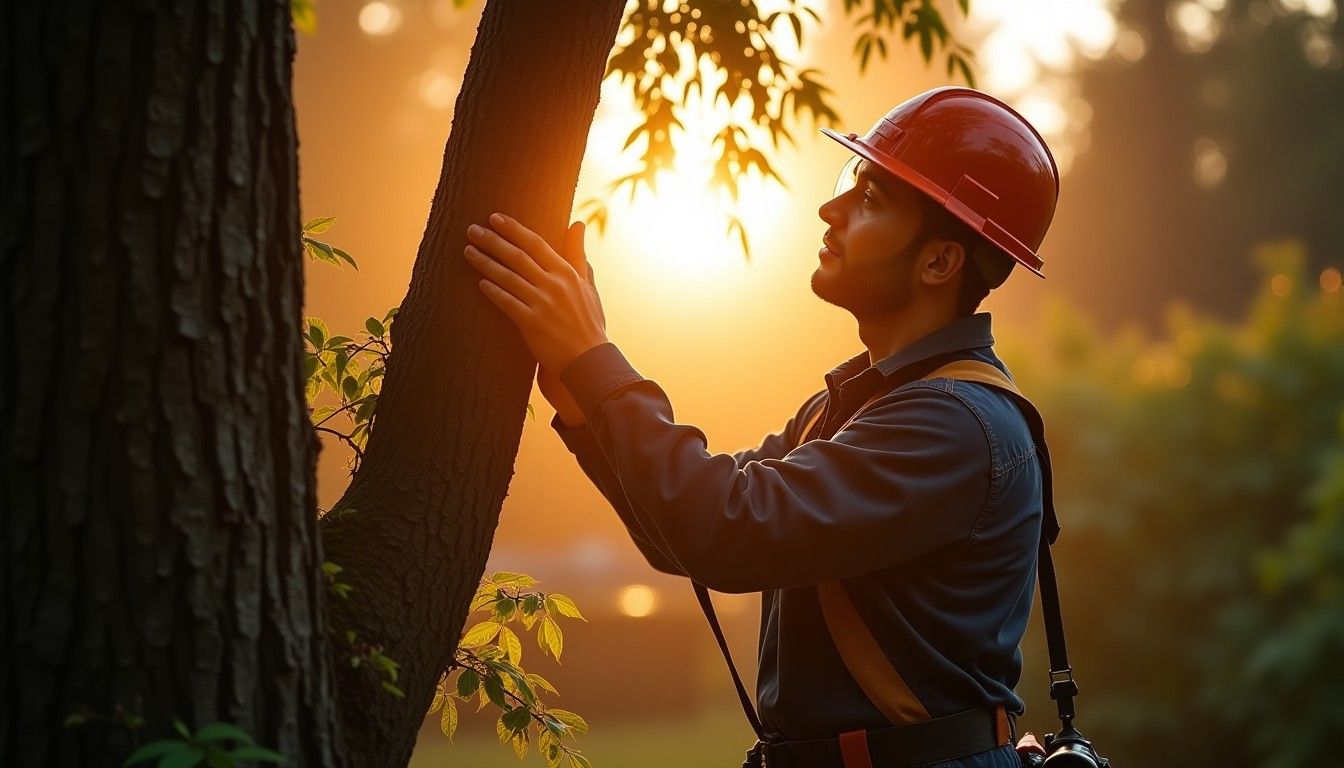
Mature trees near homes, driveways, sidewalks, or public areas should be inspected regularly. An ISA-certified arborist who knows the tree's baseline condition can spot subtle changes earlier than a homeowner seeing the tree every day.
Annual checks are especially valuable for exposed south-facing trees, trees with past construction impacts, trees in compacted soil, and trees that showed stress after the 2021 heat dome.
FAQ
Can a tree fully recover from extreme heat damage?
Yes, if the damage is limited and the root system remains functional. Trees with light scorch and less than 20% crown dieback often recover with deep watering, mulch, and time. Trees with more than 40% crown dieback, basal decay, root upheaval, or a new lean rarely return to full structural condition without ongoing risk.
How do I know if my tree is dying or temporarily stressed?
Look for patterns. Leaf scorch alone may be temporary. Leaf scorch plus early leaf drop, persistent morning wilt, crown dieback, bark separation, or fungal growth is more serious. If three or more symptoms appear together, arrange an arborist inspection.
Is summer leaf scorch always a sign my tree is dying?
No. Light scorch on exposed leaves can happen during hot Vancouver summers. Concern rises when scorch covers a large part of the canopy, returns year after year, appears with dieback, or affects a tree that is already stressed by compacted soil, root damage, or poor drainage.
Do I need a permit to remove a heat-damaged tree in Vancouver?
If the tree is 20 cm or greater in diameter at 1.4 m above grade, it is generally protected under Vancouver's private-tree rules and usually requires a permit. Emergency situations still require documentation. An arborist can help determine what is required before work begins.
How soon should I call an arborist after noticing symptoms?
Call promptly. The first 2 to 4 weeks after symptoms appear are often the best window for recovery care. If you see a new lean, root movement, fungal growth at the base, major branch failure, or a tree that could hit a structure or walkway, call for emergency assessment the same day.
Call Aesthetic Tree & Hedge Services for a free estimate: (604) 721-7370. ISA-certified arborists. WCB registered.
Related: For more on this, see What Does ISA Certified Mean — And What Uncertified Crews Miss.
Found this helpful? Follow our tree care insights directly on Google.
Make us your preferred source on GoogleBefore You Go
Where are you in your tree care journey?
Our Tree Care Services
ISA-certified arborists serving Greater Vancouver


Explore Our Tree Care Services
From expert pruning to safe tree removal, our ISA-certified arborists are ready to help across Greater Vancouver.
View Services