
TL;DR — Quick Summary
What to ask when hiring a tree service: ISA certification, WCB coverage, Vancouver permits, and red flags. 12 questions before any crew starts cutting.
It happened on a Tuesday in Burnaby.
A homeowner needed a Big-leaf maple removed from her backyard. She found a crew on Facebook Marketplace. They quoted her half what anyone else charged. She said yes.
The crew showed up with chainsaws and no credentials. Halfway through the job, a 200-pound limb swung the wrong way. It crushed a section of her neighbor's cedar fence and clipped the corner of his garage.
She called the tree crew. They were gone. No business address. No insurance certificate. Nothing but a name on Facebook and a disconnected number.
She spent the next eight months fighting a claim that cost her $26,000 out of pocket.
This isn't a rare story. It happens every summer in Vancouver. It happened on Cambie Street. It happened in Coquitlam. It happens every time a homeowner picks the cheapest option without asking the right questions first.
Hiring a tree service isn't like hiring a painter. Trees kill people. They destroy property. Unqualified operators — the ones who skip insurance, ignore permits, and cut corners on safety standards — leave homeowners holding the bag.
Here's exactly what to ask before anyone fires up a chainsaw on your property.
---
TL;DR
- **Verify ISA certification and WCB coverage** before hiring any tree service in the Lower Mainland. Both are non-negotiable.
- **Vancouver's Private Tree By-law** requires a city permit to remove trees over 20 cm in diameter on private property. Your contractor must know this cold.
- **Get everything in writing** — scope of work, equipment, cleanup, debris removal, and total cost.
- **Walk away from**: contractors with no WCB clearance letter, verbal-only quotes, pressure to start today, and anyone who can't identify your tree species.
- **ISA-certified arborists follow ANSI A300 standards** — the professional benchmark for safe tree care across North America.
---
Are They ISA-Certified — and What Does That Actually Mean?
Let's start here.
The International Society of Arboriculture (ISA) is the gold standard for tree care credentials. An ISA Certified Arborist has passed a rigorous industry exam. They maintain continuing education credits every year. They commit to a professional code of ethics.
That credential matters for one specific reason: anyone can buy a chainsaw. Not anyone passes an ISA certification.
The ISA has certified professional arborists across more than 40 countries. In the Lower Mainland, that pool is smaller. Certified arborists here know local species. They know Vancouver bylaws. They know the failure patterns of Pacific Northwest trees.
Ask for the arborist's ISA certification number. You can verify it in seconds at treesaregood.org using their free public credential verification tool. If they hesitate, you have your answer.
Also ask whether the company holds membership in the Tree Care Industry Association (TCIA). TCIA accreditation means the company undergoes periodic audits on their safety protocols, equipment standards, and business practices — not just the individual worker.
ISA certification plus TCIA membership is the full package. One without the other is a yellow flag. Neither is a red one.
---
Do They Have WCB Coverage and Liability Insurance — and Can They Prove It?
This is the most important question on this list. Nothing else comes close.
WorkSafeBC (formerly the Workers' Compensation Board) classifies arborists and tree service workers among British Columbia's highest-hazard occupational categories. Their annual reports consistently show serious injury rates in tree work that far exceed the provincial average across all industries.
Here's what homeowners consistently miss: if an unregistered tree crew member is injured on your property, WorkSafeBC can pursue the property owner for costs. You become liable because you hired an unregistered contractor.
Before the job starts, ask for two documents:
1. **A WorkSafeBC clearance letter** — This confirms the company is registered and in good standing. Request one dated within the last 30 days. You can also verify independently at worksafebc.com using their public portal. 2. **A certificate of liability insurance** — Industry standard in BC is $2 million in general liability coverage. Confirm it's current. Confirm it covers tree removal work specifically.
Don't accept verbal assurances. Get the actual documents.
A reputable contractor hands both over without hesitation. A fly-by-night operator stalls, makes excuses, or says they're "between policies." That's your cue to leave.
---
Does Your Tree Require a City Permit — and Does Your Contractor Actually Know?
This is where local knowledge separates serious arborists from out-of-province transplants.
Vancouver's **Private Tree By-law** protects trees on private property throughout the city. Any tree with a trunk diameter of 20 cm or more — measured at 1.4 metres above ground — requires a permit before removal. Violating this by-law carries significant fines. The property owner is responsible. Not the contractor.
Other Lower Mainland municipalities have their own distinct rules:
- **Burnaby** enforces the Burnaby Tree Regulation By-law with its own diameter thresholds
- **North Vancouver District** requires permits for trees over a set DBH on private lots
- **Coquitlam** maintains a protected species list and separate removal requirements
A qualified tree service doesn't just look at your tree. They ask where you live. They know whether your specific municipality and tree size trigger a permit requirement. And when one is required, they either guide you through the application — or they make clear that work doesn't start without it in hand.
If a contractor brushes off the permit question or says "don't worry about that," that tells you everything you need to know about how they handle the rest of the job.
---
Will They Perform a Proper Hazard Assessment Before Touching Anything?
Here's a question most homeowners never think to ask.
A qualified arborist doesn't just show up and start cutting. They conduct a **hazard assessment** first — a systematic evaluation of the tree's structural integrity, the risk it poses to people and property, and the safest method for the work.
Ask specifically: "Will you conduct a hazard assessment before the job begins?"
The assessment should cover:
- **Dead or weakened limbs** — known in the industry as widow-makers
- **Root defects** — root rot, girdling roots, compromised root flares
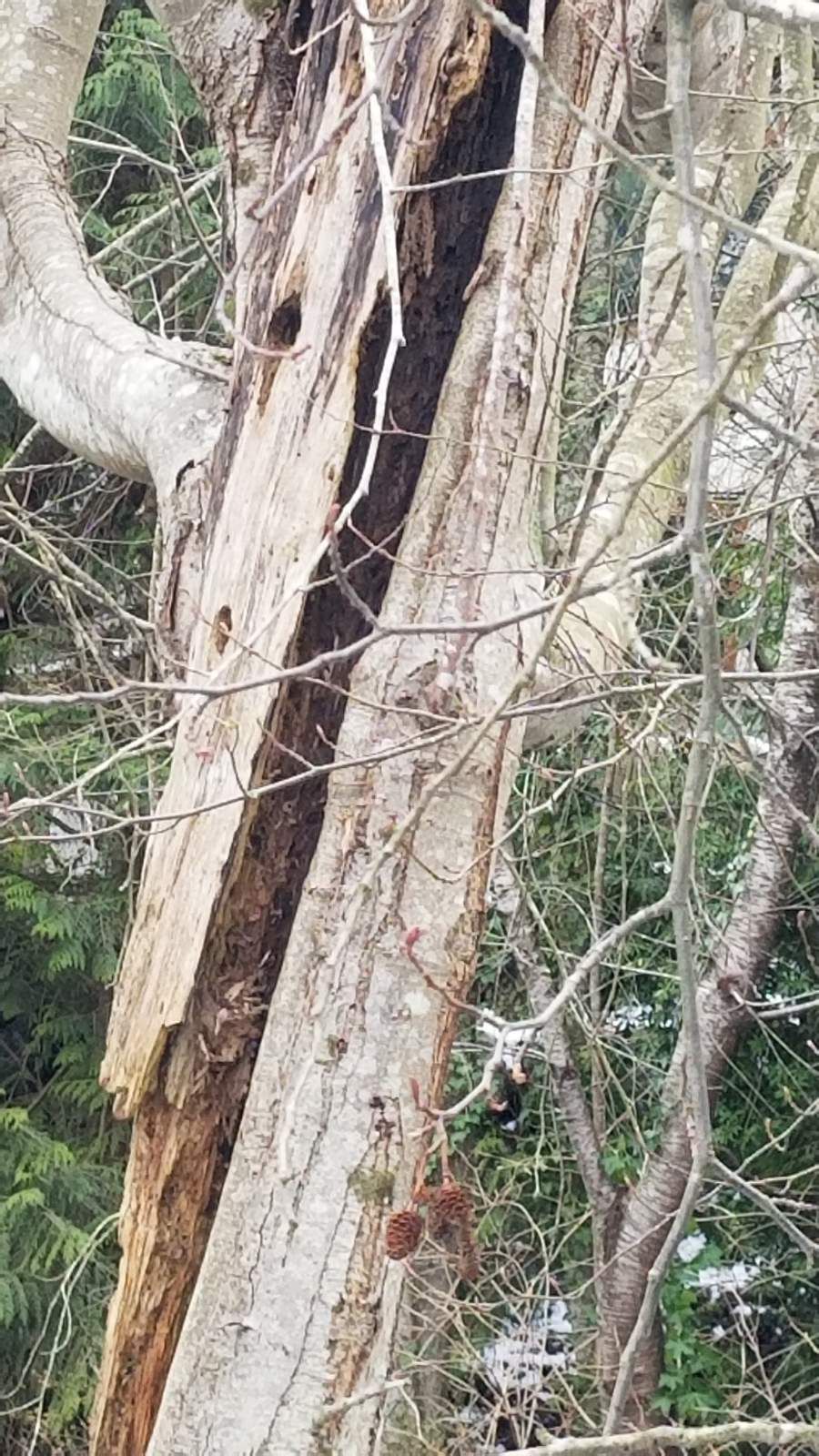
- **Co-dominant stems** — two equally sized trunks from the same origin point, one of the most common structural failure points in urban trees
- **Proximity to BC Hydro power lines** — regulated clearance requirements apply
- **Soil conditions** — saturated or previously disturbed soil changes the risk profile entirely
In our experience working through hundreds of arborist reports in Vancouver, the trees that cause the most damage are the ones that looked perfectly healthy from the outside. A proper hazard assessment is how you find the problems you can't see.
A contractor who skips this step isn't just unprofessional. They're creating liability — yours.
---
Do They Follow ANSI A300 Standards — or Are They Making It Up as They Go?
ANSI A300 is the American National Standard for tree care operations. Despite the name, these standards are the professional benchmark for arborists across all of North America, including British Columbia.
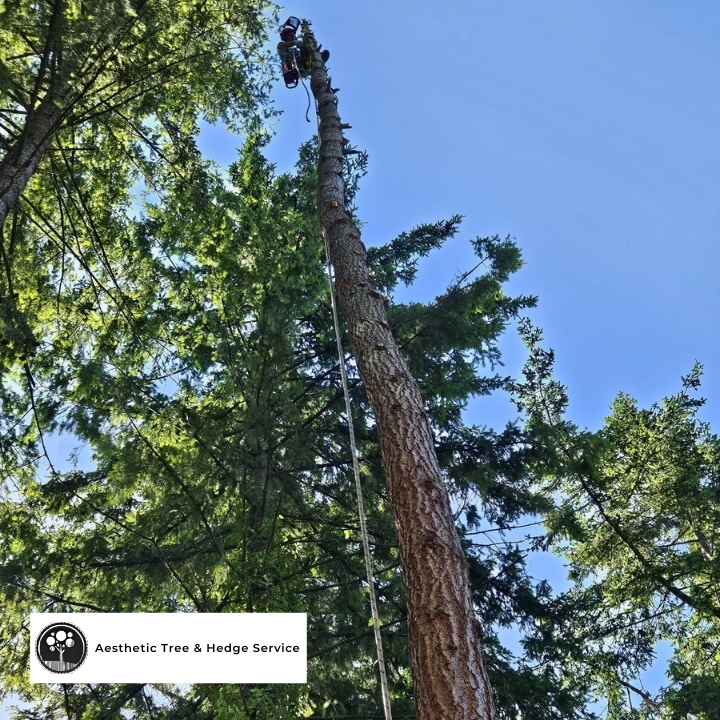
ANSI A300 governs exactly how pruning cuts are made, how heavy limbs are rigged and lowered safely, how root work is conducted, and how tree removal is sequenced. For ISA-certified arborists, this isn't optional guidance. It's the baseline.
Here's why this matters for your yard: **flush cuts**.
For decades, tree workers made cuts flush with the trunk, believing it sped up healing. ANSI A300 — based on decades of research including Alex Shigo's landmark work on tree compartmentalization — makes clear that flush cuts are harmful. They destroy the branch collar, the tree's natural chemical defense zone. They create direct entry points for decay and disease that can kill a tree over years.
If you see a crew making flush cuts on your tree, stop the job immediately. That's not a small mistake. That's textbook harmful practice.
Ask your contractor directly: "Do your crews follow ANSI A300 pruning standards?" If they don't recognize the term, you have all the information you need.
---
What Equipment Will They Use — and Is It Right for This Specific Job?
Equipment tells a story.
A properly equipped tree service for a large residential removal in Vancouver should arrive with:
- **Aerial lift or bucket truck** for safe working access at height
- **Wood chipper** for processing branches and debris on-site
- **Rigging gear** — pulleys, friction hitches, and lowering lines for controlled limb descent
- **Stump grinder** if you want the stump removed after the tree removal in Vancouver
- **Full PPE for every crew member** — chainsaw chaps, climbing helmets, eye and hearing protection
Some jobs require a crane. Not every company has one. If your tree is in a confined space — backing onto a neighbor's property, adjacent to a structure, or inaccessible to a standard bucket truck — ask specifically whether they offer crane tree removal or work with a certified crane subcontractor.
Companies that arrive with nothing but chainsaws and a pickup truck are managing large removals by guesswork. That's how branches land on roofs.
Also ask about their climbing systems. Modern professional arborists use double-rope technique (DRT) or single-rope technique (SRT) climbing systems with certified hardware. Their equipment should meet **ANSI Z133** — the safety standard for arboricultural operations specifically. If they're climbing with improvised rigs, that's a liability risk you're standing under.
---
Does the Quote Cover Debris Removal — or Will You Be Left With a Pile?
This seems obvious. It consistently isn't.
Tree work generates enormous amounts of debris: logs, sections, branches, wood chips, sawdust, stripped leaves. Some contractors quote the cut and quietly assume the homeowner disposes of everything else. You don't figure this out until they're loading their equipment and leaving a chest-high pile in your yard.
Ask specifically:
- "Does your quote include complete debris removal?"
- "Will you chip branches on-site or haul them off?"
- "What happens to the logs — sectioned and removed, or left behind?"
- "Will you broom-sweep and leave the yard in clean condition?"
Some homeowners want to keep the wood for firewood, raised beds, or a future project. If that's you, say so upfront. A professional contractor will work with your preference.
But if you want a clean yard, get it in writing before the job starts. Debris removal is often the difference between a lower and a higher quote — and if you don't know that going in, you're comparing two completely different jobs.
---
Can They Identify Your Tree Species — and Do They Know Its Specific Risks?
This question separates real arborists from generalists with chainsaws.
Vancouver's urban forest is dominated by specific species: Douglas fir, Big-leaf maple, Western red cedar, Pacific yew, and ornamental cherry varieties. Each has different structural properties, different failure patterns, and different decay characteristics.
A Douglas fir in East Vancouver behaves differently from a Big-leaf maple in the same yard. They hold weight differently. Their wood decays differently. Their root systems interact with urban clay soils differently.
Ask: "Have you worked with this species before? Are there species-specific risks I should know about?"
A qualified arborist gives you a clear, specific answer. They'll describe the species' tendencies, its known failure modes, and what that means for how the work should proceed. A generalist says "we handle all trees" and moves on.
If you have a Big-leaf maple, ask specifically about **included bark** — a structural defect where bark becomes embedded between two co-dominant stems, dramatically weakening the junction from the inside. It's common in Big-leaf maples. It's nearly invisible on the surface. And it's one of the most frequent causes of unexpected catastrophic failure. Only an experienced arborist knows to check.
---
What Are the Red Flags That Should Make You Walk Away?
You've read the questions that identify qualified contractors. Here are the signs that end the conversation.
**Walk away immediately if:**
- They can't provide a WorkSafeBC clearance letter within 24 hours
- They carry no liability insurance — or the certificate looks expired or generic
- They pressure you to commit "today" before you've had time for due diligence
- They can't identify the tree species in front of them
- They dismiss or laugh off the permit question
- The quote is verbal only with no written document
- They won't tell you clearly who will actually perform the work
- They demand full payment before work starts
- The crew shows up with no PPE
One red flag people consistently miss: **no physical business address**. A listing with just a phone number and a Google profile is not a business. It's a person with a chainsaw. That person may be skilled. But they have no accountability structure. When something goes wrong on your property — and in tree work, things go wrong — you need someone you can physically locate and hold responsible.
---
When Should You Call for an Emergency Tree Assessment?
Sometimes the question isn't who to hire. It's how fast to call.
Signs that need immediate professional attention:
- A large crack or split in the main trunk after a windstorm
- Sudden visible lean that wasn't present before
- Exposed root ball after heavy rain or ground disturbance
- Major limb failure over a structure, walkway, or vehicle
- Any contact between your tree and power lines
Vancouver gets significant windstorm events every year, particularly October through March. A tree that looked stable in late summer can be structurally compromised after repeated wet soil cycles and sustained wind loading. The damage isn't always visible until something moves.
Don't wait. Structural changes in a tree are not a "monitor it" situation. Emergency tree service exists for exactly this reason — and a same-day professional assessment costs far less than waiting for an uncontrolled failure.
---
How Do You Know You're Getting the Right Service for the Job?
Tree removal, tree cutting, hedge trimming, and stump grinding are not interchangeable terms. The right answer for your property depends on your tree's species, current health, location, and the outcome you actually want.
Before you call anyone, be clear on what you need:
- Dead, hazardous, or unwanted tree → Tree removal in Vancouver
- Overgrown branches threatening your roofline or property line → Tree cutting and structural pruning
- Stump left from a previous removal → Stump grinding in Vancouver
- Cedar or laurel hedge overhanging your neighbor's yard → Hedge trimming services
- Tree showing disease or structural concerns you want to preserve → Start with an arborist report before any other decision
Knowing what you need before you call means you can evaluate whether the contractor's recommendation aligns with best practice — or whether they're pushing full removal when a well-placed prune would solve the problem for a fraction of the cost.
---
FAQ
**Q: Do I need a permit to remove a tree on my own property in Vancouver?**
A: In most cases, yes. Under Vancouver's Private Tree By-law, any tree with a trunk diameter of 20 cm or more at 1.4 metres above ground requires a permit before removal on private property. Some limited exemptions exist — including trees posing an immediate documented hazard — but the default rule is clear: measure the trunk, contact the City of Vancouver Urban Forestry department, and secure the permit before any cutting begins. Your arborist should be able to guide you through this. Working without a required permit results in fines, and the liability falls entirely on the property owner.
**Q: What is the real difference between an ISA Certified Arborist and someone who just does tree work?**
A: Substantial. An ISA Certified Arborist has passed a comprehensive industry exam, completes ongoing continuing education, and operates under a professional code of ethics tied to ANSI A300 standards. The terms "tree trimmer" and "tree service" are completely unregulated — anyone can use them regardless of training or knowledge. For any job involving large trees, structural assessment, or permit requirements in the Lower Mainland, verify ISA credentials first at treesaregood.org. Don't rely on logos on a truck.
**Q: How do I verify WorkSafeBC coverage before I hire a contractor?**
A: Request a WorkSafeBC clearance letter dated within the last 30 days. You can also verify independently in under two minutes at worksafebc.com using the company's registered name. Don't skip this step. If a crew member without WCB coverage is injured on your property, you can be held financially liable. A simple document check eliminates that exposure entirely.
**Q: A tree fell on my fence after last night's windstorm. What do I do first?**
A: Keep everyone away from the area and confirm no one is hurt. If the fallen tree is touching or near power lines, call BC Hydro immediately at 1-888-769-3766 — do not let anyone approach until they respond. Document all damage thoroughly with photos for your insurance claim. Then contact a certified arborist who provides emergency response services. Don't attempt removal yourself. A downed tree still holds tension in unpredictable locations and can move without warning.
**Q: The cheapest quote I got is half the price of all the others. Should I be concerned?**
A: Yes — dig deeper before you sign anything. A dramatically lower quote almost always means something is missing: WCB registration, liability insurance, proper equipment, experienced crew, or debris cleanup. Ask the low bidder to walk you through their quote line by line. If they can't explain the gap, the risk doesn't justify the savings. According to the Tree Care Industry Association (TCIA), the large majority of serious property damage incidents in residential tree removal involve uninsured, unlicensed operators — the exact category that shows up with the lowest quotes.
---
Make the Right Call Before Any Crew Sets Foot in Your Yard
You've read the 12 questions. Here's the short version:
Hire certified. Hire insured. Get it in writing.
In the Lower Mainland's tree service market, the gap between a qualified ISA-certified arborist and an uninsured Craigslist crew is the gap between a clean, professional job and a five-figure property damage claim.
At Aesthetic Tree & Hedge Services, every job starts with an on-site assessment. Every technician is ISA-certified. We carry full WCB registration and liability insurance. We know Vancouver's tree by-laws and we pull permits when they're required. We don't start any job until you have a written quote you understand and, where required, a permit in hand.
**Call Aesthetic Tree & Hedge Services for a free estimate — (604) 721-7370.**
ISA-certified arborists. WCB registered. Serving Vancouver, Burnaby, North Vancouver, Richmond, Coquitlam, and the broader Lower Mainland.
Found this helpful? Follow our tree care insights directly on Google.
Make us your preferred source on GoogleBefore You Go
Where are you in your tree care journey?
Our Tree Care Services
ISA-certified arborists serving Greater Vancouver


Explore Our Tree Care Services
From expert pruning to safe tree removal, our ISA-certified arborists are ready to help across Greater Vancouver.
View Services