Maple Tree Care Vancouver
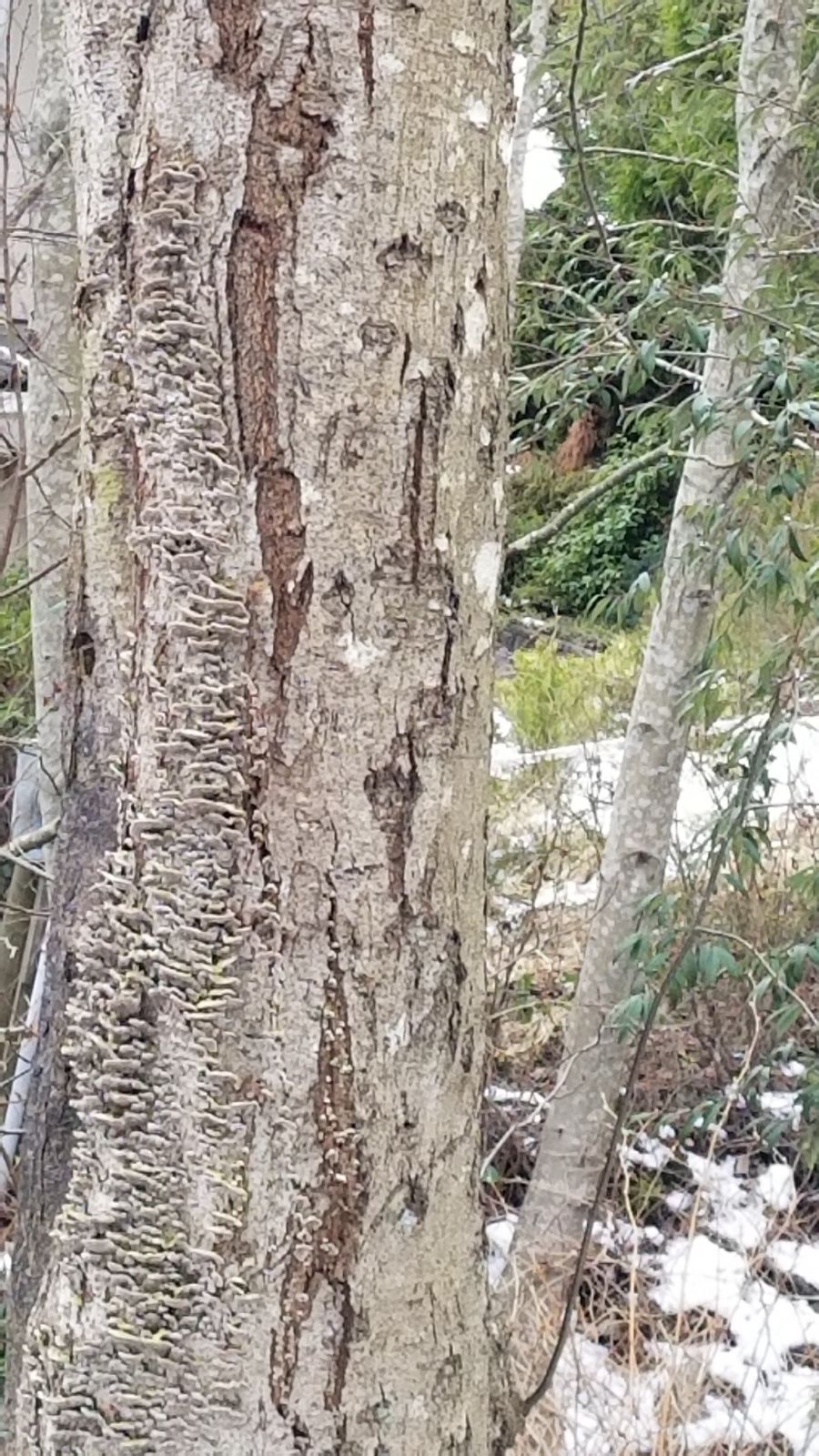
Maple care starts at the root collar, not the canopy. The most commonly missed diagnosis on Vancouver maple calls is Verticillium wilt, routinely mistaken for drought stress for a season or more. Avoid heavy pruning in late winter and early spring, when rising sap pressure opens wounds to fungal entry; late summer and fall are the safer windows.
How we read a maple before we touch it
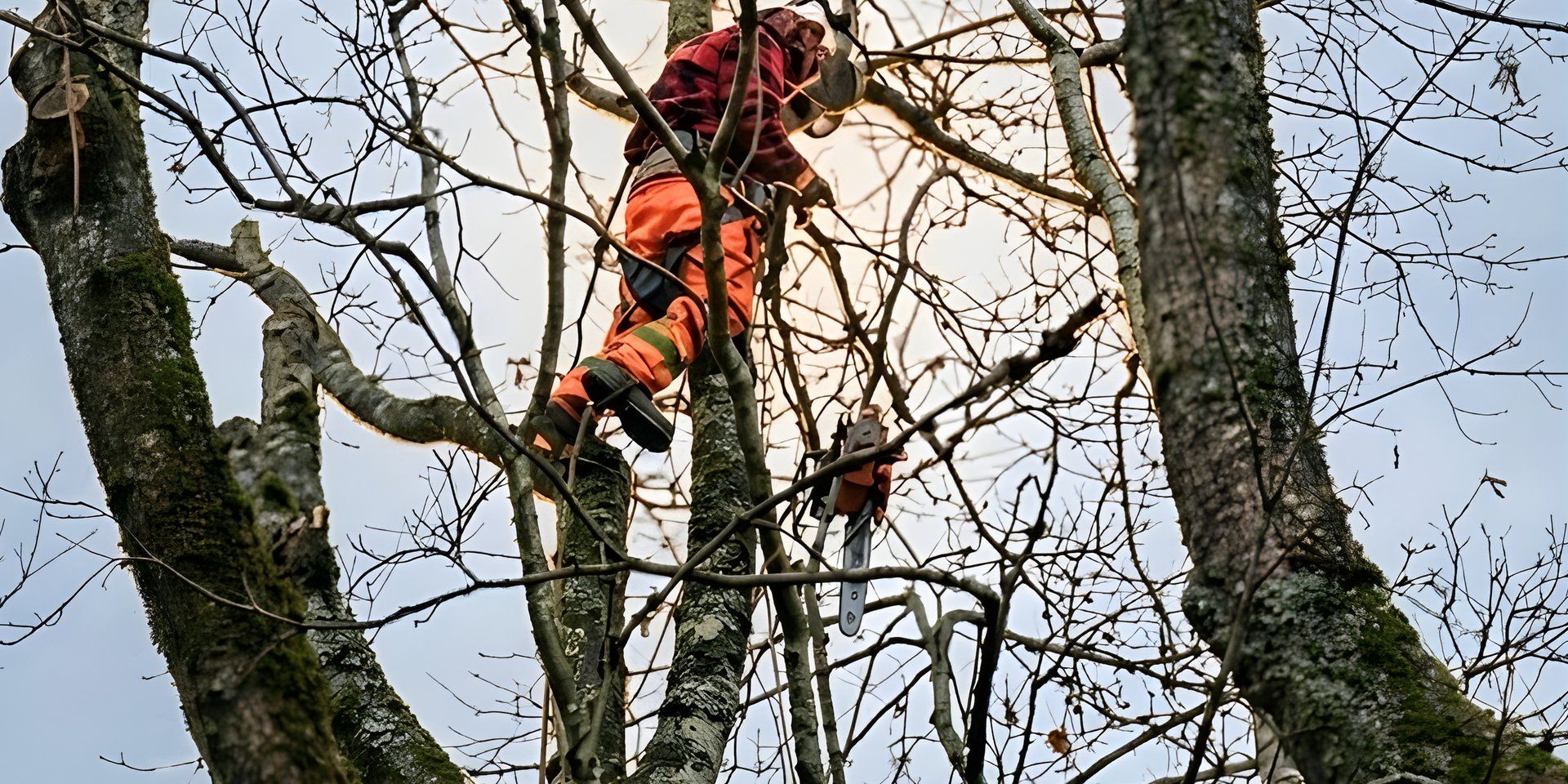
Maples hide their structural problems better than most species we work on, which is why the assessment comes before the quote.
Hollows are the clearest example. Arboriculture has a screening threshold for them, the t/R ratio, residual wall thickness divided by stem radius, published by Mattheck and Breloer in The Body Language of Trees (1995). Below 0.3, a hollow stem is treated as at risk of buckling. It is a trigger for a closer look rather than a verdict: a 2017 analysis in [Royal Society Open Science](https://royalsocietypublishing.org/rsos/article/4/4/160972) calls the threshold "an oversimplification that cannot be generalised."
Where sounding leaves a question, instruments narrow it. Sonic tomography has been measured at a 0.91 correlation with actual decay extent, and across 27 cross-sections from 13 trees, Picus tomograms deviated from visual assessment by roughly 5% of total cross-sectional area ([Arboriculture & Urban Forestry](https://auf.isa-arbor.com/content/30/5/277), 2004). Accuracy still varies by species and by who is holding the equipment.
Risk itself we rate the way the ISA Tree Risk Assessment Qualification framework does, Low, Moderate, High or Extreme, by combining how likely the part is to fail, how likely it is to hit something, and what happens if it does. A hollow bigleaf maple over a lane and the same hollow over an unused corner of a yard are not the same tree, and the rating says so.
That is the whole reason we start at the root collar. A maple that looks fine from the street can be telling a different story at the base.
One more reason we are slow to recommend removing a hollow maple: U.S. Forest Service research ([GTR PSW-181](https://www.fs.usda.gov/psw/publications/documents/gtr-181/016_Bull.pdf)) records that more than 25% of Pacific Northwest wildlife species use tree cavities, and a cavity large enough for denning takes over 100 years to form. Where the structure allows retention, that is a century of habitat you keep.
Retention is usually the cheaper path anyway. A mature maple almost always clears the permit threshold, and the [City of Richmond](https://www.richmond.ca/services/climate/environment/treeremoval.htm) can pursue a fine of up to $50,000 per tree where one comes down without a permit ([City of Richmond](https://www.richmond.ca/services/climate/environment/treeremoval.htm)), against Vancouver's $500 minimum and $10,000 maximum per offence ([City of Vancouver](https://vancouver.ca/your-government/protection-of-trees-bylaw.aspx)). Removal is the decision with the paperwork attached.
Frequently Asked Questions
Why should I avoid pruning my maple in late winter? Late winter is when sap pressure in maples is building toward the spring flush. Cutting during this window causes heavy bleeding at wound faces, creating extended moist conditions that make the tree more vulnerable to fungal pathogens like Nectria, which causes canker and is common throughout the Pacific Northwest. Our recommended pruning windows are late fall after full dormancy or mid-summer when active growth supports faster wound compartmentalisation.
What are the early signs of Verticillium wilt in a maple? Early indicators include marginal leaf scorch, browning at the leaf edges in summer, premature fall colour in isolated branches weeks before the rest of the tree turns, and a wilting or flagging limb without visible physical damage. These symptoms are frequently attributed to drought stress for one or more growing seasons before a diagnosis is made. If you're seeing any of them, an ISA-certified assessment is the right next step rather than waiting.
Is tar spot on maple leaves serious? Tar spot, the black blotches caused by Rhytisma acerinum, is cosmetic and won't kill an otherwise healthy tree. Fungicide treatments aren't necessary. Raking and disposing of fallen leaves in autumn reduces the spore load for the following season. If you're uncertain whether what you're seeing is tar spot, our team can confirm it and check for anything more serious at the same time.
Why does maple tree work sometimes cost more than comparable work on conifers? Bigleaf maple is significantly denser than species like western red cedar at similar diameters, which affects how removal work is sectioned and lowered. Codominant stems and included-bark unions require careful, methodical assessment and cuts that take more time. Root systems on established urban maples frequently run close to structures and adjacent plantings. Sap flow timing can also affect scheduling windows. Contact Aesthetic Tree for a personalised assessment, actual costs vary based on the specific tree, site conditions, and scope of work.
Can Verticillium wilt be treated in a maple tree? In early stages, management steps, removing affected tissue, improving root zone conditions, reducing other stressors, may slow progression. Once the infection has moved through a substantial portion of the vascular system, no treatment changes the biological outcome. The fungus persists in the soil and in the sapwood. Our team will give you an honest, evidence-based read of where in the progression your tree currently sits and what options, if any, remain.