
TL;DR — Quick Summary
common hedge trimmings mistakes vancouver homeowners make, with arborist-backed fixes for cedar, laurel, yew, and bylaws.
common hedge trimmings mistakes vancouver homeowners make are rarely small mistakes for long.
A hedge is not just a green wall. It is living infrastructure. It screens a lane. It cuts wind. It softens traffic noise. It holds privacy between close lots in Kitsilano, Kerrisdale, Mount Pleasant, Burnaby, Richmond, and North Vancouver.
It also reacts to bad cuts.
Cut cedar into old brown wood, and it often stays brown. Shear laurel into a hard shell, and disease hides inside. Flatten the top wider than the base, and the lower branches starve for light. Trim during nesting season without checking, and you risk harming active nests.
In our work across the Lower Mainland, the worst hedge jobs share one thing. The cut was made before the plant was understood.
Aesthetic Tree & Hedge Services is ISA-certified and WCB registered. We trim hedges, assess trees, and work under local bylaws every week. This guide explains the mistakes we see most often, why they matter, and how to avoid them.
TL;DR
- Vancouver hedges fail fastest when they are cut too hard, too flat, or at the wrong time.
- Cedar, laurel, yew, privet, and boxwood do not respond the same way to pruning.
- Environment and Climate Change Canada says Canada’s general nesting period can run from mid-March to late August. Dense hedges need a nest check before work in that window.
- City of Vancouver rules protect private trees 20 cm or larger in diameter, measured 1.4 m above grade. Hedge work near trees can still damage protected root zones.
- The safest hedge is wider at the base than the top. That shape keeps light on the lower growth.
- For large, tall, overgrown, or bylaw-sensitive hedges, book professional hedge trimming services in Vancouver.
Why Do Vancouver Hedges Brown Out After Trimming?
Most brown-out starts with one mistake. The hedge was cut past its living green layer.
This matters most on cedar and cypress hedges. Many Lower Mainland properties use Western red cedar, emerald cedar, Leyland cypress, or similar evergreens for screening. These plants carry most of their live foliage on the outside. The inside is often shaded, woody, and brown.
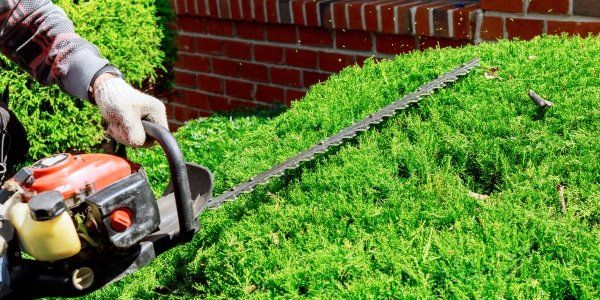
When a hedge trimmer cuts past the green surface, it exposes that old interior. On many conifers, bare old wood does not regrow well. The hedge then shows scars for years.
This is why a fast trim can become a permanent mark. The tool did what it was told. The cut was wrong.
The fix is simple in principle. Trim lightly and often. Keep cuts in green growth. Reduce height in stages when the hedge is mature. Never assume a cedar hedge will push new shoots from brown interior wood.
This is also why heavy correction work takes judgment. A hedge that has outgrown its space cannot always be made young again in one visit. Sometimes the right answer is phased reduction. Sometimes it is selective renovation. Sometimes it is removal and replanting.
The University of Maryland Extension gives a useful rule for hedges. Older shrubs used to start or restore a hedge can often have about one-third cut from the top and sides to build thick growth. That does not mean every hedge tolerates a one-third cut. Species matters. Age matters. The presence of green interior growth matters.
In Vancouver, rain adds another layer. Environment and Climate Change Canada’s 1991-2020 climate normals for Vancouver International Airport show about 1,189 mm of annual precipitation. Wet foliage, dull blades, and dense hedges raise disease pressure. A ragged cut on a wet laurel hedge is not a clean horticultural decision. It is an invitation.
A clean cut seals better. A sharp blade crushes less tissue. A dry day is better than a soaked one. The hedge tells you what it can take.
What Is the Biggest Shape Mistake People Make With Hedges?
The biggest shape mistake is making the top wider than the base.
It looks tidy for a few weeks. Then the bottom thins out.
Leaves need light. If the upper hedge flares outward, it shades the lower hedge. The lower limbs lose foliage. The privacy screen opens at eye level. That is the exact place where most homeowners need coverage.
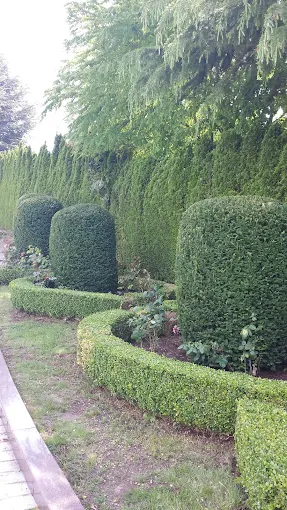
Good hedge shape is slightly tapered. The base should be wider than the top. Arborists often call this an A-shaped or pyramidal profile. The slope does not need to be dramatic. It just needs to let sunlight reach the lower branches.
The University of Maryland Extension recommends a narrow pyramid or inverted V shape for hedges because it prevents shade on lower branches. That is not a design opinion. It is plant physics.
In our experience, this mistake is common on cedar hedges along lanes in East Vancouver and Burnaby. The person trimming stands at ground level. The machine is easier to hold against the upper face. The top gets shaved tight. The lower section gets ignored. After several years, the hedge becomes green at the crown and thin at the fence line.
The repair is slow. You cannot force old shaded wood to fill overnight. You start by correcting the profile. Then you trim new growth lightly. You give the base light. You add mulch where roots are stressed. You water deeply in dry periods. You stop scalping the top.
A formal hedge is not a flat box. It is a managed plant with a planned light pattern.
When Is the Wrong Time to Trim Hedges in Vancouver?
The wrong time depends on the plant, the weather, and bird activity.
For many hedges in Vancouver, heavy pruning is best done outside the active nesting window. Environment and Climate Change Canada states that Canada’s general nesting period can start as early as mid-March and extend until late August. The federal guidance exists to help people avoid harming migratory birds, nests, and eggs.
That matters in cedar, laurel, holly, yew, and dense privet. Birds like cover. A hedge that looks empty from the sidewalk can hold a nest two feet inside.
The mistake is treating hedges like lumber. They are habitat.
Before trimming during the nesting period, check carefully. Look for birds entering and exiting. Watch from a distance. Listen for repeated alarm calls. Inspect without tearing into the hedge. If you find an active nest, delay work around that area.
Weather also matters. Vancouver summers have dry spells. Hard pruning during heat stress can scorch tender exposed foliage. Late heavy cuts can also push new growth that does not harden well before cold snaps.
For cedar hedges, light maintenance in late spring or early summer often works well after the first flush of growth. A second light pass can follow later if conditions allow. For broadleaf evergreens like laurel, avoid wet, cold periods when cuts stay damp.
Timing is not a calendar trick. It is an inspection decision.
If the hedge sits beside a protected tree, timing also relates to site work. Heavy equipment, ladders, and repeated foot traffic can compact soil. Roots breathe through pore space. Crush that space, and the tree pays later.
For projects near valuable or regulated trees, get advice before work starts. A formal arborist report in Vancouver can document condition, protection zones, and risks before a permit or construction project begins.
Why Is Cutting Too Much at Once a Common Hedge Trimming Mistake?
Plants store energy in foliage. Remove too much foliage at once, and you reduce the plant’s factory.
That is the quiet damage behind many bad hedge jobs. The hedge looks smaller. The invoice is paid. Then the stress appears.
You see brown patches. You see thin regrowth. You see sunscald on interior branches that were never meant to face direct light. You see water demand rise because the plant has lost shade over its own stems and soil.
A hedge also has a root-to-shoot balance. Hard top cuts shock that balance. Some species answer with weak water shoots. Some stall. Some decline.
The mistake gets worse on old hedges. Mature cedar, laurel, and yew have structure. They are not young nursery stock. A homeowner sees six feet of extra height and wants it gone. The plant sees a sudden loss of foliage, stored energy, and shade.
The better method is staged reduction.
Take less. Watch the response. Cut again in the right season. Keep living growth where possible. Use hand tools for structural cuts. Use hedge trimmers for surface finishing only.
This is where professional judgment pays. A hedge can be too tall for safe ladder work. It can lean over a neighbour’s roof. It can hide decay in stems. It can be tied into a fence, utility line, or old stump. A simple trim becomes a rigging and access problem.
For hedges that have grown into small trees, the work may cross into pruning, cutting, or removal. Aesthetic Tree handles tree cutting in Vancouver when woody growth has moved beyond ordinary hedge maintenance.
The goal is not to cut the most. The goal is to keep the screen healthy.
How Do Dull Blades Damage Hedges?
Dull blades tear. Sharp blades cut.
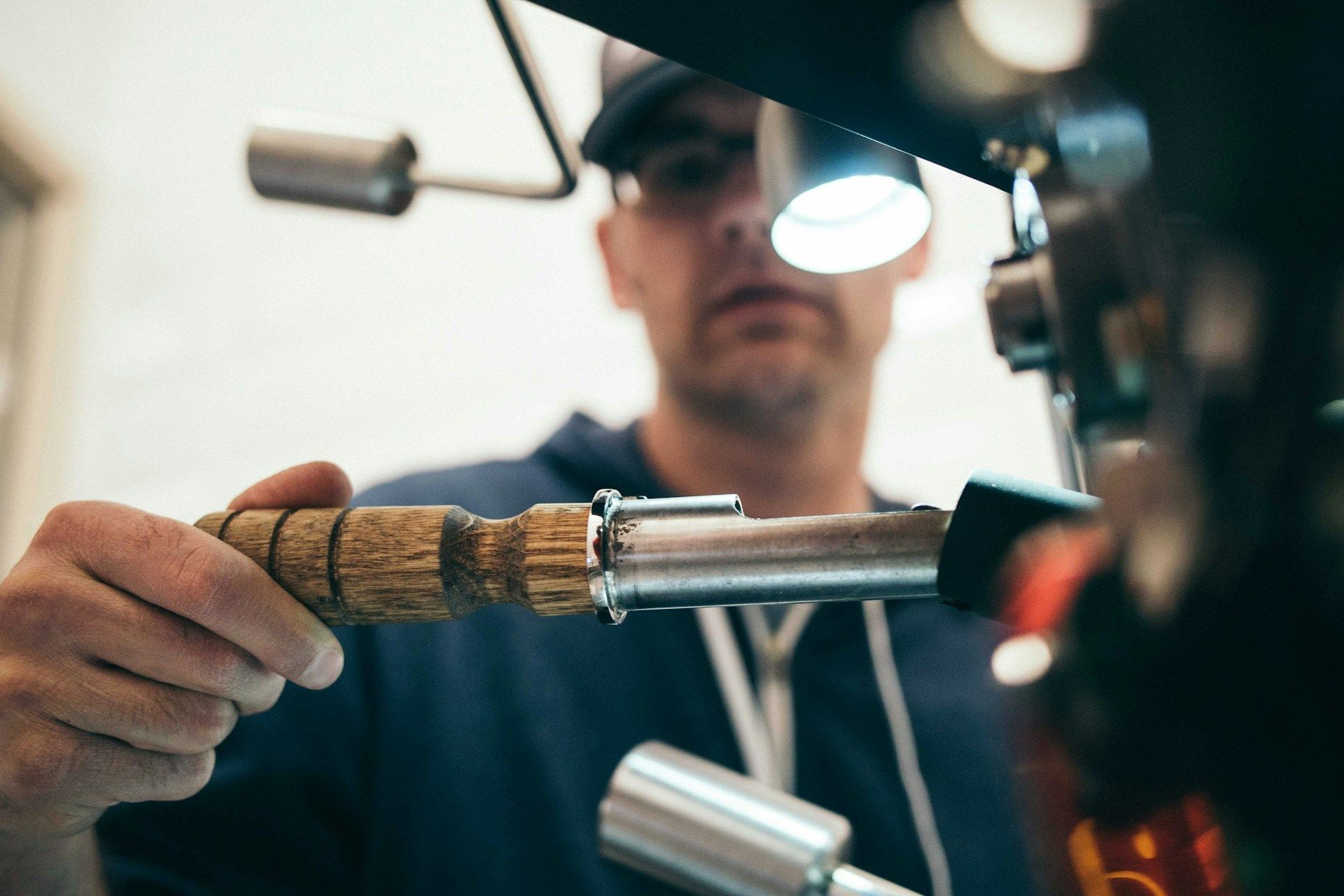
That difference is visible on leaves. A sharp blade leaves a clean edge. A dull hedge trimmer leaves shredded tips. On laurel, those torn leaf edges turn brown. On boxwood, ragged cuts add stress. On cedar, dull blades bruise the spray tips and leave a rough finish.
The tool also affects disease risk. Torn tissue dries slowly. Wet, crushed edges are easier entry points for pathogens. In Vancouver’s damp months, that matters.
A homeowner often blames the plant. The real problem is the tool.
Good hedge work starts before the first cut. Blades should be sharp. Tools should be clean. The cutter bar should move freely. Hand pruners should be suited to the stem size. A hedge trimmer is not a pruning saw. A pruning saw is not a hedge trimmer.
Tool choice also affects structure. Shears make a surface. They do not make smart interior cuts. Over time, repeated shearing creates a dense outer shell. That shell blocks light and air from the inside. The hedge looks full from ten feet away. Inside, it is dead wood and trapped debris.
Selective thinning solves that. Open small windows. Remove crossing stems. Clear dead material. Let light and air into the hedge. Then finish the face lightly.
This is one reason ISA-certified crews work differently from casual trimmers. They are not just making a green rectangle. They are managing woody plants under accepted arboricultural practice.
The Tree Care Industry Association says ANSI A300 standards provide standard practices and specification guidance for arborists, urban foresters, landscape architects, and contractors. Part 1 applies to pruning and trimming operations. Those standards exist because cuts have consequences.
Which Vancouver Bylaws Matter Before Hedge or Tree Work?
The City of Vancouver Protection of Trees By-law No. 9958 matters first.
The City states that a permit is required to remove a private-property tree with a diameter of 20 cm or greater, measured 1.4 m above the ground. A 20 cm diameter trunk is about 64 cm in circumference. The City also says trees on adjacent properties or boulevards that are in danger of damage must be protected.
That is a statistic with teeth.
Many hedge jobs happen beside regulated trees. A cedar hedge may run under a Big-leaf maple. A laurel hedge may sit near a Douglas fir. A yew screen may be planted near a boulevard tree. Trimming the hedge is not tree removal. But access, debris handling, root damage, or branch cuts can still create bylaw risk.
Development projects raise the bar. The City says an arborist report is required for a development permit application if trees 20 cm diameter or larger are present. That includes trees that may be retained.
Vancouver is not alone. Burnaby, Richmond, Coquitlam, and North Vancouver have their own tree rules. A hedge on one side of Boundary Road can fall under a different municipal process than a hedge on the other side.
This is why we do not guess on bylaws. We check the address, species, size, and work scope. If a permit is required under a bylaw, the job plan changes.
Do not let a hedge project become an unauthorized tree injury. If the work involves large woody stems, protected trees, or removal, review tree removal in Vancouver before cutting.
Why Do Cedar Hedges Need Different Care Than Laurel or Yew?
Species decide the rules.
Cedar is unforgiving when cut into old brown wood. It gives excellent privacy, but it needs regular light trimming. Let it grow too large, and heavy correction becomes hard.
Laurel is tougher in some ways. It can push new growth after harder cuts. But laurel leaves are large. Hedge trimmers slice those leaves in half. The result is a brown, torn look across the face. Hand pruning and selective cuts often give a cleaner result when appearance matters.
Yew tolerates renovation better than many conifers. It can regrow from older wood more readily than cedar. That does not mean it should be hacked. It means the correction plan can be different.
Privet grows fast. It needs frequent maintenance. It also responds well to shaping when kept in a good light profile.
Boxwood is dense and formal. It hates poor airflow. It also shows tool marks. Clean tools matter because boxwood disease can move through careless work.
Holly is sharp, tough, and slow to forgive bad planning. It often needs selective pruning, not just shearing.
This is the mistake behind many poor results. The same machine is used on every hedge. The same depth is cut. The same season is chosen. The same shape is forced.
Plants do not care about that routine.
Good arboriculture starts with identification. Then comes objective. Do you want privacy, height control, clearance, restoration, or formal shape? The pruning method follows the objective.
A hedge is a row of plants, not a product line.
How Can Overgrown Hedges Become a Safety Problem?
An overgrown hedge can hide hazards.
It can hide dead stems. It can hide wasp nests. It can hide uneven ground, old wire, fences, irrigation lines, and rotten posts. It can force workers onto ladders at poor angles. It can press into service lines. It can block sightlines at driveways and lanes.
WorkSafeBC reported that 175 workers died in British Columbia in 2023. Arboriculture is a safety trade because gravity, blades, wood tension, and weather all meet on site.
That is why WCB registration matters. It is not a slogan. It shows the contractor is part of the provincial worker safety system.
Homeowner risk is different, but real. Tall hedge work often involves ladders, powered blades, extension tools, and awkward reaches. A hedge trimmer can kick, bind, or pull. Wet grass moves under a ladder foot. A cedar top can be farther away than it looks.
The safe answer is not bravery. It is planning.
Set a stable work zone. Keep children and pets away. Avoid overhead electrical lines. Do not work alone on tall hedges. Do not overreach. Do not cut heavy stems with a tool built for soft tips.
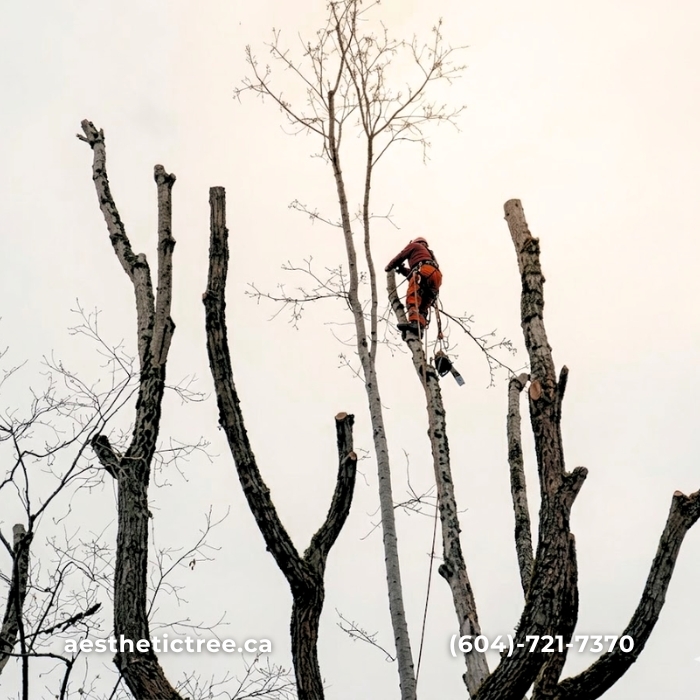
When a hedge contains tree-sized stems, the work may require rigging or sectional removal. If a tree or large limb has failed, call for emergency tree service instead of trying to clear it with household tools.
Safety-first work looks slower at first. It is faster than an injury.
Why Does Root Damage Matter During Hedge Trimming?
People look up during hedge work. Arborists also look down.
Roots are often the forgotten part of a hedge or tree system. They sit under the work area. They sit under the ladder. They sit under the chip pile. They sit under the path used to drag branches out.
Soil compaction is damage. Repeated foot traffic can reduce air space in wet soil. Heavy equipment can crush roots. Cutting grade around a hedge can sever feeder roots. Piling chips too deep against stems can trap moisture at the crown.
The root flare matters. It is the area where the trunk or stem widens into the root system. Burying the root flare with soil or mulch promotes decay and stress. For trees, that mistake can become structural.
Mulch is good when used well. It moderates soil temperature, reduces mower damage, and holds moisture. It should not be packed against stems like a wet collar. Keep it off the trunk and root flare. Spread it wide and shallow.
The City of Vancouver’s 2025 Urban Forest Strategy states that Vancouver currently has 25% canopy cover and aims for 30% by 2050. The City also reports that Strathcona, Sunset, and Downtown have the lowest canopy cover, with Strathcona below 10%.
That matters because private yards carry part of the urban forest burden. The 2022 Vancouver Tree Canopy Assessment found 1,805 hectares, or 63%, of Vancouver’s canopy on private land. A hedge job on private land is not isolated. It is part of the city’s living cover.
Good trimming protects more than the face of the hedge. It protects soil, roots, stems, and nearby trees.
For stressed beds, proper mulching services can support root health without burying the root flare.
What Should Homeowners Do Before Hiring a Hedge Trimming Company?
Ask better questions.
Start with certification and insurance. Is the company ISA-certified? Is it WCB registered? Does it carry proper insurance? Does it understand local tree bylaws?
Then ask about species. A serious contractor should identify the hedge before recommending the cut. Cedar is not laurel. Laurel is not yew. Yew is not privet.
Ask about timing. If the work falls between mid-March and late August, ask how the crew checks for nesting birds. A vague answer is a warning sign.
Ask about the amount of reduction. If someone promises to take four feet off an old cedar hedge in one pass and make it look perfect, be careful. Biology sets limits.
Ask about cleanup. Clean work includes removing debris from the hedge interior, not just blowing the driveway. Old clippings left inside a dense hedge hold moisture and decay.
Ask about bylaw risk. If the hedge is mixed with trees, near boulevard trees, or part of a development site, a contractor should know when to pause and check rules.
Ask about safety. Tall hedge work needs stable access, trained workers, and the right tools. A low bid is not a safety plan.
Aesthetic Tree & Hedge Services provides professional hedge trimming services in Vancouver, plus arborist-led tree care across the Lower Mainland. The crew sees the hedge as part of a larger site, not just a shape to shave.
That difference shows six months later.
How Do You Fix a Bad Hedge Trimming Job?
First, stop cutting.
A damaged hedge needs assessment before more work. More cuts often make the problem worse. The right repair depends on the species, the amount removed, and where live growth remains.
For cedar, brown interior exposure may not fill back in. The repair plan focuses on protecting remaining green growth, correcting shape, watering during dry weather, and waiting for edge growth to soften the scar. In severe cases, replacement is the honest option.
For laurel, hard cuts can recover if the plant is healthy. The repair may include selective thinning, staged height reduction, and cleaner hand pruning after new shoots form.
For yew, renovation can be more promising. It still needs timing and patience.
For privet, repeated light trims can rebuild density. But the base needs light. If the hedge is still top-heavy, the lower section stays thin.
For boxwood, inspect for disease, poor airflow, and dieback. Do not keep shearing a sick plant into a tighter shell.
Water matters after repair. Deep, infrequent watering beats shallow daily sprinkling. Mulch helps if placed correctly. Fertilizer is not a cure for bad cuts. Do not feed a stressed plant without knowing the cause of stress.
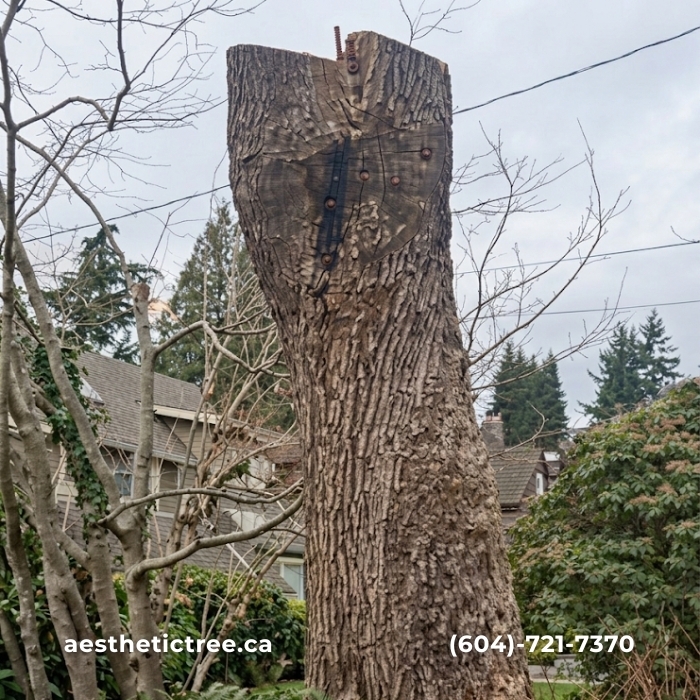
Sometimes the hedge is not the only issue. A failing hedge can expose an old stump, decayed tree base, or root conflict. If removal leaves stumps in the way of replanting, professional stump grinding in Vancouver can prepare the site for a new hedge.
Repair is not magic. It is triage, then plant care.
What Is the Best Way to Maintain a Healthy Vancouver Hedge?
Trim less, more often.
That is the rule most homeowners resist. A hedge maintained lightly each year holds shape better than one cut hard every few years. Small cuts stay in live growth. The plant keeps density. The base keeps light. The job stays safer.
Use the right shape. Wider at the bottom. Narrower at the top. Keep the top level only after the side profile is right.
Use the right tool. Hand pruners for selective cuts. Loppers for larger stems. A pruning saw for wood that is too large for loppers. Hedge trimmers for finishing soft outer growth.
Use the right timing. Avoid heavy work during nesting season unless checks are complete and no active nests are present. Avoid major stress cuts in heat, drought, or wet cold spells.
Know the species. Cedar needs conservative cuts. Laurel needs clean technique. Yew can take planned renovation. Privet needs frequency. Boxwood needs airflow.
Protect the roots. Keep the root flare clear. Avoid deep mulch against stems. Do not compact wet soil. Do not trench through roots without advice.
Watch the site. A hedge near a lane needs clearance. A hedge near a driveway needs sightlines. A hedge near a protected tree needs bylaw care.
Keep records. Note when it was trimmed, how much came off, where brown patches appeared, and how it responded. Plants leave evidence. Good maintenance reads it.
For more background on seasonal care, see Aesthetic Tree’s guide to seasonal tree care and the related article on hedge pruning in Vancouver.
FAQ
What is the most common hedge trimming mistake in Vancouver?
The most common mistake is cutting too deeply into cedar or cypress hedges. Many conifer hedges carry live green growth on the outside only. Once the cut reaches old brown interior wood, the bare area often does not fill back in.
Can I trim my hedge during bird nesting season?
You can do light work only after checking for active nests and avoiding any area with nesting activity. Environment and Climate Change Canada says the general nesting period can run from mid-March to late August. Dense hedges need careful inspection before trimming in that period.
How often should cedar hedges be trimmed in Vancouver?
Most cedar hedges do best with light annual trimming. Fast-growing hedges may need two light passes in a year. Heavy cuts every few years create more browning risk than steady maintenance.
Do I need a permit to trim a hedge in Vancouver?
Normal hedge trimming usually does not need a tree removal permit. But Vancouver requires a permit to remove private trees 20 cm or larger in diameter, measured 1.4 m above ground. If the hedge includes tree-sized stems, protected trees, boulevard trees, or development work, check the bylaw before cutting.
Why should I hire an ISA-certified arborist for hedge work?
An ISA-certified arborist understands species response, pruning standards, root health, risk, and local bylaws. That matters when a hedge is tall, old, near protected trees, or showing decline. Poor trimming can cost years of growth.
Call Aesthetic Tree & Hedge Services for a free estimate at (604) 721-7370. The team is ISA-certified and WCB registered, with hedge, pruning, removal, and hazard assessment experience across Vancouver and the Lower Mainland.
Related: For more on this, see 5 Stump Removal Mistakes Vancouver Homeowners Make.
Found this helpful? Follow our tree care insights directly on Google.
Make us your preferred source on GoogleBefore You Go
Where are you in your tree care journey?
Our Tree Care Services
ISA-certified arborists serving Greater Vancouver


Explore Our Tree Care Services
From expert pruning to safe tree removal, our ISA-certified arborists are ready to help across Greater Vancouver.
View Services