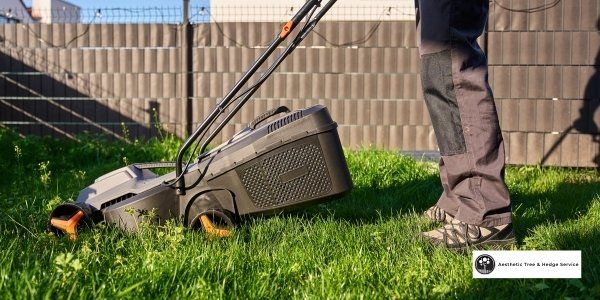

TL;DR — Quick Summary
arborist vancouver essential equipment effective lawn garden guide for safer pruning, removals, hedges, and storm prep. Call for a free estimate.
arborist vancouver essential equipment effective lawn garden sounds like a mouthful until you’re standing under a cedar in a windstorm.
The rain is coming sideways.
Your fence is shaking.
A long limb over your roof gives one sharp crack.
Not a polite crack. Not a little yard sound.
A sickening crack.
Now your Sunday garden job is a risk call.
You look at the ladder in the garage. You look at the old saw beside it. Then you look at the roof, the power line, the glass patio door, and the children’s room behind the wall.
That’s the moment equipment stops being “gear.”
It becomes the line between a clean job and a bad afternoon.
We’re Aesthetic Tree & Hedge Services. Our ISA-certified arborists work across Vancouver, Burnaby, North Vancouver, Richmond, Coquitlam, and the Lower Mainland. We’re WCB registered. We deal with Douglas fir, Big-leaf maple, cedar, birch, spruce, laurel hedges, and root systems that do not care about your plans.
This guide explains what proper arborist equipment does. It also shows where homeowner tools stop. That matters in Vancouver, where tree bylaws, rain, slopes, tight lots, and overhead lines can turn one cut into a claim, a fine, or a serious injury.
TL;DR
- A real arborist does not arrive with just a chainsaw. The kit includes PPE, climbing systems, rigging gear, saws, pole tools, lowering devices, stump grinders, chippers, and inspection tools.
- Vancouver’s Protection of Trees By-law No. 9958 requires a permit to remove most private trees 20 cm or wider, measured 1.4 m above ground.
- Equipment choice changes by job. Hedge trimming, pruning, storm damage, stump grinding, and removals all need different tools.
- Power lines are not a DIY problem. BC Hydro says to stay back at least 10 metres from a downed or damaged line and call 9-1-1.
- The safest first step is a hazard assessment by an ISA-certified arborist, especially near roofs, fences, lanes, service drops, and patios.
What Equipment Does a Vancouver Arborist Bring to a Lawn or Garden Job?
A professional arborist brings equipment for three jobs at once.
First, we protect people.
Second, we protect property.
Third, we protect the tree when the tree is worth saving.
That order matters.
A homeowner often sees only the saw. That’s the loud part. It’s not the whole job. On a proper crew, the saw is one tool in a system.
For a normal Vancouver yard, that system can include:
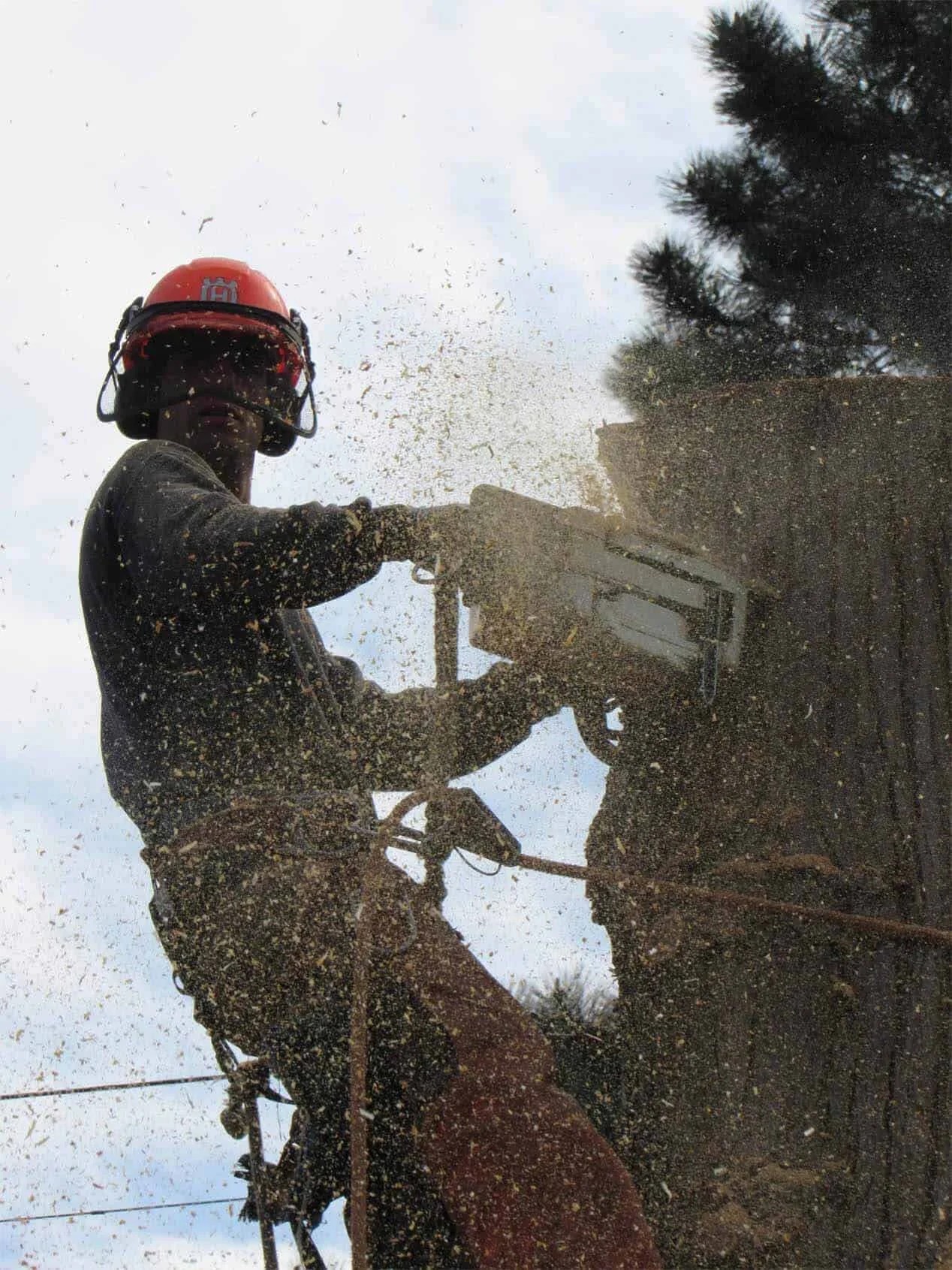
- Arborist helmet with face shield and safety glasses
- Hearing protection
- Chainsaw pants or chaps
- Cut-resistant boots
- Work positioning harness
- Climbing rope and lanyards
- Carabiners, pulleys, slings, and friction devices
- Handsaws and pole saws
- Top-handle and rear-handle chainsaws
- Hedge trimmers
- Rigging lines for lowering limbs
- Wood chipper
- Stump grinder
- Rake, blower, tarps, and cleanup tools
- Diameter tape for DBH measurements
- Mallet, probe, and inspection tools for decay checks
That list changes by site.
A flat hedge in Kerrisdale is not the same job as a cracked cedar in Deep Cove. A backyard maple in East Van is not the same as a storm-bent fir near a Coquitlam driveway. Tight access changes everything. So do slopes, fences, garden beds, greenhouses, decks, and overhead service lines.
The City of Vancouver’s 2025 Urban Forest Strategy says the city has about 150,000 street trees, 36,000 specimen trees in parks and golf courses, and more than 1 million trees across 444 hectares of public forests and woodlands. That’s a lot of canopy packed into dense lots.
Dense lots demand control.
A cut branch has weight. A wet branch has more weight. A cedar limb can swing. A maple stem can barber-chair. A hedge can hide old wire, nails, irrigation, and fence posts.
So yes, equipment matters.
But judgment matters more.
Why Isn’t a Chainsaw Enough for Tree Work in Vancouver?
A chainsaw cuts wood. It does not control gravity.
That’s the mistake we see.
Someone buys a saw. Then they believe they bought the job.
They didn’t.
They bought speed.
Speed without control creates trouble.
The Canadian Centre for Occupational Health and Safety says chainsaw operators need proper PPE, including head, eye, face, hearing, hand, leg, and foot protection. CCOHS also states that a face shield attached to a hard hat does not replace safety glasses.
That one detail tells the story.
Tree work punishes shortcuts.
Wood chips do not ask where your eyes are. Sawdust does not care about your weekend plans. A snapped branch does not slow down because you meant well.
Noise is another problem. NIOSH sets a recommended exposure limit of 85 dBA over an eight-hour workday. OSHA notes that chainsaws are often measured at about 125 dBA. That is not background noise. That is hearing damage territory.
A professional crew plans around that.
We bring hearing protection. We bring saws matched to the cut. We bring wedges, ropes, and escape routes. We keep ground workers out of drop zones. We avoid one-handed cutting. We look for tension, compression, decay, included bark, dead tops, and lean.
In our field work, the worst trees rarely look dramatic from the ground. The quiet ones fool people.
A Big-leaf maple with a heavy lateral limb over a garage can look calm. Then you see the included union. Or the fungal body. Or the old tear hidden by bark. A cedar can look full, green, and stable, then show root plate movement after long rain.
The saw is the last step.
The first tool is assessment.
If your tree is dead, leaning, cracked, or threatening a structure, start with professional tree removal in Vancouver, not a ladder and hope.
What Safety Gear Should Every Arborist Wear Before Starting Work?
A safe arborist dresses for what can go wrong.
Not for what usually happens.
That difference saves people.
At minimum, chainsaw and climbing work needs:
- Helmet rated for impact
- Eye protection under the face shield
- Hearing protection
- Chainsaw pants or chaps
- Cut-resistant boots with grip
- Gloves suited to rope and saw work
- High-visibility clothing near traffic or shared lanes
- Fall protection for climbing or lift work
WorkSafeBC’s limb and body protection guidance states that suitable protection helps reduce injury risk when working with chainsaws and other equipment. It lists cut-resistant pants, chaps, or aprons as examples.
For climbing work, the standard rises again.
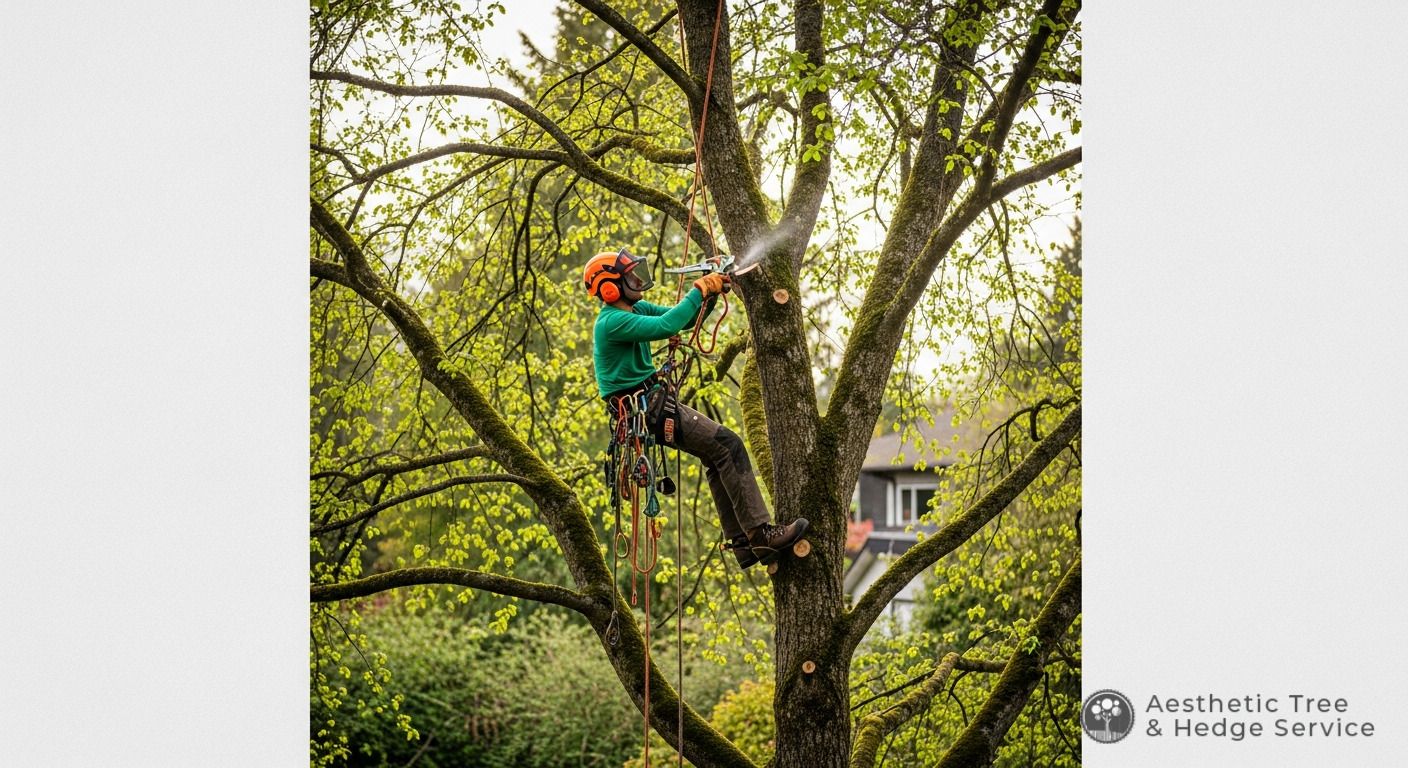
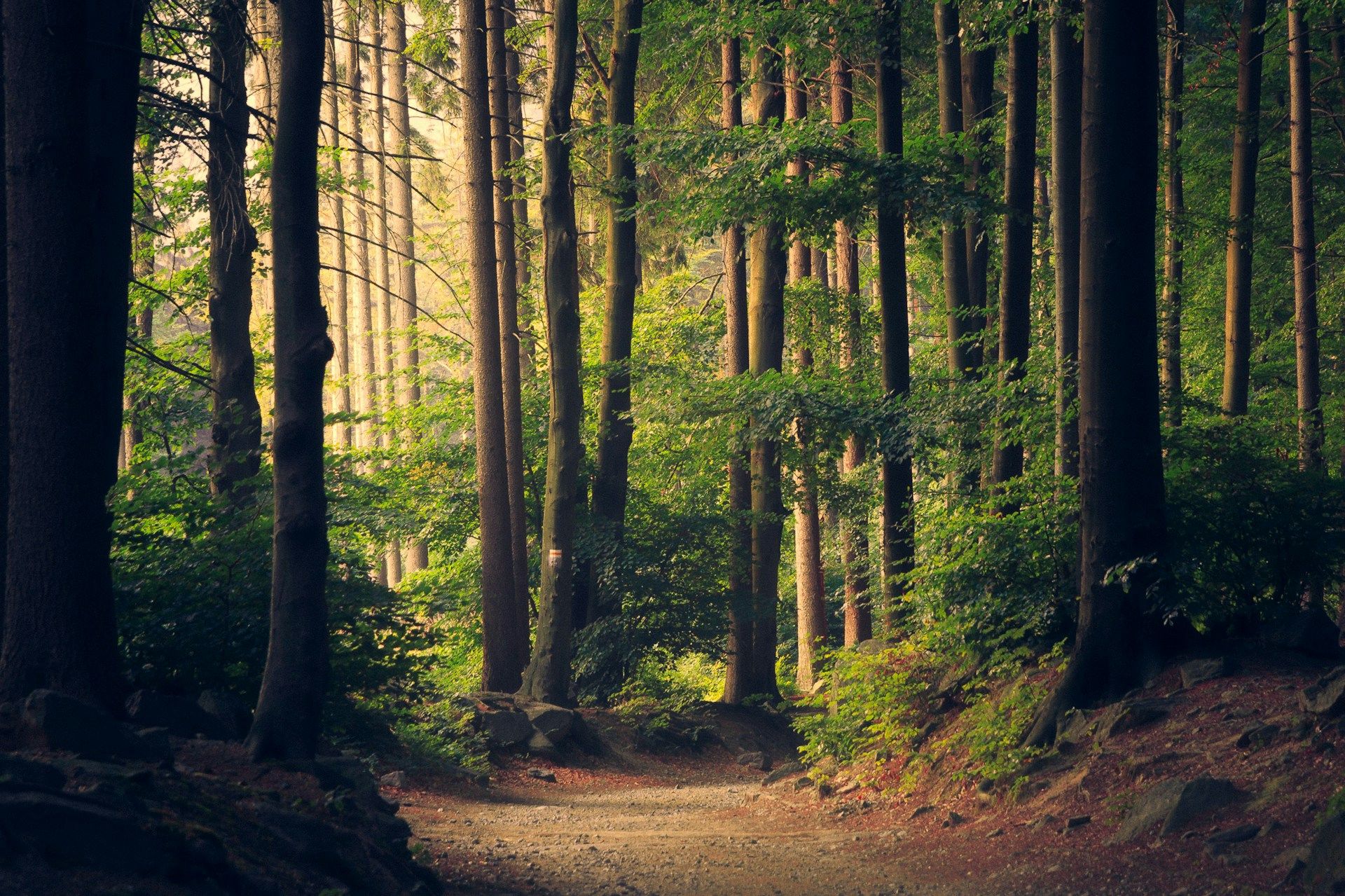
A climbing arborist needs a harness, rated ropes, lanyards, connectors, friction devices, and rescue planning. WorkSafeBC’s forestry regulation also speaks to qualified arborists, tree-climbing activities, suitable PPE, and emergency rescue procedures.
That last part is not paperwork.
It’s the plan for the bad minute.
If a climber is injured aloft, how do they get down? If a saw pinches, what’s the backup? If a limb shifts, where does the rope run? If a line rubs on bark, how is it protected?
Good crews ask those questions before the first cut.
We also check gear condition. A rope with glazing is not “mostly fine.” A cracked helmet is done. A dull chain makes bad cuts and increases fatigue. A loose chain can derail. A wet ladder against bark is not a work platform.
Homeowners sometimes ask why a crew spends time setting cones, ropes, and drop zones.
Because the job already started.
The cut is just the loud part.
How Do Arborists Choose Between Pruning, Cutting, and Full Removal?
The right equipment depends on the right decision.
Not every problem tree needs removal.
Not every tree can be saved.
That’s where ISA-certified judgment matters.
We look at species, structure, roots, targets, defects, and bylaw status. A cedar near a fence line may need clearance pruning. A Douglas fir with a split stem near a house may need removal. A fruit tree may need restoration pruning. A laurel hedge may need staged reduction instead of one hard cut.
ANSI A300 standards matter here. The Tree Care Industry Association describes ANSI A300 as standard practices and work specification guidance for arborists, urban foresters, horticulturalists, and related professionals. That matters because pruning is not random cutting.
Bad pruning creates future failure.
Topping a tree can trigger weak regrowth. Flush cuts can damage the branch collar. Over-thinning can expose limbs to sunscald and wind loading. Lion-tailing can move weight to the ends of branches.
A clean pruning plan names the purpose.
Are we reducing end weight? Clearing a roof? Removing deadwood? Improving structure? Restoring sight lines? Preparing for construction? Reducing hedge height? Protecting a service drop?
Different goals need different tools.
For careful pruning, we use handsaws, pole pruners, rigging lines, and small saws. For larger cutting, we may use chainsaws, wedges, lowering lines, and chippers. For tight removals, pieces are cut and lowered in sections.
If a tree needs sectional dismantling near a home, our tree cutting Vancouver service is built around control, not brute force.
The question is never, “Can we cut it?”
The real question is, “What happens after we cut it?”
What Tools Are Used for Hedge Trimming in Vancouver Yards?
Hedges look simple until they’re eight feet tall, wet, and leaning over a neighbour’s fence.
Then the little trimmer feels small fast.
For Vancouver hedge work, we often deal with cedar, laurel, yew, boxwood, and mixed privacy hedges. Each one reacts differently. Cedar does not forgive deep cuts into old brown wood. Laurel pushes hard new growth. Yew handles shaping better. A mixed hedge needs judgment, not one pass across the top.
Good hedge equipment includes:
- Sharp hedge trimmers
- Pole hedge trimmers for tall faces
- Hand pruners for detail work
- Loppers for heavier stems
- Tarps for cleanup
- Ladders or platforms only where stable
- Eye, ear, hand, and head protection
Sharp blades matter.
A dull hedge trimmer tears leaves. Torn leaves brown. Ragged cuts invite stress. On a cedar hedge, that can show for months.
Timing matters too.
Heavy cuts during heat or drought stress can hit plants hard. Metro Vancouver’s climate now brings hotter, drier summers and more intense rainfall. The City of Vancouver’s urban forest page says the city faces hotter, drier summers and more intense rain because of climate change.
That changes care.
We watch moisture, timing, species, and recovery. We also watch the shape. A hedge should usually be slightly narrower at the top than the bottom. That lets light reach lower growth. A hedge shaped like a mushroom often thins near the base.
If your hedge has become too tall, too wide, or too woody, book professional hedge trimming services in Vancouver before one aggressive cut ruins the screen.
The goal is not just a straight line.
The goal is a living wall that stays healthy.
What Equipment Is Needed for Stump Grinding After Tree Removal?
The tree is down.
Now the stump sits there like a bad tooth.
You mow around it. You trip on it. It grows shoots. It collects ants. It blocks planting. It reminds you the job is not done.
Stump grinding solves that.
But a stump grinder is not a lawn mower.
It’s a heavy machine with a spinning cutting wheel. It throws chips, finds rocks, and punishes hidden metal. Before grinding, we check the site. We look for irrigation, lighting wire, gas markers, grade changes, fences, and access width.
The normal stump grinding setup includes:
- Stump grinder sized for the access path
- Eye, face, ear, and leg protection
- Barriers or shields where needed
- Rake, shovel, and cleanup tools
- Mulch handling plan
- Root flare assessment
Root flare matters.
That’s the area where the trunk widens into the main roots. If a stump is cut too high, grinding takes longer. If soil is piled over the flare, decay and root problems may already be present. If you plan to replant, the grind depth and chip handling matter.
Some homeowners want the chips left. Others want them removed. Some want the area ready for sod. Others want it ready for a new tree.
Those are different finishes.
That’s why we talk through the next use of the space before the grinder starts.
For clean post-removal work, our stump grinding Vancouver service handles the ugly last step so the yard can be used again.
A stump is small compared with the tree.
But it still needs the right machine.
What Does an Arborist Use to Inspect Tree Hazards Before Cutting?
The best equipment in tree work is not always loud.
Sometimes it’s a probe.
Sometimes it’s a diameter tape.
Sometimes it’s a practiced eye on the root flare.
Before cutting, we inspect:
- Lean direction
- Root plate movement
- Soil heaving
- Cracks in trunk or limbs
- Cavities
- Fungal fruiting bodies
- Deadwood
- Bark inclusion
- Co-dominant stems
- Previous topping cuts
- Utility conflicts
- Targets under the tree
Targets mean people and property.
A tree over open grass carries one risk profile. A tree over a bedroom, lane, greenhouse, daycare path, or neighbour’s garage carries another.
The City of Vancouver’s Protection of Trees By-law No. 9958 says a permit is required to remove a private property tree with a diameter of 20 cm or greater, measured 1.4 m above ground. The same city page says an arborist report is required for development permit applications when trees 20 cm or larger are present.
That is why measurement tools matter.
DBH is not a guess. It means diameter at breast height. In Vancouver’s bylaw context, that measurement is taken 1.4 m above the ground.
A proper inspection also separates fear from hazard.
A big tree is not automatically dangerous. A small tree is not automatically safe. We’ve seen small ornamental trees split under snow load. We’ve also seen large Douglas firs stand firm because the root zone and structure were sound.
If you need documentation for removal, construction, insurance, or municipal review, start with an arborist report in Vancouver. A report can explain condition, risk, and bylaw context in plain terms.
That beats guessing.
And it beats arguing with the city after the cut.
Why Do Arborists Use Rigging Gear Instead of Just Dropping Branches?
Because the ground is rarely empty.
There’s a fence. A deck. A shed. A hot tub. A glass roof. A Japanese maple under the big maple. A neighbour’s new patio. A parked vehicle in the lane.
Dropping limbs is easy when nothing matters below.
Most Vancouver yards are not like that.
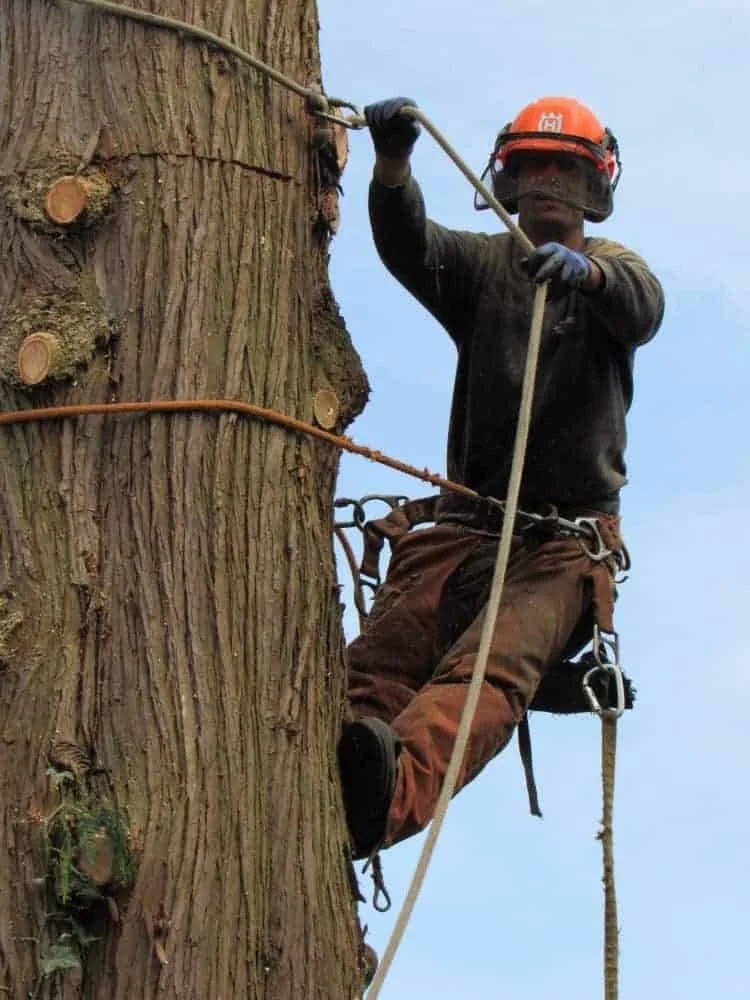
Rigging lets us lower pieces in a controlled way. The setup may include ropes, blocks, slings, pulleys, friction devices, and lowering points. The climber cuts. The ground worker controls the descent. The branch swings where we plan, not where gravity feels like taking it.
That’s the difference between tree work and demolition.
Rigging decisions depend on:
- Limb weight
- Wood strength
- Anchor point strength
- Rope angle
- Drop zone
- Wind
- Slope
- Crew communication
- Escape path
Wet wood adds weight. Wind adds movement. Decay changes strength. A heavy limb on a long rope can shock-load the system if cut wrong.
That is why a professional does not just “tie it off somewhere.”
The anchor must hold. The rope must be rated. The cut must be planned. The ground worker must be ready.
In our experience, rigging is what keeps tight city jobs calm. It also protects garden features homeowners care about. Raised beds, arbors, pavers, irrigation, and young trees can sit right below the work zone.
A good arborist sees those before starting.
A careless cutter notices them after impact.
How Do Arborists Work Safely Around Power Lines and Storm Damage?
Storm damage is where bad decisions happen fast.
The lights flicker. A limb drops. Rain hits the windows. Someone grabs a saw.
Stop.
If a tree touches a power line, or a line is down, treat it as live. BC Hydro says to stay back at least 10 metres from a downed or damaged line and call 9-1-1.
Ten metres is about the length of a city bus.
That distance matters because electricity can move through the ground, fences, branches, tools, wet soil, and your body.
BC Hydro also reported that 2024 was a record-breaking year for weather-related power outages in British Columbia. In its 2025 release, BC Hydro said nearly three-quarters of British Columbians experienced at least one weather-related outage in 2024. It also said the utility tripled its vegetation management budget for transmission and distribution lines.
That is not trivia.
It tells homeowners something serious.
Trees and wires are a growing risk in our region.
Professional storm response uses hazard zones, communication, and the right equipment. Sometimes that means no cutting until the utility makes the site safe. Sometimes it means removing failed limbs away from service lines. Sometimes it means a crane, lift, or sectional removal.
Storm trees are loaded with tension.
A bent stem can spring. A hung-up limb can drop when another cut releases pressure. A split trunk can roll. A root plate can settle. The danger is often stored inside the wood.
That’s why emergency work is different from routine pruning.
For urgent storm damage, call our emergency tree service. We assess the hazard, protect the site, and decide the right next step.
Fast is good.
Controlled is better.
What Equipment Helps Protect the Garden, Lawn, and Soil During Tree Work?
A good tree job should not destroy the rest of the yard.
That sounds obvious.
It isn’t always how the industry works.
A lawn can rut. Soil can compact. Garden beds can get buried in chips. Irrigation heads can break. Pavers can crack. Young plants can get crushed under drag paths.
So we plan the exit route before the first branch falls.
Garden protection can include:
- Plywood mats for lawns
- Tarps over beds
- Defined drag paths
- Sectional cutting to reduce impact
- Rigging over sensitive areas
- Spotters near fences and glass
- Chip control
- Final rake and blowdown
Soil protection is a tree health issue too.
Roots need air and water. Heavy equipment over a root zone can compact soil. Compacted soil suffocates roots and changes drainage. That damage can show later, long after the crew leaves.
This matters in Vancouver lots where trees, patios, lane houses, fences, and drainage all compete for space.
The City of Vancouver’s urban forest strategy targets 30% canopy cover by 2050, up from 25% today. Private yards are part of that future. A careless job can remove more canopy value than planned.
That’s why we do not treat the yard as a dump zone.
We think about what stays alive.
We think about what has to grow after we leave.
If a tree is being removed, replacement planting may matter. If pruning is being done, wound size and cut placement matter. If a stump is being ground, replanting plans matter. If a hedge is trimmed, lower growth needs light.
Effective lawn and garden tree care is not just cleanup.
It’s damage control from the start.
What Should Homeowners Ask Before Hiring an Arborist With Equipment?
Ask better questions than “How soon can you come?”
Speed matters.
But skill matters more.
Before hiring any tree crew in Vancouver, ask:
- Are you ISA-certified?
- Are you WCB registered?
- Do you carry insurance?
- Will this tree need a permit under local bylaw?
- Will you follow ANSI A300 pruning standards where pruning applies?
- How will you protect the roof, fence, garden, and lawn?
- What equipment will you use for this site?
- Will branches be lowered or dropped?
- What is the cleanup plan?
- Do you handle stump grinding if the tree comes out?
- What happens if the tree is near a line?
The answers reveal the operator.
A serious arborist can explain the job before starting. They can point to the root flare. They can name the likely species. They can describe the bylaw issue. They can explain the drop zone. They can say when a job needs utility involvement.
A weak operator talks only about price and speed.
That is not enough when a tree can hit your house.
Also ask about local experience. Vancouver is not Calgary. North Vancouver is not Richmond. Burnaby clay, Coquitlam slopes, ocean winds, tight East Van lots, and mature West Side trees all bring different problems.
Local tree work is local risk work.
The right crew knows the difference.
Which Vancouver Tree Bylaws Affect Equipment and Job Planning?
Bylaws decide what can happen before equipment comes off the truck.
In Vancouver, the big rule is the Protection of Trees By-law No. 9958. The city says a permit is required to remove any private property tree with a diameter of 20 cm or greater, measured 1.4 m above the ground.
The city also says the permit must be posted in a visible location during removal.
That means a homeowner cannot treat a protected tree like a shrub.
Other Lower Mainland cities have their own rules. Burnaby, Richmond, North Vancouver, Coquitlam, and West Vancouver do not all follow the same process. Some rules depend on DBH. Some depend on species, lot size, development status, or replacement requirements.
This affects equipment.
If a tree must be retained, the equipment plan may focus on protection barriers, root zone protection, pruning, and clearance. If removal is approved, the plan may include rigging, crane access, chipping, hauling, and stump grinding. If construction is involved, an arborist report may define tree protection zones.
For development projects, the wrong equipment route can damage protected roots. That can create bylaw trouble and tree decline.
We see this often during renovations.
A tree is not touched by a saw, but its roots get driven over. Soil gets piled against the trunk. Materials sit inside the dripline. A trench clips structural roots. Then the tree declines later.
Good arborist planning prevents that.
The work starts before the saw.
It starts with the rules, the site, and the tree’s biology.
What Equipment Is Best for Pruning Fruit Trees, Cedars, Maples, and Firs?
Different trees ask for different cuts.
Fruit trees often need smaller hand tools, clean pruning, and structure work. The goal is light, fruiting wood, and long-term form. A wild apple tree behind a Vancouver bungalow does not need the same treatment as a cedar screen.
Cedars need caution. They do not push new green growth well from old brown interior wood. Cut too deep and you leave dead-looking holes. For cedar hedges, sharp hedge trimmers and careful depth control matter.
Big-leaf maple needs weight awareness. Limbs can be large, heavy, and broad. Included bark and decay pockets matter. Reduction cuts need to respect branch structure. Large deadwood over targets needs controlled removal.
Douglas fir demands respect. Tall stems, high limbs, and wind exposure change the job. Removal or major pruning often needs climbing systems, rigging, and sometimes lift access.
Laurel grows fast. It can take reduction better than cedar, but heavy cuts still need timing and cleanup. Thick laurel stems may need loppers or saws before hedge trimmers finish the face.
The equipment follows the biology.
That is the part many homeowners miss.
A hedge trimmer is not a pruning plan. A chainsaw is not a diagnosis. A pole saw is not a permit.
A trained arborist matches tool to species, season, and risk.
That is how trees keep their structure after the crew leaves.
For broader seasonal care, our existing guide to seasonal tree care explains how Vancouver weather changes tree needs through the year.
How Does Professional Equipment Reduce Cleanup and Property Damage?
Cleanup is not an afterthought.
It’s part of production.
The right equipment turns chaos into order. A chipper reduces brush volume. Tarps catch hedge clippings. Rigging keeps limbs out of flower beds. Smaller cut sections protect lawns and hardscape. A stump grinder finishes what removal starts.
Poor cleanup usually starts with poor planning.
If every branch is dragged across the lawn, the lawn shows it. If chips spray across a pond, the pond shows it. If logs are rolled over pavers, the pavers show it.
A professional crew thinks in paths.
Where does brush go? Where do logs stack? Where does the chipper sit? Can the truck access the lane? Is the driveway load-bearing? Are there low wires? Are there sprinkler heads? Is there a gate width issue?
Those details affect the whole day.
They also affect your yard after we leave.
A clean job should leave the site safer, clearer, and ready for use. That may mean a full blowdown. It may mean leaving wood rounds where requested. It may mean removing chips. It may mean spreading mulch in a defined area.
For some gardens, mulch is useful. For others, too many fresh chips in the wrong place create mess and nitrogen issues near planting beds.
So again, the answer is not one-size-fits-all.
The right cleanup depends on the next use of the space.
When Should You Call an ISA-Certified Arborist Instead of Doing It Yourself?
Call an ISA-certified arborist when the job has height, weight, wires, targets, decay, permits, or uncertainty.
That covers more jobs than people think.
DIY can make sense for small, ground-level pruning with hand tools. A few dead twigs on a young tree? Fine. Light hand pruning on a small shrub? Fine. Small hedge touch-ups from stable ground? Fine.
But call a pro when:
- You need a ladder to reach the cut
- The branch is over a roof, fence, car, or walkway
- The tree leans
- The trunk is cracked
- Roots are lifting or soil is heaving
- Fungus grows on the trunk or root flare
- The tree is near wires
- The tree may need a permit
- The cut limb is too heavy to carry safely
- Storm damage has loaded the wood under tension
- You need a written arborist report
The British Columbia Centre for Disease Control research published in 2022 on the 2021 heat dome found that death risk in Greater Vancouver was linked with lower neighbourhood greenness, along with deprivation, older age, and sex. The 2021 heat dome was not just a weather story. It showed how much urban trees matter.
That does not mean every tree stays forever.
It means decisions need care.
A dangerous tree should be handled. A healthy tree should not be wrecked by bad cuts. A protected tree should not be removed without the right permit. A garden should not be crushed because someone brought the wrong tools.
That is why we bring equipment, training, and bylaw knowledge together.
Tree care is not just muscle.
It is risk management.
How Do You Prepare Your Yard Before the Arborist Arrives?
A little prep helps the crew work faster and safer.
Before your appointment, move what you can.
Clear patio furniture. Move cars from the driveway or lane. Bring in toys, planters, hoses, and garden tools. Unlock gates. Keep pets indoors. Tell the crew about irrigation, lighting wire, buried drains, septic fields, or fragile garden features.
Do not move anything dangerous.
Do not climb the tree. Do not cut hanging branches. Do not pull storm limbs off wires. Do not stand under split stems.
If there is storm damage, take photos from a safe distance. Then call.
For permit-related work, gather what you know. Property address, tree location, species if known, diameter if safely measurable, and reason for concern all help. If you are planning construction, tell the arborist early.
The best site visits answer three questions:
- What is the tree condition?
- What does the bylaw require?
- What equipment plan protects people and property?
Once those are clear, the work becomes much smoother.
It also becomes safer.
And safer is the whole point.
FAQ
What equipment does an arborist use most often?
An arborist uses PPE, handsaws, pole saws, chainsaws, climbing ropes, harnesses, rigging lines, pulleys, ladders or lifts where suitable, chippers, and stump grinders. The exact setup depends on the tree, site access, hazards, and whether the job is pruning, hedge trimming, removal, or stump work.
Do I need a permit to remove a tree in Vancouver?
Yes, in many cases. The City of Vancouver’s Protection of Trees By-law No. 9958 requires a permit to remove a private property tree that is 20 cm or wider, measured 1.4 m above ground. Some smaller replacement or development-related trees are also protected. Always check before cutting.
Is it safe to prune trees near power lines myself?
No. Trees near power lines require extreme caution and may require utility involvement. BC Hydro says to stay at least 10 metres away from a downed or damaged line and call 9-1-1. Do not touch the tree, branch, fence, tool, or ground near the line.
Why do arborists wear chainsaw pants or chaps?
Chainsaw pants or chaps are cut-resistant leg protection. WorkSafeBC states that limb and body protection can reduce injury risk when working with chainsaws and other equipment. They are part of a larger PPE system that also includes helmet, eye, face, hearing, hand, and foot protection.
Can hedge trimming damage cedar hedges?
Yes. Cedar hedges can be damaged by cutting too deeply into old brown interior wood. They also suffer when trimmed with dull blades or cut hard during stress periods. A professional hedge trim controls depth, timing, shape, and cleanup so the hedge keeps its privacy screen.
What is the difference between tree cutting and tree removal?
Tree cutting often refers to controlled cutting, pruning, sectioning, or reducing parts of a tree. Tree removal means taking the full tree down, usually because it is dead, hazardous, in conflict with construction, or approved for removal under local rules. The equipment plan changes with the goal.
When should I get an arborist report?
Get an arborist report when a tree may be hazardous, when a permit application requires documentation, when construction may affect trees, or when you need a clear written assessment for insurance, strata, municipal review, or planning. In Vancouver, development applications involving trees 20 cm or larger may require one.
A tree can be the best part of your property.
It can also be the heaviest risk on it.
If you’re staring at a cracked limb, an overgrown hedge, a stump, a storm-damaged cedar, or a tree that may need a permit, don’t guess. Call Aesthetic Tree & Hedge Services for a free estimate at (604) 721-7370. Our ISA-certified arborists are WCB registered, safety-first, and ready to help across Vancouver and the Lower Mainland.
Related: For more on this, see Arborist Lincoln: What Coquitlam Homeowners Need Before a Tree Comes Down.
Found this helpful? Follow our tree care insights directly on Google.
Make us your preferred source on GoogleBefore You Go
Where are you in your tree care journey?
Our Tree Care Services
ISA-certified arborists serving Greater Vancouver


Explore Our Tree Care Services
From expert pruning to safe tree removal, our ISA-certified arborists are ready to help across Greater Vancouver.
View Services