
TL;DR — Quick Summary
Tree trimming pruning Vancouver homeowners trust. ISA-certified arborists, local bylaws, ANSI A300 standards. Call for your free estimate today.
TL;DR
- Tree trimming and pruning serve different purposes — pruning targets tree health and structure; trimming is mainly about clearance and appearance
- Vancouver's **Private Tree Bylaw No. 9958** protects trees with a trunk diameter of 20cm or more — work on a protected tree without the right approvals can cost up to $10,000 in fines
- The best pruning window for most Metro Vancouver trees is late February through March, while trees are still dormant
- **ANSI A300 (Part 1)** is the North American pruning standard — a qualified arborist follows it whether you ask or not
- Always confirm your arborist is ISA-certified and WCB registered before any work begins
---
Tree trimming and pruning in Vancouver — homeowners ask about this nearly every season. And for good reason. Vancouver's wet climate, dense urban canopy, and strict private tree bylaws make this one of those jobs where getting it wrong has real consequences.
This guide covers everything you need: the right seasons, the local regulations, the ISA standards, and the mistakes that hurt trees instead of helping them. By the end, you'll know exactly what to ask a certified arborist before work starts — and what red flags should send you looking elsewhere.
Let's get into it.
---
What's the Difference Between Tree Trimming and Pruning?
People use these words interchangeably. But technically, they mean different things.
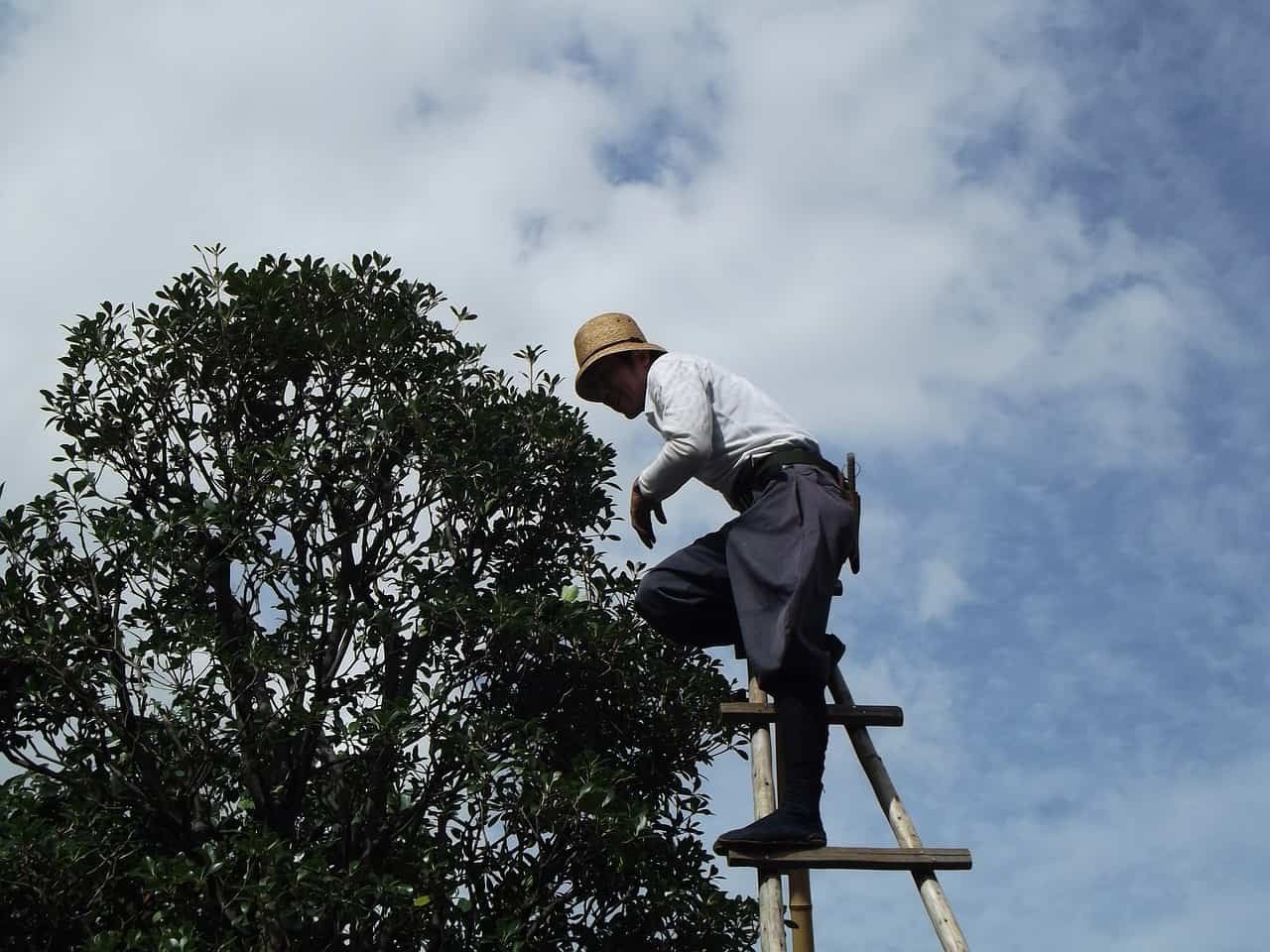
**Pruning** is about tree health. You're removing dead, diseased, or structurally weak branches. You're shaping the tree's architecture so it grows well for decades. Done right, pruning extends a tree's life significantly.
**Trimming** is mainly about clearance and appearance. You're cutting back growth to keep a tree from interfering with power lines, rooflines, driveways, or sightlines.
In practice, a good arborist does both in one visit. They look at the whole tree — not just the branch that's in the way.
This distinction matters when you're hiring. A company that only "trims" isn't always thinking about long-term health. An ISA-certified arborist always is. They're trained to make cuts that promote wound closure, reduce disease entry points, and preserve the tree's structural integrity.
If someone quotes you without walking around the tree first — without assessing the crown, the root zone, the branch unions — that's your first red flag.
---
When Is the Best Time to Prune Trees in Metro Vancouver?
Vancouver's mild, wet climate is different from most of Canada. That shifts your pruning calendar.
**For most deciduous trees**, late February to early March is the sweet spot. Trees are still dormant. There's less physiological stress, fewer active disease vectors, and faster wound closure once spring growth kicks in.
**For ornamental cherry trees** — which cover Vancouver's residential streets in pink and white every April — timing matters even more. Prune them just after bloom, in late April or May. Doing it during wet weather opens the door to silver leaf disease and black knot fungus, both of which spread through fresh pruning wounds in BC's persistently damp conditions.
**For Douglas fir and other conifers**, late spring to early summer works best. Avoid pruning conifers in fall — that's when sap beetle activity peaks in BC. Fresh cuts attract them.
**Cedar hedges** are their own category. Our hedge trimming services Vancouver team recommends pruning cedars in late spring, then lightly again in late August. Don't prune after September — new growth won't harden before frost arrives.
For a full breakdown of timing by tree type and season, our seasonal tree care guide covers the full calendar.
According to the City of Vancouver's Urban Forest Strategy (2018–2037), the city targets 30% tree canopy coverage by 2050, up from approximately 22% in 2018. Healthy, properly pruned trees live longer and contribute to that goal. Improperly pruned trees get removed sooner — and that canopy target gets harder to hit.
---
Does Vancouver Have Rules About Pruning Trees on Private Property?
Yes. And this genuinely surprises most homeowners.
Vancouver's **Private Tree Bylaw No. 9958** protects trees with a trunk diameter of 20 centimetres or greater at 1.4 metres above the ground. This includes trees growing on your own property.
For standard pruning — removing up to 25% of the live crown — no permit is usually required. But significant structural work on a protected tree, especially major limb removal or substantial crown reduction, may require approval through Vancouver's Urban Forestry department.
The fine for violating the bylaw? Up to **$10,000 per tree**. That's not hypothetical. Bylaw complaints from neighbours are common, and the city follows up.
Other municipalities have their own rules:
- **Burnaby** has the Burnaby Tree Preservation Bylaw
- **North Vancouver District** maintains strict private tree regulations, especially for trees over 30cm DBH
- **City of North Vancouver** requires a permit for any significant work on trees over 20cm DBH on private property
- **Richmond, Coquitlam, and Surrey** all have their own private tree protection requirements
If you're not sure whether your tree is protected, the safest move is to get an arborist report Vancouver before any work starts. An ISA-certified arborist knows these bylaws thoroughly. They've written permit applications, dealt with city inspectors, and kept homeowners out of expensive trouble.
---
How Do Professional Arborists Decide Which Branches to Remove?
This is where ISA certification actually makes a difference you can see.
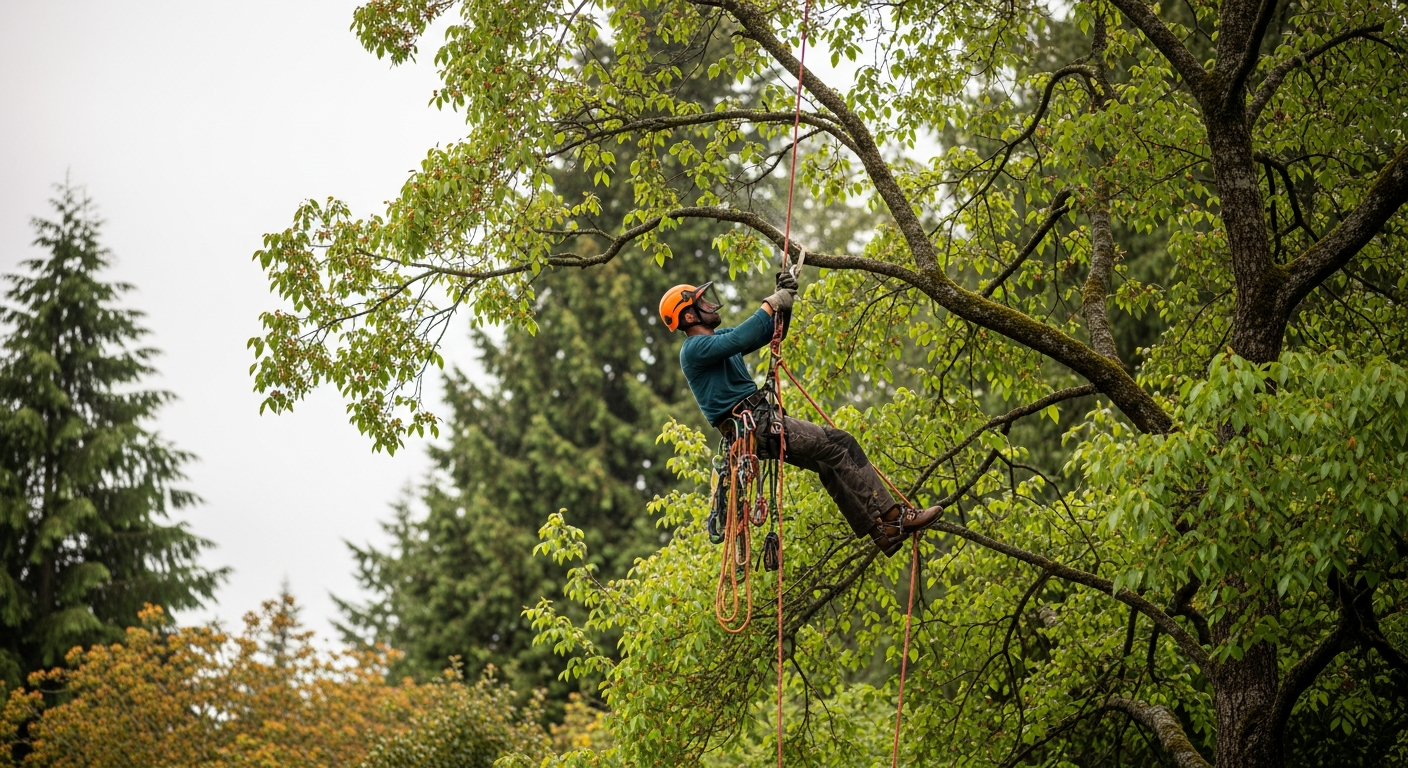
The industry benchmark is **ANSI A300 (Part 1) — Pruning**, published by the American National Standards Institute. It defines acceptable pruning practices across North America. Any arborist working to this standard uses defined pruning objectives — not guesswork.
Under ANSI A300, the main pruning types are:
- **Crown cleaning**: Removing dead, dying, diseased, or weakly attached branches and waterspouts
- **Crown thinning**: Selective removal of branches to increase light penetration and airflow — without changing the overall crown shape
- **Crown raising**: Removing lower branches for clearance below the crown — common near rooflines, driveways, and pedestrian paths
- **Crown reduction**: Carefully reducing the tree's height or spread by cutting back to natural branch unions — done with precision, never bluntly
One firm rule under these standards: **never remove more than 25% of a tree's live crown in a single session**. Take too much at once and you stress the tree severely. It responds by pushing out dozens of fast-growing epicormic sprouts — those upright, weakly attached shoots that look messy and carry almost no structural strength.
A skilled arborist is also evaluating:
- Cut placement — always at a branch union or collar, never mid-branch
- Whether a branch is truly dead or just shaded out and still alive
- Structural defects such as cracks, included bark, or co-dominant leaders competing for dominance
- Root zone health, because stressed roots always show up eventually in the crown
If a crew shows up without asking questions, grabs a chainsaw, and starts cutting without a plan — walk away.
---
What Are the Signs Your Trees Need Pruning Right Now?
Some signals are obvious. Others aren't.
**Dead branches** are the clearest indicator. A dead branch doesn't flex in wind — it snaps. In Vancouver, dead branches in large trees are a safety hazard all winter long. Don't wait for a storm to make the decision for you.
**Crossing or rubbing branches** create wound points every time the wind moves them. Those wounds don't close cleanly. Over time, they become entry points for fungal infection and insect activity.
**Branches growing toward the house** need attention before the next windstorm. A large limb over your roof isn't just inconvenient — it's a potential insurance issue. If something goes wrong and no professional assessment was ever done, adjusters will notice.
**Crown die-back from the tips inward** can signal a deeper problem: root damage, soil compaction, drainage issues, or early-stage disease. This is often the first visible sign that a tree is in serious trouble — and the time to address it is before the problem progresses.
**Trees near power lines** are a separate category entirely. BC Hydro's Safe Tree Program guidelines specify that trees within 3 metres of live distribution lines require management by qualified professionals. BC Hydro maintains approximately 57,000 kilometres of distribution lines across the province. Working near live wires is not a DIY task — it requires WCB-regulated workers with specific training and equipment.
In our experience working across Vancouver and the Lower Mainland, the most preventable tree failures we see come from two sources: neglected pruning and improper DIY cuts made at the wrong time of year.
If there's an active hazard on your property right now, don't wait for spring. Our team handles emergency tree service when the situation can't wait.
---
Why Do Arborists Refuse to Top Trees — and What Should You Ask For Instead?
Tree topping is one of the most damaging things you can do to an urban tree. Yet it's still offered by some companies, often to homeowners who just want a fast solution to a tall tree.
Here's what topping actually does.
Main branches are cut back to flat stubs — the tree's height drops dramatically. It looks like a solution. In practice, the damage begins immediately.
The International Society of Arboriculture (ISA) formally condemns topping. When large branches are cut back to stubs, the tree responds by sending out dozens of fast-growing epicormic sprouts. These shoots grow quickly but bond poorly to the parent wood. They're structurally weak from day one.
The stubs themselves rarely close. Decay sets in from the cut surface inward. Within 5–10 years, a topped tree is often more hazardous than it was before — hollow-tending stubs, poorly attached sprouts that snap under wind load, and an immune system taxed by repeated stress.
Topping also strips a major portion of the leaf canopy in one go. Photosynthesis collapses. The tree burns through its stored energy trying to recover. Exhausted trees are more vulnerable to secondary infection, insect attack, and drought.
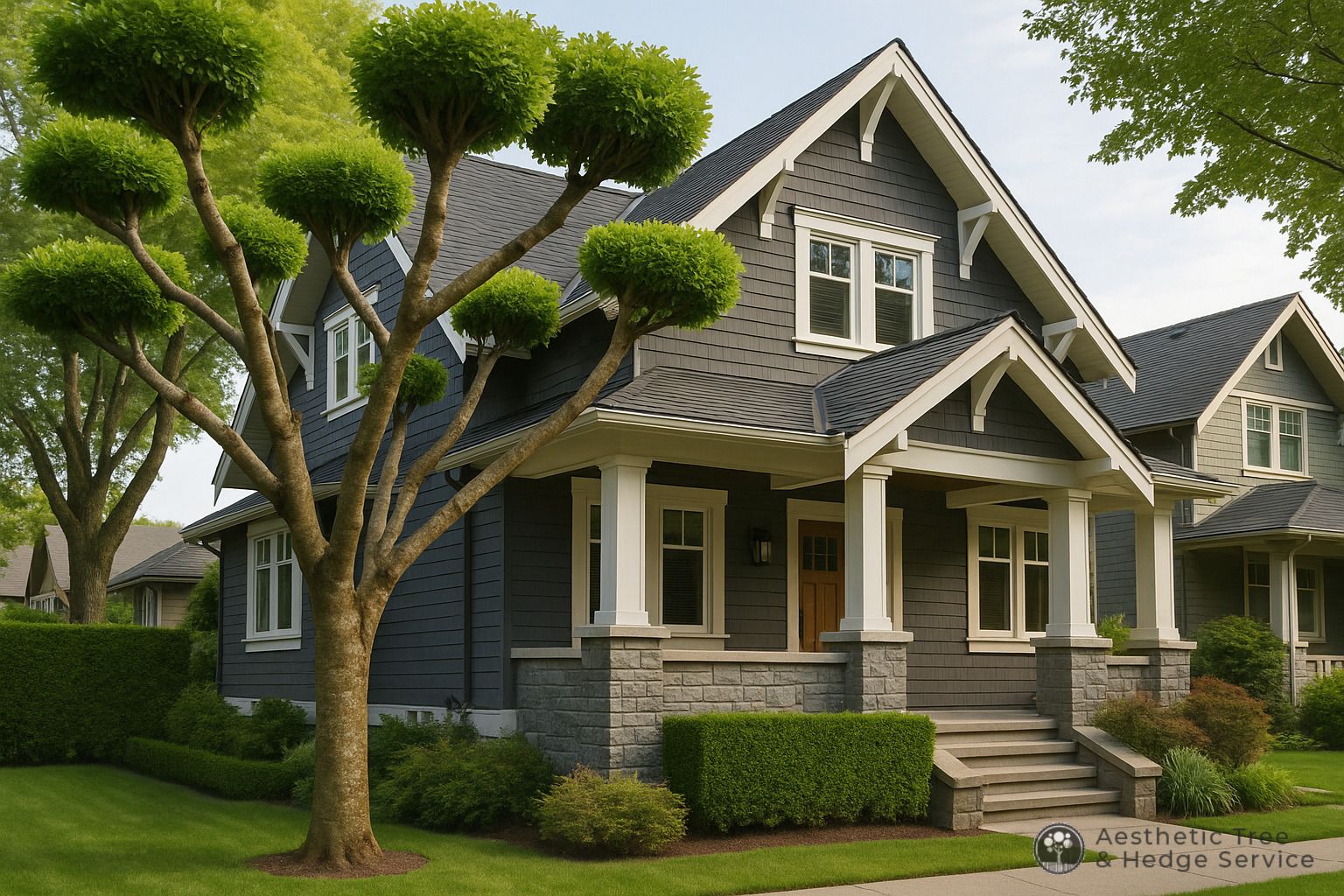
The right approach is **crown reduction** — a precision technique done at natural branch unions. It achieves the same goal (a smaller, lower tree) without destroying the tree's architecture. It takes more skill, more time, and more care. That's exactly why not everyone offers it.
If a company proposes topping your tree, ask them directly whether they hold ISA certification. The answer tends to be its own answer.
---
Which Trees in Metro Vancouver Require the Most Regular Pruning?
Vancouver's urban forest is genuinely diverse. Some species need much more attention than others.
**Big-leaf maple (Acer macrophyllum)** grows fast and drops heavy limbs as it matures. It's the most common large deciduous tree in East Vancouver, Burnaby, and Coquitlam. In older specimens, crown cleaning every 2–3 years is a sound investment. Dead branches in a mature Big-leaf maple can weigh well over 50 kilograms.
**Ornamental cherry trees (Prunus serrulata and related cultivars)** line streets across Kerrisdale, Kitsilano, and East Van. They're stunning in April. They're also prone to black knot fungus, a BC-specific disease that spreads through pruning wounds made during wet weather. Always prune ornamental cherries with sterilized tools in dry conditions.
**Douglas fir (Pseudotsuga menziesii)** is BC's defining conifer. In residential settings, Douglas firs need structural assessments more than routine pruning. Key concerns include co-dominant leaders competing for dominance at the top, early signs of basal rot, and post-storm hazard branch review. If you have a mature Douglas fir near your home — especially in high-wind areas like the North Shore — a formal arborist report is worth keeping on file.
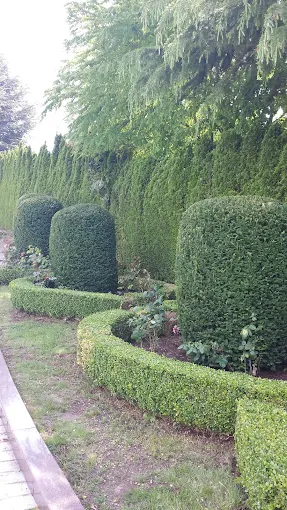
**Western red cedar (Thuja plicata)** is everywhere as hedge material across the Lower Mainland. Without consistent trimming, it browns in the interior and never recovers that density. Twice-yearly maintenance is the standard.
**Ornamental plum and crabapple** (common in newer Langley and Surrey subdivisions) benefit from annual or biennial crown cleaning. Left unpruned, they develop dense, shaded interiors packed with dead wood and rubbing branches.
A 2019 study published in *Urban Forestry & Urban Greening* found that improper pruning cuts increased fungal pathogen infection rates by up to 40% in urban trees. In Vancouver's wet climate, that number likely trends even higher.
---
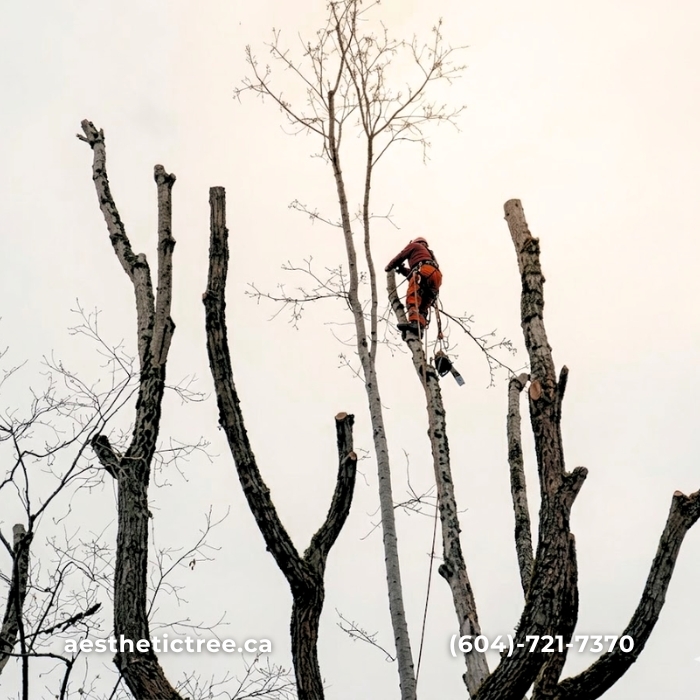
When Does Pruning Reveal Something Bigger?
Sometimes you start with a pruning assessment and find the tree has more going on than a few bad branches.
Structural evaluation can uncover advanced internal decay, deeply included branch unions with embedded bark, or root plate instability. At that point, pruning alone won't solve the problem. The conversation shifts to tree cabling for structural support, or — when the risk genuinely outweighs the value of keeping the tree — tree removal Vancouver.
Tree cabling is a legitimate long-term approach for trees with weak unions that are otherwise healthy and worth preserving. It's not the right answer for every tree. An honest arborist will tell you which situation you're in.
When removal is the right call, that triggers its own set of questions: permit requirements, stump grinding, site access, and what comes next. Our tree removal page walks through what that process looks like in the Lower Mainland context.
And if a tree fails suddenly — storm damage, root plate failure, an unexpected lean overnight — that's an emergency tree service call. Don't wait for conditions to get worse before reaching out.
---
How Much Does Tree Trimming and Pruning Cost in Vancouver?
Let's talk about cost honestly — and carefully.
According to cost data from HomeStars, Canada's largest home services review platform, homeowners in Greater Vancouver typically pay between **$300 and $1,500** for standard residential tree trimming and pruning. Larger specimens — 15 metres and taller — or complex jobs near structures and power lines commonly run **$1,500 to $4,000** or more.
These figures represent industry averages based on HomeStars third-party market data. Actual costs vary by project scope, tree species, site access, and specific conditions. Contact Aesthetic Tree & Hedge Services for a personalized assessment.
What pushes cost higher:
- Tree height and crown density
- Site access — is there a clear path for a chipper truck?
- Proximity to power lines, structures, or fences
- Whether a municipal permit application is required
- Volume of material to be removed and processed
What can legitimately lower it:
- Easy ground-level access with no obstacles
- Multiple trees quoted together on the same property
- Timing — winter is typically slower than spring and summer
What should never be the basis for your hiring decision: cutting corners on credentials. WCB registration, ISA certification, and liability insurance aren't optional upgrades. They protect you when something goes wrong — and in tree work, things occasionally do.
---
What Should You Ask Before Hiring a Tree Pruning Company in Vancouver?
Here are the questions that actually tell you something useful.
**Are you ISA-certified?** The ISA Certified Arborist credential requires passing a rigorous exam, maintaining continuing education credits, and adhering to the ISA Code of Ethics. It reflects real, verified training in tree biology, risk assessment, and ANSI A300 pruning standards.
**Are you WCB registered in BC?** WorkSafeBC's Occupational Health and Safety Regulation (Part 26) governs all commercial tree work in BC. If a worker is injured on your property and the company isn't WCB registered, liability can fall on you. Ask for their registration number.
**Do you carry general liability insurance?** A falling branch that damages a neighbouring vehicle or roof needs to be covered. Standard minimum for professional tree companies in BC is $2 million general liability.
**Will you follow ANSI A300 pruning standards?** A trained arborist will answer this without hesitation. If there's a pause or a vague response, that tells you something.
**Can you walk me through the plan before cutting?** A professional should explain what they're removing and why — which branches, what objectives, what the expected outcome looks like. If the answer is vague, ask more specific questions.
**Will you haul away the debris?** Some companies charge extra for cleanup and chipping. Confirm what's included before you sign anything.
Aesthetic Tree & Hedge Services is ISA-certified and WCB registered. We'll walk through the full plan before any work begins — and we'll tell you honestly if a tree needs more than pruning.
---
FAQ
**Do I need a permit to prune trees on my Vancouver property?**
For standard pruning — removing up to 25% of the live crown — no permit is typically required. But if your tree has a trunk diameter of 20cm or greater at 1.4 metres above the ground, it's protected under Vancouver's Private Tree Bylaw No. 9958. Significant structural work on a protected tree may require approval from the City's Urban Forestry department. An ISA-certified arborist can confirm quickly whether your specific tree falls under the bylaw and what approvals, if any, you need before work begins.
**How often should trees in Vancouver be pruned?**
Most mature trees benefit from professional pruning every 3–5 years. Young trees under 10 years old benefit from annual structural pruning to build good form early. Ornamental cherry, plum, and crabapple often need attention every 1–2 years. Cedar hedges typically need trimming twice per year — late spring and late August. Species, site conditions, and the tree's overall health all affect the ideal schedule.
**Is tree topping legal in Vancouver?**
Tree topping isn't specifically prohibited by Vancouver's bylaws, but it is formally condemned by the ISA and is widely recognized as harmful to tree structure, wound recovery, and long-term safety. If a contractor proposes topping as a solution to height or spread concerns, ask whether they hold ISA certification and whether crown reduction — a proper pruning technique that achieves the same goals without the damage — is an option instead.
**Can I prune a tree near BC Hydro power lines myself?**
No. Trees within 3 metres of live BC Hydro distribution lines must be managed by qualified professionals with the appropriate WCB training and equipment. This is both a safety issue and a regulatory requirement under WorkSafeBC Part 26. BC Hydro operates a Safe Tree program — contact them or a certified arborist if your tree is growing near lines, and don't attempt this work yourself.
**What's the difference between crown reduction and tree topping?**
Crown reduction is a precision technique that reduces a tree's height or spread by cutting back to natural branch unions. It preserves the tree's natural form and minimizes decay entry points. Topping cuts main branches back to flat stubs with no regard for branch structure, leading to internal decay, structurally weak regrowth, and increased long-term hazard. One extends a tree's life. The other shortens it. Any ISA-certified arborist can show you exactly what each approach looks like — in person, before any cuts are made.
---
Ready for a Free Estimate?
Tree pruning done right starts with the right team.
Not every company in Vancouver is ISA-certified. Not every crew carries WCB registration. And not everyone working across Metro Vancouver follows ANSI A300 pruning standards.
Aesthetic Tree & Hedge Services ticks all three. We work in Vancouver, Burnaby, North Vancouver, Richmond, Coquitlam, and throughout the Lower Mainland. We know the bylaws. We know the species. We'll tell you honestly what your trees actually need — nothing more, nothing less.
**Call for a free estimate: (604) 721-7370**
ISA-certified arborists. WCB registered. Serving Metro Vancouver.
professional tree trimming in Vancouver from ISA-certified arborists
Found this helpful? Follow our tree care insights directly on Google.
Make us your preferred source on GoogleBefore You Go
Where are you in your tree care journey?
Our Tree Care Services
ISA-certified arborists serving Greater Vancouver


Explore Our Tree Care Services
From expert pruning to safe tree removal, our ISA-certified arborists are ready to help across Greater Vancouver.
View Services