
TL;DR — Quick Summary
How to keep hedges alive under Vancouver watering restrictions starts with slow root-zone watering, mulch, and avoiding hard pruning during heat stress.
How to keep hedges alive under Vancouver watering restrictions starts with slow root-zone watering, mulch, and avoiding hard pruning during heat stress. In Vancouver and the Lower Mainland, hedges often show drought stress before homeowners realize the root zone is dry.
Under current City of Vancouver and Metro Vancouver guidance, trees, shrubs, and flowers may be watered by hand or with drip irrigation even when lawn watering is restricted. Restrictions can change by stage and municipality, so check the current rule before using sprinklers, soaker hoses, or automated systems.

Can you water hedges during Vancouver restrictions?
Check the current City or regional stage before watering. At the time of this update, Metro Vancouver allows trees, shrubs, and flowers to be watered by hand or drip irrigation when lawn watering is restricted. Focus water at the root zone, not on foliage, and stop if runoff starts.
How to keep hedges alive during a dry Vancouver summer
Water deeply in the early morning so moisture reaches the feeder roots before afternoon heat. A shallow spray on foliage is less useful than slow water at soil level.
Keep two to three inches of mulch over the root zone, but pull mulch back from trunks and hedge stems so bark stays dry.
Avoid hard pruning during heat or drought stress unless a branch is unsafe. Heavy cuts can expose inner growth and increase water loss.
Check soil four to six inches down. If it is dry at that depth and the hedge is browning, curling, thinning, or dropping foliage, water the root zone before adding fertilizer.
If the hedge already has dead sections, overgrowth, or storm-risk branches, book hedge trimming or tree pruning after the plant is stable. Aesthetic Tree & Hedge Services can assess cedar, laurel, and mixed privacy hedges across Vancouver and nearby cities.
Trees do not react like lawns. A lawn can turn brown in a few days. A tree can look mostly normal for weeks while the root zone is drying out underground. By the time you see browning foliage, early leaf drop, or dead tips in the canopy, the tree has usually been under stress for a while.
This guide explains what drought does to trees in Vancouver and the Lower Mainland, which species tend to suffer first, what warning signs to watch for, and what homeowners can do before the damage becomes serious. Aesthetic Tree & Hedge Services is an ISA-certified, WCB-registered arborist team serving Vancouver, Burnaby, North Vancouver, Richmond, Coquitlam, and nearby communities. We see summer drought stress every year, especially on exposed urban lots, boulevard trees, young plantings, cedars, birches, and trees surrounded by compacted soil or pavement.
TL;DR
- Yes, drought affects trees in Vancouver. Our winters are wet, but our summers can be dry enough to stress both young and mature trees.
- Birch, western red cedar, and Big-leaf maple often show drought stress early. Established Douglas fir usually has more drought tolerance, but it is not immune.
- Watch for early leaf or needle drop, browning leaf edges, wilting, thinning canopies, dead tips, and undersized leaves.
- Drought-stressed trees can become hazardous when branches die, roots decline, or pests move into weakened wood.
- Deep, slow watering and a proper mulch ring are the two most useful homeowner actions.
- Call an ISA-certified arborist if you see crown dieback, large dead limbs, a new lean, trunk cracks, fungal growth, or signs of boring insects.
[Image suggestion: close-up photo of drought-scorched cedar foliage in a Vancouver residential yard. Alt text: Drought-stressed cedar foliage browning during a dry Vancouver summer.]
What Actually Happens to a Tree During a Vancouver Drought?
A tree is, in simple terms, a living water system. Roots absorb moisture from the soil. Water moves up through the trunk and branches to the leaves or needles. From there, water exits through tiny pores in a process called transpiration.
That flow matters. It cools the tree, moves nutrients, supports photosynthesis, and keeps living tissue hydrated.
Drought interrupts the whole system.
When soil moisture drops too low, roots cannot pull enough water to meet the tree's needs. The tree responds by closing tiny pores in the leaves, called stomata, to reduce water loss. That helps the tree conserve moisture, but it also limits carbon dioxide intake. With less carbon dioxide, photosynthesis slows. With less photosynthesis, the tree produces less energy.
That is why drought stress is not just thirst. It is thirst plus reduced food production.
A stressed tree starts making trade-offs. It may drop leaves early to reduce water demand. Fine feeder roots may die back. Upper branches may decline because they are the hardest parts of the tree to supply with water. In conifers, older needles may yellow or shed. In broadleaf trees, leaf margins may scorch and turn brown.
Vancouver's climate makes this easy to underestimate. The city has a rainy reputation, but most of that rain arrives in fall and winter. Summer is different. Environment and Climate Change Canada climate normals show that Vancouver receives far less rain in July and August than in the wet season. Metro Vancouver also issues seasonal water-use restrictions most years because dry summer conditions are normal enough to plan for.
Extreme weather has raised the stakes. During the June 2021 heat dome, Vancouver recorded temperatures far above normal, and many trees across coastal British Columbia showed scorch, canopy thinning, and delayed decline afterward. Some trees did not fail immediately. They declined over the following seasons as drought, heat, pests, and winter storms compounded the damage.
That delayed reaction is one of the reasons drought stress deserves attention early.
Which Vancouver Tree Species Suffer Most in a Drought?
Not every tree responds to drought the same way. Species, age, planting site, soil depth, exposure, and past maintenance all matter.
In Vancouver-area yards, these are some of the species we watch closely during dry summers.
Birch
Birch is often one of the first trees to show drought stress. Many birches have shallow root systems and high water needs. In a dry spell, they may develop yellowing leaves, thinning canopies, early leaf drop, and dieback in the upper branches.
A drought-stressed birch is also more vulnerable to bronze birch borer. This pest tends to attack weakened trees, and once boring insects are active, recovery becomes much harder.
If you have a birch on an exposed lot, in compacted soil, or near pavement, treat summer watering as a priority.
Western Red Cedar
Western red cedar surprises many homeowners because it feels like such a natural Lower Mainland tree. It is our provincial tree, and it grows beautifully in moist coastal forests.
But a forest ravine is not the same as a hot front yard beside asphalt, concrete, reflected heat, and shallow urban soil.
Drought-stressed cedars often brown from the inside out or from the top down. Hedges may develop patchy dead sections. Individual trees may show thinning upper crowns. The BC Ministry of Forests has documented western red cedar dieback across parts of coastal British Columbia, with hotter and drier summers identified as an important stress factor.
A cedar that is already growing in poor soil, full afternoon sun, or a cramped root zone has less margin when drought hits.
Big-Leaf Maple
Big-leaf maple is a tough native tree, but those large leaves lose a lot of water. During dry periods, maples may show crispy brown leaf edges, early leaf drop, and thinning foliage.
Mature Big-leaf maples often survive drought, but young or stressed trees can decline. Maples growing in restricted urban spaces are especially worth watching.
Douglas Fir
Established Douglas fir is generally more drought-tolerant than birch, cedar, or many ornamental trees. A mature Douglas fir can access deeper soil moisture and has more stored reserves.
That does not mean it is drought-proof.
During extended drought, Douglas fir may shed older needles, thin in the crown, or show stress in upper branches. Newly planted firs are much more vulnerable because their root systems have not yet expanded. A newly planted conifer can look fine one week and decline quickly during a dry, hot stretch.
The practical takeaway is simple: birch, cedar, maple, and young trees need close attention during dry Vancouver summers. Mature conifers usually have more buffer, but they still need monitoring, especially near homes, driveways, and property lines.
A professional arborist report for Vancouver properties can identify which trees on your lot are most drought-vulnerable and whether any already show structural or health concerns.
[Image suggestion: labelled photo showing drought symptoms on birch, cedar, and maple leaves. Alt text: Common drought symptoms on Vancouver trees including leaf scorch, browning cedar foliage, and early leaf drop.]
How Do You Spot Drought Stress in a Tree?
Catching drought stress early can save a tree. Waiting until large branches are dead is much harder to recover from.
Start with the leaves or needles.
Early leaf drop in July or August is a classic warning sign. A tree may shed leaves to reduce water loss. You may also notice leaves that are smaller than normal, curled, wilted, yellowing, or drooping during the hottest part of the day.
Leaf scorch is another common signal. This looks like browning or crisping along the edges of the leaf. The outer margins are farthest from the water supply, so they often dry first.
On conifers, watch for browning needles at branch tips, thinning foliage, or browning inside the canopy. Some inner needle shed is normal, especially in fall, but heavy browning during a dry summer deserves attention.
Next, look at the crown. The crown is the upper canopy of the tree. Dead twigs, bare branch tips, or dieback in the top third of the tree can mean the tree has been struggling to move enough water upward.
Also inspect the trunk and root area from a safe distance. Drought stress can be associated with bark cracks, fungal growth, oozing, boring holes, sawdust-like frass, soil cracking, and sparse foliage. These signs do not all mean drought is the only cause, but they do mean the tree needs a closer look.
A useful guideline from the International Society of Arboriculture is that many urban trees need about one inch of water per week during the growing season, including rainfall. That is a general benchmark, not a substitute for site-specific advice, but it helps homeowners understand how little a quick surface spray does for a tree.
If your yard has had little rain and you have not watered deeply, assume your trees may be under stress even if they still look acceptable. Trees hide stress well.
Our seasonal tree care guide explains what to check throughout the year, including summer watering, fall recovery, and winter storm preparation.
Does Drought Make Trees Dangerous?
Yes. Drought can turn a health issue into a safety issue.
When a tree is short on water and energy, it may stop supporting some branches. Dead branches become brittle. They can break during wind, heavy rain, or sometimes with very little warning. This is especially concerning when dead limbs hang over roofs, driveways, sidewalks, patios, play areas, or neighbouring property.
Drought can also affect roots. Fine roots may die back during dry periods, and dry soil can shrink away from roots. A tree with a weakened root system has less anchoring strength when fall and winter storms arrive.
That is why drought damage in summer can show up as storm failure months later.
Pests and disease are another concern. Stressed trees are easier targets. Bronze birch borer, bark beetles, decay fungi, and other problems often move into trees that are already weakened. A drought-stressed tree this summer can become a more serious structural concern next year.
Call a professional if a tree near your home has significant dead branches, a new lean, trunk cracks, root movement, fungal growth, or sudden canopy decline. These are not cosmetic issues.
Our emergency tree service team handles urgent tree hazards across the Lower Mainland. When a tree is weakened but worth retaining, tree cabling and bracing may help support vulnerable limbs and reduce failure risk.
What Can Vancouver Homeowners Do to Protect Trees During Dry Spells?
Most drought protection comes down to two things: deep watering and mulch.
Water Deeply and Slowly
Trees do not benefit much from a quick spray over the lawn. A shallow sprinkle wets the surface and encourages roots to stay near the top layer of soil, which dries fastest.
A better approach is deep, slow watering.
Use a slow-running hose, soaker hose, or drip line. Let water soak into the soil gradually. The goal is to moisten the root zone, often 30 to 45 cm deep for many landscape trees, depending on soil type and tree size.
Water near the drip line, not right against the trunk. The drip line is the area below the outer edge of the canopy. Many absorbing roots are located away from the trunk, so picture a wide ring of water around the tree rather than a puddle at the base.
For many trees, one or two deep waterings per week during dry periods is better than light daily watering. Newly planted trees may need more careful monitoring because their root systems are still small.
Always check current Metro Vancouver and municipal water restrictions. Rules can change by stage and by municipality. Tree watering is often treated differently from lawn watering, especially when using hand watering, soaker hoses, or drip irrigation, but homeowners should confirm the current rules before setting a schedule.
Mulch Properly
Mulch is one of the best drought tools available.
A proper wood-chip mulch ring helps keep soil cooler, slows evaporation, reduces competition from grass, and protects surface roots. Spread mulch about 5 to 10 cm deep in a wide ring around the tree.
Keep mulch away from the trunk. Do not pile it against the bark. Mulch volcanoes trap moisture against the trunk and can create decay and pest problems. The right shape is a doughnut, not a mound.
A professional mulching service can install mulch at the right depth and keep it clear of the trunk flare.
Avoid Extra Stress
Do not fertilize a drought-stressed tree unless an arborist has specifically recommended it. Fertilizer can push new growth the tree does not have enough water to support.
Avoid heavy pruning during drought unless there is a safety issue. Removing too much live canopy can reduce the tree's ability to recover.
Keep vehicles, heavy equipment, and repeated foot traffic off the root zone. Compacted soil holds less oxygen and can make water infiltration worse.
If you are planting new trees, choose the site and species carefully. Fall is often a good planting season in Vancouver because roots can begin establishing during the cooler, wetter months before the next dry summer. Our tree planting service helps select trees suited to your yard's sun, soil, drainage, space, and future drought exposure.
[Image suggestion: simple diagram showing correct mulch ring and drip-line watering. Alt text: Proper tree mulching and drip-line watering method for drought protection.]
When Should You Call an Arborist About a Drought-Stressed Tree?
Homeowners can handle basic watering and mulch, but some signs call for a certified arborist.
Call an arborist if you see significant crown dieback, especially in the top third of the tree. This can indicate advanced stress or root problems.
Call if there are large dead limbs over a house, driveway, walkway, deck, or play area. Dead wood near people or property is a safety concern.
Call if the tree has developed a new lean, trunk cracks, soil heaving, exposed roots, or movement at the base. These can point to structural instability.
Call if you notice boring holes, sawdust-like material, fungal brackets, mushrooms at the base, oozing bark, or sudden bark loss. Drought may be part of the story, but pests or decay may also be present.
Call if the tree is valuable and you are unsure what to do. A site visit from an ISA-certified arborist can clarify whether the tree needs watering support, pruning, pest management, cabling, monitoring, or removal.
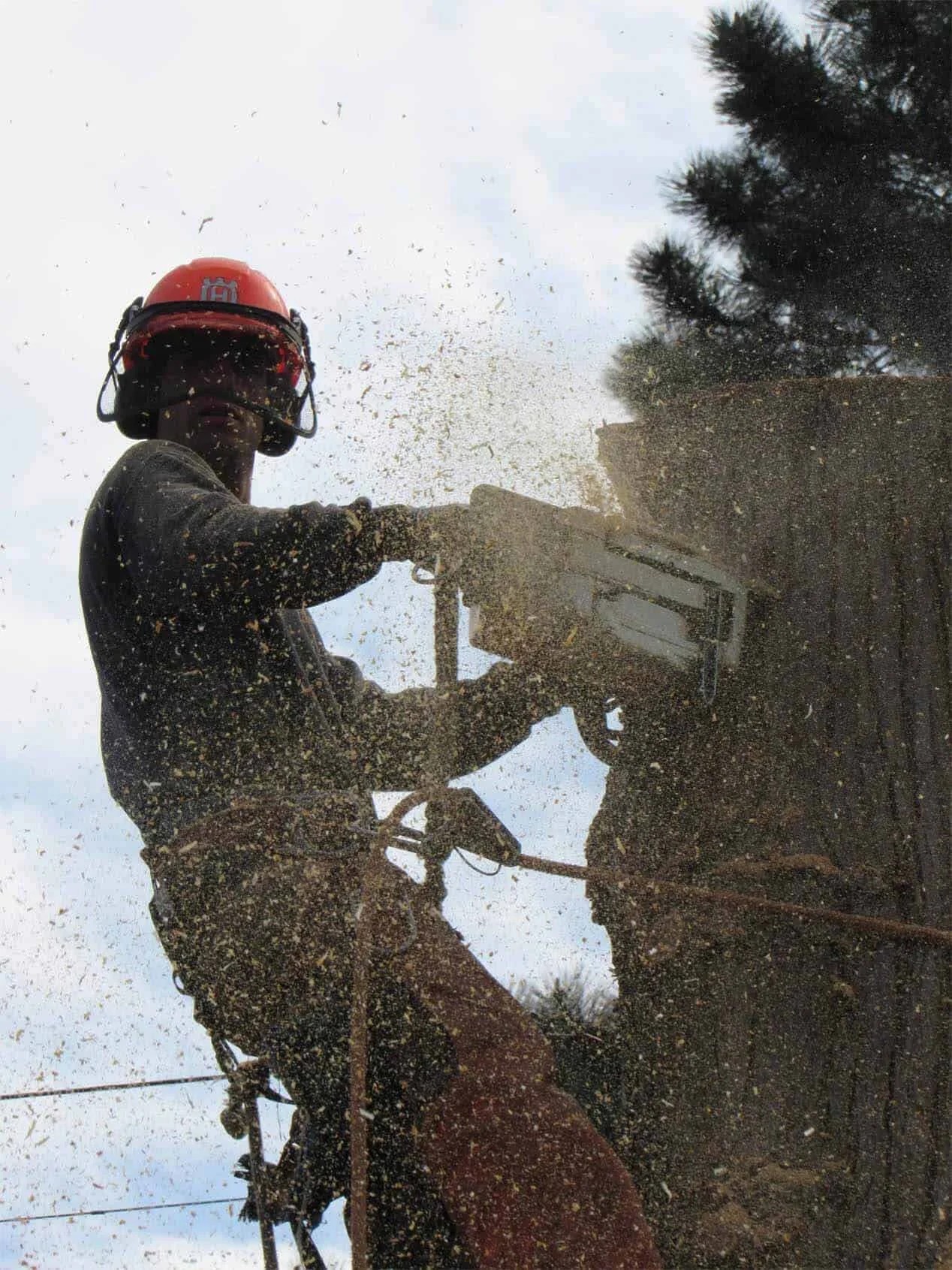
Aesthetic Tree & Hedge Services is ISA-certified and WCB-registered. That matters because tree work is high-risk work. Homeowners should know the crew assessing or removing a tree has proper training, insurance, and safety procedures.
Sometimes a tree can recover. Sometimes it cannot. If a tree is dead, structurally compromised, or too close to a target to leave standing safely, professional tree removal in Vancouver may be the responsible choice. A good arborist should explain the options clearly and tell you when preservation is realistic.
Does Drought Kill Trees Permanently in Vancouver?
It can, but usually not in the way people imagine.
Drought does not always kill a healthy mature tree in one summer. More often, it weakens the tree. Then the tree enters the next season with fewer reserves. If another dry summer follows, or if pests, disease, root damage, or storm stress are added, the decline can become permanent.
This cumulative effect is important. A tree can survive the first drought, look thinner the second year, lose branches the third year, and become hazardous later. Homeowners may not connect the final decline to the original drought stress because the timeline is slow.
A tree that gets help early has a much better chance. Deep watering, mulch, reduced soil compaction, careful monitoring, and avoiding unnecessary pruning can support recovery. Mature trees may take a year or more to rebuild canopy density and root function after severe drought.
The 2021 heat dome showed this clearly across coastal British Columbia. Some trees scorched immediately. Others declined slowly in later seasons. The BC Drought Information Portal recorded severe drought conditions in parts of the province that year, and many urban trees carried that stress forward.
The realistic answer is this: drought does not have to kill your tree, but repeated or ignored drought stress can. Early action is the difference between recovery and long-term decline.
How Is Vancouver's Drought Risk Changing Over Time?
Vancouver's drought risk is not standing still.
Climate projections for southwestern British Columbia point toward warmer conditions and increased summer moisture stress. The Pacific Climate Impacts Consortium at the University of Victoria has published regional climate projections showing rising temperatures and changes to seasonal precipitation patterns. For homeowners, the practical meaning is simple: summer tree care is becoming more important, not less.
The City of Vancouver has also recognized this in its urban forest planning. The City's Urban Forest Strategy sets a long-term canopy target and identifies climate change, development pressure, pests, disease, and drought stress as threats to the urban forest. The city has increasingly considered drought tolerance when selecting and managing urban trees.
For homeowners, this changes how tree care should be approached.
Deep watering and mulching are not just emergency measures for unusually dry years. They are becoming normal summer maintenance for valuable trees.
Species selection also matters more than it used to. If you are planting now, choose for the climate the tree will face over the next several decades, not just the climate Vancouver used to have. A tree planted today may still be on the property in 2050 or later.
There is still good news. Trees are resilient when they are planted well, watered properly, mulched correctly, and monitored by people who know what stress looks like. One yard will not solve Vancouver's urban forest challenges, but every healthy tree helps.
Does Drought Affect Young Trees Differently Than Mature Trees?
Yes. Young trees and mature trees have very different drought risks.
A newly planted tree has a small root system. Much of that root system is still close to the original planting hole. It cannot yet reach far into the surrounding soil or tap deeper moisture. That makes young trees highly dependent on regular watering during dry weather.
The first two to three years after planting are the most vulnerable. A young tree can die in a single dry summer if it is not watered properly. This is why establishment watering matters as much as planting technique. Our tree planting service includes guidance on aftercare because planting the tree is only the beginning.
If you planted a tree within the last three years, water it during every dry week. Do not assume rainfall has done enough unless you have checked the soil moisture.
Mature trees have more buffer. They usually have broader and deeper root systems and more stored energy. They can often withstand dry periods better than young trees.
But mature trees carry higher consequences when they decline. A dead branch from a mature tree can damage a roof, vehicle, fence, or neighbouring property. A mature tree with root decline can become a serious storm hazard.
So the rule is different by age: water young trees consistently, and inspect mature trees carefully. Both need attention, but for different reasons.
Protect Your Trees Before the Next Dry Summer
Drought is a real and growing issue for Vancouver trees, but it is manageable when homeowners act early.
The best first steps are straightforward: water deeply, mulch properly, avoid extra stress, and watch for early symptoms. If you notice browning foliage, early leaf drop, crown dieback, dead limbs, trunk cracks, pests, or a new lean, do not wait for the tree to decline further.
Aesthetic Tree & Hedge Services provides ISA-certified, WCB-registered tree care across Vancouver, Burnaby, North Vancouver, Richmond, Coquitlam, and the wider Lower Mainland. We assess drought-stressed trees, identify safety concerns, recommend preservation options where possible, and handle removals when a tree is no longer safe to retain.
Call Aesthetic Tree & Hedge Services at (604) 721-7370 for a drought-stress assessment and a clear plan for your trees.
FAQ
Can I water cedar hedges during Vancouver water restrictions?
Usually yes, if you water by hand or drip irrigation and follow the current stage rules. Cedar hedges dry out quickly on hot, exposed lots, so water slowly at the soil line and check moisture below the mulch.
Should I trim hedges during drought stress?
Avoid hard trimming during heat or drought stress unless there is a safety issue. Light cleanup is usually lower risk, but major reshaping is better after the hedge has recovered and active heat stress has passed.
How often should I water my trees during a Vancouver drought?
A useful benchmark is about one inch of water per week during the growing season, including rainfall. Water deeply and slowly so moisture reaches the root zone instead of only wetting the surface. Apply water around the drip line, not against the trunk. Newly planted trees need especially consistent watering during dry weeks.
Can a drought-stressed tree recover on its own?
Sometimes, but it is better to support recovery. Established trees may recover with deep watering, proper mulch, and reduced stress, but recovery can take a year or more. Repeated dry summers, pests, disease, or root damage can turn temporary stress into permanent decline.
Is it safe to leave a drought-damaged tree near my house?
Not always. Drought can lead to dead brittle branches, weakened roots, and increased pest or decay activity. If the tree has large dead limbs, trunk cracks, a new lean, fungal growth, or soil movement at the base, have an ISA-certified arborist assess it before fall and winter storms arrive.
Which Vancouver trees are most at risk from drought?
Birch, western red cedar, Big-leaf maple, newly planted trees, and trees in hot exposed sites tend to be more vulnerable. Established Douglas fir usually has better drought tolerance, but young firs and stressed mature firs can still decline during extended dry periods.
Does Vancouver's rainy reputation protect trees from drought?
No. Vancouver's rain is concentrated in the cooler months. Summers can be dry enough to stress trees, especially on urban lots with compacted soil, pavement, reflected heat, or limited rooting space. With regional climate projections pointing toward warmer conditions, summer watering and mulching are becoming standard tree-care habits.
Found this helpful? Follow our tree care insights directly on Google.
Make us your preferred source on GoogleBefore You Go
Where are you in your tree care journey?
Our Tree Care Services
ISA-certified arborists serving Greater Vancouver


Explore Our Tree Care Services
From expert pruning to safe tree removal, our ISA-certified arborists are ready to help across Greater Vancouver.
View Services