
TL;DR — Quick Summary
Mature, well-kept trees can add a measurable premium to a Vancouver home — research has linked healthy street and yard trees to property-value gains in the range of 3 to 15 percent. This ISA-certified guide explains the data, which trees actually add value here, how the City of Vancouver tree bylaw protects that value, and the maintenance mistakes that quietly erase it.
Two houses sold on the same East Vancouver block within a month of each other. Similar square footage, similar age, similar interiors. One sold noticeably faster and higher. The clearest difference a buyer could see from the curb was the front yard: one home had a mature, well-pruned Japanese maple and a tidy canopy; the other had a topped, lopsided conifer and a stump where a second tree used to be. Realtors call that curb appeal. Arborists call it the visible result of decades of either good tree care or neglect.
Trees are one of the few features of a property that genuinely appreciate on their own — but only when they are healthy, well-structured, and safe. A declining or hazardous tree does the opposite: it becomes a liability a buyer prices against you. After more than 20 years caring for trees across Greater Vancouver, we have watched both outcomes play out on real sales. This guide explains what the research shows, why it applies with particular force in Vancouver, and how to protect the value your trees represent.
Do Trees Actually Increase Property Value?
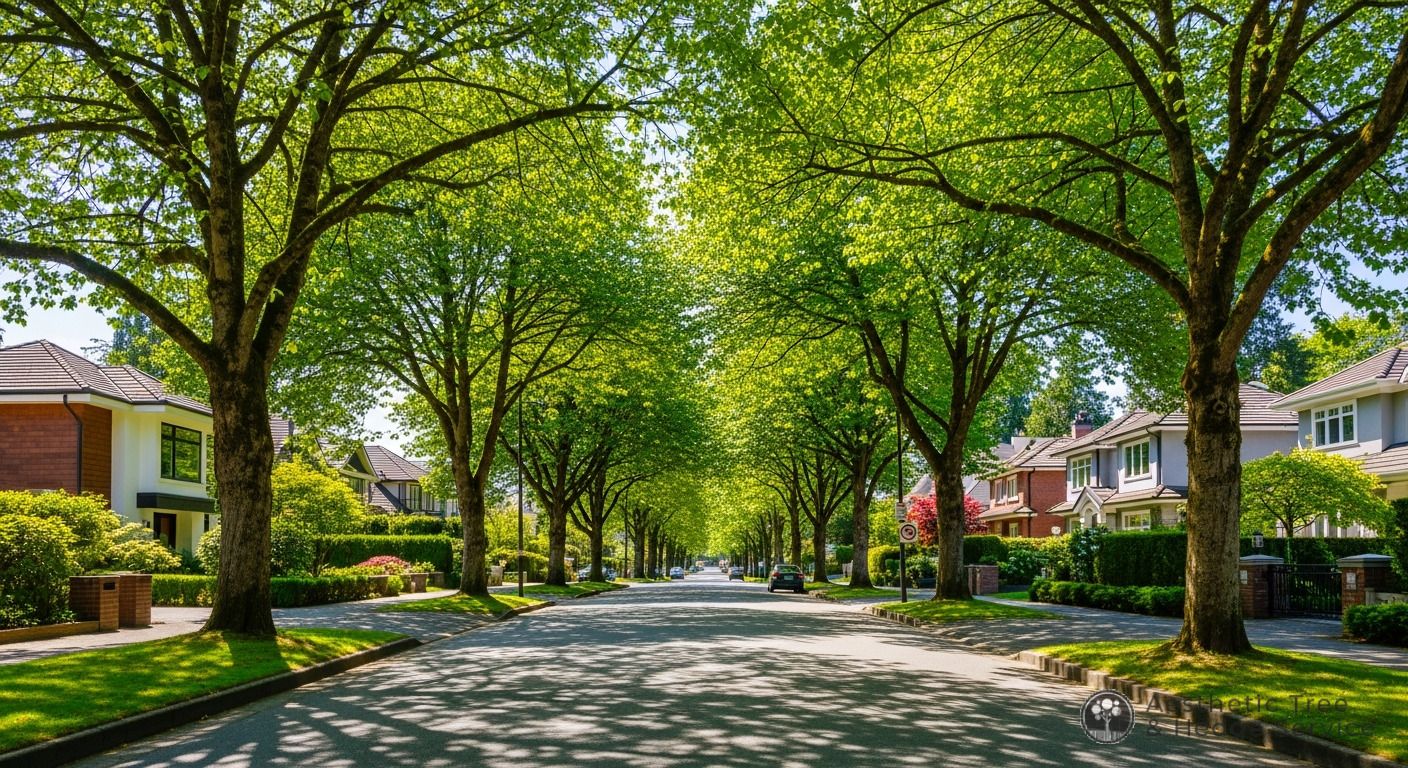
Yes — and the effect is well documented. The often-cited figure is that mature trees can add roughly 3 to 15 percent to a residential property’s value, and the research behind that range is substantial. The U.S. Forest Service has reported that healthy, mature trees can add about 10 percent to a property’s value. A widely referenced study by the Pacific Northwest Research Station found that homes with street trees in Portland, Oregon — a city with a climate close to Vancouver’s — sold for roughly $7,000 more and around two days faster than comparable homes without them.
A 2010 study published in the journal Landscape and Urban Planning, examining home sales in Portland, found that street trees added an average of about $8,870 to sale price. Industry surveys of real estate professionals routinely report the same direction of effect: most agents say mature trees and quality landscaping improve a home’s desirability and can shorten time on market. The consistent finding across decades of research is that buyers pay more for a property with a healthy, established canopy.
Two qualifiers matter, and they are the entire point of this article. First, the premium attaches to healthy, well-maintained trees — not to any tree. Second, the effect is strongest with mature trees, because a large canopy cannot be bought and installed; it can only be grown over decades or preserved. That scarcity is exactly why a mature tree on a Vancouver lot is worth protecting.
Why Do Trees Add More Value in Vancouver Specifically?
The national research understates the effect here, for reasons specific to this city and this climate.
Vancouver buyers expect a canopy
Vancouver has built its identity around its urban forest. The City’s Urban Forest Strategy set a target to raise tree canopy cover to 30 percent, up from roughly 23 percent at the time the strategy was adopted, and the city has planted and protected trees aggressively to get there. In neighbourhoods like Shaughnessy, Kerrisdale, Dunbar, and parts of Point Grey, a mature tree canopy is part of what the address means. A bare lot on a tree-lined street reads as a gap, and buyers price it that way.
Mature trees are now legally scarce
Under the City of Vancouver Protection of Trees Bylaw, a mature tree on your lot is not something a future owner can casually remove. That legal protection is a double-edged feature: it constrains what an owner can do, but it also guarantees the canopy a buyer is paying for will still be there. In a market where the bylaw makes it hard to replace a large tree once it is gone, an existing healthy mature tree is a genuinely scarce asset.
The climate rewards the right trees
Vancouver’s mild, wet oceanic climate supports a wide and beautiful palette of trees — Japanese maples, dogwoods, magnolias, katsuras, and the cherry trees the city is famous for every April. Energy savings are real too: a well-placed deciduous shade tree on the south or west side of a home reduces summer cooling load, while letting winter sun through after leaf-fall. With Lower Mainland summers trending hotter, that comfort and efficiency benefit is increasingly something buyers notice.
Which Trees Add the Most Value to a Vancouver Property?
Not every tree is an asset. The trees that consistently lift value in our market share three traits: they are appropriately scaled to the lot, they are healthy and well-structured, and they suit the local climate. Here is how that breaks down.
Mature shade and ornamental trees, properly placed
A well-formed Japanese maple in a front yard, a healthy big-leaf maple or katsura giving a backyard real shade, a dogwood or magnolia in spring bloom — these are the trees buyers fall for. Value comes from structure and placement as much as species: a tree pruned over the years to a strong, balanced form is an asset, while the same species left to grow into the house or the hydro line is a future cost.
Trees that frame the home without crowding it
The highest-value scenario is a canopy that shades and softens the property while keeping a respectful distance from the foundation, roof, and service lines. A tree planted too close decades ago can lift hardscaping, shade the house into constant damp, and worry buyers about roots — even when an arborist could manage it. Placement, set when the tree was young, is one of the biggest long-term value levers.
The trees that quietly subtract value
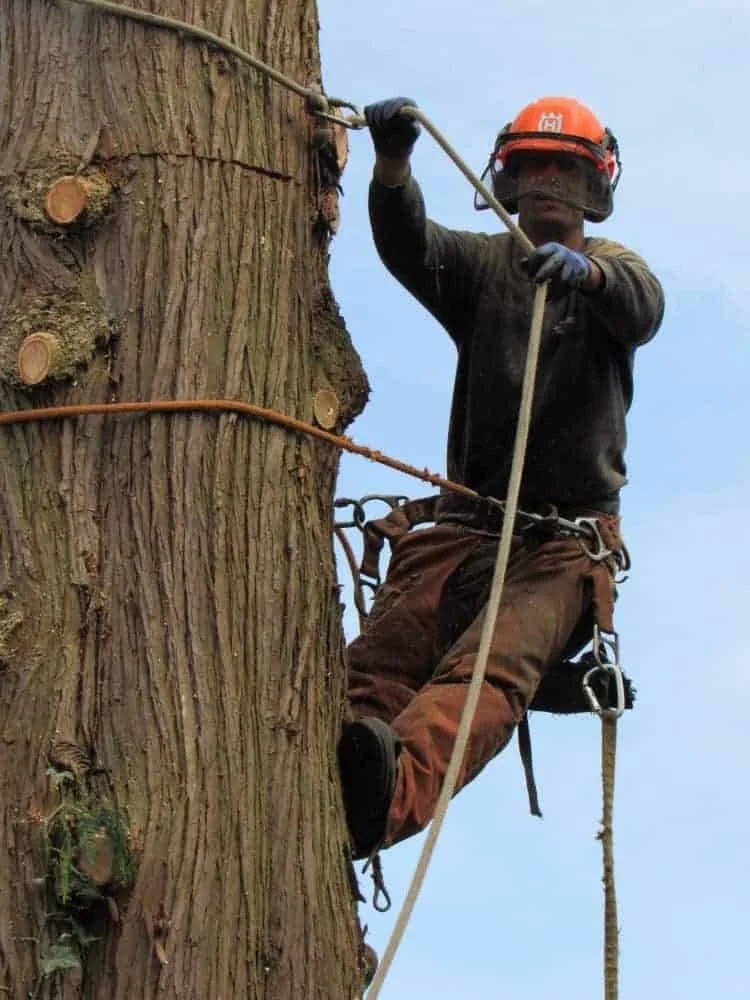
Some trees cost you. A large hazardous or declining tree leaning over a structure is a liability a buyer’s inspector will flag. A tree that has been topped — cut back to stubs — is permanently weakened, prone to weak regrowth and failure, and visibly unattractive; topping is one of the most value-destroying things that can be done to a tree. Brittle, weedy, or invasive species, and trees badly sited over a driveway or sewer line, all read as problems rather than assets. The first step in using trees to add value is honestly identifying which of yours are helping and which are not.
How Exactly Do Trees Translate Into Dollars?
The 3-to-15-percent premium is not magic. It is the sum of several concrete benefits a buyer is paying for, whether or not they could name them. Understanding the mechanisms helps you see why care matters so much — each one depends on a healthy tree.
Lower energy bills
A well-placed shade tree is a quiet, permanent energy upgrade. The U.S. Department of Energy has reported that strategically positioned shade trees can reduce a home’s summer air-conditioning costs by a meaningful margin, with the largest savings coming from trees that shade west- and south-facing walls and windows in the afternoon. In Vancouver’s warming summers, a mature deciduous tree on the west side of a home cuts the cooling load when it matters most, then drops its leaves and lets the low winter sun warm the house. A buyer comparing two otherwise-identical homes will feel that difference on a hot July viewing.
Stormwater, shade, and a measurably better microclimate
Trees do real environmental work that the City of Vancouver has put a dollar value on through its Urban Forest Strategy: intercepting rainfall and easing the load on storm drains, filtering air, and cooling streets during heat events. A property with a healthy canopy stays cooler, manages rainfall better, and sits in a more comfortable microclimate than a bare lot next door. After the 2021 Western North America heat dome, Lower Mainland buyers became markedly more aware of shade and summer comfort — and that awareness shows up in what they will pay.
Faster sales and stronger curb appeal
Curb appeal is the first thing a buyer experiences, and a mature front-yard tree is one of its strongest components. The Portland street-tree research did not only find a higher sale price — it found homes with street trees sold roughly two days faster. In a market where time on market is itself a negotiating signal, a healthy, well-framed canopy helps a listing move. Realtors across Vancouver routinely stage and photograph homes to feature their best trees for exactly this reason.
Privacy and noise buffering
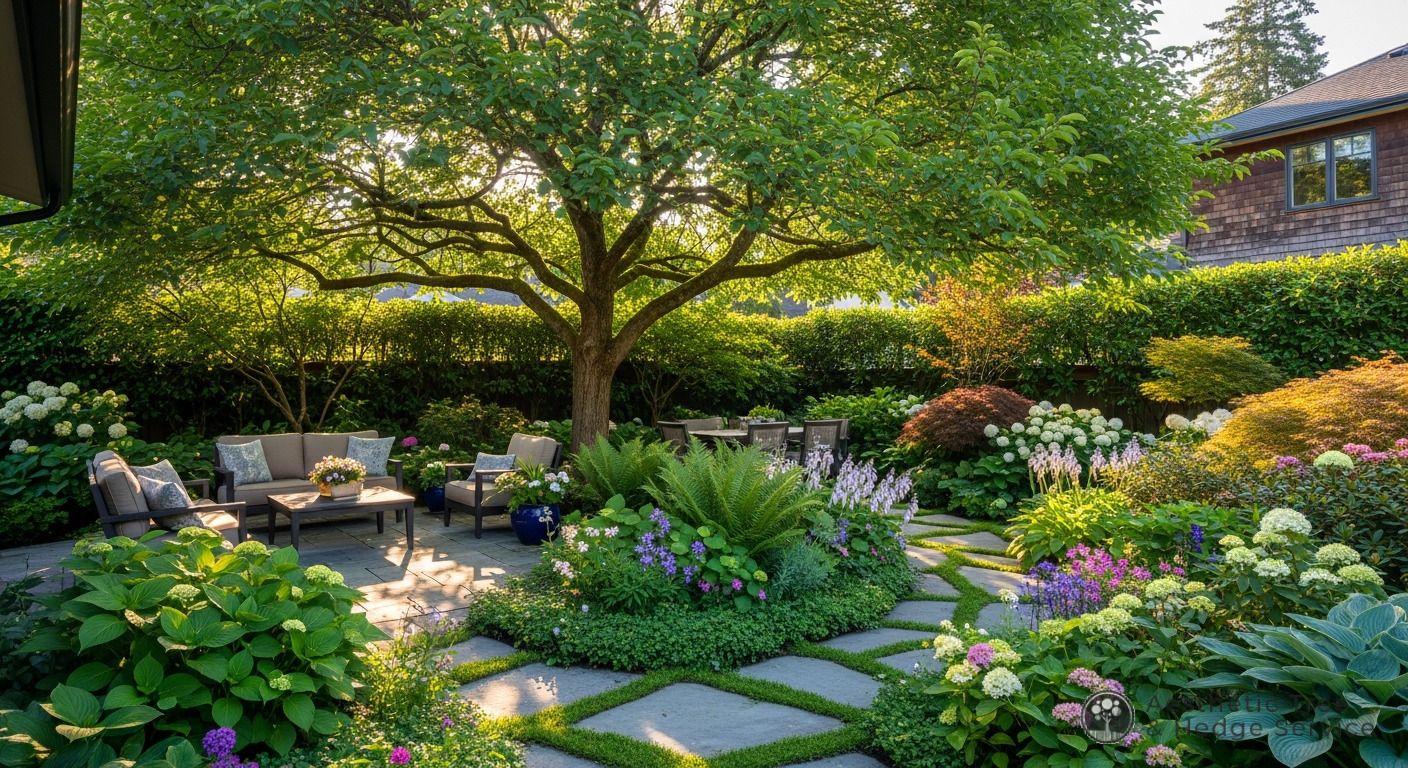
On Vancouver’s increasingly dense lots — with laneway homes, infill, and closely spaced neighbours — a mature tree or established hedge provides privacy and a noise buffer that no fence matches. Buyers pay a premium for a backyard that feels secluded. A well-maintained cedar or laurel hedge, kept dense and healthy by regular trimming, is a genuine selling feature on a tight urban lot.
How Does Tree Maintenance Protect and Build Property Value?
A tree is not a finished feature like a renovated kitchen. It is a living asset whose value compounds with good care and erodes with neglect. The maintenance that protects that value is specific and, compared with the value at stake, inexpensive.
Regular structural pruning
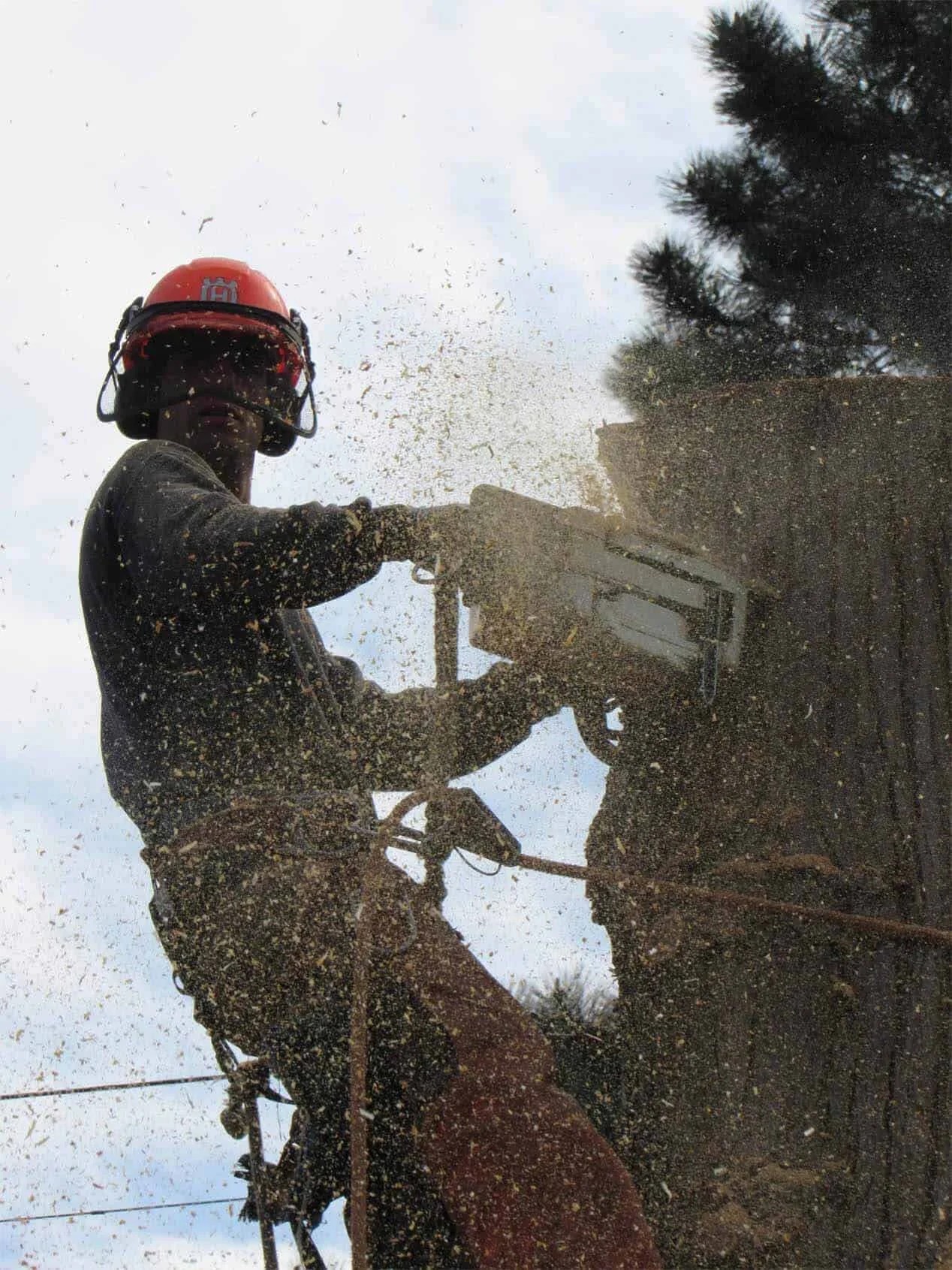
Pruning on a sensible cycle does two things at once: it keeps the tree healthy and well-formed, and it removes the weak, crossing, and dead limbs that cause storm failures. A tree that has been pruned correctly through its life is both more beautiful and dramatically less likely to fail onto the home it is supposed to enhance. Topping is not pruning — proper crown work by an ISA-certified arborist preserves both the tree and its value.
Routine risk assessment
The trees most likely to damage a property — and most likely to scare a buyer — are the ones nobody has looked at closely in years. A periodic assessment by a certified arborist catches decay, weak branch unions, root problems, and lean before they become emergencies. For a home sale, a clean arborist report turns an ambiguous "is that tree safe?" question into a documented answer, which protects your asking price.
Soil, mulch, and water care
Much of a tree’s health is decided below ground. Correct mulching, protecting the root zone from compaction during any construction, and appropriate watering through Vancouver’s increasingly dry summers all keep a tree vigorous. A healthy tree with a full, green canopy signals a cared-for property; a thinning, stressed tree signals the opposite, no matter how good the interior is.
Cabling and bracing instead of removal
When a valuable mature tree develops a structural weakness — a co-dominant stem, a heavy limb over the roof — removal is not the only option. A cabling and bracing system installed by a certified arborist can keep a high-value tree standing safely for years, preserving the canopy a buyer would pay for rather than leaving a costly gap.
When Does Removing a Tree Increase Property Value?
It would be dishonest to claim every tree should be kept. Sometimes removing a tree is the move that protects value — and a good arborist will tell you so plainly.
A tree that is genuinely hazardous — dead, severely decayed, structurally unsound, leaning over a bedroom — is a liability that a removal converts back into a safe, usable, marketable yard. A tree planted far too close to the foundation, lifting the walkway and threatening the sewer lateral, may be costing more in damage and worry than it adds in shade. An overgrown specimen that has put the entire backyard in permanent deep shade can suppress the rest of the landscape. In these cases, a planned removal — followed, where the bylaw requires, by a replacement tree sited correctly — improves the property.
The key word is planned. Removal under the City of Vancouver bylaw requires a permit for any tree 20 centimetres or more in trunk diameter measured at 1.4 metres, generally allows only one bylaw-permitted healthy-tree removal per lot per year, and usually requires a replacement tree. Removing a protected tree without a permit can draw a fine of up to $10,000 — which is value destroyed, not created. The right path is an arborist assessment, an honest verdict on whether the tree is an asset or a liability, and a lawful plan either way.
Frequently Asked Questions
How much value do trees actually add to a home?
Research consistently places the premium for healthy, mature trees in the range of roughly 3 to 15 percent of a property’s value. The U.S. Forest Service has reported that mature trees can add about 10 percent, and a Portland, Oregon study found street trees added an average of close to $8,900 to sale price while helping homes sell faster. The premium applies to healthy, well-maintained trees — a hazardous or declining tree has the opposite effect.
Which trees add the most value to a Vancouver property?
Mature, healthy, well-structured trees that suit the lot and the local climate add the most — well-formed Japanese maples, big-leaf maples, dogwoods, magnolias, and katsuras are all strong performers in Vancouver. Value comes from health, structure, and placement as much as species: a tree pruned to a balanced form and sited a respectful distance from the house is an asset, while the same tree crowding the foundation or topped into weak regrowth is a liability.
Does removing a tree increase or decrease property value?
It depends entirely on the tree. Removing a genuinely hazardous, dead, or badly sited tree usually protects value by eliminating a liability a buyer would price against you. Removing a healthy, mature tree generally decreases value, because an established canopy is scarce and cannot be quickly replaced. A certified arborist assessment is the way to know which category your tree falls into before you decide.
Will the City of Vancouver tree bylaw affect my property value?
It cuts both ways. The Protection of Trees Bylaw constrains what an owner can remove, which some buyers see as a limitation. But it also guarantees that the mature canopy a buyer pays for cannot be casually removed by a future owner, and it makes existing large trees genuinely scarce. On balance, in a tree-conscious city like Vancouver, a healthy protected mature tree is an asset — provided it is well maintained and safe.
How does tree maintenance protect property value?
Regular structural pruning keeps a tree healthy, attractive, and far less likely to fail in a storm; periodic risk assessment catches decay and weak unions before they become emergencies; and proper soil, mulch, and water care keeps the canopy full and green. A well-kept tree signals a cared-for property and supports your asking price. A neglected, stressed, or hazardous tree does the reverse, regardless of how good the home’s interior is.
Is tree topping a good way to manage a large tree near my house?
No. Topping — cutting a tree back to stubs — permanently weakens it, triggers weak and dense regrowth that is more failure-prone, and leaves the tree visibly disfigured. It reduces both the safety and the value of the tree. Proper crown reduction or structural pruning by an ISA-certified arborist achieves real size and risk management while preserving the tree’s health, form, and contribution to your property value.
Protect the Trees That Protect Your Property Value
A mature, healthy tree is one of the few things on a Vancouver property that grows more valuable every year — and one of the few a future buyer truly cannot replicate. The research is consistent: a well-kept canopy adds a measurable premium and helps a home sell. The condition is just as consistent: the premium belongs to healthy, safe, well-structured trees, and neglect quietly converts that asset into a liability.
Aesthetic Tree & Hedge Services has assessed, pruned, and cared for trees across Greater Vancouver — Vancouver, Burnaby, North and West Vancouver, Richmond, Surrey, and Coquitlam — for more than 20 years. If you want to know whether your trees are adding value or quietly subtracting it, book a free, no-obligation assessment with one of our ISA-certified arborists and get an honest answer.
Property-value figures in this article are drawn from published research, including U.S. Forest Service findings and academic studies of home sales in Portland, Oregon. They represent documented averages, not a guarantee for any specific property. Actual effect on value depends on the tree’s species, size, health, placement, and the local market. Contact Aesthetic Tree & Hedge Services for a professional assessment of the trees on your property.
Found this helpful? Follow our tree care insights directly on Google.
Make us your preferred source on GoogleBefore You Go
Where are you in your tree care journey?
Our Tree Care Services
ISA-certified arborists serving Greater Vancouver


Explore Our Tree Care Services
From expert pruning to safe tree removal, our ISA-certified arborists are ready to help across Greater Vancouver.
View Services