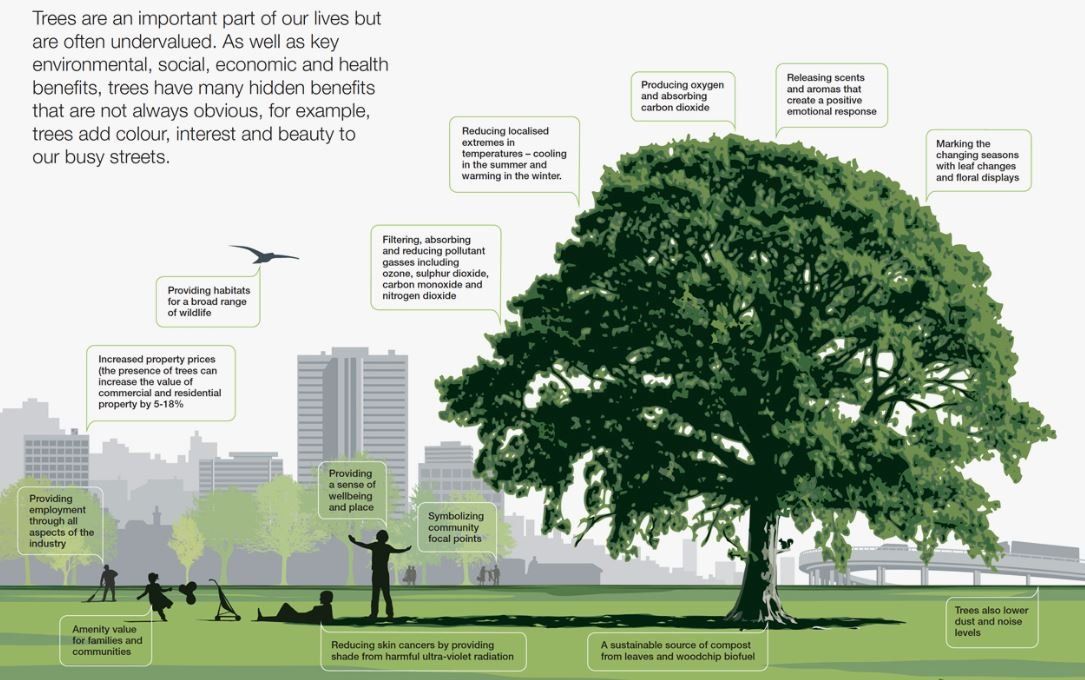

TL;DR — Quick Summary
Many benefits shade trees Vancouver homeowners gain: lower cooling bills, higher home value, cooler yards. ISA-certified arborist guide. Free estimate.
Your hydro bill climbs every July. Your backyard turns into an oven by 2 p.m. Your house sits a few degrees hotter than the home down the block with the big maple out front. That maple is doing real work. It's cutting cooling costs, lifting property value, and cooling the air around it.
Shade trees aren't decoration. They're infrastructure. And in a city like Vancouver, where summers keep getting hotter, they're worth more every year.
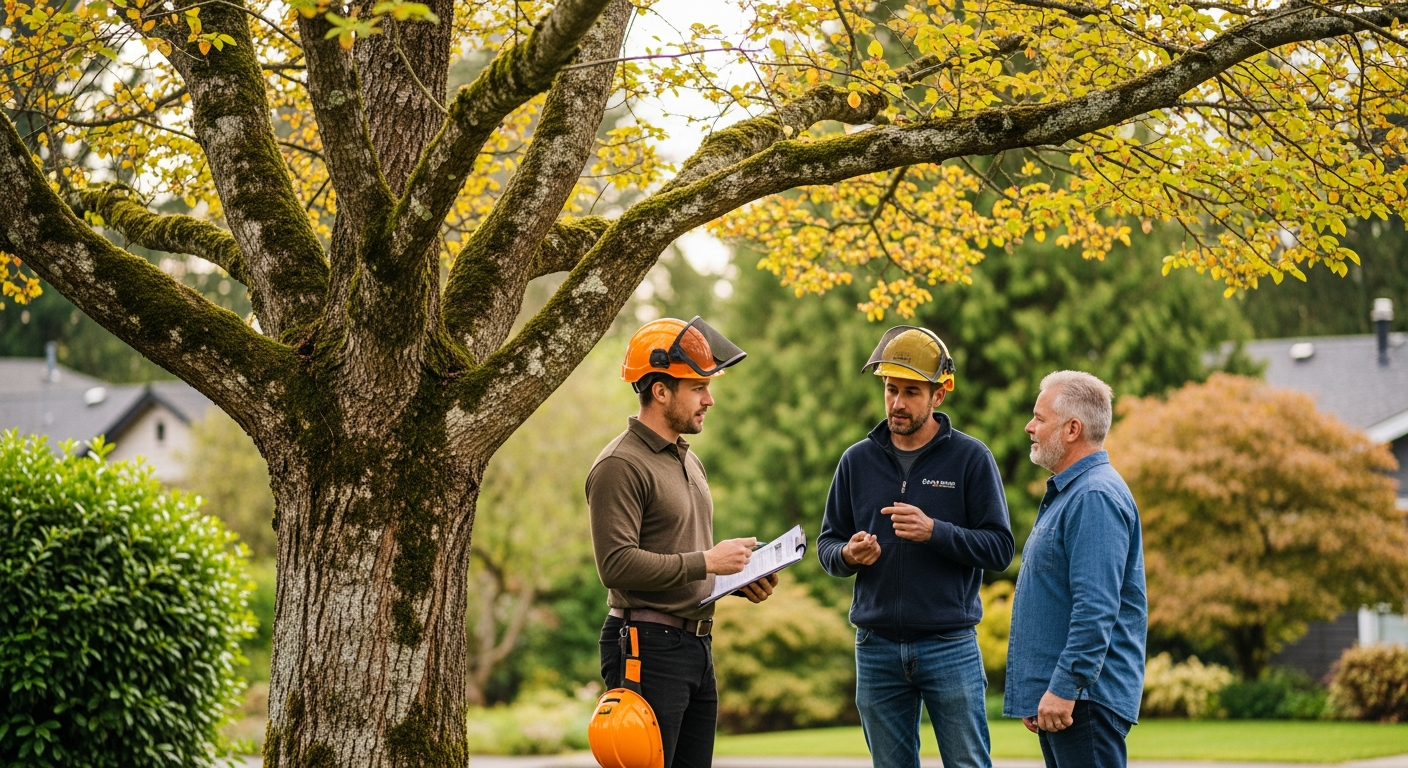
This guide breaks down the many benefits shade trees give Vancouver homeowners. Real numbers. Real sources. And the practical side too: which species work here, what the bylaws require, and how to keep a mature tree healthy for decades.
TL;DR
- Strategically placed shade trees cut air conditioning costs by 15–35%, according to the US Department of Energy (2023).
- Homes with mature trees sell for 10–15% more than comparable homes without them (USDA Forest Service, 2022).
- Vancouver's urban forest sequesters roughly 1,200 tonnes of CO2 every year (City of Vancouver Urban Forest Strategy, 2023).
- A single mature tree absorbs about 22 kg of CO2 annually (Arbor Day Foundation, 2022).
- Removing a tree over 20 cm DBH in Vancouver requires a permit under the Protected Trees By-law (Chapter 29).
How Much Money Do Shade Trees Actually Save on Cooling Costs?
This is the benefit homeowners feel first. In the bill.
The US Department of Energy (2023) found that strategically placed shade trees reduce air conditioning costs by 15–35%. That's not a rounding error. On a hot Vancouver summer, that's real money back in your pocket every month.
The science is simple. A tree intercepts direct sunlight before it hits your roof, your walls, and your windows. Less heat enters the house. Your air conditioner runs less. Your west-facing rooms stop turning into saunas by mid-afternoon.
Placement matters more than most people think. A tree on the west and southwest side of your home blocks the harshest late-day sun. That's when indoor temperatures peak. A tree on the north side does almost nothing for cooling — it just sits there.
There's a grid-level benefit too. BC Hydro has reported that Metro Vancouver's summer peak demand keeps rising as more homes add air conditioning. Every shaded house pulls a little less from the grid during those peak hours. Multiply that across a neighbourhood and the effect is large.
Here's the part people miss. A deciduous shade tree — a Big-leaf maple, a Japanese Maple, a Horse Chestnut — drops its leaves in fall. So it shades you in summer and lets winter sun warm the house when you want it. An evergreen like Douglas fir or Western Red Cedar shades year-round, which is great for privacy but blocks welcome winter light. Pick the right tree for the right job.
A mature shade tree takes years to reach full canopy. The sooner one goes in, the sooner it pays. If you're planning ahead, our tree planting service covers species selection, placement for maximum shade, and proper installation so the tree establishes fast.
*Cost figures above are based on US Department of Energy market data and represent industry averages. Actual savings vary based on home orientation, insulation, tree placement, and local climate. Contact Aesthetic Tree & Hedge Services for a personalized assessment.*
Do Shade Trees Increase Property Value in Vancouver?
Yes. And the number is bigger than most homeowners expect.
The USDA Forest Service (2022) found that residential properties with mature trees sell for 10–15% more than comparable homes without them. On a Vancouver property — where the average detached home runs well into seven figures — that premium is substantial.
Think about what a mature tree signals to a buyer. The home has been cared for. The lot feels established, not raw. There's shade, privacy, and curb appeal that a new sapling simply cannot deliver. You can't fast-forward a tree. A 40-year-old Big-leaf maple took 40 years. That scarcity is exactly why it adds value.
Real estate agents in the Lower Mainland know this. A mature canopy photographs well. It makes a listing stand out. It draws buyers who want a yard their kids can actually play in during a heat wave.
There's a flip side. A neglected, hazardous, or poorly pruned tree can drag value down. A buyer's inspector flags it. The deal stalls. This is where a professional assessment matters. If you're buying or selling and want a clear picture of a tree's condition, an arborist report documents health, structural risk, and any work needed — the kind of paperwork that keeps a transaction moving.
The takeaway is straightforward. A healthy mature tree is an asset on your balance sheet. Treat it like one.
How Do Shade Trees Cool Down Vancouver's Hot Neighbourhoods?
Cities are hotter than the countryside. That's not a feeling. It's measured.
The EPA (2023) reports that urban areas run 1–7°C hotter than surrounding rural areas. This is the urban heat island effect. Asphalt, concrete, dark roofs, and parking lots absorb sunlight all day and radiate it back as heat well into the night.
Vancouver feels this. Neighbourhoods with little tree cover — think dense blocks of pavement and few yards — get noticeably warmer than leafy streets in Kerrisdale or parts of North Vancouver. The 2021 heat dome made the danger of urban heat impossible to ignore across the Lower Mainland.
Shade trees fight the heat island in two ways. First, they block sunlight from reaching hard surfaces, so those surfaces store less heat. Second, they cool the air directly through transpiration — releasing water vapour from their leaves, the same way sweat cools your skin. A mature canopy can make the air beneath it several degrees cooler than the open street.
The City of Vancouver takes this seriously. The City's Street Tree Request Program lets residents request a tree be planted on the boulevard in front of their home, at City expense. It's one of the simplest ways to add canopy to your block. More trees per street is a public-health investment, not just landscaping.
For your own property, an established shade tree turns an unusable backyard into a comfortable one all summer. Your patio becomes a place you want to sit. Your kids stay outside. That's a daily benefit you feel, not just a number on a chart.
Are Shade Trees Good for Your Health?
Here's a benefit that surprises people. Trees on your street are linked to measurable health gains.
A widely cited study by Kardan and colleagues, published in Scientific Reports (2015) by researchers at the University of Chicago and University of Toronto, found something remarkable. Having 10 more street trees per city block was associated with a boost in how healthy people felt — comparable to the effect of being 7 years younger, or earning an additional $10,000 a year.
That's street trees. Not parks. Not forests. The trees right outside the front door.
Why would that be? Several reasons line up. Trees clean the air. They cut heat stress during dangerous hot spells. They reduce noise. They pull people outside to walk, which is good for the heart. And green views are tied to lower stress and better mental health in study after study.
For families, the air-quality angle matters most. Trees filter particulate pollution and absorb gases like nitrogen dioxide. A leafy yard gives kids and seniors — the people most vulnerable to heat and bad air — a healthier place to be.
This is the quiet benefit. You don't see it on a hydro bill. But a shaded, tree-lined property is a healthier place to live, and the research backs that up.
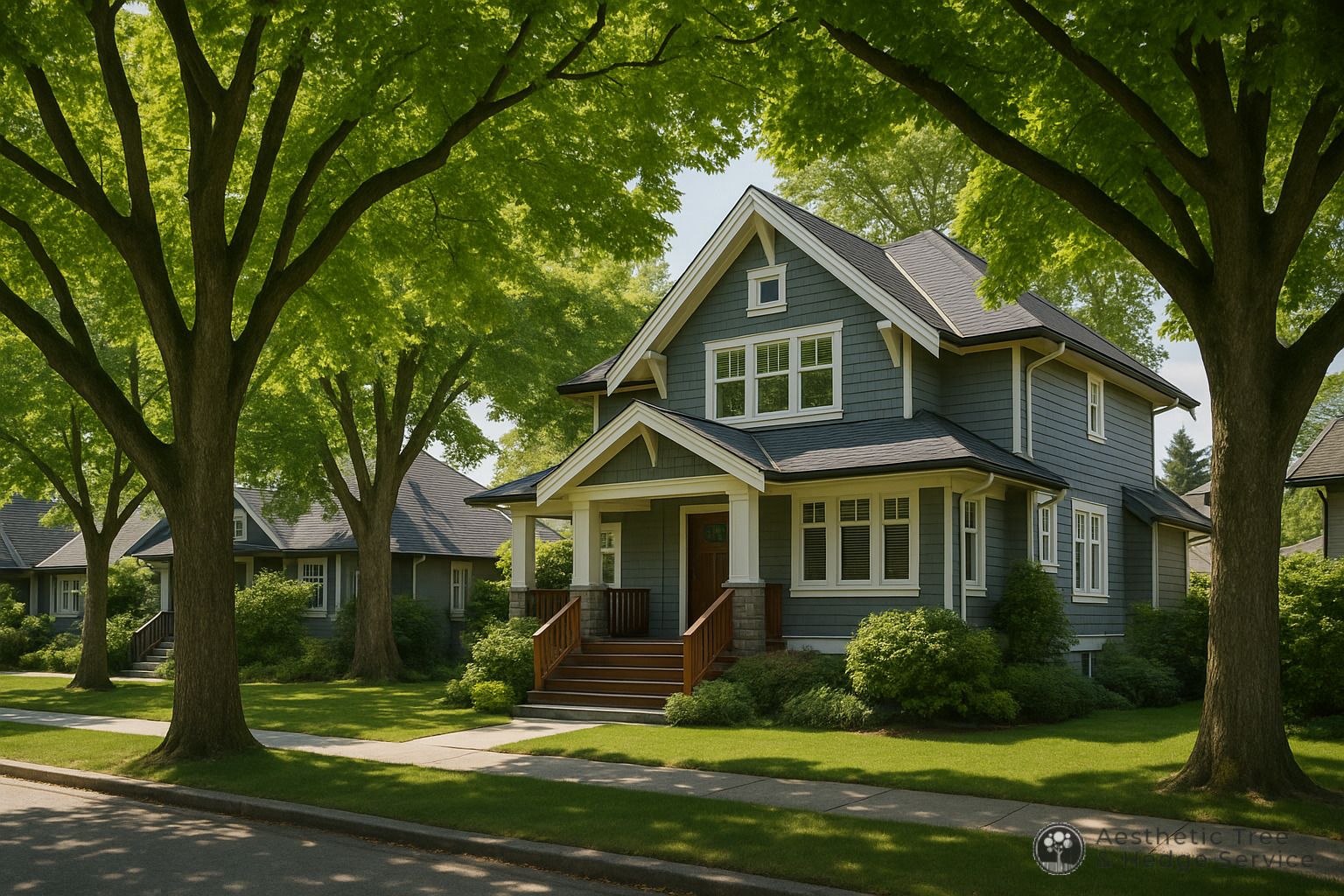
How Do Shade Trees Help With Vancouver's Heavy Rain?
Vancouver gets soaked. Environment Canada (2023) puts the city's annual rainfall at roughly 1,153 mm. That's a lot of water hitting the ground every year.
Shade trees are a stormwater tool, not just a summer one.
The USDA Forest Service (2021) found that mature tree canopies intercept 15–40% of rainfall before it ever reaches the ground. Rain lands on leaves and branches, slows down, and a good share evaporates back into the air or drips gently rather than hammering the soil all at once.
That slowdown matters. When rain hits bare ground or pavement fast, it rushes into storm drains, overwhelms the system, and carries pollutants into creeks and the ocean. A tree canopy acts like a brake. It spreads the same volume of water over a longer window, easing the load on Vancouver's drainage.
Below ground, the benefit continues. Tree roots open up the soil so water can soak in instead of running off. The roots drink that water and stabilize the soil against erosion. On a sloped Lower Mainland lot — common in North Vancouver and parts of Coquitlam — that erosion control protects your landscaping and your foundation.
A healthy root zone does this best. Keeping the soil over the roots covered with organic mulch holds moisture, moderates soil temperature, and helps the tree absorb and manage rainfall efficiently. Mulch is one of the cheapest, highest-return things you can do for a mature tree.
Do Shade Trees Really Fight Climate Change?
One tree won't reverse climate change. But the math at the city scale is real.
The Arbor Day Foundation (2022) reports that a mature tree absorbs about 22 kg of CO2 per year. It pulls carbon dioxide out of the air, locks the carbon into wood, leaves, and roots, and releases oxygen.
Now scale that up. The City of Vancouver Urban Forest Strategy (2023) estimates that Vancouver's urban forest sequesters roughly 1,200 tonnes of CO2 annually. That's the combined work of every street tree, park tree, and backyard tree across the city — including yours.
This is why Vancouver has a formal Urban Forest Strategy with a canopy-cover target. The City counts trees as climate infrastructure. Every shade tree on private property adds to that total. When you plant and protect a tree, you're contributing to a city-wide carbon effort, not just shading your patio.
Mature trees do most of the heavy lifting here. A big Douglas fir or a wide Big-leaf maple stores far more carbon than a young sapling. That's another reason to protect the established trees you already have rather than removing them lightly.
Which brings us to the rules.
What Are Vancouver's Rules for Removing or Protecting Shade Trees?
You can't just cut down a mature tree in Vancouver. The City protects them — and for good reason, given everything above.
The City of Vancouver Protected Trees By-law (Chapter 29) is the key regulation. In general, any tree with a trunk diameter over 20 cm DBH (diameter at breast height, measured at 1.4 m above the ground) requires a removal permit. Removing a protected tree without one can mean significant fines.
A permit usually requires a valid reason — the tree is dead, hazardous, or causing real damage — and often a replacement-planting commitment. Other Lower Mainland municipalities have their own tree bylaws, and they vary. Burnaby, Richmond, North Vancouver, and Coquitlam each set their own rules and DBH thresholds. Always check the bylaw for your specific city before any removal.
This is where a professional assessment earns its keep. To support a permit application, the City often wants documentation from a qualified arborist. An arborist report describes the tree's species, size, health, and risk level, and gives the City the technical basis to approve removal or pruning. It's the document that turns a request into an approval.
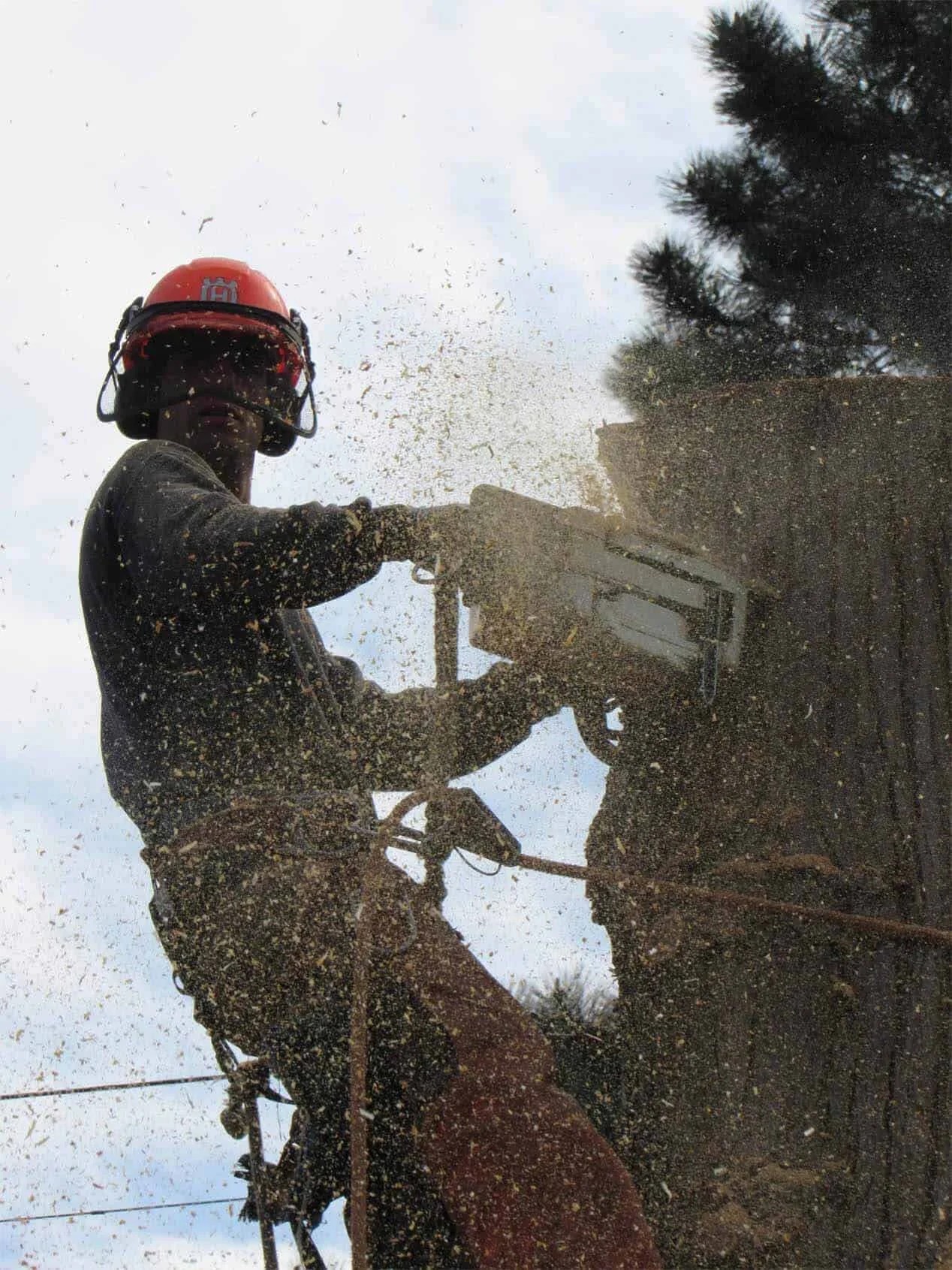
When removal genuinely is the right call — a dead Horse Chestnut, a structurally failing Garry Oak, a tree too close to the house — it should be done by a registered professional. Our tree removal service handles the permit paperwork, the safe takedown, and cleanup. We're WCB registered, so the work is covered and compliant.
The principle is simple. Vancouver wants to keep its canopy. Work with the bylaw, not against it.
How Do You Keep a Mature Shade Tree Healthy and Safe?
A shade tree only delivers all these benefits if it stays healthy. And a healthy tree is a safe tree — one that won't drop a limb on your roof.
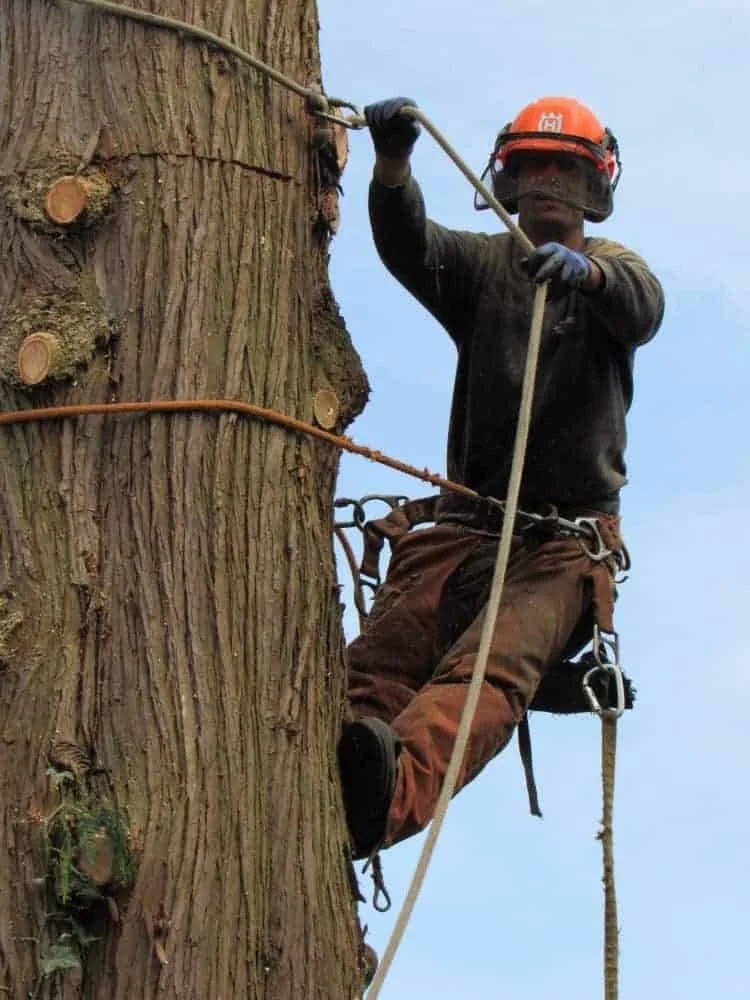
Proper maintenance follows recognized standards. Professional arborists work to the ANSI A300 standards, the industry benchmark for pruning, cabling, and tree care across North America. When you hire someone, ask whether they follow ANSI A300. It separates a real arborist from a guy with a chainsaw.
Certification is the other signal. The ISA — the International Society of Arboriculture — certifies arborists who have proven their knowledge through exams and ongoing education. An ISA-certified arborist understands tree biology, structure, and safe technique. If you want a deeper look at what arborists do and why certification matters, this guide on understanding arborists as guardians of tree health is a useful read.
Here's what good care looks like in practice.
Prune Correctly and on the Right Schedule
Pruning removes dead, weak, or crossing branches before they fail. It improves structure, reduces wind resistance, and keeps the canopy from growing into power lines or your roof. Bad pruning — topping, over-thinning, flush cuts — does lasting damage and creates hazards. Professional tree pruning and cutting done to ANSI A300 standards keeps a tree strong without harming it.
Protect the Root Zone
Roots are the foundation of tree health, and they're easy to damage. Construction, paving, soil compaction, and grade changes all hurt roots silently. A large shade tree planted close to a house can also send roots toward the foundation or drain lines. A root barrier is an engineered solution that redirects root growth away from structures, so you keep the tree and protect the building.
Mulch and Water Through Dry Spells
Vancouver summers now bring real drought stress. Mature trees suffer in long dry stretches, especially recently planted ones. A ring of mulch over the root zone and deep watering during dry weeks keeps a tree resilient.
Watch the Seasons
Different seasons call for different care — dormant-season pruning, spring inspection, fall cleanup. Our guide to seasonal tree care walks through what to do and when.
Have Storm Damage Handled Fast
Lower Mainland windstorms bring down limbs and whole trees every winter. A hanging branch over a walkway or a partly uprooted tree is an emergency. Don't approach it yourself. Emergency tree service makes the site safe quickly and assesses whether the rest of the tree can be saved.
Well-maintained trees deliver every benefit in this guide for decades. Neglected ones become liabilities. The difference is regular, professional care.
Which Shade Trees Grow Best in Vancouver Yards?
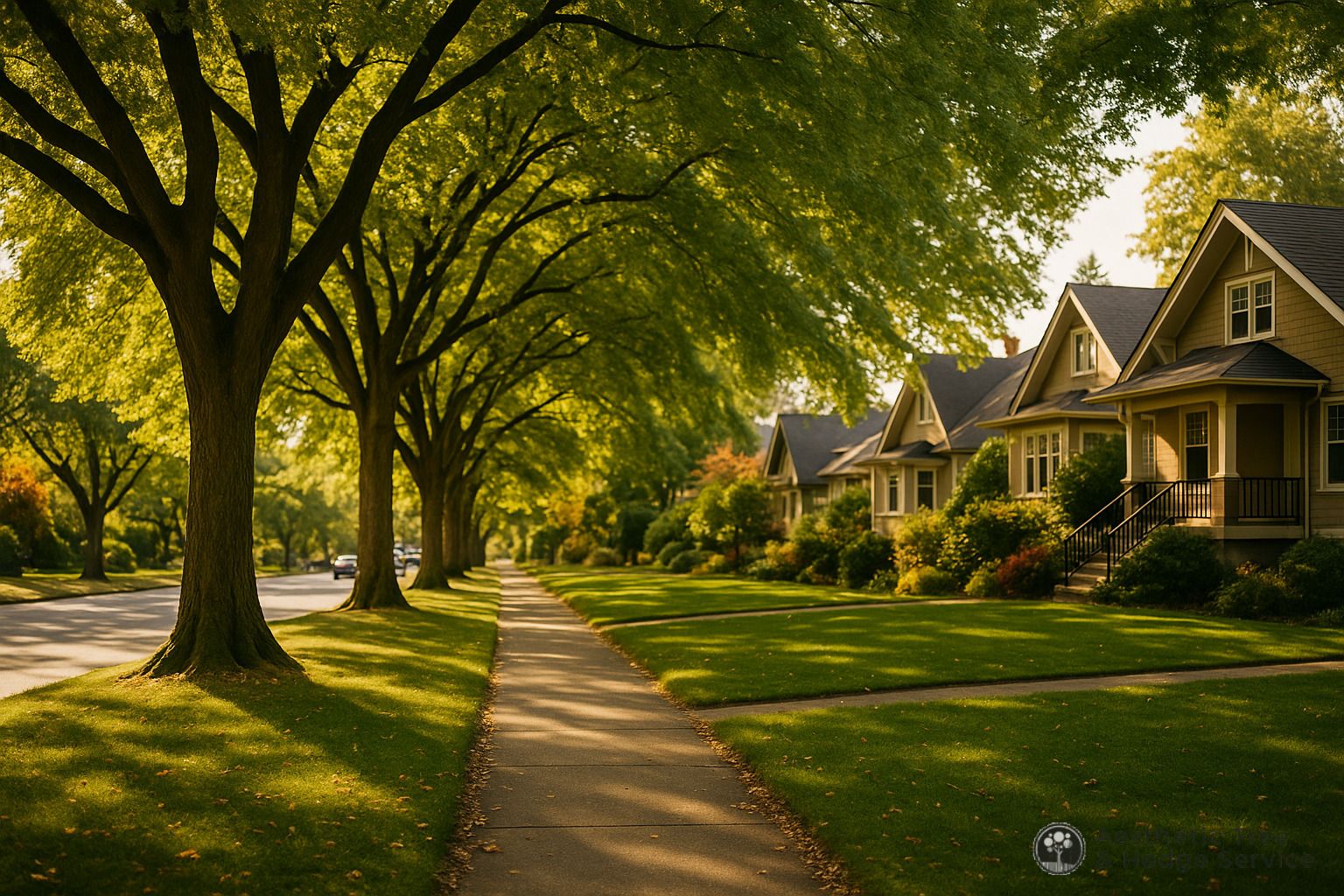
The right tree depends on your space, your soil, and what you want from it. A few species do especially well in the Lower Mainland.
- **Big-leaf maple** — A native giant. Huge leaves, fast growth, excellent broad shade. Best for large lots; it needs room.
- **Japanese Maple** — Compact, elegant, slow-growing. Ideal for smaller yards where you want filtered shade and four-season colour.
- **Douglas fir** — A native conifer. Tall, evergreen, great for year-round screening and privacy. Needs space and is best kept away from the house.
- **Western Red Cedar** — Native, evergreen, tolerates Vancouver's wet soil well. Good for privacy hedging and screening.
- **Horse Chestnut** — A classic deciduous shade tree with a wide canopy. Drops large nuts, so place it away from walkways and parking.
- **Garry Oak** — A rare native oak, slow-growing and long-lived. A heritage tree worth protecting wherever it grows.
Native species are generally the safer bet. They're adapted to our climate, our wet winters, and our drier summers, and they support local wildlife.
Placement is half the decision. A large tree too close to a foundation, a drain, or a power line creates expensive problems later. Before planting, think about mature size, root spread, and sun angle. A professional tree planting consultation matches the species to the spot — so the tree thrives and never becomes a hazard. And if privacy is the goal rather than overhead shade, a maintained hedge can be the smarter choice; our hedge trimming service keeps screening dense and tidy.
FAQ
How long does it take for a shade tree to provide real shade in Vancouver?
It depends on the species and planting size. A fast grower like a Big-leaf maple can give meaningful shade within 8–12 years, while slower trees like Japanese Maple or Garry Oak take longer. Planting a larger nursery specimen shortens the wait. Because the US Department of Energy (2023) links proper shade to 15–35% lower cooling costs, the sooner a tree goes in, the sooner it pays you back.
Do I need a permit to remove a shade tree on my Vancouver property?
Usually, yes. Under the City of Vancouver Protected Trees By-law (Chapter 29), a tree with a trunk over 20 cm DBH typically requires a removal permit. The City generally wants a valid reason and may require replacement planting. Other Lower Mainland cities — Burnaby, Richmond, North Vancouver, Coquitlam — have their own bylaws. Always check before any removal, and have an arborist confirm the tree's size and condition.
Will a large shade tree damage my home's foundation?
It can if it's planted too close, but the risk is manageable. Tree roots seek water, not concrete, and rarely break sound foundations on their own. Problems arise when roots grow under footings or into drain lines. A root barrier redirects root growth away from structures, letting you keep a mature tree while protecting the building. An arborist can assess the specific risk for your tree and home.
Are deciduous or evergreen shade trees better for cutting cooling costs?
Deciduous trees are usually better for energy savings. Species like Big-leaf maple and Horse Chestnut shade your home in summer, then drop their leaves so winter sun can warm it. Evergreens like Douglas fir and Western Red Cedar shade year-round, which is excellent for privacy but blocks welcome winter light. For pure cooling-cost savings, plant a deciduous tree on the west or southwest side.
How do shade trees help during Vancouver heat waves?
Shade trees fight the urban heat island effect, which the EPA (2023) measures at 1–7°C of extra heat in built-up areas. They block sunlight from heating pavement and roofs, and cool the air directly through transpiration. During extreme heat — like the 2021 heat dome — a tree-shaded yard and home stay measurably cooler, which protects the people most vulnerable to heat: children and seniors.
The many benefits of shade trees in Vancouver are real and measurable: lower hydro bills, higher property value, cooler air, cleaner air, better stormwater control, and a meaningful contribution to the city's climate goals. The catch is simple — those benefits only show up when a tree is healthy, well placed, and properly cared for. That's where a certified team makes the difference.
Call Aesthetic Tree & Hedge Services for a free estimate — (604) 721-7370. ISA-certified arborists, WCB registered.
Found this helpful? Follow our tree care insights directly on Google.
Make us your preferred source on GoogleBefore You Go
Where are you in your tree care journey?
Our Tree Care Services
ISA-certified arborists serving Greater Vancouver


Explore Our Tree Care Services
From expert pruning to safe tree removal, our ISA-certified arborists are ready to help across Greater Vancouver.
View Services