
TL;DR — Quick Summary
understanding importance proper tree care wildlife vancouver starts with proof, local rules, and safer tree work. Call Aesthetic Tree.
understanding importance proper tree care wildlife vancouver starts with one plain fact: a tree is not just a tree in this city.
It is shade. It is stormwater control. It is bird habitat. It is also a legal responsibility.
That sounds simple. In practice, it takes skill.
A Douglas fir beside a Kitsilano garage is not the same problem as a cedar hedge in Burnaby. A Big-leaf maple over a North Vancouver driveway is not the same job as a dead cherry tree in Richmond. Each tree has species limits, structural risks, nesting risk, and bylaw rules.
That is why proper tree care matters. It protects people first. It protects homes second. Then it protects the wildlife that depends on urban trees.
At Aesthetic Tree & Hedge Services, we look at trees as arborists. Not as landscapers. We assess root flare, crown structure, decay, included bark, targets, and access. We also assess birds, nests, and timing. That order matters.
The proof is local.
According to the City of Vancouver's 2025 Urban Forest Strategy, Vancouver's canopy covered about 25% of the city in 2022. That was up from 21% in 2013. The city target is 30% canopy cover by 2050.
Metro Vancouver's 2020 Regional Tree Canopy Cover and Impervious Surface report found 31% canopy cover inside the Urban Containment Boundary. It also found that private lands held 57% of that canopy. That means homeowners carry real weight.
The City of Vancouver Bird Strategy reports more than 250 resident, migratory, and overwintering bird species in Metro Vancouver. It also reports a 35% decline in characteristic bird species in Canada's Pacific Coast region since 1970.
Those numbers tell the same story. Yard-by-yard tree work has public impact.
TL;DR
- Proper tree care in Vancouver protects homes, people, and wildlife at the same time.
- The City of Vancouver says permits are needed for many private trees at least 20 cm in diameter, measured 1.4 m above the base.
- Vancouver's primary breeding bird nesting season runs from March to mid-August, according to the City of Vancouver.
- Environment and Climate Change Canada places the Vancouver coast in nesting zone A1. Forest nesting activity is highest from May 5 to July 21.
- ISA-certified arborists reduce risk by using hazard assessment, ANSI A300 pruning standards, bylaw checks, and nest-aware timing.
Why Does Proper Tree Care Matter For Wildlife In Vancouver?
Proper tree care matters because wildlife uses the same parts of a tree that people often want removed.
A dead limb can hold insects. Those insects feed chickadees and woodpeckers. A dense cedar hedge can hold a robin nest. A cracked trunk can create bat shelter. A mature Big-leaf maple can shade soil, hold moisture, and feed fungi that support insects.
That does not mean every dead limb stays. It means each cut needs a reason.
Good arboriculture separates useful habitat from unacceptable hazard. A dead branch over a roof, school path, or parked car is a target risk. It often needs removal. A dead stub inside a low-risk rear corner may serve habitat without threatening people.
That judgment comes from inspection. Not guessing.
The City of Vancouver tree permit page lists tree benefits that include cleaning air, absorbing carbon dioxide, absorbing stormwater, reducing erosion, and providing habitat and food for wildlife. Those are not soft claims. They are municipal reasons for tree protection.
The U.S. Environmental Protection Agency reported in 2024 that a review of 308 studies found urban forests averaged 3.0 F, or 1.6 C, cooler than urban non-green areas. The same EPA page states urban trees can reduce stormwater runoff by absorbing 15% to 27% of annual rainfall.
That matters in Vancouver. Rain, heat, and habitat all meet in the canopy.
A topped tree does less work. A buried root flare does less work. A hedge cut at the wrong time can expose nests. A stressed cedar row can thin out and lose cover for birds.
Proper care keeps the tree working.
What Wildlife Uses Vancouver Trees And Hedges?
Birds are the most visible group. They are not the only group.
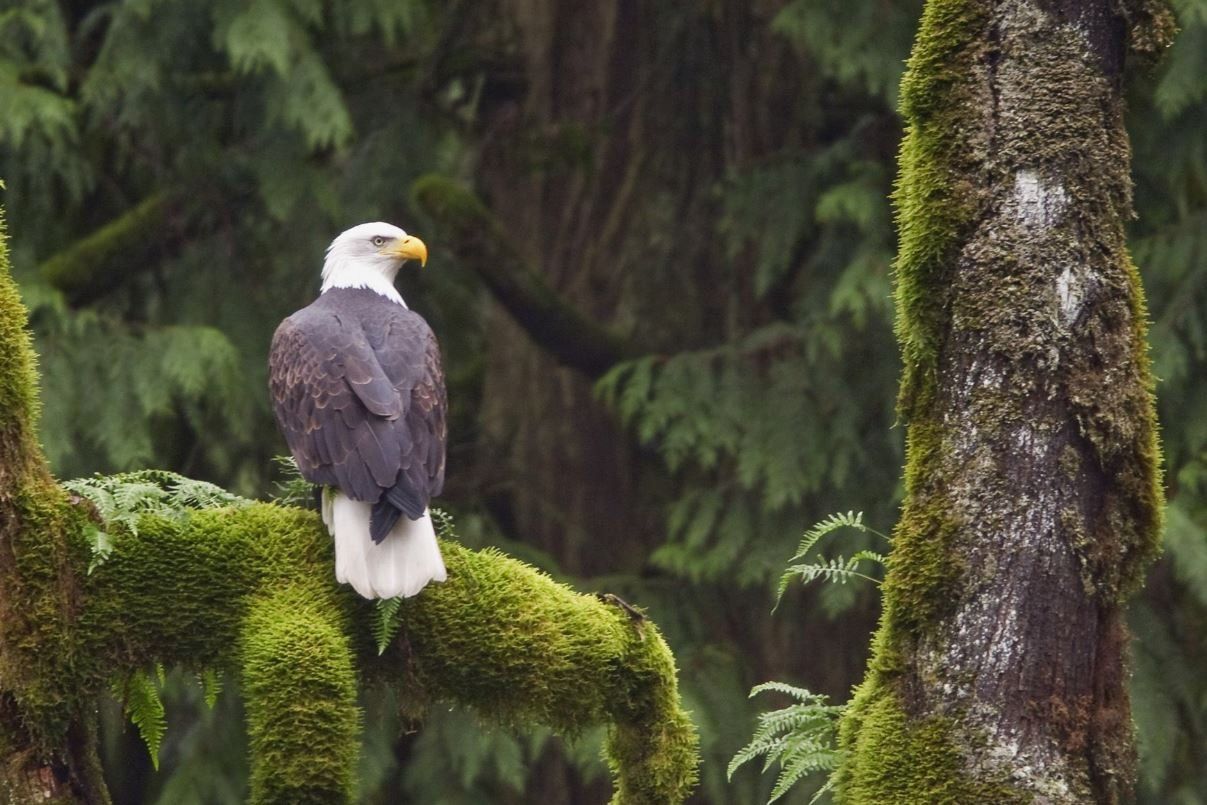
Vancouver trees and hedges support Anna's hummingbirds, Black-capped chickadees, Song sparrows, Bushtits, Northern flickers, crows, Cooper's hawks, Bald eagles, and owls. The exact species depends on site, food, water, and cover.
The City of Vancouver Bird Strategy says birds provide pest control, pollination, and seed dispersal. It also names the Fraser River Delta as a major stop on the Pacific Flyway. That route runs from Alaska to South America.
This is why backyard trees matter beyond the fence line.
A cedar hedge in Kerrisdale can be screening for a homeowner and nesting cover for birds. A fruit tree in East Vancouver can feed insects, birds, and mammals. A Douglas fir in North Vancouver can support raptors if it has height, open flight lines, and safe structure.
Urban wildlife also includes bats, squirrels, raccoons, amphibians near wet areas, and many insects. Some are welcome. Some become nuisance issues when food waste is present. The tree care answer is not to feed wildlife. It is to keep healthy structure and remove unsafe conditions.
In our experience on Lower Mainland sites, the most common wildlife conflicts come from timing. A homeowner calls for hedge work in spring. The hedge is dense. Birds are active. The work needs a nest check before cutting.
That is not delay for its own sake. It is risk control.
For dense cedar, laurel, yew, and privet rows, planned hedge trimming services in Vancouver are best booked outside peak nesting pressure when possible. The finished hedge is cleaner. The wildlife risk is lower. The crew has better visibility.
When Is Bird Nesting Season In Vancouver For Tree Work?
The City of Vancouver states that the primary nesting season for breeding birds runs from March to mid-August. That aligns with the primary vegetation season.
Environment and Climate Change Canada gives more detail. Vancouver's coast falls within nesting zone A1. In forest habitats in zone A1, 61% to 100% of federally protected species are actively nesting from May 5 to July 21. In open habitats, that highest activity band runs from May 2 to July 19. In wetland habitats, it runs from May 4 to July 15.
Those dates guide planning. They do not replace site checks.
A nest can be active outside the main period. A hummingbird can nest early. A second brood can extend activity later. A sheltered hedge can hide nest activity that is not visible from the sidewalk.
That is why we do not treat the calendar as permission.
The correct process is simple:
- Identify the tree or hedge species.
- Check the work zone from multiple angles.
- Look for active nests, bird traffic, calls, droppings, and fresh nesting material.
- Plan cuts to avoid active nests.
- Pause work in that section if active nesting is found.
- Resume only when the nest is no longer active.
This is also where crew training shows. Fast cutting is not the same as competent cutting.
Tree work during nesting season is not always banned. Hazard work still happens. Emergency work still happens. But the risk screen must be real.
A cracked stem over a house after wind needs action. A cosmetic hedge reduction can wait.
That distinction protects the homeowner and the wildlife.
What Tree Work Is Legal In Vancouver During Nesting Season?
Legal tree work depends on three layers.
First, federal and provincial wildlife law applies. Birds, nests, and eggs are protected under federal rules such as the Migratory Birds Convention Act and under provincial rules such as the BC Wildlife Act. The City of North Vancouver states this plainly on its private trees page. It also requires a bird survey by a Qualified Environmental Professional for tree removal during bird nesting season when needed for a permit.
Second, municipal tree bylaws apply. Each city has its own process. Vancouver, Burnaby, Richmond, Coquitlam, and North Vancouver do not use one shared permit rule.
Third, site risk applies. A hazardous tree over a home is not handled like a healthy ornamental tree in a rear yard.
In Vancouver, the City tree removal permit page states a permit is required to remove a tree or hedge on private property when a tree is at least 20 cm in diameter, or 64 cm in circumference, measured 1.4 m above the base. Multi-stem trees can also meet the threshold when the largest stems combine to at least 20 cm.
The same City page says an arborist report prepared by an ISA-certified arborist is required for non-development removal applications. It also says replacement planting is required for any removed tree larger than 20 cm diameter.
That is why a quick chainsaw answer is risky.
If you are unsure whether your work is removal, pruning, hedge cutting, or hazard work, get an assessment first. A permit error costs time. A wildlife error is worse.
For permit-driven work, start with an arborist report in Vancouver. The report can document species, diameter, condition, defects, targets, and removal rationale. It can also support a cleaner permit review.
How Do ISA-Certified Arborists Protect Wildlife While Managing Risk?
ISA-certified arborists protect wildlife by using inspection before action.
That sounds basic. It is not common enough.
A proper visit starts at the ground. We look at the root flare. If soil or mulch covers the flare, the tree can hold moisture against the trunk. That invites decay. We look for grade changes, girdling roots, compacted soil, trenching, and pavement pressure.
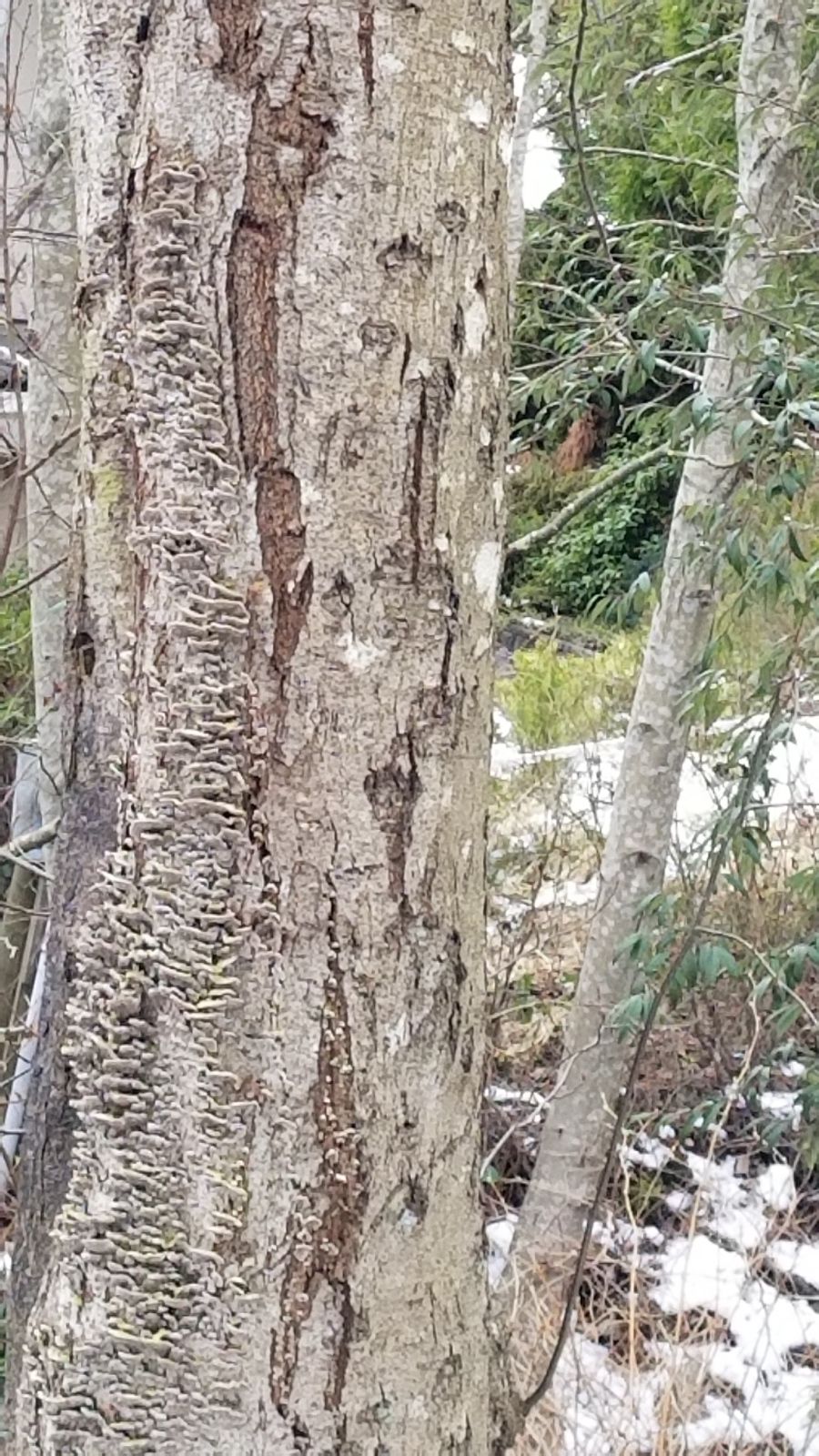
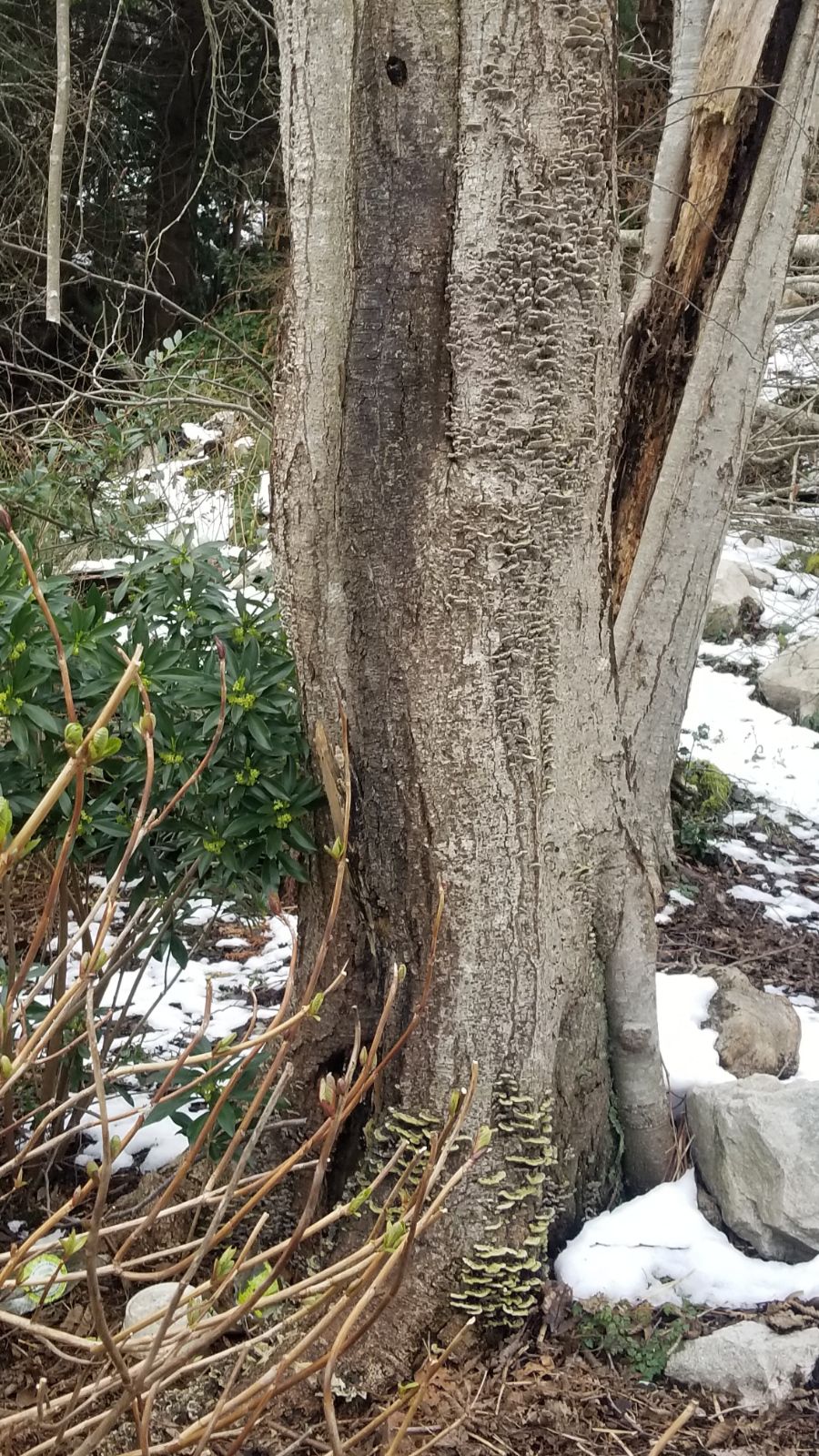
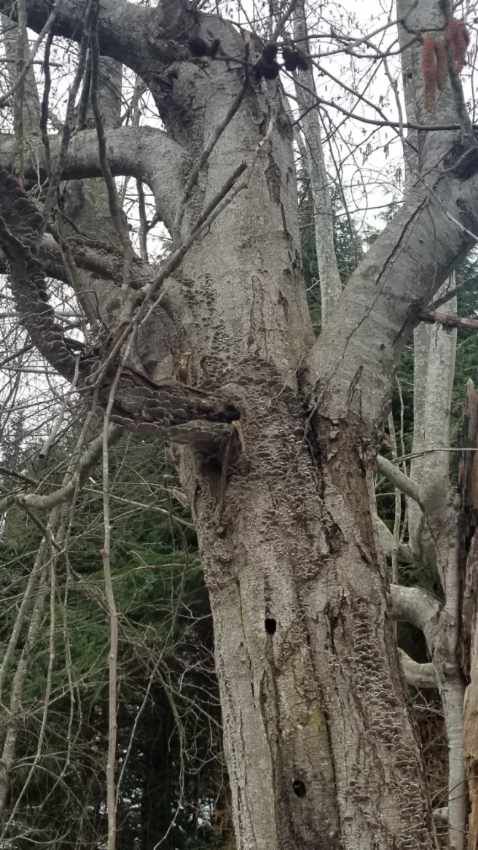
Then we look at the stem. We check cavities, cracks, seams, included bark, fungal fruiting bodies, old topping wounds, and lean. We compare lean to root plate movement. A natural lean is not the same as recent movement.
Then we inspect the crown. We look for deadwood, broken limbs, rubbing branches, weak attachments, end weight, and storm damage. We also look for nests and wildlife use.
The question is not whether a tree has wildlife value. Most trees do. The question is how to keep that value while reducing unacceptable risk.
ANSI A300 standards give arborists a shared language for pruning. The Tree Care Industry Association describes ANSI A300 as standards for arborists, urban foresters, landscape architects, and contractors. The pruning standard covers terms such as branch collar, crown cleaning, and proper cut objectives.
A branch collar matters. A flush cut removes tissue the tree needs for wound closure. A long stub dies back and can decay. A proper cut respects the tree's defence system.
That is tree health. It is also wildlife care.
A tree that compartmentalizes wounds well can live longer. A longer-lived tree provides more stable habitat. That is better than repeated hard cuts that stress the tree until removal becomes the only option.
For clearance pruning, see tree cutting in Vancouver. Good pruning is not random shortening. It is objective-based work.
When Should A Tree Be Removed Instead Of Pruned?
A tree should be removed when risk, decline, or site conflict cannot be corrected through pruning, cabling, soil care, or monitoring.
Removal is not the first answer for a healthy tree. It is the right answer for certain trees.
Common removal reasons include:
- Dead or dying structure.
- Advanced decay at the base.
- Root plate movement.
- Severe storm cracks.
- Major trunk split.
- Disease that has passed a useful treatment point.
- Unavoidable conflict with permitted construction.
- Serious damage to a structure or service line.
- High risk to people, homes, vehicles, or public access.
The City of Vancouver permit page lists several valid removal reasons. These include serious property damage, location inside an issued building envelope, and trees that are dead, dying, diseased, or hazardous.
A wildlife lens does not mean unsafe trees stay standing.
It means removal is planned. The crew checks timing. The arborist checks bylaws. The site plan protects retained trees. If the tree is removed, stump and root decisions are made with care.
In some cases, a wildlife snag can remain. That means a stem is reduced and retained for habitat. This is only suitable in low-risk settings. It is not suitable beside a driveway, sidewalk, playground, roof, or utility line.
In tighter urban yards, full removal is often safer.
For hazardous, dead, or permit-approved removals, use professional tree removal in Vancouver. The goal is controlled work, not speed.
How Does Bad Pruning Harm Trees And Wildlife?
Bad pruning creates a chain reaction.
First, it wounds the tree. Then it stresses the tree. Then it invites decay or weak regrowth. Then it creates more future hazard. Wildlife loses stable cover when the tree declines.
The most common bad cuts are topping, flush cuts, lion-tailing, over-thinning, and random height reduction.
Topping is especially damaging. It removes large sections of crown. The tree responds with fast shoots. Those shoots are often weakly attached. They look like recovery. They are often future failure points.
Over-thinning is another problem. It can strip interior growth and leave weight at the ends. That increases branch movement in wind. It also removes cover that birds use for shelter.
Lion-tailing is easy to spot. The inner branches are stripped. Foliage remains at the branch tips. The tree looks cleaned out. It is not stronger.
A good pruning plan has an objective.
For example:
- Crown cleaning removes dead, diseased, and broken branches.
- Crown raising improves clearance over paths, roads, or roofs.
- Crown reduction reduces size with proper lateral cuts.
- Structural pruning improves long-term form.
- Clearance pruning reduces contact with buildings.
Each cut must earn its place.
On ornamental trees, small cuts done early beat large cuts done late. On mature conifers, unnecessary live limb removal can expose trunks and reduce screening. On cedar hedges, cutting into old brown wood can leave bare sections that do not fill back in.
Wildlife also responds to structure. Dense, layered vegetation gives small birds cover from predators. A hard, flat cut during nesting season can remove that cover in one morning.
That is why planned seasonal work is better than panic work.
For timing, our guide to seasonal tree care gives homeowners a useful starting point.
How Do Vancouver Tree Bylaws Affect Wildlife-Friendly Tree Care?
Tree bylaws protect canopy. Canopy protects wildlife.
That is the simple link.
In Vancouver, the Protection of Trees By-law defines an arborist as an arborist certified by the International Society of Arboriculture. That detail matters. The city does not ask for a random opinion. It asks for qualified assessment.
The permit process also asks for a site plan. That plan must show retained trees, trees proposed for removal, and replacement tree locations. During development, Vancouver can require tree protection barriers and arborist reports.
These steps do more than slow removal. They reduce accidental damage.
Construction is hard on trees. Excavation cuts roots. Soil storage compacts root zones. Machinery scrapes bark. Grade changes bury root flares. Trenching severs structural roots.
A tree can survive the construction date and die three years later. That is common when root damage is missed.
Wildlife loses twice in that case. First, site work disturbs habitat. Then delayed decline removes canopy later.
This is why development sites need early arborist input. Not after the excavator arrives.
In Burnaby, the 2025 Urban Forest Strategy reports 32% canopy cover in 2022 and a target of 40% by 2075. Metro Vancouver has a broader 40% target for the Urban Containment Boundary by 2050. These numbers show the same trend. Cities need private trees to meet public canopy goals.
Private homeowners are not just managing private assets. They are managing part of the urban forest.
When in doubt, check before cutting.
What Are The Best Tree Care Practices For Vancouver Yards?
The best practice is to keep trees healthy before they become hazards.
Reactive tree work costs more time and stress. Preventive care gives better results.
Start with the root zone. Roots need air and water. They do not need deep mulch piled against bark. Keep mulch wide and shallow. Keep it off the trunk. Protect soil from compaction. Avoid trenching near structural roots.
Next, inspect after storms. Vancouver wind and rain expose weak unions, dead limbs, and saturated soils. Look for fresh cracks, hanging limbs, sudden lean, lifted soil, and fungal growth at the base.
Then plan pruning during better seasons. For many deciduous trees, late fall through early spring is a strong window. The tree is dormant. Structure is visible. Bird nesting pressure is lower.
Some species need special timing. Cherry trees are more disease-prone when cut during certain wet growing periods. Cedars do not respond like maples. Fruit trees need species-specific pruning.
Do not treat all trees the same.
A simple care plan includes:
- Annual visual inspection from the ground.
- Professional inspection for large trees near targets.
- Proper mulch placement.
- No soil piled against root flare.
- No topping.
- No climbing spurs on trees being retained.
- Structural pruning while trees are young.
- Deadwood removal where targets exist.
- Nest checks before spring and summer cutting.
- Permit review before removal.
For retained trees with weak unions, tree cabling can reduce movement in selected cases. It is not a cure for decay. It is a support method used after assessment.
For new canopy, tree planting matters too. Right tree, right place is not a slogan. It is how you avoid future removals.
How Should Homeowners Handle Hazard Trees After Storms?
Storm work has one rule. Do not stand under the problem.
After heavy wind or rain, a damaged tree can hold tension. A split limb can shift without warning. A leaning tree can be loaded by roots, wires, fences, or another tree. Chainsaw work in that setting is not a homeowner task.
Common emergency signs include:
- A tree leaning suddenly after a storm.
- Soil lifted on one side of the trunk.
- A large cracked limb over a roof or driveway.
- A hanging branch caught in the crown.
- A stem split down the trunk.
- Contact with a structure.
- Contact with service lines.
Emergency work still needs wildlife awareness. But safety comes first. A tree that threatens people or a home needs rapid assessment.
The right crew controls the drop zone. They assess load. They use rigging when needed. They may remove weight in stages. In tight sites, cranes or lifts may be required.
Do not let anyone cut the easiest branch first. In storm damage, the easiest branch can be the one holding the system in place.
For urgent hazards, call emergency tree service in Vancouver. If wires are involved, contact the utility first and keep clear.
What Should Happen To Stumps, Roots, And Replacement Trees?
Tree care does not end when the trunk is down.
A stump can resprout. It can attract decay organisms. It can block replanting. It can also create a trip hazard. In some yards, leaving a stump is acceptable. In high-use areas, removal is cleaner.
Stump grinding removes the visible stump below grade. It does not remove every root. That is usually enough for lawns, gardens, and replanting plans when space allows.
For replacement planting, do not plant the new tree in the exact same compacted, decayed hole without site preparation. Check soil, drainage, mature size, and distance from buildings. A poor planting site creates the next removal problem.
Species choice matters.
In Vancouver and the Lower Mainland, common choices include native and well-adapted species such as Douglas fir, Western red cedar, Vine maple, Pacific dogwood, Garry oak where suitable, and Big-leaf maple where space allows. Not every native tree fits every yard. A Big-leaf maple can outgrow a small urban lot. A cedar can suffer in hot, dry, compacted soil.
A replacement tree should match the site.
If roots are the issue, removal is not always the only answer. In some cases, a root barrier can protect hardscape while retaining the tree. In other cases, root cutting would make the tree unstable. That is an arborist decision.
For finished removals, stump grinding in Vancouver helps prepare the site for safer use and better replanting.
How Can You Choose A Wildlife-Aware Arborist In Vancouver?
Choose an arborist by proof, not promises.
Ask direct questions.
Are they ISA-certified? Are they WCB registered? Do they know the local bylaw? Do they inspect for nests before spring or summer work? Do they prune to ANSI A300 standards? Do they carry insurance? Can they explain the pruning objective before cutting?
You want clear answers.
A professional arborist should explain:
- Why a branch is being removed.
- Where the final cut will be made.
- Whether the tree needs a permit for removal.
- Whether the work should wait due to nesting risk.
- Whether cabling, reduction, or monitoring is a better option.
- How retained trees will be protected during nearby work.
Avoid anyone who recommends topping as routine care. Avoid anyone who says permits are not a concern without measuring the tree. Avoid anyone who wants to cut dense hedges in nesting season without checking for bird activity.
Good tree work is measurable. Diameter is measured at 1.4 m. Crown defects are inspected. Targets are named. Cuts are placed at proper points. Permits are checked. Work zones are controlled.
That is the scientific advertising view applied to arboriculture. Claims do not matter. Evidence does.
Aesthetic Tree & Hedge Services works across Vancouver, Burnaby, North Vancouver, Richmond, Coquitlam, and the Lower Mainland. We bring ISA-certified arborist judgment to tree removals, pruning, hedge trimming, stump grinding, arborist reports, and emergency tree service.
For broader background, see our guide on understanding arborists and tree health.
FAQ
Do I need a permit to remove a tree in Vancouver?
In many cases, yes. The City of Vancouver says you need a permit to remove a private tree or hedge when the tree is at least 20 cm in diameter, or 64 cm in circumference, measured 1.4 m above the base. Multi-stem trees can also qualify when the largest stems combine to meet the threshold. Permit rules change by city, so check the local bylaw before cutting.
Can tree pruning be done during bird nesting season?
Yes, some pruning can be done, but it needs a nest-aware inspection first. Vancouver's primary breeding bird nesting season runs from March to mid-August. If an active nest is found in the work zone, that section must be avoided until the nest is inactive. Hazard work is handled differently from cosmetic work.
Is a dead tree good for wildlife?
A dead tree can provide habitat for insects, birds, and cavity users. It can also be a serious hazard. The right answer depends on location. A dead tree in a low-risk natural corner may be reduced and retained as habitat. A dead tree over a house, driveway, sidewalk, or utility line usually needs removal or major risk reduction.
What is the best season for tree care in Vancouver?
For many deciduous trees, late fall through early spring is a strong pruning window. Structure is easier to see, and nesting pressure is lower. Hedges often need species-specific timing. Storm damage and hazard work should be assessed right away, no matter the season.
Why hire an ISA-certified arborist instead of a landscaper?
An ISA-certified arborist is trained to assess tree biology, structure, defects, pruning standards, and risk. A landscaper may be skilled at planting and general yard care, but tree risk is a different trade. Large trees near homes need arborist judgment, proper equipment, WCB coverage, and bylaw knowledge.
Proper tree care is not guesswork. It is inspection, timing, and controlled work. It protects the homeowner and the urban forest at the same time.
Call Aesthetic Tree & Hedge Services for a free estimate at (604) 721-7370. Our ISA-certified arborists are WCB registered and ready to assess your tree, hedge, stump, or emergency tree concern in Vancouver and the Lower Mainland.
Found this helpful? Follow our tree care insights directly on Google.
Make us your preferred source on GoogleBefore You Go
Where are you in your tree care journey?
Our Tree Care Services
ISA-certified arborists serving Greater Vancouver


Explore Our Tree Care Services
From expert pruning to safe tree removal, our ISA-certified arborists are ready to help across Greater Vancouver.
View Services