
TL;DR — Quick Summary
tree species create stunning autumn landscapes vancouver with safer planting, pruning, and arborist tips from Aesthetic Tree. Call for a free estimate.
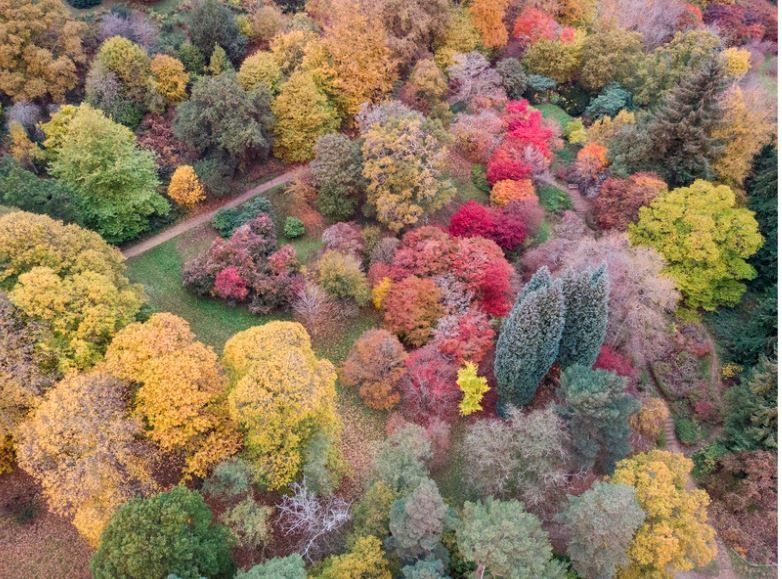
Vancouver's best autumn colour comes from species matched to site: bigleaf maple, vine maple, Japanese maple, Persian ironwood, katsura, and ginkgo lead the list for the Lower Mainland. Choosing the right species, assessing hazard risk each fall, and understanding City of Vancouver bylaw requirements before any removal work keeps your landscape both beautiful and safe.

Which Tree Species Deliver the Best Autumn Colour in Vancouver
Vancouver's autumn palette depends on matching species to site before thinking about colour. A tree planted in the wrong soil volume, drainage, or light condition will underperform, become a hazard, or require removal within a decade. An ISA-certified arborist reads the site first. The species selection follows. According to the City of Vancouver's Urban Forest Strategy (2018), native species support local ecosystems and are adapted to regional rainfall and soil conditions, which is why starting with natives makes both ecological and practical sense.
For native options, bigleaf maple (Acer macrophyllum) delivers the strongest gold in the Lower Mainland. It is a large tree that needs room, good soil volume, and distance from foundations. Vine maple (Acer circinatum) is the better native choice for understory sites, smaller yards, and ravine edges. Its fall display runs orange, red, and yellow in the same canopy, often on trees under six metres tall. Serviceberry (Amelanchier species) earns space by doing multiple jobs: white flowers in early spring, edible fruit for birds in summer, and orange-red fall colour on a frame sized for urban lots.
For ornamental colour in smaller yards, Japanese maple (Acer palmatum) provides reliable red and orange in protected spots. Persian ironwood (Parrotia persica) is unusually versatile: one tree can carry red, orange, purple, and gold simultaneously in mid-October. Katsura (Cercidiphyllum japonicum) turns yellow to apricot and, in fall, smells faintly of burnt caramel near the falling leaves. Ginkgo (Ginkgo biloba) offers some of the cleanest fall colour available in Metro Vancouver, pure yellow with strong urban tolerance. Use male cultivars from reputable nurseries to avoid the odour issue associated with female fruit. Sweetgum (Liquidambar styraciflua) and stewartia (Stewartia pseudocamellia) are less common but well suited to medium-sized lots where extended-season interest matters.
The reason site-first selection matters is structural. A tree too large for its soil volume becomes a pruning problem, then a neighbour dispute, then a bylaw issue. A tree in heavy shade produces weak growth and poor colour. Matching mature size, drainage tolerance, and sun exposure to the actual site is the single variable that separates a twenty-year tree from a ten-year liability. According to the City of Vancouver's Urban Forest Strategy (2018), Vancouver's urban forest provides cooling, stormwater management, air quality improvement, and biodiversity habitat, all of which are maximised when trees are sited correctly from the start.
How Fall Colour Connects to Tree Health and What to Assess Before Winter Storms
Autumn colour is not always a health report. Some trees colour early because of stress, not season. A mature maple turning gold in early September when neighbouring trees are still green is showing a symptom, not a calendar response.
According to the BC Ministry of Forests, early leaf senescence can indicate drought stress, root damage, compacted soil, construction disturbance within the drip line, vascular disease, or systemic decline. These conditions weaken branch attachments and increase failure risk over winter. Fall is when structural problems become visible, and Vancouver's October and November storm season follows closely.
Assess your trees for the following before the first major storm: leaves colouring or dropping earlier than the same species nearby; one limb colouring before the rest of the crown; mushrooms or conks at the trunk base or root flare; soil lifting on one side of the root plate; bark cracking along a major stem; large dead limbs remaining in the upper crown; cavities collecting water; old topping cuts producing dense, weakly attached shoots. None of these automatically means removal. Each means inspection by a qualified arborist.
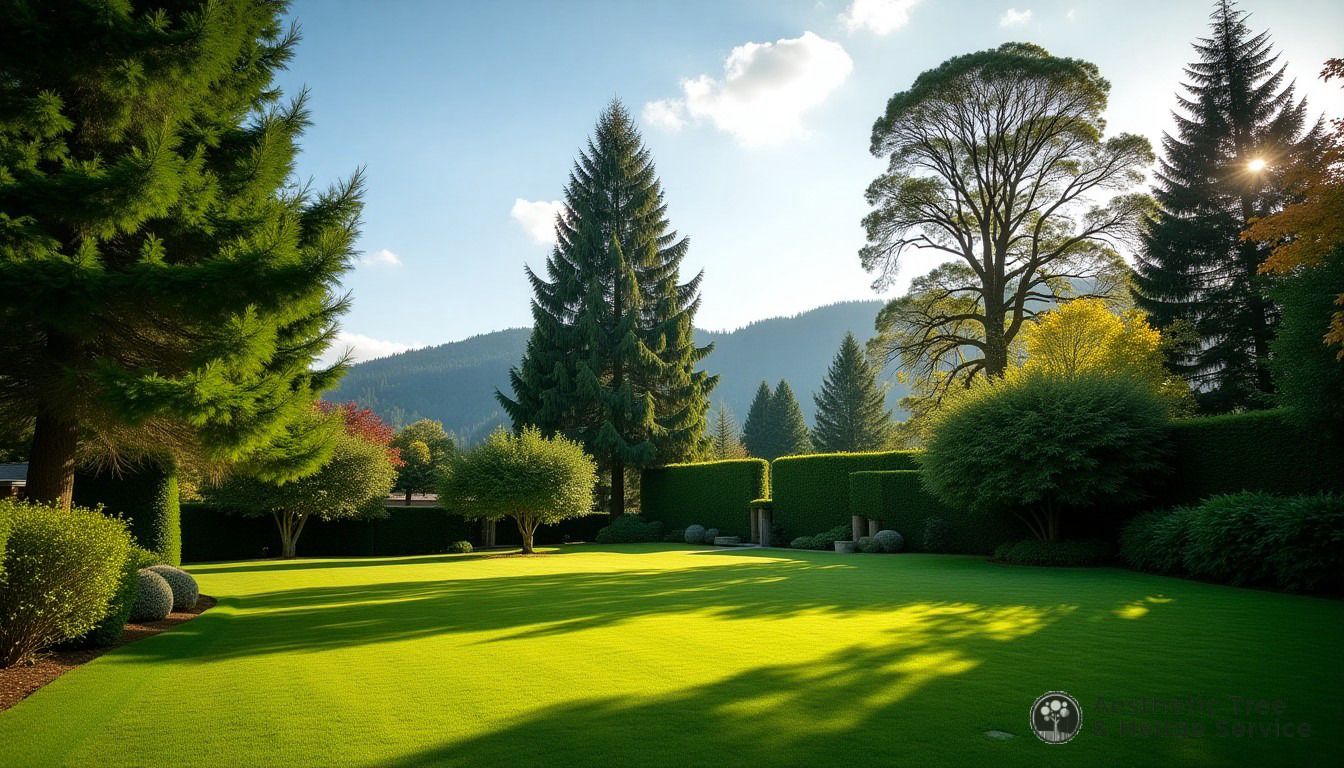
Evergreens matter here too. Douglas fir, western red cedar, and western hemlock form the dark background that makes deciduous fall colour visible in the Lower Mainland landscape. They also carry real structural risk near buildings. A large conifer adjacent to a house, lane, or neighbour's roof warrants risk assessment regardless of season. For storm-damaged limbs or split stems, emergency tree service should be arranged before the next weather system extends the damage.
Fall is also the right time for structural pruning on young trees, deadwood removal over roofs and driveways, clearance pruning near buildings and walkways, mulching over root zones, and cable inspection on supported trees. Deciduous structure is easier to read after leaf drop. According to the BC Ministry of Forests' Tree Risk Assessment guidelines, late fall through early spring is the optimal window for risk assessment on deciduous species because crown architecture is fully visible. Soil moisture also returns in fall, making it a practical planting window once summer heat stress has passed.
City of Vancouver Tree Bylaws, Permit Costs, and What Removal Actually Involves
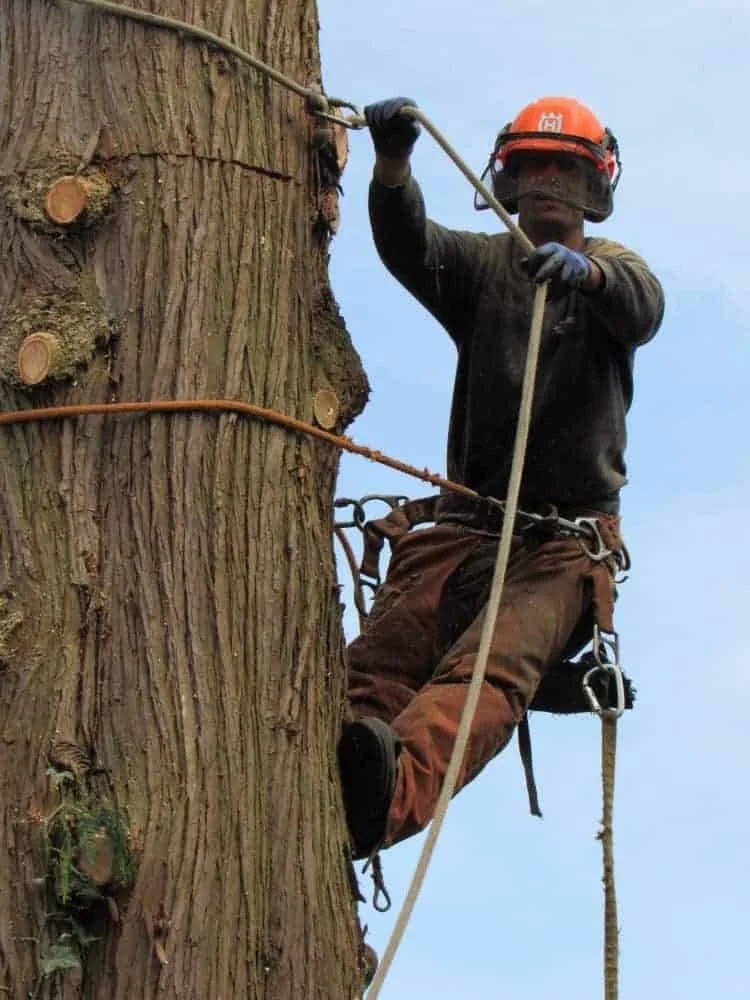
Before removing any significant tree, check the bylaw. City of Vancouver Protection of Trees By-law 9958 requires a permit to remove private-property trees with a trunk diameter of 20 centimetres or more, measured 1.4 metres above ground. A 20 cm trunk is approximately 63 cm in circumference. Smaller trees can also be protected if they were planted as replacement trees or tied to development conditions. The City's Urban Forestry team administers these permits; applications require a site plan and, in many cases, an arborist report.
According to the Metro Vancouver 2020 Regional Parks and Natural Areas report, tree canopy inside the Urban Containment Boundary fell from 32 percent in 2014 to 31 percent in 2020. Permit requirements are one mechanism the City uses to slow canopy loss. Removal without a required permit can result in fines and mandatory replacement planting, as set out in the by-law's enforcement provisions.
Where removal is approved, a replacement tree is typically required either on-site or through payment into the City's tree replacement fund, according to the City of Vancouver Protection of Trees By-law 9958 schedule. Replacement contribution amounts are based on the appraised value of the removed tree and vary by species, size, and condition. The City's 2024 Fees and Charges Schedule sets the permit application fee for tree removal at $152 per tree.
Worked example (illustrative):
Assumptions: a mature Japanese maple in a Kitsilano backyard, trunk diameter 25 cm (over the 20 cm threshold, permit required), located within 3 metres of a fence, in a fenced yard accessible from a side gate. Permit application proceeds and removal is approved. The following figures are illustrative assumptions, not Aesthetic Tree quoted prices, except where a named public source is cited.
- Arborist site visit and written report for permit application: $350 (assumption)
- City of Vancouver tree permit application fee: $152 (according to the 2024 City of Vancouver Fees and Charges Schedule)
- Tree removal to ground level, small ornamental in accessible yard: $800 (assumption)
- Stump grinding to 30 cm depth: $150 (assumption)
- Debris removal and site cleanup: $100 (assumption)
- Subtotal before tax: $350 + $152 + $800 + $150 + $100 = $1,552
- GST at 5% (according to the Canada Revenue Agency, the federal Goods and Services Tax rate is 5%): $1,552 x 0.05 = $77.60
- Total estimated project cost: $1,552 + $77.60 = $1,629.60
- City replacement tree fund contribution: varies by appraised value of the removed tree; set by the City of Vancouver Protection of Trees By-law 9958 schedule and calculated at time of permit approval
For a larger tree, say a bigleaf maple with a 60 cm trunk on a corner lot requiring a crane and lane closure, removal scope is substantially different. The permit fee remains $152 per tree according to the 2024 City of Vancouver Fees and Charges Schedule, but removal, grinding, and debris costs scale with access complexity, crew size, and debris volume. This example is illustrative only. Actual quotes depend on site access, tree condition, debris volume, and scope of work.
Planning an Autumn Tree Landscape That Works for Twenty Years
Start with a site assessment, not a nursery visit. The questions to answer before choosing any species: How much sun does the spot receive in summer and fall? Is the soil compacted, sandy, clay-heavy, or fill? Where does water pool after heavy rain? How close are the house, fence, lane, sidewalk, utilities, and neighbouring structures? What is the tree's mature height and canopy spread? Will roots conflict with hardscape within ten years?
For small front yards in Vancouver, Japanese maple, serviceberry, paperbark maple, stewartia, and vine maple offer colour and proportion without outgrowing the space. For medium yards, Persian ironwood, katsura, dogwood, and ginkgo provide multi-season interest at a scale that works near buildings. For large sites with adequate soil volume, bigleaf maple, red oak, tulip tree, and well-sited conifer mixes deliver canopy depth and long-term structure. According to the City of Vancouver's Urban Forest Strategy (2018), the City's target is 22 percent tree canopy cover by 2050, up from 18 percent at time of publication. Every well-sited private planting contributes to that target and increases the property's own resilience to heat and stormwater events.
Layering works better than planting three competing mid-size trees at the same time. One large shade tree, one small ornamental, and a managed hedge create variety in height, seasonal colour, and habitat value without root or canopy competition. Give each plant a defined job: shade, colour, screening, habitat, or structure. Timing matters through the year, not just in fall. Our guide to seasonal tree care covers how maintenance priorities shift through Vancouver's distinct seasons.
When replacing a removed tree, the species decision made at planting time determines what your site can support for the next forty years. According to the BC Ministry of Forests, trees sited in appropriate soil volumes with adequate drainage and sun exposure consistently outperform specimens planted without a site assessment, in both structural stability and longevity. Ask about tree planting in Vancouver to get species recommendations matched to your specific conditions. For a broader introduction to what qualified tree care looks like, read our guides to arborists near me in Vancouver and what arborists do.
Call Aesthetic Tree & Hedge Services for a free estimate at (604) 721-7370. Our ISA-certified arborists are WCB registered and serve Vancouver and the Lower Mainland.

Frequently Asked Questions
Found this helpful? Follow our tree care insights directly on Google.
Make us your preferred source on GoogleOur Tree Care Services
ISA-certified arborists serving Greater Vancouver

Explore Our Tree Care Services
From expert pruning to safe tree removal, our ISA-certified arborists are ready to help across Greater Vancouver.
View Services