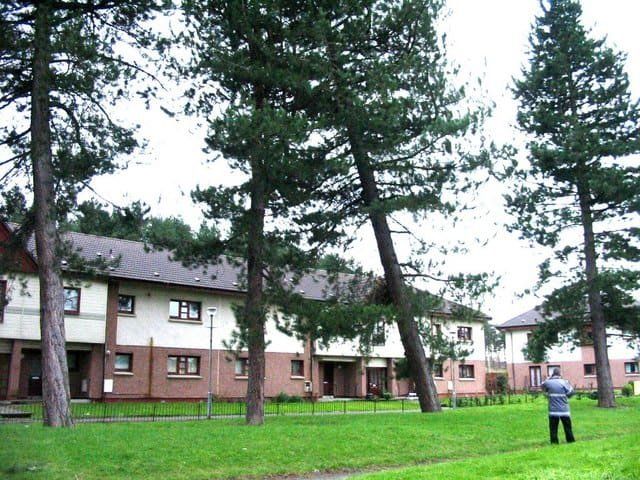

TL;DR — Quick Summary
how to identify a dangerous tree before it falls. Learn the warning signs, local bylaw rules, and when to call an ISA-certified arborist.
how to identify a dangerous tree starts with one plain fact: trees fail when defects, weather, and targets line up.
A dead cedar in an empty forest is habitat. The same cedar above a Vancouver roof is a hazard. The tree did not change. The risk did.
That is the first lesson in tree safety.
A dangerous tree is not always dead. It is not always leaning. It is not always ugly. Some of the most serious failures come from trees that still carry green foliage. The crown looks alive. The root plate is not.
In the Lower Mainland, we see this often after long wet periods. Soil stays saturated. Wind loads increase. Roots lose grip. Decay that was quiet in August becomes urgent in November.
This guide explains the signs homeowners can check from the ground. It also explains what requires an ISA-certified arborist. We will keep this practical. No guesswork. No tree mysticism.
Author: Aesthetic Tree & Hedge Services, ISA-certified arborists and WCB registered.
TL;DR
- A dangerous tree has three parts: a defect, a chance of failure, and a target such as a house, driveway, sidewalk, or power line.
- The most serious warning signs are a fresh lean, cracked soil, root flare movement, large dead limbs, trunk cracks, fungal conks, and included bark between co-dominant stems.
- Vancouver requires a permit to remove a private tree with a diameter of 20 cm or more at 1.4 m above ground, according to the City of Vancouver Protection of Trees By-law No. 9958.
- Call an ISA-certified arborist when a tree is near a roof, road, utility line, neighbour property, retaining wall, or play area.
- If a tree or limb is touching a power line, stay at least 10 metres away and call 9-1-1, following BC Hydro safety guidance.
What Makes a Tree Dangerous Instead of Just Old?
A tree becomes dangerous when failure has a real consequence.
Arborists call this risk. Risk is not only tree condition. It is condition plus exposure.
A cracked Big-leaf maple over a ravine has one level of concern. The same maple over a Burnaby laneway has another. A dead Douglas fir in a park buffer has ecological value. A dead Douglas fir beside a bedroom wall needs action.
The International Society of Arboriculture uses structured tree risk assessment. The form looks at the tree part, the defect, the load, the likelihood of failure, and the likely target. That is why an arborist does not answer from one photo alone. The setting matters.
The most common targets in Vancouver and the Lower Mainland are:
- Houses and garages
- Driveways and parked vehicles
- Sidewalks and lanes
- Power lines and service drops
- Fences and retaining walls
- Decks and patios
- Play areas
- Neighbouring homes
Old age alone is not a removal reason. Mature trees can be safe. Young trees can be dangerous. The question is structure.
We look for defects that change the tree's ability to carry load. That includes root decay, trunk cavities, weak unions, dead tops, storm cracks, and poor prior pruning.
Tree risk also changes by season. A western red cedar that stood through July can become unstable after weeks of rain. A Norway maple with a heavy summer crown can shed limbs in a dry spell. A topped tree can send out fast shoots that look strong but attach weakly.
According to BC Hydro's 2025 storm-outage release, more than 1.4 million customers in British Columbia had weather-related power outages in 2024. That was the highest number in BC Hydro history. In one major December 2024 windstorm, more than 320,000 customers were affected across the Lower Mainland, Sunshine Coast, Vancouver Island, and the Gulf Islands.
That data matters. In our work, storm risk is not theoretical. Wind and rain expose weak trees.
How Can You Spot a Dangerous Tree From the Ground?
Start at the bottom. Then work up.
Most homeowners look at the canopy first. That is natural. The top is visible. But many serious failures begin at the root flare.
The root flare is where the trunk widens into the roots. It should be visible. If the trunk enters the soil like a telephone pole, the tree has a problem to investigate. Soil, mulch, or grade changes can bury the flare. That traps moisture. It can hide girdling roots and decay.
Stand back far enough to see the full tree. Then check these signs.
What root signs mean danger?
Look for:
- Fresh soil lifting on one side
- Cracks in the lawn around the trunk
- Fungal growth near the base
- Missing bark at the root flare
- Severed roots from trenching
- Recent excavation inside the dripline
- A new lean after wind or rain
- Water pooling around the base
Root defects are serious because roots anchor the tree. A crown can look full while roots fail below grade.
This is common near construction. Driveways, fence posts, sewer repairs, and retaining wall work can cut roots. Soil compaction can be just as harmful. Heavy equipment can crush pore space. Roots need oxygen. Compacted soil starves them.
If the root plate is moving, treat the tree as urgent. Do not stand under it. Do not pull on branches. Do not try to correct the lean with straps.
What trunk signs mean danger?
The trunk is the load path. It carries crown weight to the roots.
Watch for:
- Vertical cracks
- Open cavities
- Long seams in the bark
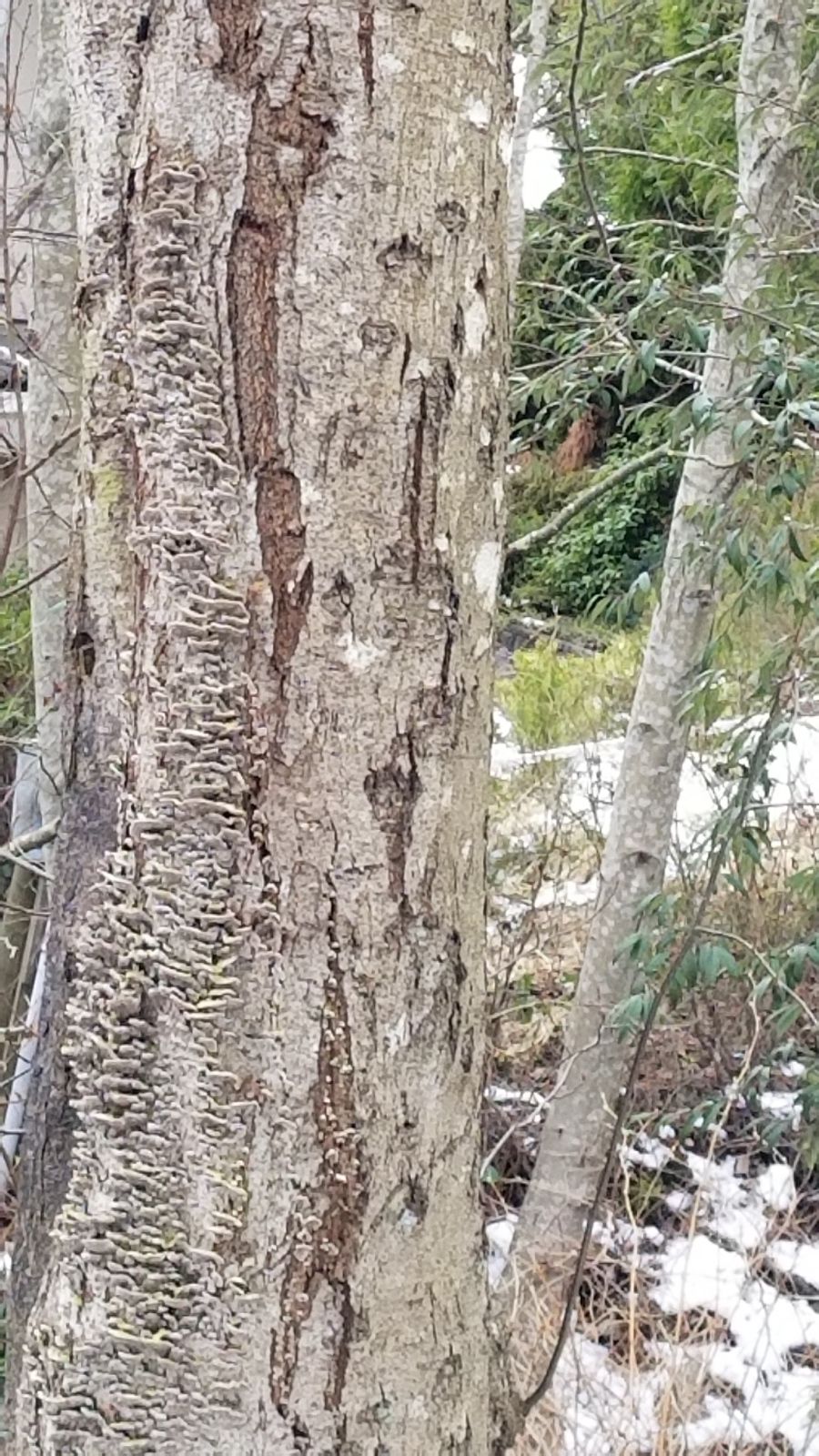
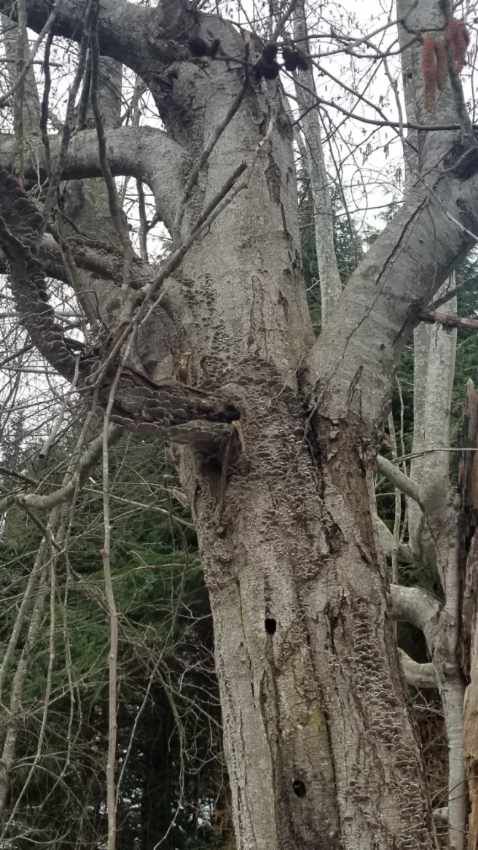
- Mushrooms or conks on the trunk
- Large areas of missing bark
- Fresh sap flow from cracks
- Swelling around old wounds
- Two stems pressing tightly together
A hollow trunk is not always an emergency. Some trees form strong outer shells. But shell thickness matters. So does species, wound size, decay type, and wind exposure.
Do not test cavities with tools. Do not chip bark away. You can worsen the wound. An arborist can use sounding, probing, visual assessment, and advanced tools where needed.
What crown signs mean danger?
The crown shows stress, but it does not tell the full story.
Look for:
- Large dead limbs
- A dead top
- Hanging broken branches
- Sparse leaves on one major side
- Branches rubbing hard against each other
- Heavy limbs over a roof
- Cracks where large limbs attach
- Sudden leaf loss outside normal season
Deadwood is common in mature trees. Small dead twigs are routine. Large dead limbs are different. A dead branch over a driveway is a falling object waiting for the next load.
If the issue is branch structure, pruning can reduce risk. That work should follow ANSI A300 standards. The Tree Care Industry Association states that ANSI A300 provides standard practices for arborists, urban foresters, and other tree care professionals. Since January 1, 2024, TCIA has offered the standards as one consolidated document.
Poor pruning creates future hazards. Topping is the usual example. It removes major leaders and triggers fast regrowth. Those shoots attach to wounded wood. They can fail later under snow, rain, or wind.
For trees that need structural work rather than removal, our tree cutting and pruning service in Vancouver focuses on safe cuts, branch weight, and long-term structure.
What Are the Biggest Warning Signs After a Windstorm?
After a windstorm, inspect from a safe distance.
Do not walk under damaged trees. Do not move branches near wires. Do not climb a ladder into a storm-damaged canopy.
The biggest post-storm warning signs are:
- A tree that now leans more than before
- Soil lifted near the root plate
- A split trunk or split co-dominant stem
- A hanging limb caught in the crown
- A broken top lodged in another tree
- Branches resting on a roof
- Any contact with utility lines
BC Hydro tells the public to assume every downed or damaged power line is live. Stay back at least 10 metres, about the length of a bus, and call 9-1-1.
That rule is not cautious language. It is life safety.
In Vancouver, North Vancouver, and Coquitlam, many residential lots have mature conifers close to service lines. Cedars and Douglas firs can hold broken tops high in the canopy. Homeowners often miss them from ground level. Then a later gust drops the section.
Call for emergency tree service when a damaged tree threatens a structure, blocks access, touches a wire, or has a hanging limb over a used area.
Storm work has added hazards. Loads are trapped. Limbs are under tension. The tree can move when one cut is made. This is not weekend chainsaw work.
WorkSafeBC's 2022 hand-falling safety campaign reported that the 2020 injury rate for manual tree falling was 20.1, nearly ten times the provincial average of 2.15. The point is simple. Tree work injures trained workers. It is not safer for homeowners.
How Do Roots, Soil, and the Root Flare Show Tree Risk?
Roots are the hidden structure.
A tree can lose a large number of absorbing roots and still leaf out. That fools people. Leaves show short-term function. Roots show stability.
Lower Mainland soils make root checks important. Many Vancouver and Richmond sites have compacted urban soils. North Vancouver slopes add drainage and erosion concerns. Burnaby lots often have old grade changes, retaining walls, and service trenches.
A healthy root flare spreads into the soil. It should not be buried by deep mulch, fill, pavers, or new lawn grade.
The danger signs are specific:
- Soil mounding on the windward side after a storm
- A gap opening between soil and trunk
- Roots cut close to the trunk
- Decay at buttress roots
- Fungal conks at ground level
- A trunk that rocks when wind blows
- Recent drainage changes around the tree
Root damage is common after renovations. A trench for drainage, gas, irrigation, or electrical work can remove structural roots. The closer the cut is to the trunk, the greater the concern.
A useful field rule is this: roots inside the dripline matter. Roots close to the trunk matter more.
If you are planning work near a valuable tree, use a certified arborist before cutting soil. Our root barrier service helps manage root conflicts where preservation is still practical. Root barriers are not a cure for every site. They work best when installed with a clear arborist plan.
Mulch also matters. Good mulch protects roots. Bad mulch damages them. A thick mulch volcano against the bark holds moisture. Keep mulch off the trunk. Leave the root flare visible.
When Does a Leaning Tree Become Dangerous?
A lean is dangerous when it is new, increasing, or paired with root movement.
Some trees grow with a natural lean. They adapt over years. Their wood forms in response to load. That is not the same as a tree that shifted last night.
Ask three questions:
- Was the lean present before?
- Has the soil lifted on the opposite side?
- Are cracks visible at the root flare or trunk?
A new lean after a storm is urgent. A slow lean toward open space needs assessment. A slow lean toward a house needs faster assessment.
Species matters too. Big-leaf maple can develop large, heavy scaffold limbs. Western red cedar can hold dense sail area in wind. Douglas fir can fail at the root plate when soil is saturated. Ornamental cherries often show decay in older trunks and unions.
The target matters most. A leaning tree over a garden bed has one risk profile. A leaning tree over a child's bedroom has another.
Do not cable a leaning tree yourself. Tree cabling is not a hardware-store fix. It needs the right inspection, anchor points, load judgment, and follow-up.
For selected trees with weak unions or heavy leaders, professional tree cabling can reduce movement and help preserve the tree. It is not a substitute for removing a tree with active root failure.
What Do Fungi, Cavities, and Dead Branches Tell You?
Fungi are evidence. They are not decoration.
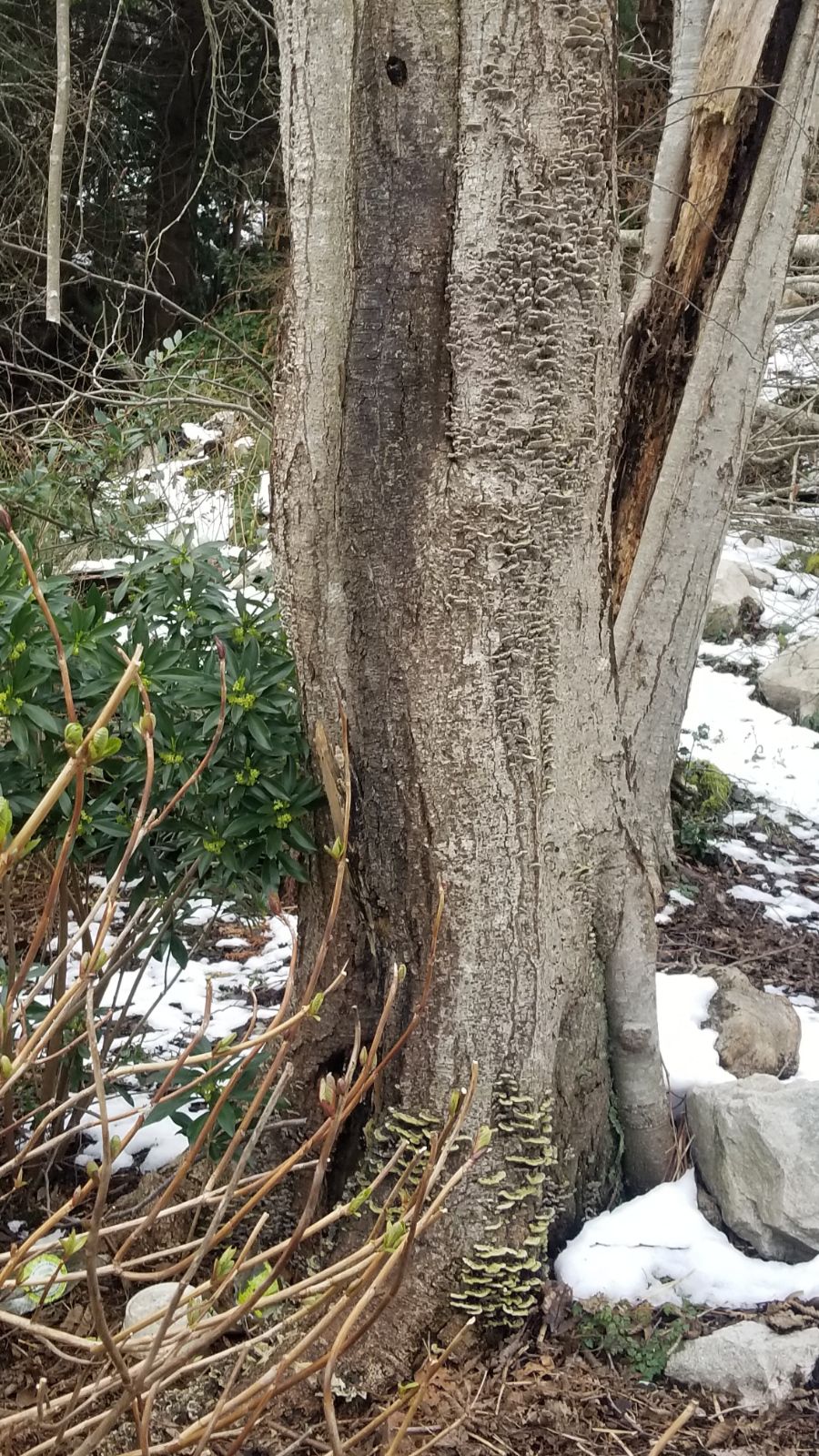
A mushroom on the lawn near a tree is not always serious. A conk attached to the trunk or root flare is more concerning. Conks are the fruiting bodies of decay fungi. They can signal internal wood decay.
Dead branches also tell a story. Small dead twigs happen. Large dead limbs show stress, disease, shade dieback, root issues, or structural decline.
Look closely at where deadwood sits:
- Dead branches at the lower interior can be normal shade pruning by the tree.
- Dead branches at the top can signal root or vascular decline.
- One dead side can indicate root damage on that side.
- Dead limbs over targets need prompt removal.
Cavities require judgment. Trees compartmentalize wounds. Some wall off decay well. Others decline fast. Species, cavity size, opening shape, shell thickness, and load all matter.
Do not assume a cavity means removal. Do not assume green leaves mean safety.
That is why arborist inspection beats guesswork. A formal arborist report in Vancouver documents condition, defects, risk, and bylaw context. It is often required for permits, construction, insurance questions, and neighbour disputes.
The U.S. National Institute for Occupational Safety and Health published a 2024 study reviewing 93 fatality reports involving landscaping and tree care workers from 1987 to 2023. The deaths involved tree work, equipment, falling objects, and worksite decisions. The study is a reminder that visible defects are only one part of safe work planning.
Which Vancouver Tree Species Most Often Need Hazard Assessment?
Any tree can become hazardous. Still, certain Lower Mainland species deserve close attention because of size, growth habit, or common defects.
Douglas fir
Douglas fir grows tall and carries major wind load. Mature firs near homes need root and crown review after trenching, grade work, or storm movement. A green crown does not rule out root decay.
Western red cedar
Western red cedar is common across North Vancouver, Burnaby, and Coquitlam. It can develop dead tops, stem decay, and windthrow risk in saturated soils. Dense hedging cedars also fail when stems are shaded out and then exposed by removal of nearby trees.
Big-leaf maple
Big-leaf maple often forms large scaffold limbs. Mature trees can have cavities, included bark, and heavy end weight. They need careful pruning, not topping.
Lombardy poplar
Poplars grow fast and fail fast. They are prone to limb breakage and decay. Large poplars near property lines need regular review.
Cherry and plum
Older ornamental cherries and plums often show trunk decay, cankers, and weak unions. They can still flower well while structure declines.
Birch
Birch can decline after drought stress, root damage, or pest pressure. Dead tops and brittle limbs need attention near walkways and driveways.
Local context matters. A cedar in Lynn Valley faces different wind, soil, and slope conditions than a cherry in Richmond. An arborist assessment should reflect the site, not just the species name.
For broader seasonal care, see our guide to seasonal tree care in Vancouver. It explains how weather shifts affect pruning, inspection, and maintenance timing.
Do You Need a Permit to Remove a Dangerous Tree in Vancouver?
Often, yes.
The City of Vancouver states that a permit is required to remove any private-property tree with a diameter of 20 cm or more, measured at 1.4 metres above ground. The City also notes that permission can be granted when an arborist certifies the tree is dead, dying, or hazardous.
That is Protection of Trees By-law No. 9958.
Do not remove first and ask later. The permit must be posted visibly during removal.
Other Lower Mainland cities have their own rules:
- Richmond Tree Protection Bylaw No. 8057 generally prohibits cutting or removing a tree larger than 20 cm DBH without a permit.
- Burnaby defines protected trees by site type. On properties not under development, protected size starts at 30 cm for conifers and 45 cm for deciduous trees. Development sites use 20 cm or greater.
- Coquitlam's Tree Management Bylaw protects private trees. The City states that, in most cases, owners can remove up to two protected-size trees per 12-month period without a permit, unless the trees are in special areas.
- District of North Vancouver materials state that permits apply to both removal and pruning of protected trees under Tree Protection Bylaw 7671.
These rules change by city and site condition. Streamside areas, replacement trees, covenant trees, development permits, and boulevard trees add restrictions.
This is why we check bylaws before recommending removal. A hazardous tree still needs the right documentation. The goal is safety and compliance.
If removal is the right call, use a qualified crew. Our tree removal service in Vancouver includes hazard assessment, rigging planning, site protection, and permit-aware work.
Can a Dangerous Tree Be Saved With Pruning or Cabling?
Yes, when the defect is manageable and the target risk is acceptable.
Tree preservation is often possible. The key is choosing the right method.
Pruning can reduce deadwood, end weight, and branch conflicts. Cabling can support selected weak unions. Mulching can improve root-zone conditions. Root barriers can manage conflicts when installed correctly. Monitoring can track a defect that is not yet urgent.
Removal is the better choice when:
- The root plate is moving
- The trunk has severe structural decay
- The tree is dead and near a target
- A major stem has split
- The tree cannot be pruned enough without ruining structure
- The site target is too severe for retention
Tree work should match ANSI A300 standards. That means clear objectives first. Deadwood pruning is not the same as crown reduction. Clearance pruning is not the same as structural pruning.
Bad work increases risk. Topping, flush cuts, lion-tailing, and over-thinning all create future problems. A tree that looks smaller after bad pruning can be more dangerous later.
If the tree is too compromised to retain, removal leaves another question: what happens to the stump? Stumps can interfere with replanting, paving, drainage, and trip safety. Our stump grinding service in Vancouver clears the site after safe removal.
When Should You Call an Arborist Instead of Inspecting It Yourself?
Call an arborist when the consequence of being wrong is high.
Homeowners can spot warning signs. They should not diagnose hidden risk from the ground.
Call when you see:
- A fresh lean
- Root plate movement
- A cracked trunk
- Fungal conks at the base
- A hanging broken limb
- A large dead top
- A tree over a roof, road, or line
- Decay near the root flare
- Recent construction near the tree
- A neighbour dispute about tree safety
Also call before major pruning. Mature trees need planned cuts. Over-pruning can create sunscald, decay, and weak regrowth.
An ISA-certified arborist brings three advantages.
First, training. ISA certification signals professional knowledge in tree biology, pruning, diagnosis, and safety. Second, process. Arborists use structured inspection, not hunches. Third, documentation. A written report helps with permits, insurance, strata concerns, and municipal review.
WCB registration matters too. Tree work has real injury risk. A homeowner should not carry that risk because a contractor lacks coverage.
The U.S. Department of Labor reported in 2024 that Bureau of Labor Statistics data showed 222 fatal workplace injuries in tree and landscaping services nationwide in 2022. WorkSafeBC also treats tree falling and arborist work as high-risk. Those facts support one practical rule: hire properly insured professionals.
If you are comparing providers, read our guide to choosing arborists near you in Vancouver. Look for ISA certification, WCB registration, clear scope, and bylaw knowledge.
How Should You Document a Dangerous Tree for a Permit, Insurance, or Neighbour Concern?
Good documentation prevents confusion.
Start with photos. Take them from a safe location. Do not stand under the defect.
Capture:
- The full tree from two angles
- The base and root flare
- Any soil cracks or lifting
- Trunk cracks or cavities
- Fungal conks
- Dead or hanging limbs
- The target, such as roof, fence, driveway, or wire
- A measuring tape near trunk diameter, if safe
Write down the date and weather. Note whether the defect appeared after wind, rain, construction, or pruning.
For Vancouver, diameter is measured at 1.4 metres above ground. This is often called DBH, or diameter at breast height. The City of Vancouver uses 20 cm as the private-tree permit threshold. Richmond uses the same 20 cm DBH threshold for many private tree removals.
Do not trespass to inspect a neighbour's tree. Do not cut branches across the property line without legal clarity and arborist advice. Tree law disputes get expensive fast.
An arborist report should include species, DBH, condition, defects, risk rating, recommendations, and photos. For development sites, cities often ask for retention and protection details. That includes tree protection barriers and root-zone limits.
When a tree is dangerous, clear records help the city act faster. They also show that the homeowner took reasonable steps.
What Should You Do Right Now If You Think a Tree Is Dangerous?
Take five steps.
First, keep people away. Move vehicles if safe. Block access to the target zone. Keep children and pets inside.
Second, check for wires. If a tree or branch contacts a power line, stay at least 10 metres away. Call 9-1-1. Do not touch the tree, fence, vehicle, or branch.
Third, photograph from a safe distance. Get the tree, defect, and target in the same frame where possible.
Fourth, call an ISA-certified arborist. Ask for a hazard assessment. Ask whether a permit, emergency exemption, or arborist report applies.
Fifth, do not start cutting. Cutting changes load. A branch under tension can snap back. A split stem can release. A hung-up top can fall.
If the issue is urgent, Aesthetic Tree & Hedge Services can assess the site, plan the work, and complete safe removal or pruning where required. We serve Vancouver, Burnaby, North Vancouver, Richmond, Coquitlam, and nearby Lower Mainland communities.
Call Aesthetic Tree & Hedge Services for a free estimate at (604) 721-7370. Our crews are ISA-certified and WCB registered.
FAQ
How do I know if a tree is dangerous?
A tree is dangerous when it has a serious defect and a target. Look for a fresh lean, cracked soil, root flare movement, trunk cracks, fungal conks, large dead limbs, or hanging broken branches. If the tree can hit a house, driveway, sidewalk, road, or power line, call an ISA-certified arborist.
Is a leaning tree always dangerous?
No. Some trees grow with a natural lean for many years. A leaning tree becomes dangerous when the lean is new, increasing, or paired with soil lifting, root cracks, trunk cracks, or decay. A lean toward a home or wire needs faster assessment.
Can I remove a dangerous tree in Vancouver without a permit?
Vancouver requires a permit to remove any private-property tree with a diameter of 20 cm or more, measured at 1.4 metres above ground. The City can allow removal when an arborist certifies that the tree is dead, dying, or hazardous. Emergency situations still need proper documentation.
What should I do if a tree is touching a power line?
Stay at least 10 metres away and call 9-1-1. BC Hydro says every downed or damaged line should be treated as live. Do not touch the tree, branch, fence, ladder, vehicle, or anything in contact with the line.
Can pruning make a dangerous tree safe?
Pruning can reduce risk when the problem is deadwood, end weight, clearance, or branch structure. It cannot fix active root failure, severe trunk decay, or a major split stem. Pruning should follow ANSI A300 standards and be done by trained arborists.
What is the difference between an arborist report and a tree estimate?
An arborist report documents species, size, condition, defects, risk, photos, and recommendations. Cities, insurers, strata councils, and builders often need that record. An estimate explains the scope of work and site plan. A dangerous tree often needs both.
Who should I call for a dangerous tree in the Lower Mainland?
Call an ISA-certified, WCB registered arborist. Aesthetic Tree & Hedge Services provides hazard assessment, arborist reports, pruning, emergency tree service, stump grinding, and tree removal across Vancouver, Burnaby, North Vancouver, Richmond, Coquitlam, and the Lower Mainland. Call (604) 721-7370 for a free estimate.
Found this helpful? Follow our tree care insights directly on Google.
Make us your preferred source on GoogleBefore You Go
Where are you in your tree care journey?
Our Tree Care Services
ISA-certified arborists serving Greater Vancouver


Explore Our Tree Care Services
From expert pruning to safe tree removal, our ISA-certified arborists are ready to help across Greater Vancouver.
View Services