
TL;DR — Quick Summary
preparing trees larger storm risks vancouver starts with hazard checks, storm pruning, permits, and fast cleanup. Call ISA-certified arborists.
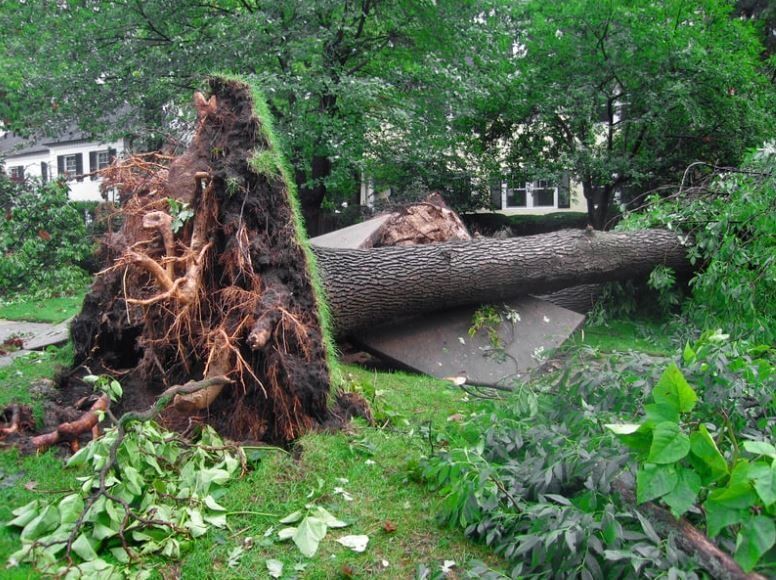
preparing trees larger storm risks vancouver starts before the forecast turns red.
Not when the cedar is leaning over the garage.
Not when the maple limb is bouncing above the service line.
Not when rain has soaked the soil for three straight days.
That is too late.
In Vancouver, big trees fail for clear reasons. Weak branch unions. Root loss. Over-thinning. Decay pockets. Soil saturation. Bad past cuts. New exposure after a neighbouring tree comes down. The storm is only the final push.
A good storm plan finds those weak points early. Then it fixes what can be fixed. It removes what can’t be kept safely. It respects the bylaw. It protects the house, the fence, the cars, and the people walking under the canopy.
Aesthetic Tree & Hedge Services is an ISA-certified, WCB registered arborist team serving Vancouver, Burnaby, North Vancouver, Richmond, Coquitlam, and the Lower Mainland. We assess hazard trees, prune to ANSI A300 standards, handle tree removal permits, and respond when storm damage becomes urgent.
TL;DR
- Vancouver storms are harder on trees when wind, rain, saturated soil, and drought stress stack together.
- BC Hydro reported in 2023 that trees and bad weather cause more than half of all power outages in B.C.
- The City of Vancouver requires a permit to remove most private trees 20 cm or wider at 1.4 m above grade.
- Mature Douglas fir, cedar, hemlock, Big-leaf maple, birch, and poplar need different storm-risk checks.
- Don’t top trees. Don’t strip the inner canopy. Use ISA-certified arborists and ANSI A300 pruning standards.
Why Are Vancouver Trees Facing Larger Storm Risks Now?
Vancouver has always had wet winters. That part isn’t new.
What’s changed is the pressure on urban trees.
The City of Vancouver says local climate projections point to more frequent and intense rainfall events by 2050. Heavy rain matters because roots need soil strength. When soil gets soaked, it grips roots with less force. Then wind loads the crown. The tree starts to move. If roots are decayed, cut, shallow, or trapped under hardscape, the whole tree can fail.
The City also says Vancouver will face hotter, drier summers, more intense rainfall, and rising sea levels. That is a hard pattern for trees. Summer drought weakens fine roots. Fall rain adds weight. Winter wind tests every defect.
BC Hydro warned in 2023 that drought-damaged trees and branches increase outage risk. The same release stated that trees and adverse weather are the single biggest cause of power outages in B.C., causing more than half of all outages. That is not theory. That is what crews see on the ground.
Metro Vancouver’s 2020 Regional Tree Canopy Cover and Impervious Surface report adds another piece. It found that Vancouver had 25% tree canopy cover in 2020. It also found that 64% of Vancouver’s land area was impervious surface. That means more roofs, roads, patios, lanes, and compacted soils. Water runs fast. Roots get less open soil. Trees stand in tighter spaces.
The risk isn’t spread evenly. A tall Douglas fir in North Vancouver has different exposure than a Big-leaf maple in Kitsilano. A cedar beside a new laneway home in Dunbar faces different root pressure than a street-side cherry near Commercial Drive. A poplar near a lane in Richmond faces wind and wet-soil risk in a different way again.
That is why storm prep has to be specific. Species. site. soil. target. defect. wind exposure. bylaw. All of it matters.
Which Tree Defects Should Homeowners Check Before Storm Season?
Start with the parts of the tree that carry load.
A storm doesn’t care if a tree looks full and green. It cares where the structure is weak.
Look for these warning signs:
- A fresh lean, or a lean that has changed since last winter
- Soil lifting on one side of the trunk
- Cracks in the trunk or main limbs
- Large dead branches over roofs, driveways, patios, or sidewalks
- Mushrooms or conks at the root flare
- Cavities where old limbs broke out
- Included bark in tight V-shaped branch unions
- Hanging branches caught in the canopy
- Heavy limbs reaching over the house
- Recent trenching, paving, or excavation near roots
- Sudden dieback in the upper crown
- Woodpecker activity on a main stem
- Old topping cuts with weak regrowth
The root flare is one of the first places we check. That is where the trunk widens into the roots. If mulch, soil, pavers, or grade changes bury the flare, decay can hide. If the flare is visible but one side is lifting, the tree needs a hazard assessment.
Conifers show risk in their own way. A cedar can hold green foliage while decay is active inside. A Douglas fir can carry deadwood high in the crown. A hemlock can decline from drought and still look passable from the lawn.
Deciduous trees show other clues. Big-leaf maple often develops heavy lateral limbs. Birch can decline from drought and pests. Poplar can grow fast and shed brittle limbs. Cherry and plum can have old pruning wounds that never closed well.
In our field work, the most dangerous trees are often the ones homeowners have learned to ignore. They have been leaning for years. They have had a cavity for years. They have dropped small branches for years. Then one storm turns a known defect into a claim.
If you see more than one warning sign, book an arborist report in Vancouver. A written assessment helps you understand risk, permit rules, and the right next step.
When Does A Vancouver Tree Need Pruning Before A Storm?
A tree needs storm pruning when the work reduces a clear risk without harming the tree.
That last part matters.
Bad pruning makes storm risk worse. Topping creates weak shoots. Lion-tailing strips inner branches and leaves weight at the ends. Flush cuts injure the branch collar. Over-thinning lets wind move through in strange ways and can increase limb movement.
Professional pruning is not about making a tree smaller at any cost. It is about a defined objective.
For storm prep, that objective often includes:
- Removing dead, broken, or hanging branches
- Reducing end weight on long limbs
- Improving clearance from roofs and structures
- Correcting rubbing or crossing limbs
- Reducing risk from weak branch unions
- Preserving enough live foliage for tree health
- Keeping natural form where possible
The Tree Care Industry Association states that ANSI A300 standards give arborists standard practices and specification guidance for tree care. That matters because a homeowner should not have to guess whether a pruning job is proper. The work should follow a known standard.
Timing also matters.
Late summer and early fall are good times to inspect before the first major wind events. Winter pruning works for many deciduous trees, but you don’t want to wait until a weather warning is already posted. Crews are then dealing with emergencies, blocked roads, and downed limbs.
For mature trees, pruning often needs to be staged. Removing too much live canopy in one visit shocks the tree. A good arborist will explain what can be done now and what should wait.
If your tree has limbs over the roof, an old topping history, or branches near service lines, ask for tree cutting in Vancouver by trained arborists. The goal is not a rough cut. The goal is risk reduction with proper cuts.
When Is Tree Removal Safer Than Storm Pruning?
Tree removal becomes the right choice when the defect is too serious to manage with pruning.
That can happen with root decay, major trunk cracks, advanced cavities, severe lean, dead standing trees, or trees already failing at the base. It can also happen when a tree has outgrown a site and now places a high-value target at risk.
A target is anything the tree can hit. A house. A garage. A sidewalk. A power line. A neighbour’s roof. A daycare path. A parked vehicle. A retaining wall. Risk rises when a serious defect and a serious target line up.
The City of Vancouver’s Protection of Trees By-law No. 9958 says a permit is required to remove a private tree with a diameter of 20 cm or greater, measured 1.4 m above the ground. The City also says removal can be permitted when an arborist certifies a tree as dead, dying, or hazardous.
That is where documentation matters. A homeowner saying “it looks dangerous” is not the same as an arborist report. Photos, measurements, defect notes, species, condition, target rating, and permit context all matter.
Removal is also not one method. A small ornamental tree can be felled in sections. A tight backyard cedar in Kitsilano may need rigging. A tall fir near a house in North Vancouver may need crane access. A storm-cracked maple over a garage may need immediate stabilization before the final cuts.
If the tree is hazardous, close the area under it. Keep children, pets, cars, and contractors away. Do not pull hanging limbs with a rope. Do not cut a tensioned stem from a ladder. Do not work near power lines.
For trees that can’t be made safe through pruning, use professional tree removal in Vancouver. For large, confined, or high-risk removals, a crane or advanced rigging plan may be needed.
How Do Rain, Soil, And Roots Change Storm Risk?
Wind gets the attention. Soil decides a lot of failures.
Roots hold a tree in place by spreading through usable soil. They need oxygen, structure, and room. They do not do well under compacted driveways, new patios, trench cuts, repeated grade changes, or standing water.
When heavy rain saturates soil, root plates move more. That is why some trees fail after long rain followed by wind. The gust does not need to be historic. It only needs to arrive when anchorage is weak.
Environment and Climate Change Canada’s wind impact guide says gusts of 70 to 90 km/h can break small branches and cause possible power outages. At 90 to 100 km/h, some tree limbs break, occasional trees topple, and power outages occur. At 100 to 120 km/h, branch breakage becomes more common and some trees topple.
Now add saturated soil. Add drought-stressed roots. Add a tree that lost roots during a fence or drain repair. That is how a normal winter storm turns serious.
Root damage is often hidden. We look for:
- Excavation within the dripline
- New retaining walls near the trunk
- Soil piled against the root flare
- Paving over root zones
- Drainage changes after construction
- Cracked soil near the base
- Fungal fruiting bodies
- Crown dieback after site work
The Metro Vancouver 2020 report found that impervious surface increased by 2% across the region from 2014 to 2020. Within the Urban Containment Boundary, it increased by 4%. More hard surface means less forgiving soil around many urban trees.
A root barrier can help in selected cases where roots conflict with hardscape. Mulching can protect soil and reduce moisture swings. But these tools need judgment. A root barrier placed wrong can injure the roots a tree needs for stability.
If your tree is close to a driveway, drain line, new build, or retaining wall, get the roots checked before storm season. The crown tells only part of the story.
What Should Vancouver Homeowners Know About Tree Permits And Bylaws?
Tree work in Vancouver is not just a saw-and-truck decision.
The bylaw controls many removals. Other Lower Mainland cities have their own rules. Burnaby, Richmond, Coquitlam, North Vancouver, and Vancouver do not treat every tree the same way. Diameter, species, condition, development status, and location can all change the permit path.
In Vancouver, the key private-tree threshold is 20 cm diameter at 1.4 m above the ground. The City says a tree of that diameter has a circumference of about 64 cm. If the tree meets that threshold, removal usually needs a permit unless a specific exemption applies.
The City also says development projects must retain existing trees unless removal conditions apply. Trees on adjacent properties or boulevards that face damage risk must be protected too. If trees 20 cm or larger are on site, an arborist report is required for a development permit application.
That matters for homeowners planning:
- Drainage work
- New fences
- Laneway homes
- Additions
- Garage rebuilds
- Driveway changes
- Retaining walls
- Major landscaping
Storm prep and permit planning often meet. A tree can be hazardous and still need paperwork. A tree can be inconvenient and still be protected. A tree can be dead and still need proper documentation before removal.
This is where an ISA-certified arborist saves time. We measure DBH, document defects, check targets, explain permit requirements, and help homeowners avoid preventable delays.
If a tree has already failed after a storm, the first step is safety. The second step is documentation. Take photos before cleanup if it is safe to do so. Record damage. Keep people back. Then call an arborist or emergency crew.
Which Trees In Vancouver Need The Closest Storm Review?
Every species can fail. But some patterns show up again and again in the Lower Mainland.
Douglas fir needs space and root stability. It is strong, but it can be unforgiving when roots are cut or the tree is newly exposed. If a neighbouring tree was removed, the remaining fir now takes wind it did not take before.
Western red cedar can decline after drought. It can also hide internal decay. Brown interior foliage alone is not proof of danger, but dieback, root damage, and stem defects need review.
Big-leaf maple can carry broad limbs with heavy end weight. Old pruning wounds and weak unions need attention, especially over roofs and lanes.
Birch often struggles in hot, dry urban sites. A thin crown, dead top, and bark problems should not be ignored.
Poplar and willow grow fast and can shed limbs. They need careful target review when close to homes, play areas, and parking.
Cherry, plum, and ornamental pear often split at tight unions. They look manageable because they are smaller. Then one loaded branch tears out.
Hedges deserve storm prep too. Tall cedar hedges can catch wind like a sail. Overgrown laurel hedges can split under wet snow. A hedge leaning into a lane or walkway becomes a safety problem fast.
For tall or dense hedges, proper hedge trimming services in Vancouver reduce weight and keep growth controlled. The cut should fit the plant. A hedge butchered into bare wood often recovers poorly.
Neighbourhood also matters. Shaughnessy, Kerrisdale, Dunbar, and parts of West Side Vancouver have large mature trees on private lots. East Vancouver has many tighter lots, lanes, and overhead service conflicts. Richmond has wet soils and wind exposure. North Vancouver has slope, tall conifers, and heavy rain. Coquitlam has steep sites and fast-changing development edges.
A storm plan should match the site. A checklist is useful. An inspection is better.
How Should You Prepare Trees Before A Wind Warning?
If a warning is already active, don’t start major tree work.
Do the safe basics.
Move cars out from under large trees. Clear patio furniture, planters, trampolines, and loose items. Keep children away from big trees during the event. Charge phones. Check BC Hydro outage updates. Stay at least 10 metres back from any downed line, as BC Hydro advises.
Do not climb a tree in rising wind. Do not use a ladder against a moving limb. Do not cut branches touching wires. Do not stand under a hung branch to “just pull it down.”
Before storm season, use this homeowner plan:
- Walk the property after leaf-out and again before fall storms.
- Photograph large trees from the same angle each season.
- Watch for new lean, cracks, or root movement.
- Keep mulch wide and shallow, away from the trunk.
- Avoid trenching inside the dripline.
- Prune deadwood before bad weather arrives.
- Reduce long, heavy limbs over targets.
- Remove hazardous trees with permits in place.
- Keep hedges from becoming top-heavy.
- Have an emergency tree service contact ready.
This work is less dramatic than a storm call. That is the point.
A planned crew has room to assess. They can rig properly. They can protect lawns, fences, and structures. They can check permit needs. They can schedule equipment. Emergency work happens under pressure, often with damage already done.
For urgent situations after wind, rain, or snow, call emergency tree service. That includes trees on roofs, blocked driveways, cracked stems, hanging limbs, and trees leaning after soil movement.
What Should You Do After A Tree Fails In A Storm?
First, make the area safe.
Keep people back. Look up before walking near the tree. One failed limb often leaves another hanging above it. Check for wires. If wires are involved, stay back and call 9-1-1 or BC Hydro. Treat every downed line as live.
Then document the damage if you can do so from a safe place. Take photos of the tree, the base, the failed limb, property damage, and nearby targets. These photos can help with insurance, permits, and arborist review.
Do not rush to cut the trunk. Storm-failed wood is often under compression and tension. A wrong cut can cause the stem to roll, spring, or split. That is how people get hurt.
Call an arborist for:
- Trees on structures
- Split trunks
- Hanging limbs
- Root plate movement
- Trees leaning toward homes or streets
- Failed limbs near service lines
- Large broken tops
- Damage on shared property lines
Cleanup should also include the stump and roots when removal is complete. A storm stump left high can block rebuilding, fencing, drainage work, or replanting. Grinding also helps restore the site.
For finished removals, stump grinding in Vancouver clears the leftover stump below grade so the area can be repaired or replanted.
After one tree fails, inspect nearby trees. Wind exposure changes fast. A tree that grew sheltered for 30 years can face new loading after its neighbour is gone.
How Can You Keep Trees Strong Without Making Them Dangerous?
The best storm tree is not the most aggressively cut tree.
It is the tree with good structure, sound roots, proper clearance, and enough canopy to stay healthy.
That means regular care:
- Inspect mature trees every one to three years.
- Inspect sooner after construction or nearby removals.
- Water young trees during drought.
- Mulch root zones with wood chips, not soil piled on trunks.
- Train young trees early so weak unions don’t become large defects.
- Use reduction cuts instead of topping.
- Keep heavy equipment out of root zones.
- Plant the right tree for the space.
The City of Vancouver’s 2025 Urban Forest Strategy sets a target of 30% canopy cover by 2050. The City also reported that Vancouver’s canopy grew from 21% in 2013 to 25% city-wide by 2025 reporting. That growth matters. But private trees are a large part of the urban forest. Homeowners carry real responsibility.
Metro Vancouver’s 2020 report found that 38% of tree canopy inside the Urban Containment Boundary was in residential areas. Single detached residential neighbourhoods held 21% of UCB canopy. That means yard trees are not background. They are infrastructure.
But infrastructure needs maintenance.
A mature tree beside a home should be treated like a roof, furnace, or retaining wall. You don’t wait for failure. You inspect. You maintain. You document. You repair before the big event.
Aesthetic Tree & Hedge Services follows ISA-certified practices and works to ANSI A300 standards. We are WCB registered. We know local municipal bylaw requirements. We also know the difference between a tree that scares a homeowner and a tree that truly meets hazard criteria.
That distinction matters. It protects trees worth keeping. It removes trees that no longer belong near people and structures.
How Do You Choose The Right Arborist For Storm Preparation?
Choose the arborist before you need one.
When the storm is already here, every homeowner with a cracked cedar is calling at once. Good crews book fast. Bad crews appear fast too.
Ask direct questions:
- Are you ISA-certified?
- Are you WCB registered?
- Do you carry liability insurance?
- Do you follow ANSI A300 pruning standards?
- Can you explain Vancouver permit requirements?
- Will you provide a written scope?
- Will you identify targets and defects?
- Will you protect the site during rigging and cleanup?
Avoid anyone who recommends topping as routine storm prep. Avoid vague claims like “we’ll thin it out so wind passes through.” Avoid ladder-and-chainsaw work on large limbs. Avoid cash-only crews with no insurance.
A proper arborist will tell you when no work is needed. They will also tell you when pruning is not enough. Both answers require integrity.
They should speak clearly about root flare, branch collar, load, targets, decay, included bark, clearance, and permit required under the bylaw. They should be able to name the species and explain how that species behaves in Vancouver conditions.
For deeper reading on local arborist selection, see Aesthetic Tree’s guide to arborists near me in Vancouver. For broader seasonal timing, our seasonal tree care guide explains what to handle through the year.
Storm preparation is not fear. It is control.
It means finding the one limb that matters. The one root problem that changed. The one permit issue that needs time. The one tree that should not go through another winter beside your house.
What Sources Support This Vancouver Storm-Tree Guidance?
This article used public data and industry standards that matter for Lower Mainland tree care.
City of Vancouver’s 2025 Urban Forest Strategy reports more than 150,000 street trees, 36,000 specimen trees in golf courses and urban parks, and more than 1 million trees across 444 hectares of public forests and woodlands. It also sets a 30% canopy target by 2050.
City of Vancouver’s May 2025 Urban Forest Strategy release reports that canopy grew by four percentage points since 2013, reaching 25% city-wide. It also names Strathcona, Sunset, and Downtown as low-canopy areas, with Strathcona below 10% canopy.
Metro Vancouver’s 2020 Regional Tree Canopy Cover and Impervious Surface report found 31% canopy cover inside the Urban Containment Boundary, with Vancouver at 25%, Burnaby at 31%, Richmond at 11%, and Coquitlam at 58% within their municipal boundaries. It also found Vancouver at 64% impervious surface.
BC Hydro’s 2023 storm-season release states that trees and adverse weather are the largest cause of power outages in B.C., causing more than half of all outages. It also reported more than 1,400 power poles and nearly 90 kilometres of power lines replaced after wildfire and drought impacts that year.
Environment and Climate Change Canada’s wind impact guidance links 70 to 90 km/h gusts with small branch breakage and possible power outages, 90 to 100 km/h gusts with some limb breakage and occasional toppled trees, and 100 to 120 km/h gusts with more common branch breakage and some toppled trees.
The Tree Care Industry Association describes ANSI A300 as standards that provide practices and specification guidance for arborists, urban foresters, landscape architects, and contractors.
These sources do not replace an on-site hazard assessment. Trees fail because of site-specific conditions. The defect has to be seen, measured, and judged against the target.
FAQ
How often should large trees be inspected in Vancouver?
Large trees should be inspected every one to three years. Inspect sooner after major storms, nearby construction, trenching, paving, drought stress, or removal of neighbouring trees. Mature trees near homes, lanes, sidewalks, and service lines need closer review because the target risk is higher.
Do I need a permit to remove a storm-damaged tree in Vancouver?
Often, yes. The City of Vancouver requires a permit to remove most private trees 20 cm or wider at 1.4 m above ground. If a tree is dead, dying, or hazardous, an arborist can document that condition. Emergency safety comes first, but photos and arborist documentation are important.
Is topping a good way to reduce storm risk?
No. Topping creates weak regrowth, large wounds, and decay entry points. It often increases future risk. Proper storm pruning uses selective cuts, deadwood removal, clearance pruning, and end-weight reduction based on ANSI A300 standards.
What trees fail most often during Vancouver storms?
Any tree can fail when defects, saturated soil, and wind align. In the Lower Mainland, we pay close attention to drought-stressed cedars, exposed Douglas firs, heavy-limbed Big-leaf maples, declining birch, fast-growing poplar, and older ornamental trees with tight unions or past bad cuts.
Who should I call if a tree is leaning after a storm?
Keep people and cars away from the tree. Stay clear of wires. Then call Aesthetic Tree & Hedge Services for emergency assessment and cleanup. For a free estimate, call (604) 721-7370. Our ISA-certified arborists are WCB registered and serve Vancouver and the Lower Mainland.
Call Aesthetic Tree & Hedge Services for a free estimate at (604) 721-7370. Our ISA-certified, WCB registered arborists handle hazard assessment, storm pruning, tree removal, permits, hedge trimming, stump grinding, and emergency tree service across Vancouver, Burnaby, North Vancouver, Richmond, Coquitlam, and the Lower Mainland.
Found this helpful? Follow our tree care insights directly on Google.
Make us your preferred source on GoogleBefore You Go
Where are you in your tree care journey?
Our Tree Care Services
ISA-certified arborists serving Greater Vancouver


Explore Our Tree Care Services
From expert pruning to safe tree removal, our ISA-certified arborists are ready to help across Greater Vancouver.
View Services