
TL;DR — Quick Summary
Fall — not spring — is the best time to plant a tree in Vancouver, thanks to our mild, wet-winter Cfb climate. This ISA-certified guide covers the ideal planting windows, the best BC-native and climate-suited species, City of Vancouver bylaw replacement rules, and how to plant a tree so it survives its first year.
Ask ten Vancouver gardeners when to plant a tree and you'll get ten answers, most of them involving spring. Spring feels right. The garden centres are full, the weather is pleasant, and planting a tree on a sunny April afternoon is genuinely lovely. But here is the thing the garden-centre rush gets wrong: spring is not the best time to plant a tree in Vancouver. For most trees, in most years, fall is.
That's not a quirky opinion. It comes straight out of how Vancouver's climate works and what a freshly planted tree actually needs to survive its first year. After more than two decades planting and caring for trees across Greater Vancouver, our ISA-certified arborists have watched the timing of a planting do more to determine whether a young tree thrives or struggles than almost any other single decision. Get the season right and the tree has months to settle in before it is ever stressed. Get it wrong and you spend the next summer nursing it.
This guide walks through the best planting windows for Vancouver, why our specific climate makes fall so favourable, which trees suit our conditions, and the City of Vancouver rules you should know before you dig. By the end, you'll be able to time a planting like an arborist would — and if you'd rather hand the job to one, you can always contact our team for an assessment.
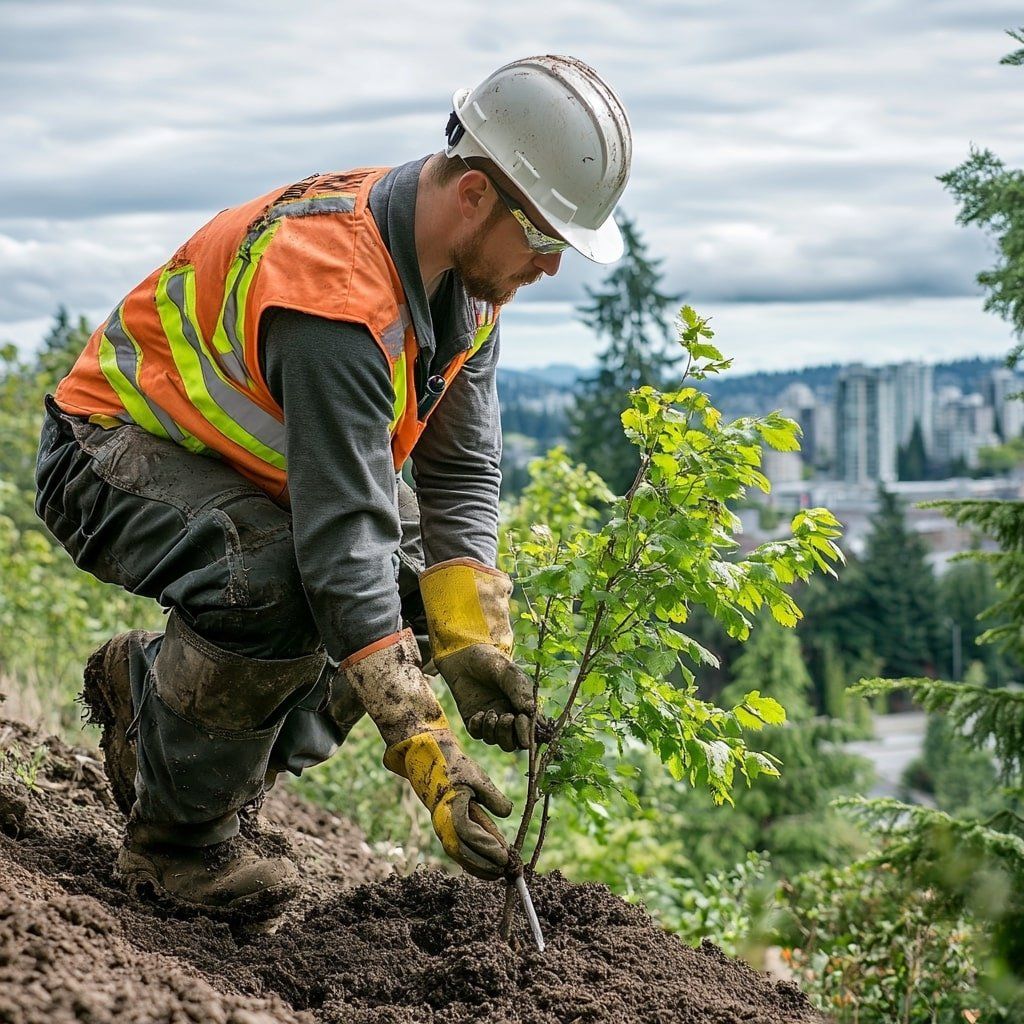
The quick version: in Vancouver's mild, wet-winter climate, the best time to plant most trees is fall — roughly mid-September through November — because the soil is still warm, the rains have returned, and the tree can grow roots all winter without the demand of holding a full canopy of leaves. Early spring, before bud break, is the solid second choice. Summer is the season to avoid. The rest of this guide explains why — and what to do if your timing is not ideal.
Why Does Vancouver's Climate Decide the Best Planting Time?
Every recommendation in this article traces back to one fact: Vancouver has a temperate oceanic climate — Cfb in the Köppen climate classification — and that climate is unusually kind to a young tree, but only in the right season.
Two features matter most. The first is rainfall. Metro Vancouver receives well over 1,000 millimetres of precipitation a year — the City of Vancouver and regional climate records put the long-term average comfortably above that — and the overwhelming majority of it falls between October and March. A tree planted in fall is therefore planted directly into its irrigation. The clouds water it, consistently, for months, exactly when its roots are trying to establish.
The second is mildness. Vancouver winters are cool and wet rather than deeply frozen. Most of the populated Lower Mainland sits in Canadian plant hardiness zone 8, one of the mildest zones in the country. The ground rarely freezes hard or for long. That matters because roots keep growing in cool, unfrozen soil — far later into the year, and far earlier, than most homeowners assume. A tree's roots do not switch off the way its leaves do.
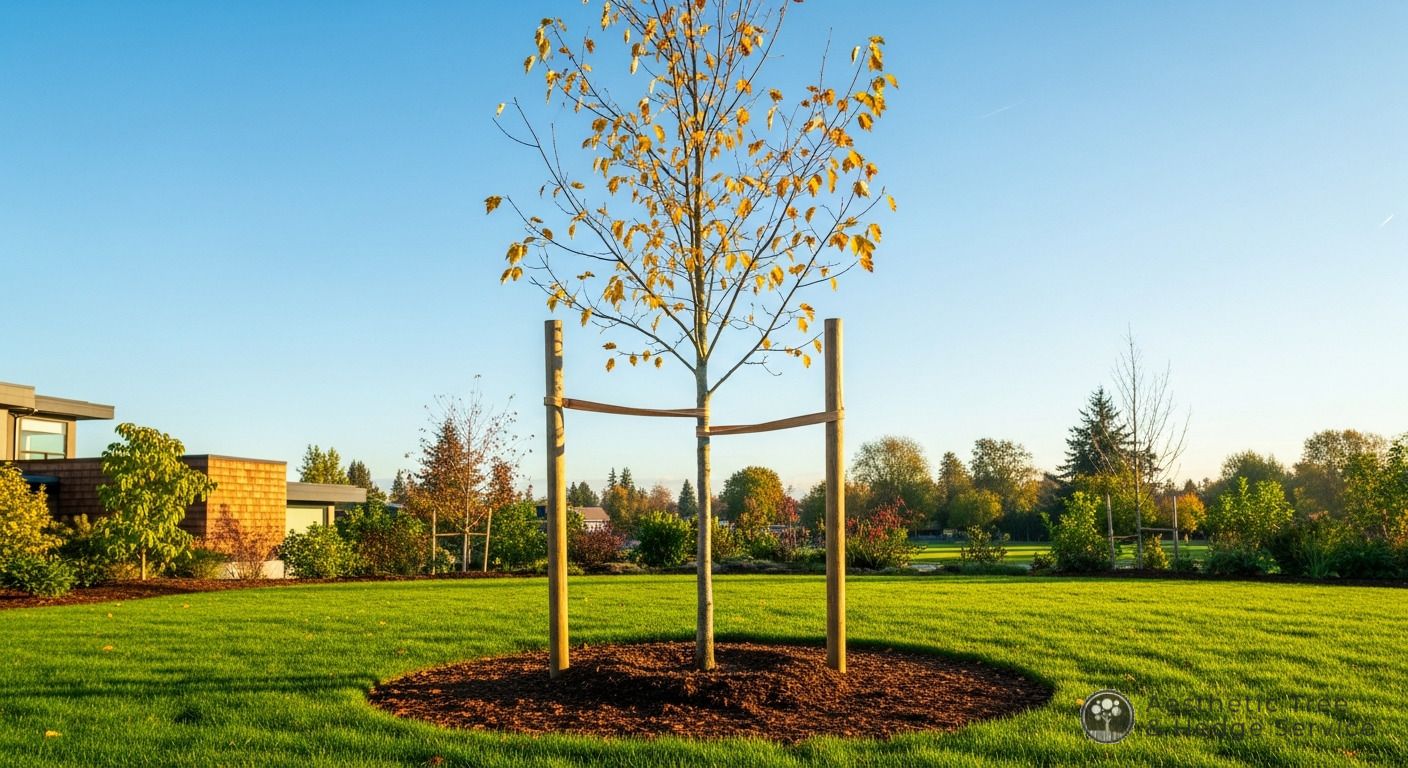
Put those two together and the logic of fall planting falls into place. In autumn, the soil still holds the warmth of summer, the rains have arrived to do the watering, and the tree — having dropped its leaves, or about to — is pouring its energy into roots instead of foliage. It can spend the entire mild winter quietly expanding its root system. By the time the following summer's heat arrives, it is anchored and supplied. That head start is the whole game.
When Is the Best Time to Plant a Tree in Vancouver?
Here is the season-by-season breakdown our arborists use when advising homeowners.
Fall (mid-September to late November) - the best window
This is the prime planting season for Vancouver, and for most trees it is the clear first choice. The soil is still warm from summer, the autumn rains have returned to keep it moist, and air temperatures are cool enough that the tree is not under heat stress. A deciduous tree planted now has dropped its leaves and is dormant above ground while its roots stay active below. It will establish through the winter and wake up in spring already settled. Aim to plant several weeks before any hard frost so the roots have time to start moving.
Early spring (March to early April) - the strong second choice
If you missed fall, early spring is a good alternative — specifically the window after the ground has thawed and dried enough to work but before the tree breaks bud and leafs out. Planting while the tree is still dormant gives its roots a chance to begin establishing before the canopy demands water. Spring-planted trees do well in Vancouver; they simply have a shorter runway than fall-planted ones before their first summer.
Summer (June to August) - the season to avoid
Summer is the hardest time to establish a tree here. The rains have largely stopped — Vancouver's summers are notably dry — and a newly planted tree carrying a full canopy of leaves is losing water faster than its undeveloped root system can replace it. Recent summers have made this worse: the late-June 2021 heat dome pushed temperatures across the Lower Mainland to record highs, and a tree planted into that kind of heat with no established roots is fighting for its life from day one. If you must plant in summer, expect to water deeply and frequently, and accept a higher risk of failure.
Winter (December to February) - possible, with caveats
Because Vancouver's ground rarely freezes hard, mid-winter planting is not impossible the way it is in colder parts of Canada, and dormant trees can be planted in mild spells. The practical limits are a frozen or waterlogged soil you cannot work, and the risk of an unusual cold snap. Winter planting is best left to mild conditions and hardy species, and it is generally a fallback rather than a goal.
Which Trees Are Best Suited to Vancouver's Conditions?
Timing gets a tree off to a good start; choosing a tree that belongs here keeps it going. Vancouver's climate, soils, and increasingly variable summers reward species that evolved for, or adapt well to, our coastal conditions. Native and climate-suited trees also support the local food web and tend to need less intervention once established.
BC native trees worth considering
Western red cedar is the signature tree of the coast, beautiful and at home here, though it prefers moist soil and some shelter and has shown stress in recent dry summers, so place it thoughtfully. Vine maple is an excellent smaller native, graceful, suited to dappled shade, and brilliant in fall colour. Pacific dogwood — British Columbia's provincial flower — is a lovely native ornamental for the right spot. Garry oak is a magnificent, drought-tolerant native oak; it is slow but it is built for our climate and increasingly valued as summers swing drier. Douglas fir and western hemlock are the great native conifers, suited to larger properties with room for them to reach full size.
Climate-suited non-native choices
Plenty of well-adapted introduced trees also thrive here and feature widely on Vancouver streets and in yards: Japanese maple for compact, refined gardens; serviceberry for spring bloom and bird-friendly fruit; hornbeam and a range of ornamental cherries — the cherries Vancouver is famous for each spring. The principle is the same whatever you choose: match the tree to the actual site. Note the sun, the drainage, the available room above ground and below, and the proximity to your house and to overhead BC Hydro lines, then pick a species whose mature size and needs fit that space. The most common planting mistake in Vancouver is not the wrong season — it is the right tree in the wrong place, planted under a power line or three feet from a foundation.
Do Vancouver's Tree Bylaws Affect How and What You Plant?
Most homeowners think of tree bylaws as removal rules. They are also planting rules, and that catches people out.
Under the City of Vancouver's Protection of Trees Bylaw (Bylaw No. 9958), when a permit is issued to remove a tree on private property, the City generally requires a replacement tree to be planted. The bylaw sets expectations for that replacement — including a minimum size and standards for where and how it is planted — so a removal is not simply a loss of canopy but a managed swap. If you have recently had a tree removed under permit, you may have a replacement obligation, and the species and placement of what you plant next is partly a compliance question, not only a gardening one.
The wider context is the City of Vancouver's Urban Forest Strategy, which set a goal of raising the city's canopy cover to 30 percent. Every well-chosen, well-placed, well-timed tree a homeowner plants contributes to that target. It is worth knowing, too, that rules differ sharply across the region — Burnaby, the District and City of North Vancouver, West Vancouver, and the Tri-Cities each run their own tree bylaws, with their own permit triggers and replacement requirements. Before you remove anything or plant a replacement, confirm what your specific municipality requires. A certified arborist familiar with local bylaws can tell you in one visit.
How Do You Plant a Tree So It Survives Its First Year?
The right season buys a tree its best chance. Sound planting technique cashes it in. A few principles do most of the work.
Dig wide, not deep. The planting hole should be two to three times the width of the root ball but no deeper than the root ball itself. A young tree planted too deep — with soil mounded against the trunk — is one of the most common reasons trees fail slowly over several years. The root flare, where the trunk widens into the roots, should sit at or slightly above the surrounding ground level, visible, never buried.
Loosen the roots and backfill with native soil. If the tree is pot-bound, gently tease the circling roots outward so they grow into the surrounding ground rather than strangling the tree later. Backfill with the soil you dug out, firmed gently to remove air pockets, and water it in thoroughly.
Mulch correctly and water deeply. A layer of wood-chip mulch a few centimetres deep, spread in a ring and kept well back from the trunk, conserves moisture and moderates soil temperature — but mulch piled against the bark causes rot, so the technique matters. Even a fall-planted tree benefits from deep, occasional watering during dry spells in its first couple of years, and a summer-planted tree depends on it. For the full method, see our guide to mulching done right.
For a large specimen tree, a tricky site, or a planting that has to satisfy a bylaw replacement requirement, it is worth having a certified arborist handle the species selection, placement, and planting. The cost of getting it right once is far lower than the cost of replacing a tree that failed because it went into the ground in the wrong season, too deep, or in the wrong spot.
Frequently Asked Questions
Is fall really better than spring for planting trees in Vancouver?
For most trees, yes. Fall planting works so well here because Vancouver's soil stays warm into autumn while the seasonal rains return to do the watering, and the tree — dormant above ground — can grow roots through the mild winter without the demand of a full canopy. By the following summer it is established and far better prepared for heat and dry weather. Early spring, before bud break, is a good second choice; it simply gives the tree a shorter head start before its first summer.
Can I plant a tree in Vancouver during the summer?
You can, but it is the most difficult time to succeed. Vancouver summers are dry, the seasonal rains have stopped, and a newly planted tree carrying a full canopy of leaves loses water faster than its young roots can supply it — a problem made sharper by recent extreme-heat events like the 2021 heat dome. If you must plant in summer, commit to deep, frequent watering, mulch the root zone properly, and accept that the risk of failure is higher than it would be in fall or early spring.
Do I have to plant a replacement tree if I remove one in Vancouver?
In most cases, yes. Under the City of Vancouver's Protection of Trees Bylaw (Bylaw No. 9958), a permitted tree removal on private property generally triggers a requirement to plant a replacement tree, and the bylaw sets standards for the size and planting of that replacement. Other Metro Vancouver municipalities have their own replacement rules. If you have removed a tree under permit, confirm your specific replacement obligation with your municipality before choosing what to plant next.
What are the best native trees to plant in Vancouver?
Strong BC-native choices include western red cedar (give it moist soil and some shelter), vine maple and Pacific dogwood as graceful smaller natives, Garry oak as a slow but drought-tolerant native oak well suited to drier summers, and Douglas fir or western hemlock where there is room for a large conifer. The right native for your yard depends on the site — sun, drainage, available space above and below ground, and distance from buildings and power lines all narrow the list.
How far from my house should I plant a tree?
Far enough that the tree's mature size — both canopy and roots — has room. The exact distance depends entirely on the species: a Japanese maple can sit reasonably close to a house, while a Douglas fir or a big-leaf maple needs substantial clearance from foundations, fences, and especially overhead BC Hydro lines. Planting for the size of the sapling instead of the size of the mature tree is the single most common Vancouver planting mistake. Choose the species to fit the space, not the space to fit the species.
How long does a newly planted tree take to establish in Vancouver?
As a general rule, a tree needs roughly one year of establishment for every 2.5 to 5 centimetres of trunk diameter, so a typical young residential tree is genuinely established after about two to three years. During that establishment period it needs attentive care — particularly deep watering through Vancouver's dry summers and correct mulching — even if it was planted in the ideal fall window. Establishment is when the tree is most vulnerable and most worth the attention.
Plant the Right Tree, in the Right Place, at the Right Time
A tree is one of the few things you can add to a property that quietly grows more valuable every year you own it. Vancouver's mild, wet-winter climate makes it an excellent place to establish one — provided you plant in the favourable season, choose a species suited to our coastal conditions, place it where it has room to mature, and plant it correctly. Fall is the window. Early spring is the backup. Summer is the season to plan around.
Aesthetic Tree & Hedge Services has planted and cared for trees across Vancouver, Burnaby, the North Shore, and the Tri-Cities for more than 20 years. If you are choosing a tree, timing a planting, or working out a bylaw replacement requirement — or you simply want the job done right the first time — contact our ISA-certified team for an assessment of your property and your planting plan.
Climate and bylaw references: City of Vancouver climate and urban-forest records, the City of Vancouver Protection of Trees Bylaw (Bylaw No. 9958) and Urban Forest Strategy, the Köppen climate classification, and the Canadian plant hardiness zone system. Replacement-tree and permit requirements differ by municipality — confirm your local rules before removing or replacing a tree. Written by the ISA-certified arborists at Aesthetic Tree & Hedge Services. Copywriter voice: Ann Handley.
If you are planting a fruit tree — apple, pear, or cherry — the structural choices you make in the first two to three years after planting determine yield for the following decade. Our guide on boosting fruit production with strategic pruning in Vancouver explains exactly how to build that scaffold from year one, so the fall-planted tree pays dividends in three to four years rather than six or seven.
After your new tree's first rainy season, a certified arborist report Vancouver can assess root establishment, identify early structural concerns, and recommend corrective action before minor issues become expensive ones. If pests or fungal disease are a concern in your neighbourhood, our tree pest control Vancouver service covers the treatment protocols certified arborists use for the invasive species most affecting Metro Vancouver's urban canopy.
To explore the full range of tree care that follows a successful planting — from routine maintenance through to structural pruning and hazard management — visit our Vancouver tree services hub. And if your newly planted tree needs a mulching layer applied correctly in those critical first weeks, revisit our Vancouver mulching guide for the depth, coverage, and species-specific notes that make the difference between a tree that thrives and one that stalls.
Found this helpful? Follow our tree care insights directly on Google.
Make us your preferred source on GoogleBefore You Go
Where are you in your tree care journey?
Our Tree Care Services
ISA-certified arborists serving Greater Vancouver


Explore Our Tree Care Services
From expert pruning to safe tree removal, our ISA-certified arborists are ready to help across Greater Vancouver.
View Services