
TL;DR — Quick Summary
tree species create stunning autumn landscapes vancouver with safer planting, pruning, and arborist tips from Aesthetic Tree. Call for a free estimate.
tree species create stunning autumn landscapes vancouver homeowners remember because fall colour here is brief, wet, and valuable. It is not just scenery. It is urban forest performance.
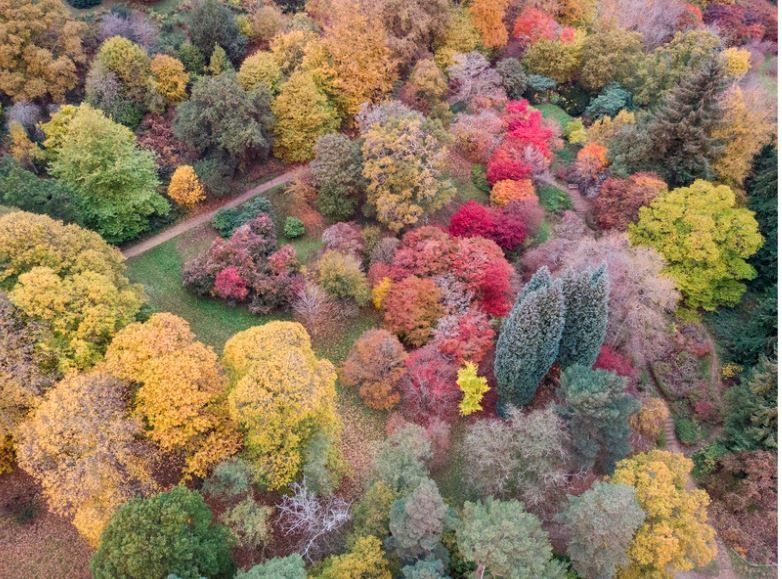
In Vancouver, autumn arrives with gold bigleaf maple, red vine maple, yellow katsura, burgundy Persian ironwood, and the dark green frame of Douglas fir and western red cedar. The best fall landscapes are not accidents. They come from the right species, planted in the right soil, then pruned with discipline.
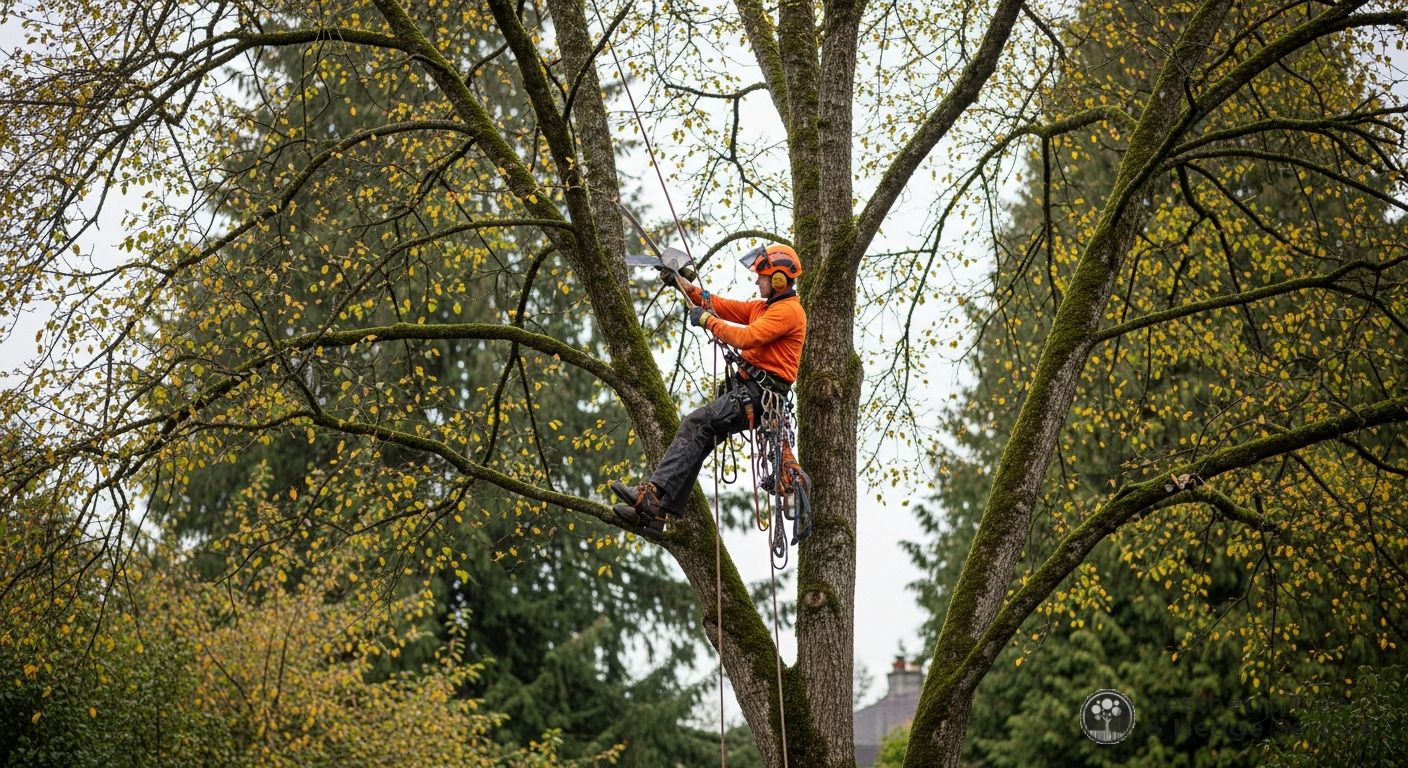
That matters in the Lower Mainland. A beautiful autumn tree can also be a hazard tree. Wet soil, wind, decay, poor branch unions, and root damage turn colour into liability fast. Our ISA-certified arborists look at both sides. We want trees kept where they are sound. We recommend removal only when the evidence says the risk is real.
TL;DR
- Vancouver's best autumn colour comes from bigleaf maple, vine maple, Japanese maple, katsura, Persian ironwood, red oak, serviceberry, and ginkgo.
- Metro Vancouver reported regional tree canopy inside the Urban Containment Boundary fell from 32% in 2014 to 31% in 2020. Good tree care matters.
- City of Vancouver Protection of Trees By-law 9958 requires a permit to remove many private trees 20 cm or more in diameter, measured 1.4 metres above ground.
- Fall is a good time for hazard assessment, structural pruning, mulching, and planting. It is also storm season.
- Call Aesthetic Tree & Hedge Services for a free estimate at (604) 721-7370. We are ISA-certified and WCB registered.
Which Vancouver Tree Species Create The Best Autumn Colour?
The strongest autumn landscapes in Vancouver use contrast. Bright deciduous colour works best beside dark evergreens. That is why local parks look so good in October. Gold bigleaf maple stands against Douglas fir. Red alder yellows beside cedar. Vine maple burns orange under taller conifers.
The most reliable autumn species for Vancouver and the Lower Mainland include:
- Bigleaf maple, Acer macrophyllum. Native. Large. Gold to yellow in fall.
- Vine maple, Acer circinatum. Native. Orange, red, and yellow. Good for understory sites.
- Japanese maple, Acer palmatum. Small. Strong red and orange colour in protected yards.
- Katsura, Cercidiphyllum japonicum. Yellow to apricot leaves. Good form when trained young.
- Persian ironwood, Parrotia persica. Red, orange, purple, and gold on one tree.
- Red oak, Quercus rubra. Strong red colour. Needs space and good soil volume.
- Serviceberry, Amelanchier species. White spring flowers, edible fruit, orange fall leaves.
- Ginkgo, Ginkgo biloba. Clear yellow fall colour. Good urban tolerance when sited well.
- Sweetgum, Liquidambar styraciflua. Star-shaped leaves. Red to purple fall tones.
- Stewartia, Stewartia pseudocamellia. Fine bark, white flowers, red-orange fall colour.
In our experience across Vancouver, Burnaby, North Vancouver, Richmond, Coquitlam, and nearby cities, the mistake is not choosing a dull tree. The mistake is choosing a tree with no room. A red oak is handsome. It is also a large tree. A Japanese maple is refined. It does not like harsh exposure, mower damage, or compacted soil.
Fall colour starts with biology. But it survives because of structure. Proper young-tree training cuts future risk. Mature-tree pruning protects branch unions. Root-zone care keeps water and oxygen moving. If limbs are already overextended or cracked, book professional tree cutting in Vancouver before storm season loads them with rain.
Why Does Vancouver Need The Right Autumn Trees Instead Of Just More Trees?
Vancouver does not need random trees. It needs durable trees. That means trees matched to site, soil, light, drainage, wind exposure, and municipal rules.
Metro Vancouver says tree canopy cover is a simple way to measure the urban forest and its benefits. Its 2024 reporting shows canopy inside the Urban Containment Boundary dropped from 32% in 2014 to 31% in 2020. Metro 2050 sets a target to raise that figure to 40% by 2050. That is a large gap.
The City of Vancouver reports a 25% overall tree canopy in its 2022 Tree Canopy Assessment. The City also describes an urban forest that includes about 150,000 street trees, 36,000 specimen trees in parks and golf courses, and more than 1 million trees across 444 hectares of public forests and woodlands.
Those numbers explain why species choice matters. A badly chosen tree often fails early. A well-sited tree gives shade, stormwater value, habitat, carbon storage, privacy, and fall colour for decades.
The best autumn tree for a narrow Kitsilano lot is not the best tree for a large Coquitlam ravine edge. The best street tree near pavement is not the best backyard shade tree. Soil volume changes everything.
We also look at wind. Many Lower Mainland yards sit in wind corridors. Corners, lanes, slopes, and waterfront areas all change load. A beautiful crown with poor branch attachment is not a success. It is deferred risk.
This is why arborist-led planting beats impulse planting. An ISA-certified arborist reads the site first. Then the species follows.
How Do Bigleaf Maple And Vine Maple Shape Vancouver Fall Landscapes?
Bigleaf maple and vine maple are two of the best native autumn trees in coastal British Columbia. They do different jobs.
Bigleaf maple is the grand local hardwood. The Province of British Columbia describes bigleaf maple as a species found in southwestern B.C., often mixed with conifers or other hardwoods. It grows in floodplains, second-growth stands, gaps, and upland sites. It often grows in clumps of three to five stems from one stump.
That clumping habit matters. Multi-stem bigleaf maples can be beautiful. They can also hide included bark, decay pockets, and old storm damage. Our crews pay close attention to stem unions. Gold leaves are lovely. Weak unions are not.
The City of Vancouver lists bigleaf maple as a major deciduous species in Stanley Park. It sits beside western red cedar, Douglas fir, western hemlock, red alder, black cottonwood, cherry, and Pacific dogwood. That mix is the classic Vancouver look. Green conifer mass. Gold hardwood canopy. Moss. Moist soil. Shade.
Vine maple works at a smaller scale. It is often the better choice for yards, edges, and understory plantings. It can bring red, orange, and yellow into a shaded garden without becoming a massive shade tree. It suits naturalistic sites, woodland borders, and layered planting.
But native does not mean maintenance-free. Vine maple can form dense stems. Bigleaf maple can shed limbs when defects advance. Both need room at the root flare. Both suffer when soil is compacted, grade is raised, or bark is damaged by string trimmers.
If a native maple has deadwood, fungal conks, cracked unions, or root heaving, get an assessment before fall storms. If the tree is protected, the City may require documentation before removal. A professional arborist report in Vancouver gives homeowners the facts needed for permit and safety decisions.
Which Ornamental Trees Give The Strongest Fall Colour In Small Vancouver Yards?
Small Vancouver yards need trees with proportion. A tree that outgrows the space becomes a pruning problem. Then it becomes a neighbour problem. Then it becomes a permit problem.
Good small-site autumn trees include Japanese maple, serviceberry, Persian ironwood, katsura, paperbark maple, stewartia, and some dogwood selections. These trees give colour without the scale of a large maple or oak.
Japanese maple is popular for good reason. It fits courtyards, front entries, and protected gardens. It gives fine texture. It can hold excellent fall colour. But it needs care. Afternoon heat, drought, and poor pruning leave scorch and dieback. Do not strip the interior. Do not lion-tail branches. Thin with purpose.
Katsura is different. It has a graceful habit and soft yellow to apricot fall colour. It needs moisture and good soil. It performs poorly when jammed into dry, compacted ground near hardscape.
Persian ironwood is one of the best small to medium ornamental trees for fall interest. Its leaves can show red, gold, orange, and purple. It also has strong bark character. It is a good fit where homeowners want colour and structure.
Serviceberry earns its space. It flowers in spring, feeds birds, and colours well in fall. It is also sized for many urban lots.
Ginkgo gives clean yellow colour and strong urban tolerance. Use male cultivars from reputable nurseries. Female fruit can create a maintenance issue.
The rule is simple. Choose the mature size, not the nursery size. A five-foot tree is not the tree you are buying. You are buying the 20-year form. That is where professional guidance pays.
If your yard also has hedges near these trees, manage both together. Overgrown hedges reduce airflow and light. They also hide trunk defects. Our hedge trimming services in Vancouver keep clearance, sightlines, and plant health in balance.
How Does Fall Colour Connect To Tree Health And Hazard Risk?
Fall colour is not always a health report. Some trees colour early because they are stressed. Some drop leaves early because roots are damaged. Some show thin crowns because decay has been advancing for years.
Look for these warning signs:
- Leaves turn colour much earlier than the same species nearby.
- One limb colours or drops leaves before the rest of the crown.
- Mushrooms or conks grow at the trunk base.
- Soil lifts on one side of the root plate.
- Bark cracks along a major stem.
- Large dead limbs remain in the upper crown.
- Old topping cuts have produced weak shoots.
- Cavities collect water.
- The tree leans more after wind or rain.
These signs do not always mean removal. They mean inspection. The difference matters.
The City of Vancouver says removal may be allowed when an arborist certifies a tree is dead, dying, or hazardous. That is not guesswork. It requires evidence. Our hazard assessments look at species, size, target, defects, load, decay, root condition, and occupancy beneath the tree.
ANSI A300 standards guide professional tree care work. They are the industry baseline for pruning, support systems, and related arboricultural practices. For homeowners, the main point is clear. Tree work should have a reason. Every cut creates a response.
Bad pruning creates future failure. Topping creates dense weak sprouts. Flush cuts damage the branch collar. Over-thinning increases wind load on remaining limbs. Stub cuts invite decay.
If a tree has reached the end of its safe useful life, removal is sometimes the right answer. For protected trees, permits and documentation come first. Our tree removal service in Vancouver is built around safety, permit awareness, and site protection.
What Do Vancouver Tree Bylaws Mean Before You Remove An Autumn Tree?
Do not remove a significant tree in Vancouver because leaves are messy, roots are inconvenient, or a neighbour complains. Check the bylaw first.
City of Vancouver Protection of Trees By-law 9958 applies to trees on private property. The City says a permit is required to remove any private-property tree with a diameter of 20 centimetres or more, measured 1.4 metres above the ground. A 20 cm trunk is about 64 cm in circumference.
The City also states that an arborist report is required for development permit applications when trees 20 cm or larger are present. Trees on adjacent properties or boulevard trees that are at risk during construction must also be protected.
That affects renovations, laneway homes, additions, drainage work, driveway changes, and retaining walls. Roots do not stop at property lines. Construction damage often shows up later as crown decline, root rot, or windthrow risk.
Other Lower Mainland municipalities have their own rules. Burnaby, Richmond, Coquitlam, North Vancouver, West Vancouver, Surrey, and Delta all treat tree protection differently. Do not assume Vancouver's bylaw applies across the region.
This is where homeowners get into trouble. They hire a low-bid cutter. The cutter removes the tree. Then the City asks for the permit. That is backwards.
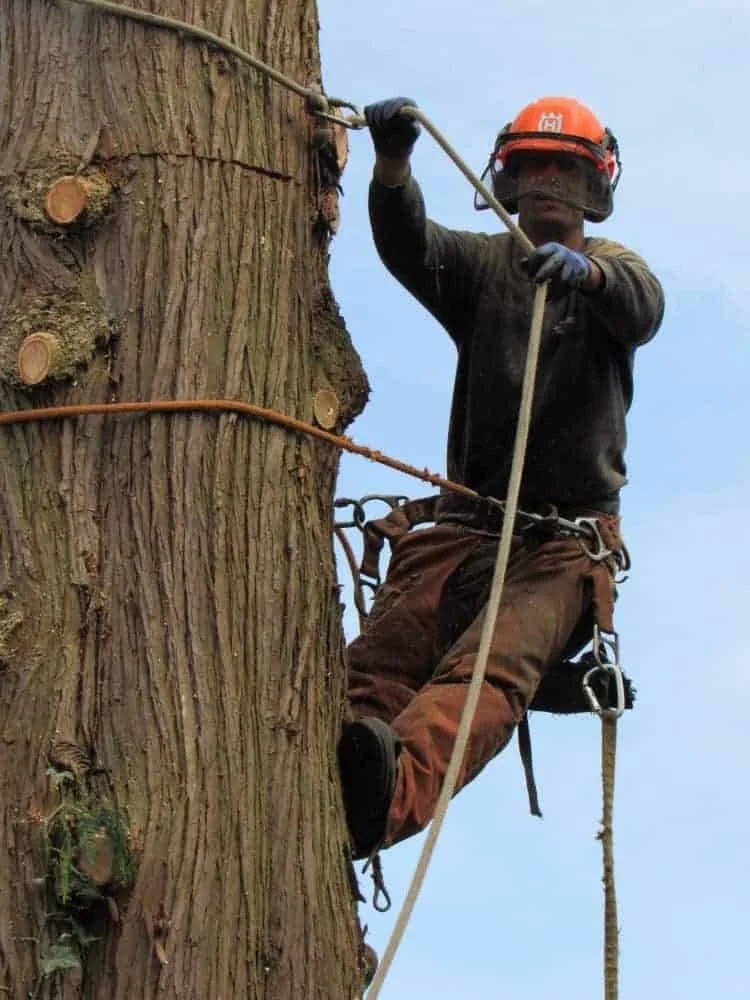
An ISA-certified arborist gives you a defensible path. We measure diameter at breast height. We inspect health and structure. We document defects. We explain retention options. If removal is warranted, we help the homeowner understand the next step.
After removal, do not ignore the stump. Stumps become trip hazards, re-sprout in some species, attract decay organisms, and block new planting. Our stump grinding in Vancouver clears the site for safer use and better replacement planting.
When Is Fall The Best Season For Pruning, Planting, And Mulching In Vancouver?
Fall is one of the most useful seasons for tree work in Vancouver. The heat has eased. Soil moisture returns. Deciduous structure becomes easier to see after leaf drop. Storm defects also become more obvious.
Environment and Climate Change Canada climate normals show why timing matters. Vancouver moves from dry late summer into wet autumn. City of Vancouver sustainable development guidance, using Environment Canada 1981-2010 station data, lists historical average monthly rainfall of 157 mm in October and 234 mm in November. That is a major shift for soils, roots, and crews.
Wet soil helps new plantings establish. It also increases root-plate risk where drainage is poor. Clay soils, compacted lanes, and fill areas hold water. Saturated soil reduces anchorage. Add wind, and weak trees fail.
Good fall work includes:
- Structural pruning on young trees.
- Deadwood removal over roofs, patios, and driveways.
- Clearance pruning near buildings and walkways.
- Mulching over root zones.
- Root flare inspection.
- Cable inspection on supported trees.
- Planting after heat stress has passed.
- Hazard assessment before winter storms.
Do not over-prune in fall. The goal is not to thin a tree until it looks clean. The goal is to reduce specific risks while preserving live crown.
Mulch is often overlooked. It protects soil, moderates temperature, reduces mower damage, and supports root health. Keep mulch off the trunk. The root flare must stay visible. Mulch volcanoes cause decay and stem problems.
For new autumn planting, water still matters. Rain does not always reach the root ball. Nursery root balls can shed water when dry. Check soil by hand. Do not guess.
If you are replacing a removed tree, ask about site-first tree planting in Vancouver. Species selection should match future size, soil volume, light, drainage, and bylaw requirements.
How Do Evergreens Make Autumn Colours Look Better In The Lower Mainland?
Vancouver's fall beauty depends on evergreens. Without them, the colour would look thin. Douglas fir, western red cedar, western hemlock, grand fir, and Sitka spruce give the dark background that makes gold and red leaves stand out.
The City of Vancouver lists western hemlock, western red cedar, Douglas fir, Sitka spruce, and grand fir among the major conifers of Stanley Park. It also notes some Douglas firs in the park are over 50 metres tall. These are not small garden trees. They are landscape anchors.
A 2022 study in Atmosphere looked at Metro Vancouver using Landsat 8 and regional land-cover data. It found areas dominated by coniferous trees were 12.2 C cooler than areas dominated by buildings. The same paper notes trees can block 60% to 90% of shortwave solar radiation from reaching the ground.
That tells homeowners something important. A conifer is not fall colour in the usual sense. It is the frame, shade engine, privacy wall, and climate asset. Remove too many evergreens and the yard changes fast. It gets hotter, brighter, windier, and less private.
But large conifers also need respect. Watch for top dieback, root disturbance, heavy lean, basal decay, cracked soil, and bark beetle activity. Western red cedar decline has become more visible in hot, dry summers. Hemlock can suffer from pests and drought stress. Douglas fir is strong, but it is not immune to root damage.
Never trench through a conifer root zone without advice. Never raise grade around the trunk. Never cut major roots to install a patio and expect the crown to stay safe.
If a large evergreen is near a house, school, lane, or neighbour's roof, risk assessment is not optional. It is responsible ownership.
What Autumn Tree Mistakes Do Vancouver Homeowners Make Most Often?
The first mistake is planting for colour alone. A tree is a structure. It has weight, roots, branch unions, mature size, and failure modes.
The second mistake is topping. Topping does not make a tree safe. It creates weak regrowth and decay columns. It also ruins form. A topped maple may look smaller for a year. Then it responds with dense shoots that attach poorly.
The third mistake is burying the root flare. The root flare is where the trunk widens into the root system. It should be visible. Soil or mulch piled against the trunk traps moisture and invites decay.
The fourth mistake is ignoring soil volume. Urban trees need soil, not just a hole. A tree planted between concrete, compacted subgrade, and a dry fence line will struggle.
The fifth mistake is pruning at the wrong time for the wrong reason. Removing live limbs without a clear goal reduces energy production. It can stress the tree before winter.
The sixth mistake is assuming a colourful tree is healthy. Early colour can be a stress response. One-sided colour can mean root damage or vascular problems. Thin fall colour can follow drought, compaction, or disease.
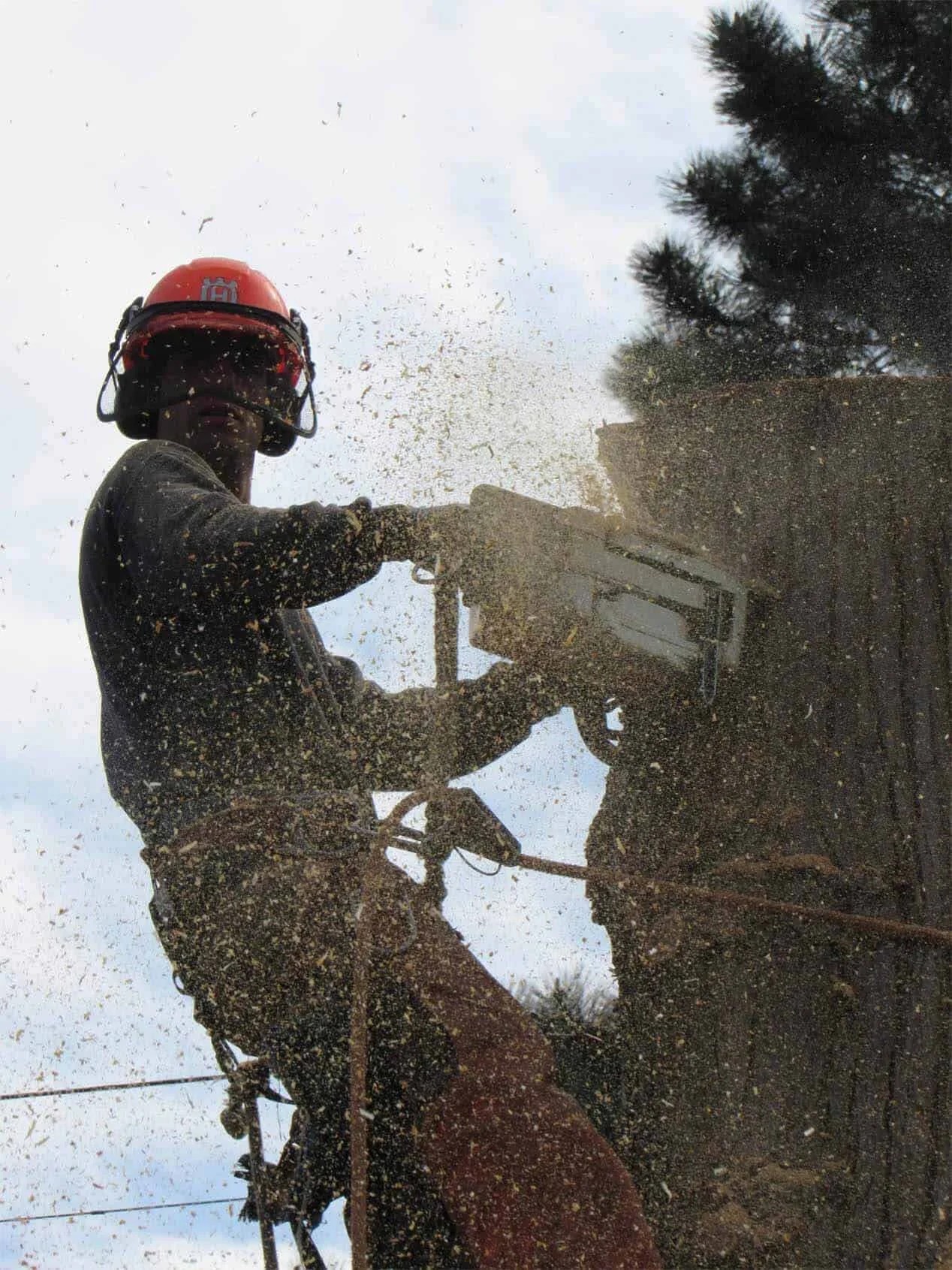
The seventh mistake is hiring uninsured, uncertified crews. Tree work is high-risk work. A branch over a roof is not a handyman task. A storm-damaged tree under tension is not a weekend project.
Aesthetic Tree & Hedge Services is WCB registered. Our ISA-certified arborists use professional rigging, site controls, and sound pruning methods. The goal is simple. Keep good trees. Reduce risk. Remove only when needed.
For storm-damaged limbs, split stems, or leaning trees, use emergency tree service rather than waiting for the next weather system to finish the job.
How Should Homeowners Plan An Autumn Tree Landscape That Lasts?
Start with a site assessment. Do not start with a nursery tag.
Ask these questions:
- How much sun does the tree get in summer and fall?
- Is the soil compacted, sandy, clay-based, or fill?
- Where does water sit after heavy rain?
- How close are the house, fence, lane, sidewalk, and utilities?
- What is the mature height and spread?
- Will roots conflict with hardscape?
- Is a permit needed for removal or replacement work?
- What maintenance will the tree need in five, ten, and twenty years?
Then choose the species.
For a small front yard, consider Japanese maple, serviceberry, paperbark maple, stewartia, or vine maple. For a medium yard, consider Persian ironwood, katsura, dogwood, or ginkgo. For a large site, consider bigleaf maple, red oak, tulip tree, or a well-sited conifer mix.
Use layers. One large shade tree, one small ornamental, and a managed hedge often works better than three competing medium trees. Give each plant a job. Shade. Colour. Screening. Habitat. Structure.
Keep sightlines open. Trees near driveways and sidewalks need clearance. Hedges near corners need disciplined trimming. Roots near walls need planning.
Build maintenance into the design. A tree that needs annual corrective pruning was not the right choice. A hedge that blocks light from a young maple will become a fight. A large tree planted too close to a house will force poor pruning later.
We also recommend documenting important trees before renovations. Photos, measurements, and a tree protection plan can prevent damage. It also helps if a neighbour, contractor, or municipality asks questions.
For broader seasonal timing, our guide to seasonal tree care explains how care changes through the year in Vancouver conditions.
Which Local Places Show Vancouver Autumn Tree Species At Their Best?
Look at good local examples before planting.
Stanley Park shows the native pattern. Conifers dominate the frame. Bigleaf maple, red alder, black cottonwood, cherry, cascara, Pacific dogwood, and arbutus add seasonal change. The City says Stanley Park has 27 kilometres of trails through diverse ecosystems. It is the best public classroom for native structure.
UBC Botanical Garden shows plant diversity. It is Canada's oldest university botanical garden and includes collections that help homeowners see form, scale, and seasonal change. Nitobe Memorial Garden is useful for studying Japanese maple placement, proportion, and restraint.
Queen Elizabeth Park shows ornamental planting at public scale. VanDusen Botanical Garden shows mature specimens and layered design. Pacific Spirit Regional Park shows native forest edges and natural regeneration. Deer Lake in Burnaby shows water, deciduous colour, and mature canopy together.
These places teach a practical lesson. Fall colour works best when it is part of a complete canopy. A single red tree in a bare yard looks decorative. A planned canopy looks established.
Homeowners can borrow that principle. Pair deciduous colour with evergreen structure. Use shrubs and hedges to frame views. Keep the root zone open. Avoid crowding. Let each tree mature.
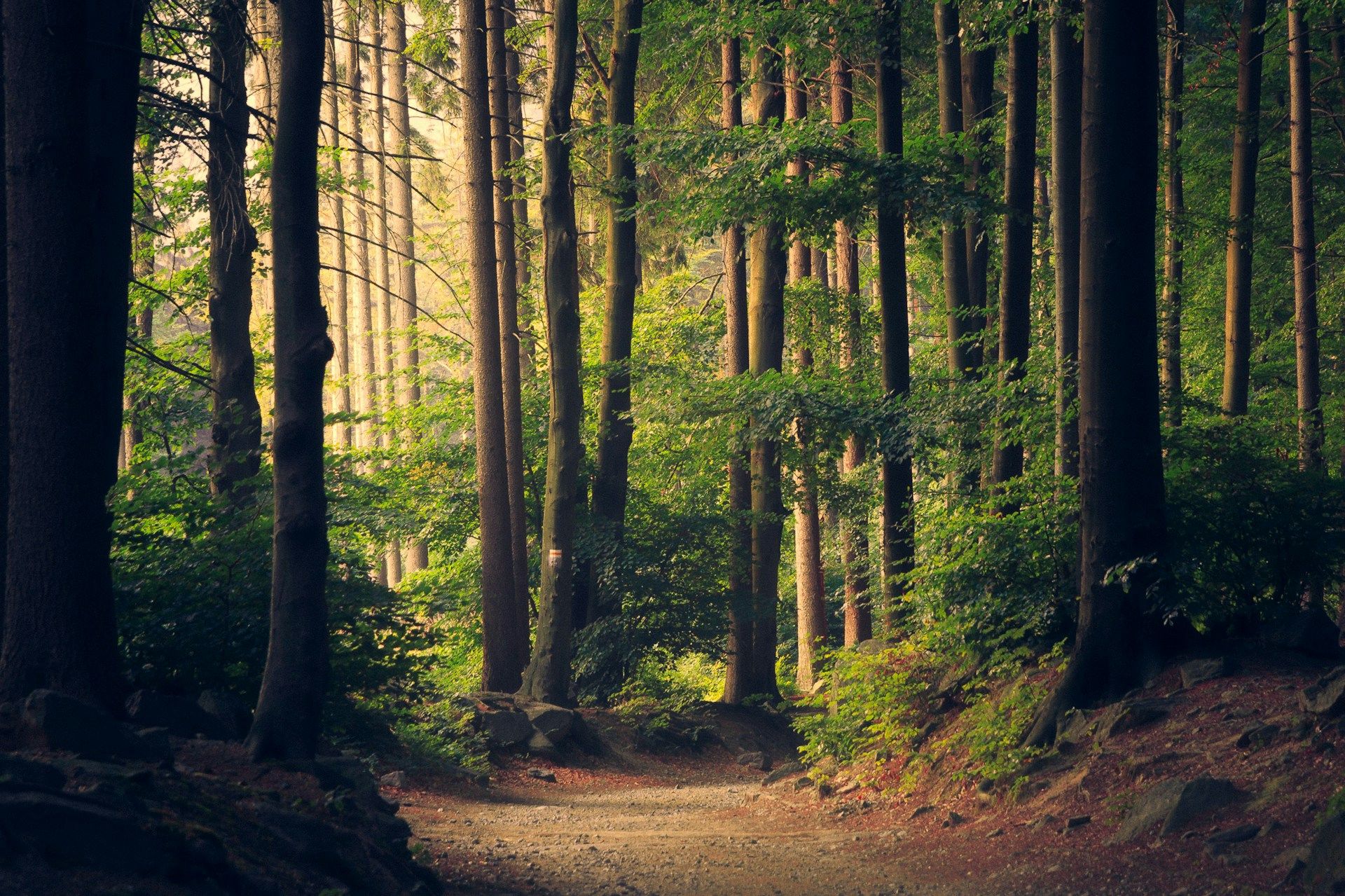
This is arboriculture, not decoration. The best autumn yard is not the one with the brightest tree in year one. It is the one that still looks good and stands sound in year twenty.
How Can Aesthetic Tree Help Before Fall Storms Arrive?
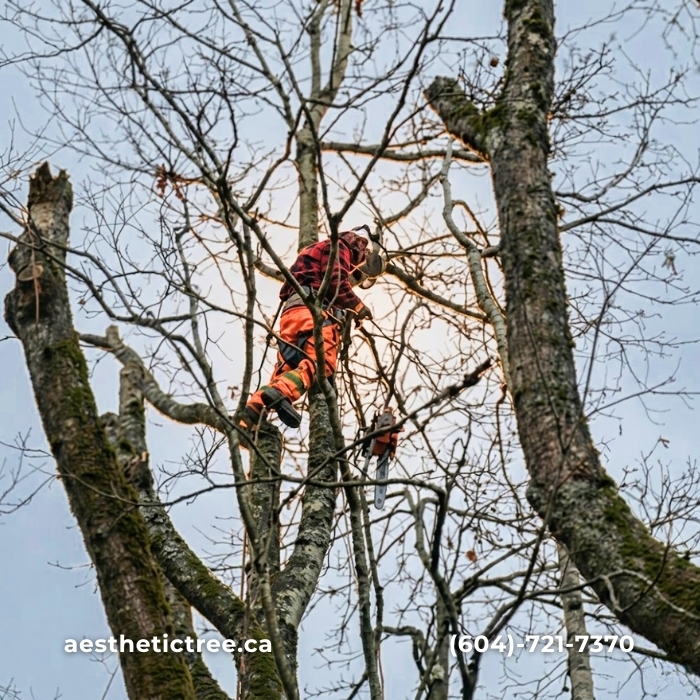
Our work starts with evidence. We inspect the tree, the site, and the target. Then we explain the practical options.
That may mean pruning. It may mean cabling. It may mean mulch and root-zone care. It may mean an arborist report. It may mean removal. The answer depends on the tree.
For valuable trees with weak branch unions, support systems can reduce risk when used correctly. For trees with advanced decay, support is not a cure. For dead or dangerous trees, removal protects people and property.
We follow safety-first work practices. We know Vancouver and Lower Mainland bylaws. We understand permit required under bylaw situations. We work around homes, fences, utilities, gardens, and neighbours.
Call before the first major storm, not after it. Once a tree fails, options shrink. Access gets harder. Damage spreads. Emergency work costs more across the market because risk and urgency rise, even though we do not publish pricing.
A fall inspection is simple. We check root flare, trunk, scaffold limbs, crown density, deadwood, lean, decay signs, and site exposure. We also ask what changed. Construction, trenching, drought, grade changes, and new paving often explain decline.
If the tree is sound, we will say so. If it needs work, we will explain why. If removal is warranted, we will tell you what documentation or permit step comes next.
For more background on qualified tree care, read our guide to arborists near me in Vancouver and our explanation of what arborists do.
FAQ
What tree has the best fall colour in Vancouver?
Bigleaf maple gives the strongest native gold. Vine maple gives the best native red-orange colour for smaller spaces. Japanese maple, Persian ironwood, katsura, serviceberry, and ginkgo are strong ornamental choices. The best tree depends on soil, space, drainage, and exposure.
Do I need a permit to remove a tree in Vancouver?
Often, yes. City of Vancouver Protection of Trees By-law 9958 requires a permit to remove private-property trees 20 cm or more in diameter, measured 1.4 metres above ground. Smaller trees can also be protected if they were planted as replacement trees or tied to development plans. Always check before cutting.
Why did my tree turn colour early in September?
Early colour often means stress. Common causes include drought, root damage, compacted soil, construction injury, disease, or vascular decline. Compare it with the same species nearby. If one limb colours early, or the crown thins, book an arborist assessment.
Is fall a good time to prune trees in Vancouver?
Fall is good for inspection, deadwood removal, structural pruning on many trees, and storm-risk work. It is not a reason to over-prune. Proper pruning follows ANSI A300 standards and has a clear goal. Large cuts, topping, and heavy thinning create long-term problems.
What should I plant after removing a hazardous tree?
Choose by site first. Small yards suit Japanese maple, vine maple, serviceberry, stewartia, and Persian ironwood. Larger sites can support bigleaf maple, red oak, ginkgo, or conifers. Match the mature size to the space. Check municipal replacement rules before planting.
Call Aesthetic Tree & Hedge Services for a free estimate at (604) 721-7370. Our ISA-certified arborists are WCB registered. We help Vancouver and Lower Mainland homeowners keep beautiful trees safe, sound, and ready for the next autumn.
Found this helpful? Follow our tree care insights directly on Google.
Make us your preferred source on GoogleBefore You Go
Where are you in your tree care journey?
Our Tree Care Services
ISA-certified arborists serving Greater Vancouver


Explore Our Tree Care Services
From expert pruning to safe tree removal, our ISA-certified arborists are ready to help across Greater Vancouver.
View Services